- Taking medicine does not by itself rule out a full-arch implant.
- What we check first is whether your blood pressure is controlled.
- Never stop a blood thinner on your own.
- Whether to stop is decided with the doctor who prescribed it.
"I stopped my aspirin a few days ago." We often hear this at full-arch implant consultations in Seomyeon, Busan. At Reset Dental Clinic, we would rather you ask us first. For patients living in or visiting Korea, we provide 1:1 English interpretation from the first consultation through the end of treatment.
We understand the worry. But stopping these medicines carries its own risks.
A full-arch implant covers a wide area, so we look at your medicines more carefully. This column uses public health sources and dispute cases to explain what we check and how we decide.

Why are medicines checked more closely for a full-arch implant?
Because the area is wide. It is different from placing one or two implants.
Several remaining teeth are often removed, so there are more places that can bleed. Surgery also takes longer, which puts more strain on blood pressure and the heart.
More areas need numbing, so the total amount of anesthetic rises. That is why we ask about your medicines in detail.
Which medicines should I tell you about?
All of them, even ones that seem unrelated to dentistry.
- Blood pressure and heart medicines
- Blood thinners
- Diabetes medicines and insulin
- Osteoporosis pills and injections
- Steroids and cancer drugs
- Herbal medicines and supplements too
Many people forget the last item, but some contain ingredients that affect the blood. You do not need to memorize names; just bring your medicine bags.
Does taking medicine rule out a full-arch implant?
No. In the national health portal (KDCA) guide on dental implants, checking your medicines is the first pre-surgery item, along with your general health.
It says circulation medicines can raise the chance of bleeding, so some may need to be paused. Note that it says "may," not "must."
Asan Medical Center in Seoul says the same. Tell the team about your illnesses and medicines, and have high blood pressure and diabetes well controlled before surgery.
What must I tell you before surgery?
The hospital guide lists three things to report.
- Your illnesses and medicines
- Long-term use of aspirin or warfarin
- A tendency to bleed easily
The national portal adds advice for the day before: sleep well and eat lightly. Poor sleep from nerves affects blood pressure.
Neither source says medicine rules out surgery. Both say to report, control and check first.
Why does your current blood pressure matter more than the pill?
A full-arch implant often includes extractions, so the portal's extraction guide applies too. It urges care with heart disease and high blood pressure, as well as blood disorders, diabetes, and liver or kidney disease.
With high blood pressure, the problem is when it is not controlled. Pressure can change sharply during an extraction.
So your control matters more than the fact that you take a pill. That is why we measure blood pressure on the day of surgery.

Are there numerical criteria?
Yes. Dental News, a Korean dental newspaper, introduced a paper in a Korean geriatric medicine journal on implants for older patients. It says bone condition and general illness are bigger risks than age.
- Diastolic 110 mmHg or higher: consult a physician
- Systolic 180 mmHg or higher: consult a physician
- Heart attack within 6 months: emergency care alone
- Unstable angina: emergency care alone
- Uncontrolled heart failure or arrhythmia: the same
Diabetes slows healing, so the paper advises a medical consultation and blood sugar control before surgery.
These figures are for older patients, but the principle holds at any age. With heart disease or uncontrolled blood pressure, a physician's check comes first.
Does the time of surgery matter?
The same paper suggests late morning or early afternoon. Early morning blood pressure runs high, and by late afternoon stress has built up.
Too much tension can cause fainting, and the paper advises raising the legs if it happens. If your heart or lungs are weak, we sit you more upright.
| Medicine or condition | What the sources say |
|---|---|
| High blood pressure | Control it well before surgery |
| Aspirin, warfarin | Always report long-term use |
| Circulation medicines | Some may need to be paused |
| Blood, liver or kidney disease | Consult a physician before extraction |
| Osteoporosis drugs, cancer drugs | Slow healing, so consultation is needed |
How do anesthetic and anxiety affect a full-arch implant?
The portal's guide on dental local anesthesia says it does not affect consciousness, so it is safer than general anesthesia.
Dental injections are usually lidocaine with epinephrine, which narrows blood vessels. It makes numbing last longer and work better.
It also reduces bleeding, which helps people on blood thinners.
Is there a limit on anesthetic?
Yes. The guide gives amounts.
| Group | What the guide says |
|---|---|
| Healthy adults | Epinephrine 0.2 mg, about 11 cartridges |
| Clear heart or vessel disease | Epinephrine 0.04 mg, about 2 cartridges |
| Older adults with heart disease | 2 or fewer cartridges of 2% lidocaine |
A full-arch implant needs many areas numbed at once, so these limits matter. With heart or vessel disease, they also affect how many sessions surgery is split into.
The guide says overdose side effects are rare, unless the anesthetic enters a blood vessel directly. Then blood pressure and heart rate can rise, which checking before injection can prevent.
What if I am very anxious?
The portal's guide on dental sedation recommends it for people whose condition worsens with stress, such as angina.
Even then, we first check whether your illness is controlled and what you take. Sedation is mainly for people in fair general health.
For those in poor health, the guide advises asking their doctor. It may also recommend a general hospital with emergency facilities.
Why should you never stop a blood thinner on your own?
Because that medicine is protecting you from another illness.
There are antiplatelet drugs such as aspirin, and anticoagulants such as warfarin. Both are prescribed for conditions outside dentistry.
Stopping them for a full-arch implant creates risk on that side.
Has this actually happened?
Yes. Dental News reported a case in 2025. A patient in their 60s sent a photo of a medicine bag, then stopped the medicine on the clinic's instruction and had teeth extracted.
Soon after, the patient had a stroke and died. The family said the risk of stopping was never explained.
The clinic said it heard of no illness besides high blood pressure, and thought the medicine was preventive.
The mediation agency could not rule out a link between stopping and the stroke. It found the patient's doctor should have been consulted.
A legal affairs director of the Korean Dental Association advised consulting the internist or a cardiologist.

What does research say?
In 2020, Dental News covered a Korean gerontology paper that surveyed 1,000 dentists. 87.8% had patients stop these medicines before extraction, almost all because of delayed bleeding.
| Item | Rate |
|---|---|
| Record whether medicine is taken | 92% |
| Have seen delayed bleeding | 55.1% |
| Stop medicine before extraction | 87.8% |
| Reason: delayed bleeding | 98.3% |
| Stop for 3–5 days | 64% |
Dentists who had seen bleeding were more likely to stop the medicine. One experience made them cautious.
The article says this is stricter than guidelines, because extraction and dental surgery are low bleeding risk. Instead of stopping, it recommends limiting the treatment area and controlling bleeding on the spot.
What does splitting the treatment area mean?
It means not doing everything at once. A full-arch implant removes and places many teeth, so there are many bleeding sites.
You can keep taking your medicine and split surgery: one side first, the other later. Or, after consulting your doctor, the medicine is adjusted and it is done at once.
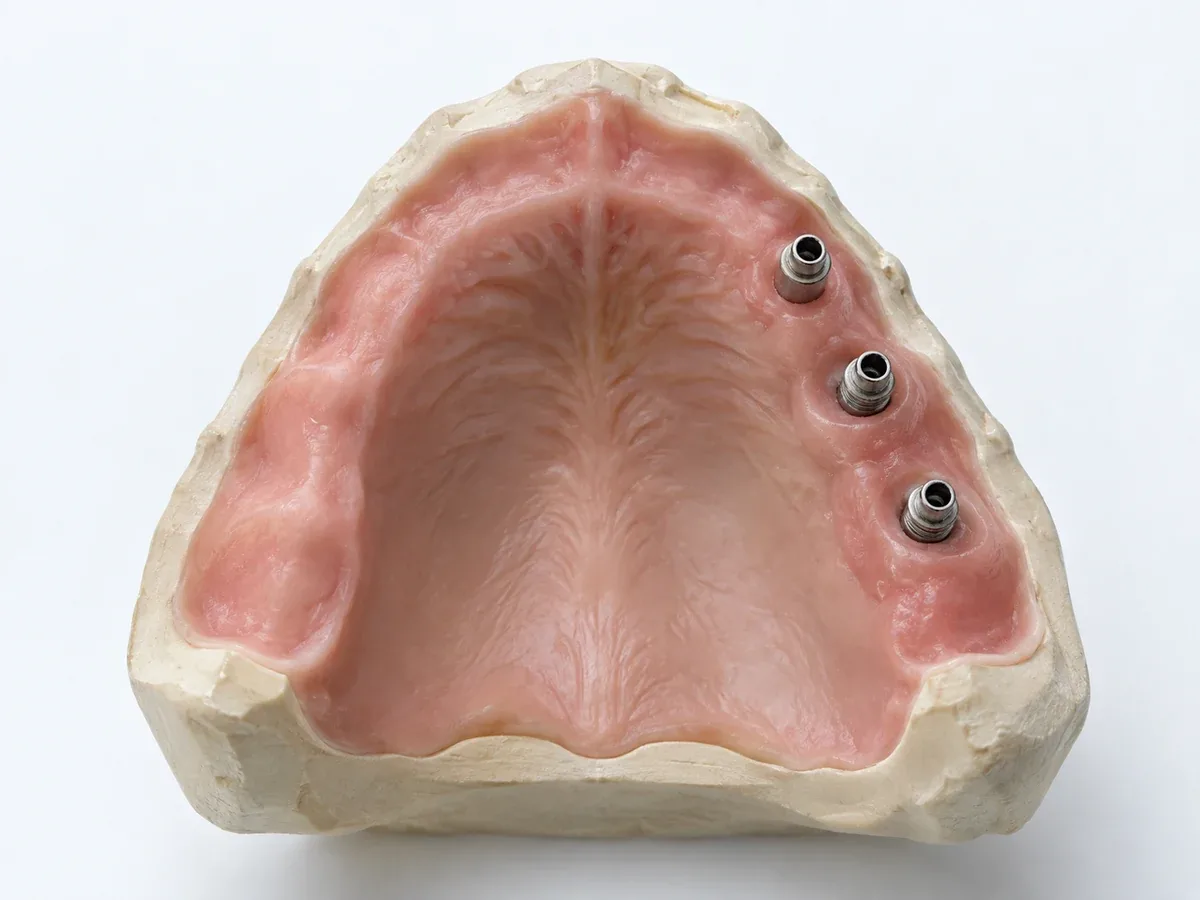
A split full-arch implant takes a little longer, but safety comes first. You can chew on the other side, and recovery comes in smaller steps.
We suggest which way suits you after looking at your medicines, blood pressure, age and bone.
If I must stop, when?
The prescribing doctor decides that too, not the dental clinic alone.
Each medicine leaves the body at a different speed, so timing differs. When you restart also matters; too late raises the risk for the original illness.
If needed, we request a written opinion and set the date from it.
What happens on surgery day and during recovery?
The portal lists bleeding as a complication right after surgery, more likely with anticoagulants or high blood pressure. It is handled by finding the spot and pressing, or using a hemostatic agent.
The extraction guide agrees that most bleeding stops by biting on gauze. If it continues or is heavy, further care at the clinic is needed.
How should I spend the day of an extraction?
- Bite on the gauze for about an hour and a half
- Do not touch the area afterwards
- Hold something cold to your cheek for a day or two
- Avoid hot baths and saunas
- Do not use a straw for three days
- Avoid alcohol and smoking for at least a week
Blood can spread under the skin and bruise, more often in older people. Pain, swelling, a stiff jaw or a mild fever can last a day or two.
Take the prescribed medicines, and tell us right away about any problem with them. If bleeding will not stop, do not stop more medicine; call the clinic that did the surgery.

What about the morning of surgery?
Take your usual medicines. Skipping blood pressure medicine is more dangerous.
Do not fast; eat something light. An empty stomach plus nerves makes dizziness more likely.
Cut back on coffee, as a faster heart raises blood pressure. And sleep well the night before, as the sources advise.
Is blood pressure checked during surgery?
Yes. We check before starting, and again during longer surgery.
If it is too high, we may postpone the full-arch implant that day rather than push ahead. Postponing may feel like a loss, but it is safer.
What should I watch for during recovery?
After a full-arch implant, the first few days matter most, when a clot must stay in place. A straw or smoking can dislodge it.
Avoid hot foods, which widen vessels and can restart bleeding. Rest from exercise for about a week, as heavy breathing raises blood pressure.
If unsure, call us.
How should you prepare for a consultation in Busan?
First, keep taking your medicines. Do not stop them early because you have booked.
Second, bring your medicine bags and the reason you take each one. The same drug can call for a different decision depending on the reason.
Third, show us any home blood pressure records. They help set the date and time of surgery.
The legal director said patients also have a duty to inform. If they do not, responsibility can be shared.
| What to bring | Why |
|---|---|
| Medicine bags or names | The sources say to always report them |
| Why you take each medicine | The dispute case where it was thought preventive |
| The prescribing hospital | To decide together with your doctor |
| Usual blood pressure | To decide based on control |
A full-arch implant takes months, and medicines can change. Tell us each time you get a new one.
Do I need a letter from another doctor?
Sometimes. Full-arch implant patients on blood thinners usually do, as do those who have had heart surgery.
With well-controlled blood pressure and simple medicines, we may proceed without one. We also tell you which department to ask and what to ask.
Is it sometimes better to wait?
Yes. After a recent heart attack, or with unstable angina or uncontrolled blood pressure, we wait. A physician should get things under control first.
If there is urgent pain, we treat that first and plan the full-arch implant afterwards.
Taking medicine does not rule out a full-arch implant; it means checking more carefully. The most dangerous step is stopping on your own.
Bring your medicine bags and we will decide the rest together. Many people on medication have a full-arch implant by following the right order.
Frequently asked questions
Can I have a full-arch implant if I take aspirin?
Yes. The sources simply say to tell us. Do not stop it yourself; decide with the prescribing doctor.
What if my blood pressure is high on the day, or I bleed afterwards?
We look at that day's reading and decide again. For bleeding, bite on gauze and call us if it continues.
I also take osteoporosis medicine. Is that a problem?
It can affect bone healing, so we check it separately.
Can I get this treatment in English in Busan?
Yes, we offer 1:1 English interpretation from the first consultation through the end of treatment. The clinic is near Seomyeon Station Exit 2 (5-min walk), opposite Lotte Hotel Busan. Call 010-8555-2854 (+82-10-8555-2854 from abroad).
Do not stop your medicine on your own.
That medicine is protecting you from another illness.
Bring your medicine bag,
and we will decide the rest together.
If you take medicine and are considering a full-arch implant in Busan, Reset Dental Clinic offers 1:1 English interpretation from your first consultation through the end of treatment. Call 010-8555-2854 to book.
References
- KDCA National Health Information Portal, "Dental Implants" — checking medicines before surgery, bleeding risk with circulation medicines, managing bleeding right after surgery
- Asan Medical Center, "Implant Surgery" — always report underlying illnesses and medicines; control high blood pressure and diabetes well before surgery
- KDCA National Health Information Portal, "Tooth Extraction" — avoid extraction when blood pressure is uncontrolled; care after extraction
- Dental News (Chiui Sinbo), "Do not stop antithrombotics hastily before extraction" (January 30, 2025) — dispute case of death from stroke after stopping medicine for extraction, and the finding that the patient's doctor should have been consulted
- Dental News (Chiui Sinbo), "Korean dentists strict on stopping antithrombotics" (April 3, 2020) — survey of 1,000 dentists; dental surgery is low bleeding risk, so limiting the area and local bleeding control are recommended over stopping
Written by Reset Dental Clinic Support Team
Medical review Dr. Na In-chae, Head Dentist · Periodontics Specialist
Last updated: October 21, 2026
This column is for general information and does not replace diagnosis or treatment for individual patients. If you have symptoms, please see a dentist.