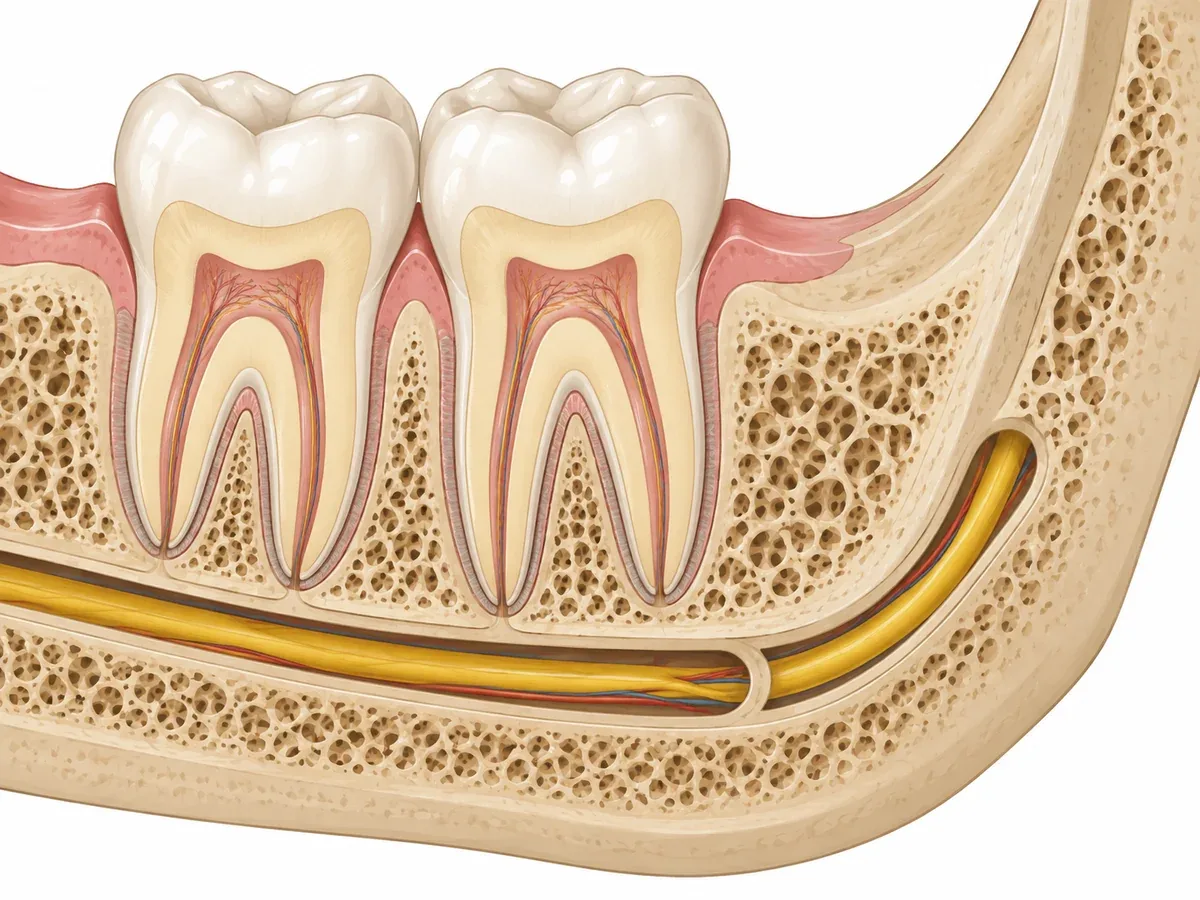
- Below the lower molars runs a canal carrying a large nerve.
- So a lower molar implant starts with measuring the distance on a CT scan.
- If the margin is too small, a shorter implant or a slightly different position is chosen.
- During surgery, the key is never touching the nerve directly.
"I heard the nerve is close in the lower jaw, so it's risky." We hear this often in implant consultations in Busan. At Reset Dental Clinic, we measure it and show you the numbers. Patients living in or visiting Korea can go through this with 1:1 English interpretation from the first consultation to the end of treatment.
This is what people hear most before a lower molar implant, and a nerve canal really does run through the lower jaw.
But if the distance is measured in advance, the nerve can be avoided. This column explains what is measured and how.
Is there really a nerve close to the lower molars?
Yes. A canal inside the jawbone carries the inferior alveolar nerve, right below where a lower molar implant goes.
It enters near the ear and exits toward the front of the chin. It supplies feeling to the lower lip and the skin below it.
What happens if the nerve is touched?
The lower lip and chin can feel numb, as if the anesthetic has not worn off. It is a change in sensation rather than pain.
That is why measuring in advance and avoiding the nerve is everything.
Is the canal in the same place for everyone?
It varies a lot. In some people it runs mid-bone, in others lower down.
Left and right sides often differ too. So the decision has to come from your own CT, not someone else's average.
Some people have a canal that splits in two. If CT shows two lines, both must be avoided, and a flat X-ray cannot show this.
Why is there no nerve talk for the upper jaw?
The upper jaw has no large canal like this. Instead, it has an air space called the maxillary sinus, and the distance to that space is checked.
Think of it this way: the nerve below, the space above.
What about the lower front teeth and wisdom tooth sites?
The canal opens at the front of the jaw, so the area around that opening must be avoided. Near the lower front teeth, thin bone is the bigger issue, so implant width is adjusted.
The site of a removed wisdom tooth is the closest to the canal. In some people, the wisdom tooth roots touched it. Implants are rarely placed there and usually go in the molar space in front.
How is the distance measured for a lower molar implant in Busan?
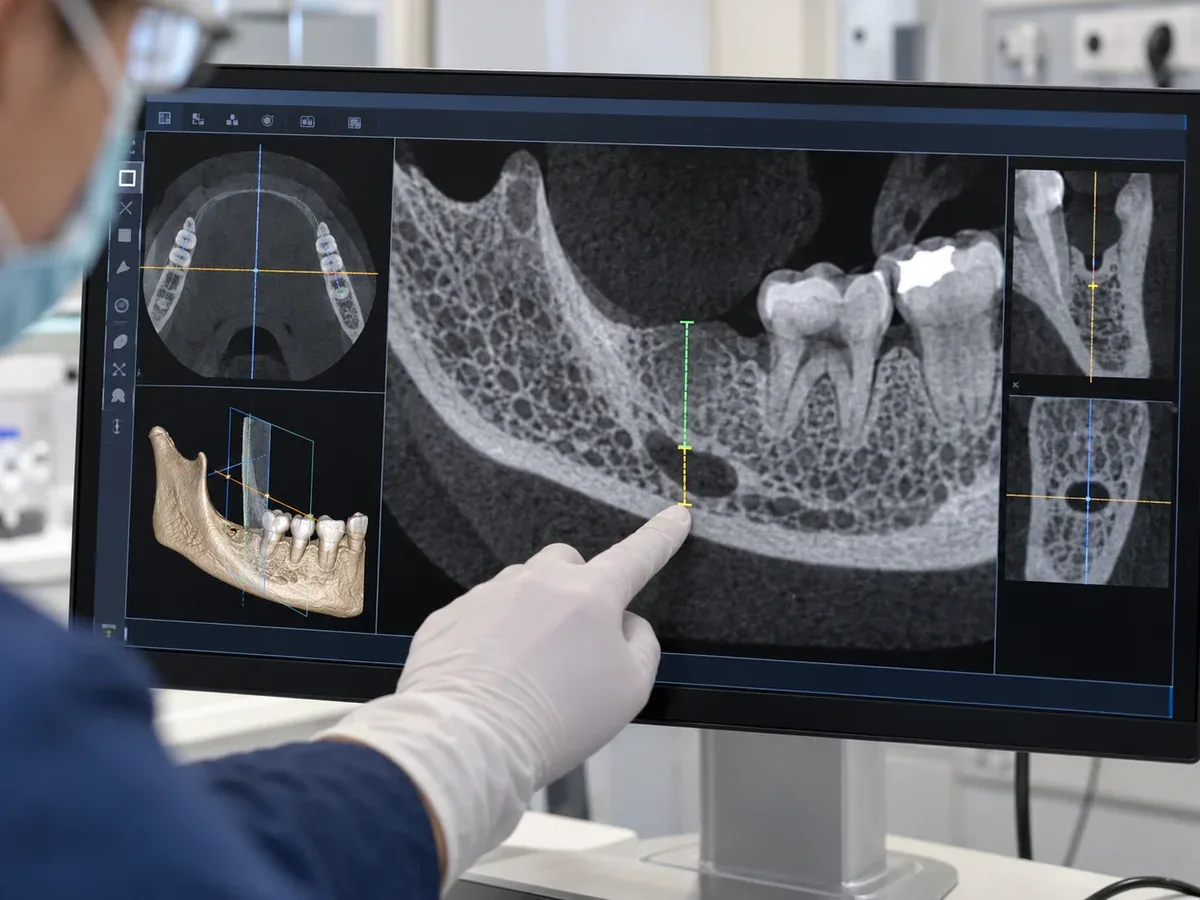
We take a CT scan and measure. A flat X-ray cannot show depth from front to back.
CT shows the bone in thin slices. We read the position of the canal and the bone height in millimeters.
Is a CT scan really necessary?
For a lower molar implant, we recommend it, since a flat image does not show the distance to the canal.
Bone thickness and shape also need checking, and one scan serves the whole plan.
I am worried about radiation
A dental CT briefly covers the jaw area, unlike a whole-body CT.
If you are pregnant, please tell us in advance. We take it when needed and not often.
Can I see the planned position on a model?
Yes. A 3D model is made from the CT data, with the implant position and depth marked on it.
The nerve canal is shown in a different color.
What should I ask at the consultation?
Three questions are enough.
- How many millimeters of bone height do I have?
- How much margin is there to the nerve?
- What length of implant do you plan to place?
If all three get answers in numbers, that is a good sign.
What if there is not enough room above the nerve?
We leave a set safety margin above the canal and choose the lower molar implant length within it. If the margin is too small, a shorter implant is used.
Moving the position slightly is also considered.
Is a short implant acceptable?
A short lower molar implant is widely used today. The contact area with bone matters more than length.
The width is sometimes increased slightly to make up the area. Forcing a long implant in is the bigger risk.
| Bone height | Common approach | Also considered |
|---|---|---|
| Plenty | Regular length | Just match the width |
| Slightly short | Shorter implant or adjusted position | Wider implant |
| Very short | Add bone, then place | Longer treatment time |
| Canal sits high | Move the position forward | Adjust the number of implants |
| Very shallow | Look at other options too | Bridge or denture |
The table is a guide, and each plan is set individually.
What does moving the position mean?
The canal follows a curve along the jaw. A little further forward, it can sit lower, so placing the implant there gives more room.
We also check whether that spot takes chewing force.
Can the implant be angled to avoid the nerve?
A lower molar implant can be tilted to pass the canal. However, it changes the shape of the tooth on top, so we do not force a steep angle.
Can bone be added first?
Sometimes. But adding height to the lower jaw is not easy, so a shorter implant is considered first.
If bone must be added, we tell you in advance that treatment will take longer.
Another clinic said the nerve is too close. What now?
We look at the CT and measure again. Sometimes a short implant works, and sometimes moving the position does.
If it really is difficult, we will tell you so. Then we show you a bridge or partial denture as well.
An implant is not the one answer, and we write down the pros and cons of each.
Can I just leave the gap?
When one space is empty, the teeth around it move. The opposing tooth drops down and the neighbors tilt.
The space then narrows, and waiting means more work later.
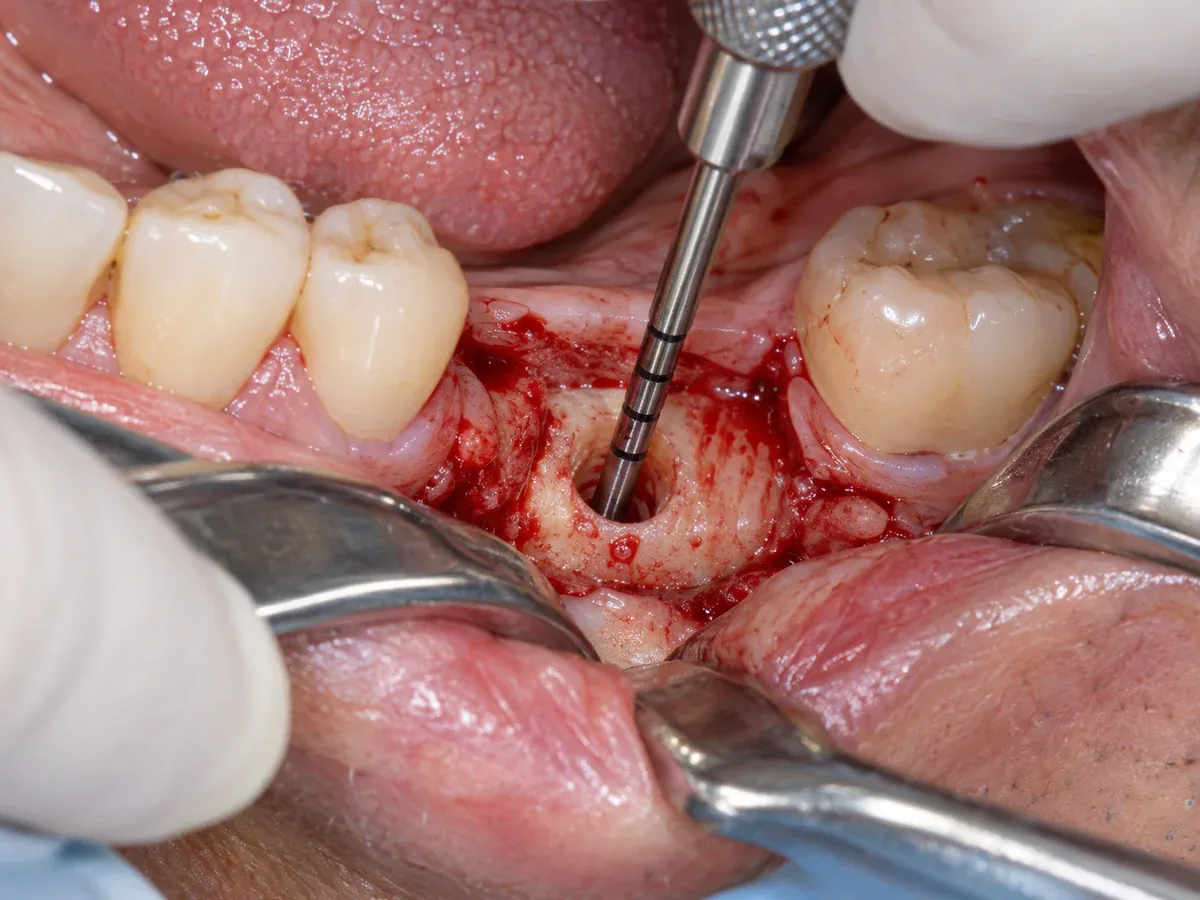
How is the nerve protected during lower molar implant surgery?
We check with a depth-measuring instrument as we go. The bone is never drilled to full depth in one go.
- Drill a little deeper.
- Measure the depth each time.
- Take an X-ray on the spot if needed.
- Stop at the depth set on the CT.
Can't you feel it under anesthesia?
That is the hard part. With no sensation, you cannot tell us.
So we rely on numbers, not feeling, and never pass the CT depth. Sometimes a stopper is attached to the drill.
Even so, some people feel a tingling as the instrument gets close. If so, raise your hand, and we stop and measure again.
Is it all right to raise my hand during surgery?
Please do, and we tell you this in advance. We stop at once for any pain or odd feeling.
If you hold it in, we have no way of knowing.
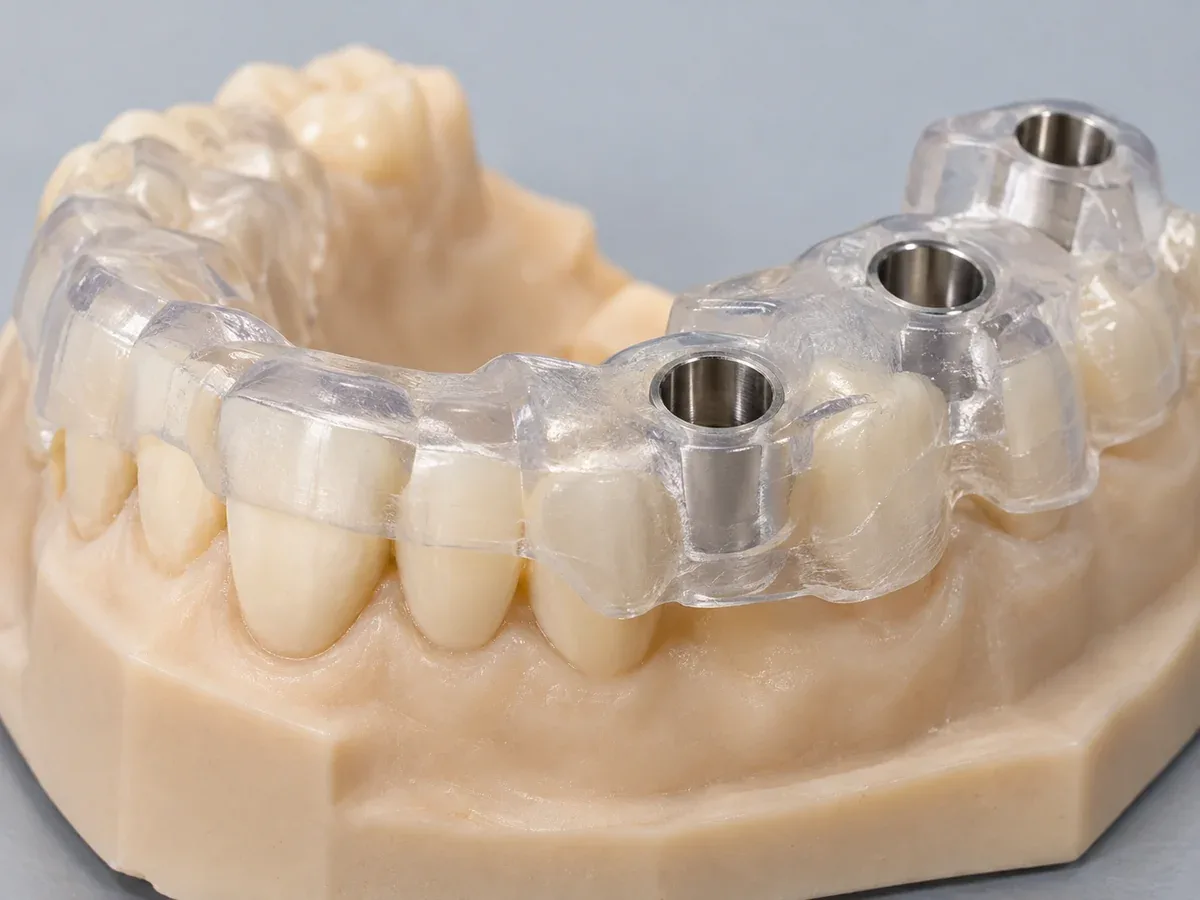
Does a surgical guide make it safer?
It helps. A pre-made guide is fitted before drilling, so the implant goes in at the planned position and depth.
It is especially useful near the nerve, though not every case needs one.
How long does surgery take?
For one implant, not long. Near the nerve, though, we work slowly.
Not rushing is the biggest safety measure. We take that time even if it runs a little longer.
Several implants at once mean fewer visits but more swelling, so sites near the nerve may be split.
Is it checked right after surgery?
An X-ray shows the depth of the lower molar implant and the remaining distance to the canal, compared with the plan.
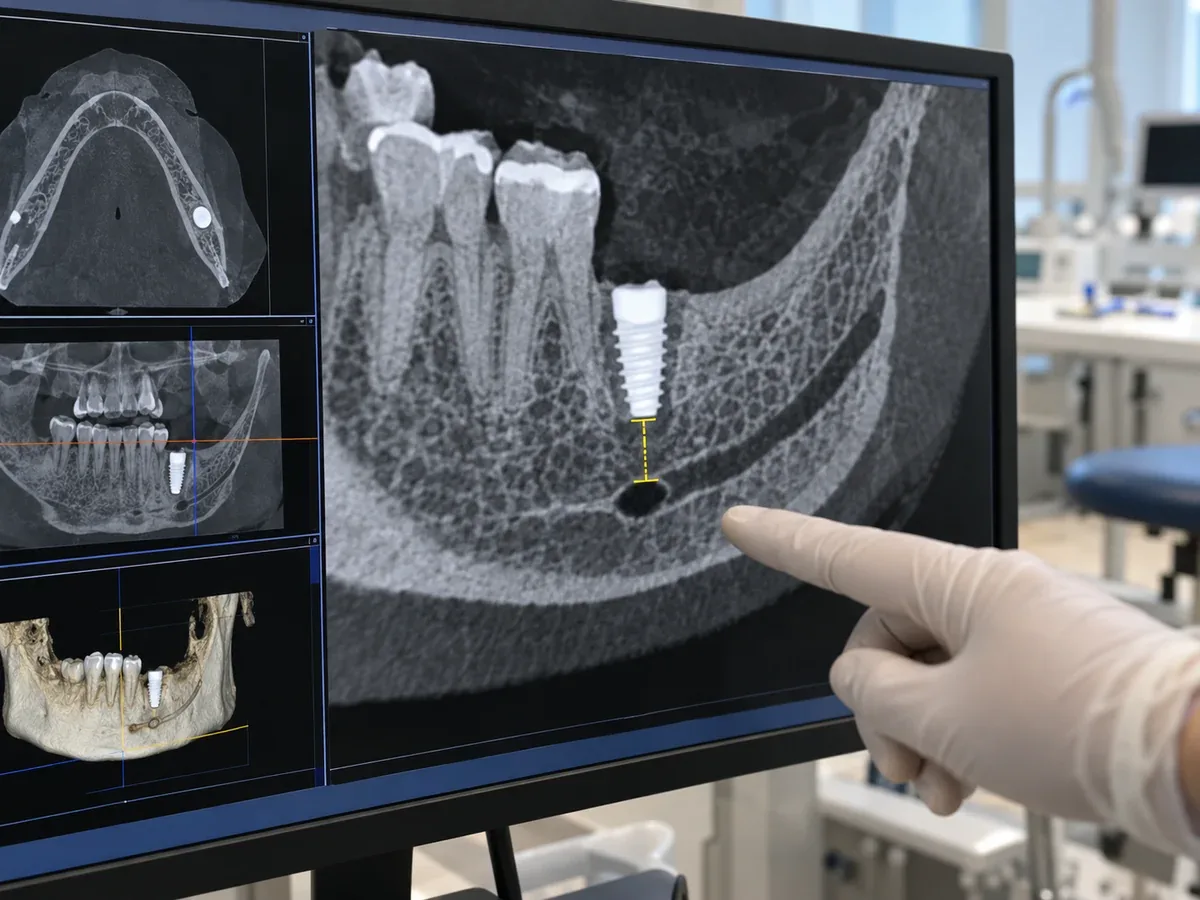
That number goes into your records, which helps any dentist you see later. We give you the X-ray and CT on request.
We also note the brand, length and width, since matching parts are needed for later repairs.
What if the lip feels numb after a lower molar implant?
We do not assume nerve damage straight away. The anesthetic may not have worn off, or swelling may be pressing.
In those cases it comes back within a day or two. If it is unchanged after three days, we take a look.
| Common cause | How it feels | Usual recovery |
|---|---|---|
| Anesthesia | Like a normal anesthetic | A few hours |
| Swelling pressing | Numb | A few days |
| Slight pressure on the nerve | Pins and needles | Weeks to months |
| Direct contact | Almost no feeling | Separate treatment considered |
The first two rows cover most cases.
What is done then?
We check the position on an X-ray first. If it looks like pressure, the implant is backed out slightly or swapped for a shorter one.
The sooner it is addressed, the better the chance of recovery. So tell us right away if anything feels odd.
Does it happen often?
It is rare with a lower molar implant, because we measure first. But it is not zero, so we never skip CT planning.
Are there other symptoms besides numbness?
Some feel tingling or crawling in the lower lip, drool, or bite a dull lip.
Whatever the feeling, tell us if it is different from usual.
What should I watch for at home?
- Does the lower lip feel normal?
- Does numbness last more than three days?
- Does one side alone feel different?
- Is the swelling going down?
- Is the pain easing?
The third item is the clearest signal.
| Condition | When to come in |
|---|---|
| Lip numb for more than three days | Right away |
| One side alone feels different | Right away |
| Swelling not going down | Within a day |
| Numb the day after surgery | You can watch it |
| Check-up day | As booked |
How does recovery go after a lower molar implant?
After a lower molar implant, we usually wait before fitting the tooth. Leaving the implant undisturbed while the bone bonds is safer.
You get a temporary to use meanwhile. Near the nerve, we wait with extra care.
Can I chew on that side while waiting?
For the first few weeks after a lower molar implant, chew on the other side. Force during healing can loosen the implant.
We decide when it is fine from an X-ray.
Does the lower jaw take longer than the upper?
Lower jawbone is denser, so a lower molar implant tends to need a shorter wait. If bone was added, it takes longer.
We check bonding on X-rays rather than going by the calendar.
How often are check-ups?
We see you the day after surgery, then at one week to remove stitches. After that, roughly monthly while it heals, or sooner if sensation feels odd.
Swelling, ice and sleep
Swelling peaks the day after surgery and the day after that. It starts to go down on day three and is usually hard to notice by a week.
Tell us if it grows after day three. Wrap ice in a towel against the cheek, 10 minutes on and 10 off on the first day.
From the next day, warmth is better. For the first two or three days, sleep on the other side with a slightly higher pillow.
Surgery is inside the mouth, so no scar shows, and bruising settles in days.
How should I prepare for surgery?
- Bring a list of the medicines you take.
- Get enough sleep the night before.
- Eat at least a light meal beforehand.
- Do not plan to drive right after surgery.
Many forget the last one. The date is set once the CT plan is ready.
What does the dentist check?
| Item | How | Why |
|---|---|---|
| Distance to the canal | CT | Sets the length |
| Bone thickness | CT cross-section | Sets the width |
| Bone density | Feel while drilling | Waiting time |
| Opposing tooth | Bite check | Chewing force |
| Gum condition | Visual, probe | Inflammation |
A lower molar implant can avoid the nerve when it is measured first. CT sets the length in numbers, and during surgery the depth is checked each time.
When choosing a dentist in Seomyeon, Busan for a lower molar implant, ask about these three steps.
Frequently asked questions
Is a lower molar implant risky?
Measuring first lets the nerve be avoided. Going ahead without measuring is the risk.
Is a short implant weak?
Contact area matters more than length, and width can make up for it.
My lip is numb after surgery. Will it come back?
Often it is anesthesia or swelling. If it lasts beyond three days, come in, because early review gives a better chance.
Can I get a lower molar implant in English in Busan?
Yes, we offer 1:1 English interpretation from the first consultation through the end of treatment. The clinic is near Seomyeon Station Exit 2 (5-min walk), opposite Lotte Hotel. Call 010-8555-2854 (+82-10-8555-2854 from abroad), or send your X-rays first if you live farther away.
The nerve can be avoided when the distance is measured first.
CT before surgery, depth checks during surgery,
and an X-ray right after.
If you are considering a lower molar implant in Busan, Reset Dental Clinic offers 1:1 English interpretation from your first consultation through the end of treatment. Call 010-8555-2854 to book a consultation.
References
- KDCA National Health Information Portal, "Dental Implants" — a titanium root is placed in the bone and an artificial tooth is connected on top
- KDCA National Health Information Portal, "Gum Disease (Periodontal Disease)" — gum inflammation, bone loss and the need for regular check-ups
- KDCA National Health Information Portal, "Systemic Disease and Periodontal Treatment" — cases needing care in procedures that expose bone
- National Health Insurance Service, "Dental Implant Coverage Guide" — eligibility and number of implants covered
Written by Reset Dental Clinic Support Team
Medical review Dr. Na In-chae, Head Dentist
Last updated: October 21, 2026
This column is for general information and does not replace diagnosis or treatment for individual patients. If you have symptoms, please see a dentist.