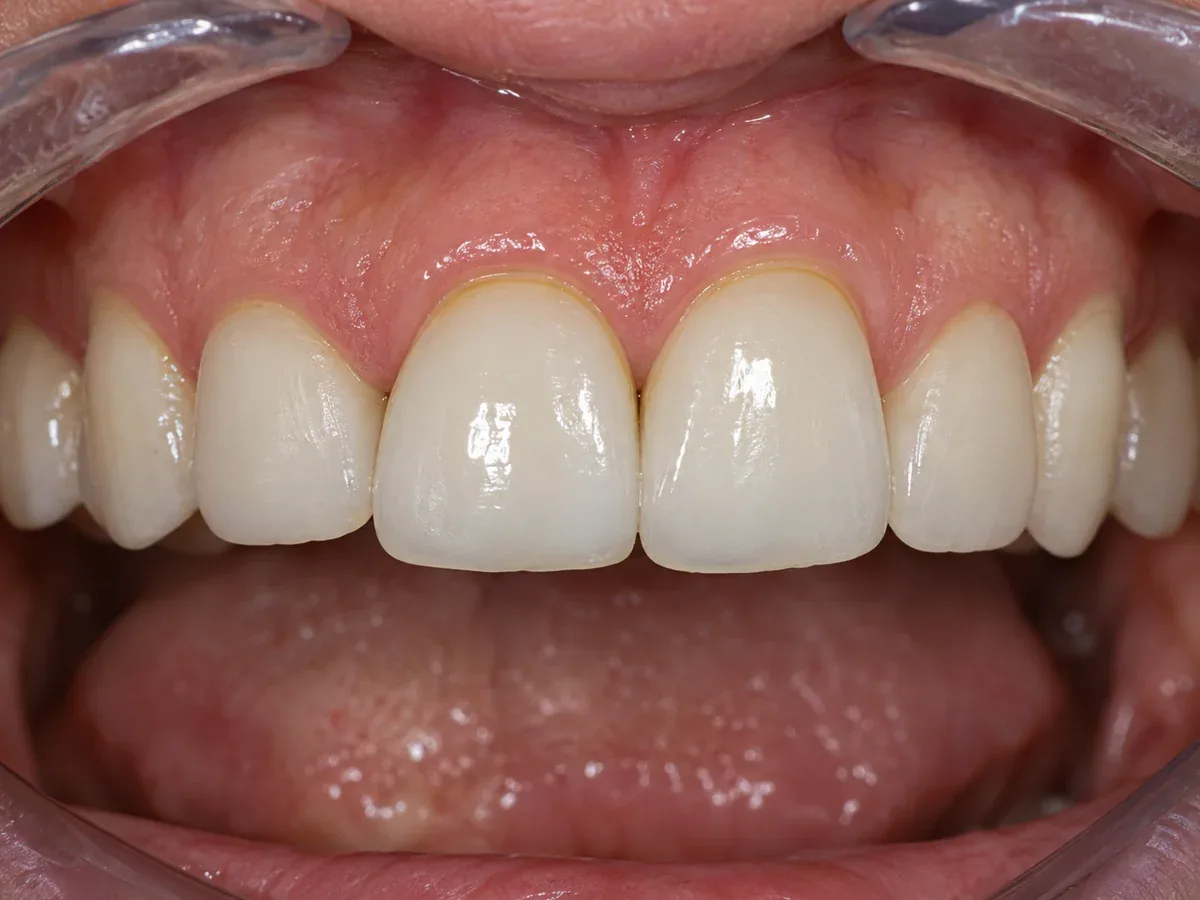
- A yellow line along the edge of a veneer is usually a stain, not decay.
- The colour sits in the bonding layer, not in the ceramic.
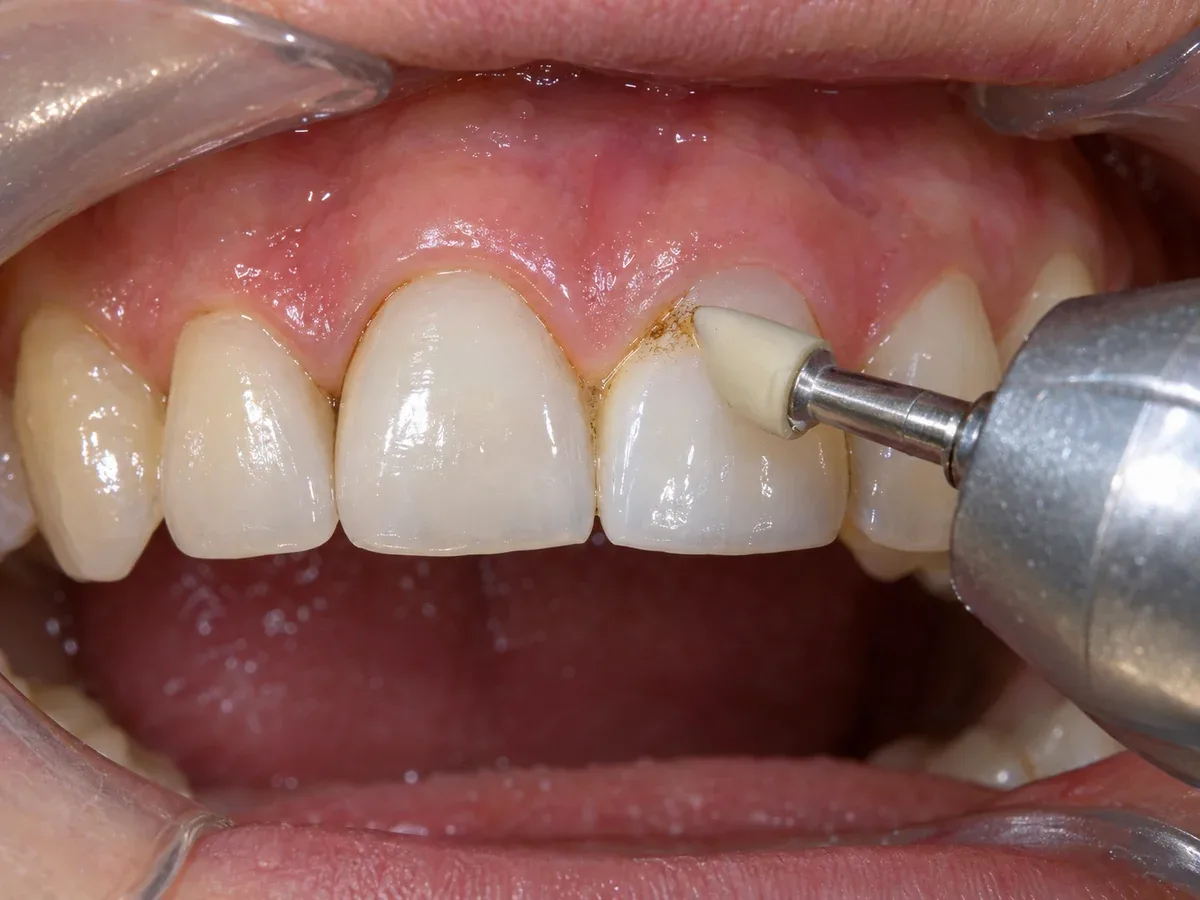
- A shallow stain disappears with cleaning and polishing.
- If an instrument sinks in when scratched, we treat it as decay.
"The edge of my veneer has turned yellow." We hear this often in Seomyeon, Busan, and at Reset Dental Clinic we first check whether it is a stain or decay. For patients living in or visiting Korea, we offer 1:1 English interpretation from the first consultation through the end of treatment.
This change commonly appears after a few years. Most of the time it is nothing to worry about, and it can often be reversed simply.
Why does the edge of a veneer turn yellow?
Where does the colour come from?
Colour soaks into the bonding layer. Between the veneer and the tooth sits a very thin layer of adhesive.
That layer takes up colour more easily than ceramic. Coffee and black tea build up along that line.
Does the ceramic itself change colour?
Hardly at all. Ceramic is smooth like glass and has no pores, so pigment has nowhere to sink in.
What changes is the line around it.
How many years does it take?
It usually becomes noticeable in 3 to 5 years. It comes sooner with a lot of coffee and much sooner with smoking.
The difference between people is large.
Which veneers stain first?
The two central front teeth show it first, because they are the most visible. People notice the teeth further back later, so we check those too.
Which foods and habits make the staining worse?
Which foods leave colour?
Dark drinks and foods with acid leave the most.

- Coffee, black tea and green tea
- Red wine
- Curry and dark sauces
- Kimchi juice and red pepper powder
- Cola and dark soft drinks
Rinsing with water afterwards reduces it quite a lot.
Should I brush right after drinking?
Not after acidic drinks. Brushing while the surface is softened by acid wears it more.
Rinse with water and brush 30 minutes later, once saliva has neutralised the acid.
How much does smoking matter?
A great deal. The edge yellows faster and the colour soaks in deeper, and gum healing slows down too.
After veneers, we recommend cutting down.
Why does a dry mouth stain more?
Saliva does much of the washing. With less saliva, pigment lingers longer.
This affects people on some medicines and mouth breathers. Sipping water often already makes a difference.
Who stains more easily?
We check more often if any of these apply.
- Several cups of coffee a day
- Smoking
- A mouth that often feels dry
- Not using floss
- Using a strongly abrasive toothpaste
If they do, we shorten the check-up interval.
Do I have to give up coffee?
No. Rinsing with water afterwards reduces staining quite a lot.
Sipping slowly all day is worse than drinking quickly. A straw helps with cold drinks, as they touch the front teeth less.
What about the first days after bonding?
The first two or three days matter most, as the bonding layer fully settles. Dark drinks then stain at once, and two days of care make a big difference later.
- Coffee and black tea
- Red wine
- Curry and dark sauces
- Kimchi and red pepper powder
- Smoking
Water and pale foods are fine during that time.
Can the stain be polished away?
Does cleaning really remove it?
If it is shallow, yes. We lift the surface pigment and polish again.
It takes a few minutes and needs no anaesthesia. We do it during a regular check-up.
Can I remove it at home?
A toothbrush will not remove it, because the colour has soaked into the bonding layer. Scrubbing hard wears off the gloss, and lost gloss stains faster next time.
Will whitening toothpaste or whitening help?
We do not recommend whitening toothpaste. Its strong abrasive wears down the ceramic gloss, so the edge gets rougher and stains more.
Whitening does not lighten the bonding layer. The surrounding teeth get lighter instead, which makes the edge stand out more.
Use a gentle toothpaste and have the edge cleaned instead.
Does scaling remove it?
Surface stain comes off, but colour soaked into the edge needs separate removal. After scaling we look at the edge again and polish it if needed.
How often should it be cleaned?
Once every year or two is usually enough, or once a year for heavy coffee drinkers. We do it with your scaling, so no extra visit is needed.
Does cleaning make the veneer thinner?
Hardly. We smooth just the very surface, not enough to reduce thickness, even over several sessions.
What if the stain returns despite a smooth edge?
The bonding layer itself has taken up colour. Removing a little of the surface clears it, and polishing hides the line again.
This differs from decay, so there is no need to worry.
Do you check veneers done elsewhere?
Yes. We first tell stain from decay and clean stain on the spot.
For decay, we look at the depth before advising, and many cases end without removing the veneer. With old veneers, we check for an opened edge first, since polishing over a gap stains again.
Is it a stain or decay?
What happens if the stain is left?
The colour deepens and spreads. A roughened spot collects more plaque and can turn into decay.
So it is better to remove it when you see it.
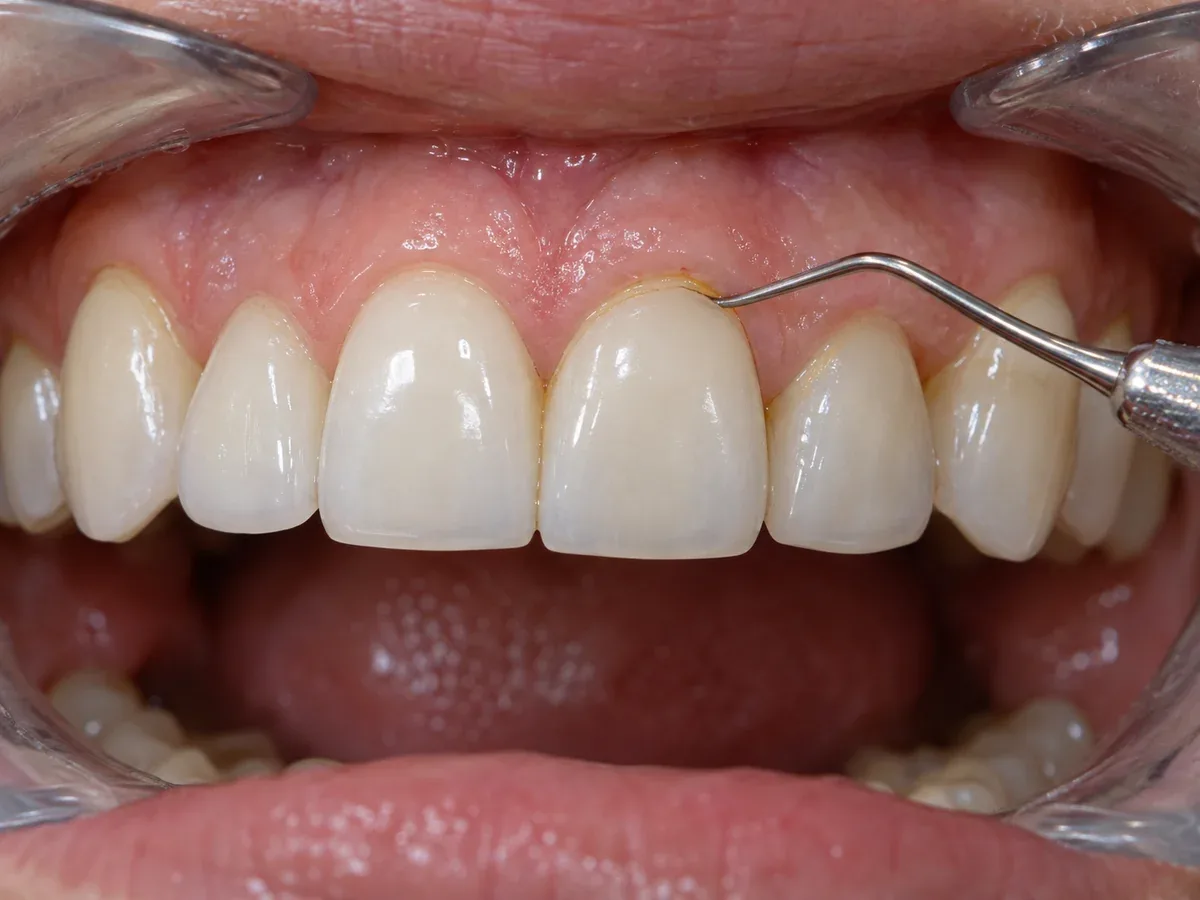
How do you tell them apart?
By colour and hardness. A stain sits on the surface over a hard base, while decay is soft and lets the instrument sink in.
If it is unclear, we take a photo and compare six months later.
| What you see | Common meaning | What we do |
|---|---|---|
| Thin yellow band | Stained bonding layer | Clean and polish |
| Spreading brown | Decay at the edge | Treat, then remake |
| Grey shadow | Metal underneath | Switch to metal-free |
| Tooth-coloured line | Receded gum | Refit the edge |
| Black dot | Stain or gap | Check, then decide |
We never judge by colour alone.
Does decay show on X-rays?
Not clearly, because the ceramic hides it. Between teeth, X-rays help, but the front edge has to be checked directly.
That is why regular check-ups matter more.
Does decay always mean a new veneer?
It depends on depth. Very shallow decay is trimmed and filled, while decay spread along the edge means removing and remaking.
We tell you once the veneer is off.
Can a gap at the edge look like a stain?
Yes. Colour gets into an opened gap, so the line looks sharper, and floss catches there.
An opened edge is smoothed or remade.
Why does the bonding layer open up?
It wears very slowly over the years. Acid and temperature changes dissolve it bit by bit, and tiny flexing when biting adds to it.
So after five years we examine that line more closely.
Is resin different from a veneer?
Quite different. Resin absorbs colour throughout, while a ceramic veneer stains just at the edge, so it keeps its colour longer.
Resin front teeth improve for a while with smoothing and polishing. After some years they stain again and are ground out and refilled.
How bad is the staining?
We grade it like this.
| Level | What it looks like | What we do |
|---|---|---|
| 1 | Thin line seen up close | Leave and watch |
| 2 | Clear yellow band in a mirror | Clean and polish |
| 3 | Brown visible from a distance | Clean, then reassess |
| 4 | Instrument sinks in | Treat, then remake |
Cleaning at level 2 is simplest.
How can you keep a veneer edge from staining?
What happens when the veneer is made?
Much is decided at that stage.
- Shape the edge thin and smooth
- Keep the bonding layer from being thick
- Remove leftover cement thoroughly
- Polish the edge after bonding
- Keep the edge above the gum where possible
These five steps greatly reduce later staining.
Wouldn't an edge under the gum be hidden?
At first, yes. But toothbrush and floss cannot reach it, plaque builds up and pigment settles on top.
When the gum recedes, it shows anyway. So we place the edge above the gum where possible.
What if the gum recedes and the edge shows?
More of the line is exposed. If it is hard, we simply clean and polish.
If it really bothers you, we remake it, but it is not urgent.
Why does one veneer stain within a year?
The edge may have been rough, the polish incomplete or cement left behind. When one tooth alone stains, its conditions differed, and floss may catch there.
We clean that spot and polish it again.
Do Minish veneers stain too?
The principle is the same, because there is a bonding layer. With almost no tooth reduction the layer is thin, so there is less room to stain.
The edge also stays on the surface, so it is easier to clean.
What daily habits help?
These five are enough.
- Drink dark drinks quickly and rinse with water
- Avoid sipping all day
- Avoid strongly abrasive toothpaste
- Floss every day
- Have the edge cleaned every year or two
Nothing special is needed. Consistency wins.
How can I check the edge myself?
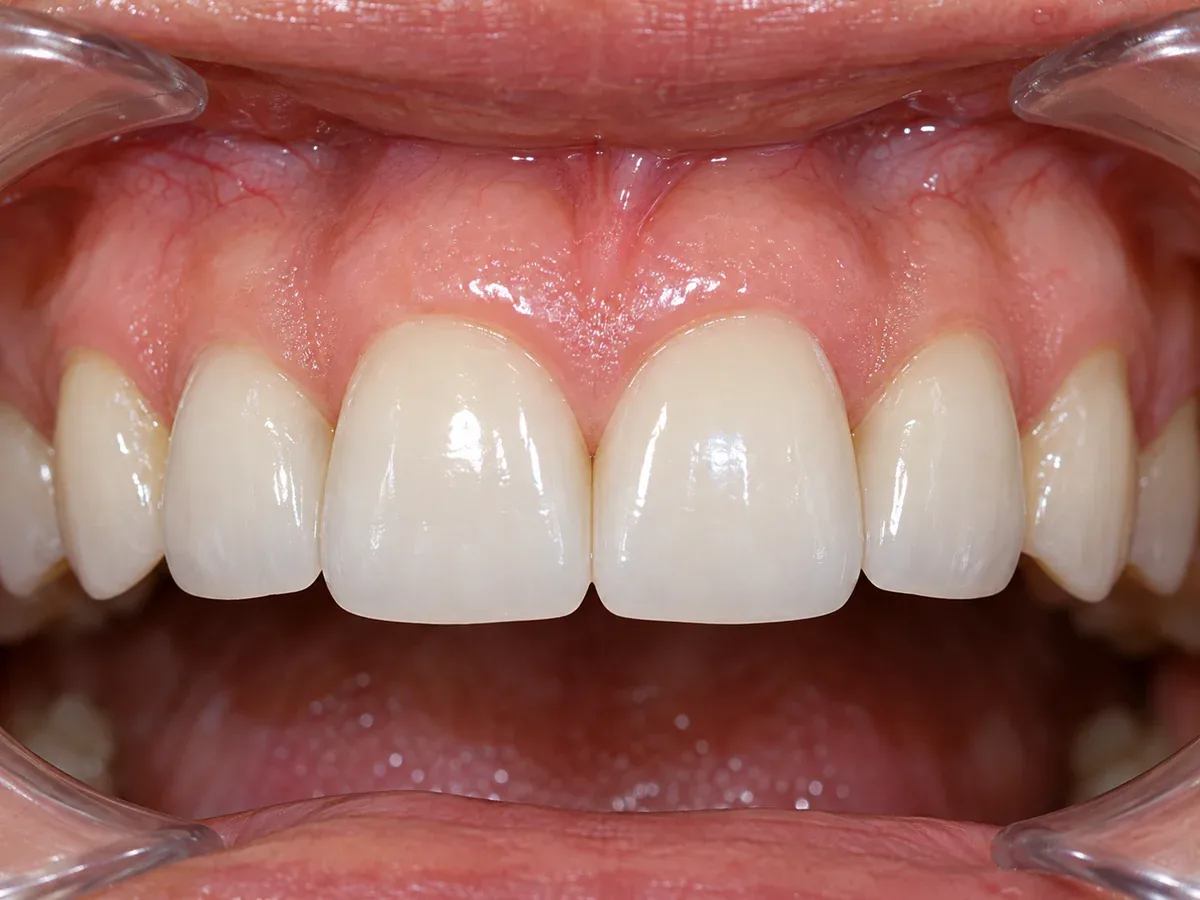
Run your tongue tip up and down along the gum-side edge. Smooth means fine, and a ledge means we should look.
A photo at the same angle each year also shows slow colour changes clearly. We record them the same way in the clinic.
When does a veneer need to be remade?
In these cases, we remake it.
- Decay has spread along the edge
- The bonding layer has opened widely
- Stain returns soon after cleaning
- The ceramic has cracked
Before that, cleaning and polishing come first. Staining matters for lifespan, because a rough, stained spot collects plaque and can decay.
When should you see a dentist in Busan?
What does the dentist check?
We do not look at colour alone.
| Check | Method | Why |
|---|---|---|
| Hardness of the base | Light probing | Stain or decay |
| Gap at the edge | Probe and floss | Whether it has opened |
| Surface gloss | Light reflection | Risk of restaining |
| Between teeth | X-ray | Hidden decay |
| Gum condition | Bleeding check | Local inflammation |
Checking all five together keeps anything from being missed.
What should I ask at the consultation?
Three questions are enough.
- Is this a stain or decay?
- Will cleaning remove it?
- What should I change so it does not stain again?
If there is no answer to the third, it is fine to think it over.
When should I come in?
Use this as a guide.
| Condition | When to come in |
|---|---|
| Sensitive to cold water | Within a week |
| Floss catches | Within a month |
| Brown spreading | Within a month |
| Thin yellow band | At your regular check-up |
| No change | At your regular check-up |
If you are passing by, feel free to drop in then.
When are the follow-ups after bonding?
On the day, we pass floss through, smooth any catching spot and remove leftover cement. This step reduces later staining more than anything.
We check again after one week and one month, then every six months. When choosing a clinic, ask about aftercare too.
A yellow edge on a veneer is usually a stain.
Cleaning and polishing hide it again,
and a quick probe tells stain from decay in minutes.
If the edge of your veneer has changed colour in Busan, Reset Dental Clinic offers 1:1 English interpretation from your first consultation through the end of treatment. Call 010-8555-2854 to book a visit.
Frequently asked questions
Does a yellow veneer edge mean decay?
Usually it is a stain. If it feels hard when scratched, it is a stain.
Can I remove it at home or with whitening?
No. Scrubbing hard wears off the gloss, and whitening does not lighten the bonding layer.
How long does cleaning take, and how often?
A few minutes, with no anaesthesia. Once every year or two is enough.
Can I get this treatment in English in Busan?
Yes, we offer 1:1 English interpretation from the first consultation to the end of treatment, near Seomyeon Station Exit 2, opposite Lotte Hotel Busan. If you live outside Busan, you can send photos first. Call 010-8555-2854, or +82-10-8555-2854 from abroad.
References
- KDCA National Health Information Portal, "Laminate Veneer Treatment" — advice to avoid staining drinks for 2–3 days after bonding, and how veneers are made and bonded
- KDCA National Health Information Portal, "Tooth Decay" — treatment stages by how far decay has progressed, and the properties of restorative materials
- KDCA National Health Information Portal, "Gum Disease (Periodontal Disease)" — the need for plaque control and regular tartar removal
- Journal of the Korean Dental Association, Vol. 49 No. 2, "Tradition and Prospects of Minimally Invasive Restoration" — an approach that removes as little tooth as possible
Written by Reset Dental Clinic Support Team
Medical review Dr. Kim Hyun-joo, Head Dentist
Last updated: October 21, 2026
This column is for general information and does not replace diagnosis or treatment for individual patients. If you have symptoms, please see a dentist.