- Toothpaste leaves scratches on a denture.
- Use a denture cleanser or a neutral detergent.
- Hot water makes the shape warp.
- Take it out at night so the gums can rest.
Many people tell us they have always cleaned their denture with toothpaste, which looks obvious yet shortens its life. At Reset Dental Clinic in Seomyeon, Busan, we show how to brush it and where to keep it. Patients get 1:1 English interpretation from the first consultation through the end of treatment.
The pink part of a denture is made of a resin material.
The tooth part is usually made of something from the same family. Both are far softer than natural enamel.
So anything rough will scratch the surface easily. Scratches leave grooves too fine for the eye to see.
Bacteria and fungus settle inside those grooves. Once they are in, brushing does not lift them out well.
Odour and reddened gums are the result. So the way you clean it is half of the care.
Why should you not clean a denture with toothpaste?
Toothpaste contains an abrasive that lifts stain away.
On natural enamel that abrasive causes no trouble. Denture material is a great deal softer.
So the same abrasive scratches the surface instead. After a few years the shiny finish turns cloudy.

That cloudy finish is where the tiny grooves have gathered. Once a bacterial film sits in them, brushing cannot clear it all.
This is the most common source of odour.
| Product | Use it? | Why |
|---|---|---|
| Toothpaste | No | The abrasive scratches the surface |
| Denture cleanser | Yes | Made for this material |
| Neutral dish detergent | Yes | No abrasive, lifts oily film |
| Baking soda | No | The grains scratch the surface |
| Bleach | No | Colour fades and metal is damaged |
| Hot water | No | The shape warps |
Two items in that table are safe to use. The rest look clean at first and damage the material.
Bleach in particular damages the metal clasps. White marks appear, or a clasp weakens.
If odour is the worry, a cleanser is the better choice. Bring the product you have been using and we look at the surface first.
Whichever you use, rinse the plate well before putting it back in.
How should you clean a denture properly?
Take it out and rinse the food debris off under running water.
Then scrub every corner with a denture brush. Its bristles are stiffer and its shape differs from a normal toothbrush.
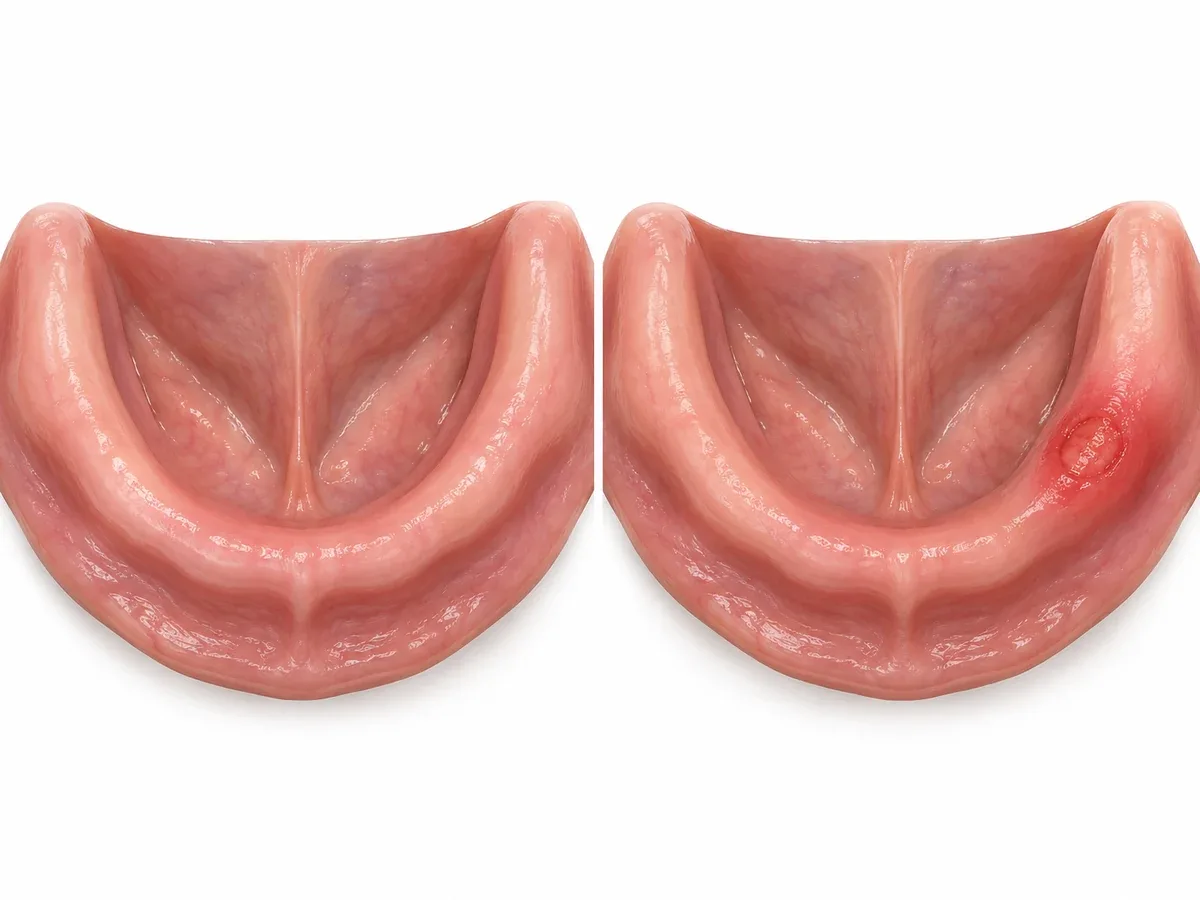
Clean the inner pink surface with particular care. That surface meets the gum, so it matters most.
Do not skip the spaces between the teeth or the area around the clasps. Use a little detergent, then rinse with lukewarm water.
Twice a day is the aim, with a plain water rinse after meals.
- Take it out and rinse under running water first
- Start with the inner surface, using a denture brush
- Clean between the teeth and around the clasps too
- Use a neutral detergent or a denture cleanser
- Rinse thoroughly with lukewarm water
Do the brushing over a basin that you have filled with water.
A dropped denture breaks, and that is the most common accident we see.
Please do not glue a broken plate back together. Household glue is not meant for use inside the mouth.
If it has broken, bring every piece along. We fit them back together and repair it.
Should you take the denture out at night?
Taking it out is the better habit, because the gums need to rest.
Blood has to flow back into tissue that has been pressed all day. Sleeping in it keeps that tissue under pressure.
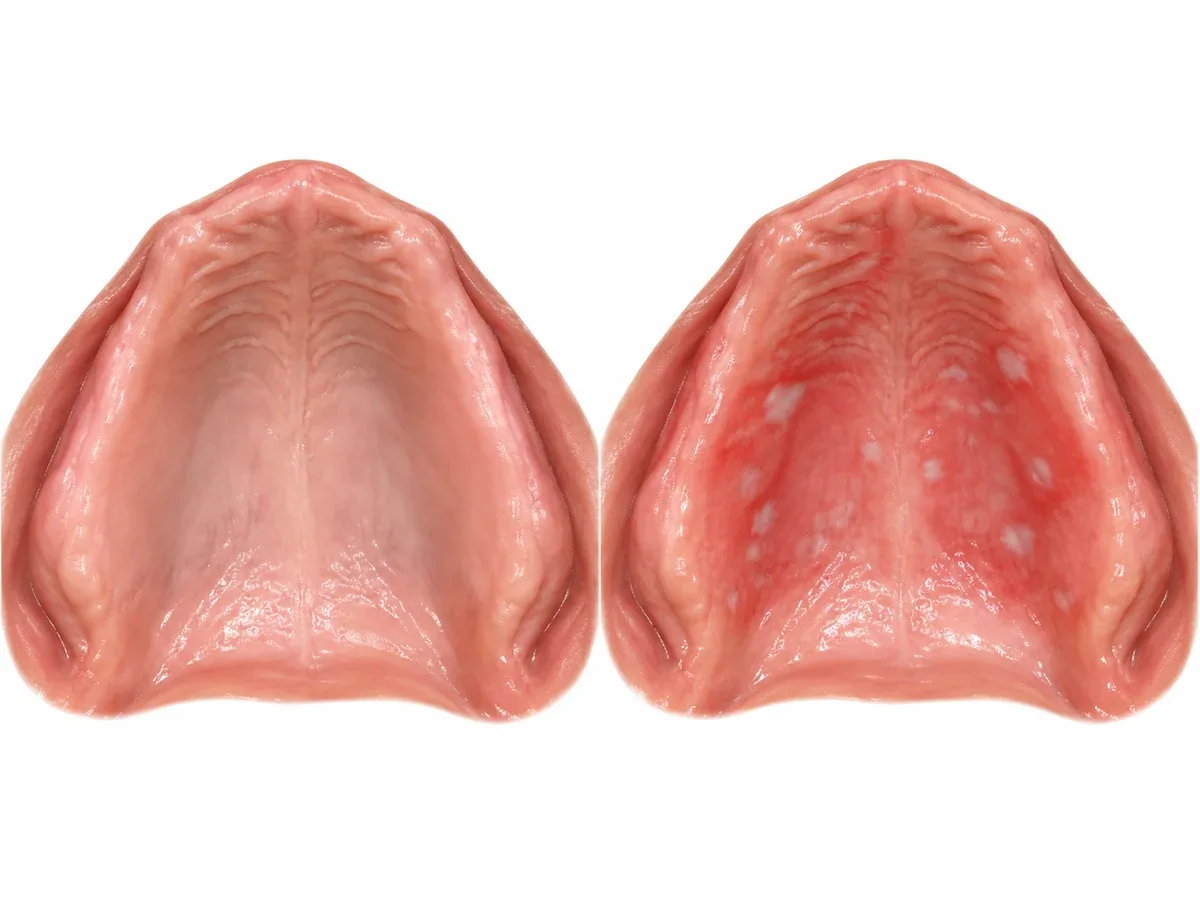
The gums then redden and fungus finds it easy to settle. Some people see a reddened palate or white patches.
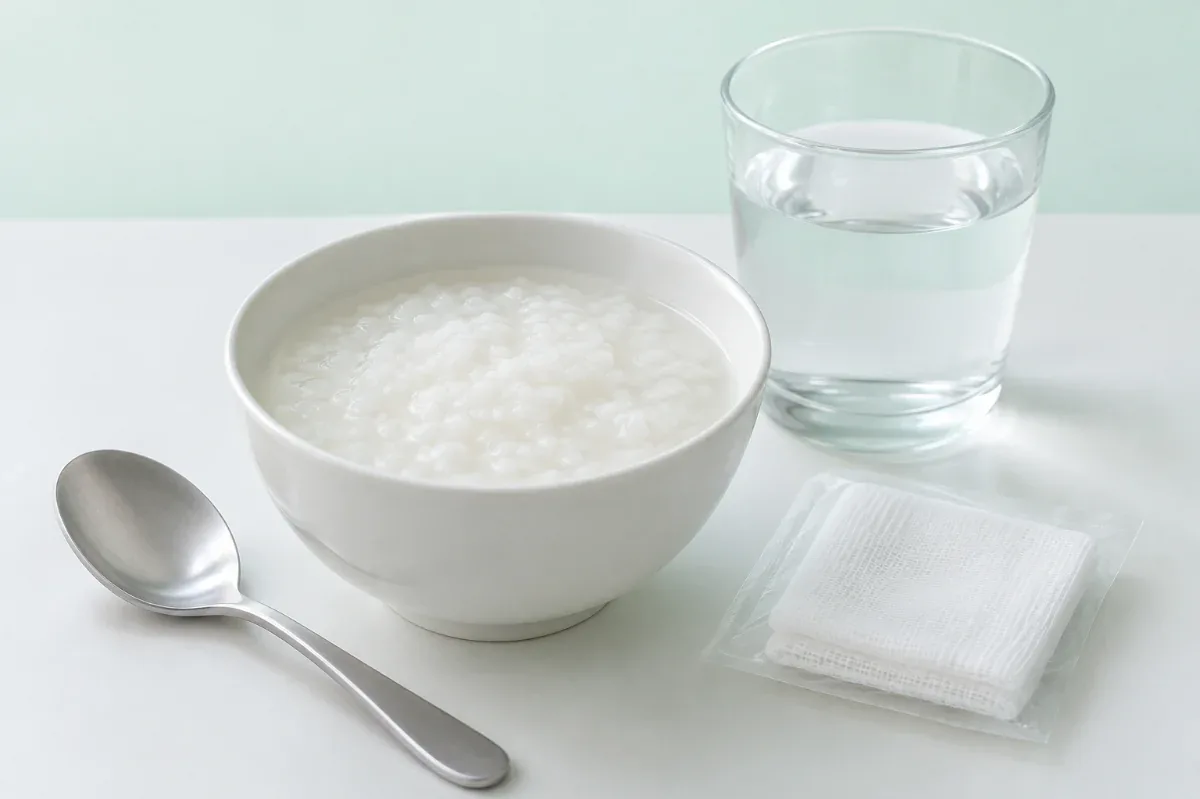
Those are the classic signs. Taking the plate out and soaking it in water is all that is needed.
- Take it out at night so the gums can rest
- Soak it in water or in a cleansing solution
- Left dry, the shape warps
- Always rinse it after soaking, before wearing it
- Store it in a container with a lid
Left dry, the resin dries out and the shape shifts slightly.
If leaving it out overnight makes you uneasy, take it out for a few hours during the day instead. Six or seven hours of rest a day is the target.
| Step | What to do | Why |
|---|---|---|
| Before removing | Rinse under running water | Clears the debris first |
| Brushing | Denture brush, inner surface included | Lifts the bacterial film |
| Soaking | In water or cleansing solution | Drying out warps the shape |
| Morning | Rinse well, then wear it | Residue stings the mouth |
| Gums | Sweep with a soft brush | Gets the blood flowing |
Of everything here, the habit of taking the denture out at night makes the largest difference.
How do you care for the remaining teeth and gums?
With a partial denture, the remaining teeth matter even more.
Those teeth are what hold the plate in place. Teeth that carry a clasp decay particularly easily.
Food lodges in the space between clasp and tooth. Please clean that spot separately with an interdental brush.
Even with a full denture, the gums still need cleaning. Sweep the gums and palate with a soft brush or a piece of gauze.
- Interdental brush for any tooth carrying a clasp
- Fluoride toothpaste on the remaining teeth
- Sweep the gums and palate gently
- Give the tongue a light clean
- Sip water often if the mouth feels dry
Many people find the mouth gets drier once they wear a denture. A dry mouth means more odour and more fungus.
Sipping water through the day helps. Where medication is the cause of the dryness, a saliva substitute is sometimes used.
If even one natural tooth is left, that tooth is the most important thing in the mouth. Losing it means redesigning the whole appliance.
What do white patches or red marks on the palate mean?
Please do not leave such a spot alone.
It is common for the palate to redden in the exact outline of the plate. Usually that means fungus has settled there.

It often does not hurt, so people live with it unaware.
Diabetes or a dry mouth makes it more likely. It also appears after a long course of antibiotics.
- The palate is red in the outline of the denture
- A white film forms and scrapes away
- The corners of the mouth crack
- It appears even without pain
- It is more common in people who sleep in a denture
Treatment is not difficult, using a medicine you apply or hold in the mouth.
At the same time we disinfect the denture itself. Carry on wearing it untreated and the fungus simply transfers back.
Building the habit of removing it at night greatly reduces how often this returns. Cracked corners of the mouth often share the same cause.
Around two weeks of treatment usually settles it.
What if the denture feels loose or one spot hurts?
A plate that fitted closely at first will loosen over the years.
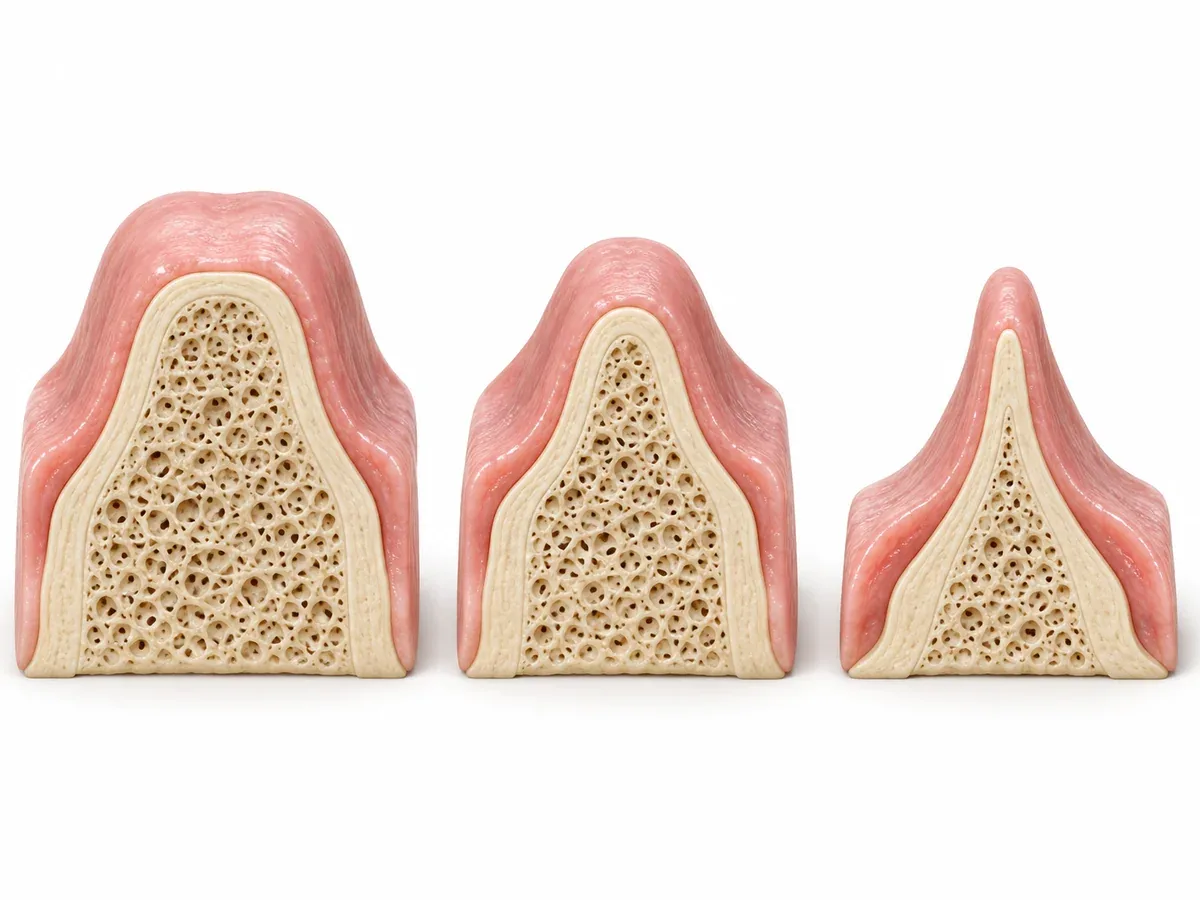
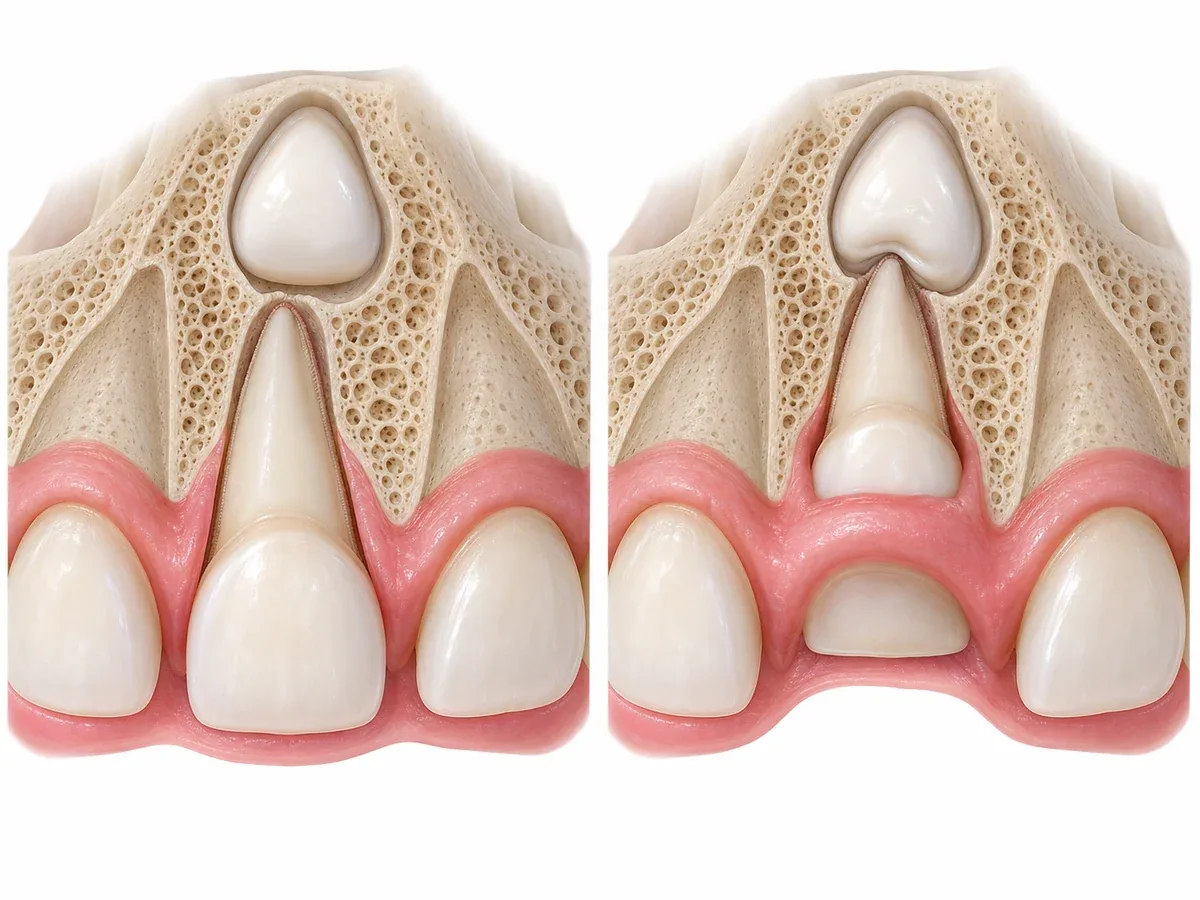
What changed is not the denture but the ridge of bone underneath. Where teeth are missing, the bone beneath keeps shrinking.
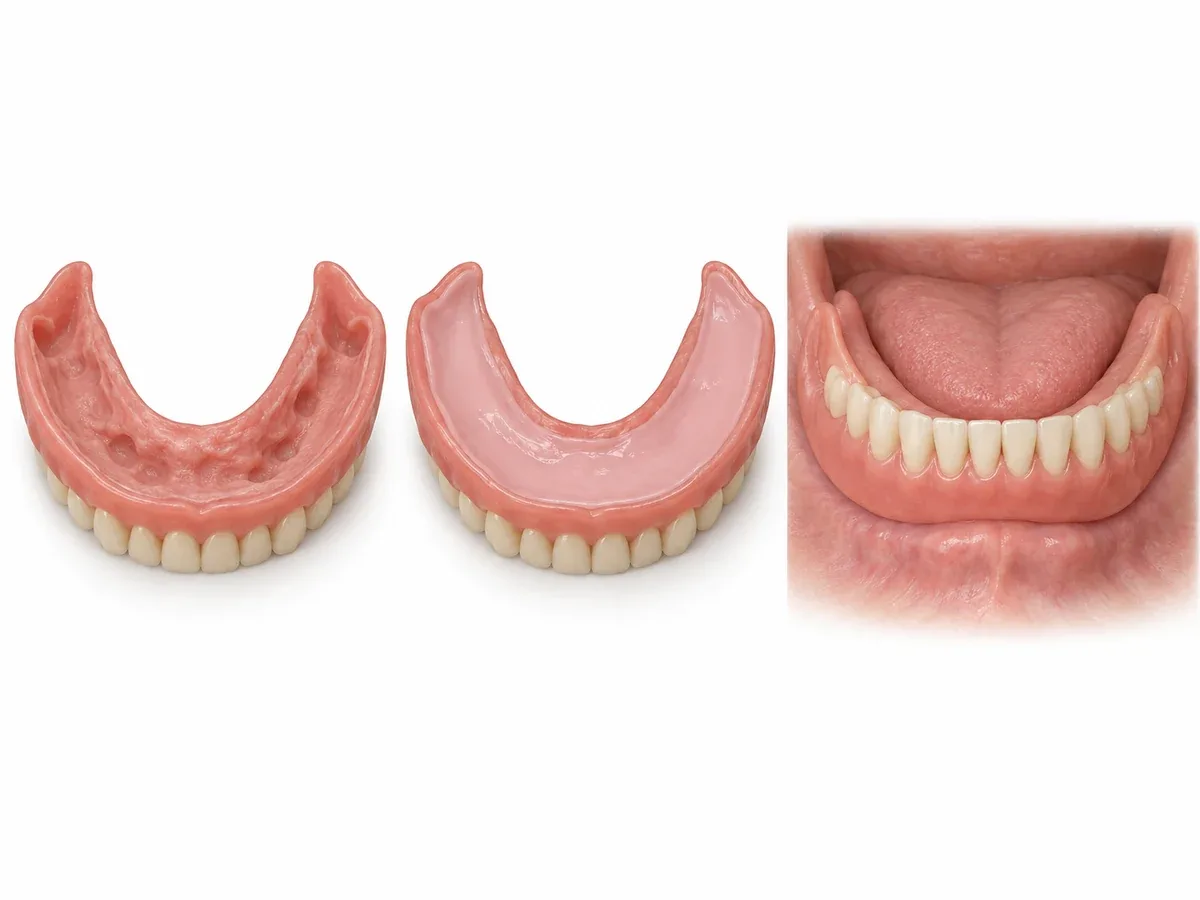
A gap opens between the inner surface and the gum. There is a procedure that fills that gap and refits the plate.
Because it renews the inner surface alone, the whole denture is not remade. Most people have it done once every few years.
- The ridge of bone has shrunk and left a gap
- The inner surface is refilled and refitted
- The whole denture need not be remade
- Adhesive is a stopgap
- Where the ridge has shrunk a lot, we remake it
Many people get by on adhesive. It is fine in a pinch, but not something to rely on for long.
Adhesive masks the pressure, so a sore spot goes unnoticed. The bone underneath can shrink faster in the meantime.
If it feels loose, it is worth having it looked at. The refit is often finished the same day, with an impression taken and the plate back a few hours later.
With a new denture, several spots may ache for the first few days. The gums are learning to carry the pressure.
If one spot alone hurts, though, that spot needs easing back. Bearing with it lets the area break down and spread.
Please come in wearing the plate, sore as it is. Taken out, the pressure mark fades and the spot is hard to find.
- Come in wearing it, even while it hurts
- One painful spot gets eased back
- Bearing with it makes the sore area larger
- A long edge is trimmed shorter
- Several short adjustments are normal
A new denture usually takes three or four visits. We explain that sequence before we begin.
| Complaint | Usual cause | What we do |
|---|---|---|
| One spot hurts | Pressure at that spot | Ease that area back |
| Aches here and there | Still getting used to it | Wear it a few more days, then review |
| Lifts while speaking | The edge is long | Shorten the edge |
| Lifts while chewing | A gap at the inner surface | Refit the inner surface |
| Makes you gag | The back border is long | Reduce the border slightly |
Tell us which row matches and we find the spot to adjust quickly.
Eating, check-ups and denture care in Seomyeon, Busan
Start with soft food cut into small pieces.
Biting with the front teeth lifts the plate. Chewing on both back sides at once keeps it steadier.
Build up to tough meat and hard food gradually. Sticky food such as rice cake or taffy needs care for a long time.
Hot soup is harder to judge by temperature, because the palate is covered. Let it cool before you drink it.
- Cut food small and chew on both back sides
- Avoid biting with the front teeth
- Treat sticky food with lasting care
- Let hot soup cool first
- Small seeds lodge under the inner surface
A check-up once or twice a year is sensible, even without pain. We look at whether the ridge has shrunk and whether a gap has opened.
Where natural teeth remain, we review those at the same time. If a clasped tooth starts to loosen, the design has to change.
We also check the palate and gums for white patches. A surface that has gone rough gets polished smooth.
At the visit we first look at the denture while you are wearing it, checking the bite height and where it lifts.
Then we take it out to examine the inner surface and the edges, looking for scratches and cracks.
We check the palate and gums for red marks. For patients visiting Korea, we can work through all of this in one appointment.
- We check the bite while you wear it
- We take it out to inspect the inner surface and edges
- We look for marks on the gums and palate
- We review the remaining teeth and clasps
- We have you try the cleaning method yourself
We do not describe the cleaning method and leave it there, but have you try it with us. Changing the angle of the brush alone makes a real difference.
A denture is not finished when it is made, but adjusted as it is worn. Even someone getting on well needs something seen to every few years.
Toothpaste scratches a denture. A cleanser and a nightly soak do not.
Brush it over a filled basin, soak it overnight
and have the fit checked once or twice a year.
If your denture is uncomfortable while you are in Busan, Reset Dental Clinic offers 1:1 English interpretation from your first consultation through the end of treatment. Call 010-8555-2854 to book a visit.
Frequently asked questions
Is toothpaste really that bad for a denture?
The abrasive scratches the surface. Use a cleanser or a neutral detergent instead.
Can I disinfect it in hot water, and where do I keep it overnight?
Hot water warps the shape, so use lukewarm water. Overnight, keep it in water or cleansing solution in a container with a lid.
My palate is red but it does not hurt. Can I leave it?
It may be fungus, so please have it looked at even without pain. Taking the plate out at night is part of the treatment.
Can I have my denture seen to in English in Busan?
Yes. We offer 1:1 English interpretation from the first consultation through the end of treatment, near Seomyeon Station Exit 2, opposite Lotte Hotel Busan. Call 010-8555-2854, or +82-10-8555-2854 from abroad.
References
- KDCA National Health Information Portal, "Stomatitis" — fungal infection arising with denture wear
- KDCA National Health Information Portal, "Halitosis" — causes of bad breath inside the mouth
- KDCA National Health Information Portal, "Swallowing Disorders in Older Adults" — what follows when a denture does not fit
- KDCA National Health Information Portal, "Dry Mouth" — managing a mouth that feels dry
Written by Reset Dental Clinic Support Team
Medical review Dr. Kim Hyun-joo, Head Dentist
Last updated: November 3, 2026
This column is for general information and does not replace diagnosis or treatment for individual patients. If you have symptoms, please see a dentist.