- Numbness on the day of surgery is usually from the anaesthetic and the swelling.
- If the same area is still numb after a week, please tell us.
- It happens mainly at the lower molars.
- Before surgery we measure the distance to the nerve.
"The implant surgery went fine, but my lower lip feels like someone else's skin." We hear this often in Seomyeon, Busan. This column explains how long to wait and when to call us. For patients living in or visiting Korea, Reset Dental Clinic offers 1:1 English interpretation from the first consultation through the end of treatment.
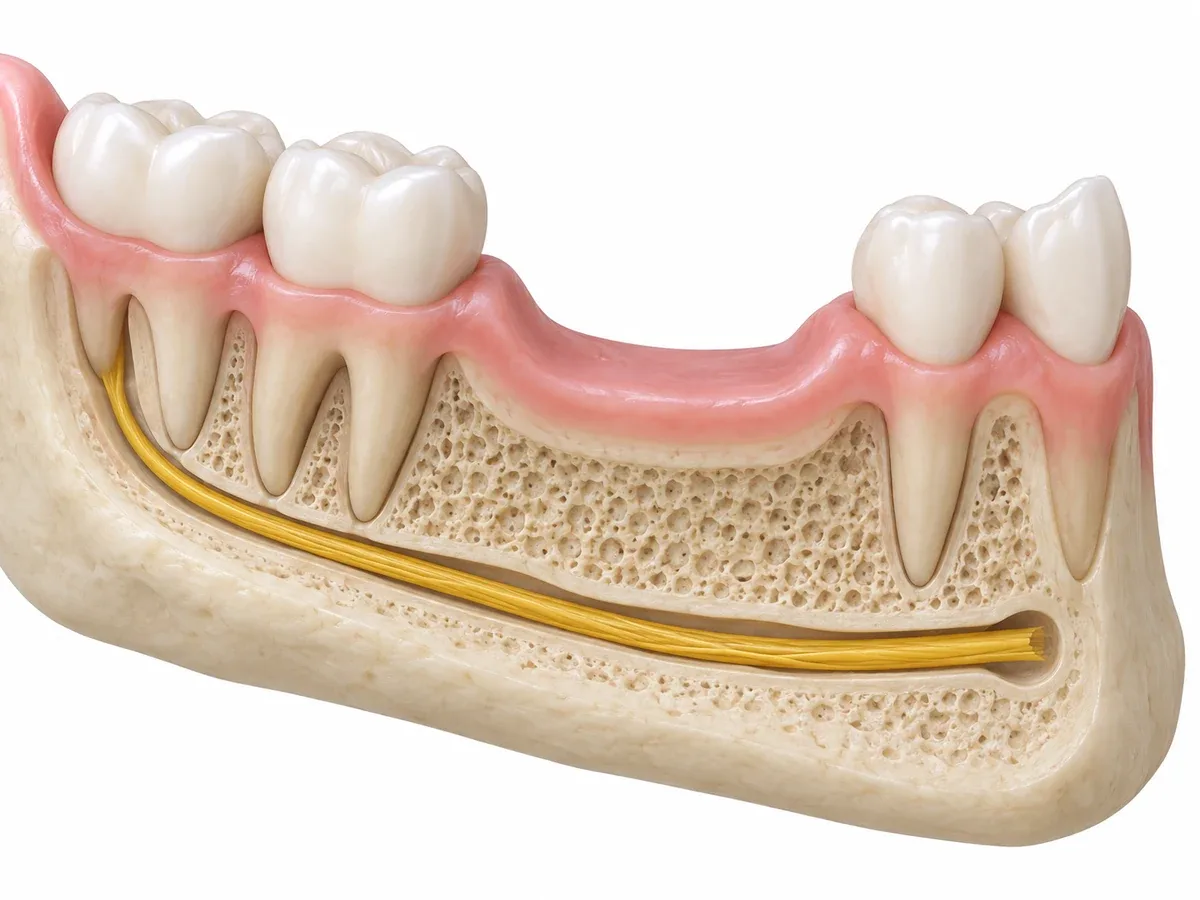
A thick nerve runs inside the lower jawbone. It carries sensation for the lower molars, the lower lip and the chin.
It travels forward along a canal in the bone and leaves through a small opening below the premolars.
An implant post is placed in the bone above that canal. So at the lower molars, distance is always the issue.
If heat reaches the canal, or the implant post presses on it, sensation changes. There is a much more common cause, though, and we will start with that one.
Why is my lip numb on the day of implant surgery?
What does the anaesthetic do?
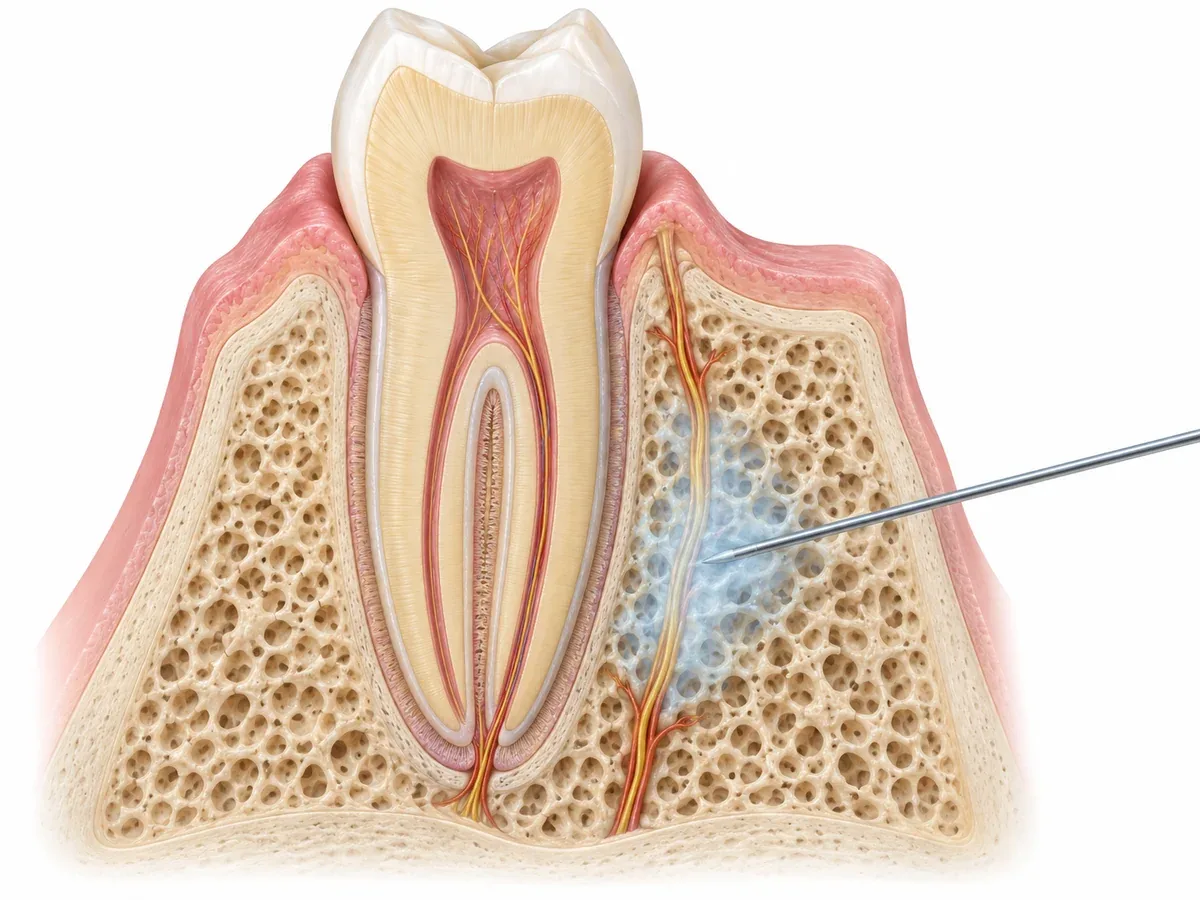
For implant surgery at the lower molars, we numb the whole nerve rather than a single tooth.
That includes the lower lip, the chin, the gum on that side and part of the tongue.
How long does that last?
Some numbness stays for hours after the implant surgery is over. Two or three hours is usual, and four or five happens when a larger dose was needed.
Is a dull feeling the next morning normal?
Some patients say a faint dullness is still there the next morning. That much is common after implant surgery and is not yet a stage to worry about.
| When | Common feeling | How we read it |
|---|---|---|
| Day of surgery | Lip and chin completely dull | From the anaesthetic, expected |
| Next day | Faintly dull | May be swelling, we watch it |
| Day three | Much reduced | Settling down |
| One week | Almost back to normal | A normal course |
| Unchanged after one week | A clear area stays numb | Needs checking |
Which line of the table should I call about?
The last line is the one to tell us about, since until then time usually settles it. If the feeling stops improving and stays put, that is the signal.
So it helps to note each day how far the dull area reaches. We go through all of this when we take your consent, so the day itself is less alarming.
Can swelling alone make the numbness last?
Why does swelling change sensation?
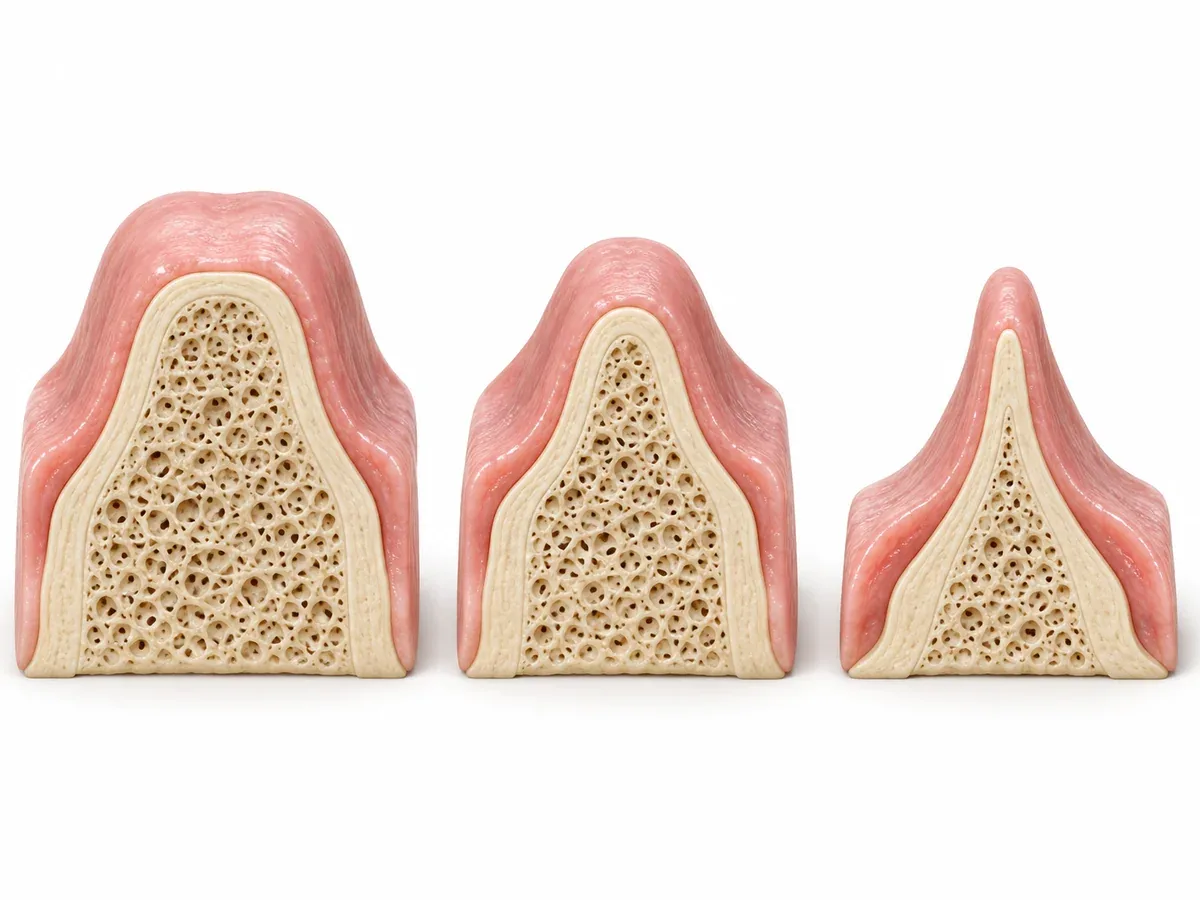
Yes, and this is by far the more common cause. When the tissue around the surgical site swells, it presses on the nerve.
A pressed nerve cannot pass sensation through properly. So a dull or tingling feeling stays behind.
When does the swelling peak?
Swelling is worst on the second or third day and shrinks after that. As it goes down, sensation comes back with it, and in most cases things are nearly back in place within a week.
- Swelling is at its worst on day two or three
- Sensation returns as the swelling goes down
- Something cold against the cheek keeps swelling smaller
- From day three, warmth works better than cold
- Lie down with your head slightly raised
What can I do at home?
For the first two days, hold something cold against the cheek. From the third day, warmth actually clears it faster.
Sleeping with your head slightly raised means less swelling in the morning. Salty food makes swelling worse, and smoking is bad for healing. Please take the anti-inflammatory medicine we prescribed without skipping doses.
Does a bigger operation mean longer numbness?
The more swelling a surgery causes, the longer the numbness tends to run. A bone graft at the same time, or several posts placed at once, both do this.
In those cases we watch a little longer than a week. The dull area should be shrinking, though.
How is a nerve injury different?
What is the clearest difference?
The biggest difference is that it does not improve with time. After a week, the same area is still just as dull.
The dull area also has an outline, where one side of the lip and the chin form a border.

Does it feel different as well?
Slightly. It is not simply dull but prickly, and touching it can be unpleasant.
Some patients do not notice saliva running, and a few find their speech a little awkward.
- No improvement after a week
- A clear border to the dull area
- Prickling or unpleasant sensation mixed in
- Not noticing saliva running
- Not feeling food caught in the mouth
What if several of those overlap?
Then please tell us straight away. Some patients assume it will pass and come in months later, when there is less room to act.
The sooner we know, the more we can do. That is the most important point here.
Is numb the same as painful?
No, and we always ask you to separate the two. Dull sensation and pain are not the same thing.
If it also hurts, another cause may be mixed in, so we look at inflammation as well.
Why does it happen mostly at the lower molars?
How close is the canal there?
Because that is where the nerve canal sits closest. The gap between the root tips of a lower molar and the canal is sometimes a few millimetres.
The height of the canal differs from person to person. In some people it runs very high.
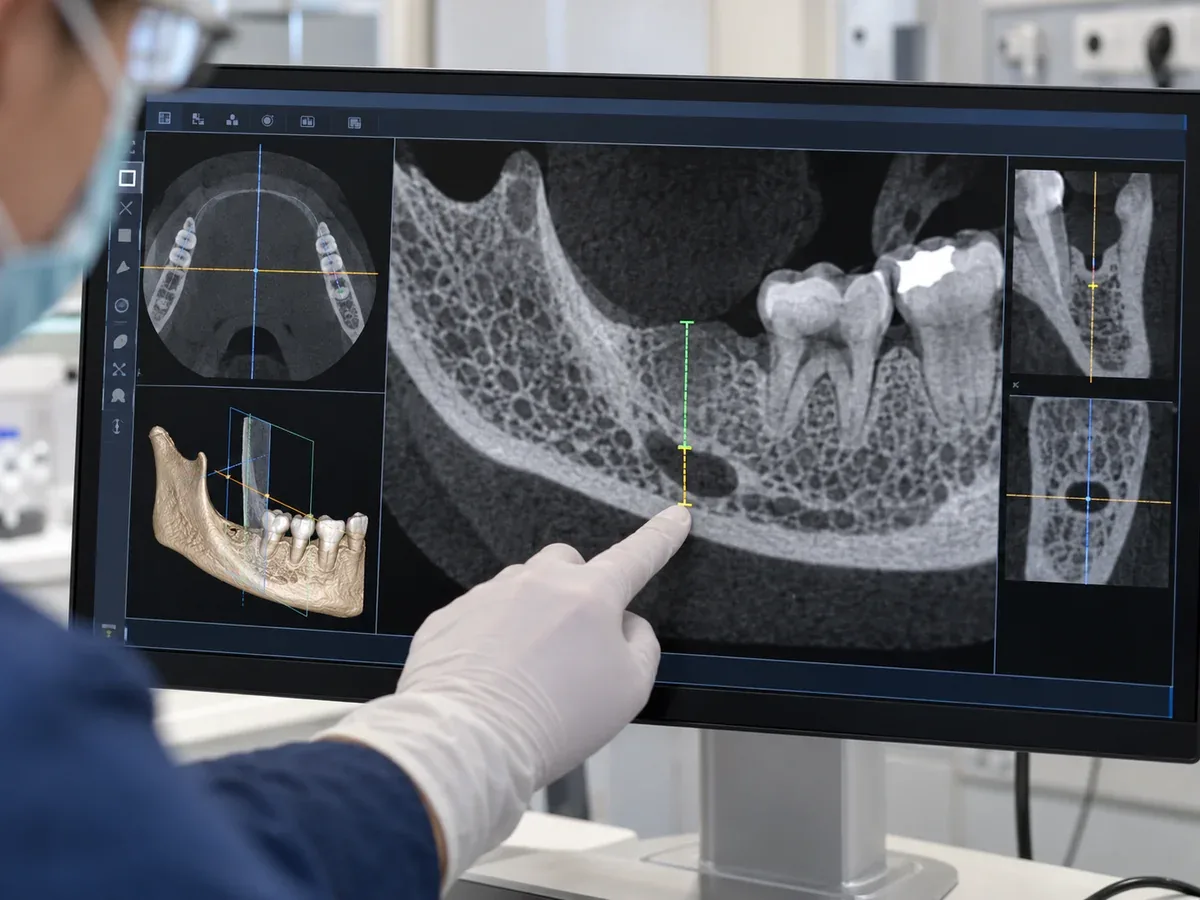
Why is a flat X-ray not enough?
On a flat X-ray the distance can look greater than it is, because front and back are layered in one image.
That is why we take a three-dimensional scan for lower molar implant work.
What about the upper jaw?
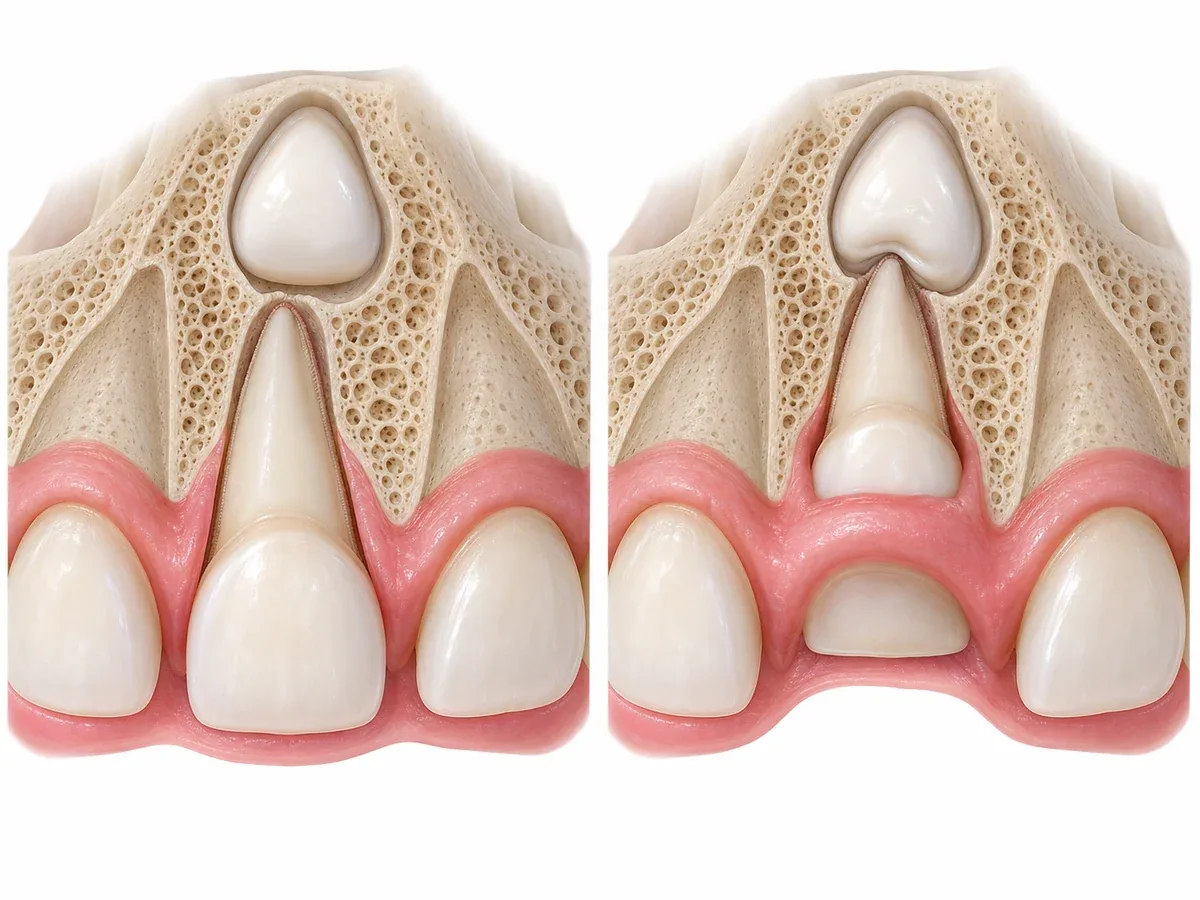
That nerve does not run through the upper molar area. Instead there is an air space beside the nose up there, and we watch for different problems.
| Site | Nearby structure | What we mainly check |
|---|---|---|
| Lower molars | Lower jaw nerve canal | Distance to the canal |
| Lower premolars | Opening where the nerve exits | Position of the opening |
| Lower front teeth | Blood vessels inside the jawbone | Thickness of the bone |
| Upper molars | Maxillary sinus | Height to the sinus floor |
| Upper front teeth | Floor of the nose | Bone thickness and angle |
How does that change the plan?
The top two rows are the ones tied to numbness. At those sites we always measure the distance first.
We then choose the implant post length with a safe margin below that figure.
The height of the canal can shift slightly with age. Where a gap has been left for years, the bone shrinks and the canal looks closer, so we study those images carefully.
Can it be prevented before implant surgery?
What does planning involve?
Yes. Measure the distance, then leave that much margin.
A three-dimensional scan shows the canal from three directions. On that scan we stand the post up in advance.
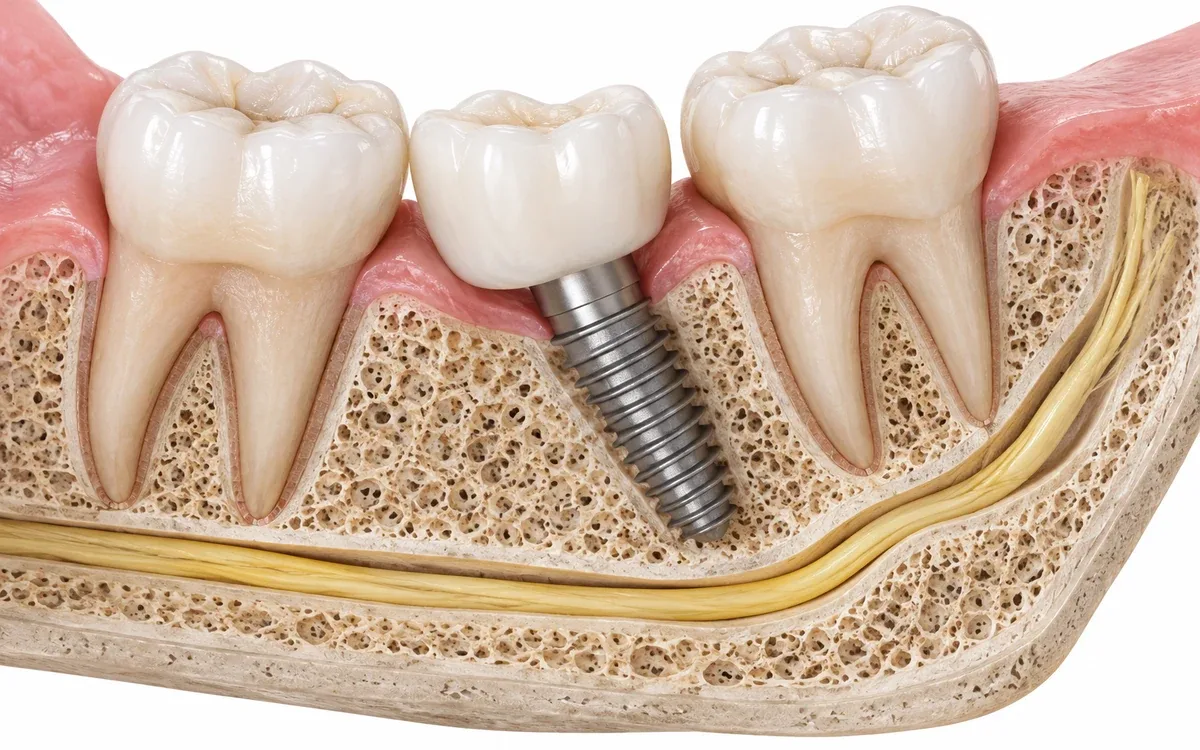
What is a surgical guide for?
We set the length and width, then match the angle too. Where it helps, we have a surgical guide made and place the post through it.
The guide fixes the direction and the depth of the drilling. It helps most when several posts go in at once.
- Measure the distance on a three-dimensional scan
- Stand the post up on the scan beforehand
- Choose the length with a safe margin
- Have a surgical guide made where it helps
- Use a shorter post when the margin is tight
Is a short implant post weak?
Many ask this. Today's implant posts have better surface treatment and hold well even when short.
Forcing a long one in is riskier.
What if the site really will not take one?
Then we leave that site empty and look at other options. A bridge is the better answer in some cases.
We decide while looking at the scan with you.
How long does numbness last, and what can be done?
How long, by cause?
It varies with the cause. From the anaesthetic it is hours, from swelling days to a week or two, and from a pressed nerve weeks to months.
If the nerve itself is damaged, it can run longer or stay. Usually the dull area narrows bit by bit, and that narrowing is the sign of recovery.
| Cause | Usual time | Chance of lasting |
|---|---|---|
| Anaesthetic | A few hours | None |
| Swelling | Days to two weeks | Very slight |
| Pressed, then released | Weeks to months | Low |
| Post touching the canal | Improves once it is dealt with | Lower the sooner we act |
| Nerve damaged | Months or more | Possible |
How do you check which one it is?
First we draw and record which area is dull, tracing the border with a fine instrument.
We check whether you can tell cold from warm, and light touch from a sharp point. Those results go down by date, because a comparison is what shows the direction.
At the same time we re-measure the distance between the implant post and the canal.
What can be done about it?
If the implant post is touching the canal, we deal with that first. It can be backed off a little, swapped for a shorter one, or removed.
Removing one is a shame, but the sooner it is done, the better the result. If it is not touching, we help things along with medication.
We use medicine to settle the swelling together with medicine that supports nerve recovery. Vitamin-type medication is often taken for longer, and the effect differs between people.
What if it still has not gone?
If it remains after some months, we refer you to a larger hospital. Oral and maxillofacial surgery or neurology sometimes take it further.
We then gather all the records for you. Medication does not change things overnight, so give it some weeks.
Smoking slows recovery. Sitting at home putting up with it is the worst choice.
What do we check before lower implant surgery in Busan?
Does this happen with wisdom teeth too?
The roots of a lower wisdom tooth sometimes touch the nerve canal. Taking it out can then press on the nerve.
The tongue can go dull as well, since a finer nerve runs along that side. When the tongue is dull, taste can be reduced.
Most of these come back within weeks to a few months. Before an extraction we look at the roots and the canal on a scan.
- Risk rises when the roots touch the canal
- The tongue sometimes goes dull as well
- Most cases return within weeks to months
- We check with a three-dimensional scan beforehand
- Where it is very close, the crown alone may be removed
How is our implant surgery planned?
Before lower molar work we take a scan, measure the distance to the canal and stand the implant post up on the image. At the consultation we say whether your site counts as a risky one.
Where it is risky, we change the plan or work more carefully. Wisdom teeth and implants sit in similar places, so we explain both together.
What happens after the surgery?
We tell you beforehand that numbness can occur, and how to watch it change. We ask how you are on the next day and on day three.
Being close to Seomyeon Station makes dropping in the next day easy. If it is unchanged after a week, we repeat the scan and adjust the post that day if it is touching.
Who should I contact at the weekend?
We give you a separate contact number after surgery, so you can ask even at the weekend. Records are kept by date so they can be compared.
One question beats several uneasy days. Numbness is not something to wait out quietly; it is something to tell us about.
Numbness on the day and the next day is usually the anaesthetic and the swelling.
If the same area is still numb after a week,
tell us rather than waiting.
If you are worried about numbness after implant surgery in Busan, Reset Dental Clinic offers 1:1 English interpretation from your first consultation to the end of treatment. Call 010-8555-2854 to arrange a visit.
Frequently asked questions
How many days should I wait, and what if it is numb but not painful?
Take one week as the mark. Dull without pain is the more common pattern, but record the area anyway.
Is prickling the same thing, and does the implant post have to come out?
Prickling mixed in makes a nerve cause slightly more likely, so please tell us. If the post is touching the canal we make that decision; if not, we watch it with medication.
Will sensation come back fully, and are upper molars safe?
Most people recover, though a part can remain when it has been left a long time. That nerve does not run by the upper molars, where we watch the sinus instead.
Can I get implant treatment in English in Busan?
Yes. We provide 1:1 English interpretation from the first consultation to the end of treatment, near Seomyeon Station Exit 2, opposite Lotte Hotel Busan. Call 010-8555-2854, or +82-10-8555-2854 from abroad.
References
- KDCA National Health Information Portal, "Dental Implants" — the sites where an implant is placed and the conditions for it
- KDCA National Health Information Portal, "Dental Local Anaesthesia" — the area the anaesthetic quiets and how sensation returns
- Dental News, "Altered sensation after an implant calls for immediate medication" — what to do when sensation has changed
- Dental News, "Altered tongue sensation after wisdom tooth extraction" — cases where sensation on the tongue side changes
Written by Reset Dental Clinic Support Team
Medical review Dr. Kim Hyun-joo, Head Dentist
Last updated: November 3, 2026
This column is for general information and does not replace diagnosis or treatment for individual patients. If you have symptoms, please see a dentist.