- Oral probiotics do not replace brushing.
- Plaque comes away with a brush, not with a capsule.
- They are sometimes used as a support for bad breath.
- Products containing sugar do more harm than good.
Patients often ask whether oral probiotics are worth taking for their teeth. The advertising is loud, and it is hard to tell where the evidence stops. At Reset Dental Clinic in Seomyeon, Busan, we explain what is known, and we provide 1:1 English interpretation from the first consultation to the end of treatment.
Hundreds of species of bacteria live together in your mouth.
Some of them cause decay and some do not.
The decay-causing group feeds on sugar and releases acid.
That acid dissolves the surface of the tooth. This is how a cavity starts.
A different group lives along the gum line. When that group grows, the gums become inflamed.
So when the mix of bacteria in your mouth changes, the outcome changes with it.
The idea behind oral probiotics came from exactly that thought. Add helpful bacteria, and shift the mix.
The idea sounds reasonable. The question is how much it actually does.
What are oral probiotics?
They are live bacteria taken by mouth with the aim of helping you. Products aimed at the gut came first.
Products aimed at the mouth came later. The two are not interchangeable.
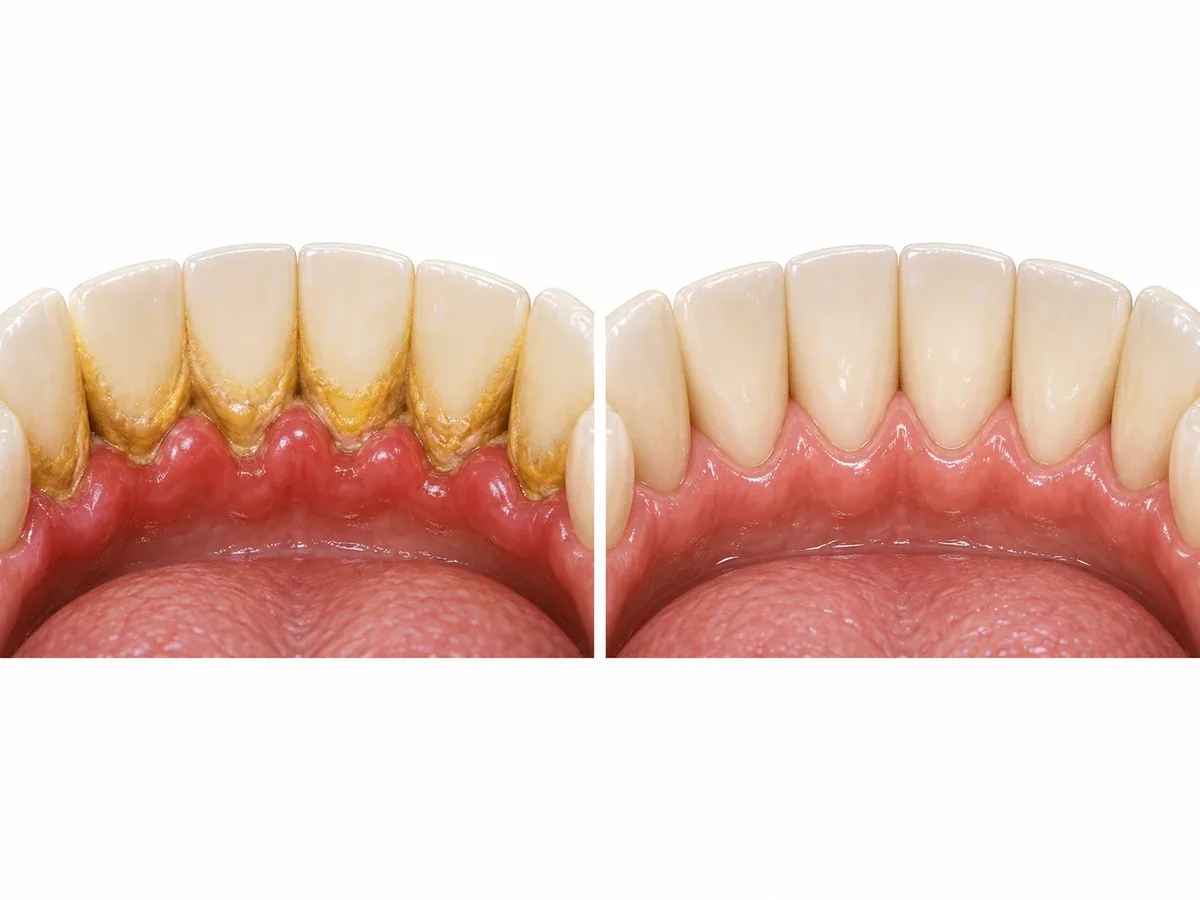
Oral probiotics are made as tablets, powders or lozenges. Many of them are meant to dissolve in the mouth.
If you swallow them straight down, they have no time to stay in the mouth.
The strains are also a little different from the gut versions. Makers choose strains that can settle in the mouth.
| Item | Aimed at the gut | Aimed at the mouth |
|---|---|---|
| How it is taken | Swallowed | Dissolved in the mouth |
| Where it settles | Inside the bowel | Mouth and gums |
| What is expected | Gut condition | Smell and mild inflammation |
| Weight of evidence | Reasonably well built up | Still being gathered |
| Replaces dental treatment | No | No |
The last row of the table matters most. Neither kind replaces dental treatment, and their place is as a support.
A great deal of advertising steps outside that place, which is where the confusion starts.
The strains differ from product to product, so two products under the same heading do not do the same thing.
So one trial cannot be stretched to cover all of them.
Do oral probiotics prevent cavities?
Less than you might hope, and the reason is clear.
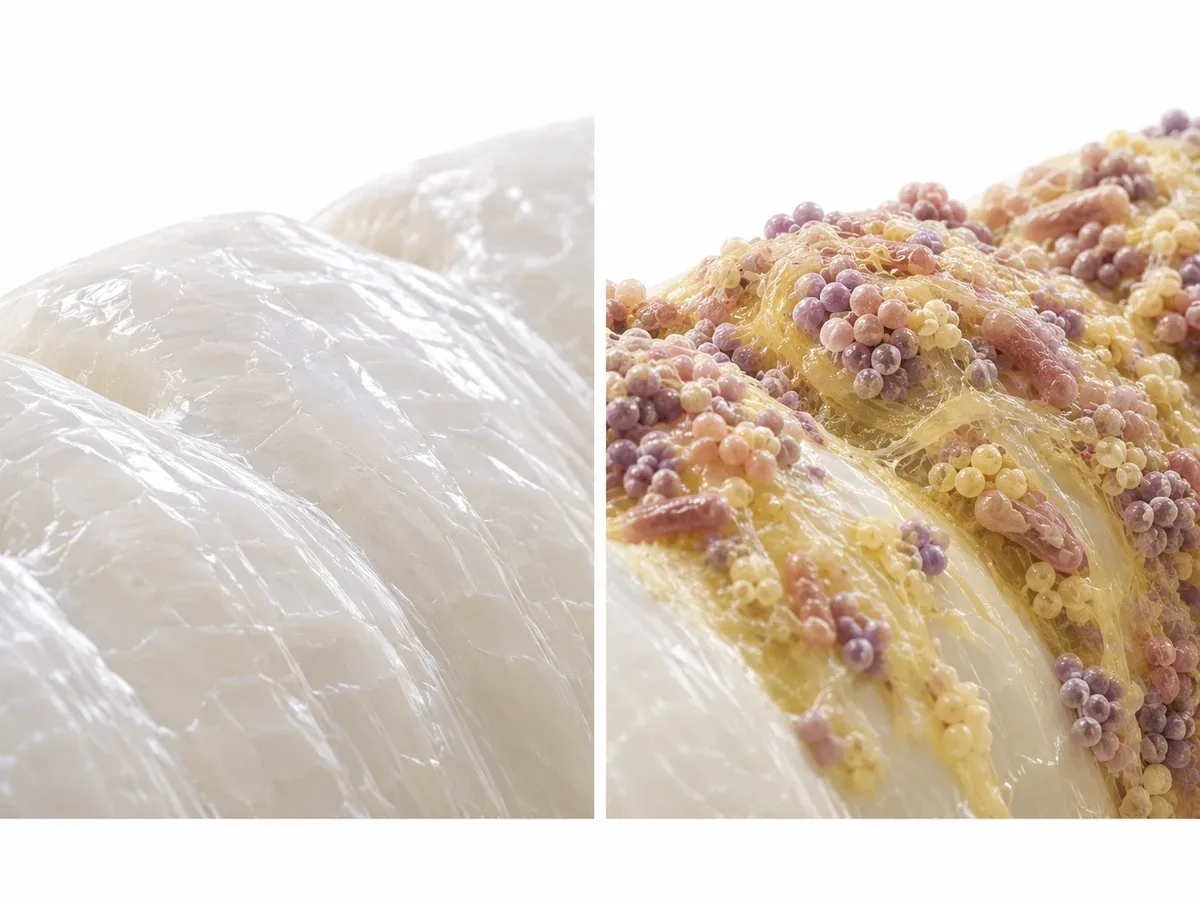
Decay happens because bacteria form a film and stick to the tooth surface. Acid is produced inside that film.

Rinsing with water does not lift that film away. It has to be rubbed off.
Some studies report that the number of acid-producing bacteria fell.
Whether cavities themselves fell is not clear.
- The bacterial film comes away when it is rubbed
- Oral probiotics do not peel the film off
- There are reports of fewer acid-producing bacteria
- Whether cavities fall is not clear
- Products containing sugar do more harm than good
The sweetener in the product is the thing to watch most closely.
Some products add sugar to make them pleasant to take. That sugar helps decay along instead.
Check whether the product uses a sweetener such as xylitol, which does not feed decay.
The surest step is careful brushing with a fluoride toothpaste. After that comes cutting down how often you eat sugar.
Oral probiotics sit behind those two in the order.
Do oral probiotics help your gums?
For mild gum inflammation they are sometimes used as a support.
There are reports that patients did a little better when they were used alongside gum treatment.
That holds where treatment was actually carried out.
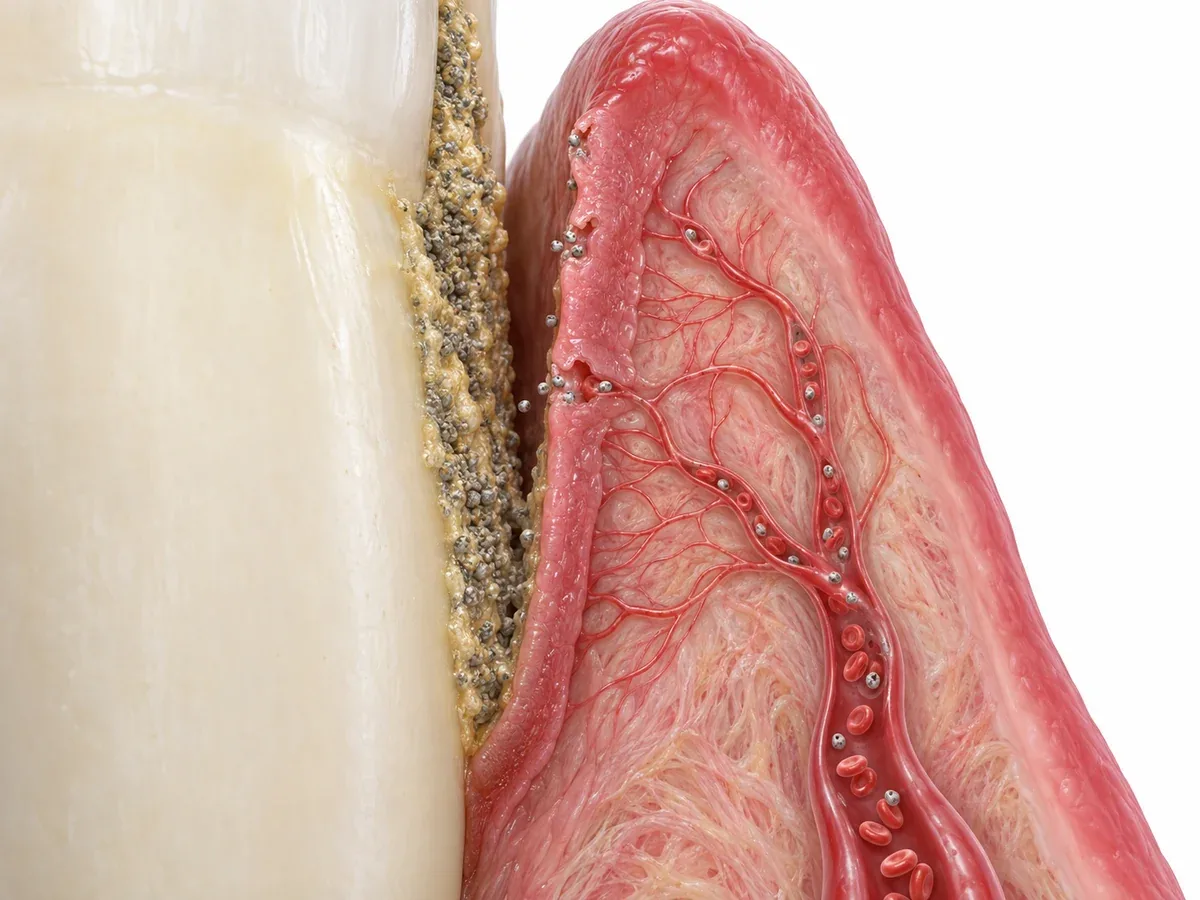
There is no evidence that taking them without treatment made gums better.
A brush cannot reach inside the gum pocket. The tartar in there has to be lifted out with instruments.
If it is left, the cause stays where it is, and nothing you swallow changes much.
- They act as a support when used with gum treatment
- Taking them without treatment changes little
- Tartar in the pocket is lifted out with instruments
- This applies to mild gum inflammation
- It does not apply once bone has been lost
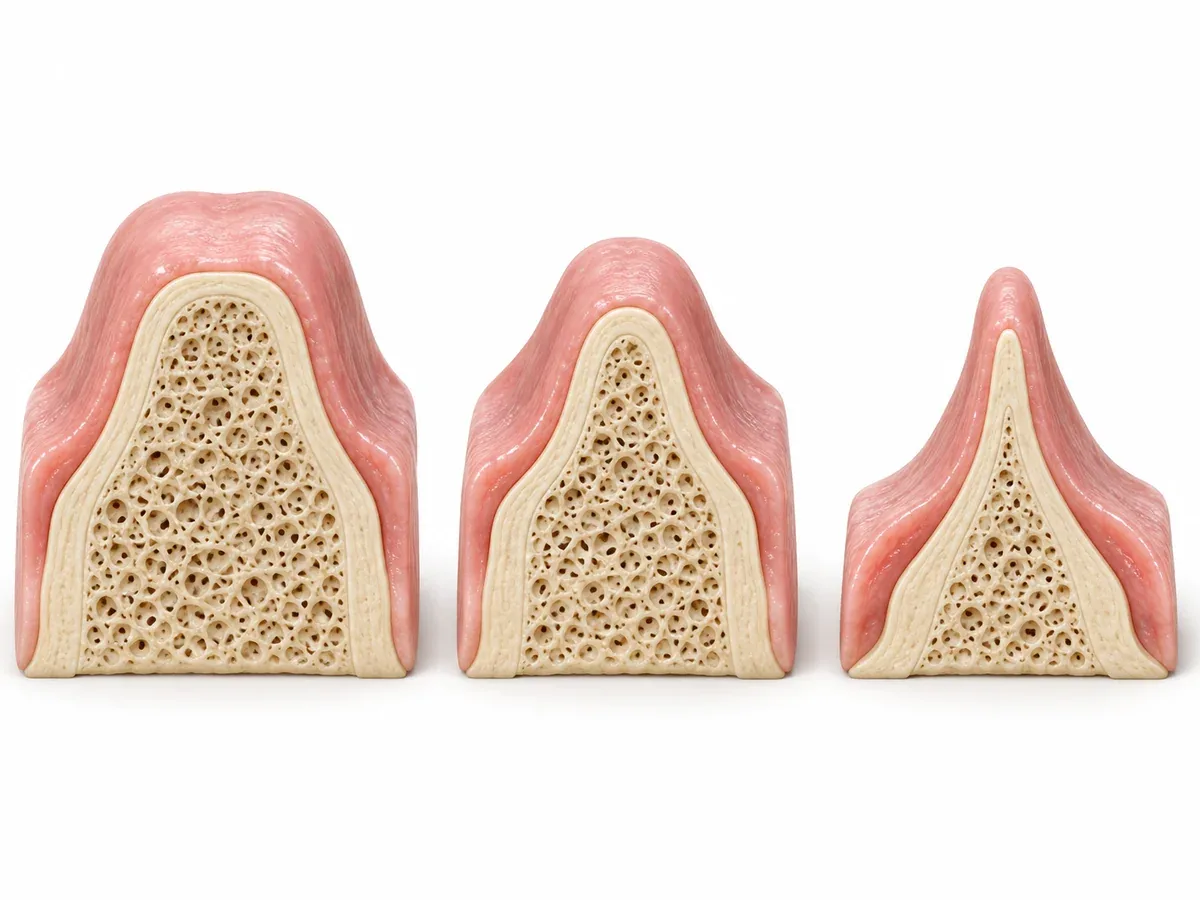
Where bone has already been lost, the case is weaker still. That stage cannot be reversed.
So keeping to the order matters. Clear the deposits, change how you brush, then think about a support.
The largest reason gums swell is that some surface is not being cleaned. Finding that surface and getting it clean comes first.
Passing floss or an interdental brush between the teeth changes a great deal on its own.
You can gauge whether your gums are improving by whether they bleed when you brush. Less bleeding is a good sign.
Do oral probiotics help bad breath?
This is the area where expectations are more reasonable.
A good share of bad breath comes from bacteria on the tongue. Those bacteria break down protein and make smelly gases.
When helpful bacteria compete for that space, the gases fall. Several reports show that they did fall.
The effect lasts while you keep taking them, though. In many cases things return to how they were once you stop.
- Bacteria on the tongue are the main source of the smell
- There are reports of less gas while the product is taken
- In many cases it returns once the product is stopped
- Cleaning the tongue is more dependable
- If the cause lies elsewhere, start there
Cleaning the tongue is more dependable, and it costs nothing.
Use the back of your brush or a tongue cleaner, sweeping from back to front.
Once a day is enough. Do not press hard.
If the smell comes from tartar or a decayed tooth, that comes first.
Sometimes the cause sits in the nose or the stomach. In those cases nothing taken by mouth will change it.
| Cause | How common | What to do first |
|---|---|---|
| Coating on the tongue | Commonest | Sweep the tongue from back to front |
| Tartar and gum inflammation | Common | Scaling and gum treatment |
| Decayed teeth or loose restorations | Common | Repair that area |
| Dry mouth | Common | Sip water often and raise saliva flow |
| Nose or tonsils | Occasional | See an ENT doctor |
| Stomach | Rare | See an internal medicine doctor |
The top four rows of the table are causes that arise in the mouth.
Rule those four out, and then think about a support.
Reaching for oral probiotics first covers the cause up.
Who might oral probiotics suit, and how should you take them?
We suggest them as a support to patients whose brushing is already in good order. Without the basics, there is little point.
They can help patients whose mouths run dry. When saliva falls, the mix of bacteria turns for the worse easily.
The same goes for patients in orthodontic treatment, with far more surfaces to clean.
We sometimes suggest them to denture wearers who are worried about smell.
| Patient | Worth using as a support | What comes first |
|---|---|---|
| Brushing in good order | Worth using | Keep the current routine |
| A lot of tartar | Not yet | Scaling |
| Dry mouth | Worth using | Ways to raise saliva flow as well |
| In orthodontic treatment | Worth using | Interdental brush and fluoride first |
| Gum bone already lost | Little to expect | Gum treatment |
| Children | Often not suggested | Avoid products containing sugar |
As the table shows, there is often something else to do first. Many patients skip that step, which is why they feel nothing happened.
For children, fluoride application and sealants are far more dependable. We suggest those first, and a support can wait.
How to take them
Products aimed at the mouth are meant to dissolve. Chewing and swallowing leaves no time in the mouth.
Place the tablet on your tongue and let it melt slowly. Do not rinse straight afterwards, because it washes away.
The most suitable moment is after brushing at bedtime. The mouth is cleanest then, and it stays that way longest.
Toothpaste residue is still present right after brushing, so leave a short gap.
Keep taking them for the effect to continue. This is not something that changes in a few days.
Usually you need a few weeks before you can judge. Many patients stop after a few days, so they never find out.
If you use them, keep the same routine for a few weeks. One a day is usual, and taking more does not help.
Are there side effects, and how do oral probiotics compare with mouthwash?
For healthy patients there is usually no trouble.
Some people get wind for the first few days, which generally settles down.
Patients whose immune system is much weakened need to take care, including those having chemotherapy or an organ transplant.
Rarely, live bacteria have caused problems in such patients. In that situation, speak to your own doctor first.
The commonest problem is not a side effect at all. It is sugar.
The easier a product is to take, the sweeter it tends to be. That amounts to leaving something sweet in the mouth at bedtime.
This is why we ask patients to read the ingredient panel, especially those who have had many cavities.
If you take medicines, check whether the two can be taken together. While you are on antibiotics the effect drops, so starting after that course ends is better.
Mouthwash works the other way round
Mouthwash reduces. Its antiseptic lowers the number of bacteria.
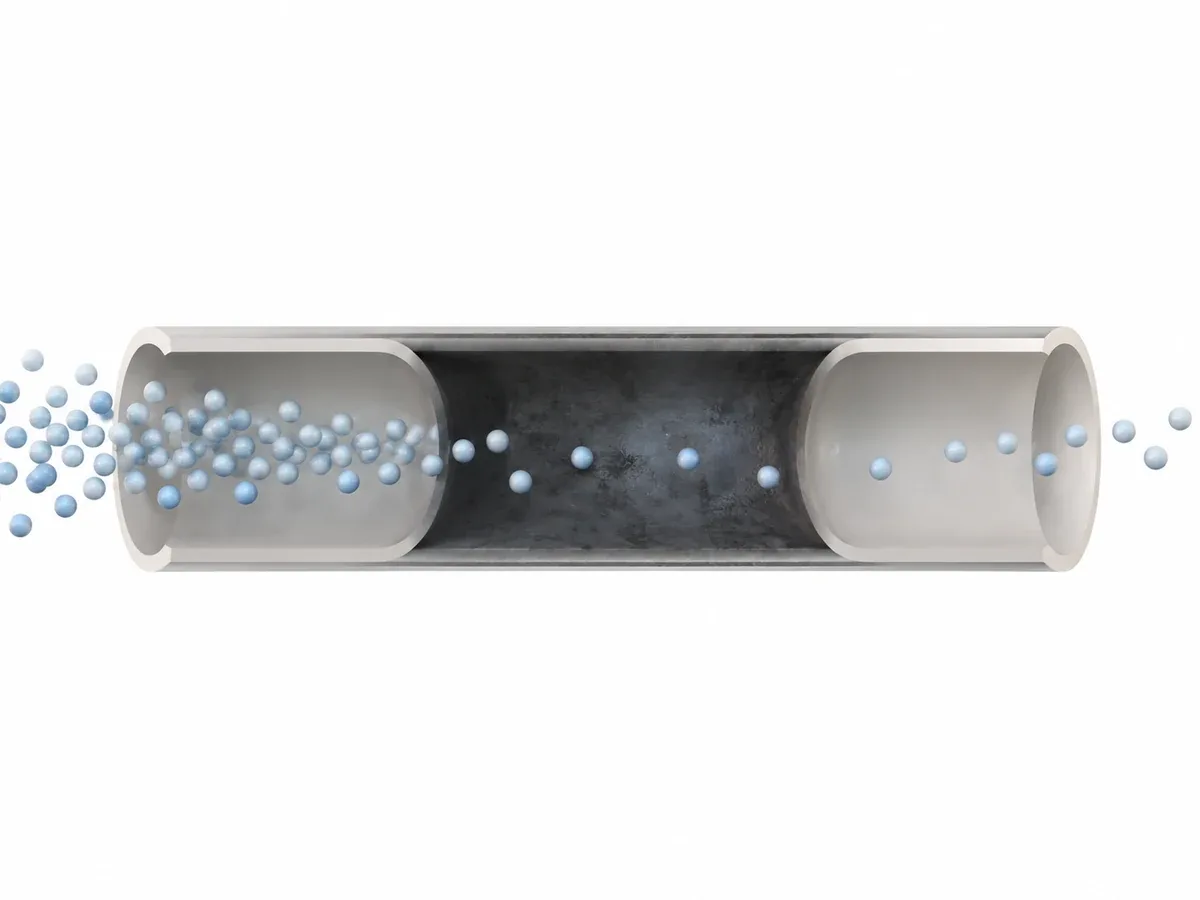
Oral probiotics add. They increase the helpful side so that it takes the space.
Used together, the two get in each other's way. A probiotic taken right after a mouthwash dies at once.
You have to separate them in time. Long-term mouthwash use also dries the mouth and causes staining.
Neither of them replaces brushing. Many patients let a mouthwash stand in for cleaning, and those are the mouths that go downhill fastest.
Either way, the place is the same: a support. The basics are a brush, floss and regular scaling.
Many patients use a mouthwash containing alcohol. That ingredient dries the mouth, and a dry mouth smells more, so we suggest an alcohol-free one.
How do you choose a product, and what do we check in Busan?
Look first at whether it contains sugar. One using xylitol or another substitute sweetener is better.
Next, check that it is aimed at the mouth. Holding a gut product in your mouth achieves little.
See whether the strains and their counts are printed, and whether the instructions say to let it dissolve.
Avoid products with large advertising claims and no ingredient detail.
- Contains no sugar
- Aimed at the mouth rather than the gut
- Strains and counts are printed
- Meant to dissolve in the mouth
- Storage instructions can be kept to
Storage matters too, because these are live bacteria. If a product needs refrigeration, keep to that.
A product left on a shelf a long time has many dead bacteria in it. A high price does not mean a better product.
Probiotics built into toothpaste or mouthwash are now sold too. The bacteria have little time to stay while you clean, so expect less.
If your toothpaste suits you, there is no particular reason to change it.
What we check at the clinic
We start by looking at whether your teeth are actually being cleaned. Sometimes we apply a staining dye to show where plaque is left.
If a lot is left, we work on those surfaces first. If there is tartar, lifting it out comes first.
We talk about a support after those two are done. Not changing that order is our principle.
If bad breath is the worry, we start by teaching you how to clean your tongue. Many patients improve with that alone.
If something remains, we let patients try a support and check a few weeks later. If it did nothing, we say so and tell patients to stop.
We are close to Seomyeon Station, so you can drop in for a check. You are welcome to ask about anything you saw in an advertisement.
We tell you how far the evidence goes, and when we do not know we say so.
Bringing the product you have been taking is quickest. We read the ingredient panel with you, and we do not suggest a change where there is no need.
Frequently asked questions
Can I brush less if I take oral probiotics?
No. The bacterial film comes away when it is rubbed.
Do they reduce cavities?
That is not clear. Products containing sugar do more harm than good.
Can I use them together with a mouthwash?
Keep the two apart in time. The antiseptic in mouthwash kills the bacteria.
Can I discuss oral probiotics in English in Busan?
Yes, we provide 1:1 English interpretation from your first consultation to the end of treatment. We are near Seomyeon Station Exit 2, a five-minute walk, opposite Lotte Hotel Busan, and you can call 010-8555-2854 (+82-10-8555-2854 from abroad).
Oral probiotics do not replace a brush or a scaler.
The bacterial film comes away when it is rubbed,
and tartar is lifted out with instruments.
If you are wondering about oral probiotics, Reset Dental Clinic in Busan provides 1:1 English interpretation from the first consultation to the end of treatment. Call 010-8555-2854 to book a consultation.
References
- KDCA National Health Information Portal, "Health Functional Foods" — labelled functions and how to choose
- KDCA National Health Information Portal, "Gum Disease (Periodontal Disease)" — how gum inflammation develops
- KDCA National Health Information Portal, "Halitosis" — where bad breath arises
- KDCA National Health Information Portal, "Dry Mouth" — what changes when saliva falls
Written by Reset Dental Clinic Support Team
Medical review Dr. Kim Hyun-joo, Head Dentist
Last updated: November 3, 2026
This column is for general information and does not replace diagnosis or treatment for individual patients. If you have symptoms, please see a dentist.