- Snoring is the sound of an airway that has narrowed during sleep.
- The position of the tongue and lower jaw is part of it.
- An oral appliance helps some patients.
- If breathing stops at night, a sleep study comes first.
Patients come in because the noise keeps the rest of the family awake, and they wonder what a dentist has to do with it. This guide from Reset Dental Clinic in Seomyeon, Busan sets out which part of snoring is dental work and which part is not. For patients living in or visiting Korea, we provide 1:1 English interpretation from the first consultation to the end of treatment.
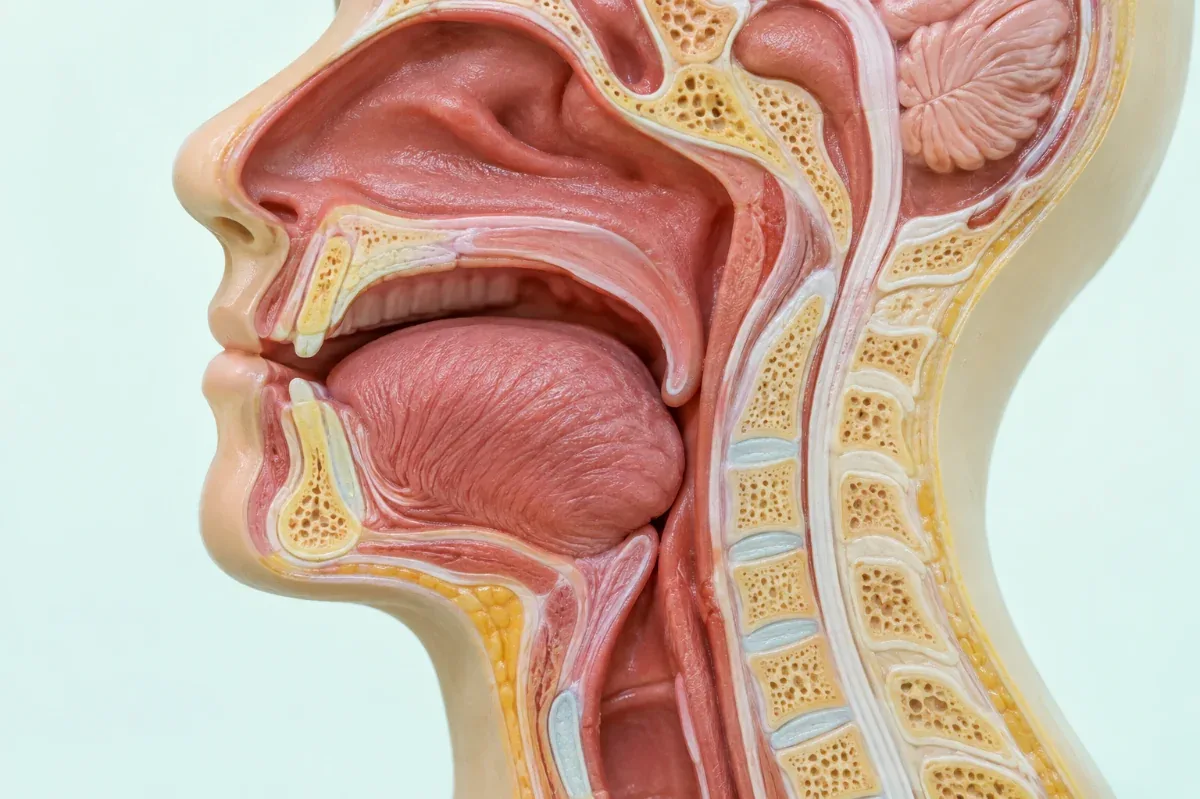
Air travels from the nose and mouth through the throat to the lungs. That route is the airway.
While you are awake, the muscles around the throat hold it open. Once you fall asleep they slacken, and the route narrows.
Air moving quickly through a narrow space makes the surrounding tissue vibrate. That vibration is the sound.
So what matters is less the noise itself than where the narrowing sits, and how tight it is.
The tongue is attached to the lower jaw. When the jaw sits back, the tongue follows it back.
That is why a dental clinic, which looks at teeth and jaw position, ends up in this conversation.
Why does snoring happen?
As sleep deepens, the muscles around the throat relax. The passage gets narrower.
Air rushing through that narrow passage sets the surrounding tissue vibrating. The narrower it is, the louder the snoring.
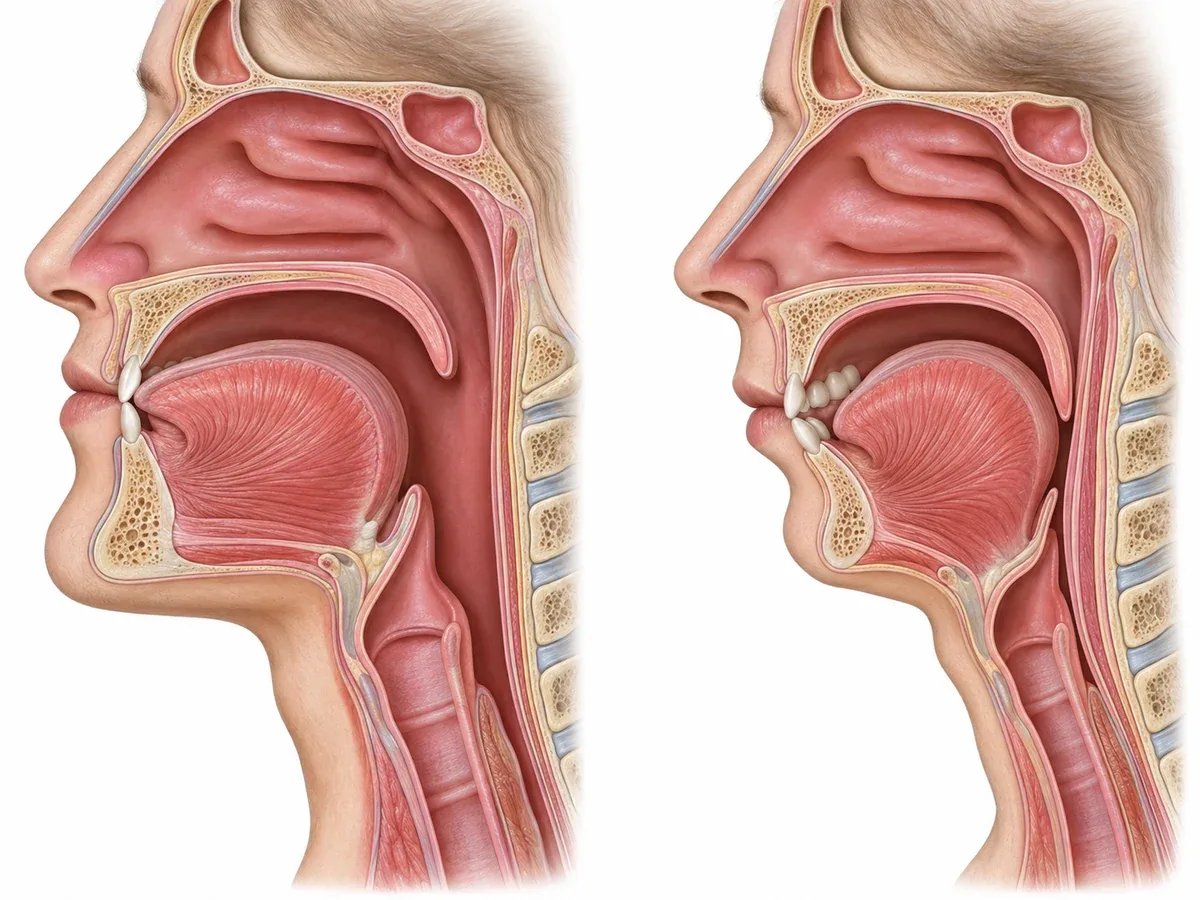
Lying on your back lets gravity pull the tongue and lower jaw backwards. Snoring usually gets worse in that position.
That is why many people are quieter on their side.
Alcohol makes snoring worse that night, because the muscles slacken further.
Weight gain adds fat around the neck as well, and the passage narrows a little more.
| Narrow point | Common reason | What you notice |
|---|---|---|
| Inside the nose | Rhinitis or a deviated septum | A blocked nose, so you breathe through the mouth |
| Around the soft palate | A slack soft palate | A rattling, droning sound |
| Behind the tongue | The lower jaw sits back | A sense of breath catching |
| Around the tonsils | Enlarged tonsils | Common in children |
Of the rows in that table, a dentist deals with the lower two.
The inside of the nose belongs with an ear, nose and throat doctor. We say that plainly.
Plenty of patients have more than one narrow point. Correcting a single one changes less than they hope.
So the first job is sorting out where the narrowing actually is.
What does a dentist check when you snore?
We start with the position of the lower jaw, looking at whether it sits back.
Then we check how much of the soft palate shows when you open your mouth. If it is hidden, the space is tight.
Worn teeth go on the list too, because grinding often comes along with snoring.
- Whether the lower jaw sits back
- Whether the tongue is large and rests far back
- How much of the soft palate is hidden
- Whether the teeth are worn flat
- Whether the mouth is dry
Those four or five findings give us an impression, not a diagnosis. Whether breathing stops can be settled by testing alone.
So we refer patients for a sleep study when the picture calls for it.
We do not make an appliance before that testing. In the wrong order it serves little purpose.
Notes from the person who sleeps beside you help a great deal. Whether the sound ever stops is the key detail.
Does grinding come with it?
Quite a few patients have both, appearing in the same night.
When breath catches, the body sometimes moves the jaw to open the passage. That movement can look like grinding.
Some patients therefore feel stifled when fitted with a grinding guard alone.
An appliance shaped so that it pushes the lower jaw further back makes the airway tighter.
In that case we change the design, so the lower jaw is not pushed backwards.
- A stiff jaw in the morning
- Front teeth or molars worn flat
- A stifled feeling with an appliance in
- Waking repeatedly during the night
- Daytime sleepiness
If several of those overlap, the two problems need looking at together.
We do not promise to remove snoring and grinding at a stroke. We ask which one troubles you more, and start there.
Does mouth breathing make snoring worse?
It does. A blocked nose pushes you into breathing through your mouth.
Sleeping with your mouth open lets the lower jaw drop down and rotate backwards.
The tongue follows it back, and the airway narrows further.
So the habit itself feeds the snoring.
The mouth also dries out. A dry mouth brings more gum disease and more decay.
Waking with a parched mouth and a sore throat is the usual sign.
That is why we ask you to have the blocked nose looked at first.
Where rhinitis is present, treating it comes before any dental appliance.
Practising keeping the lips closed and breathing through the nose helps some patients.
In children the habit changes the shape of the face and the bite, so it needs attention earlier.
In adults the shape has finished growing, and habit work alone changes less.
If the lips sit apart all night, the gum behind the front teeth dries first and swells first.
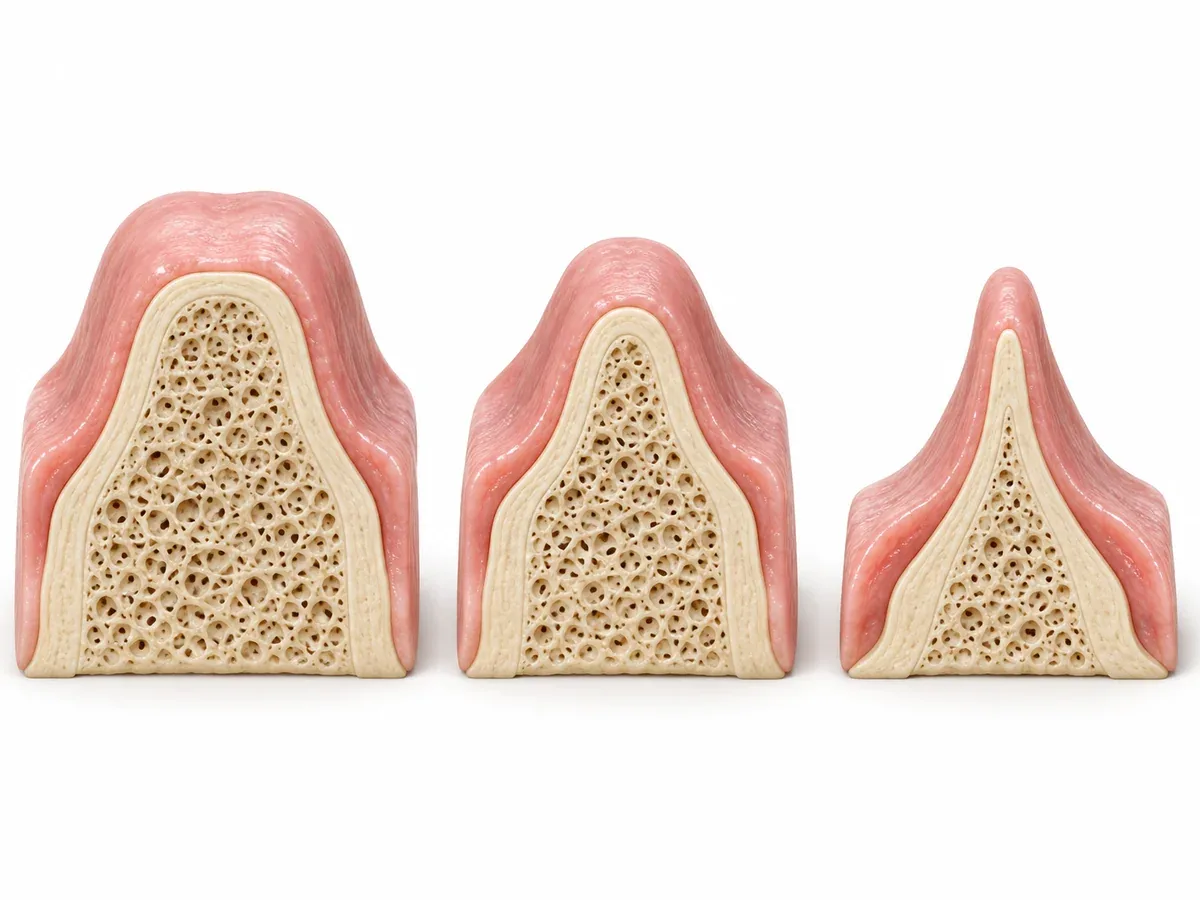
Can a narrow upper jaw cause snoring?
The roof of the upper jaw is also the floor of the nose. One bone, two surfaces.
So a narrow, high upper jaw means a narrow route for air through the nose.
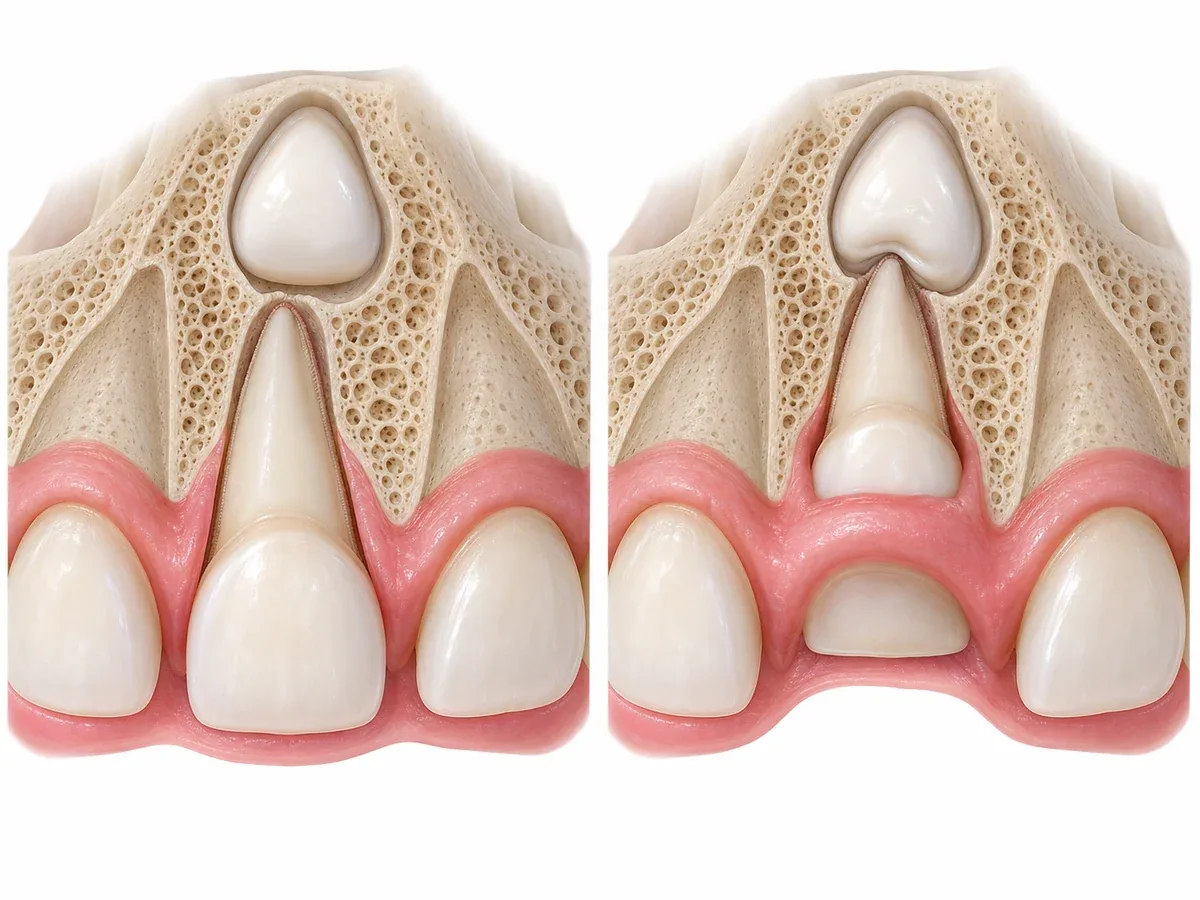
Among patients with crowded teeth, this shape is common.
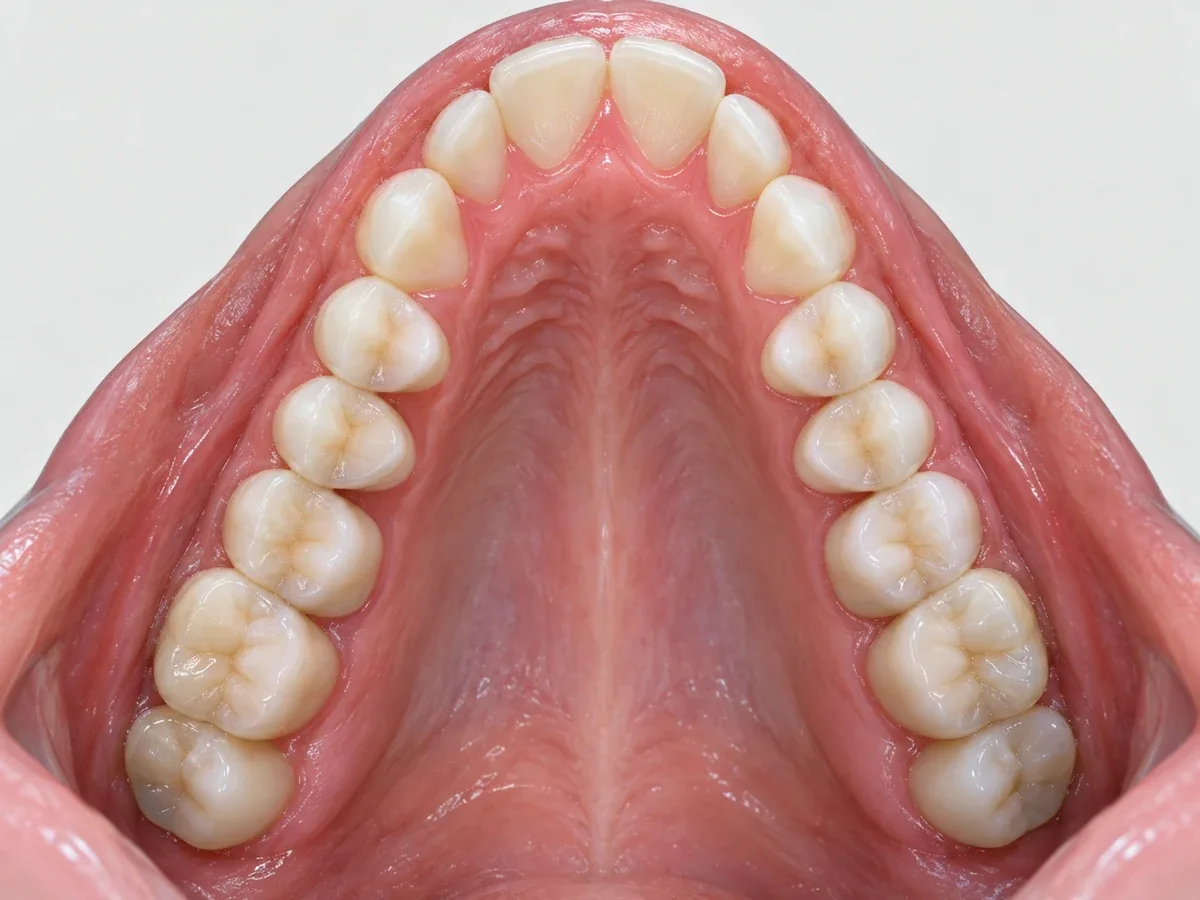
When the upper jaw is narrow, the lower jaw settles inside it.
The lower jaw therefore takes up a position further back, and the tongue has less room.
With nowhere to go, the tongue moves backwards, into the airway.
| Shape | Effect on the airway | What can be done |
|---|---|---|
| Narrow upper jaw | A narrow route through the nose | Widening while a child is growing |
| Small lower jaw | Little room for the tongue | An appliance holding it forward |
| Heavily crowded front teeth | The tongue is pushed back | Orthodontics to create room |
| Large tongue | The space behind is tighter | Sleep position and weight reviewed together |
In a growing child, widening the upper jaw is possible, because the bone has not fused.
In adults that widening is limited, so we look at other routes alongside it.
Orthodontics sometimes creates room so that the tongue rests further forward.
We do not tell patients that braces alone will end the sound.
That shape is one factor in snoring among several rather than the sole cause.
What does a dental appliance for snoring do?
It holds the lower jaw slightly forward, gripping the upper and lower teeth together while you sleep.
As the lower jaw comes forward, the tongue comes forward with it, and the airway widens.
We take an impression and build it to fit that mouth. It is not an off-the-shelf item.
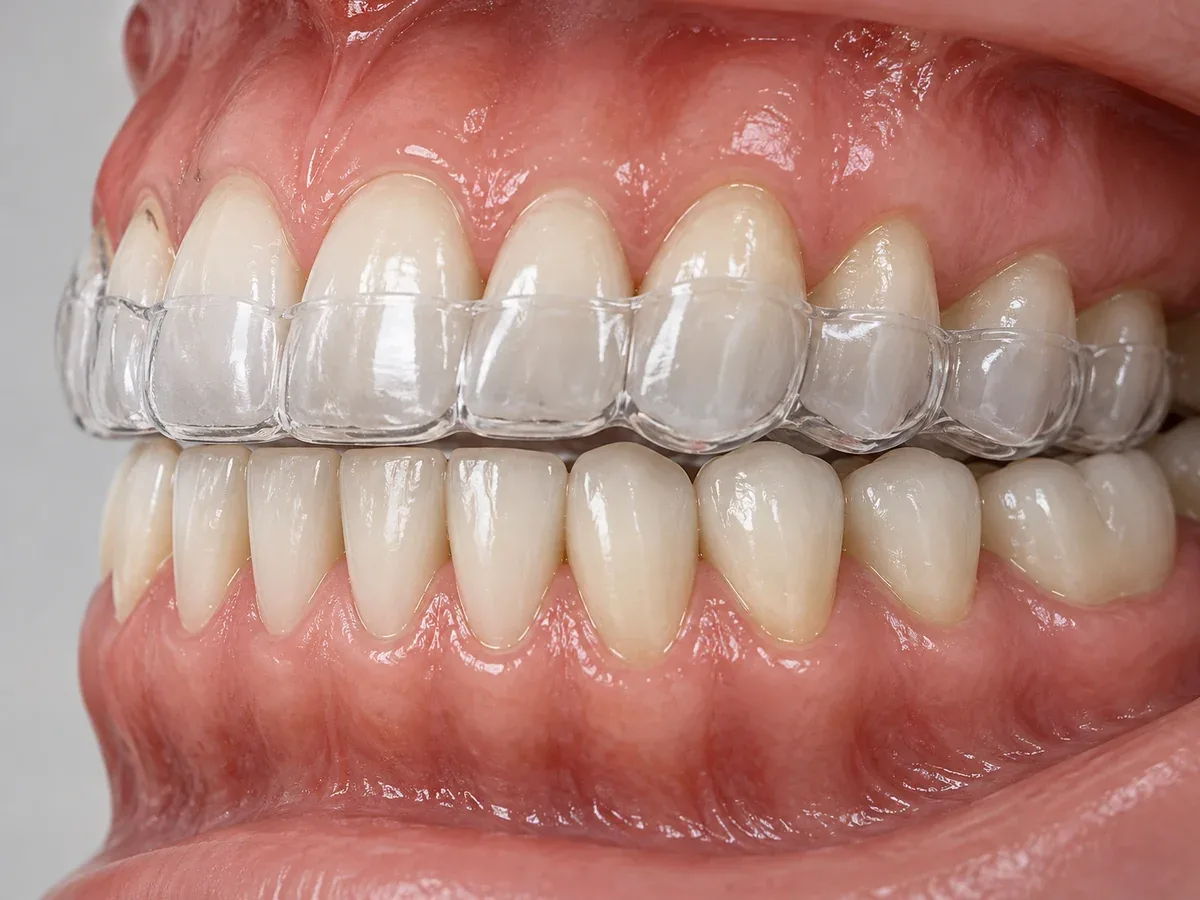
How far forward it holds the jaw is adjusted in small steps, never all at once.
We set it barely forward at the start and increase it over several weeks.
That gives the jaw joint and the muscles time to follow.
It tends to help where snoring is mild or moderate.
- Built to that mouth from an impression
- Holds the lower jaw slightly forward
- Advanced in stages rather than at once
- Reviewed every few months
- Results differ from person to person
In severe cases, a CPAP machine comes first, as the more reliable route.
For patients who struggle with CPAP, we consider an appliance alongside it.
It works while you wear it every night. Occasional use changes little.
Take it out in the morning, brush it and let it dry. Keep hot water away from it.
Will the appliance make my jaw ache?
Many patients describe a stiff jaw for the first few weeks. It eases as they get used to it.
Some find their bite feels out of place in the morning. Usually it settles back within minutes.
If it does not settle, or pain continues, we reduce how far forward the jaw is held.
Patients with a history of clicking or pain in the jaw joint start more cautiously.
Extra saliva is another common complaint, and it generally quietens down after a few weeks.
- A stiff jaw in the first weeks
- A bite that feels off in the morning
- More saliva than usual
- Teeth shifting slightly over time
- Marks pressed into the gums
For that reason we record the bite at regular intervals.
Please tell us about any discomfort rather than putting up with it. This is an appliance that gets tuned as you wear it.
When is a sleep study needed, and how do we check in Busan?
Snoring alone and breathing that stops are two different situations.
When breathing stops, blood oxygen falls, which loads the heart and blood vessels.
That difference cannot be heard. Testing is what separates them.
A polysomnogram records breathing and oxygen together through the night.
The result decides whether CPAP comes first or an appliance is reasonable.
So we suggest testing first if any of the following apply to you.
- Someone has told you that your breathing stopped
- You have woken up unable to get a breath
- You wake with a headache
- You are heavily sleepy during the day
- Your blood pressure is high
The result is a number, counting how often each hour breathing grew shallow or stopped. That number sorts cases into mild, moderate and severe.
| Finding | Usual approach | The dental role |
|---|---|---|
| Snoring sound without pauses | Sleep position and weight | An appliance sometimes helps |
| Mild | Oral appliance | Made from an impression, then adjusted |
| Moderate | Appliance or CPAP | Decided from the test result |
| Severe | CPAP first | Considered when CPAP is hard to use |
What if my child snores?
In children the reason is different. Enlarged tonsils are a frequent cause.
When the tonsils and adenoids grow, the back of the throat is blocked.
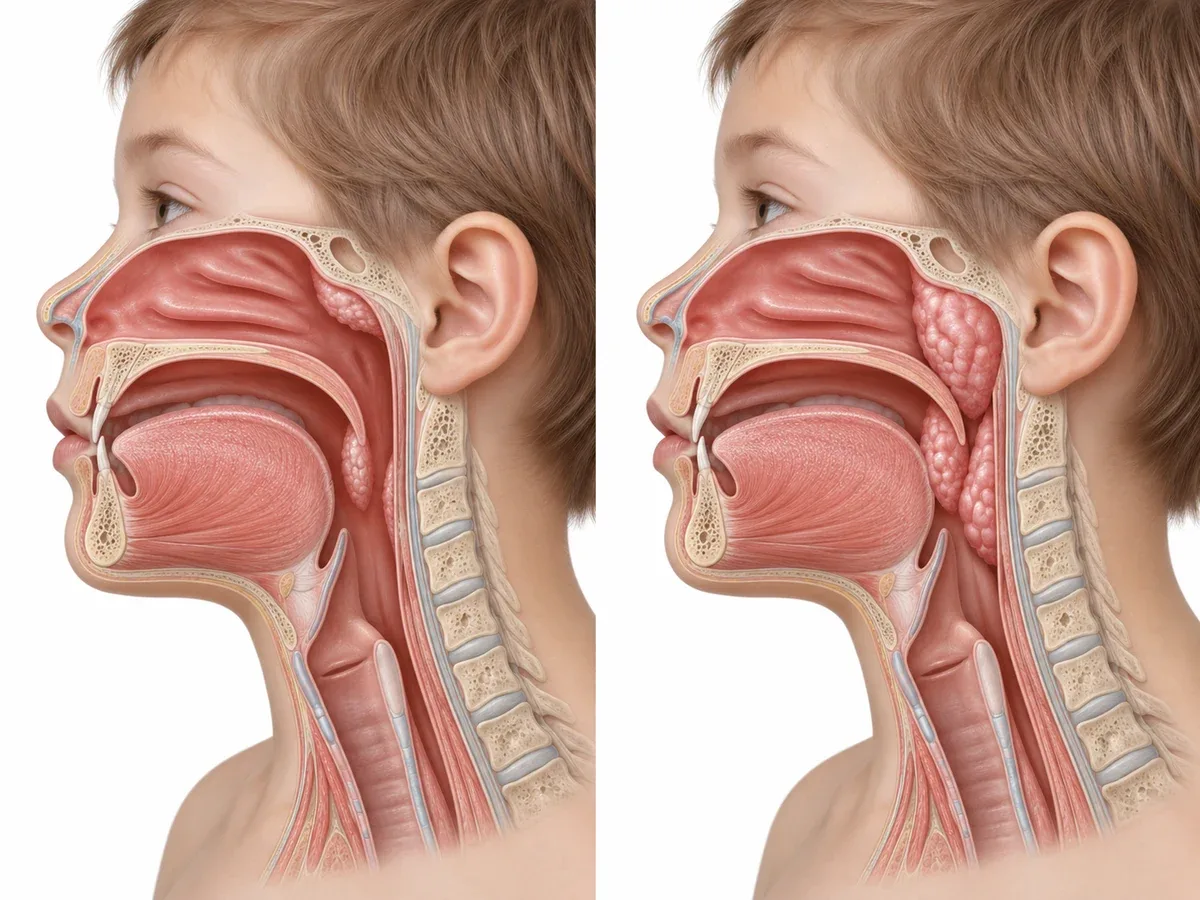
The child then breathes through the mouth. Kept up over years, the upper jaw narrows and the front teeth tip forward.
So children need looking at earlier, while the shape is still being set.
If a child snores and sleeps with an open mouth, start with a paediatrician or an ENT doctor.
Our part is widening a narrow upper jaw, which works far better before the bone fuses.
How do we start here?
First we sort out where the narrowing is, nose or jaw.
A profile X-ray shows the position of the chin and the width of the airway.
If the nose is the larger share, we ask you to see a doctor about that first.
Where breathing may be stopping, the sleep study comes before anything we make.
- Work out where the narrowing sits
- Refer for a sleep study when needed
- Start with the shape of your current appliance
- Advance the appliance in small stages
- Keep a record of the bite
Once we decide to make an appliance, we adjust it in stages, checking the bite every few months.
Our clinic sits near Seomyeon Station Exit 2, a five-minute walk away, so patients call in on the way home for an adjustment.
Snoring rarely has a single cause. Overlapping causes are the norm, so we take the largest share first.
Snoring in short
Snoring is the sound of tissue vibrating where the airway narrows in sleep.
It narrows inside the nose, around the soft palate, behind the tongue and around the tonsils.
The tongue is attached to the lower jaw, so a jaw that sits back tightens the airway.
A dentist checks jaw position, tongue position, worn teeth and a dry mouth.
Mouth breathing makes the sound louder, so the blocked nose is looked at first.
A narrow upper jaw narrows the nasal route, and a growing child's jaw can be widened.
A dental appliance widens the airway by holding the lower jaw slightly forward, advanced over weeks.
If breathing may be stopping, a sleep study comes first. Children often have enlarged tonsils, so they need looking at earlier.
Frequently asked questions
Is snoring without pauses something I can leave alone?
If breathing does not stop, it is not urgent. Confirming that by testing is still the safer course.
Will an appliance make me quiet straight away?
Many patients get quieter, though the sound does not vanish. It depends on how tight the airway is.
Is it the same as a grinding guard?
No. A snoring appliance holds the lower jaw forward, so the design is different.
Can I be treated for snoring in English in Busan?
Yes. We provide 1:1 English interpretation from the first consultation to the end of treatment. Call 010-8555-2854, or +82-10-8555-2854 from abroad.
Find the narrow point first, then treat it.
Snoring is a narrowed airway, and the jaw and tongue are part of that space,
so the order of care matters more than any single device.
For snoring assessed by a dentist in Seomyeon, Busan, Reset Dental Clinic supports patients in Korea with 1:1 English interpretation. Call 010-8555-2854 to arrange a consultation.
References
- KDCA National Health Information Portal, "Snoring" — where the sound comes from and why
- KDCA National Health Information Portal, "Sleep Apnoea" — when breathing stops, and how it is diagnosed
- KDCA National Health Information Portal, "Sleep and Sleep Disorders" — the structure of sleep and common sleep problems
- KDCA National Health Information Portal, "Dry Mouth" — why the mouth dries out when you breathe through it
Written by Reset Dental Clinic Support Team
Medical review Dr. Kim Hyun-joo, Head Dentist
Last updated: November 3, 2026
This column is for general information and does not replace diagnosis or treatment for individual patients. If you have symptoms, please see a dentist.