- Instruments that go into your mouth are sterilized, not merely disinfected.
- They are washed and pouched, then treated with heat and pressure.
- The pouch is opened in front of you.
- A great many items are used once and discarded.
When you sit in the chair, the instruments on the tray catch your eye, and wondering whether they are clean is reasonable. This column explains how dental sterilization works. At Reset Dental Clinic in Seomyeon, Busan, we provide 1:1 English interpretation from the first consultation to the end of treatment.
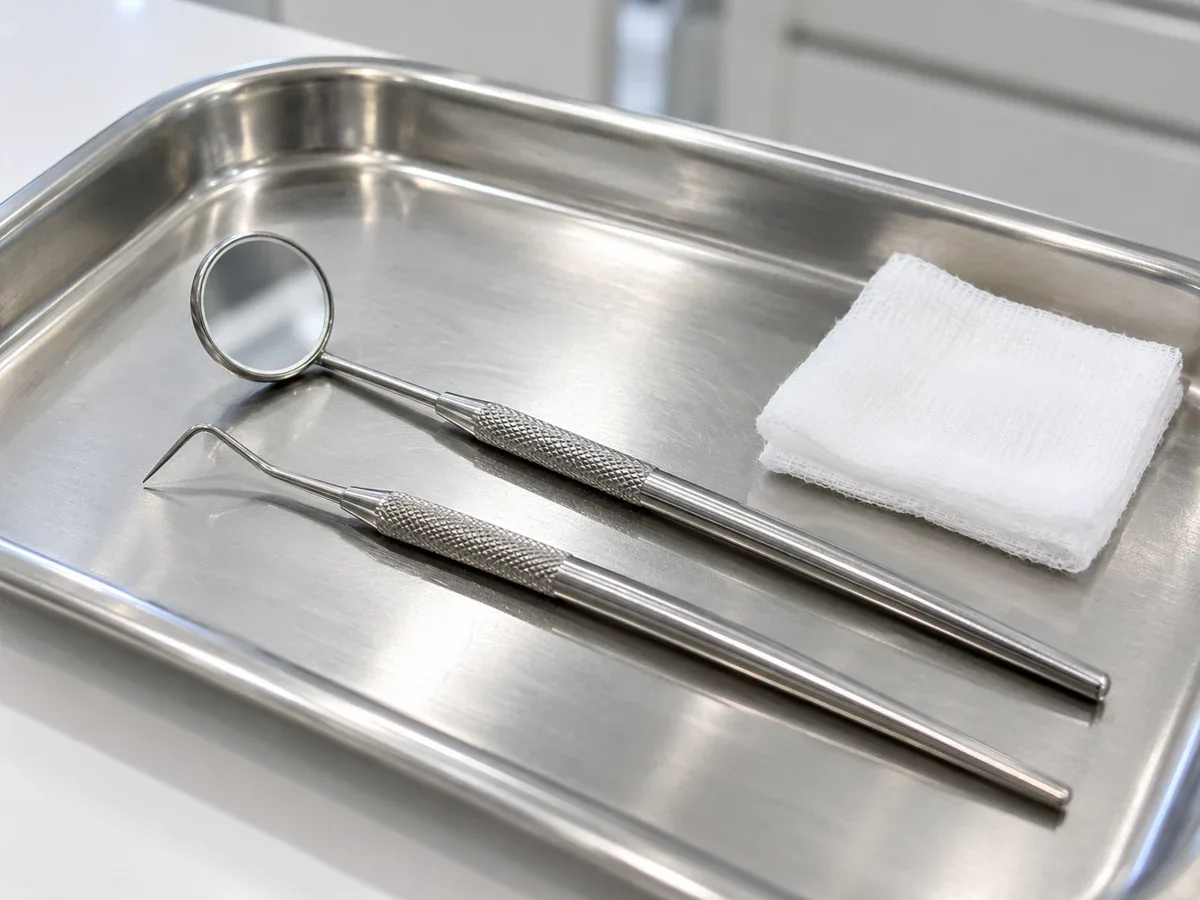
Almost every tool used in a dental clinic touches the inside of your mouth.
Many of them pick up blood or saliva.
So before they can be used on the next person, they have to be fully processed.
People usually call this disinfection, but two different things are meant by it.
Disinfection greatly reduces the number of bacteria. Sterilization kills everything, spores included.
Instruments that touch blood have to go through sterilization.
Surfaces that never reach the mouth are handled by disinfection instead.
How is sterilization different from disinfection?
Disinfection reduces the number of bacteria. It does not kill them all.
Sterilization leaves nothing behind, spores included.
A spore is a very tough shell that bacteria build.

Chemicals do not kill that shell well. So high temperature and pressure are used together.
Every instrument that touches blood or opens the gum goes through sterilization.
Instruments that touch the mouth without touching blood are usually sterilized as well.
Places that hands touch, such as chair handles and the light, are handled by disinfection.
| Where it is used | How it is processed | Examples |
|---|---|---|
| Instruments touching blood | Sterilization, always | Extraction and surgical instruments |
| Instruments touching the mouth | Sterilization | Mirror, probe, handpiece |
| Single-use items in the mouth | Discarded | Suction tips, gauze, cups |
| Surfaces that hands touch | Disinfection | Chair handles, light, buttons |
| Floor and walls | Cleaning | The whole treatment room |
As the table shows, each place has its own method.
Spraying a chemical over everything is not the answer. Instruments have their method and surfaces have theirs.
Keeping to those methods is what infection control amounts to. Skip one step and the rest counts for less.
Because the word disinfection is used so widely, the two get mixed up. We say it to patients for convenience, yet what we actually do is usually sterilization.
What steps does instrument sterilization go through?
There are five steps, and the order is fixed.
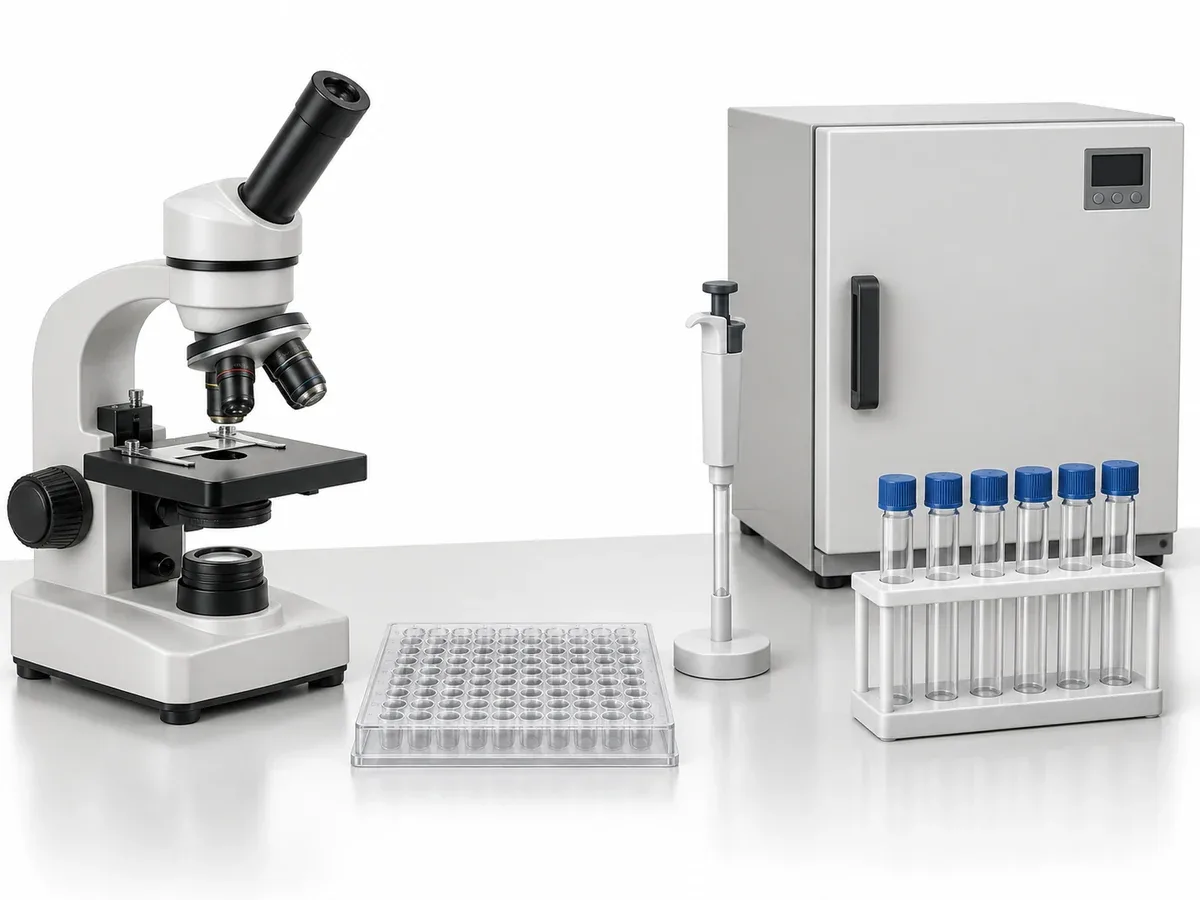
Used instruments are gathered in one place first. They are soaked in water or a cleaning solution before blood and saliva dry.
Once debris has dried on, it will not come away, and the next step becomes hard.
The second step is washing, which removes everything visible. An ultrasonic bath or a dedicated washer does the work.
Washing by hand risks injury and leaves corners untouched.
Washing matters more than anything. If debris is left, sterilization simply does not happen.
- Gather used instruments and soak them
- Wash in an ultrasonic bath or dedicated washer
- Dry them and check their condition
- Pouch each set and write the date
- Sterilize with heat and pressure
The third step is drying and inspection. Rusted instruments and damaged edges are pulled out at that point.
The fourth step is pouching. Each set goes into a pouch and is sealed, with the date and a marking on it.
The fifth step is sterilization itself, with the set going into the machine pouched.
It stays pouched in storage, and the pouch is opened when the set is used.
| Step | What is done | If it is missed |
|---|---|---|
| Gathering | Soak before anything dries | Debris hardens and will not come off |
| Washing | Remove visible debris by machine | Sterilization does not happen at all |
| Drying | Remove water and check condition | Rust forms inside the pouch |
| Pouching | Seal each set and date it | Recontamination during storage |
| Sterilization | Treat with heat and pressure | Spores survive |
Miss any one step in the table and the result changes.
The order is written down and followed as written.
The point is that the process stays the same whoever is doing it.
What kind of machine does the sterilization?
It traps steam to build high temperature and pressure. It is usually called an autoclave.
Steam above a hundred degrees is held for a set time.
Usually that means 121°C for twenty minutes, or 132°C for fifteen minutes.
Those conditions are what kill spores. Boiling water is not enough on its own.
Machines come in classes, and the range each class can handle differs.
| Class | What it can process | Use in dentistry |
|---|---|---|
| Class N | Unwrapped, simple instruments | Limited use |
| Class S | The range set by the maker | For some instruments |
| Class B | Pouched and hollow instruments | The recommended class |
| Dry heat | Oily instruments | Used as a support |
| Chemical vapour | Less concern about rust | Used as a support |
Sterilization of pouched instruments needs a class B machine.
Hollow instruments need one too, because steam has to reach the inside.
The chamber is not packed full. About seventy per cent is the aim, because gaps let steam circulate evenly.
The machine itself needs regular servicing.
One cycle takes thirty to forty minutes. So it runs several times a day, and on busy days it runs without a pause.
How do you check that sterilization worked?
Three methods are used together.
The first is the figures the machine records. Temperature, pressure and time are printed exactly as they were.
The second is the indicator on the pouch. A strip changes colour once it has taken heat.
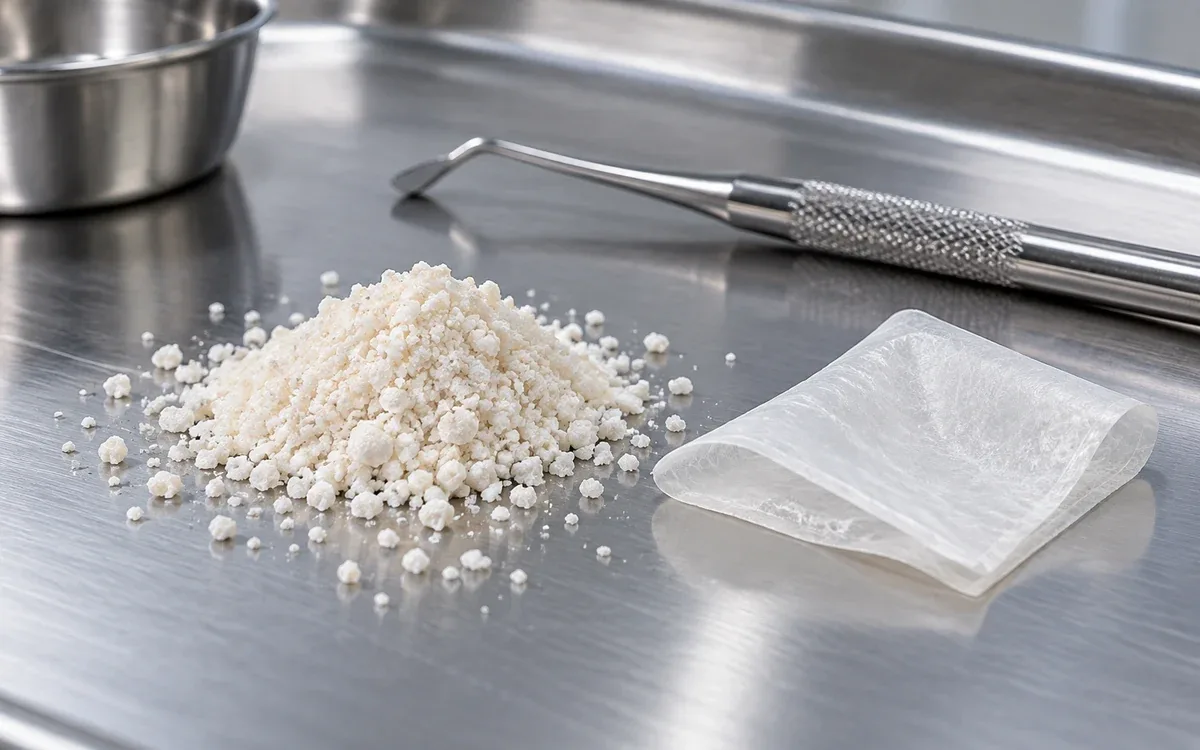
If the colour has not changed, that pouch is not used.
A changed colour does not settle the matter, though. The strip tells you that heat arrived, and nothing more.
- The temperature and time printed by the machine
- The colour-change indicator on the pouch
- Culture testing with live spores
- Records kept so a load can be traced
- Regular servicing of the machine
The third method is the most dependable. Live spores are put through the machine.
They are then cultured to see whether they died. Nothing growing means the cycle worked.
This test is run at set intervals, and the result is recorded.
Records matter because they let you trace back when something goes wrong. Sterilization records are kept for several years.
You have to be able to say when a load was run and under what conditions.
How are handpieces and water lines handled?
A handpiece is the most awkward instrument. It is hollow and holds mechanical parts inside.
It sprays water and air in the mouth and turns very fast. Saliva can be drawn inside while it does.
So wiping the outside is not enough. Soaking it in a chemical is not advised either.
There is no way to tell whether the chemical reached the inside, and the metal corrodes.
Instead it goes through sterilization by the maker's method, with oil put in and the excess expelled first.
Leftover oil that hardens ruins the bearings inside. Not following the instructions is the commonest reason for failure.
Changing handpieces between patients means owning several of them. They are expensive, so there is a temptation to stretch them.
Resisting that temptation is part of infection control, and doing it properly means owning enough.
The water from the chair
The water line in the chair is managed as well. It runs through narrow tubing, and a film forms on the inside.
That happens when water moves slowly or stands overnight, and bacteria grow inside the film.
So the lines are flushed for a while each morning, and briefly before and after each patient.
The tubing itself is cleaned with a solution at set intervals, and filters are changed on schedule.
Surgery that opens the gum does not use that water. Sterile saline is connected separately for it.
This part is out of sight, so it is easy to let slip. Dates are set for it and kept to.
What is thrown away, and what can you check?
More than you would think, and it goes straight in the bin.
Gauze, cotton and paper cups are in that group.
The suction tip that draws up saliva is used for one patient.
Needles and anaesthetic ampoules go without saying.
Gloves and masks are changed for every patient, and impression material is discarded after one use.
Surgery uses sterile drapes and gowns. The impression tray itself is disinfected and used again.
- Gauze, cotton and paper cups
- The suction tip for saliva
- Needles and anaesthetic ampoules
- Gloves and masks
- Surgical drapes and gowns
- Impression material
Waste is separated by type. Anything that could prick, such as a needle, is collected apart.
That container is sealed and disposed of before it fills up.
Using so much once and discarding it raises costs. Even so, not reusing is the rule, and that is the right side to be on.
Surfaces and hands
Surfaces that hands touch are wiped between patients. Chair handles, the headrest and the light handle are in that group.
So are the instrument tray and its stand, along with the buttons and switches used during treatment.
A dedicated wipe or a cloth sprayed with solution does the work. A solution left to sit for a moment beats one that dries at once.
Frequently touched spots are sometimes covered with a film, which is quick and certain to change.
Floors and walls are cleaned daily, and the air is changed often, because droplets travel further than you would expect.
Hand hygiene is the most basic step and the one with the largest effect. Hands are washed before and after every patient.
Soap and water for fifteen to thirty seconds, covering between the fingers, under the nails and up to the wrists.
Visible soiling calls for soap and water, while a hand rub can be used when there is none.
Hands are dried with a paper towel, because wet hands carry bacteria more easily.
Hands are washed before gloves go on and again after they come off, since a glove may have a hole.
Surgery follows a longer hand hygiene procedure.
What you can check as a patient
Several things are plain to see.
The first is whether the pouch is opened in front of you. If a set is already lying open, you may ask about it.
The second is whether fresh gloves go on. Nobody should walk over from the previous patient as they were.
The third is whether the cup and suction tip are new, and the fourth is whether the chair and tray have been wiped.
Asking is not rude. It is the sort of thing you should ask.
We would rather be asked, since it gives us a chance to explain.
If you are curious, we will show you the machine and the sterilization records.
Many patients say the explanation puts their mind at rest. The process is out of sight, so wanting to know is natural.
How is sterilization handled at our clinic in Busan?
The room where instruments are processed is kept separate from the treatment room.
Work moves in one direction, from the dirty side to the clean side. Keeping the two from mixing is the point of that room.
Washing is done by machine rather than by hand, and each pouch carries the date and the name of the person who prepared it.
The machine keeps its records, and servicing is booked to a set date.
- A processing room separate from treatment
- Movement in one direction, dirty to clean
- Washing done by machine
- Date and staff name on every pouch
- Culture test results kept on file
Spore culture testing is run at intervals, and those records are collected and stored.
We keep enough handpieces to change them between patients.
Water lines are flushed each morning and the tubing is cleaned at intervals.
Staff are trained regularly, because knowing a procedure and having it in your hands are two different things.
New colleagues work alongside someone for a while until it settles. Processing records are collected and reviewed each month.
If a day is missing, we look at why. Building that record up is what trust rests on in the end.
We are close to Seomyeon Station, so dropping in to look is easy. Please ask about anything at all, and we will show you.
Frequently asked questions
Are disinfection and sterilization the same thing?
They differ. Sterilization kills spores as well, while disinfection reduces numbers.
Is boiling the instruments enough?
No. Spores survive in boiling water.
Is the handpiece changed for every patient?
It is, which is why a clinic has to own several.
Can I ask about sterilization in English in Busan?
Yes, we provide 1:1 English interpretation from your first consultation to the end of treatment. We are near Seomyeon Station Exit 2, a five-minute walk, opposite Lotte Hotel Busan, and you can call 010-8555-2854 (+82-10-8555-2854 from abroad).
Instruments that go into your mouth are sterilized, not merely wiped.
Five steps, a machine record, a colour strip and a culture test,
and the pouch opened in front of you.
If you would like to see how sterilization is done, Reset Dental Clinic in Busan provides 1:1 English interpretation from the first consultation to the end of treatment. Call 010-8555-2854 to book a consultation.
References
- KDCA National Health Information Portal, "Hand Washing" — method and duration of hand hygiene
- Dental News, "Safe dental care begins with infection control" — infection control across the clinic
- Dental News, "Do you know your autoclave class?" — sterilizer classes and loading
- Dental News, "Look after your dental water lines" — why chair water lines need management
Written by Reset Dental Clinic Support Team
Medical review Dr. Kim Hyun-joo, Head Dentist
Last updated: November 3, 2026
This column is for general information and does not replace diagnosis or treatment for individual patients. If you have symptoms, please see a dentist.