- The KDCA advises a check-up every 3–6 months, even after implant treatment is finished.
- A Korean periodontology society talk suggested every 3 months in the first year, then about every 6 months depending on risk.
- Disease around an implant can progress without discomfort, and it is often advanced by the time you feel it.
- Each check-up looks at the gums, bone level and bite, and the interval is set by your own risk.
"Nothing hurts, so do I really need to come in?" Patients who have finished implant treatment at our clinic in Seomyeon, Busan often ask us this. For patients living in or visiting Korea, we offer 1:1 English interpretation from the first consultation through the end of treatment.
Implants do not get cavities, so it is easy to feel that care is over. This column draws on the KDCA National Health Information Portal and on Dailydental reports of periodontology society talks and guidelines.
Below, we explain how often a check-up is needed, and why.
Do you need a check-up if your implant does not hurt?
The 2025 Gum Day event of the Korean Academy of Periodontology focused on implant success, failure and aftercare. Data presented that day showed that 43% of implant patients experience peri-implant mucositis. Another 22% experience peri-implantitis.
Dailydental reported this under the headline "65% of implant patients experience peri-implant disease." In other words, gum problems around implants are not rare.
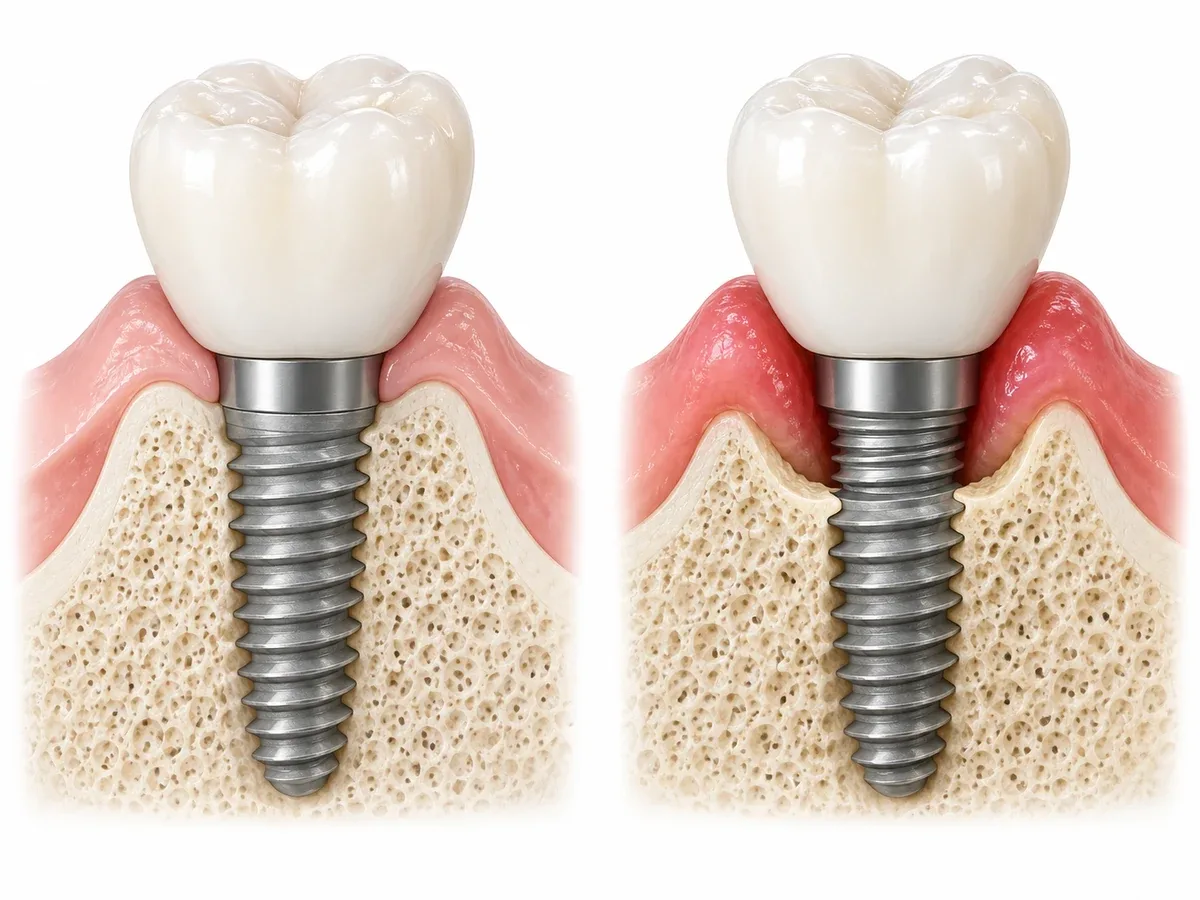
The KDCA describes peri-implantitis as inflammation of the gum and bone around an implant. It lists lifestyle habits such as smoking, and poor oral hygiene, among the causes.
Yet 89.4% of patients said they skip aftercare because nothing feels wrong. A society spokesperson stressed that by the time symptoms appear, the disease has often progressed. That is why a regular check-up matters so much.
The KDCA makes the same point. Peri-implantitis starts in the gum, but as it worsens it reaches the bone. Even with severe bone loss the implant may not move or stop working, so treatment is often delayed.
At the same event, Professor Park Jin-young of Yonsei University explained how fast it moves. Bacteria around an implant are not easily broken down by the body's immune cells. So it tends to progress more destructively than gum disease around natural teeth.
The KDCA advises healthy habits and good oral hygiene to prevent peri-implantitis. Alongside these, it recommends regular dental visits for professional care.
The society's president, Seol Yang-jo, put it simply. Success depends less on the surgery than on steady aftercare and regular check-ups.
How often should you have an implant check-up?
The KDCA advises a regular check-up every 3–6 months after treatment is complete. Long-lasting implants need good hygiene, avoiding excessive chewing force and regular check-ups.
At the same Gum Day event, Professor Kim Sung-tae of Seoul National University Dental Hospital also suggested an interval. For maintenance care, every 3 months in the first year is appropriate, he said. After that, about every 6 months is appropriate, depending on individual risk.
The society's 2025 clinical guideline is similar. If the tissue around the implant is healthy, maintenance continues every 3–6 months. The interval is set for each person using an implant disease risk assessment (IDRA).
The society said this guideline condenses a consensus published in its journal (JPIS) for easy clinical use. It was made public so that local clinics can use it too.
| Source | Interval |
|---|---|
| KDCA National Health Information Portal | Every 3–6 months after treatment is complete |
| Gum Day talk (Professor Kim Sung-tae) | Every 3 months in the first year, then about 6 months depending on risk |
| Periodontology society guideline (2025) | Every 3–6 months if healthy, set per person by risk assessment (IDRA) |
There is a reason to check more often in the first year. A retrospective study in the Journal of the Korean Dental Association recommended shorter visit intervals early on. This allows a close look at the crown and the bite.
The KDCA also notes that the first year is when the bone around the implant firms up and stabilizes. It recommends starting with soft foods during this time.
There is also a period of getting used to the new tooth. After a long gap, you may bite your tongue or cheek at first. According to the KDCA, this usually settles over 1–2 months.
Under Korean national health insurance, implants also come with a follow-up period. It lasts 3 months from the day after the final crown is placed, and visits are made at the same clinic.
| Stage | What the sources say |
|---|---|
| First 3 months after the crown | Follow-up period for implants covered by Korean national health insurance |
| First year | A check-up every 3 months was suggested |
| Eating in the first year | The bone is stabilizing, so start with soft foods |
| After the first year | About every 6 months, depending on risk |
| Staying healthy | The guideline suggests every 3–6 months |
Who needs check-ups more often?
The Gum Day talks also presented the main risk factors for peri-implant disease. The numbers show how many times higher the risk is.
| Factor | Reported risk |
|---|---|
| Smoking | 5.89 times higher |
| Poor oral hygiene | 3.8 times higher |
| Uncontrolled diabetes | 2.75 times higher |
Having these factors does not mean everyone will develop peri-implantitis. But the guideline sets intervals by risk, so these factors are a reason to schedule check-ups closer together.
The KDCA singles out smoking. Smoking is directly linked to implant failure, so quitting is essential for success and long use.
The causes of failed bonding between implant and bone are similar. The KDCA lists infection right after surgery, poor oral hygiene after surgery, smoking and low bone density.
General health matters too. The retrospective study linked early failures to conditions such as diabetes and high blood pressure, which limited initial stability. The researchers considered general health a major factor in failure.
The KDCA notes that diabetes slows wound healing, so blood sugar control is needed. If you have diabetes, please tell us how your blood sugar is doing at your check-up.
Chewing habits are also considered when setting the interval. The KDCA says these habits put too much force on certain areas:
- grinding your teeth
- chewing on one side
- clenching your teeth
If you have these habits, the KDCA advises talking with your dentist about preventive measures. That is also why the bite is checked at each visit.
What is checked at an implant check-up in Busan?
The KDCA says implants are seen as "a second set of permanent teeth" because their chewing force is close to natural teeth. Still, it notes that implants do not last forever. It sums up the work of a regular check-up in three points:
- Any inflammation around the implant is treated.
- The bite between upper and lower teeth is checked and readjusted if it has changed.
- Depending on the type, the top part is removed and cleaned.
The periodontology society guideline gives clear criteria for healthy tissue. All three must be met before moving to the maintenance stage:
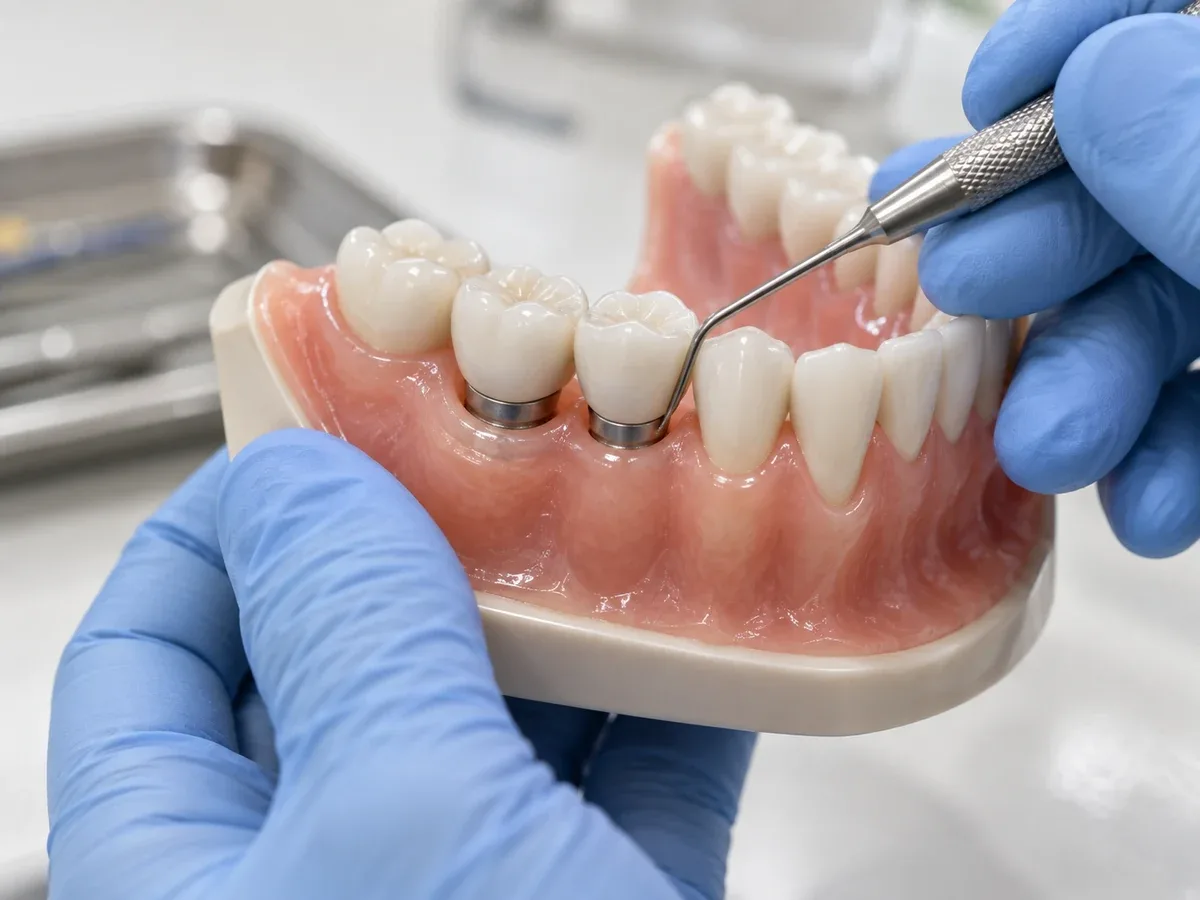
- Probing depth, measured with a thin instrument, is under 5 mm.
- There is no bleeding or pus when probing.
- There is no sign of ongoing bone loss.
The guideline names regular professional cleaning as the basis of maintenance. This means removing tartar and plaque at the clinic. It also stresses helping patients keep up their care over time.
The guideline sets the next visit based on the risk assessment (IDRA). So a check-up is not a one-time inspection, but a way of deciding the next interval.
The retrospective study also found regular checks and X-rays helpful in preventing failure. Changes in bone level cannot be seen from outside, so we compare X-rays.
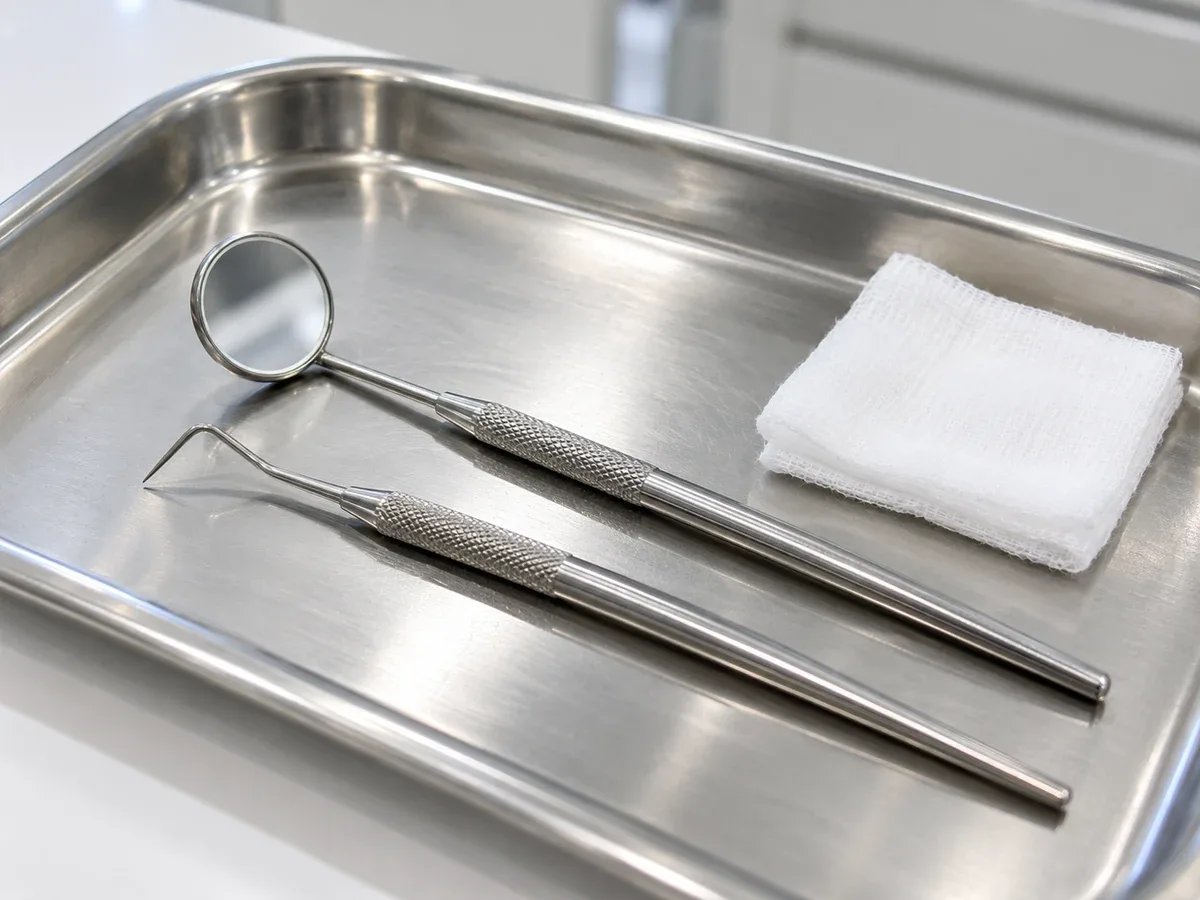
Putting the sources together, one check-up usually runs in this order:
- We ask about any discomfort since the last visit and any medicines you take.
- We check gum depth, bleeding and pus around the implant.
- If needed, we compare bone level on X-rays.
- We check the bite and adjust it if needed.
- We remove tartar and plaque, and clean the top part if the type allows.
- We set the next check-up interval based on the results and your risk.
What happens if a problem is found?
The guideline lays out treatment as a step-by-step flow. It starts with one question: is the tissue around the implant healthy? If there is inflammation, decisions follow this order:
- Check whether the implant is loose or fractured, and remove it if so.
- If it is stable, assess how much bone has been lost.
- If more than half the implant length has lost bone, removal is recommended.
- If loss is less severe, non-surgical treatment comes first.
- After re-assessment, return to maintenance if healed, or move to surgery if inflammation persists.
Non-surgical treatment cleans the implant surface mechanically and chemically. In the surgical stage, the method depends on the shape of the bone loss. Either the bone is rebuilt or its shape is refined.
If the implant is removed and replaced, the bone shape is checked again. The guideline mentions bone grafting or a wider implant when immediate replacement is possible. Otherwise, a new implant is placed after the bone recovers.
After treatment, all three health criteria must be met again before returning to maintenance. If they are not met, non-surgical treatment is repeated or surgery is recommended.
| Condition | Guideline response |
|---|---|
| Probing depth under 5 mm, no bleeding or pus, no ongoing bone loss | Move to maintenance |
| Implant loose or fractured | Remove |
| Bone lost along more than half the implant length | Removal recommended |
| Bone loss not severe | Non-surgical treatment first, then back to maintenance if healed |
| Inflammation persists | Move to surgical treatment |
In short, the earlier a problem is found, the more options remain. That is why the check-up interval matters.
What happens if you skip check-ups?
Dailydental reported on a study in the Journal of the Korean Dental Association. It analyzed 17 patients (26 implants) whose implants failed and were removed or retreated.
The researchers named poor maintenance and mechanical defects as the main causes. On average, it took about 2.8 years until failure was diagnosed. Of the 17 patients, 8 failed early and 9 failed after the crown was in use.
The late-failure patients had one thing in common. They had not kept their check-up dates, and came in when the implant was already moving.
This was a small study at one hospital, so it cannot be generalized. Still, it shows what regular check-ups are for.
The researchers also thought the crown design may have caused food to get trapped, raising the chance of peri-implantitis. They recommended follow-up that covers maintenance, crown design and mechanical problems together.
So please mention small changes at your check-up, such as food getting stuck or the top feeling loose.
What should you do at home between check-ups?
The KDCA says implants must be kept as clean as natural teeth to avoid inflammation. Gum disease is a major cause of tooth loss, and implants also need to stay clean to last.
Implants in particular have wider gaps between teeth. So the KDCA says floss and interdental brushes are essential.
Some patients are told at every visit that their hygiene needs work. The KDCA explains that a regular toothbrush alone cannot reach every surface. Here is what to do at home:
- Clean between the teeth with floss and interdental brushes, as well as brushing.
- Brush the tongue side, which is easy to miss, while looking in a mirror.
- Avoid hard or tough foods where possible.
- Chew evenly on both sides so force does not build up on one side.
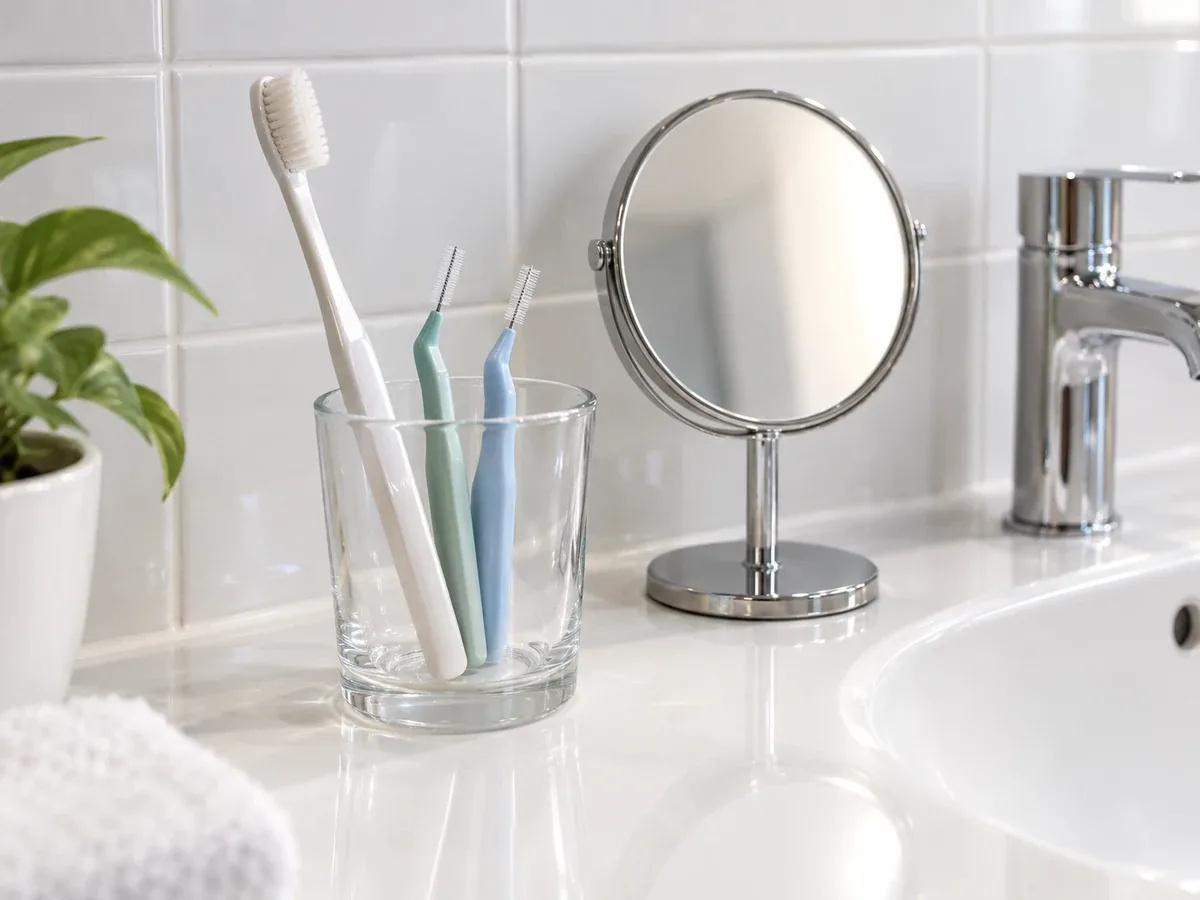
If you bring your interdental brush or floss to your check-up, we can review the size and how you use it. Care keeps going when your daily tools fit the gaps.
Home care and a dental check-up do not replace each other. Daily care reduces plaque, and the check-up uses X-rays and instruments to find changes you cannot see.
Frequently asked questions
It does not hurt or move. Do I still need a check-up?
The sources say peri-implant disease can progress without discomfort, and bone can be lost without any wobble. A check-up is meant for the time when nothing feels wrong. Think of it as a chance to find changes before problems grow.
After the first year, is once a year enough?
The KDCA advises check-ups every 3–6 months after treatment. The Gum Day talk also suggested about every 6 months after the first year, depending on risk. If you smoke or have diabetes, the interval may be shorter.
I have not had a check-up for over a year. What should I do?
Come in now. We first check your gums and bone level, then reset your future interval based on the results.
Can I get an implant check-up in English in Busan?
Yes. We provide 1:1 English interpretation from the first consultation through the end of treatment. The clinic is near Seomyeon Station Exit 2 (5-min walk), opposite Lotte Hotel Busan, and you can call 010-8555-2854 (+82-10-8555-2854 from abroad).
The sources agree: a check-up every 3 months in the first year, then an interval set by your risk.
The point of a check-up
is to have it while nothing hurts.
If you have an implant and live in or are visiting Busan, Reset Dental Clinic offers 1:1 English interpretation from your first consultation through the end of treatment. Call 010-8555-2854 to book your next check-up.
References
- KDCA National Health Information Portal, "Dental Implants" — peri-implantitis as inflammation of the gum and bone around an implant linked to smoking and poor hygiene; implants do not last forever and need hygiene, avoiding excess force and regular check-ups; check-ups every 3–6 months with treatment of inflammation, bite checks and, depending on type, cleaning of the top part; peri-implantitis that damages bone without any wobble; the first year as the period when bone stabilizes; grinding, one-sided chewing and clenching; floss and interdental brushes as essential
- KDA newspaper Dailydental, "65% of Implant Patients Experience Peri-implant Disease" (Mar 26, 2025) — the 17th Gum Day of the Korean Academy of Periodontology: 43% mucositis and 22% peri-implantitis; more destructive progress than gum disease around natural teeth; risk factors of poor hygiene 3.8 times, smoking 5.89 times and uncontrolled diabetes 2.75 times; 89.4% skipping aftercare because nothing felt wrong; maintenance every 3 months in the first year, then about 6 months by individual risk
- KDA newspaper Dailydental, "New Guideline on Treating Peri-implant Disease" (Oct 29, 2025) — the 2025 KAP consensus on peri-implant diseases: maintenance every 3–6 months if healthy; removal of loose or fractured implants and when bone loss exceeds half the implant length; non-surgical treatment first, then re-assessment; the three health criteria for maintenance; risk-based recall with IDRA and regular professional cleaning; choice of surgery by the shape of bone loss
- KDA newspaper Dailydental, "Half of Implant Failures Due to Poor Maintenance" (Sept 23, 2019) — a retrospective study of 17 patients and 26 implants: about 2.8 years to diagnosis of failure; late-failure patients missed check-up dates and came in once problems appeared; shorter early visit intervals and regular checks with X-rays; crown design and food impaction; follow-up covering maintenance, crown design and mechanical problems
- National Health Insurance Service, "Dental Implant Coverage Q&A" — the 3-month follow-up period after the final crown for implants covered by national health insurance, and how crown work and treatment of disease around implants are handled after it
Written by Reset Dental Clinic Support Team
Medical review Dr. Na In-chae, Head Dentist · Periodontics Specialist
Last updated: September 19, 2026
This column is for general information and does not replace diagnosis or treatment for individual patients. If you have symptoms, please see a dentist.