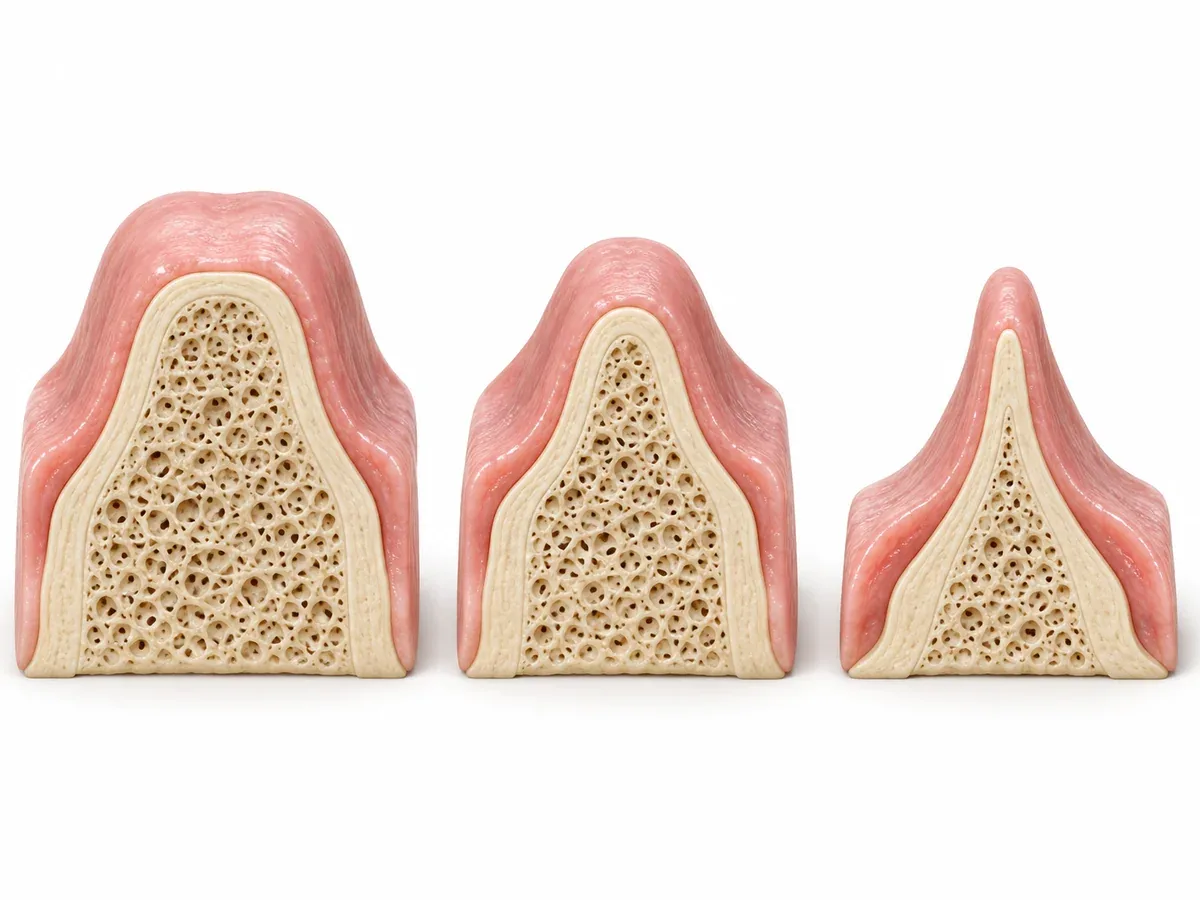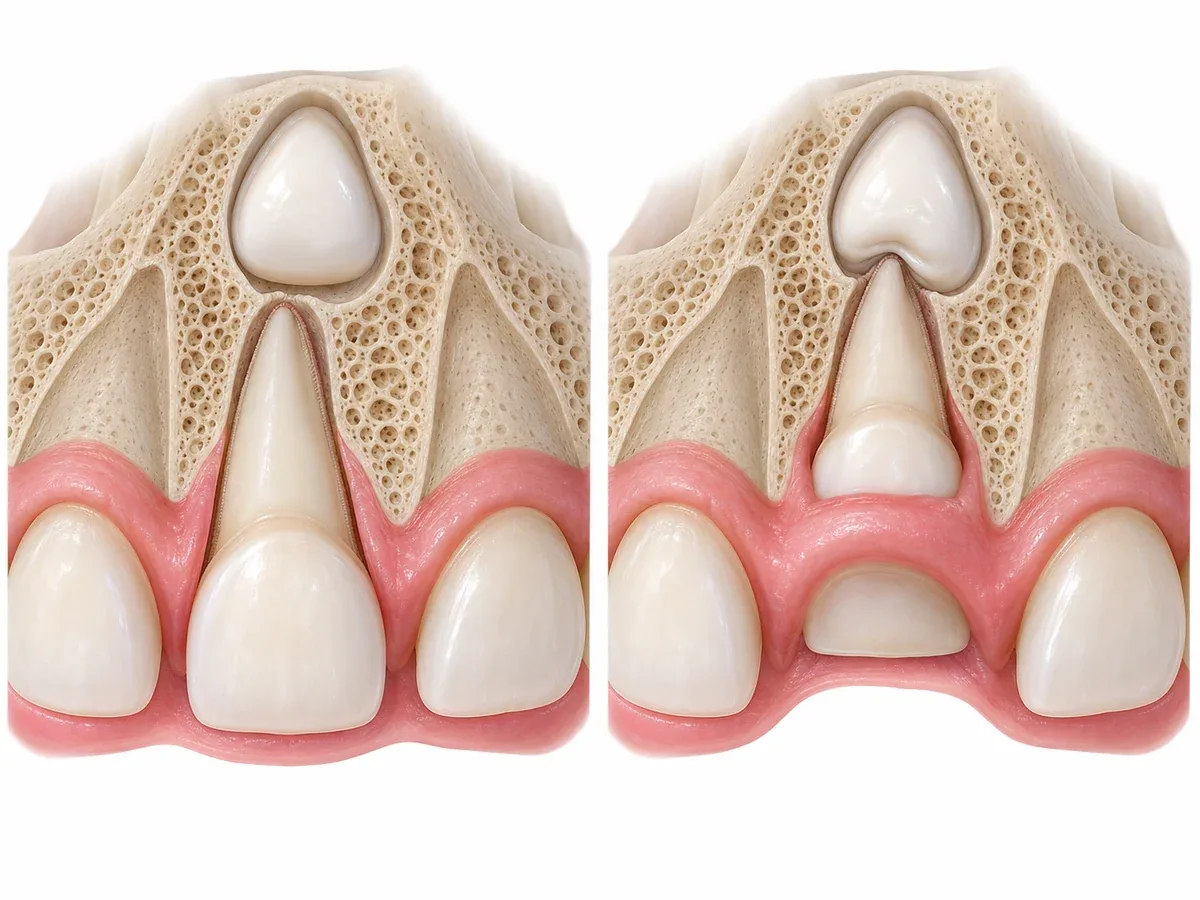
- Full-arch implant time is the sum of several stages, from exams to final teeth.
- Bone healing takes generally 3–4 months, and longer in the upper jaw.
- A bone graft usually means 6–9 months of healing.
- Temporary teeth are used for one to several months before the final teeth.
"How many months until it is all done?" This is the first question we hear in full-arch implant consultations in Seomyeon, Busan. The timeline differs by stage and by person, so this column lays it out step by step. For patients living in or visiting Korea, we provide 1:1 English interpretation from the first consultation through the end of treatment.
We draw on material from the KDCA and Seoul National University Hospital, plus full-arch case reports from university hospital prosthodontics departments.
Why is it hard to give one number for full-arch implant treatment?
The KDCA material on removable prostheses describes denture treatment combined with implants. It says treatment generally takes at least several months, and sometimes more than a year.
It gives two reasons. Extraction sites take a few months to heal. Once implants are placed, several more months are needed for them to bond with the bone.
A fixed full-arch implant cannot skip these two waits either. Exams, planning and time to adapt to temporary teeth are added on top.
So it is more accurate to see the timeline as the sum of each stage than as a single block of months. Splitting it into stages, as below, shows where the time goes.
| Stage | What happens | Time |
|---|---|---|
| Exams and planning | Medicines and health conditions are checked, and a CT is taken. | Varies by person. |
| Tooth removal | Remaining teeth are extracted and the placement timing is chosen. | At extraction, 6–10 weeks later, or 3–6 months later. |
| Placement | Implants are placed in the jawbone. | Surgery usually takes about an hour. |
| Bone healing | Waiting for osseointegration. | Generally 3–4 months, longer with a bone graft. |
| Temporary teeth | Chewing, speech and appearance are checked. | About one to six months in the cases. |
| After final teeth | Regular check-ups. | Every 3–6 months. |
The times in the table can add up or overlap. That is why full-arch implant schedules differ so much from person to person.
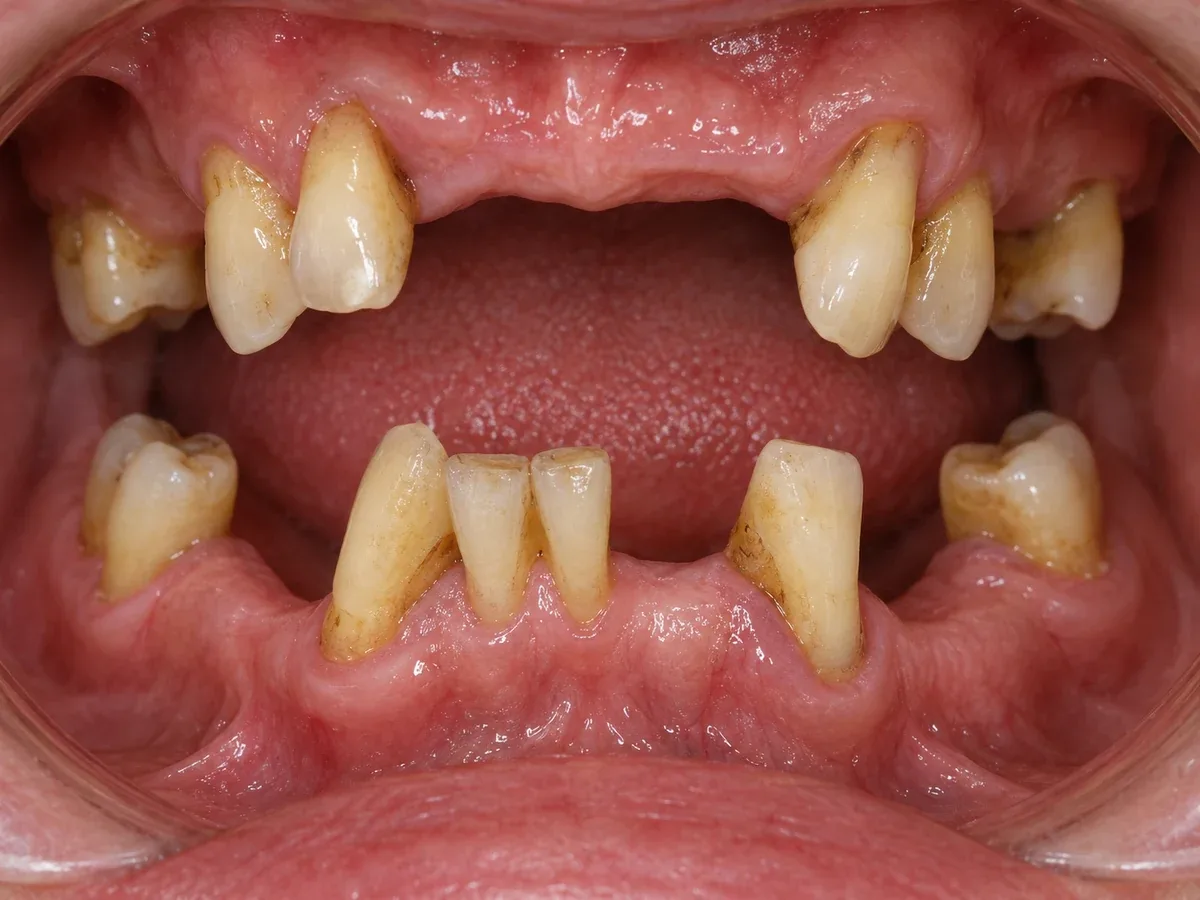
What happens at the first stage, exams and planning?
The KDCA dental implant material says general health conditions and current medicines are checked before surgery. Any decay or gum disease is treated first, to create a clean environment in the mouth.
Next, the bone is examined with a dental CT scan and a panoramic X-ray. A diagnostic model showing how the upper and lower teeth meet is made from impressions or an intraoral scan.
These results decide whether a bone graft is needed, and the type, size, length and number of implants. For a full-arch implant, the decisions made here shape the whole schedule that follows.
The same material is specific about medicines. People taking blood pressure or heart medicines may need to pause some of them because of bleeding. Osteoporosis medicines or injections may need to be stopped or replaced.
In an Asan Medical Center case, a medicine that raised bleeding risk was discussed with the patient's physician. It was stopped 7 days before extraction. Time to adjust medicines also belongs at the start of the schedule.
It helps to prepare the following before your exam.
- The names of your medicines, especially for blood pressure, the heart or osteoporosis.
- Any health condition under treatment, such as diabetes, and the hospital you attend.
- Whether you smoke, and how much per day.
- Dates of work or events to avoid during surgery and recovery.
If you smoke, full-arch implant preparation starts here. Seoul National University Hospital notes that smokers may resist infection less well and heal more slowly. So it advises stopping before surgery.
How are tooth removal and placement timing decided?
Seoul National University Hospital divides implant placement timing into three types.
- Immediate placement: the implant is placed at the time of extraction.
- Delayed immediate placement: placed 6–10 weeks after extraction.
- Late placement: placed 3–6 months after extraction.
The choice changes the early part of a full-arch implant schedule a great deal. Whether immediate placement is possible depends on the bone.
With many teeth to remove, a full-arch implant plan also decides whether to extract all at once or in stages. How you will manage with temporary teeth ties into this.
The Asan Medical Center prosthodontics team reported a full-arch implant case in a Korean journal. The remaining teeth were removed in three stages, and temporary dentures were fitted.
Impressions were taken four months after extraction to make the plan. From six months after extraction, implants were placed in three stages, with nine planned for the upper jaw and eight for the lower.

What are surgery day and the following days like?
Seoul National University Hospital says surgery usually takes about an hour. It can take longer with several implants or a large bone graft. The Asan case above placed implants in several stages.
In the two-stage method, the implant is covered by gum and later reopened in a short second surgery. After that, normal life can resume at once or within a day or two.
Swelling generally peaks within 48 hours of surgery and then fades. Moderate pain may occur for 24–48 hours and is controlled with medicine.
| Time | Guidance | Source |
|---|---|---|
| Right after surgery | Spit out the gauze after about an hour. | Seoul National University Hospital |
| First 24 hours | Ice packs, 5 minutes on and 5 minutes off. | KDCA |
| Days 2–3 | Soft or liquid food on the other side, with a raised pillow. | Seoul National University Hospital |
| First week | Avoid hard exercise, alcohol and smoking. | Seoul National University Hospital |
| Weeks 1–2 | Stitches are removed in turn. | Seoul National University Hospital |
| Before stitches are out | Use mouthwash on the surgical area instead of brushing. | KDCA |
Do not spit, drink through a straw or blow your nose. Contact the clinic if you have severe pain or bleeding.
Plan work and events around this period. When a full-arch implant is placed in stages, these days repeat after each surgery.
Separate surgeries for the upper and lower jaws mean two recovery periods. On your calendar, mark the week after surgery before the surgery date itself.
How long does bone healing take, and what makes it longer?
The firm bond between implant and bone is called osseointegration. The KDCA says this healing period is generally about 3–4 months.
It varies with bone condition, age and general health. It also takes longer if a bone graft is needed.
Seoul National University Hospital explains it by jaw. The lower jaw needs at least 2–3 months, and the upper jaw at least 4–6 months. Weak bone adds 1–2 months, and a bone graft usually means 6–9 months.
| Condition | What the source says |
|---|---|
| Lower jaw | At least 2–3 months |
| Upper jaw | At least 4–6 months |
| Weak bone at the implant site | 1–2 months more |
| After a bone graft | Usually 6–9 months |
If you are treating both jaws, the two waits may differ. That is why a full-arch implant schedule lists the upper and lower jaws separately.
The timing of a bone graft also matters. The KDCA says grafts are mostly done before implant placement, though sometimes during the same surgery. Either way, the time for the graft to settle is added to the schedule.

A Yonsei University case shows how conditions change the schedule. A CT scan showed much bone loss near the upper back teeth. The lining of the maxillary sinus was also widely thickened.
So an ear, nose and throat specialist helped control the inflammation first. A sinus floor elevation was then done, while front-tooth and lower-jaw surgery went ahead in the meantime.
After the graft, about 5 months of healing followed. After the back implants were placed, there was about 3 more months of waiting.
The KDCA notes that diabetes slows wound healing, so blood sugar needs control. Smoking is directly linked to implant failure, so quitting is essential.
During healing, avoid hard foods. Biting too hard can disturb the implant as it fixes to the bone.
| Condition | What is checked |
|---|---|
| Not enough bone | CT decides whether to graft; grafting lengthens healing |
| Upper back teeth | The sinus; any inflammation is controlled first (Yonsei case) |
| Decay or gum disease in remaining teeth | Treated before surgery |
| Diabetes | Blood sugar control, as it slows wound healing |
| Smoking | Directly linked to failure; quitting needed |
Why is a period with temporary teeth needed?
You do not go without teeth while waiting. Meals and social life continue during treatment. So the KDCA says extra temporary dentures are often made.
Temporary dentures take time to make too, so allow for this in your full-arch implant plan. That is why the extraction date is set together with the date the temporary teeth are ready.
In the Yonsei case, the patient found speaking and chewing hard with temporary dentures. During healing, the front section was switched to temporary teeth fixed on implants. The patient was told to wear the back dentures at meals, to protect implants still bonding.
In many cases, the final teeth were not fitted as soon as the bone healed. In the Asan case, stability was measured two weeks after front implant placement. Then a screw-retained temporary restoration was made.
After a month, the patient felt the front teeth looked sunken and the face looked short. So lip support and the vertical dimension, the height of the bite, were increased by 1–2 mm.
This second set of temporary teeth was assessed for function, appearance, speech and hygiene over 6 months. In the Yonsei case, fixed temporary teeth were used for about a month to check chewing and speech.
During this period, note spots that hurt when chewing, unclear sounds and how your smile looks in the mirror. Both cases assessed function, appearance and speech.
Both cases carried the feedback from this period into the final design. In full-arch implant treatment, the temporary stage is not a detour but a step for checking the design.
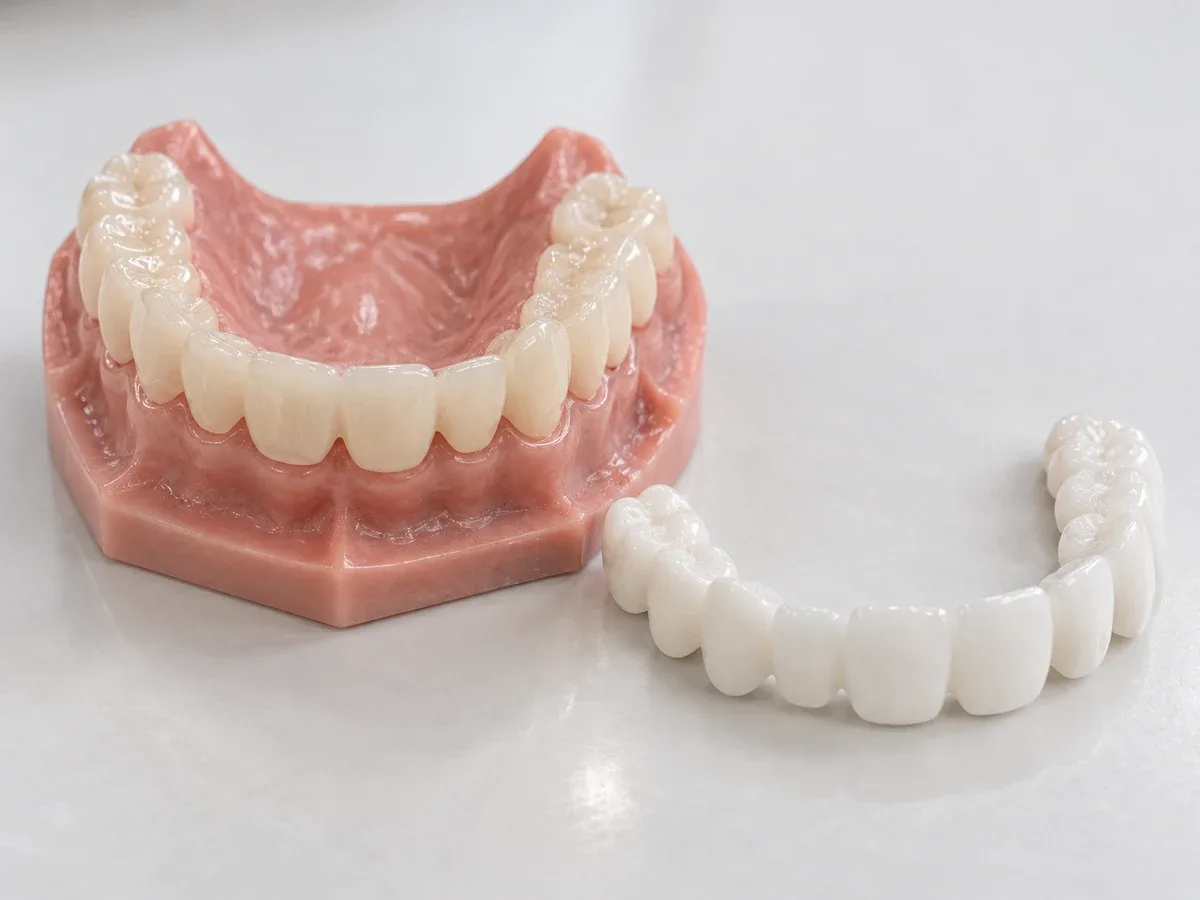
What should a full-arch implant schedule in Busan include?
The KDCA lists the steps from bone healing to the final teeth.
- An abutment connects the artificial tooth to the implant.
- The tooth is fixed to the abutment with cement or a screw.
- Contact and force with the opposing teeth are adjusted.
In the Asan case, the final teeth were also fitted in three stages. The patient then returned every 3 months for hygiene care and wore a night guard while sleeping.
This is the course of one patient, though. It does not mean the same order and timing apply to everyone.
The KDCA advises regular check-ups every 3–6 months after full-arch implant treatment. At these visits, the following is done.
- Any inflammation around the implants is treated.
- The bite is checked and readjusted if it has changed.
- Depending on the implant type, the upper parts are removed and cleaned.
In the first year, the bone around the implants firms up, so start with soft foods. You may bite your tongue or cheek at first, but most people adapt within 1–2 months.
The day your final teeth go in ends treatment and starts your care schedule. It helps to write these items in your schedule.
- Extraction date and the date temporary teeth are ready.
- Surgery dates for each jaw, and whether a bone graft is planned.
- The first week after surgery and the stitch removal date.
- How long you will use temporary teeth and what to check.
- The first check-up after the final teeth.
The first schedule is a plan that is readjusted as exam results and healing progress come in. At Reset Dental Clinic, we can go through a stage-by-stage schedule with you based on your exam.
Frequently asked questions
Does placing implants at extraction shorten the full-arch implant timeline?
Seoul National University Hospital lists immediate placement as one timing option. But both sources describe bone healing separately. Placing implants earlier does not remove the wait for healing.
How much longer does a bone graft add?
Seoul National University Hospital says a bone graft usually needs 6–9 months of healing. The extent of grafting is decided after a CT scan, so a more precise schedule comes after the exam.
When can I return to daily life after surgery?
After a second-stage surgery, normal life can resume at once or within a day or two. After the first surgery, stitches come out over 1–2 weeks, and hard exercise, alcohol and smoking are avoided for a week.
Can I have full-arch implant treatment in English in Busan?
Yes. We offer 1:1 English interpretation from the first consultation through the end of treatment. The clinic is near Seomyeon Station Exit 2 (5-min walk), opposite Lotte Hotel Busan, and you can call 010-8555-2854 (+82-10-8555-2854 from abroad).
A full-arch implant timeline is the sum of its stages.
Bone healing, bone grafts and temporary teeth
each add their own time,
and the plan is adjusted as healing goes.
If you are considering a full-arch implant in Busan, Reset Dental Clinic offers 1:1 English interpretation from your first consultation through the end of treatment. Call 010-8555-2854 to book an exam.
References
- KDCA National Health Information Portal, "Dental Implants" — definition of osseointegration; healing generally 3–4 months, varying with bone condition, age and general health and longer with a bone graft; checking health conditions and medicines and treating decay and gum disease before surgery; CT, panoramic X-ray and diagnostic models to decide on grafting and implant type and number; blood sugar control and quitting smoking; immediate implants as a treatment type; check-ups every 3–6 months and soft foods in the first year
- Seoul National University Hospital Medical Information, "Dental Implants" — placement at extraction, 6–10 weeks or 3–6 months after extraction; surgery usually about an hour, longer with several implants or large grafts; the two-stage method and return to daily life at once or within a day or two; stitches removed over 1–2 weeks and no hard exercise, alcohol or smoking for a week; healing of at least 2–3 months (lower jaw) and 4–6 months (upper jaw), 1–2 months more for weak bone and usually 6–9 months with a bone graft; systemic diseases affecting integration
- KDCA National Health Information Portal, "Removable Prostheses" — denture treatment taking at least several months and sometimes over a year, because extraction sites need months to heal and implants need further months to bond with bone; temporary dentures often made for meals and social life, with time needed to make them
- Shin Hee-hyun et al., "Full-Mouth Rehabilitation of a Completely Edentulous Patient With Fixed Implant Prostheses," Journal of Dental Rehabilitation and Applied Science 37(3), 2021, Asan Medical Center Department of Prosthodontics — one patient's course: extraction in three stages with temporary complete dentures, impressions at 4 months, placement in three stages from 6 months, a month with fixed temporaries, a second temporary with more lip support and 1–2 mm more vertical dimension assessed over 6 months, final restorations fitted in three stages and 3-monthly recalls
- Yonsei University College of Dentistry, Department of Prosthodontics, "Full-Arch Fixed Implant Rehabilitation Using an Intraoral Scanning Digital Workflow in a Maxillary Edentulous Patient," Journal of Korean Academy of Prosthodontics 62(1), 2024 — one patient's course: about two months of temporary dentures with reassessment, sinus lining thickening managed with an ear, nose and throat specialist before sinus floor elevation, front surgery first, about 5 months of healing, about 3 months of waiting after back placement, and about a month of fixed temporaries before the final prosthesis
Written by Reset Dental Clinic Support Team
Medical review Dr. Na In-chae, Head Dentist · Periodontics Specialist
Last updated: September 19, 2026
This column is for general information and does not replace diagnosis or treatment for individual patients. If you have symptoms, please see a dentist.