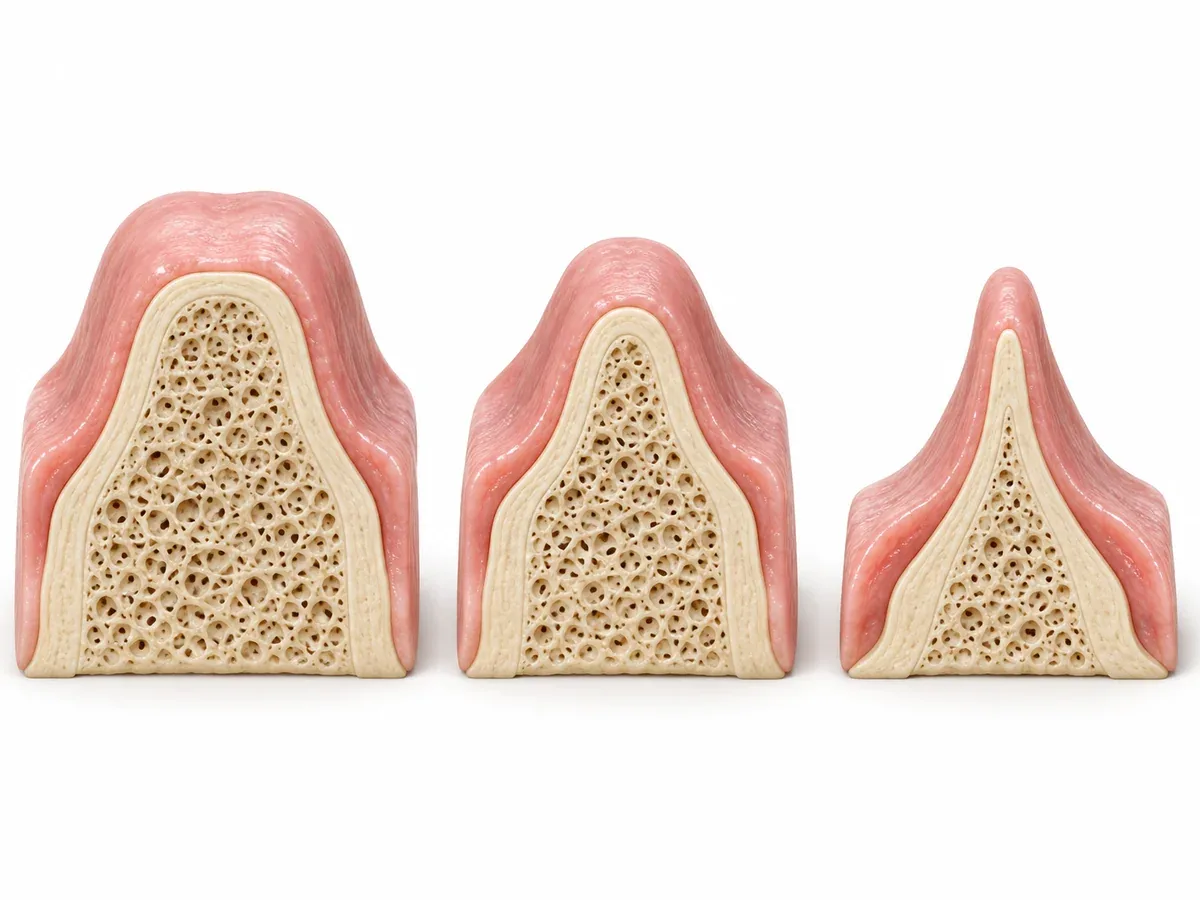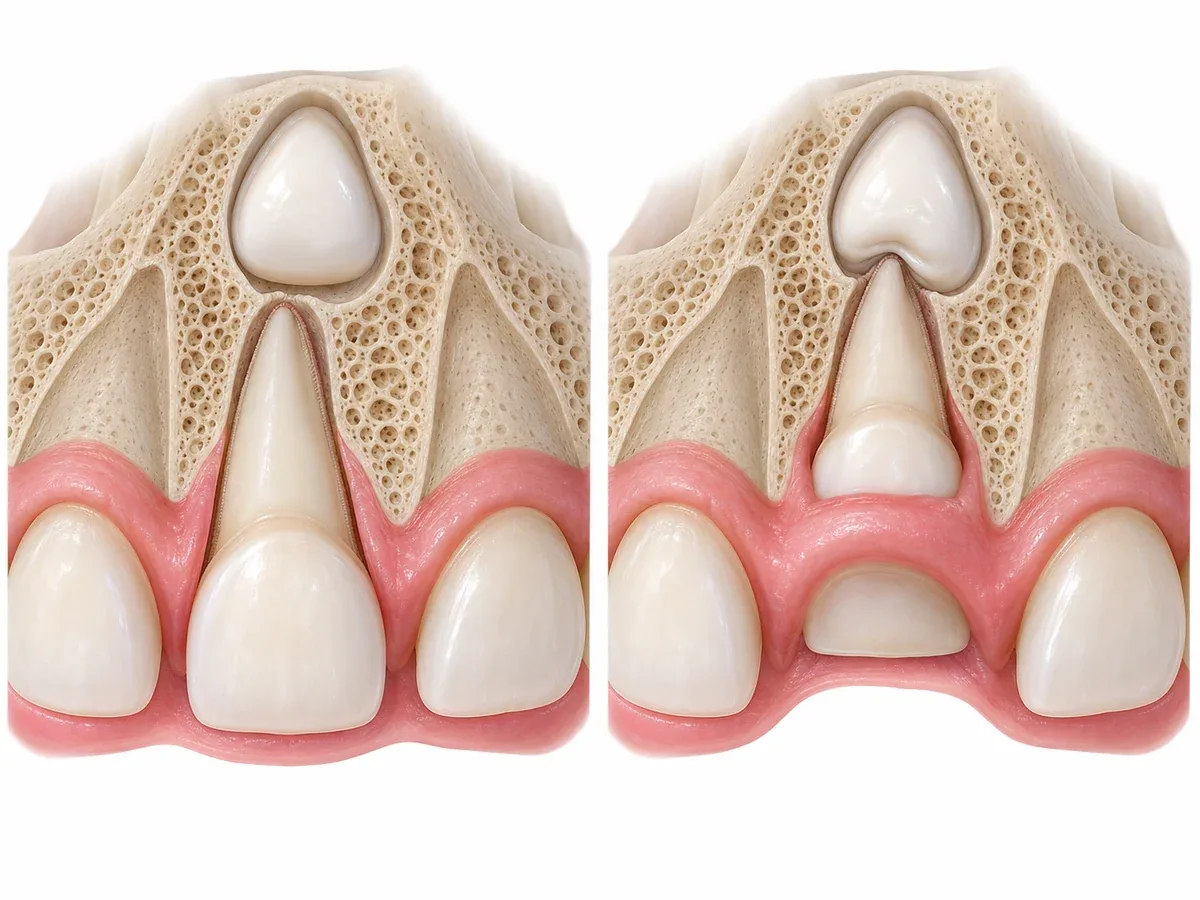
- A short tongue-tie limits how far the tongue lifts.
- We check whether the tip reaches the palate.
- A short tongue-tie does not always need surgery.
- Surgery by itself does not change speech at once.
If your child's speech is unclear, you have probably asked them to lift their tongue. It looks short, and you are wondering whether it needs cutting. At Reset Dental Clinic in Seomyeon, Busan, we explain what we look at before deciding, with 1:1 English interpretation throughout.
Lift the underside of the tongue and you see a thin band in the middle.
That band joins the tongue to the floor of the mouth.
It is called the lingual frenulum, and a short one is called a tongue-tie.
Everyone has the band. Without it the tongue would not stay in place.
The trouble arises when it is very short, or attached close to the tip.
Lifting the tongue or pushing it forward then becomes hard.
The tongue has to touch several places on the palate while you speak. When it cannot reach them, those sounds blur.
That is where the question about speech comes from.

What does tongue-tie mean, and how can you check it?
A genuinely short tongue is rare.
Usually the band underneath is short and movement is blocked, and that is what tongue-tie means.
It matters most when the band attaches close to the tip.
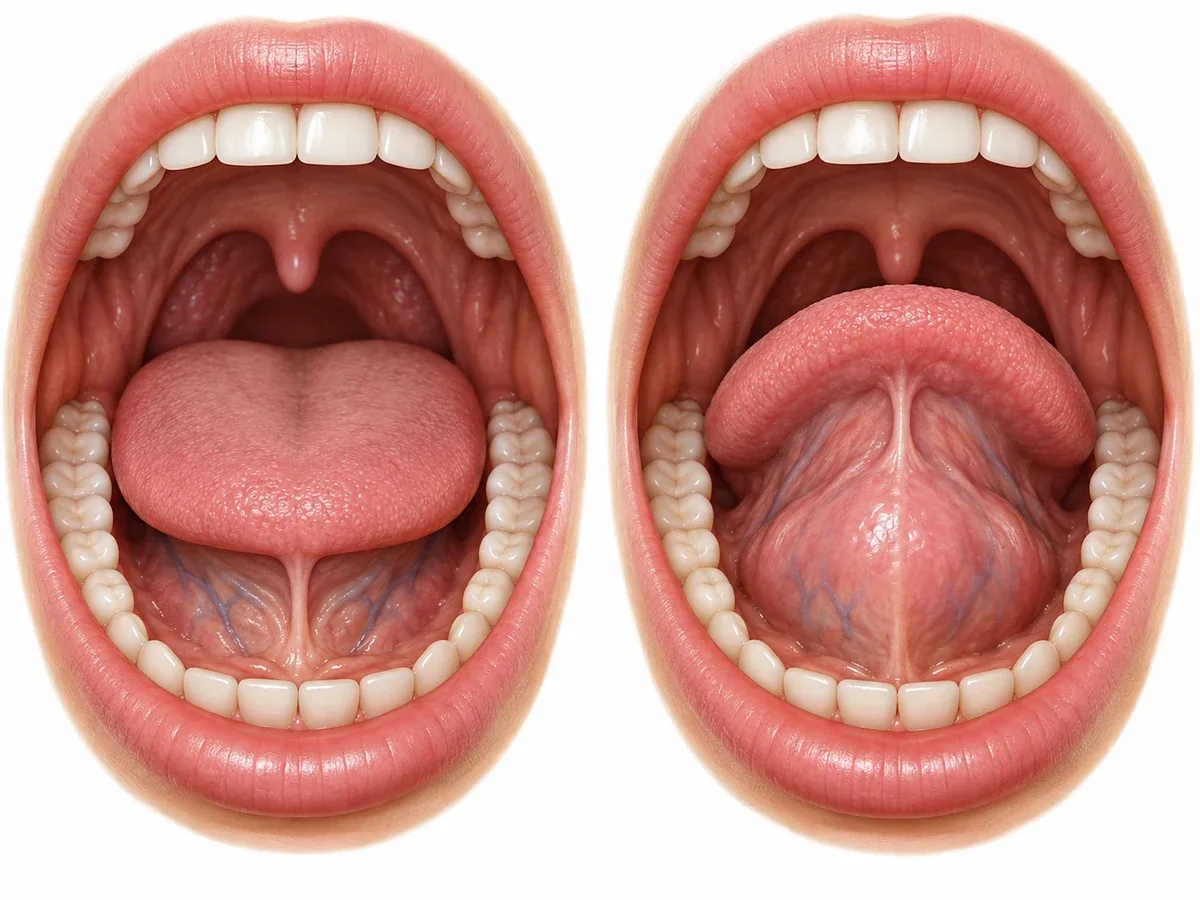
The tip is then pulled as the tongue comes out. The middle of the tip dips in, so it looks notched like a heart.
That shape is the easiest sign of tongue-tie to recognise.
On lifting, the tongue does not reach the palate. Asking a child to lift it with the mouth held open makes the difference plain.
| What we look at | Close to normal | Movement blocked |
|---|---|---|
| Tongue pushed out | The tip comes out rounded | The middle of the tip dips in |
| Tongue lifted | Reaches the palate | Rises halfway at most |
| Lifted with mouth open | Rises well | Barely rises |
| Where the band attaches | Mid to back of the tongue | Close to the tip |
| How wide the mouth opens | No effect | Wider means more pull |
The more items on the right of the table, the more movement is blocked.
We do not decide from one or two of them, though. Whether it causes real difficulty matters more.
Many people have a short band and no trouble in daily life, and those cases can be left alone.
Tongue-tie is sometimes graded by how close the band sits to the tip. The further forward it attaches, the more movement is blocked.
Checking at home
Stand in front of a mirror, open wide and lift the tongue.
If the tip reaches the gum behind the upper front teeth, things are usually fine.
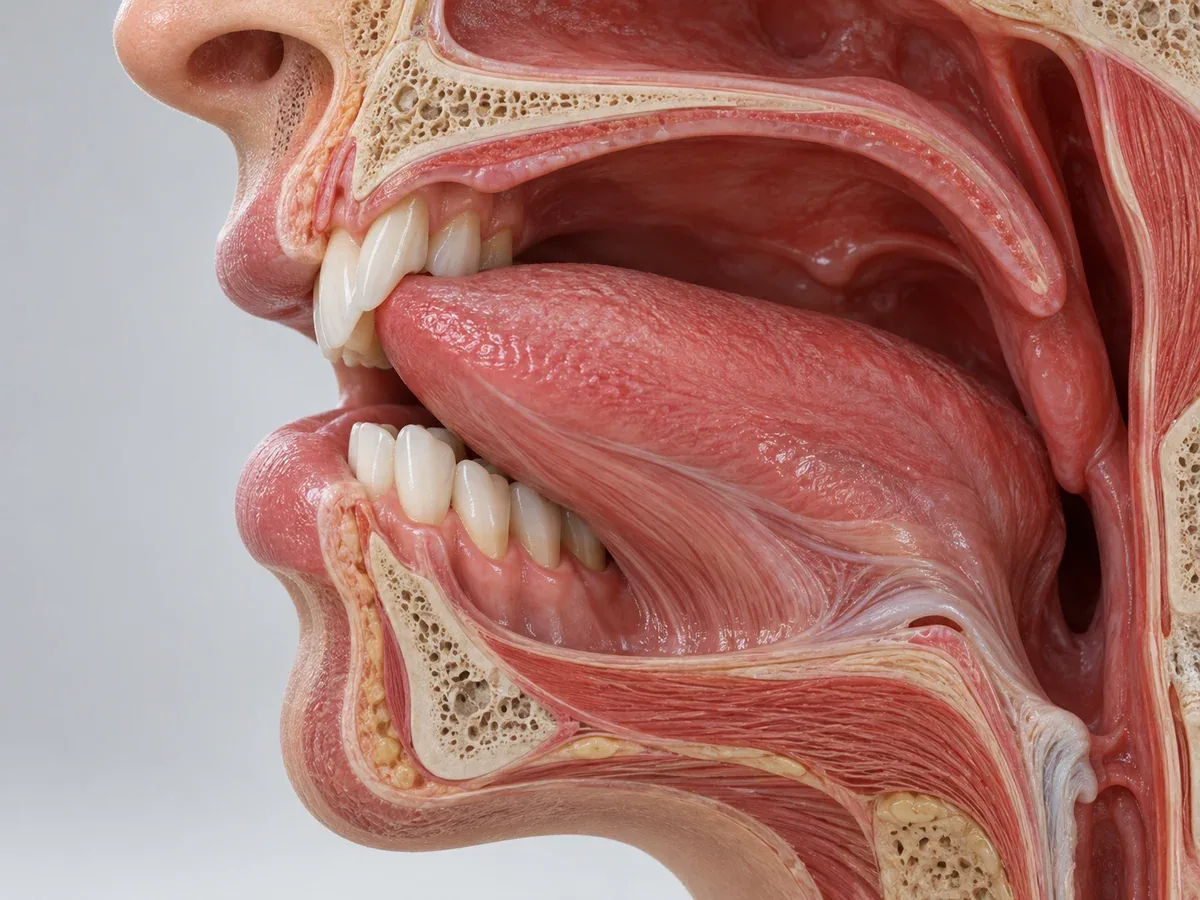
If it stops halfway, it is worth having looked at.
We also see whether the tongue passes the lower lip, and whether it reaches the corners of the mouth on each side.
- Whether the lifted tongue reaches the palate
- Whether it passes the lower lip
- Whether it reaches each corner of the mouth
- Whether the tip dips in when pushed out
- Whether it can lick the upper lip
In the clinic we add a few things, measuring where the band attaches and recording it.
We look at the shape of the palate and the alignment of the teeth too, because a tongue that always lies low leaves the upper jaw narrow.
If we see that shape, we consider other treatment alongside.
Let a child look in a comfortable position. Forcing the mouth open hides what you want to see, while making a game of it shows it clearly.
Does tongue-tie really affect speech?
It affects sounds made with the tip of the tongue.
In Korean those are the l-r sound and the s, j and t families.
The tip has to touch behind the front teeth for all of them.
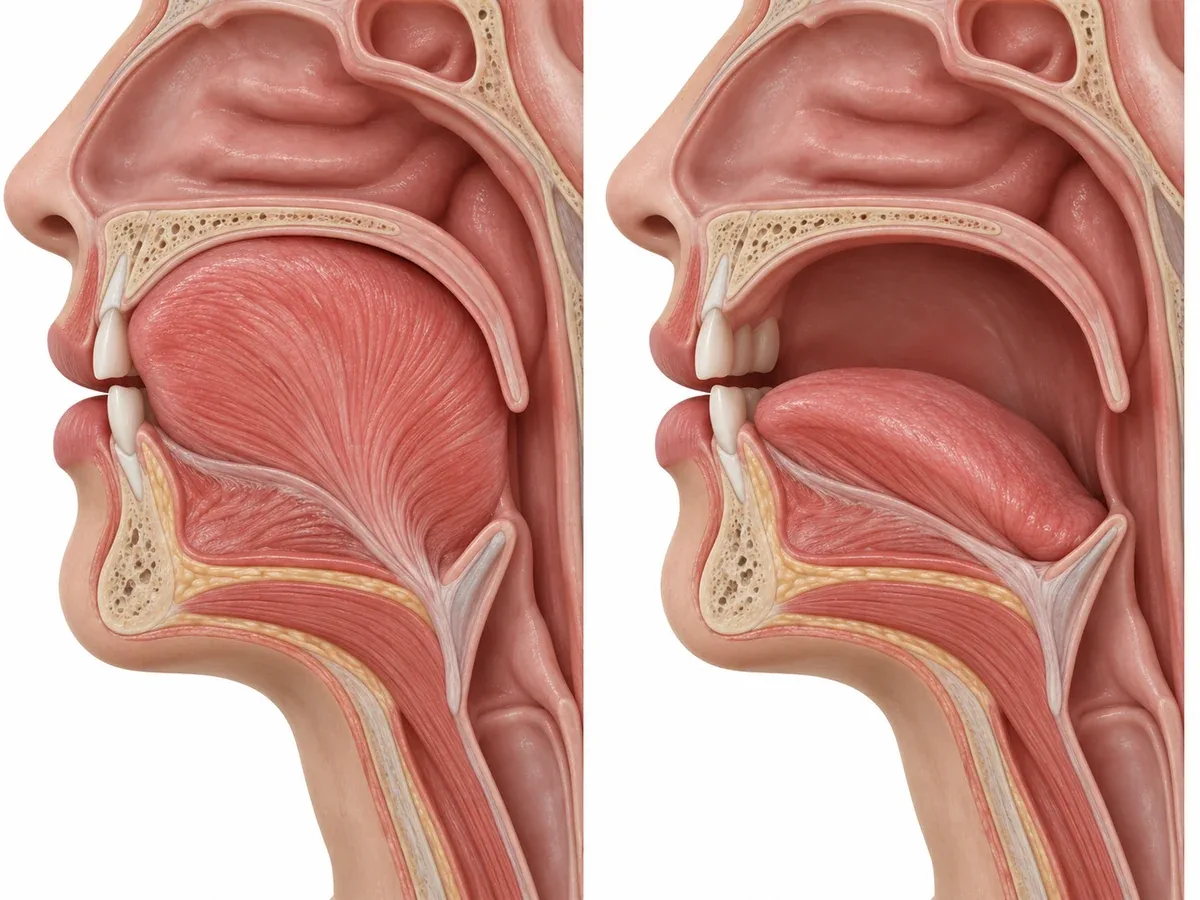
When it cannot reach, the sound spreads or air leaks out. To a listener it sounds like a short tongue.
Not every child is affected, though. Many children with a short band speak clearly.
They learn to compensate with other parts of the tongue.
- The l-r sound blurs
- Air leaks on s sounds
- The j and t sounds smear together
- Fast speech makes it worse
- Long sentences show it more
So we do not operate simply because the band is short. We look first at whether speech is actually affected.
A speech assessment helps, because the tongue has to be separated from other causes.
Speech problems have several causes besides the tongue.
| Sound | Where the tongue touches | If movement is blocked |
|---|---|---|
| l-r | Gum behind the front teeth | The sound blurs |
| s, ss | A narrow gap behind the front teeth | Air leaks |
| j, ch | Released from behind the front teeth | Smears together |
| t, d | Placed behind the front teeth and released | Sounds weak |
| g, k | Back of the tongue and back of the palate | Usually affected little |
As the last row shows, some sounds are affected less.
So we listen to which sounds are hard before judging.
Plenty of speech problems have nothing to do with tongue-tie.
How is tongue-tie handled in babies?
For a baby the issue is latching, not speech.
A tongue that lies low cannot latch deeply. Feeds then take a long time and the baby tires quickly.
Mothers often say that feeding hurts.
We look more closely when a baby is not gaining weight well.
There may be a sound as the mouth closes, or the baby may swallow a lot of air.
In that situation we think about looking early.
- Cannot latch deeply
- Long feeds with frequent breaks
- The mother says it hurts
- Weight is not going up well
- A sound during feeding
Babies are better seen together with a paediatrician, because feeding position or another cause is often behind it.
Some parents see a feeding counsellor first. If that does not settle it, a procedure is considered then.
In babies the band is thin, so it is often very simple.
How is tongue-tie surgery done?
The band is divided to make room for the tongue to move.
It is done under local anaesthesia, and general anaesthesia is usually not needed.
The band is cut with scissors or a laser, and a laser leaves almost no bleeding.
A thick band is sometimes stitched. There is also a method that gathers the tissue under the tongue and stitches it again.
It takes ten to twenty minutes.
| Method | When it is used | Character |
|---|---|---|
| Cut with scissors | A thin band | Simple and quick |
| Cut with a laser | When bleeding is a concern | Almost no bleeding |
| Stitched reshaping | A thick band | Reduces reattachment |
| Local anaesthesia | Most cases | Home the same day |
| General anaesthesia | Very young or unable to cooperate | Discussed separately |
Either way you go home the same day, and there is no hospital stay.
In babies it is sometimes finished very quickly without anaesthesia. That decision rests on the baby's condition and the shape of the band.
Either way we explain beforehand and decide together.
Dividing a tongue-tie covers a small area, so recovery is quicker than other oral surgery. The tongue is always moving, though, so it stays a little uncomfortable.
Does speech improve straight after surgery, and can adults have it done?
It does not improve straight away, and this is the most important point.
Surgery goes as far as making room to move. Learning to use that room is a separate job.
That is especially true after years in the old pattern.
The tongue is already used to making sounds another way, and surgery does not change that habit.
So speech therapy often runs alongside tongue-tie surgery.
- Surgery goes as far as making room
- Using that room has to be learned
- The longer it has been, the firmer the habit
- Speech therapy often runs alongside
- Tongue exercises have to be kept up
Younger children adapt faster, and some change noticeably within a few months.
Older patients take longer, and we say so in advance, because disappointment is worse when expectations are off.
Adults can have it done too
There is no age limit, but the purpose has to be clear.
Correcting speech and relieving another difficulty are not the same aim. If speech is the aim, speech therapy has to follow.
Where the gum behind the lower front teeth is being pulled down, surgery by itself brings a clear gain.
The same goes for denture wearers, because a pulling band keeps lifting a lower denture.
It is sometimes done before orthodontic treatment, to reduce the push of the tongue against the teeth.
Either way we settle the reason first. Some patients have lived with the discomfort for years, and they are often very satisfied afterwards.
What else does tongue-tie make hard, and when is surgery unnecessary?
There are a few things besides speech.
Sweeping the mouth clean with the tongue is hard, so food stays longer and cavities come more easily.
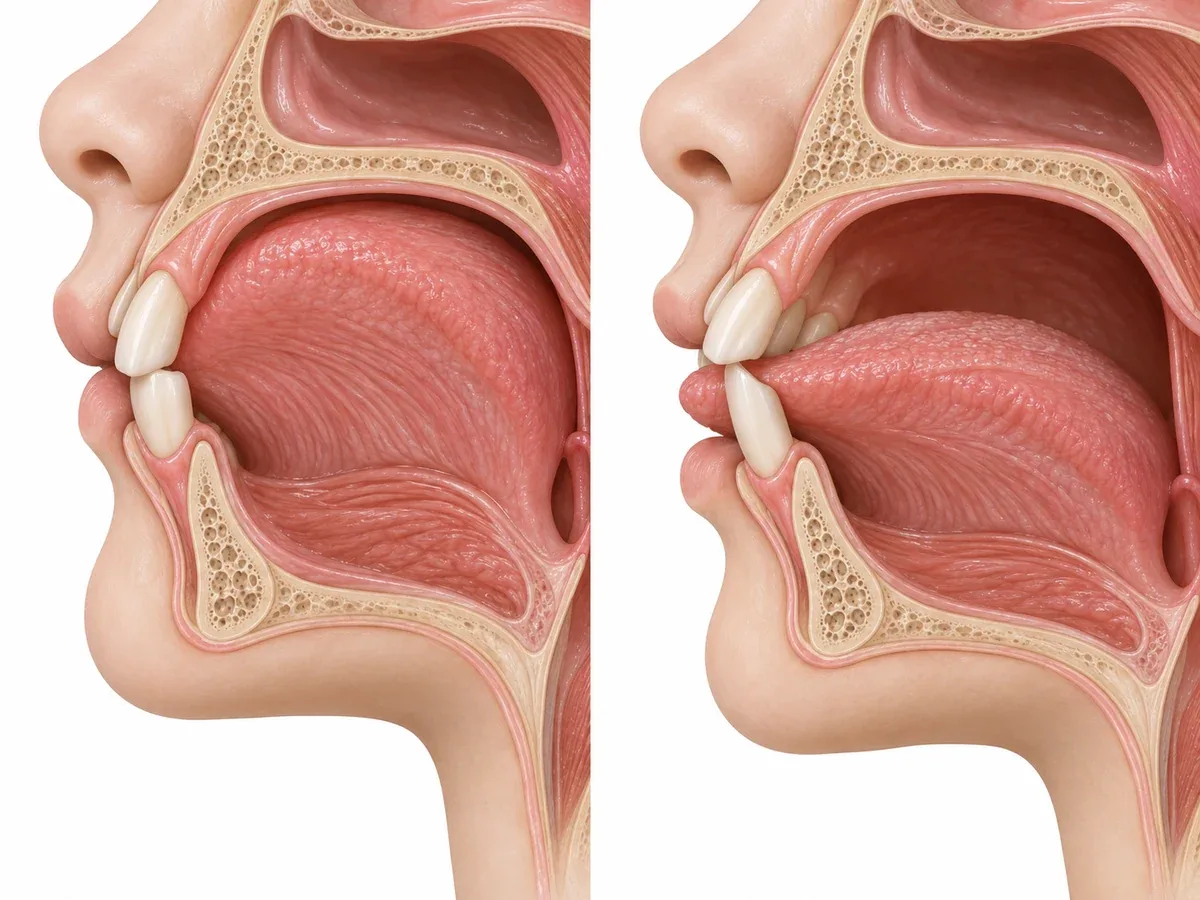
Licking an ice cream or the lips is hard. Some patients say it gets in the way of playing a wind instrument.
A tongue that lies low can leave the upper jaw narrow, and a narrow upper jaw crowds the teeth.
A narrow upper jaw narrows the nasal airway as well, which is why snoring comes into the conversation.
A tongue-tie on its own does not cause all of that, though.
It is right to treat it as one factor among several, and we say so without overstating it.
When surgery is unnecessary
That is the more common situation.
If it looks short but daily life is unaffected, we leave it. Clear speech is no reason to intervene.
A child's tongue grows as the child grows, and something that looked short early sometimes settles by itself.
So we often watch without hurrying, and teach tongue exercises instead.
- Press the tongue to the palate and release
- Sweep the palate with the tongue
- Touch each corner of the mouth
- Push the tongue out and draw it back
- Read aloud, clearly and slowly
Some children improve in movement with those exercises alone. A few minutes a day, kept up, is what matters.
Making a game of it helps a child follow along. After a few months, if nothing has changed, we look again.
Keeping that order avoids surgery that was never needed. Do not settle on surgery just because someone said the band is short.
How do we check tongue-tie in Busan, and what follows surgery?
We start with how far the tongue moves, asking for a lift, a push forward and a reach to each side.
We measure where the band attaches and record it, then look at the palate and the alignment of the teeth.
Then we ask what the actual difficulty is. If speech is the problem, we listen to which sounds are hard.
If a speech assessment is needed, we point you to one, since the tongue has to be separated from other causes.
- Watch the tongue's movements in turn
- Measure and record where the band attaches
- Look at the palate and the alignment
- Listen to what the real difficulty is
- Point to a speech assessment if needed
If surgery is not needed, we teach the exercises and leave it there. If it is, we go through the method and the schedule that follows.
We look at the whole way the tongue is used, not the band alone, including the palate, the alignment and how you breathe.
After surgery
Have cold, soft things that day, such as ice cream or yoghurt, and avoid hot and spicy food for a few days.
The site looks white, which is part of healing, and it usually closes within a week or two.
Tongue exercises matter most. Left alone, the cut edges can reattach.
So lifting exercises start the same day, a few times a day, and we write the method down for you.
A parent has to do them with a child. Short and frequent beats long, and two or three minutes a few times a day is enough.
We see you about a week later to check progress, and deal with any sign of reattachment then.
We are close to Seomyeon Station, so coming with a child is easy.
Frequently asked questions
Does a short tongue-tie always need cutting?
No. If daily life is unaffected, it can be left as it is.
At what age should it be looked at?
In babies when feeding is the problem, and while speech is being learned when speech is the problem.
Can it reattach after surgery?
Left alone it can, which is why the tongue exercises matter.
Can I discuss tongue-tie in English in Busan?
Yes, we provide 1:1 English interpretation from your first consultation to the end of treatment. We are near Seomyeon Station Exit 2, a five-minute walk, opposite Lotte Hotel Busan, and you can call 010-8555-2854 (+82-10-8555-2854 from abroad).
A short tongue-tie does not always need cutting.
We look at how far the tongue moves,
and at what is actually difficult.
If tongue-tie is on your mind, Reset Dental Clinic in Busan provides 1:1 English interpretation from the first consultation to the end of treatment. Call 010-8555-2854 to book a consultation.
References
- Journal of the Korean Dental Association 56(1), "Local anaesthesia techniques for minor outpatient surgery" — anaesthesia for frenulum procedures
- Journal of the Korean Dental Association 53(12), "Lasers in everyday dental practice, A to Z" — minor surgery with a laser
- Journal of the Korean Dental Association 48(3), "Diagnosis and treatment of snoring and obstructive sleep apnoea" — a short band and the airway
- KDCA National Health Information Portal, "Dental Local Anaesthesia" — extent of local anaesthesia and recovery
Written by Reset Dental Clinic Support Team
Medical review Dr. Kim Hyun-joo, Head Dentist
Last updated: November 3, 2026
This column is for general information and does not replace diagnosis or treatment for individual patients. If you have symptoms, please see a dentist.