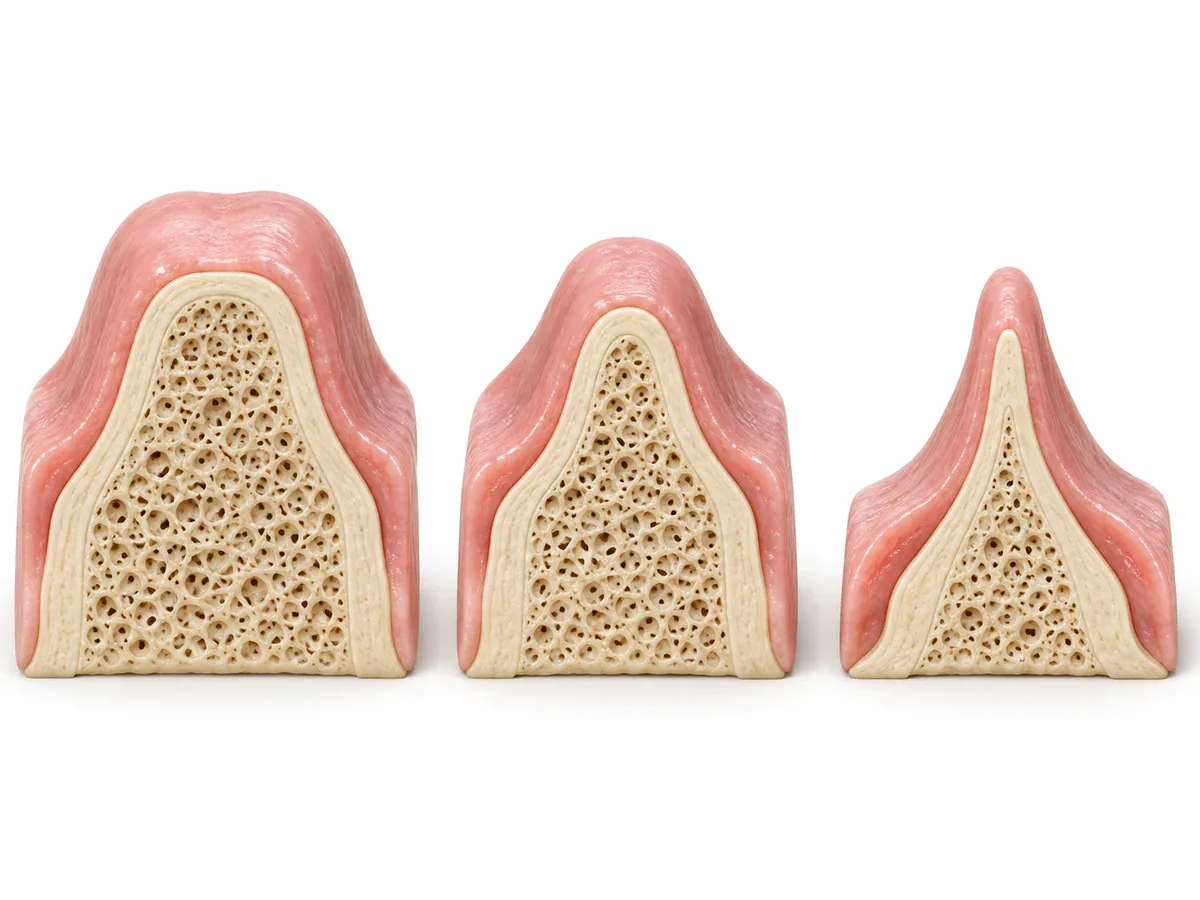
- An empty socket shrinks over several months.
- Sites with a thin outer wall shrink most.
- A bone graft on the day keeps the shape fuller.
- Not every socket needs one.
You may have been told that bone will go in at the same time as the extraction. Reset Dental Clinic in Seomyeon, Busan explains why it is done that day and what happens if it is not. We provide 1:1 English interpretation from the first consultation through to the end of treatment.
This column is for patients living in or visiting Korea.
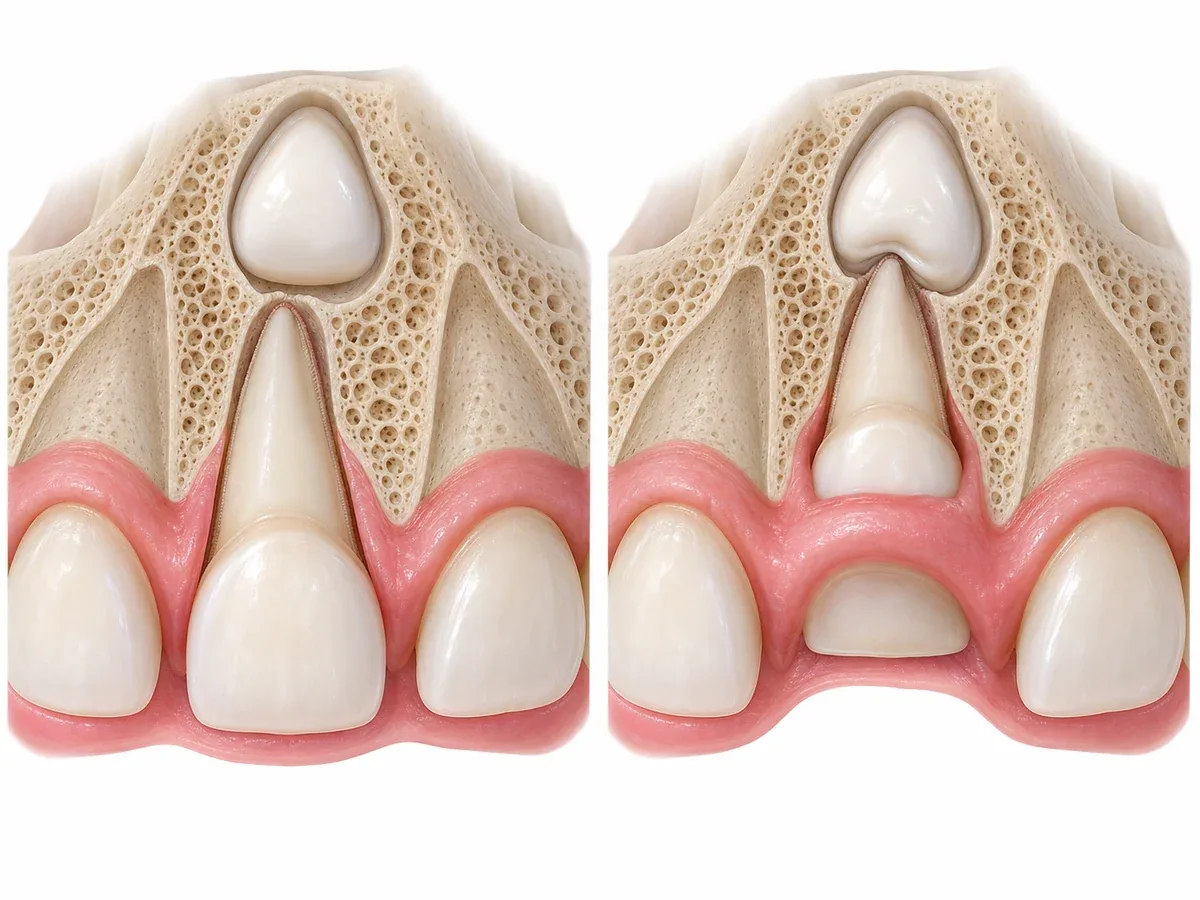
Tooth roots sit inside the jawbone. The bone wrapped around them is called alveolar bone.
That bone exists because the tooth is there. Chewing force passing through the root is what maintains it.
Remove the tooth and that force disappears. The body then decides it has no reason to keep the bone.
So it dissolves it away little by little, a natural process. The difficulty comes later, when an implant is planned and bone is short.
That is why a bone graft on the day of extraction became an option.
What happens to the socket if it is left alone?
What do you see from outside?
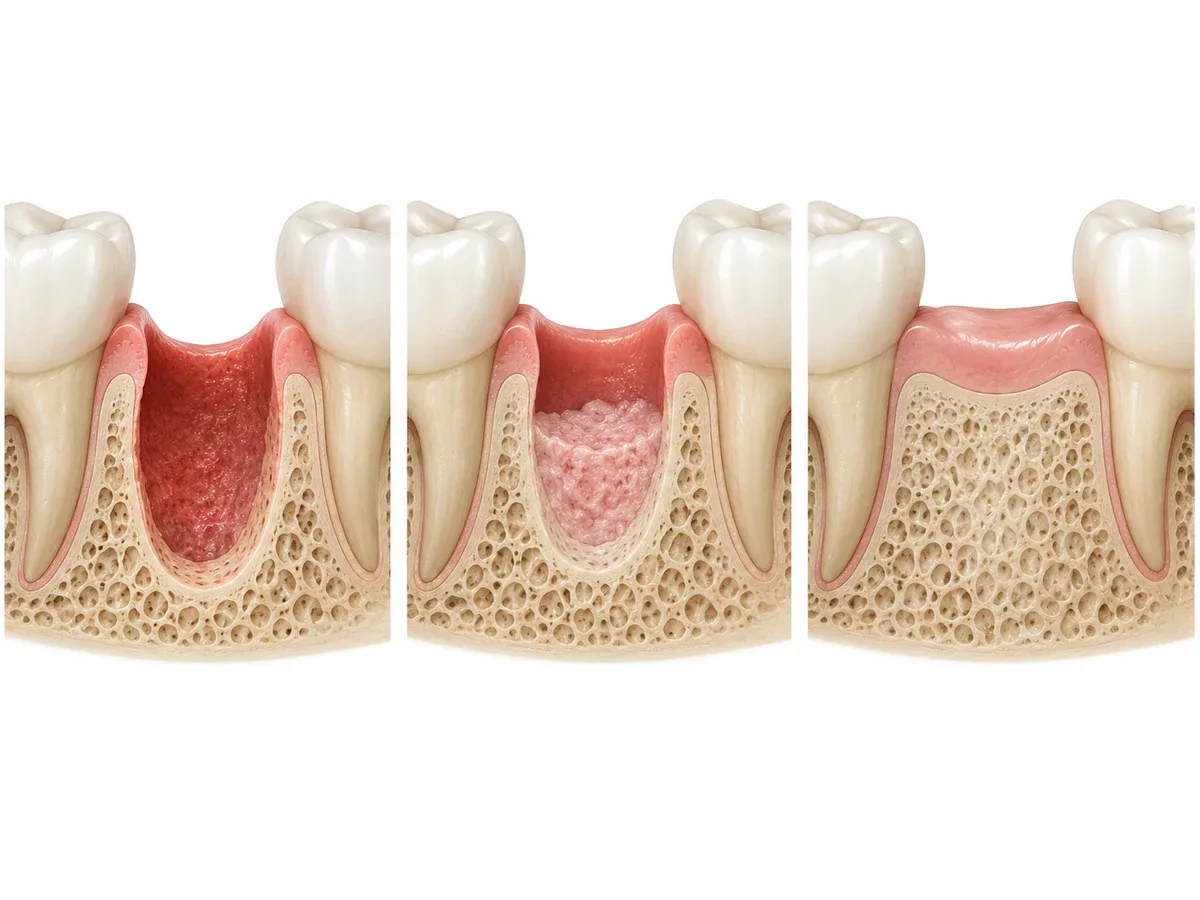
The gum closes over and flattens, which takes about two weeks.
Inside, though, change carries on for months. Bone fills in while the outer rim shrinks away.
How much does it shrink?
The ridge narrows in width and drops a little in height. Most of that loss happens in the first three months.
After that it carries on very slowly. A site left empty for years looks visibly sunken.
Seen above the gum, it sits set in from the neighbouring teeth.
| Time passed | What changes there | Effect on an implant |
|---|---|---|
| Two weeks | The gum closes | No effect yet |
| Three months | Width drops most | Less room to place a fixture |
| Six months | Inner bone has mostly filled | It sets narrow |
| One year | The shape is largely fixed | A bone graft may be needed |
| Several years | The hollow is obvious | A large bone graft is needed |
Why does the timing matter?
The first three months are the important window, and acting within it is the logical choice.
That is why a bone graft is done on the day of the extraction. Not every site shrinks a great deal, and the next question is why.
A bone graft is not decided on the spur of the moment. We talk it through at the consultation beforehand.
Why does the bone shrink after an extraction?
What is lost along with the tooth?
The bone wrapped around a root belongs to that tooth. Inside it lies a very thin layer, next to the root membrane.
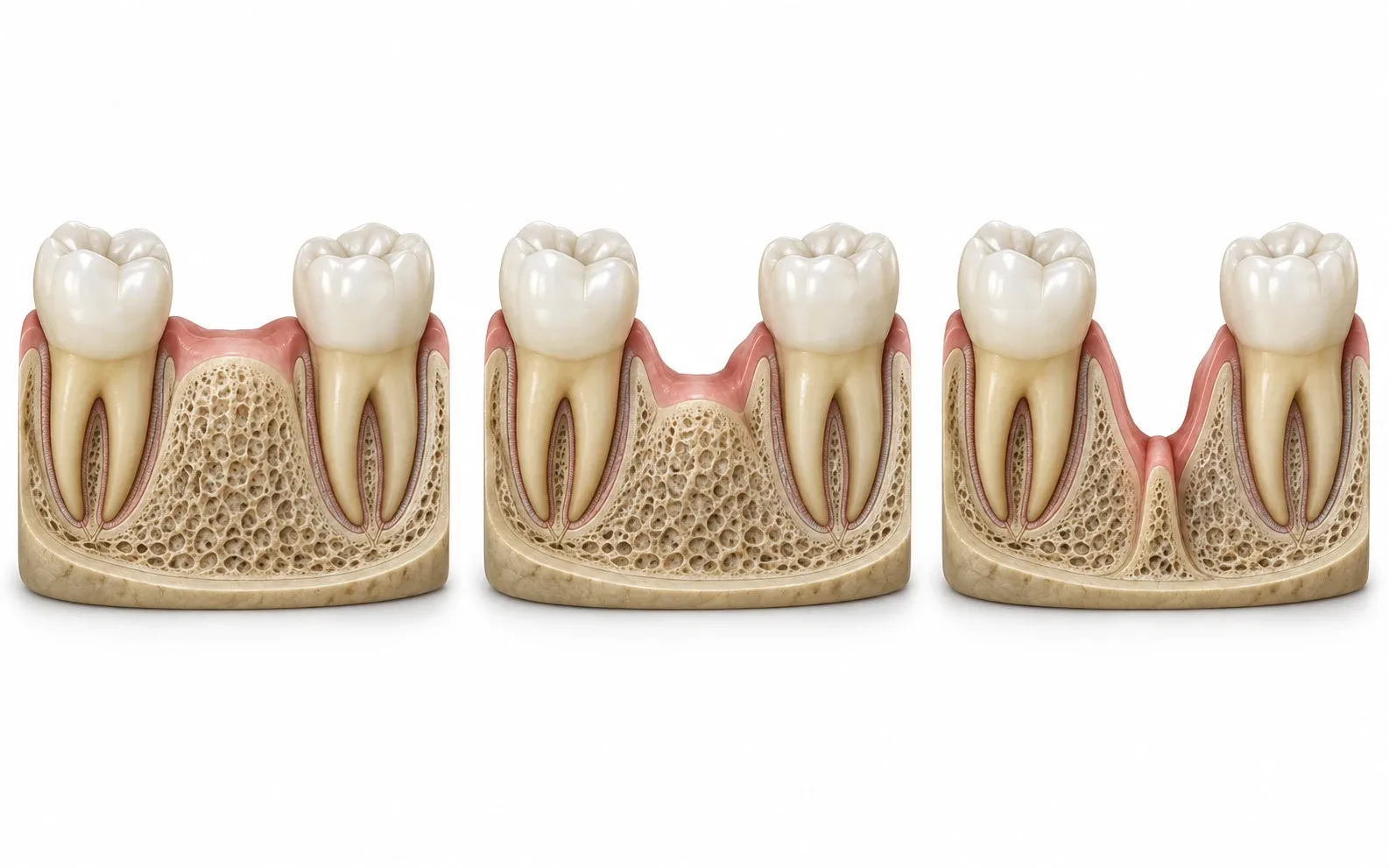
That layer goes when the tooth goes. Where the outer wall is thin, the layer makes up most of the wall.
Those sites therefore shrink the most.
Which sites shrink most?
Front teeth and premolars have the thinnest outer wall. From the lip side you can trace the root through it.
Lower molars, by contrast, have a thick wall. Those sites shrink less even when left alone.
- Front teeth — the thinnest outer wall
- Premolars — fairly thin
- Upper molars — in between
- Lower molars — on the thick side
- Walls already dissolved by infection — the most at risk
What about sites damaged by infection?
A site where infection has dissolved the wall needs the most care. Sometimes one wall is missing once the tooth is out.
Left alone, such a site sinks a great deal. So we look at the wall on an X-ray before extracting.
Where it matters, we take a three-dimensional image and measure the thickness. One image can change the decision considerably.
What does a bone graft on the day of extraction change?
What does it actually do?
It reduces how much the site shrinks, without stopping it. We say so plainly.
Even with a bone graft, a little is lost. What it avoids is a larger operation later.
How does it work?
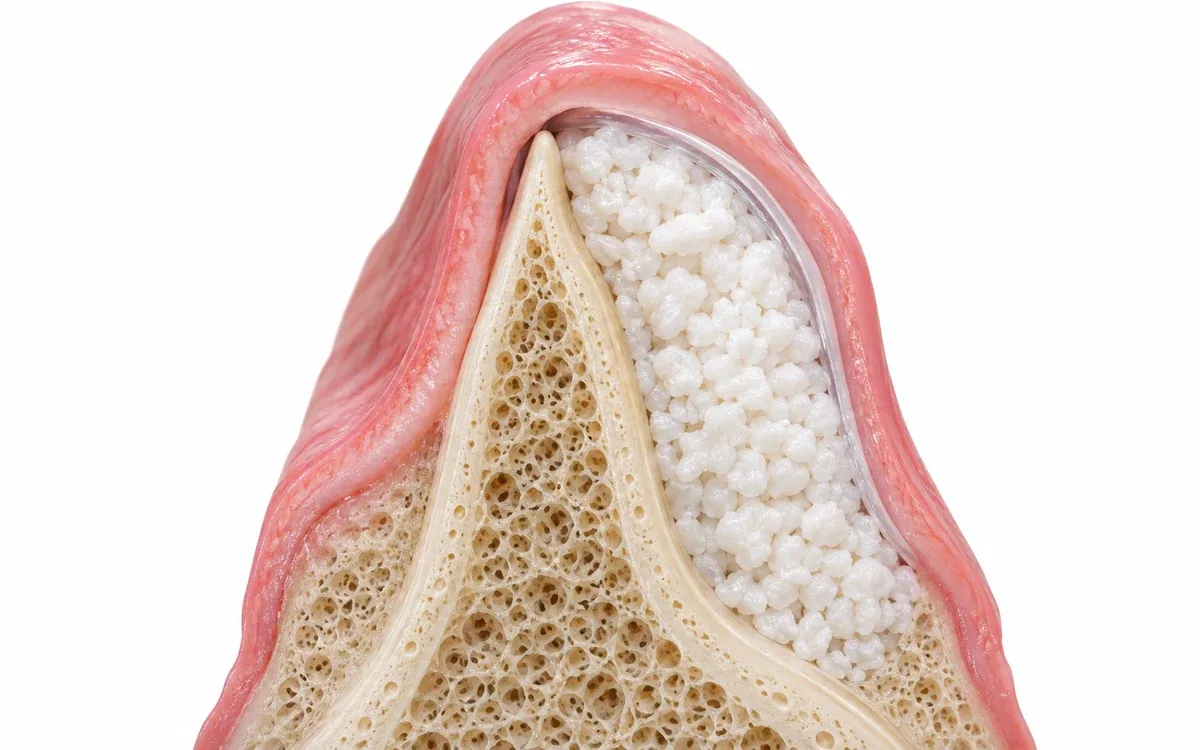
While the particles hold the space, new bone grows in. Width and height are therefore kept fairly well.
With room to spare, placing the implant is simpler. The gum shape also sinks less, which counts for front teeth.
A small change in the gum line shows at the front.
- Less shrinkage at the site
- A larger operation later can be avoided
- The gum shape sinks less
- The visible result differs at the front
- The implant position is easier to choose
What does a bone graft not do?
It does not add bone beyond what was there. It preserves the shape rather than building it up.
Knowing that difference keeps expectations right. A bone graft widens the choices open to you later.
If the site narrows, those choices shrink with it. Where a denture or bridge is planned, many sites need no bone graft.
Does the implant go better afterwards?
With room, the fixture can stand upright in the middle of the bone. Tilted, the force later concentrates on one side.
A wider site is therefore better for long use.
Skipping it does not make an implant impossible. A sunken site can be grafted later and implanted.
The process is longer, though, and one more operation is added. A large bone graft also needs more healing time, and we set out cost and timing beforehand.
How do we decide on a bone graft in Seomyeon, Busan?
What do we ask first?
What you plan for the site. If an implant is planned, a bone graft has a purpose.
If a bridge is planned, it is not essential. If the gap will be left, less so again.
Wisdom teeth and the last site at the back are usually not grafted, since nothing will be built there.
| Situation | Usually grafted | Usually left |
|---|---|---|
| Front tooth | Nearly always | When the wall is very thick |
| Premolar | Often | When a bridge is planned |
| Lower molar | Depends on the site | Thick wall, no infection |
| Wisdom tooth | Not grafted | Almost always |
| Heavily infected site | Settle it first | Postponed during acute infection |
What else do we check?
We look at the outer wall on an X-ray. A three-dimensional image is taken where thickness needs measuring.
We do not graft an acutely infected site on the day. Bone graft material does not settle where there is pus.
There we extract, let things calm down, and do the bone graft separately. Heavy smoking lowers the result, and we say so.
- Ask about the plan for the site first
- Check the wall on an X-ray
- Measure thickness on a three-dimensional image if needed
- Settle any infection first
- Change the plan after seeing the socket
What happens once the tooth is out?
If the wall is intact, we also consider placing the implant straight away. If it is not, we graft and wait.
Both plans are explained before we start. After a graft we take an image at about four months.
We are close to Seomyeon Station, which makes follow-ups easy. We do not suggest a bone graft where it is not needed.
Adding treatment that serves no purpose is a loss to the patient.
What material is used for a bone graft?
What are the particles?
Granular bone graft material, a little coarser than sand. The particles act as a scaffold for new bone.
In time they turn into the body's own bone or stay inside it as support. There are four broad kinds.
What are the four kinds?
Your own bone attaches most reliably, though a second site is needed to take it from. Processed human and animal bone are both widely used.
Synthetic material imitates the composition of bone. Materials are used alone or mixed.
- Your own bone — attaches most reliably, but needs a donor site
- Processed human bone — widely used
- Processed animal bone — holds its form for a long time
- Synthetic material — made to imitate the composition
- Mixtures of several kinds
Why cover it with a membrane?
A thin membrane is often laid over the particles. It stops gum tissue pushing inwards.
Gum grows faster than bone, which is why the membrane is needed. Some dissolve away and some are taken out later.
Most of the time we use the kind that dissolves.
| Material | Where it comes from | Character |
|---|---|---|
| Your own bone | Taken from the jaw or elsewhere | Attaches most reliably, needs a donor site |
| Processed human bone | Donated bone, processed | Widely used and turns over well |
| Processed animal bone | Cattle or pig bone with protein removed | Holds the shape for a long time |
| Synthetic material | Made to imitate the composition | Little concern about infection |
| Covering membrane | Dissolving or removed later | Stops the gum pushing in |
How big a procedure is it?
Many people picture major surgery when they hear the words bone graft. Filling a socket is a much smaller procedure than that.
Is it the same as placing an implant straight away?
How do the two differ?
They are different. The aim is the same and the method is not.
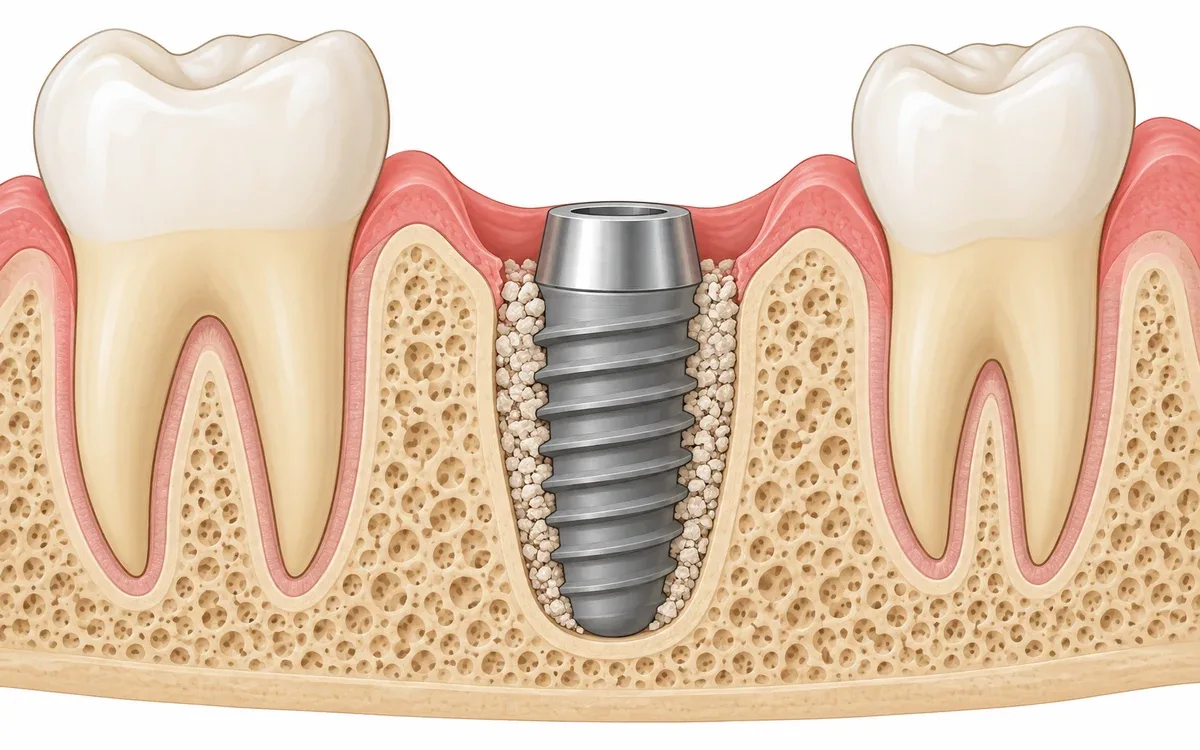
Immediate placement puts the implant into the socket on the day. Where the conditions allow, the waiting time drops a great deal.
What conditions are needed?
It is not possible at every site. There must be no infection and the walls must remain.
The fixture has to engage firmly so that it does not move. If those conditions are not met, we graft and wait instead.
- No infection present
- The outer wall still standing
- The fixture engaging firmly
- Height matching the opposing tooth
- Chewing force not excessive
Can both be done together?
They can. The implant goes in and the gaps around it are filled with particles.
That is two things in one appointment, and in practice it is the most common pattern.
Sometimes which path applies is known after the tooth is out. So both plans are described before we begin.
If the wall turns out to be gone, we change the plan there and then.
How long is the wait, and does it hurt?
How long do you wait?
Usually four to six months. New bone moves into the space the particles hold.
Small sites such as front teeth are a little shorter, molars a little longer. The space stays empty while you wait.
For a front tooth we fit a temporary tooth, since it shows. A molar can be left empty without much difficulty.
Afterwards we take an image to see how much bone has filled in.
- Usually four to six months
- A temporary tooth for front teeth
- Molars sometimes left empty
- An image to check how much has filled
- A little more added at placement if short
What if it has not filled enough?
If there is enough, the implant goes in as planned. If it is short, we add a little more around it at placement.
Even then it is far simpler than a large bone graft from scratch. Keep the site clean while you wait.
Does it hurt?
Not much more than the extraction itself, since it is done at the same site.
The stitched area is a little wider, so there is a pulling feeling. Swelling is strongest on the second or third day.
A few particles may work loose and be felt in the mouth. That is common, though tell us if many come out.
Infection is uncommon but possible, which is why antibiotics are used.
- Swelling strongest on day two or three
- A pulling feeling at the stitches
- A few particles may come out
- No hard rinsing and no sucking
- Smoking lowers the result sharply
What should you avoid?
Rinsing hard and smoking are the two to watch. Both pull particles out of the site.
The first week needs particular care. Stitches come out between seven and ten days, when we check the cover.
Bone graft material rarely provokes a reaction, as it has been processed. Bacteria getting in stops it settling, so cleanliness matters most.
An empty socket shrinks most in the first three months.
A bone graft on the day keeps the shape fuller,
and a fuller site makes the implant simpler later.
If you are considering a bone graft in Busan, Reset Dental Clinic provides 1:1 English interpretation from your first consultation through to the end of treatment. Call 010-8555-2854 to arrange a visit.
Frequently asked questions
Can a bone graft be done later instead?
It can. After the site has shrunk, though, the operation is a larger one.
Is it essential, and will it make the implant quicker?
It is not essential, and we decide from your plan and the state of the site. It does not make things quicker, but it does make the surgery simpler.
Is processed animal bone all right, and do the particles stay?
The protein is removed during processing, and it is a long-established material. Depending on the kind, some particles stay in place as support.
Can I discuss a bone graft in English in Busan?
Yes. We provide 1:1 English interpretation from the first consultation to the end of treatment, near Seomyeon Station Exit 2, opposite Lotte Hotel Busan. Call 010-8555-2854, or +82-10-8555-2854 from abroad.
References
- KDCA National Health Information Portal, "Dental Implants" — the structure of an implant and the conditions for placing one
- KDCA National Health Information Portal, "Tooth Autotransplantation" — reusing an extracted tooth
- KDCA National Health Information Portal, "Gum Disease (Periodontal Disease)" — how inflammation dissolves bone
- KDCA National Health Information Portal, "Wisdom Teeth" — what happens at the site after removal
Written by Reset Dental Clinic Support Team
Medical review Dr. Kim Hyun-joo, Head Dentist
Last updated: November 3, 2026
This column is for general information and does not replace diagnosis or treatment for individual patients. If you have symptoms, please see a dentist.