- A knocked-out baby tooth is not put back in.
- Pushing it back can disturb the tooth bud below.
- If a permanent tooth comes out, come in at once.
- We image the site that day to find any fragments.
Nothing alarms a parent more than a baby tooth knocked out in a fall, and the first question is usually whether to push it back. This column sets out the order to follow. At Reset Dental Clinic in Seomyeon, Busan, we offer 1:1 English interpretation from the first consultation through the end of treatment.
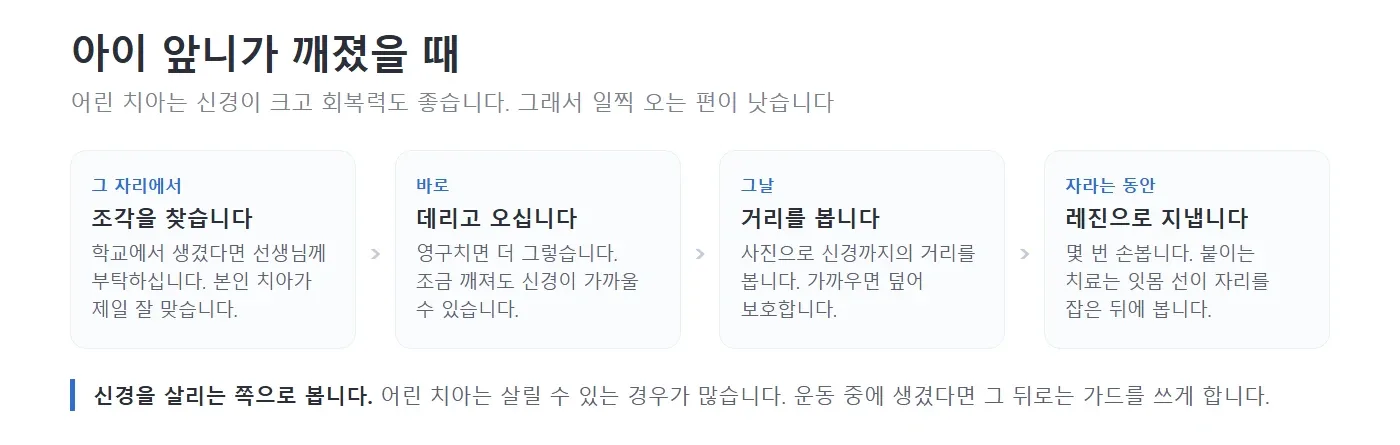
Children start hurting their front teeth at around three or four. That is when walking speeds up and running begins.
In a fall, the front teeth are the first part of the face to land. The two upper front teeth are hurt most often.
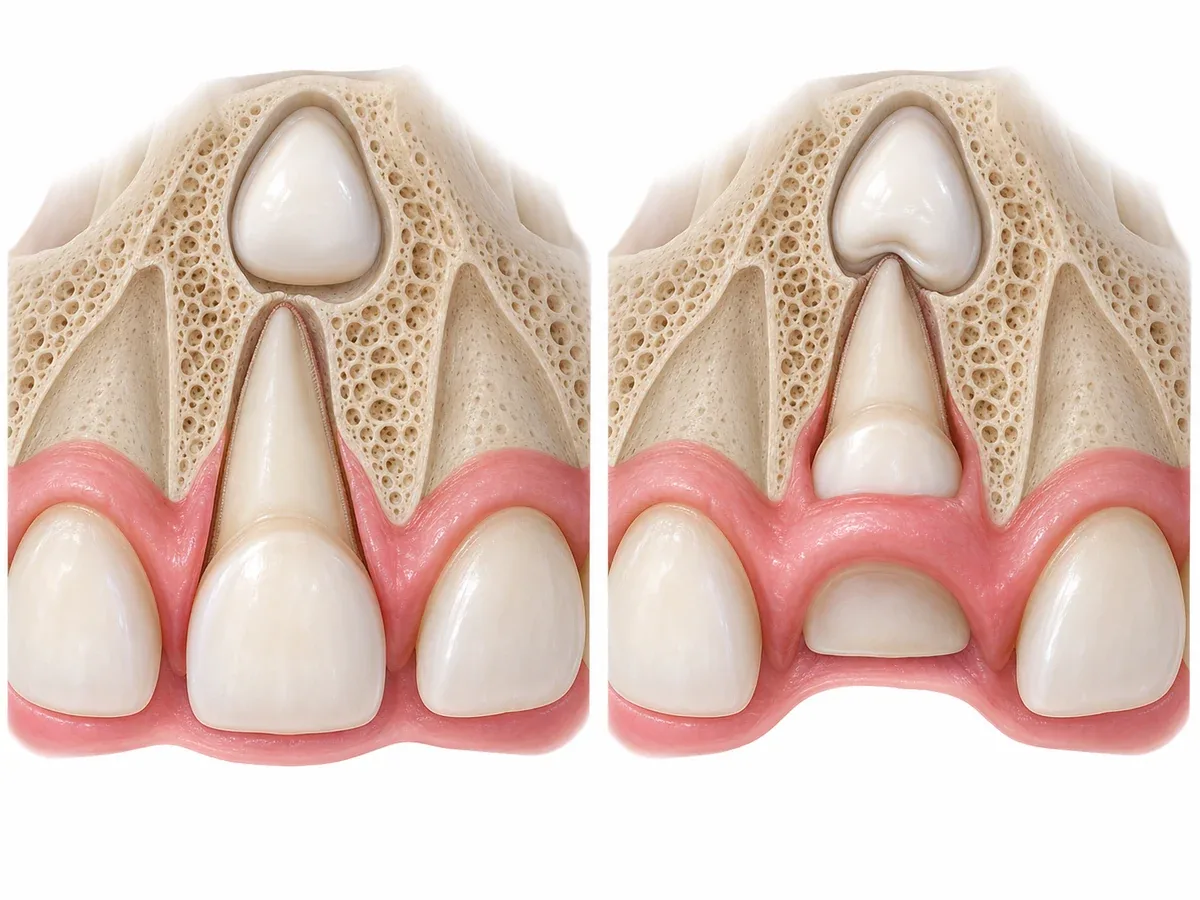
Underneath them sits the bud of the permanent tooth. The root tip of a baby tooth and that bud sit very close together.
Force applied there can damage the bud. That is why the treatment differs from an adult losing a tooth.
Should a knocked-out baby tooth be put back?
Why not simply push it in?
Please do not put it back. This is the first and most important point.
An adult tooth is replanted, but a baby tooth is treated differently. The bud of the permanent tooth lies just below its root tip.
Pushing a baby tooth back can press on that bud and change its shape or colour. It can also fuse to the bone and block the path the permanent tooth needs.
What should I bring in?
Do not throw the baby tooth away; bring it with you. We match the fragments against the socket and check that nothing is left in the mouth.
| What came out | At the scene | At the clinic |
|---|---|---|
| Baby tooth | Bring it, do not reinsert | Image for fragments and the bud |
| Permanent tooth | Put it in milk or saline, come at once | Rinse, replant and splint |
| Broken fragment | Bring the fragment too | Bonded back where possible |
| Loose but in place | Leave it alone | Decide whether to splint |
| Pushed inward | Leave it alone | Decide after checking the bud |
Is it a baby tooth or a permanent tooth?
The first two rows are entirely different, so we settle which kind of tooth came out.
Before the age of six it is usually a baby tooth. After six the two are mixed and easy to confuse.
Bring it in and we will tell you. Your first job, though, is to calm your child.
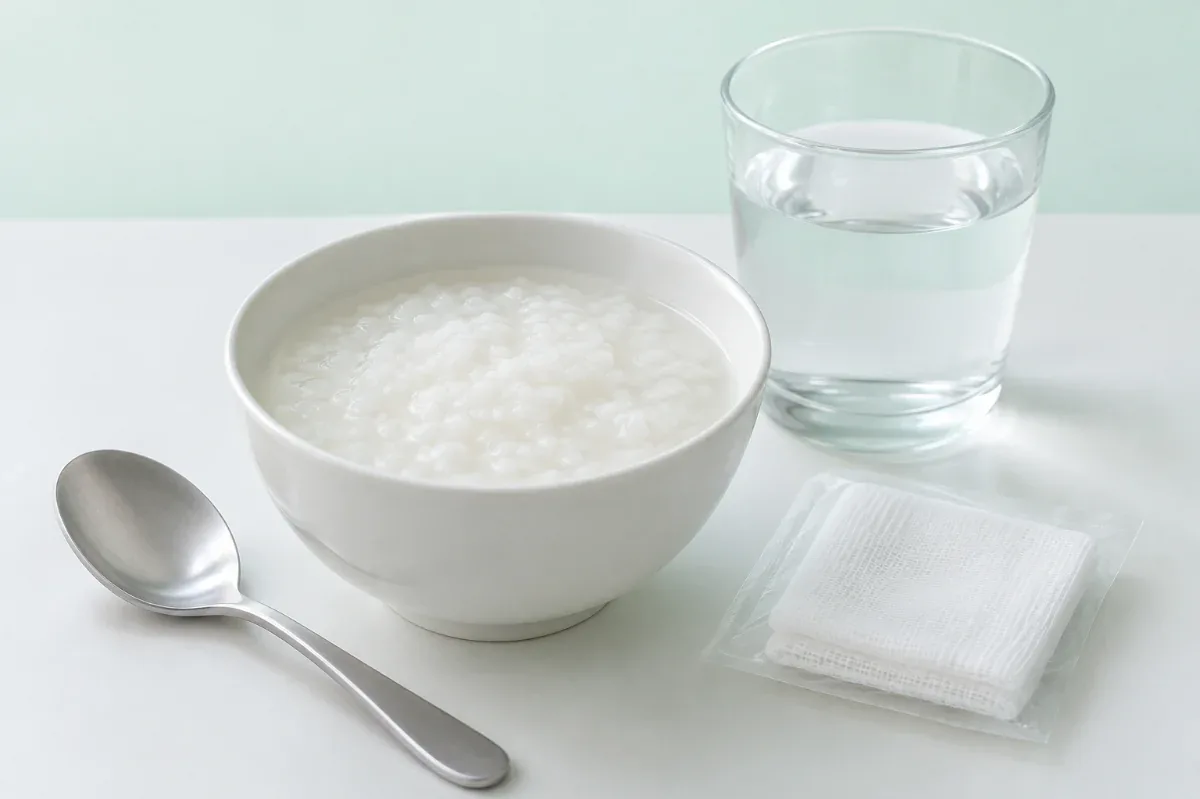
If there is bleeding, press on it with clean gauze. Then look for the tooth that came out.
If you cannot find it, tell us that too. It may have been swallowed or driven into the lip.
What if a permanent tooth comes out?
What matters most?
Then time matters most of all. Please come in at once.
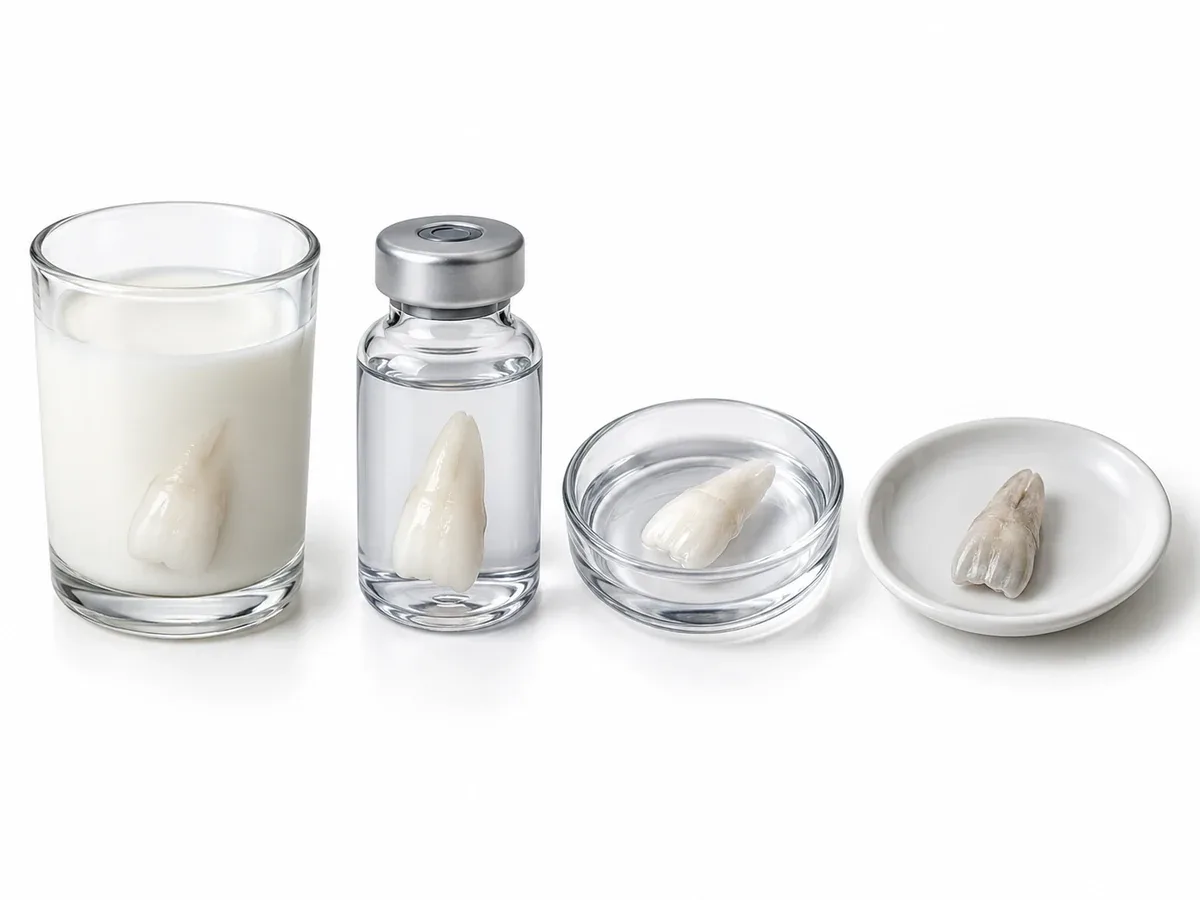
Hold the tooth by the crown, not the root. The cells on the root surface are what it needs to attach again.
How should it be carried?
If there is soil on it, rinse briefly under running water. Do not rub it or use a brush.
Then put it in milk. Saline or the child's saliva is fine too.
Leaving it in water for long is not good. Your child can also hold it inside the cheek on the way.
- Hold the crown, never the root
- Rinse very briefly under running water
- Do not rub or brush it
- Carry it in milk or saline
- Never let it dry out
How much time is there?
Once it has been dry for an hour, replanting becomes difficult. That is why carrying it in liquid matters.
The sooner you arrive, the better the chance it settles in. After replanting, it is splinted to the teeth beside it.
Root canal treatment often follows some weeks later. If there is no time to find a container, just bring the tooth in your hand.
What if the tooth is just chipped?
How deep does the chip go?
What we do depends on the depth. A chip of the surface layer is smoothed and watched.
Where the yellow layer beneath shows, we cover that area.
A red spot in the middle means the nerve is exposed. That is urgent, and covering it within hours is better.
Is the fragment worth keeping?
Bring the fragment and it can sometimes be bonded straight back. Keep it in water or milk so it does not dry out.
A crack running into the root cannot be seen from outside, so an image is the way to find it.
- Surface layer alone — smoothed and watched
- Yellow layer showing — the area is covered
- Red spot visible — treated at once
- Crack into the root — found on an image
- Fragment kept — carried in liquid
| Depth | How it looks | Done that day |
|---|---|---|
| Surface layer | A corner slightly chipped | Smoothed and watched |
| Into the inner layer | A yellow surface showing | The area is covered |
| To the nerve | A red spot in the middle | Treated within hours |
| Into the root | Nothing visible outside | Checked on an image |
| Fragment left behind | In the lip or the gum | Removed and cleaned |
Can it change later?
The bottom two rows cannot be judged by eye, so a visit is worth it even for a light chip.
The colour sometimes darkens a few months afterwards. We look again then and decide about root canal treatment.
What if the tooth is loose or pushed in?
Is a loose baby tooth left alone?
A baby tooth that is merely loose is usually left and watched. It often firms up again after a few days.
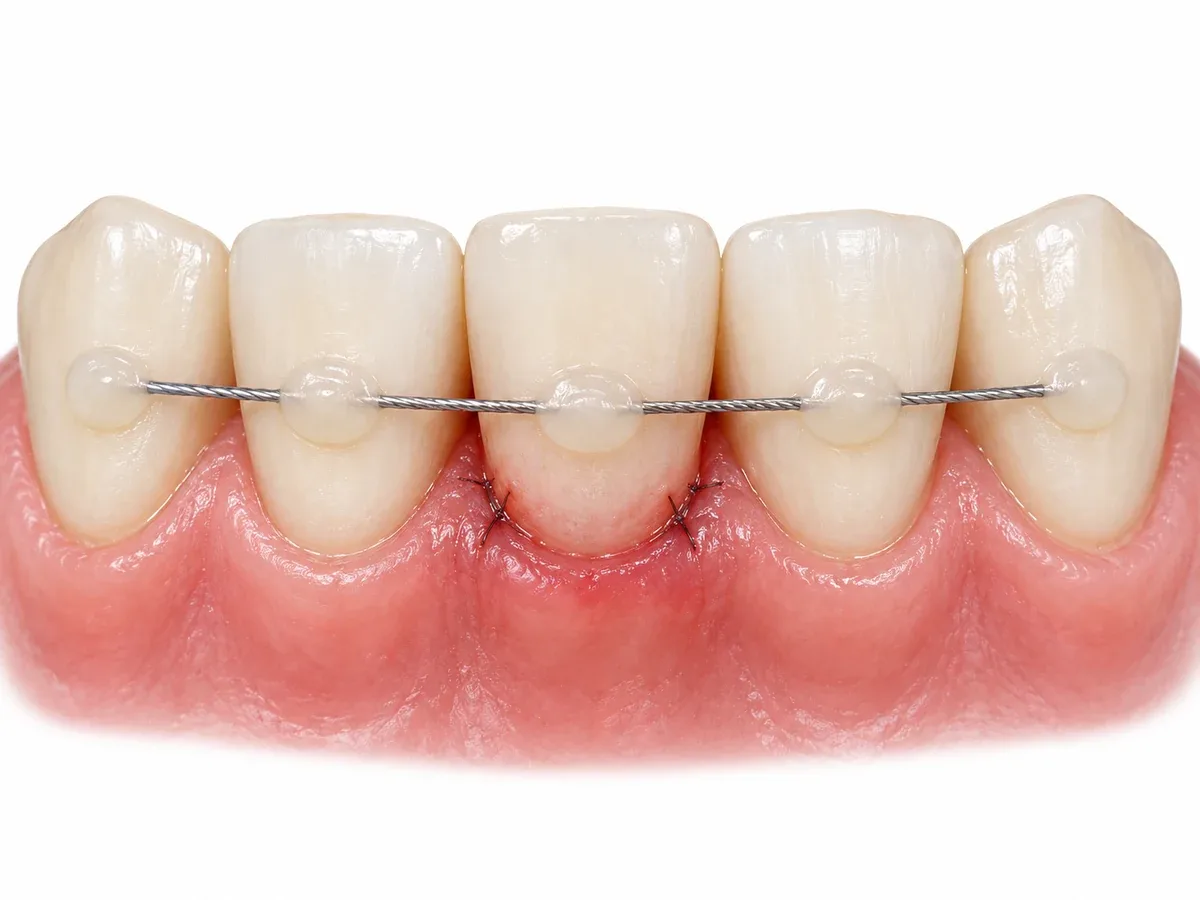
Keep your child on soft food meanwhile. If it is very loose, we sometimes splint it to its neighbours for a while.
Firming up again takes around two weeks. With a splint, extra care is needed until it comes off.
Pushed into the gum
A baby tooth driven up into the gum calls for the most caution. If it has gone in towards the tooth bud, we sometimes remove it.
That direction is confirmed on an image. A tooth pushed out towards the lip is a better situation.
It sometimes finds its own position again over a few weeks. Either way, an image that day matters.
- Merely loose — left and watched
- Very loose — splinted for a while
- Pushed in — the direction is checked
- In towards the bud — sometimes removed
- Out towards the lip — may right itself
That image is the baseline for later comparison. Keep your child from chewing on that side for a few days.
Can the injury affect the permanent tooth?
What marks can it leave?
It can, so we never treat these falls lightly. A pressed bud can leave marks on the surface of the tooth that follows.
They show as white patches or yellowish bands. In more marked cases the shape itself comes through uneven.
The direction it comes through can be turned, and rarely it stays buried. The younger the child at the time, the larger the effect can be.
How long do you watch for?
So we follow a baby tooth injury over several years. About once a year we take an image to see where the bud sits.
We look especially closely around the time the permanent tooth is due, so that we can prepare.
Patches can be smoothed and tidied later on. We separate what can be seen that day from what cannot, and we do not look once and close the file.
Is it a problem to leave an early gap?
It depends on the site, and front and back are not the same. An empty space at the front is usually no great problem, and it tends to hold until the permanent tooth arrives.
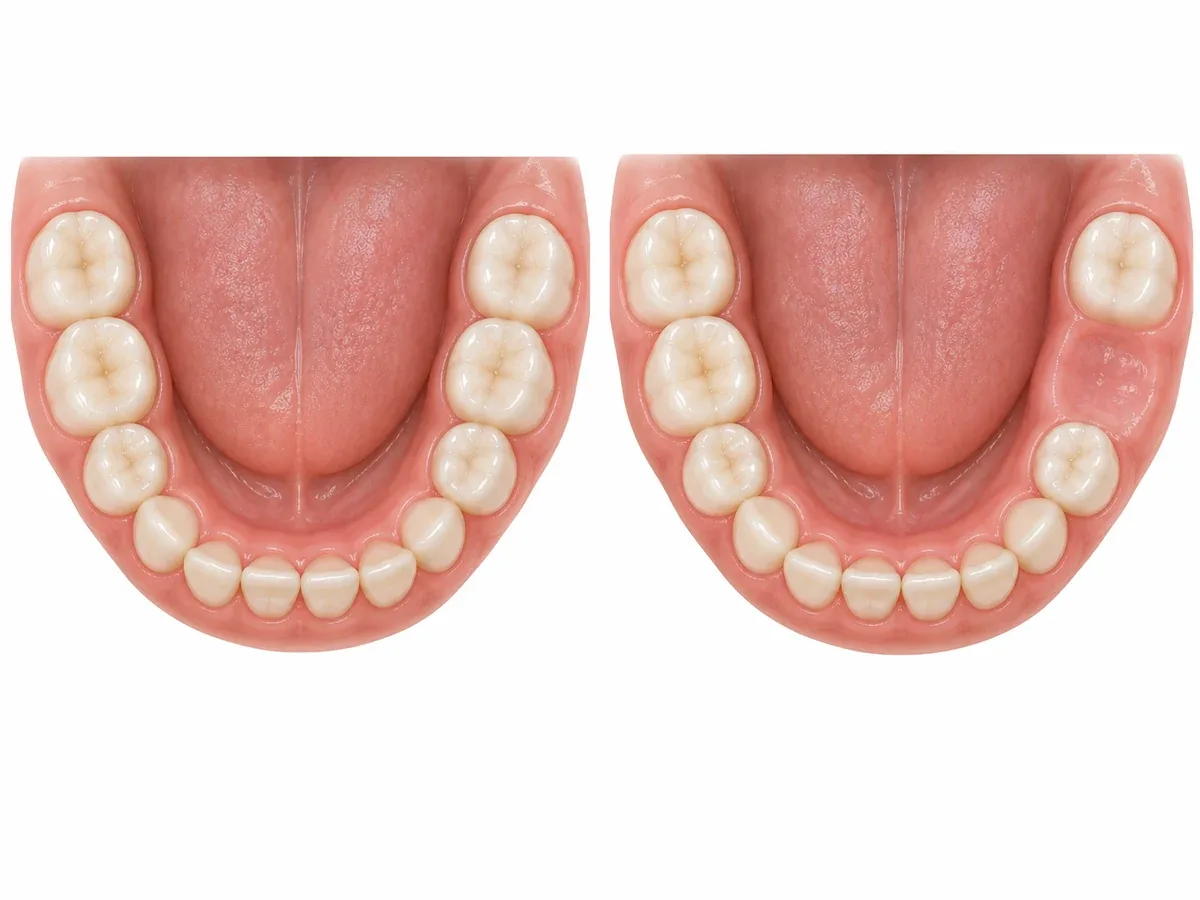
A back tooth site is different: the tooth behind tilts forward. The room the permanent tooth needs then narrows.
What is a space maintainer?
So we sometimes fit a device that holds the space open. It is small and simple, and comes out when the permanent tooth arrives.
It is fixed so a child cannot remove it. Eating is unaffected and a few days is enough to get used to it.
| Site | Does the space narrow? | What we do |
|---|---|---|
| Upper front tooth | Hardly at all | Left as it is |
| Lower front tooth | May narrow a little | Watched |
| First molar site | Narrows easily | Space maintainer |
| In front of the second molar | Narrows a good deal | Space maintainer |
| Several teeth lost | Narrows a good deal | Maintainer and orthodontic advice |
An empty space at the front makes speech awkward for a while. Most children adapt within months.
If the look of it troubles you, a temporary tooth can be made. We decide by the child's age and temperament.
Brush around a space maintainer especially carefully.
What else is checked, and how do you care for it after?
What else needs looking at that day?
We look beyond the mouth as well as inside. The inside of the lip is often torn and sometimes needs stitching.
A tooth fragment is sometimes lodged in that tear. Where the gum has split, we tidy that site too.
If the jaw took the impact, we check the jaw joint. If the head was struck hard, or there is vomiting or vagueness, a hospital comes first.
- Is the inside of the lip torn?
- Is a fragment lodged in the tear?
- Has the gum split open?
- Did the jaw take a knock?
- Was the head struck?
How should the first few days go?
Head and neck injuries are the cases where an emergency room comes first. With a deep, soil-filled wound we also check tetanus cover.
Keep your child on soft food, away from biting with the front teeth. Cut fruit and bread so the back teeth do the work.
Brush the injured site too, with a very soft brush. Unbrushed, the gum swells and it hurts more.
Swelling peaks on the second or third day. Something cold held briefly against the cheek eases it.
- No biting with the front teeth
- Brush the site with a very soft brush
- Hold something cold against the cheek briefly
- Pause straws and dummies for a while
- Call us if the pain worsens
Pause straws and dummies, since sucking keeps disturbing the site. If pain eases and then worsens, please call.
Watch for the colour darkening, which shows up weeks later. Give medicines as prescribed and finish any antibiotic course.
How do we handle a child's tooth injury in Busan?
What happens on the day?
First we settle whether the lost tooth is a baby tooth or a permanent tooth. We look at it and at the mouth together.
An image shows any fragments left and where the tooth bud sits. Lip and gum wounds are tidied at the same visit.
A permanent tooth is replanted and splinted there and then. For a baby tooth, we clean the site and set out a plan for watching it.
How often will we come back?
That day's image is kept as the baseline. Visits follow at a week, a month and three months.
After that we check the bud once a year. Most children arrive frightened, and tears are no problem at all.
Being near Seomyeon Station makes it easy to get here in a hurry. Families visiting Korea can call ahead and come straight in.
Can another injury be prevented?
Not altogether, though the risk can be reduced. Children whose front teeth stick out are hurt more often.
The lips do not cover them, so they take the impact directly. We then sometimes consider orthodontics a little earlier.
For a child who plays sport, we make a mouthguard from an impression. Helmets for bicycles and scooters, and care on slippery floors, both help.
A tooth hurt once is easily hurt again, so protection matters more then.
A knocked-out baby tooth is not put back in. Bring it with you instead.
A permanent tooth is different: carry it in milk
and come straight in.
For a child's tooth injury in Busan, Reset Dental Clinic offers 1:1 English interpretation from the first consultation to the end of treatment. Call 010-8555-2854 to come in.
Frequently asked questions
Can a knocked-out baby tooth go back in, and should we keep it?
Please do not put a baby tooth back, as it can disturb the tooth bud below. Do bring it with you, because we need to match the fragments.
Can a permanent tooth be carried in water, and what if it is bleeding heavily?
Milk or saline is better than water, and it must not dry out. For bleeding, press firmly with clean gauze or a handkerchief and come in if it does not stop.
The tooth darkened a few days later, and when should we come back?
Darkening is a common change, and we take an image before deciding. Visits follow at a week, a month and three months.
Can we see an English-speaking dentist in Busan for this?
Yes. We provide 1:1 English interpretation from the first consultation to the end of treatment, near Seomyeon Station Exit 2, opposite Lotte Hotel Busan. Call 010-8555-2854, or +82-10-8555-2854 from abroad.
References
- Journal of the Korean Dental Association, Vol. 53 No. 9, "Methods of Preserving Teeth After Trauma" — how a knocked-out tooth is handled
- Dental News, "First guideline proposed for estimating treatment of baby tooth trauma" — the standards used in looking at baby tooth injuries
- KDCA National Health Information Portal, "Disorders of Tooth Eruption" — cases where a permanent tooth cannot come through
- KDCA National Health Information Portal, "Autogenous Tooth Transplantation" — what replanting a tooth involves
Written by Reset Dental Clinic Support Team
Medical review Dr. Kim Hyun-joo, Head Dentist
Last updated: November 3, 2026
This column is for general information and does not replace diagnosis or treatment for individual patients. If you have symptoms, please see a dentist.