

- At our clinic in Busan, implant surgery is done under anesthesia, so you should not feel pain during the procedure. The discomfort usually comes for a few days after it wears off.
- It generally hurts less than it used to. Opening just as much as needed has greatly reduced swelling and pain.
- What decides how much it hurts is not the number of implants but the extent and length of surgery. A bone graft or sinus work adds a few days to recovery.
- The anesthetic must be given by a dentist. Check who gives it at your consultation.
"Will it hurt a lot?" is the question we hear most about implant surgery at Reset Dental Clinic in Seomyeon, Busan. This guide walks through when you may feel discomfort, how much, and what decides it, in time order. For patients living in or visiting Korea, we provide 1:1 English interpretation from the first consultation through the end of treatment.
The word "surgery" alone carries a lot of fear. Our aim is to turn a vague worry into a clear idea of what to expect.
Does implant surgery hurt while it is being done?
No, it should not. Implant surgery is done under local anesthesia.
Once the anesthetic has fully taken effect, you may feel pressure and vibration from the instruments, but not pain. That is why we ask during surgery, "Are you feeling any pain?" If you do, we give more anesthetic.
Many patients tense up picturing the gum being opened. In reality, that part is the quietest of all.
In fact, many say the waiting beforehand was harder than the surgery itself.
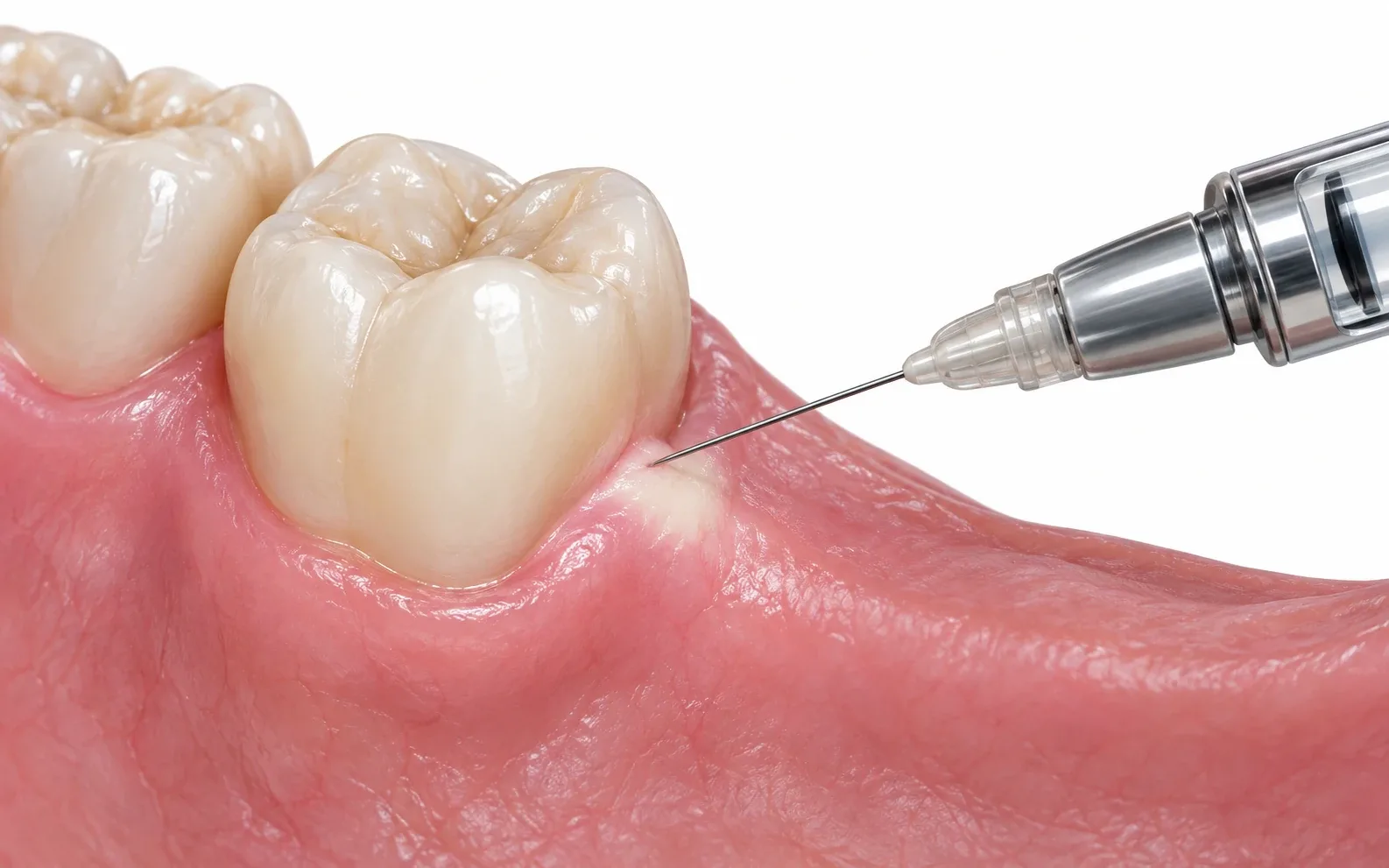
Can implant surgery be done with sedation? When the surgery covers a large area or dental fear is strong, sedation is sometimes used as well.
It may not suit everyone, depending on general health. Please tell us in advance about any medicine you take and your medical history.
Who gives the anesthetic in Korea, and why should you check?
This is about safety more than pain, so we cover it separately.
The anesthetic must be given by a dentist. A needle goes into the gum and a drug is injected.
If this is done without exact knowledge of the anatomy, it can affect nerves or blood vessels. Even in an area that feels almost no pain, it is not a task to hand to another role.
Once you lie down in the chair, a drape covers you. It is hard to see who is doing what.
There is an easy way to check. Look at the name badge. It shows whether the person is a dentist or a dental hygienist.
It is not rude to ask before treatment who will be doing what that day.
Two simple ways to check who is treating you:
- read the name badge, which shows dentist or dental hygienist
- ask before treatment starts which procedure each person will do
| Procedure | Who may do it |
|---|---|
| Anesthesia | Dentist |
| Implant placement and opening the gum | Dentist |
| Tooth restoration (such as resin fillings) | Dentist |
| Scaling | Dentist or dental hygienist |
How much does it hurt after the anesthetic wears off?
Most patients say it feels about the same as after a tooth extraction, or a little less. It is at a level that prescribed painkillers can manage.
Here is roughly how the days after implant surgery go.
1. The day of surgery
The anesthetic usually wears off after two to three hours. A dull ache begins from then.
It is important to take the prescribed medicine on schedule. Taking it before the pain arrives is much easier than taking it afterwards.
2. From the next day to day three
This is when swelling peaks. Swelling and a dull ache are the main discomfort, more than pain. After this period, things get noticeably easier.
3. From day four to one week
As the swelling goes down, daily life is hardly affected. Most people no longer take painkillers by this point.
4. After one week
The stitches are removed. From here, many people go about their day without thinking about the surgical site.
The implant is still bonding with the bone, though, so avoid hard foods.
| When | What you may feel | What to do |
|---|---|---|
| Day of surgery | A dull ache once the anesthetic wears off after 2–3 hours | Take the prescribed medicine on time, before pain builds |
| Next day to day 3 | Swelling at its peak; a dull ache more than pain | Follow the swelling care below |
| Day 4 to one week | Swelling goes down; daily life is hardly affected | Most people stop painkillers |
| After one week | Stitches removed; many stop noticing the site | Keep avoiding hard foods while the implant bonds |
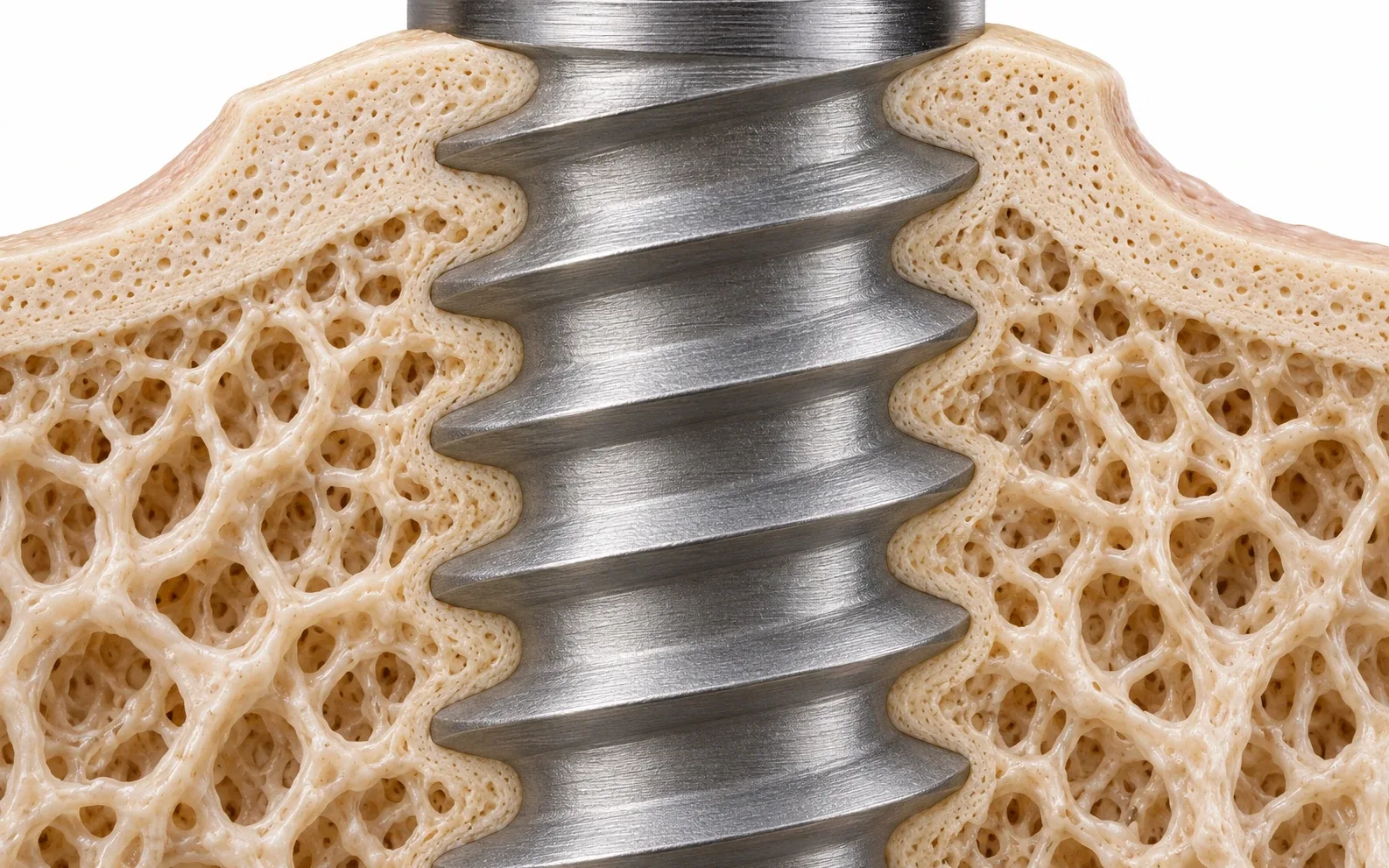
When can you chew on it? Avoid chewing on the treated side while the implant bonds with the bone. You can eat on the other side right away.
When you can chew on the implant side is decided after checking how well the fixture has bonded.
Why does implant surgery hurt less than it used to?
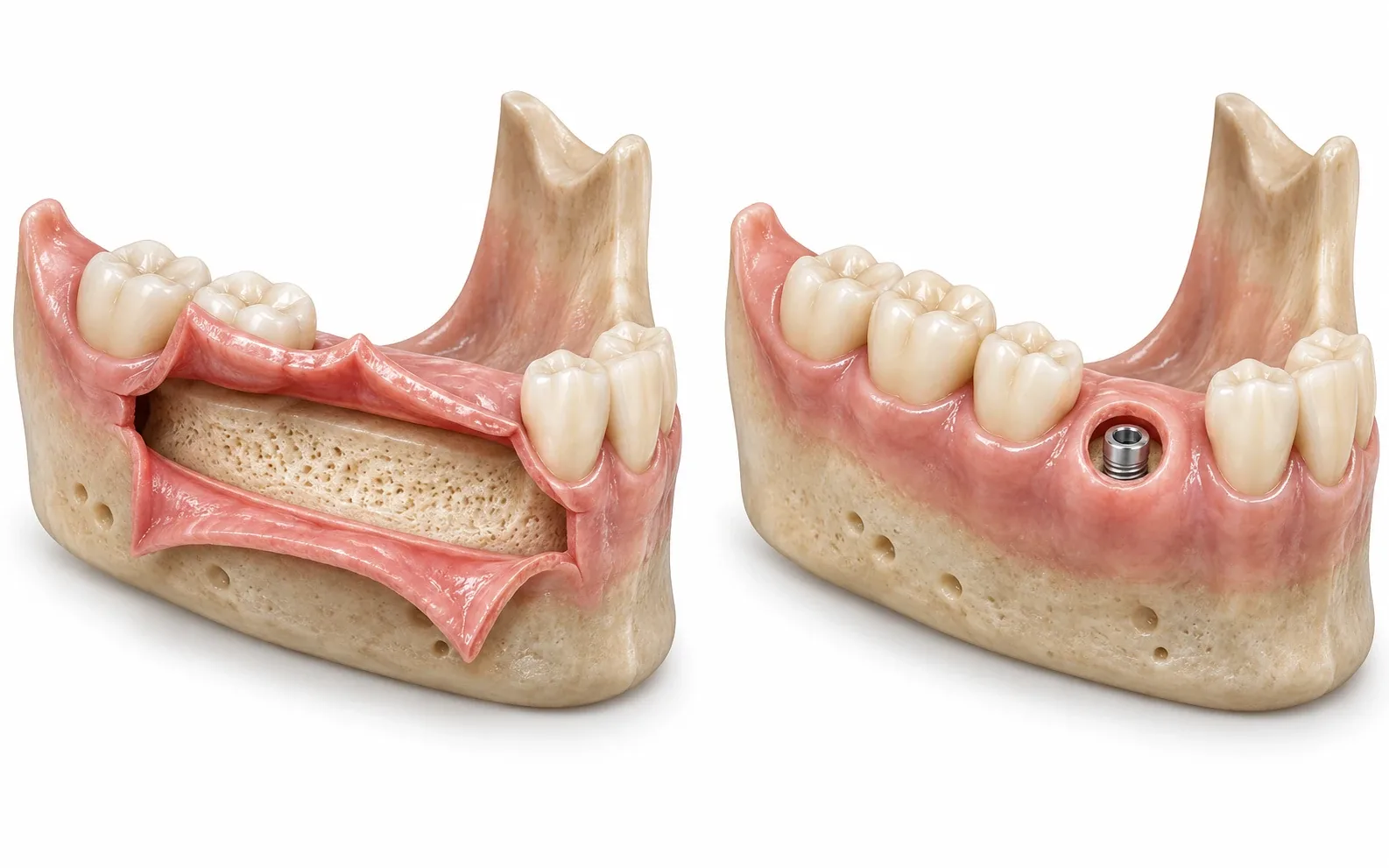
In the past, the gum was opened widely so the bone could be checked directly by eye. A bigger opening means more swelling and pain.
Extra procedures were often added on top, which made the surgery longer as well.
Today the order is reversed. We check the bone and nerve position on a 3D CT scan first, choose the implant site, and then open just as much as needed.
We do not open first and decide afterwards. We decide first, then open. A smaller opening means less swelling and less pain.
| In the past | Today | |
|---|---|---|
| How the bone is checked | The gum is opened widely to look at the bone by eye | Bone and nerve position are checked on 3D CT beforehand |
| Size of the opening | Wide | Just as much as needed |
| Order of decisions | Open first, then decide | Decide first, then open |
| Length of surgery | Longer, with extra procedures added | Shorter, with a precise plan |
| Swelling and pain | Greater | Greatly reduced |
Shorter surgery also makes a big difference. The longer the gum is exposed to air, the more it swells.
The more precise the plan, the shorter the implant surgery.
What decides how much implant surgery hurts?
More implants do not always mean more pain. Opening one site widely can be harder than making several small openings.
What really makes the difference is shown in the table below.
| Factor | How it affects recovery |
|---|---|
| Size of the opening | The biggest factor. The wider the opening, the more swelling and pain. |
| Bone graft at the same time | A large graft area keeps swelling going for a few more days. |
| Sinus procedure | Work on the sinus above the upper molars needs more recovery time. |
| Length of surgery | The longer it takes, the more strain on the tissue. |
| Gum inflammation | Surgery on inflamed gums heals more slowly, so gum treatment comes first. |
| General health | Poorly controlled blood sugar or smoking slows recovery. |
The last two rows are the part you can reduce yourself. Clear up gum inflammation before surgery and stop smoking before and after it. Recovery can change noticeably.
What about diabetes? If blood sugar is under control, implant surgery usually goes ahead without problems.
If it is not controlled, wounds heal more slowly and the risk of infection rises. Tell us about your medicine and recent readings, and we will plan around them.
Before surgery, please let us know about:
- any medicine you take regularly
- your medical history
- recent blood sugar readings, if you have diabetes
- whether you smoke
How can you reduce swelling after implant surgery?
How you care for yourself in the first few days sets the pace of recovery.
Cold for the first two days, then warm. On the day of surgery and the next day, ice packs keep swelling from building up. From day three, warm packs help the swelling go down.
The order matters. If it is reversed, it does not work.
On the first day, keep your upper body raised. When your head is lower than your heart, swelling gets worse. Add an extra pillow when you sleep.
Avoid smoking completely. Smoking disturbs blood flow in the gums and slows healing. Among patients who have problems after implant surgery, smoking is often part of the picture.
Do not touch the surgical site with your tongue or fingers. However curious you are, leaving it alone is the fastest way to heal.
- Day of surgery and the next day: ice packs.
- From day three: warm packs.
- First night: sleep with an extra pillow, head above heart.
- Throughout healing: no smoking, and hands and tongue off the site.

Please contact us instead of putting up with it if:
- pain has not eased after three days
- pain is getting worse
- swelling comes back after going down
- you develop a fever
Is it okay to put off implant surgery because you are afraid?
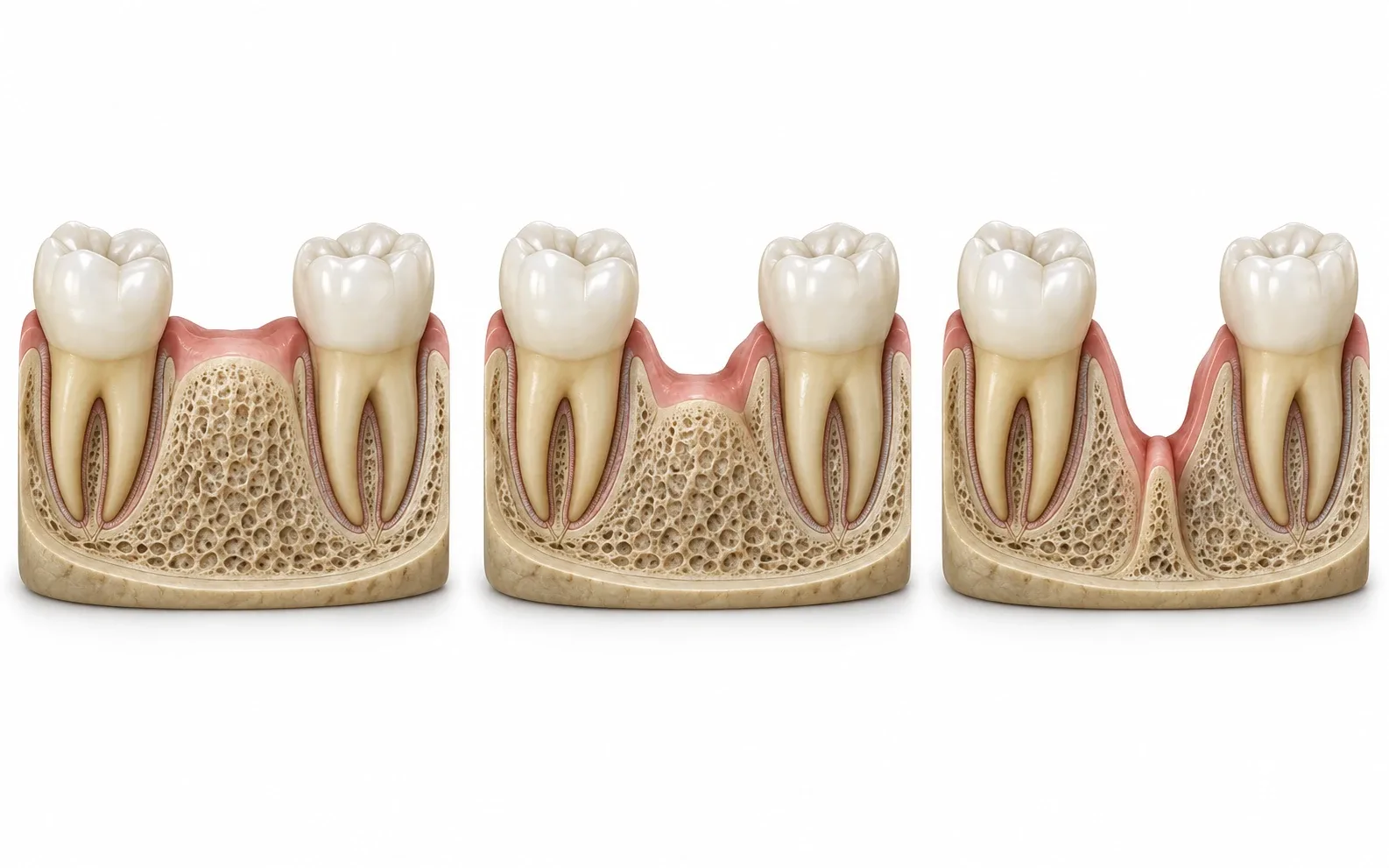
We understand the fear. But the jawbone keeps shrinking while you wait.
Where a tooth is missing, chewing forces no longer reach the bone, so the bone is slowly absorbed. It is like a muscle that wastes away when it is not used.
If you wait until the bone has shrunk, a bone graft may be needed. The surgery becomes larger, and recovery takes longer.
Putting it off out of fear today can turn into bigger surgery later.
Here is how waiting tends to play out:
- The gap no longer receives chewing force.
- The jawbone there is slowly absorbed.
- A bone graft becomes more likely to be needed.
- The implant surgery grows larger, and recovery takes longer.
So if fear is what holds you back, talk to us about it first. Knowing how the surgery will go, step by step, is often what makes it manageable.
Frequently asked questions
Can I go to work the day after implant surgery?
In most cases, yes. How visible the swelling is varies from person to person. With a bone graft or sinus work, allowing a day or two is wiser, and we can time surgery around important plans.
Does it hurt more to place several implants at once?
Not necessarily. Pain depends more on the size of the opening and the length of surgery than on the number. Splitting into several surgeries means recovering each time, so doing it at once is often easier where possible.
I am taking painkillers and it still hurts. Is that normal?
If pain has not eased after three days, or is getting worse, it needs checking. The same goes for swelling that returns or a fever. Please do not just put up with it; contact us.
Can I have implant surgery with English support in Busan?
Yes, we provide 1:1 English interpretation from the first consultation through the end of treatment. The clinic is near Seomyeon Station Exit 2 (5-min walk), opposite Lotte Hotel Busan. Call 010-8555-2854, or +82-10-8555-2854 from abroad.
The way to keep pain down is careful planning.
A smaller opening and shorter surgery mean less swelling and less pain.
So we do not open first and decide later.
We check the bone and nerves on 3D CT, choose the site, and then open.
Knowing in advance how the days will go can ease much of the fear.
If you are considering implant surgery in Busan, we offer 1:1 English interpretation for patients living in or visiting Korea. Call 010-8555-2854 to book a consultation.
References
- KDCA National Health Information Portal, "Dental implants" — definition of implants and osseointegration, treatment time, care and complications
- KDA Dental News, "65% of implant patients have experienced peri-implant disease" (17th Gum Day, Korean Academy of Periodontology) — prevalence and risk factors of peri-implant disease, maintenance intervals
- KDCA National Health Information Portal, "Gum disease (periodontal disease)" — how gum inflammation progresses to the jawbone
- KDCA National Health Information Portal, "Systemic disease and periodontal treatment" — general health factors such as smoking and diabetes, and the gum tissues
- KDA Dental News, "Implant patients aged 65 and over exceed 800,000 last year" — growth in the number of implant patients in the country
Written by Reset Dental Clinic Support Team
Medical review Dr. Na In-chae, Head Dentist · Periodontics Specialist
Last updated: September 19, 2026
This column is for general information and does not replace diagnosis or treatment for individual patients. If you have symptoms, please see a dentist.


