

- Sensitive teeth make many people afraid of dental work, but treatment can sometimes reduce sensitivity.
- Yellowing, sensitivity and receding gums often share one root: thinning enamel and exposed tooth surfaces.
- Minish covers the exposed surface with ceramic, which can block the path that cold and air take to the nerve.
- Black triangles were reduced while keeping the natural tooth shape, not by making teeth square.
"My teeth are sensitive, so is it safe to work on my front teeth?" Many patients at Reset Dental Clinic in Seomyeon, Busan ask this before any esthetic treatment. This case review explains how senior Minish covered exposed tooth surfaces, and why the patient's sensitivity eased afterwards. For patients living in or visiting Korea, we provide 1:1 English interpretation from the first consultation through the end of treatment.
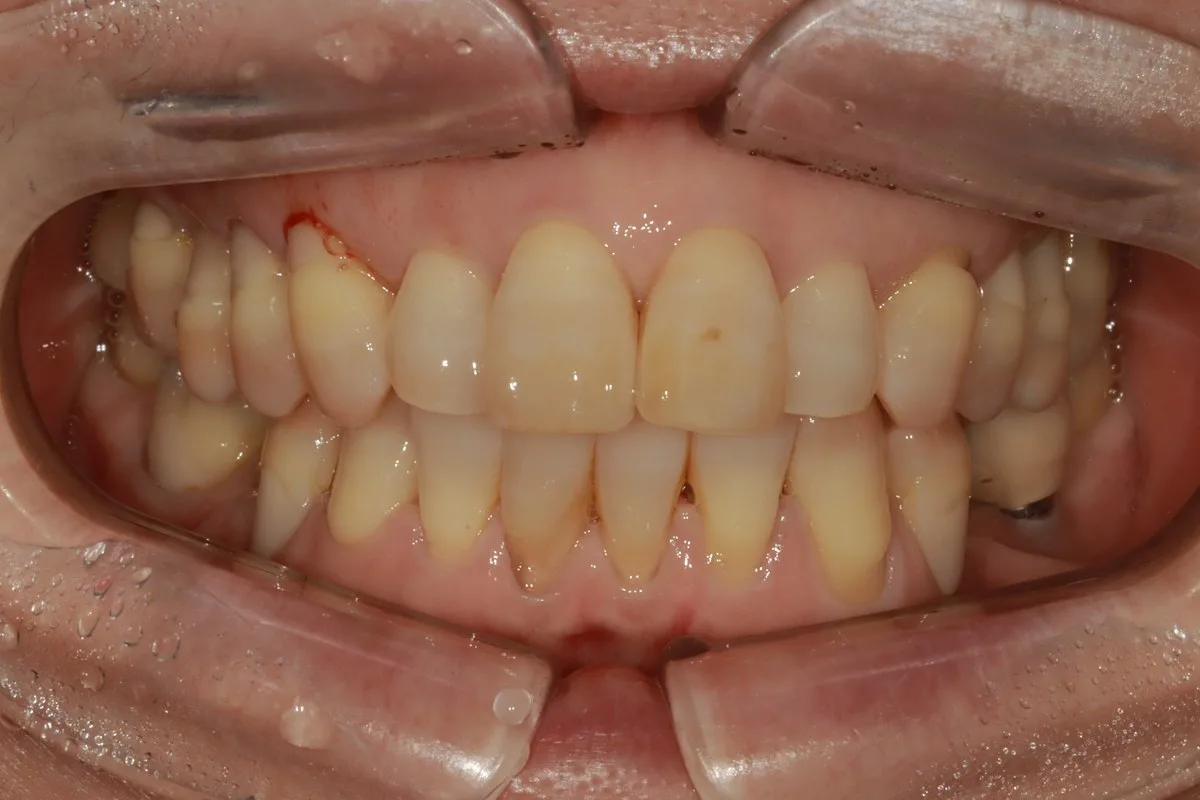
Why do yellow teeth, sensitivity and receding gums appear together?
When teeth are sensitive, doing anything at the dentist feels scary. It seems as if touching them would make them worse.
But when the cause of the sensitivity is dealt with at the same time, teeth can become less sensitive after treatment. That is what happened with this patient.
At the first visit, the patient mentioned three things. The teeth were too yellow, they felt sensitive overall, and the gums had receded.
- "My teeth are too yellow."
- "My teeth feel sensitive in general."
- "My gums have gone down."
These look like three separate problems, each needing its own fix. In fact, they are changes that grow from one root.
Understanding this link matters, because it shapes the treatment plan. If the three complaints share a root, one plan can address them together.
With age, the enamel covering the outside of the tooth becomes thinner. The dentin inside then shows through, and the color looks darker.
At the same time, stimuli reach the nerve more easily, so the teeth feel sensitive. One change leads to two complaints.
On top of this, when the gums recede, the root side of the tooth is exposed. Enamel does not cover this area, and it is more sensitive by nature.
| What the patient noticed | What was happening |
|---|---|
| Yellow teeth | Thinner enamel lets the darker dentin show through |
| General sensitivity | With thinner enamel, stimuli reach the nerve more easily |
| Receding gums | The root side of the tooth, which enamel does not cover, is exposed and more sensitive |
Why did the two front teeth look so long?
The two central front teeth, #11 and #21, hung down further than the teeth on either side. In dental numbering, these are the upper right and upper left central incisors.
This is the shape people often call "bunny teeth". It draws the eye to the middle of the smile.
The lower front teeth were overlapping as well (crowding). This is the result of teeth slowly drifting forward over the years with age.
Both the long central teeth and the crowded lower teeth are changes that build up slowly. So the case involved more than color. Length, color, dark gaps between the teeth and overlap all had to be planned together.
With Minish, the length of the front teeth can be adjusted too. Because the two central teeth were longer than their neighbors, we reset the overall length of the front teeth.
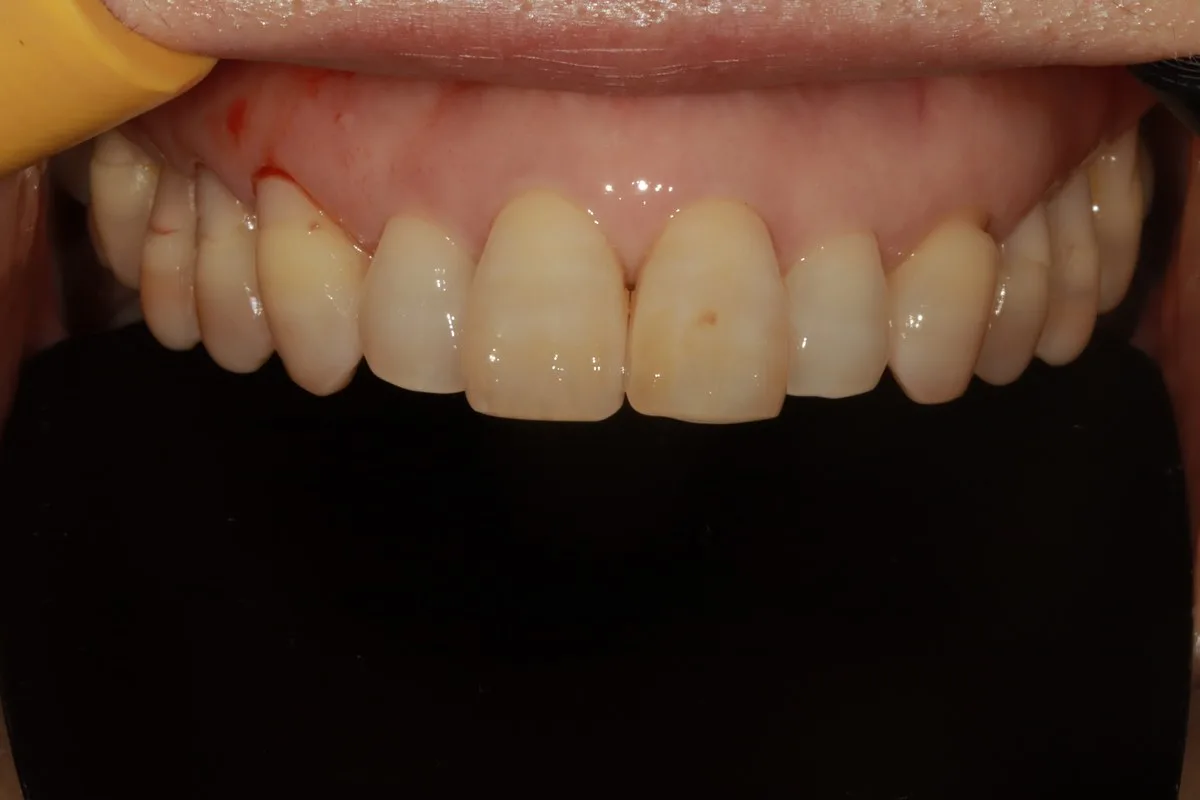
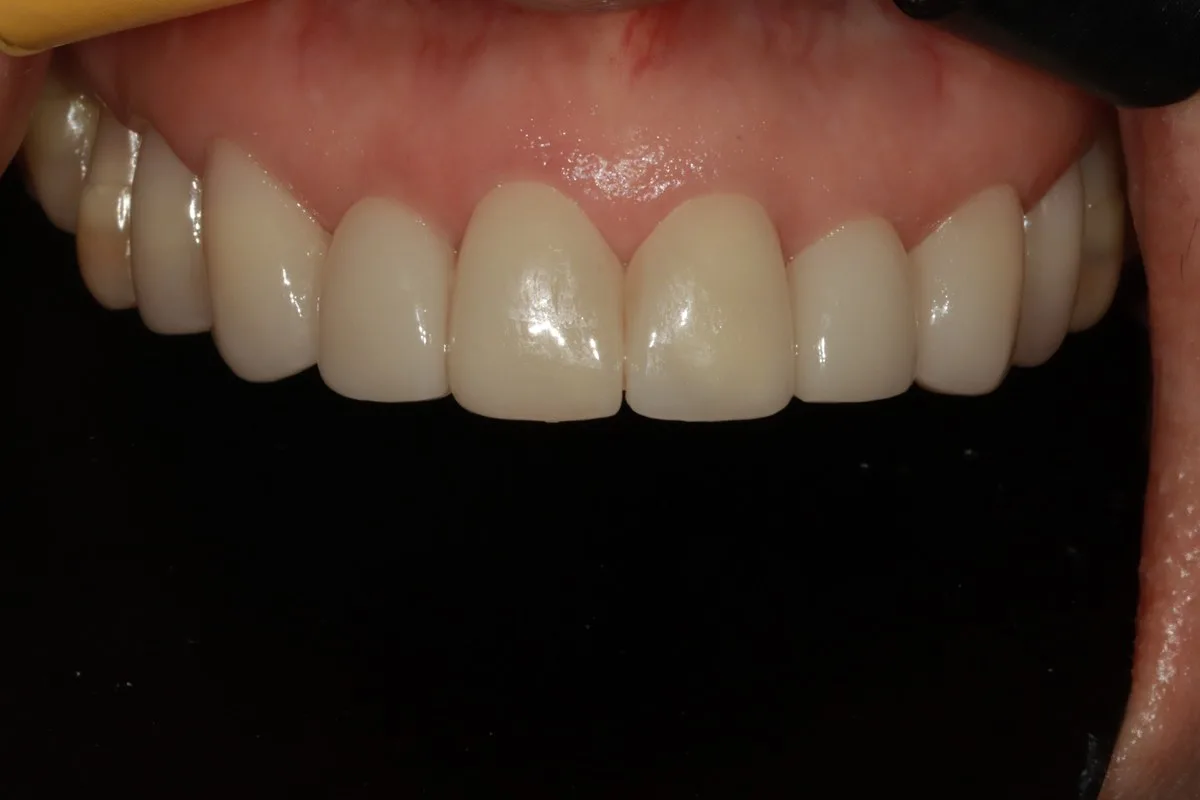
Upper front teeth: length, color and dark gaps were addressed together.
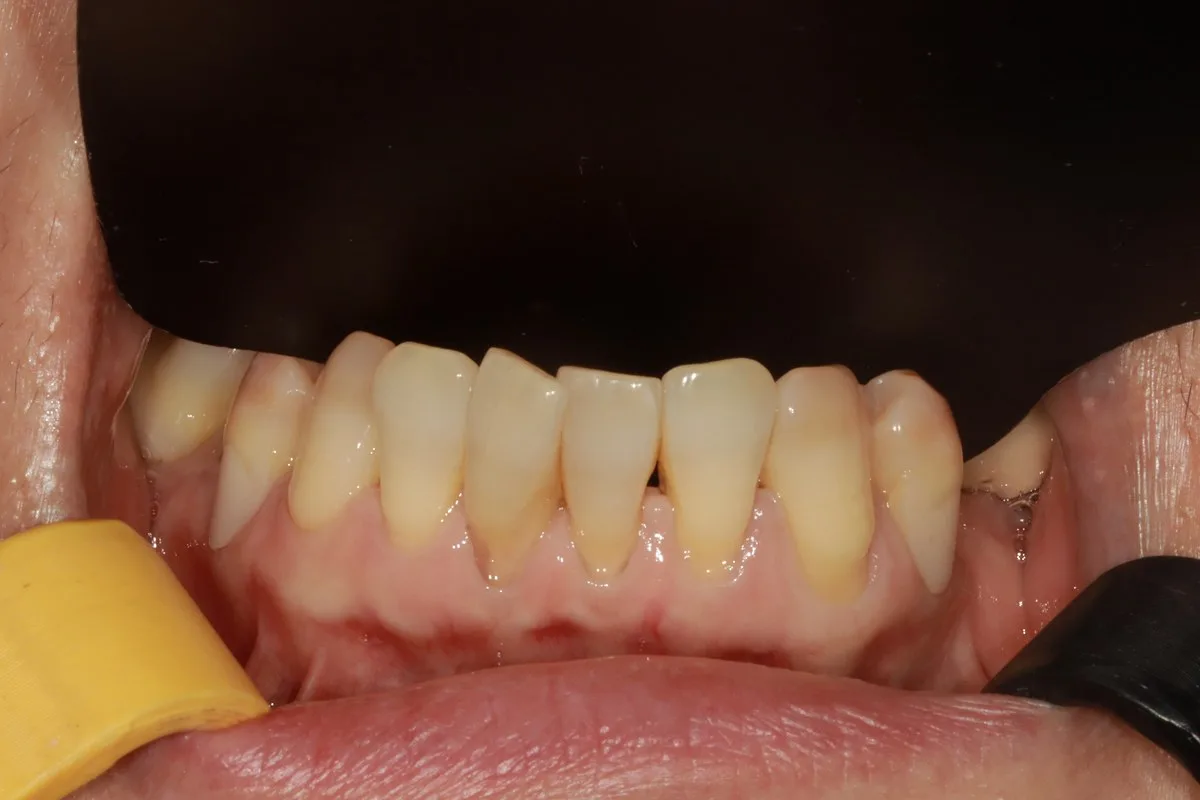
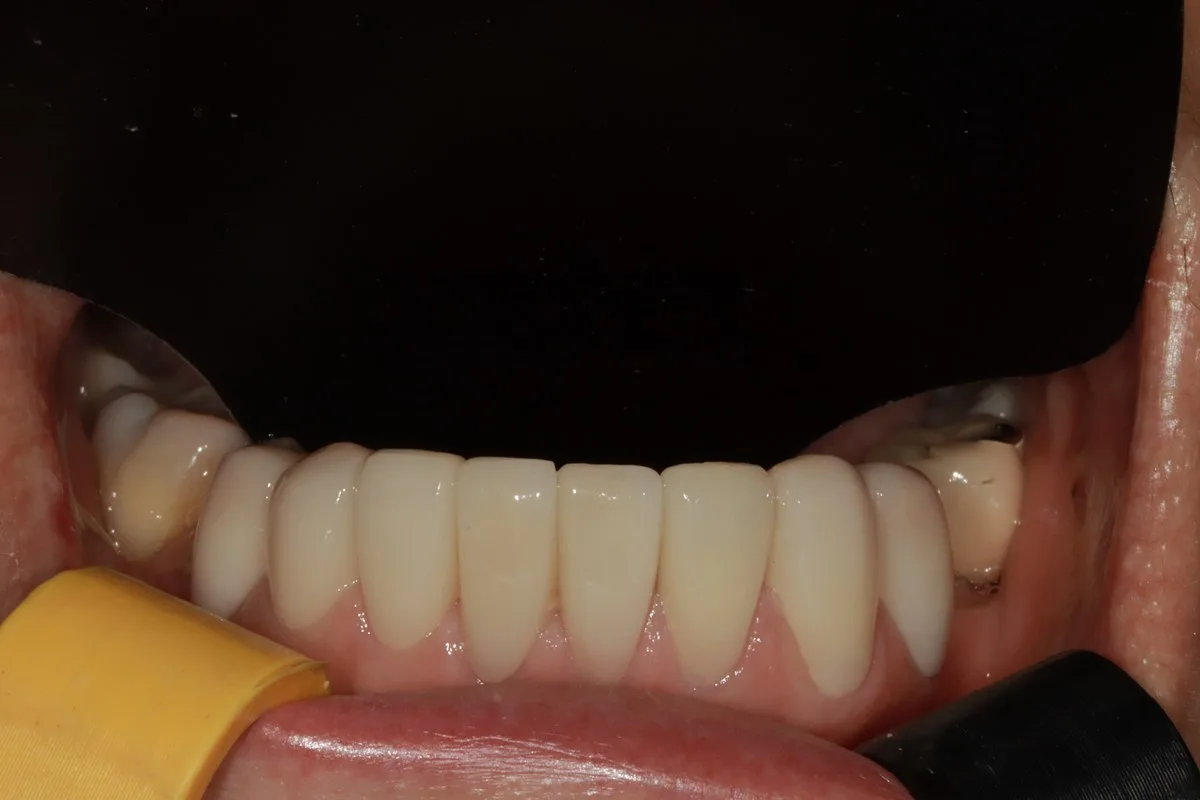
Lower front teeth: the overlap has been tidied up.
| Issue | Where | Approach |
|---|---|---|
| Long central teeth | #11 and #21 | Overall length of the front teeth reset |
| Dark color | Upper and lower front teeth | Brightness raised to suit the surrounding teeth |
| Black triangles | Between the upper front teeth | Contact points lowered slightly, curves kept |
| Overlap | Lower front teeth | Tidied through shape |
| Sensitivity | Exposed tooth surfaces | Covered with ceramic |
Can Minish actually reduce tooth sensitivity?
To bond Minish, the tooth surface is first smoothed to make room. Patients often ask, "Won't that make my teeth more sensitive?"
In this case, the result was the opposite. The sensitivity went down after treatment.
The reason is simple: the exposed surface gets covered. Teeth feel sensitive when dentin is exposed, so cold and air are passed on to the nerve.
In daily life, this is the twinge you feel with a cold drink or a breath of cold air. Blocking that path is what Minish does here.
Minish covers that exposed surface with ceramic and seals it. With the path for stimuli blocked, the sensitivity eases.
The amount of smoothing is very small, and ceramic covers it straight away. For this patient, the overall result was less sensitivity, not more.
Of course, not every kind of sensitivity is solved this way. If decay, gum disease or teeth grinding is the cause, that has to be treated first.
Sometimes back teeth feel sensitive because they are worn down. That situation needs its own assessment.
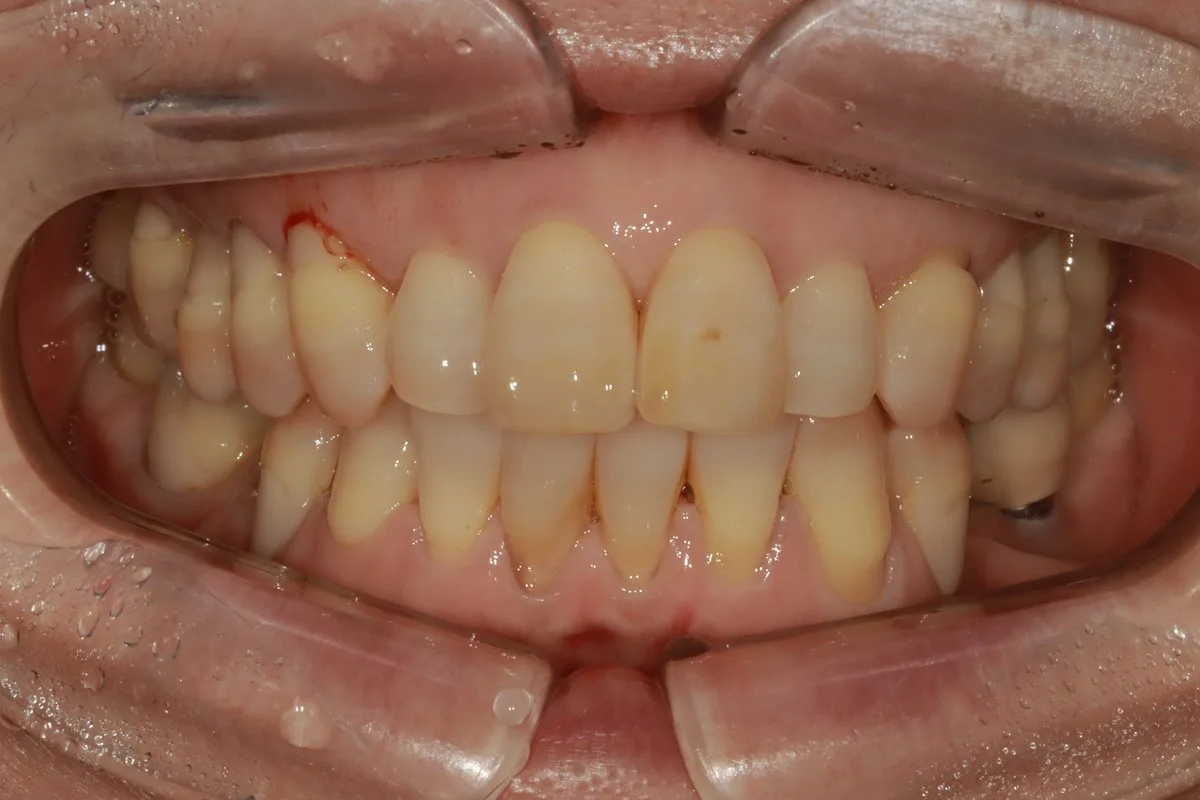
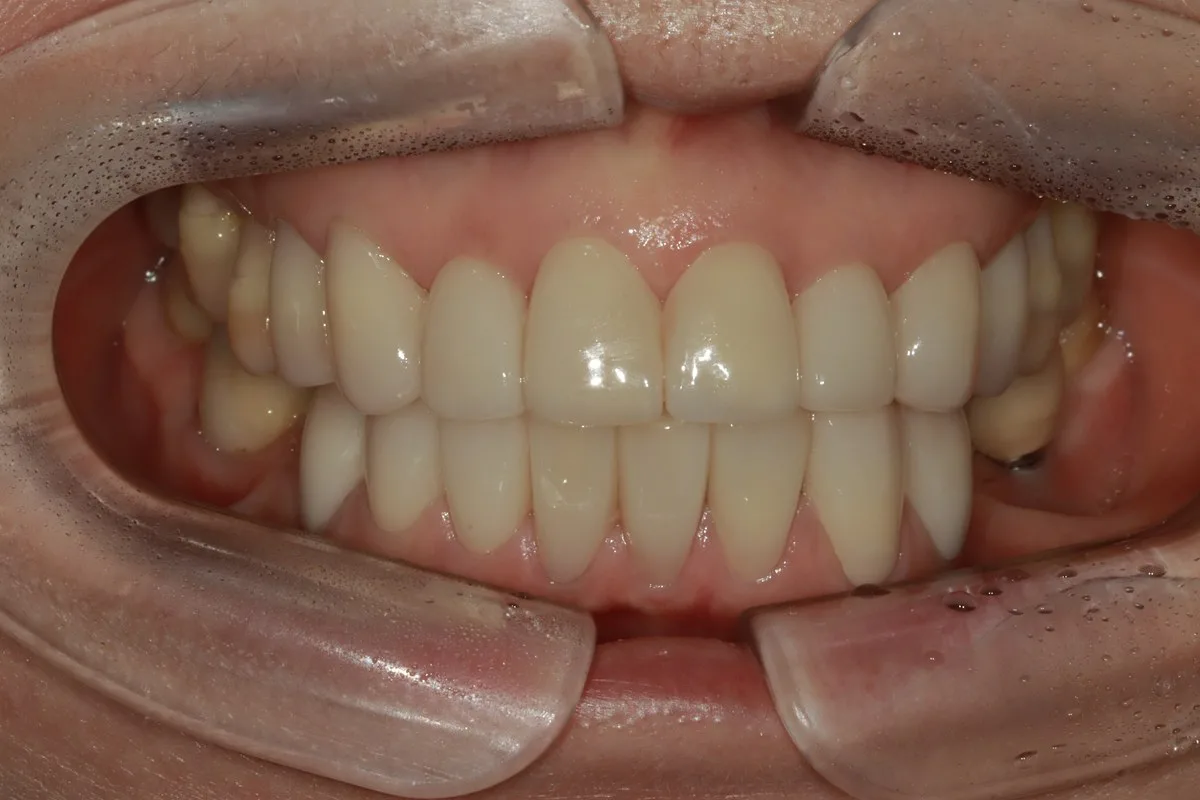
Before and after treatment.
- The cause of the sensitivity is checked first.
- Decay, gum disease or grinding, if present, is treated first.
- The tooth surface is smoothed very slightly to make room.
- Ceramic covers the exposed surface straight away.
- With the path to the nerve blocked, the sensitivity can ease.
The order matters here. Covering a tooth while decay or gum disease is still active would leave the real problem untreated.
How were the black triangles closed without square teeth?
When the gums recede, the space that the gum used to fill between two teeth is left empty. That empty space shows up as a dark gap.
This is called a black triangle. It is the dark space seen between the teeth near the gum line.
Filling it in is not hard in itself. If the sides of the teeth are made wider, the gap disappears.
The problem is what happens next. The teeth become square and look unnatural.
So for this patient, the Minish design lowered the point where neighboring teeth meet just a little. We kept the curve of the side edges as it was.
The gap was reduced enough not to stand out, while the tooth shape stayed true to the original. Nearly invisible was the goal, not completely gone.
With Minish, this balance is planned tooth by tooth. How far to fill the gap is decided together at the consultation. It is a balance between the size of the gap and the natural shape of the tooth.
Receded gums do not grow back up. What we do is make that area look natural through the shape of the tooth, and if the gums need treatment, that comes first.
| Approach | Gap | Tooth shape |
|---|---|---|
| Widening the sides of the teeth | Disappears | Teeth look square and unnatural |
| Lowering the contact point slightly | Reduced until it hardly shows | Natural curves are kept |
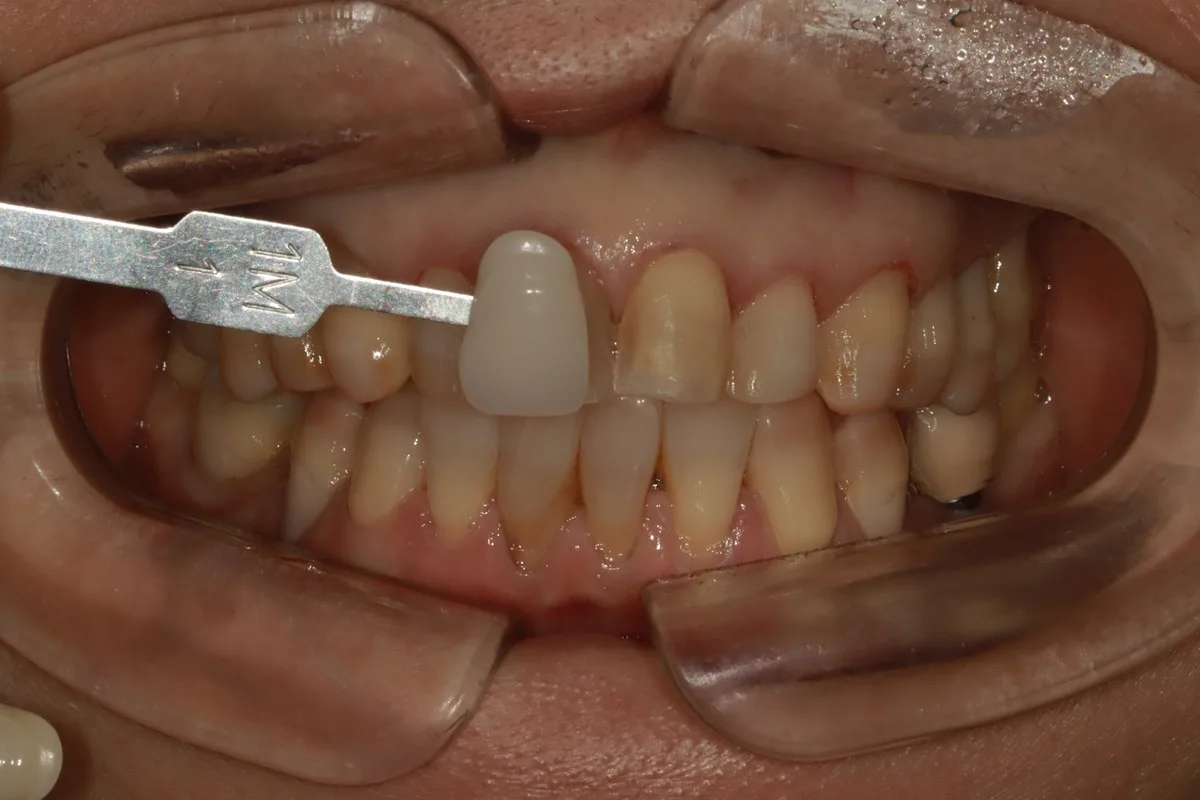
The Minish shade is matched by holding a shade guide against the neighboring teeth. We set the color by the same standard as the shape.
We did not make the teeth bright white. We raised the brightness within a range that suits the surrounding teeth.
The aim was a result that looks natural next to the teeth around it, not a dramatically new smile. The photos below show the upper and lower jaw after this balance was set.
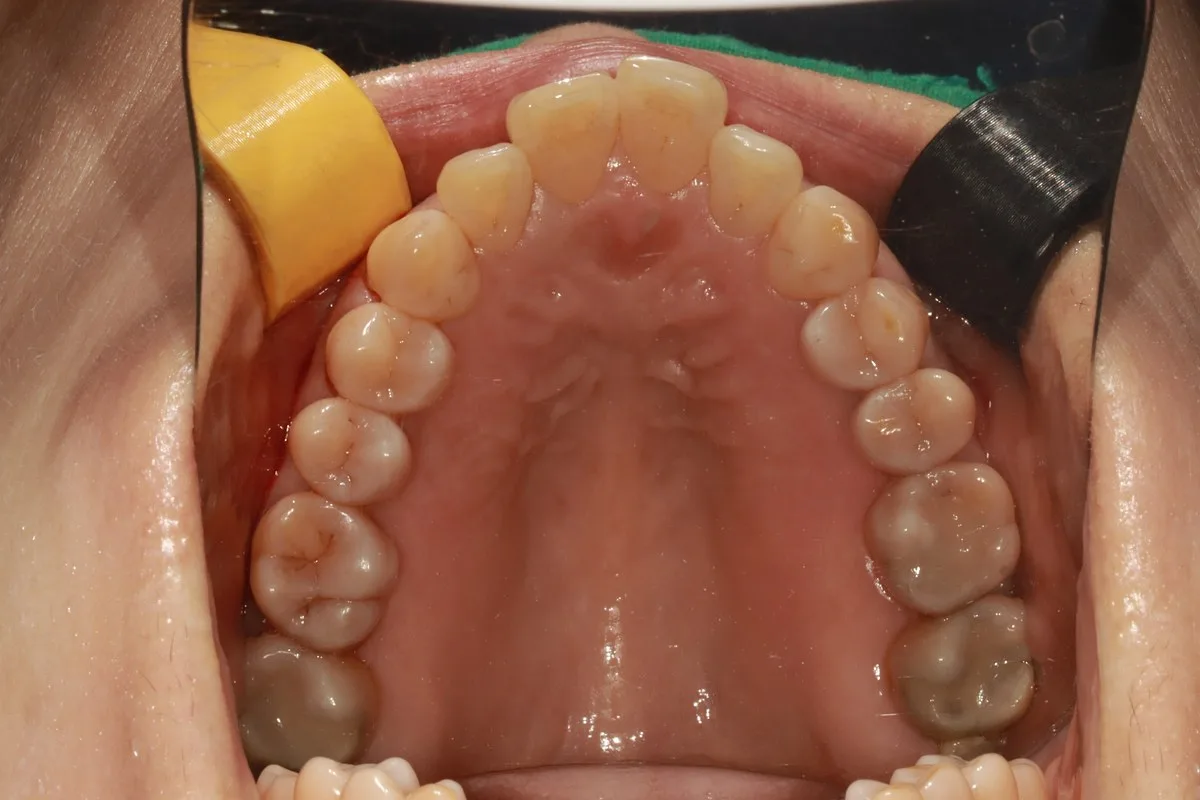
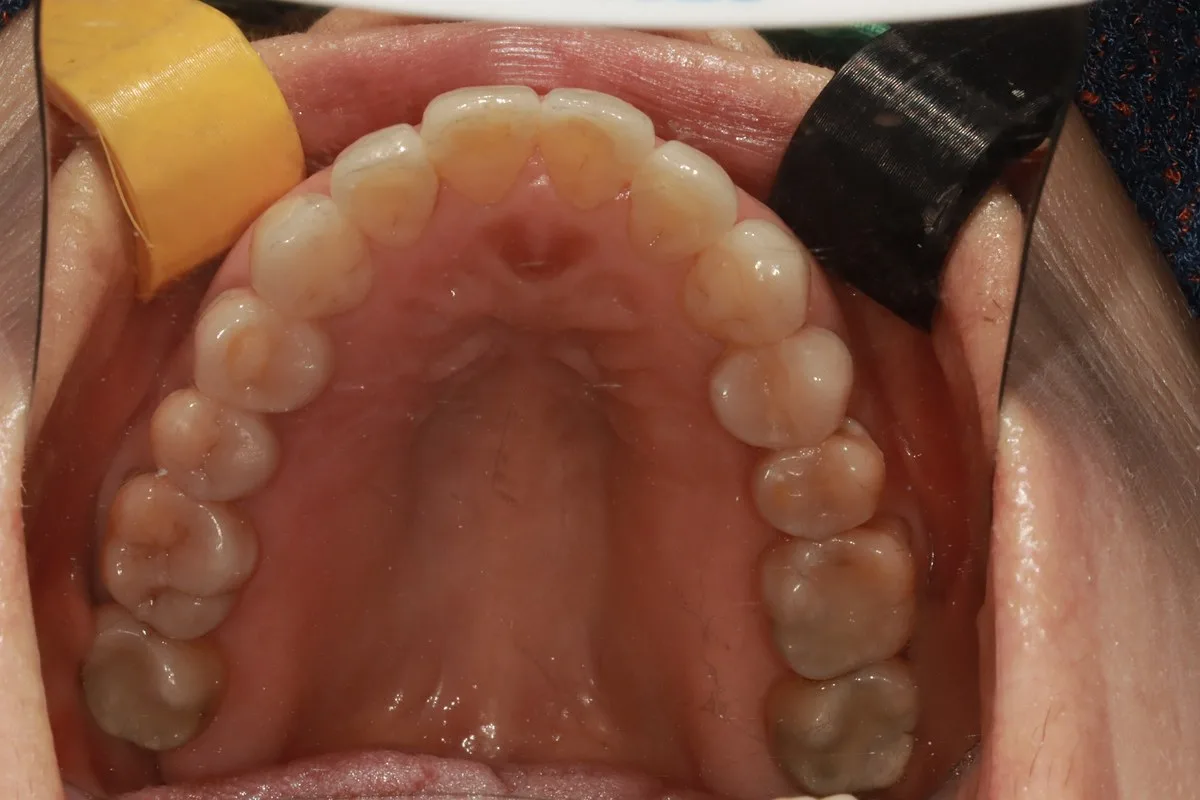
Upper jaw, before and after.
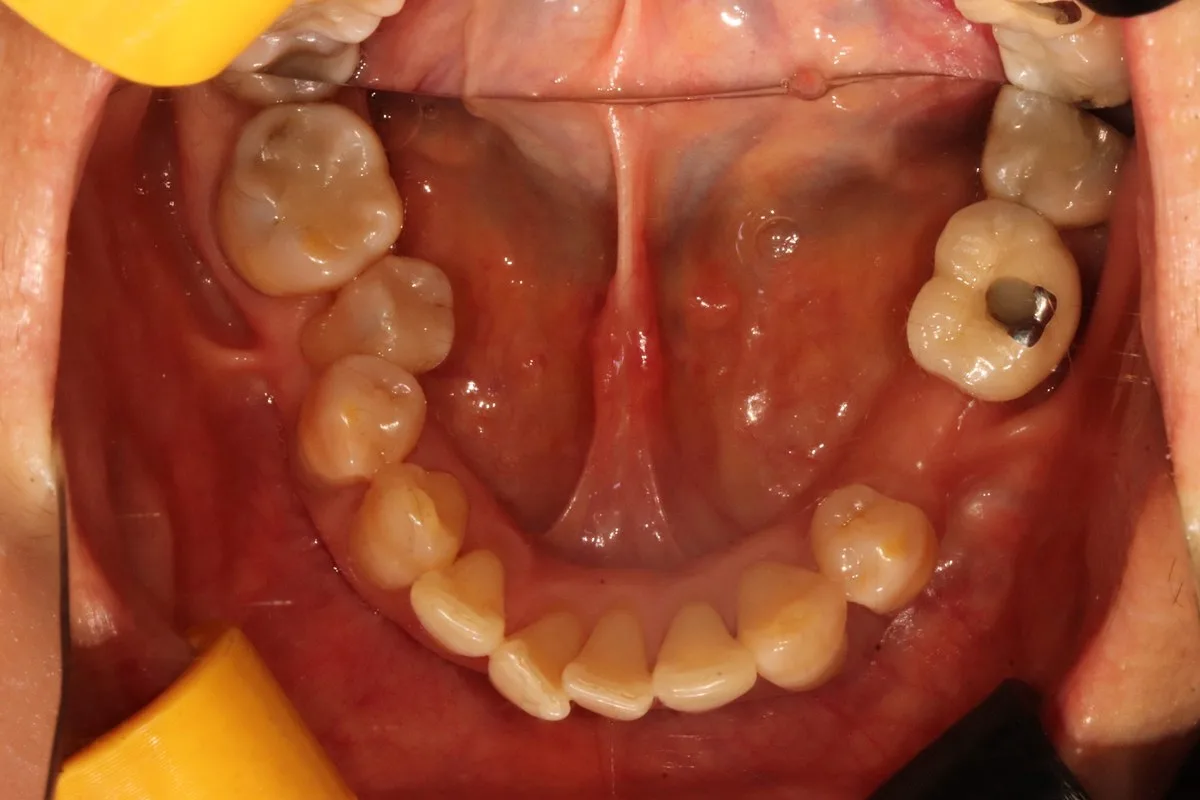
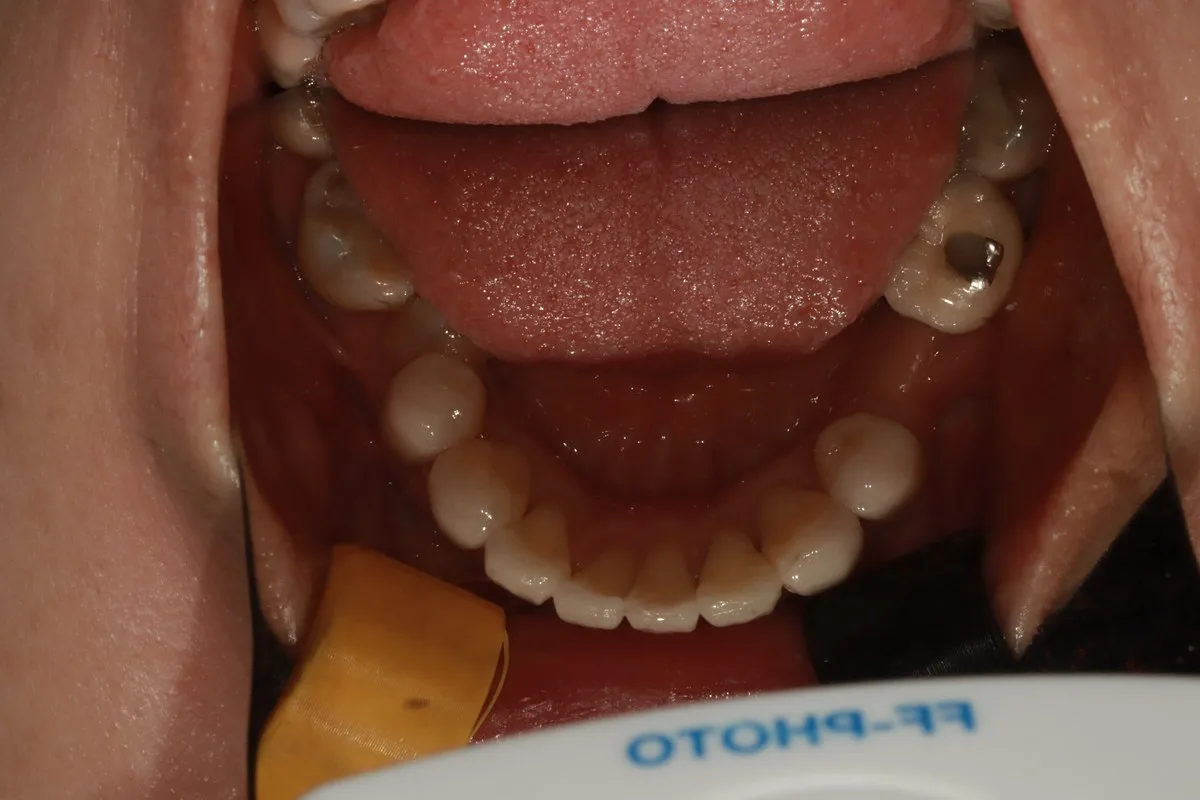
Lower jaw, before and after.
How much tooth does Minish remove on sensitive teeth?
For someone with sensitive teeth, the amount of tooth removed is a fair worry. When teeth feel sensitive after esthetic work, the usual reason is that a lot of tooth was removed.
For comparison, the KDCA National Health Information Portal describes laminates as removing about 0.5–1.0 mm of tooth. In this Minish case, the smoothing was very small, and ceramic covered the surface straight away.
How much smoothing is needed still varies from person to person. It depends on the shape of the teeth, how much they overlap and the result you want.
So it is reasonable to ask the question directly at your consultation. The KDA newspaper Dailydental has reported a court case on the duty to explain when more tooth was removed than advertised.
The condition of the gums matters as well. The KDCA page on gum disease explains how the gums affect esthetic results, which is why gum treatment comes first when it is needed.
| Point | What it means for you |
|---|---|
| Laminates (KDCA) | About 0.5–1.0 mm of tooth is removed |
| Minish in this case | Very small smoothing, covered by ceramic straight away |
| Sensitivity after esthetic work | Usually linked to removing a lot of tooth |
| Your right to know | Ask how much will be removed before treatment starts |
Should sensitive teeth delay treatment in Busan?
Sensitive teeth and aging teeth often come together, so a senior Minish case like this one starts with finding the cause. Sensitivity is not a reason to put off dental treatment. If the cause is an exposed tooth surface, a treatment that covers that surface can be part of the answer.
That said, sensitivity has many causes. Each one calls for a different treatment:
- Tooth decay
- Gum disease
- Teeth grinding
- A cracked tooth
- An exposed tooth surface from thinning enamel or receding gums
Which one applies to you can be known after looking inside the mouth and examining the teeth. At our clinic in Seomyeon, we first check the cause of the sensitivity and then decide on treatment together.
For this patient, Minish treatment took about one month from the first consultation to completion. The time depends on the number of teeth and the condition of the gums.
If you are weighing senior Minish with sensitive teeth, these points are worth raising at your consultation:
- What is causing my sensitivity?
- Does decay, gum disease or grinding need treatment first?
- How much will the surface be smoothed?
- How far should the black triangles be filled?
- Does the length of my front teeth need adjusting?
Frequently asked questions
My teeth are sensitive. Can I still have Minish?
It depends on the cause. If receding gums have exposed the tooth surface, a treatment that covers it can help. If decay or gum disease is the cause, that is treated first.
Won't smoothing the teeth make them more sensitive?
The amount smoothed is very small, and ceramic covers it right away. This patient's sensitivity decreased after treatment.
Will my receded gums get better too?
Receded gums do not grow back. The shape of the teeth is used to make that area look natural. If the gums themselves need treatment, that comes first.
Can I get this treatment in English in Busan?
Yes. We offer 1:1 English interpretation from the first consultation through the end of treatment. The clinic is near Seomyeon Station Exit 2 (5-min walk), opposite Lotte Hotel Busan, and you can call 010-8555-2854 (+82-10-8555-2854 from abroad).
Sensitive teeth are not a reason to put off treatment.
When an exposed surface is the cause,
covering it can be part of the answer.
If you are considering Minish for sensitive, darkened front teeth in Busan, we will check the cause first. Patients in Korea can get 1:1 English interpretation from the first consultation through the end of treatment. Call 010-8555-2854 to book a consultation.

References
- KDCA National Health Information Portal, "Laminate Treatment" — what laminates are, how much tooth they remove (0.5–1.0 mm) and when they are used
- KDCA National Health Information Portal, "All-Ceramic Crowns" — pros and cons of all-ceramic crowns and the tooth reduction they require
- KDA newspaper Dailydental (Chiui Sinbo), "Court Orders Damages for Excessive Tooth Reduction in Laminate Treatment" — how the court viewed the duty to explain when more tooth was removed than advertised
- KDCA National Health Information Portal, "Dentin Hypersensitivity" — causes and treatment of sensitive teeth
- KDCA National Health Information Portal, "Gum Disease (Periodontal Disease)" — how the condition of the gums affects esthetic results
Written by Reset Dental Clinic Support Team
Medical review Dr. Kim Hyun-joo, Head Dentist · Esthetic Restorations
Last updated: September 19, 2026
This column is for general information and does not replace diagnosis or treatment for individual patients. If you have symptoms, please see a dentist.


