- In full-arch implant disputes, the problem is usually the explanation, not the surgery.
- Check that what you heard is written in the consent form.
- The questions to ask come down to five topics.
- Writing your questions down changes the consultation.
Many patients leave a full-arch implant consultation in Seomyeon, Busan unsure what they should have asked. At Reset Dental Clinic, we suggest writing your questions down first. For patients living in or visiting Korea, we provide 1:1 English interpretation from the first consultation through the end of treatment.
A full-arch implant is a wide-ranging, long treatment. There is a lot to explain, and afterwards it is hard to remember what mattered.
This column works backwards from dispute cases to see what was not explained. Those points are exactly what you should ask about.
How does a full-arch implant consultation usually go?
It is usually split into two or three visits.
On the first day, we examine your mouth and take images. Knowing your current condition comes first.
With the results, we meet again to discuss the method, number of implants, time frame and cost.
You do not have to decide on the spot. A full-arch implant is a major treatment, so take a few days to think.
What should I bring?
- Your medicine bags or medicine names
- Images taken at another clinic
- Your current denture, if you wear one
- A note with your questions
- A family member, if possible
Where your current denture felt uncomfortable is an important clue. Left as it is, that problem can return in the new teeth.
With a family member, two people share the explanation and can talk it over later.
Why do explanation and records matter so much?
A dispute can arise even when the surgery itself was appropriate.
In a 2026 case reported by the Korean dental newspaper Dental News, a patient with diabetes received upper implants. They became loose and were placed again, and then the cheek looked sunken.
Expert review found every step within the usual range. Even so, a settlement was recommended.
What was the problem?
The medical dispute mediation agency pointed to three things. The risk that diabetes could raise the chance of failure was not explained enough.
The consent form lacked the date and the dentist's signature. Re-placement also added to the patient's burden.
A 2018 expert review was similar. The treatment was judged appropriate, but the explanation could not be found in the records, so the case ended with a consolation payment.
Why does this matter more for a full-arch implant?
Those cases involved one or two implants. A full-arch implant involves several and can take from a few months to over a year.
The same steps repeat many times, so there is more to explain. It must be written down to be checked later.
Is there official guidance?
Yes. The mediation agency and the national consumer agency made a dispute prevention guide. According to Dental News, it splits implant treatment into three stages.
- Planning: check your illnesses and medicines
- Planning: explain the method and complications based on your bone
- Surgery: get consent in advance if the method changes
- Aftercare: explain the chance of infection, bleeding and numbness
The guide says trust is built through communication. Your questions at the consultation are where that starts.

| Case | What was pointed out |
|---|---|
| Numbness after lower jaw placement | No confirmed explanation or consent about nerve injury |
| Re-placement with diabetes | Risk not explained enough; signature and date missing |
| Denture held by magnets | Wear and repair of parts not recorded |
| Re-placement after same-day placement | No confirmed notice of the chance of failure |
| Bite problem with the prosthesis | Limits of chewing force should be explained first |
Questions 1 and 2: what side effects can occur, and how do my health and medicines matter?
The national health portal (KDCA) lists these complications right after surgery.
- Swelling, pain and difficulty opening the mouth
- Bleeding, especially with medicines or high blood pressure
- Damage to a neighboring tooth if the angle is off
- Numbness if a nerve in the lower jaw is injured
- Touching the air space beside the nose in the upper jaw
Ask which of these apply to your full-arch implant plan.
When does numbness happen?
In a July 2026 case, a patient had extraction, bone grafting and placement in the lower back teeth on one day. Pain and numbness followed.
The clinic moved the implant nearest the nerve upward, but numbness remained from the lower lip to the chin.
The mediation agency said a causal link was possible. The clinic said it had taken a CT and given precautions, but no explanation or consent about nerve injury could be confirmed.

What should the consent form say?
A legal affairs director of the Korean Dental Association said "side effects may occur" is not enough.
The form should state that numbness or paralysis may affect the lower lip and chin, and may be temporary or may not go away. The patient should tick or sign that part.
How is the distance to the nerve measured?
In a 2023 ruling, an implant tip sat closer to the nerve than the minimum safety distance of 1–2 mm. The court found negligence because the CT showed this.
The director advised measuring the distance on images first. With too little bone, a short implant or bone graft should be considered.
The court also said at least two years should be allowed to watch recovery from numbness. So ask whether the distance to the nerve is checked on CT.
Question 2: how do my illnesses and medicines matter?
The national health portal lists this first before surgery.
- Circulation medicines: some may be paused because of bleeding
- Diabetes: slow healing, so blood sugar control is needed
- Osteoporosis medicines: may need to be stopped or changed
- Smoking: directly linked to failure, so quit
The director said diabetes, high blood pressure, and heart, liver and kidney disease should be explained in detail and checked carefully during and after treatment.
Do not stop at asking whether diabetes rules you out. Ask what is riskier in your condition, and what will be done differently.
A full-arch implant treats many sites at once, so your health affects the extent and number of surgeries. Bring your medicine bags, and tell us if your medicines change.
Questions 3 and 4: will the implants bond, and which full-arch implant type suits me?
Implants can be placed right after extraction to reduce the number of surgeries.
The 2018 review notes the chance of not bonding to bone may be relatively higher. It said this, and the chance of redoing it, should be explained and recorded.
What if an implant does not bond?
The national health portal says bonding takes three to four months, longer with a bone graft. Causes of failure include infection, poor hygiene, smoking and low bone density.
In that case, one implant did not bond and was removed. A month later, a wider one went into firmer bone, which experts found appropriate.
A full-arch implant involves several implants. Ask in advance about the chance that one or two may not bond.
Question 4: fixed teeth or an implant denture?
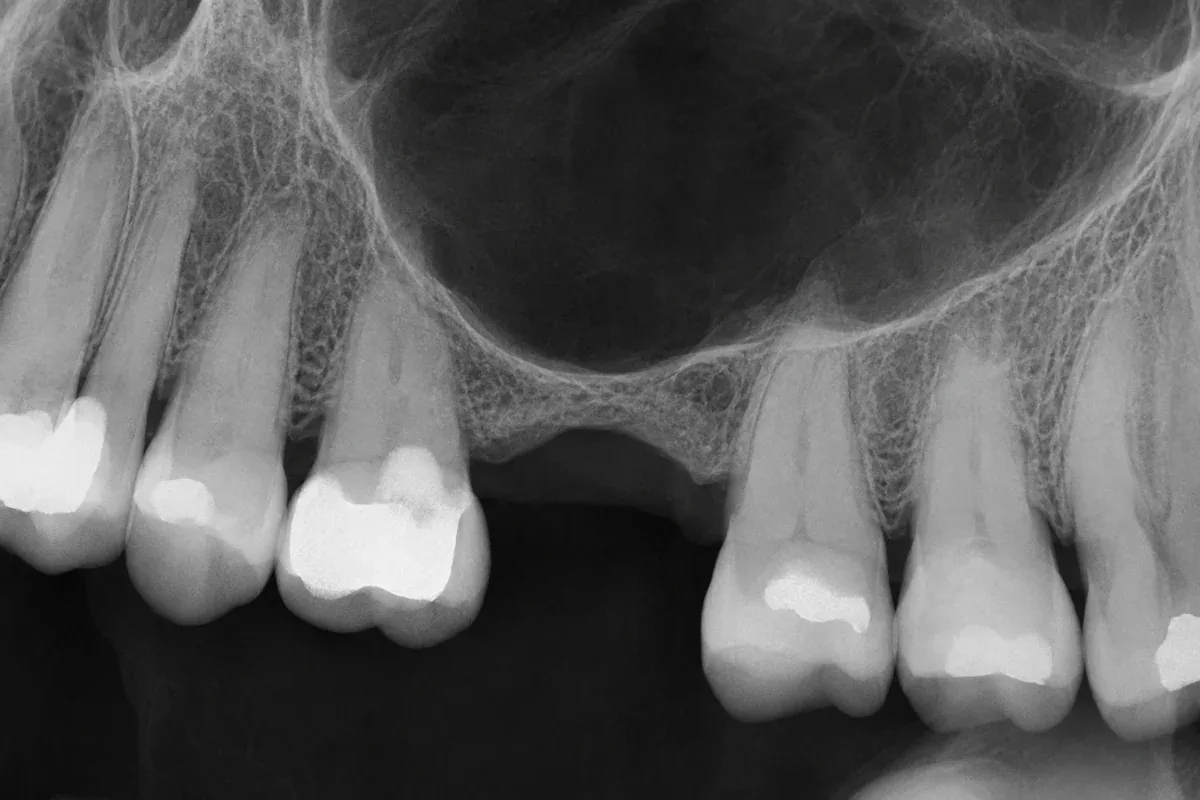
Tests decide this. CT, a panoramic X-ray and intraoral photos show the bone, and impressions or a scan show how your teeth meet.
Your wishes and the cost are weighed too. Then we decide on bone grafting and the number of implants.
In a 2010 Dental News lecture, Professor Woo Yi-hyung wrote that fixed teeth need at least 6–8 upper and 4–6 lower implants. A denture on implants can need 4–6 upper and 2–4 lower.
He added that with heavy bone loss, fixed teeth may not support the lips well. Insisting on them regardless often leads to poor results.
| Question | What the sources say |
|---|---|
| How many implants? | Fixed teeth need more |
| Will my lips be supported? | Hard if bone has been lost |
| How long will it take? | A few months to over a year |
| What do I use meanwhile? | A separate temporary set |
| How are parts maintained? | Magnet types: explain wear and repair first |
What else to ask about a removable type?
Ask about the full-arch implant parts. In a 2018 case, an upper denture held by magnets lost a metal part and a magnet.
Experts said this can happen after appropriate treatment, as constant force wears parts. But the records lacked an explanation that repairs would be needed.

So ask which parts are used, how often they are adjusted and how repairs work. The portal also says a temporary set is often made, so ask what you will use meanwhile.
Question 5: how much chewing force comes back, and what follows?
Kim Kyung-rye of the national consumer agency described a case. After an implant prosthesis, the teeth did not meet properly, and two years of adjustments and remakes followed.
An expert adviser explained that chewing with the front teeth for years without molars shifts the lower jaw.
The adviser said to find the jaw position first with temporary teeth, or use them for about six months. A finished porcelain prosthesis is hard to raise once the bite is too low.
How much should I expect?
The adviser said chewing force after implants is about 80–90% of before, and this should be explained in advance.
The portal says contact points and force are adjusted at fitting. In the first year, while bone firms up, start with soft foods.
Chew evenly on both sides and avoid hard foods. Tell us first if you grind or clench.
What about aftercare?
The national health portal states that implants do not last forever. It advises a check-up every three to six months.
A full-arch implant needs long-term care. So ask how often to come and what is checked.
| Question | Source behind it |
|---|---|
| What side effects can occur? | Numbness case, consent wording advice |
| My illnesses and medicines? | Diabetes case, prevention guide |
| Placement right after extraction? | Review on notice of failure risk |
| Parts maintenance? | Magnet denture repair case |
| Chewing force? | Explaining 80–90% in advance |
When will I know the cost?
After the test results. Any figure before that is a guess.
The cost of a full-arch implant varies with the number of implants, the type and any bone grafting. We write it down after reviewing the images, including what is separate.
If you are 65 or older, coverage may apply for up to two implants in total. We check whether you qualify, as some coverage needs registration first.
What if I change my mind?
Tell us and we will review the plan. Some patients switch from fixed teeth to a denture, or the reverse.
Once implant sites and numbers are set, changing is hard. So ask enough at the start, including when change is still easy.
What should you check after a consultation in Busan?
The cases point to one thing: what was explained, and a record of it. Check that the consent form contains what you heard.
- Side effects such as numbness and paralysis
- Risks from your own illnesses
- The chance of failure and the plan for redoing it
- Plans for repairing parts or temporary teeth
- The date and the dentist's signature
If any wording on your full-arch implant form is unclear, ask on the spot. You can also ask for a copy.

Can I bring written questions?
Yes, and it helps. Copy the five questions above onto a note.
You can hear the explanation again after the test results, when answers can be more specific.
Asking is not rude. Patients who ask in detail tend to finish treatment well, because both sides expect the same thing.
The dispute cases are clear: things go wrong in the explanation more than the surgery. So ask, and check it is written down.
Starting from shared understanding is safer for us too. A full-arch implant is something you will use for many years.
Frequently asked questions
Is it all right to ask a lot of questions?
Yes. Questions start communication, and the prevention guide says trust is built that way.
What should a full-arch implant consent form include?
Specific side effects, risks from your illnesses, the date and the dentist's signature.
Can the plan change, and what if my lip feels numb?
It can change, with your consent asked first. If your lip feels numb, contact us right away.
Can I get a full-arch implant consultation in English in Busan?
Yes, we offer 1:1 English interpretation from the first consultation through the end of treatment. The clinic is near Seomyeon Station Exit 2 (5-min walk), opposite Lotte Hotel Busan. Call 010-8555-2854 (+82-10-8555-2854 from abroad).
Ask, and check that it is written down.
A full-arch implant is used for many years,
so know enough before you start.
Bring your questions and we will answer each one.
If you are planning a full-arch implant in Busan, Reset Dental Clinic offers 1:1 English interpretation from your first consultation through the end of treatment. Call 010-8555-2854 to book.
References
- KDCA National Health Information Portal, "Dental Implants" — checking general illnesses and medicines before surgery, complications right after surgery, bonding time and causes of failure, check-up intervals after treatment
- Dental News (Chiui Sinbo), "Side effects must be stated in implant consent forms" (July 1, 2026) — numbness after lower jaw placement, settlement because explanation and consent could not be confirmed, advice to word consent forms specifically
- Dental News (Chiui Sinbo), "Explain possible complications when placing implants for diabetic patients" (July 22, 2026) — treatment within the usual range, but settlement recommended for insufficient risk explanation and a missing signature
- Dental News (Chiui Sinbo), "Failure of an upper implant-retained denture and lower osseointegration failure" (October 26, 2018) — appropriate treatment but settlement for lack of recorded explanation; prevention tips on recording magnet denture repairs and the failure risk of immediate placement
- Dental News (Chiui Sinbo), "Is the response to bite problems with implant prostheses appropriate?" (November 18, 2014) — finding the lower jaw position with temporary teeth before the final prosthesis, explaining in advance that 80–90% of chewing force is restored
Written by Reset Dental Clinic Support Team
Medical review Dr. Na In-chae, Head Dentist · Periodontics Specialist
Last updated: October 21, 2026
This column is for general information and does not replace diagnosis or treatment for individual patients. If you have symptoms, please see a dentist.