

- There is no single right answer on doing upper and lower full-arch implants at once or in stages.
- A jaw that needs a bone graft takes longer to heal, so treatment may be staged.
- IV sedation can complete a lot of treatment in one visit, after health and airway checks.
- Even when staged, the bite is designed for both jaws from the start.
People in Korea planning upper and lower full-arch implants often ask first whether it can all be finished at once. This column draws on KDCA health portal pages, hospital information, dental news and a published case report. At Reset Dental Clinic in Seomyeon, Busan, patients can have 1:1 English interpretation from the first consultation through the end of treatment.
What decides whether both jaws are done together?
The KDCA portal says implant planning starts with bone information from a dental CT scan and a panoramic X-ray. Impressions or an intraoral scan show how the upper and lower teeth meet.
These results are then weighed together with the patient's needs and expectations. Bone grafting, and the type, size, length and number of implants, are decided at this stage.
For upper and lower full-arch implants, three more questions are added.
- How much surgery can your body handle at one time?
- Will the upper and lower bone be ready at the same pace?
- Where should the upper and lower teeth meet?
Seoul National University Hospital notes that heart disease, diabetes and osteoporosis can affect how implants fuse with bone. The KDCA portal adds that blood sugar must be controlled, because diabetes slows healing.
That is why a full-arch implant consultation begins with questions about your health, before your mouth.

What are the advantages of doing it all at once?
Doing all full-arch implant surgery at once means going through anesthesia and recovery once. The KDCA page on dental sedation describes IV sedation separately.
With IV sedation, the effect of the drug is easy to control. It also allows enough treatment time, so a lot of treatment can be completed in one visit.
Sedation is recommended for people with strong dental anxiety, or with conditions such as angina that stress can worsen.
After sedation, you must avoid driving, alcohol and hard exercise for 24 hours, and go home with a companion. Some people find it hard to arrange such days several times, so a single session may suit them better.
Longer sedation for a full-arch implant needs checks first. The page advises confirming that health conditions are well controlled, and asking about medicines and allergies. Airway assessment matters most, and it covers these points.
- whether the neck is thick and short, and whether the head tilts back easily
- enlarged tonsils or sleep apnea
- a small lower jaw or a relatively large tongue
- how well the mouth opens
Most sedation complications involve the airway and breathing. As sedation deepens, the tongue or soft tissue can fall back and narrow the airway.
Dailydental reported that the Korean Dental Association does not allow implants to be advertised as done while asleep. Conscious sedation means you still respond and breathe on your own.
The article also notes that implant surgery takes longer than an endoscopy, with a risk of blood, saliva or instruments entering the airway. Please tell us if you snore heavily or have sleep apnea.
Why might a full-arch implant be split into stages?
The most common reason to stage a full-arch implant is general health. The sedation page says sedation is meant for people whose health assessment is good.
With severe general illness at ASA class III or higher, on the American Society of Anesthesiologists scale, a physician should be consulted first. Treatment at a general hospital with emergency facilities is also recommended.
A geriatrics paper reported by Dailydental adds limits. A diastolic pressure of 110 mmHg or higher, or a systolic pressure of 180 mmHg or higher, calls for a physician consultation before surgery. After a heart attack within 6 months or with unstable angina, dental care should be limited to emergencies, so the full-arch implant is postponed.
With heart disease, the paper says 2% lidocaine local anesthetic should be kept to 2 cartridges or fewer. If the anesthetic per session is limited, the full-arch implant surgery is split to match.
Seoul National University Hospital says implant surgery usually takes about an hour. It can take longer when many implants are placed or large grafts are needed.
Recovery also counts. The KDCA portal says swelling, pain and limited mouth opening (trismus) are common, and swelling is usually worst around 48 hours after surgery.
If no one can help with meals, or long leave from work is hard, splitting this period into two may be easier. The aftercare rules also change when both jaws are treated together.
- Ice the area for 24 hours, 5 minutes on and 5 minutes off (KDCA).
- Use a mouth rinse on the surgical area until the stitches are removed (KDCA).
- Eat a liquid diet on the opposite side for 2 to 3 days (Seoul National University Hospital).
If both jaws are done at once, there is no untreated side to chew on. Meals and plans for those days need to be worked out in advance.
Staging means two such recovery periods. Doing it all at once means one, but with a wider area of surgery.
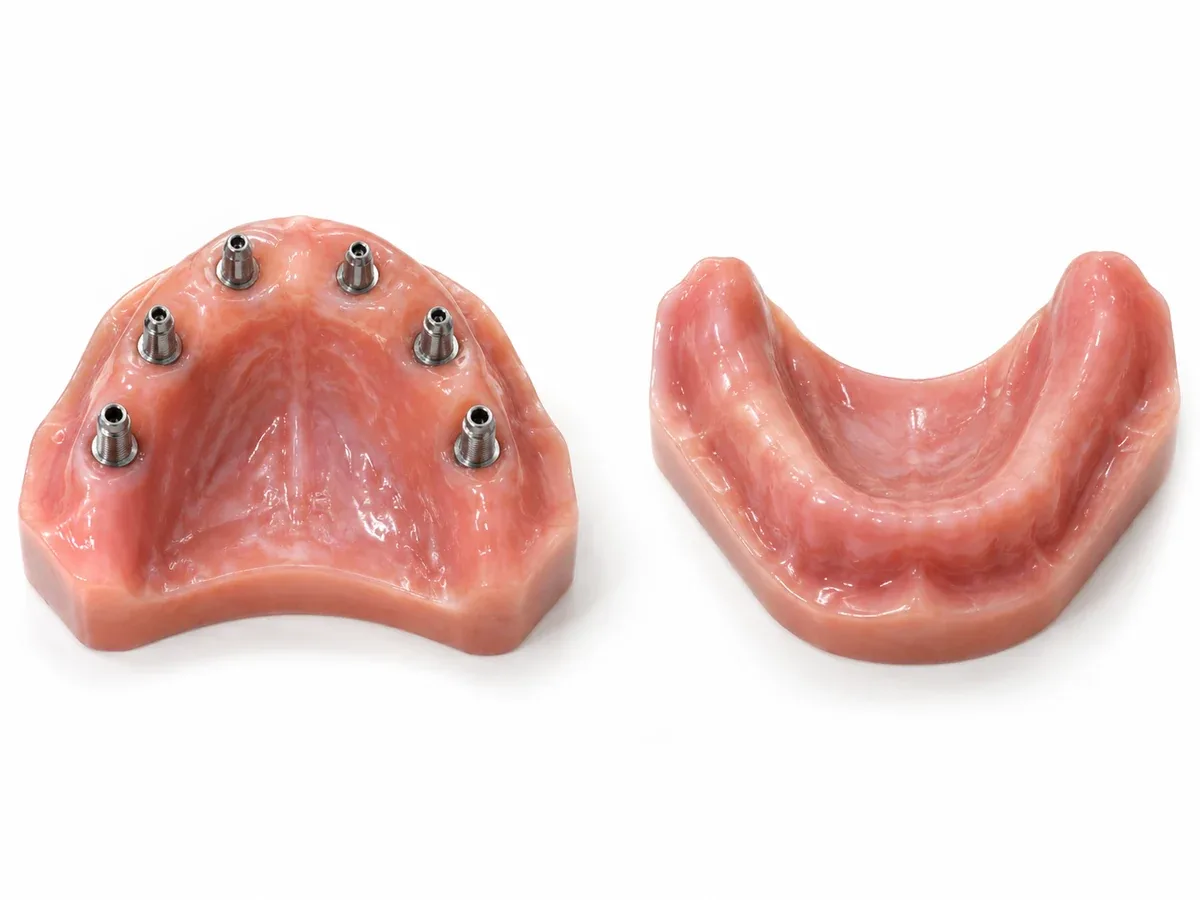
| Item | All at once | In stages |
|---|---|---|
| Anesthesia and recovery | Anesthesia and recovery happen once | Swelling, pain and limited opening are split into two periods |
| General health | IV sedation can complete a lot of treatment in one visit (health and airway assessed first) | ASA class III or higher needs a physician's advice; heart disease limits lidocaine to 2 cartridges |
| Daily life | Fewer days of avoiding driving, alcohol and hard exercise after sedation | Easier if no one can help with meals or long leave is hard |
What if the upper and lower jawbone differ?
The firm bond between bone and implant is called osseointegration. The KDCA portal says it generally takes 3 to 4 months, and longer if a bone graft is needed.
Seoul National University Hospital gives separate times for each jaw. It lists at least 2 to 3 months for the lower jaw and at least 4 to 6 months for the upper jaw.
| Case | Healing time | Source |
|---|---|---|
| General | 3 to 4 months, longer if a bone graft is needed | KDCA |
| Lower jaw | At least 2 to 3 months | Seoul National University Hospital |
| Upper jaw | At least 4 to 6 months | Seoul National University Hospital |
| Weak bone at the site | 1 to 2 months more | Seoul National University Hospital |
| After a bone graft | Usually 6 to 9 months | Seoul National University Hospital |
When bone is lacking, guided bone regeneration (GBR) with graft material may come first, usually before the implants.
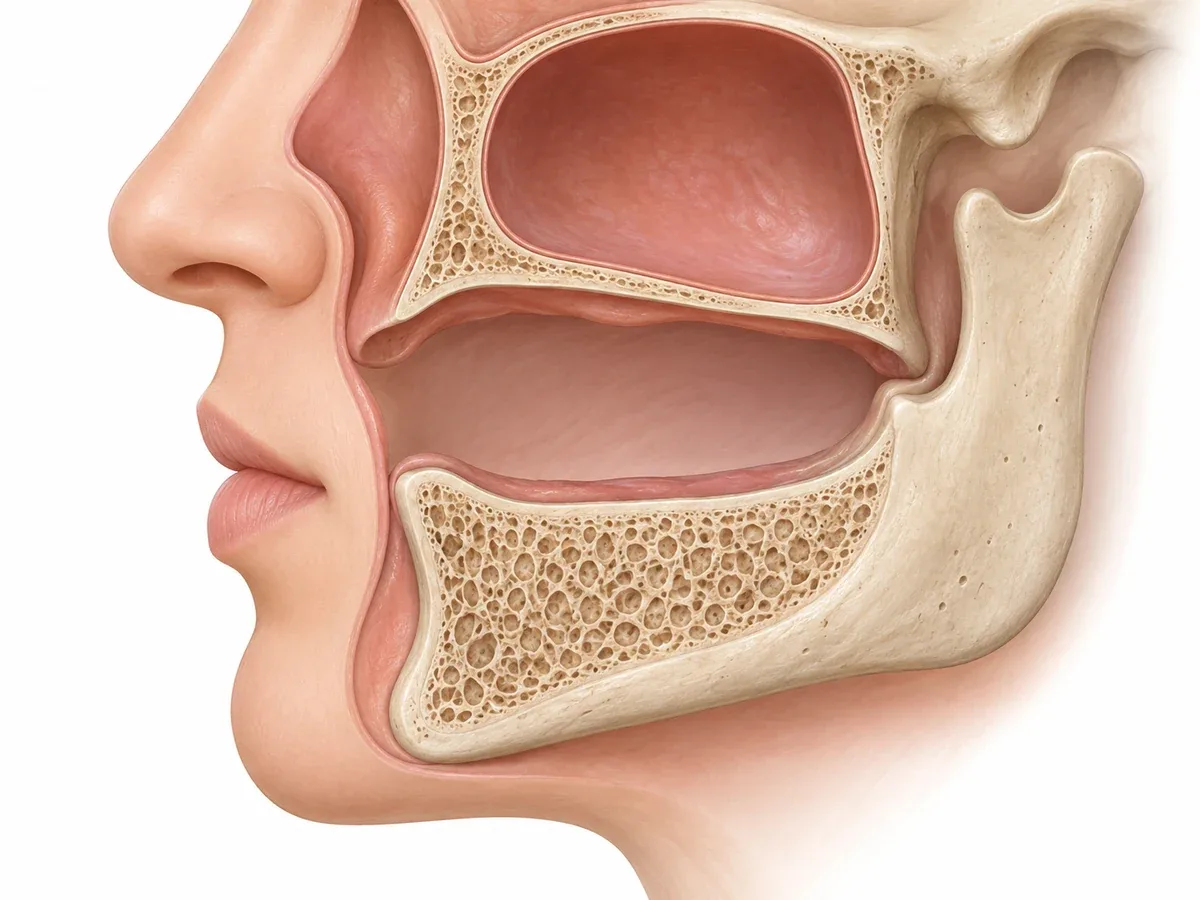
Behind the upper back teeth lies the maxillary sinus, an air space beside the nose. The KDCA portal notes that upper jaw treatment can cause new sinusitis or make existing sinusitis worse.
So the upper jaw may need bone built first while the lower jaw can receive implants right away. When the two jaws are ready at different paces, a full-arch implant plan that treats one jaw first follows.
Why is the bite designed together even when staged?
Dailydental reported a dispute case from the Korea Consumer Agency with expert advice. It covered a patient who chewed with the front teeth for years after losing back-tooth contact.
To chew, the lower jaw had to be pushed forward. As a result, the jaw position and bite point can change.
The advice was to use temporary teeth to diagnose the lower jaw position before the final teeth. If the bite point is hard to find, they are worn for about 6 months.
So even when a full-arch implant is staged, the height and position of the first jaw are set with the other jaw in mind. Finishing one jaw first leaves less room to match the other.
The advice raised two more points. One-piece ceramic restorations make a lowered bite hard to raise again. Patients should also be told beforehand that about 80 to 90% of former bite force is reproduced.
Implant bites used to be set slightly lower than natural teeth, but the trend now is to match natural height. The mediation committee agreed that adjusting the bite with resin provisional teeth before fixing the final teeth is the usual practice.

| Item | What the advice says |
|---|---|
| Years without back-tooth contact | The lower jaw position and bite point can change |
| Making the final teeth | Diagnose the lower jaw position with provisional teeth first |
| Bite point hard to find | Use provisional teeth for about 6 months before the final teeth |
| Ceramic restorations | If made in one piece, a lowered bite is hard to raise again |
| Explaining in advance | About 80 to 90% of former bite force can be reproduced |
Has a staged full-arch implant case been reported in Korea?
Asan Medical Center's prosthodontics department reported a case in a Korean dental journal in 2021. A 50-year-old woman had all remaining teeth removed and both jaws restored with fixed implant teeth.
Nine upper and eight lower implants were planned, using a surgical guide based on lip support and bite height.
Extraction, implant placement and the final teeth were each done in three stages, in this order.
- The remaining teeth were removed in three visits, with temporary full dentures in both jaws.
- Four months after extraction, impressions set the lip support and bite height.
- From six months after extraction, implants were placed in the upper back, the lower jaw and then the upper front.
- Fixed provisional teeth were checked for 6 months for function, looks, speech and hygiene.
- The final teeth went in the upper back, the lower back and then the front of both jaws.
After a month with the first provisional teeth, the patient felt her front teeth looked sunken and her face looked short. The second provisional teeth raised lip support and bite height by 1 to 2 mm.
After the final teeth, lip support, chewing and speech were reported to be much improved. She has since returned every 3 months for oral hygiene care.
This is a single case, so the same order does not fit everyone. It shows that even with many stages, a full-arch implant plan is made as one.
How do you manage while one jaw waits?
The KDCA page on dentures says treatment can take several months or more, plus time for bone fusion when implants are placed.
During treatment, temporary dentures are often made for eating and social life. They also take time to make, so it helps to visit with time to spare.
The page adds that a lower full denture is less stable than an upper one, because it sits around the moving tongue. When setting the order of a full-arch implant, we consider which denture you can manage for longer.
Denture care continues while you wait for a full-arch implant. The page recommends the following.
- Take the denture out at night so the gums rest for at least 8 hours.
- Keep it in a cup of water when it is out.
- Clean it gently with soap or dish detergent, not regular toothpaste.
- If it becomes loose or breaks, have it checked instead of fixing it yourself.
A denture that fit well at first loosens over the years, so regular fit checks matter while you wait.

Whether both jaws are treated at once or in stages depends on your health, your bone and your schedule. Either way, the bite is designed for both jaws from the start.
After the CT scan and health checks, we suggest comparing the two full-arch implant plans side by side. Please bring your medicine names and let us know about snoring, sleep apnea and any past sedation.
Frequently asked questions
Does doing both jaws at once shorten full-arch implant treatment?
It can reduce surgery days, but bone fusion follows the bone in each jaw. The sources say healing takes longer if a bone graft is needed, so if one jaw needs a graft, completion follows that jaw.
Is it fine to do everything at once under sedation?
IV sedation can complete a lot of treatment in one visit. However, general health and the airway must be assessed first, and severe illness calls for a physician's advice.
Which jaw is treated first?
There is no fixed order. We look at which jaw needs a graft, which side bothers you more and which denture is less stable, and the bite is designed for both jaws from the start.
Can I get full-arch implant treatment in English in Busan?
Yes. We offer 1:1 English interpretation from the first consultation through the end of treatment. The clinic is near Seomyeon Station Exit 2 (5-min walk), opposite Lotte Hotel Busan, and you can call 010-8555-2854 (+82-10-8555-2854 from abroad).
All at once or in stages, one plan covers both jaws.
Your health sets how much surgery fits in one visit.
Your bone sets how fast each jaw can be ready.
The bite is designed for both jaws from the very beginning.
If you are considering upper and lower full-arch implants in Busan, Reset Dental Clinic offers 1:1 English interpretation from your first consultation through the end of treatment. Call 010-8555-2854 to book a consultation.
References
- KDCA National Health Information Portal, "Dental Implants" — CT and panoramic imaging and bite checks, weighed with the patient's needs and expectations to decide on grafting and on implant type, size and number; bone fusion in about 3–4 months, longer with a graft; guided bone regeneration; sinusitis after upper jaw treatment; swelling, pain and limited opening, with swelling worst around 48 hours; icing for 24 hours and a mouth rinse until stitches are removed; avoiding smoking and alcohol
- KDCA National Health Information Portal, "Dental Sedation" — sedation for anxious patients and those whose conditions worsen with stress, such as angina; checking health, medicines and allergies and assessing the airway; most complications involve the airway and breathing; ASA class I–II as the main candidates, with physician advice and general hospital care for class III or higher; IV sedation allows enough time to complete a lot of treatment in one visit; no driving, alcohol or hard exercise for 24 hours and going home with a companion
- Dailydental (Korean Dental Association newspaper), "Late Morning or Early Afternoon Suits Implant Surgery in Older Patients" (introducing a paper from a Korean clinical geriatrics journal) — stress reduction for older patients who may become very tense; keeping 2% lidocaine local anesthetic to 2 cartridges or fewer for patients with heart disease
- Dailydental (Korean Dental Association newspaper), "Is the Response to Bite Problems in Implant Restorations Appropriate?" (Korea Consumer Agency dispute case) — expert advice that long chewing with front teeth after losing back-tooth contact can change the lower jaw position and bite point; temporary dentures and provisional teeth to diagnose jaw position, with about 6 months of provisional teeth when the bite point is hard to find; one-piece ceramic restorations make a lowered bite hard to raise; explaining that about 80–90% of former bite force can be reproduced
- KDCA National Health Information Portal, "Removable Prostheses (Dentures)" — treatment taking several months to over a year, with more months for bone fusion when implants are placed; temporary dentures often made for eating and social life during treatment; lower full dentures less retentive and stable than upper ones because they sit around the tongue
- Seoul National University Hospital Medical Information, "Dental Implants" — heart, hormonal and bone conditions that can affect implant fusion; surgery usually about an hour, longer with many implants or large grafts; a liquid diet on the opposite side for 2–3 days; healing of at least 2–3 months in the lower jaw and 4–6 months in the upper jaw, 1–2 months more for weak bone and usually 6–9 months after grafting
- Dailydental (Korean Dental Association newspaper), "KDA Warns Against Misleading Sedation-Implant Wording and Excessive Commercialization" — conscious sedation as a state in which patients respond to stimuli and breathe on their own; the KDA advertising review committee's refusal of that wording; implant procedures taking longer than endoscopy, with a risk of blood, saliva or instruments entering the airway or lungs
- Shin Hee-hyun et al., "Oral Rehabilitation of a Completely Edentulous Patient With Fixed Implant Prostheses: A Case Report," Journal of Dental Rehabilitation and Applied Science 2021;37(3) (Department of Prosthodontics, Asan Medical Center) — a single case of a 50-year-old woman: extraction in three visits with temporary full dentures, lip support and bite height set 4 months after extraction, implants placed in three stages from 6 months (9 upper and 8 lower planned), bite height raised 1–2 mm after a month of provisional teeth, 6 months of evaluation, final teeth in three stages and 3-month recalls
Written by Reset Dental Clinic Support Team
Medical review Dr. Na In-chae, Head Dentist · Periodontics Specialist
Last updated: September 19, 2026
This column is for general information and does not replace diagnosis or treatment for individual patients. If you have symptoms, please see a dentist.


