

- Mouthwash does not replace brushing. It masks bad breath for a while but has no lasting treatment effect, says Korea's national health portal.
- Right after toothpaste, it may work less well, so use it at a separate time from brushing.
- Alcohol-containing products can dry the mouth further, and children and teenagers should not use them.
- Dental chlorhexidine rinse used for more than 4 weeks can stain teeth, which may need removing at the dentist.
Mouthwash is one of the questions we hear most often in Seomyeon, Busan. Some people always rinse after brushing, while others skip brushing on busy days and just rinse. Whether it helps depends on when and how you use it.
For patients living in or visiting Korea, we provide 1:1 English interpretation from the first consultation through the end of treatment.
This column draws on national health portal guides, a dental newspaper article on oral rinse standards and a Cochrane review.
What is in a mouthwash?
A standards series in the Korean Dental Association's newspaper describes an oral rinse as a liquid the public uses for oral care. This follows the international standard ISO 16408.
According to the article, the main ingredient is water. Antibacterial agents to reduce germs and fluoride to prevent cavities are added. Alcohol or surfactants help dissolve other ingredients, and flavoring is added too.
Early products were used mainly to mask bad breath. Today they also aim to help prevent cavities, gum disease and sensitive teeth.
The article names cetylpyridinium chloride (CPC) as an antibacterial agent widely used in Korean mouthwashes. Chlorhexidine, which dentists use for treatment, is covered separately below.
The national health portal agrees: most products contain fluoride and an antibacterial agent. Used for a period of time, they can help control disease-causing bacteria.
However, the effect depends on the ingredients, so the portal says to check that it contains what you need. Each ingredient has its own recommended period and method, so read the label on the bottle.
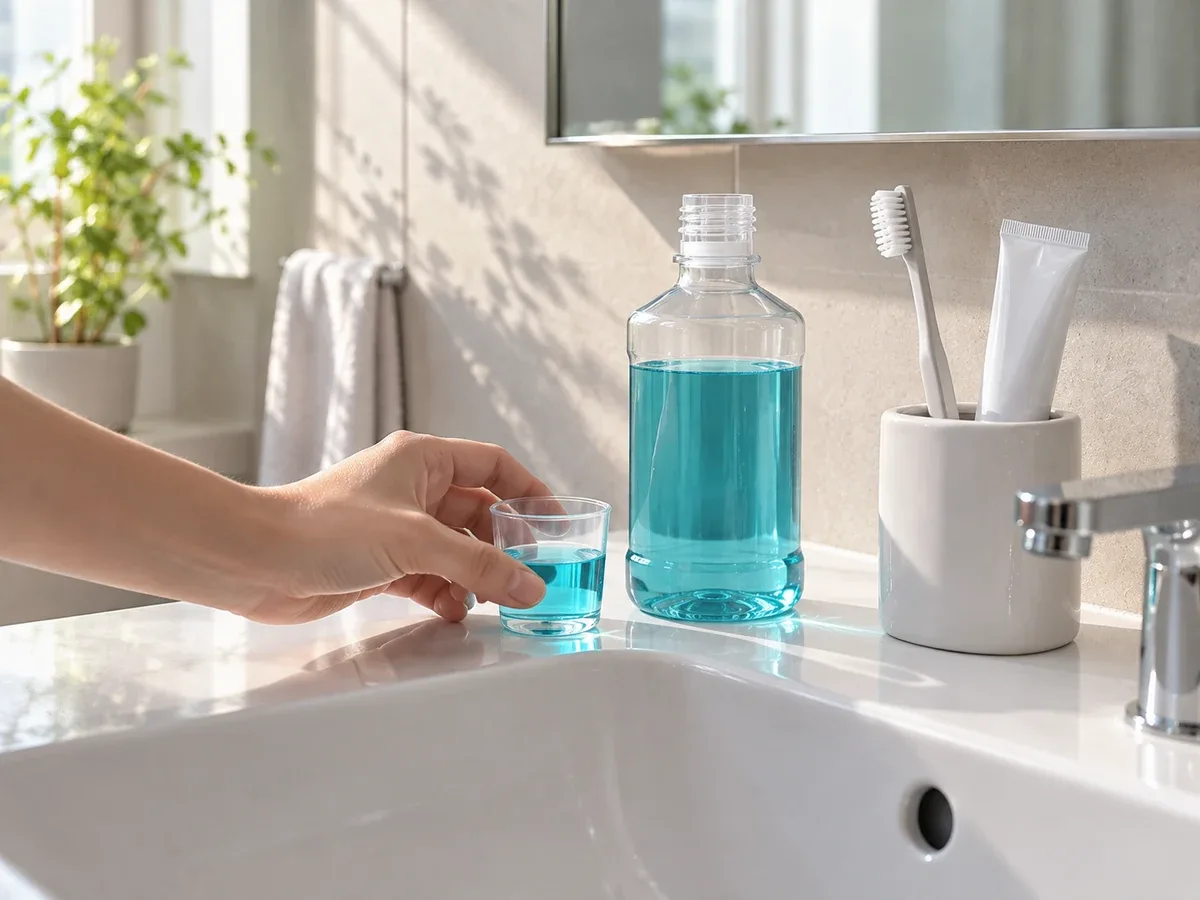
Can mouthwash replace brushing?
No, it cannot. The reason lies in the film that sticks to the tooth surface.
The national health portal first explains dental plaque. This film is sticky, so it does not come off easily without a brush-like tool. Swishing liquid alone will not peel it away.
Mouth bacteria live on the teeth, around the gums, on the tongue and in saliva. Those on the tooth surface and around the gums matter most for oral disease.
The portal sorts plaque control into three methods: removing it physically, reducing it with chemicals, and balancing bacteria against each other. Mouthwash belongs to the chemical group.
The portal also says plaque cannot be removed completely. Bacteria always live in the mouth, so the goal is to keep them low enough that disease does not start.
That is why the portal starts with the basics: brush for 2 minutes or more in front of a mirror, checking for missed spots.
The portal lists these tools for removing plaque physically:
- Toothbrush: brush at least twice a day with fluoride toothpaste, and always before bed.
- Floss: cleans the gaps between teeth that a brush cannot reach well.
- Interdental brush: add one if bone loss has widened the gaps between teeth.
- Tongue cleaning: clean gently if a thick coating has built up.
Antibacterial toothpastes have lower concentrations than other products, so the ingredient must reach the whole mouth to work.
For balancing bacteria, the portal mentions xylitol and probiotics. Probiotics have a limited role in the mouth, so it advises checking the type and effect.
Even if liquid flows between the teeth, it cannot lift the film stuck there. Think of a rinse as an extra step after these tools.
When should you use mouthwash?
Many people rinse right after brushing, but the national health portal adds a caution.
Rinsing after brushing is possible. But right after toothpaste, the rinse may bind with toothpaste ingredients and work less well. So the portal recommends using it at a separate time from brushing.
Advice on brushing times has also changed. People used to be told to brush right after meals. Now the portal says to brush before bed without fail, and the other time whenever it suits you.
After a rinse, there is no need to rinse again with water. After brushing with fluoride toothpaste, the portal advises spitting out the extra rather than rinsing it away.
Fluoride keeps repairing teeth even at low levels in the mouth. The portal says fluoride needs enough contact time with the teeth to bind to the surface.
Fluoride mouthwash has a slightly different purpose. The portal says rinsing daily with fluoride mouthwash can reduce cavities. The newspaper article also describes its aims as cavity prevention and remineralization of early cavities.

Put into a daily routine, the portal's advice looks like this:
- Before bed, always brush for 2 minutes or more with fluoride toothpaste.
- After brushing, spit out the extra toothpaste without rinsing with water.
- Use mouthwash at a separate time from brushing.
- After a rinse, do not rinse again with water.
- After an acidic drink, wait about 30 minutes before brushing.
| Topic | What the sources say |
|---|---|
| Brushing | Plaque does not come off easily without a brush-like tool, so mouthwash cannot replace brushing |
| Timing | It may work less well right after toothpaste, so use it at a separate time |
| Rinsing | No need to rinse with water after mouthwash |
| Bad breath | Masks it for a while but has no lasting treatment effect |
| Fluoride mouthwash | Daily rinsing can reduce cavities |
Does mouthwash for bad breath last?
Many people rinse because of bad breath. The national health portal's guide to bad breath starts with the cause.
Most bad breath comes from volatile sulfur compounds. Bacteria make them as they break down food debris and proteins. Most causes lie in the mouth, such as tongue coating, gum disease, cavities and dry mouth.
Morning breath is common. The portal says even healthy people notice it on waking. Food debris, mouth cells and saliva left overnight break down and cause it.
Saliva slows microbes and washes away odors. Without enough of it, bad breath follows.
The portal is clear here. Store rinses are convenient, but they mask bad breath for a while and have no lasting treatment effect. Misusing products with ethanol or antibacterial agents can even make bad breath worse.
Rinses with zinc are similar. They turn volatile sulfur compounds into non-volatile ones and remove the odor, but have no lasting treatment effect.
The portal's advice is to reduce the cause. Proper brushing, floss, tongue cleaning, enough water and regular dental checkups help prevent bad breath.
It also explains how to clean the tongue. Use a tongue scraper twice a day, gently, 3–4 strokes from back to front. Scraping too hard or too often can cause inflammation or damage the taste buds.
| Method | What the sources say |
|---|---|
| Mouthwash | Masks bad breath for a while; no lasting treatment effect |
| Zinc rinse | Removes the odor; no lasting treatment effect |
| Tongue scraper | Twice a day, 3–4 gentle strokes from back to front |
| Brushing and floss | With tongue cleaning and water, help prevent bad breath |
| Oral exam | Done first to find the exact cause |
If the smell stays after rinsing again and again, look for the cause rather than rinsing more. Common spots to check first are between the teeth, the tongue, the gums and a dry mouth.
Who should be careful with alcohol mouthwash?
If your mouth often feels dry, check the label first. The national health portal's guide to dry mouth says rinsing often with water helps. But mouthwash containing alcohol can dry the mouth even more.
Sometimes water does not help because the salivary glands work less well. The bad breath guide says artificial saliva can then be used. Heavy snoring or mouth breathing can make the mouth drier.
A rinse with pilocarpine, which boosts saliva, is sometimes used. It does not work when the salivary glands have stopped working entirely. It can affect the heart and lungs, so caution is needed.
Children also need care. The oral disease guide notes that some rinses contain alcohol. It warns that children and teenagers should not use it.
The newspaper article makes a similar point. Under the international standard, products with alcohol and fluoride carry a warning for children under 6.
The article adds that high-alcohol products can sting and irritate the lining of the mouth, so lower-alcohol products are appearing.

There is also a standard for acidity. The international standard sets mouthwash pH between 3.0 and 10.5.
Products at pH 5.5 or below may erode the tooth surface, so they must pass a separate test. Used as directed, they should not irritate or damage the tissues of the mouth.
Here is what to look for on the label:
- Alcohol: if your mouth is often dry or stings, look for an alcohol-free product.
- Fluoride: check for it if preventing cavities is the goal.
- Antibacterial agent: each one has its own recommended period and method.
- Who uses it: children and teenagers should not use alcohol products.
How is a dental mouthwash different?
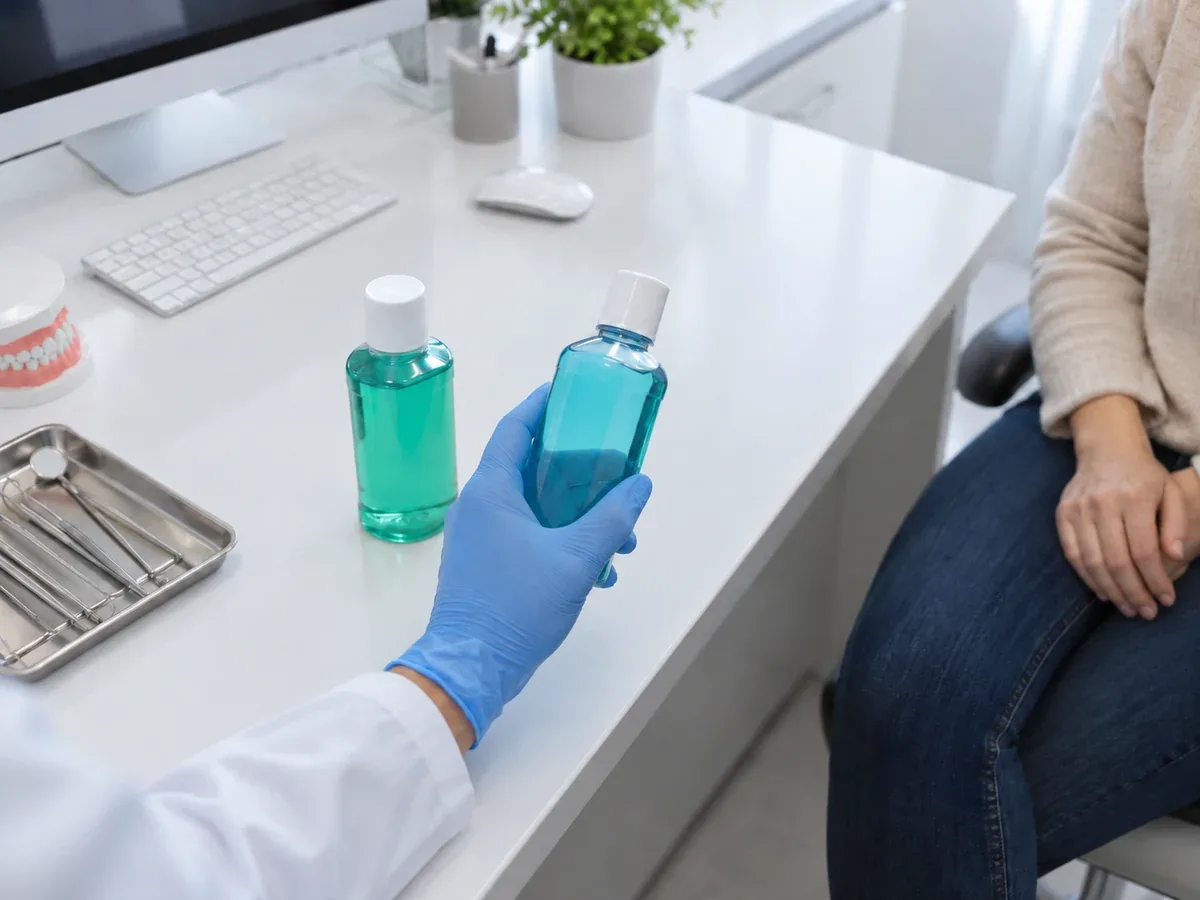
Chlorhexidine is a leading antibacterial agent that dentists use for treatment. The newspaper article says it binds strongly, so its effect lasts a long time.
Its effect as a treatment rinse has been shown over time, and it is mainly used at 0.12–0.20%. The bad breath guide says rinses such as chlorhexidine kill bacteria and fungi. They help reduce gingivitis and cavities, but the portal advises using them after talking with a dentist.
A Cochrane review shows why. It analyzed 51 studies with 5,345 people. Using a chlorhexidine rinse for 4–6 weeks or 6 months, on top of normal brushing, greatly reduced plaque.
The review rates this as high-quality evidence. On the other hand, use beyond 4 weeks can stain teeth, which may need scaling and polishing at the dentist. More tartar, a temporary change in taste and temporary peeling of the mouth lining were also reported.
The size of the effect matters too. Mild gingivitis was reduced moderately, but because levels were low to begin with, the clinical meaning was small. There was no evidence that the effect differed by concentration.
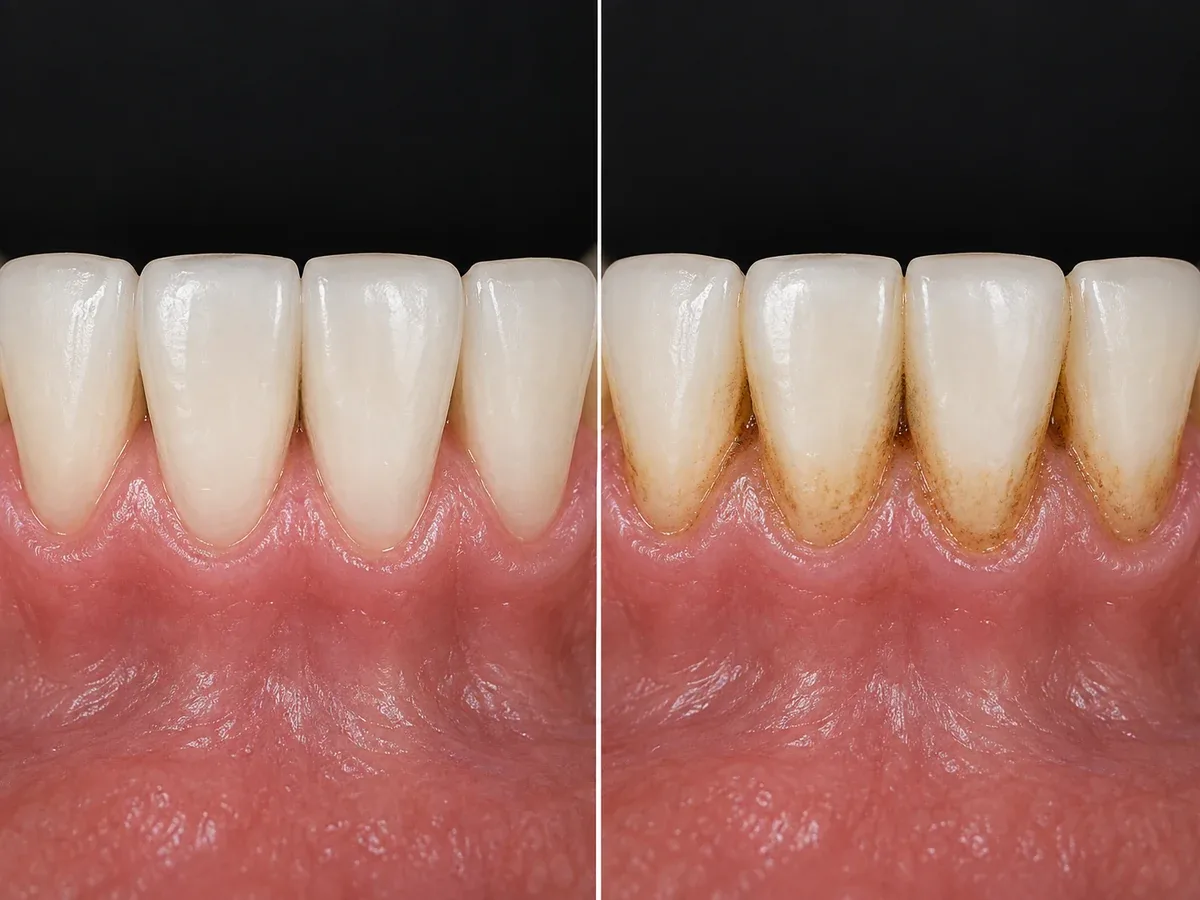
So use a dental rinse for the period you were told. Do not keep using it just because it seems to work. If you notice stains afterwards, mention them at your next cleaning.
| Ingredient | What the sources say |
|---|---|
| Cetylpyridinium chloride (CPC) | A widely used antibacterial agent in Korean mouthwashes |
| Alcohol | Can dry the mouth further; children and teenagers should not use it |
| Alcohol and fluoride products | Carry a warning for children under 6 under the international standard |
| Products at pH 5.5 or below | May erode teeth, so they must pass a separate test |
| Chlorhexidine | Use after talking with a dentist; more than 4 weeks can stain teeth |
What should you ask your dentist in Seomyeon about mouthwash?
The portal's oral disease guide asks whether rinse products help. The answer is yes, when products with fluoride or antibacterial agents are used as directed. Still, it advises getting expert help to know which product suits you.
Here are good questions to ask at a checkup:
- Does the product I use suit the state of my mouth?
- If I worry about cavities, do I need a fluoride mouthwash?
- If my mouth is often dry, is an alcohol-free product better?
- When should I stop the mouthwash the dentist gave me?
Some things rinsing cannot solve. Hardened tartar is hard to remove by brushing. The portal says tartar and plaque in spots a brush cannot reach should be removed by scaling.
The portal also recommends a dental checkup once or twice a year, because oral diseases show symptoms late.
Mouthwash is an extra step after brushing and floss. Getting the timing and ingredients right makes it more useful. At Reset Dental Clinic, bring the mouthwash you use and we will check the ingredients with you.
If choosing a mouthwash in Busan puzzles you, feel free to ask at your checkup.
Frequently asked questions
Can I use mouthwash often for bad breath?
It masks bad breath for a while but has no lasting treatment effect, and misuse can make it worse. If the smell continues, check the usual causes first: the tongue, gums, gaps between teeth and dry mouth.
Can children use mouthwash?
The portal warns that children and teenagers should not use rinses containing alcohol. The international standard also requires a warning for children under 6 on alcohol and fluoride products. Before giving it to a child, check with a dentist about age and swallowing.
Can I keep using the mouthwash my dentist gave me?
A chlorhexidine rinse used for more than 4 weeks is reported to cause staining or a temporary change in taste. Stop when the advised period ends, and ask at your visit if you need more.
Can I get dental care in English in Busan?
Yes. We offer 1:1 English interpretation from the first consultation through the end of treatment. The clinic is near Seomyeon Station Exit 2 (5-min walk), opposite Lotte Hotel, and you can call 010-8555-2854 (+82-10-8555-2854 from abroad).
Mouthwash is an extra step, not a replacement for brushing.
Use it at a separate time from brushing,
check the label for alcohol and fluoride,
and use dental rinses for the period advised.
If you have questions about mouthwash in Busan, Reset Dental Clinic offers 1:1 English interpretation from your first consultation through the end of treatment. Call 010-8555-2854 to book a checkup.
References
- KDCA National Health Information Portal, "Preventing and Managing Oral Disease" — plaque that does not come off without a brush-like tool; brushing at least twice a day with fluoride toothpaste for 2 minutes or more, always before bed; mouthwash with fluoride and antibacterial agents helping control bacteria; using it apart from brushing and not rinsing with water afterwards; keeping alcohol products away from children and teenagers; spitting out fluoride toothpaste and daily fluoride rinses reducing cavities
- Chiui Sinbo, "Dental Standards (34): Oral Rinses" (2017) — a series by the Korean Dental Association's materials and standards committee; ingredients of oral rinses; the shift from masking bad breath to preventing cavities, gum disease and sensitivity; cetylpyridinium chloride as a widely used agent; chlorhexidine's lasting effect at 0.12–0.20%; fluoride rinses for cavity prevention and remineralization; the pH 3.0–10.5 standard and erosion testing below pH 5.5; warnings for children under 6
- KDCA National Health Information Portal, "Bad Breath" — mouthwash masking bad breath for a while with no lasting treatment effect, and misuse of ethanol or antibacterial products making it worse; antibacterial rinses such as chlorhexidine helping reduce gingivitis and cavities, used after consulting a dentist
- KDCA National Health Information Portal, "Dry Mouth" — rinsing often with water helps, but mouthwash containing alcohol can dry the mouth further
- Cochrane, "Chlorhexidine mouthrinse to reduce gingivitis and plaque build-up" — 51 studies with 5,345 people; high-quality evidence that chlorhexidine rinse for 4–6 weeks or 6 months on top of brushing greatly reduces plaque; small clinical importance for mild gingivitis; no evidence of a difference by concentration; staining after 4 weeks needing professional scaling and polishing, with more tartar, temporary taste change and mucosal changes reported
Written by Reset Dental Clinic Support Team
Medical review Dr. Kim Hyun-joo, Head Dentist · Integrated Dentistry Specialist
Last updated: September 19, 2026
This column is for general information and does not replace diagnosis or treatment for individual patients. If you have symptoms, please see a dentist.


