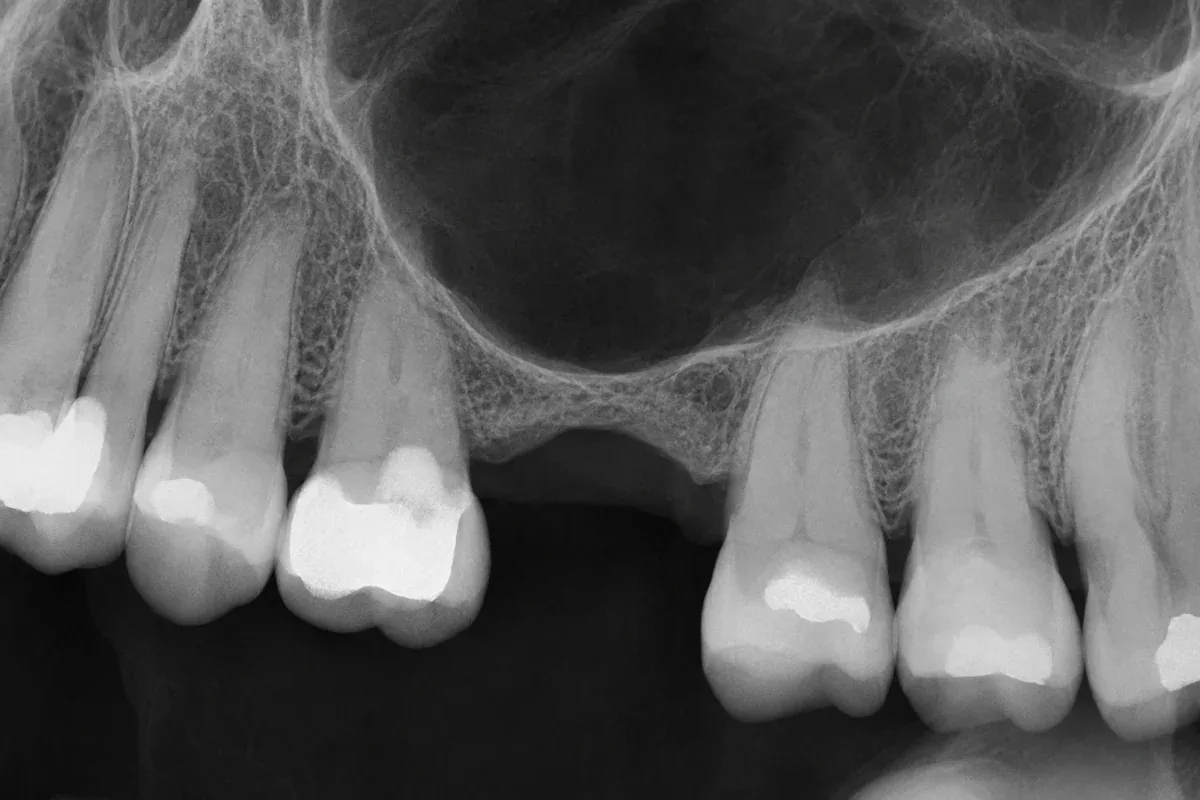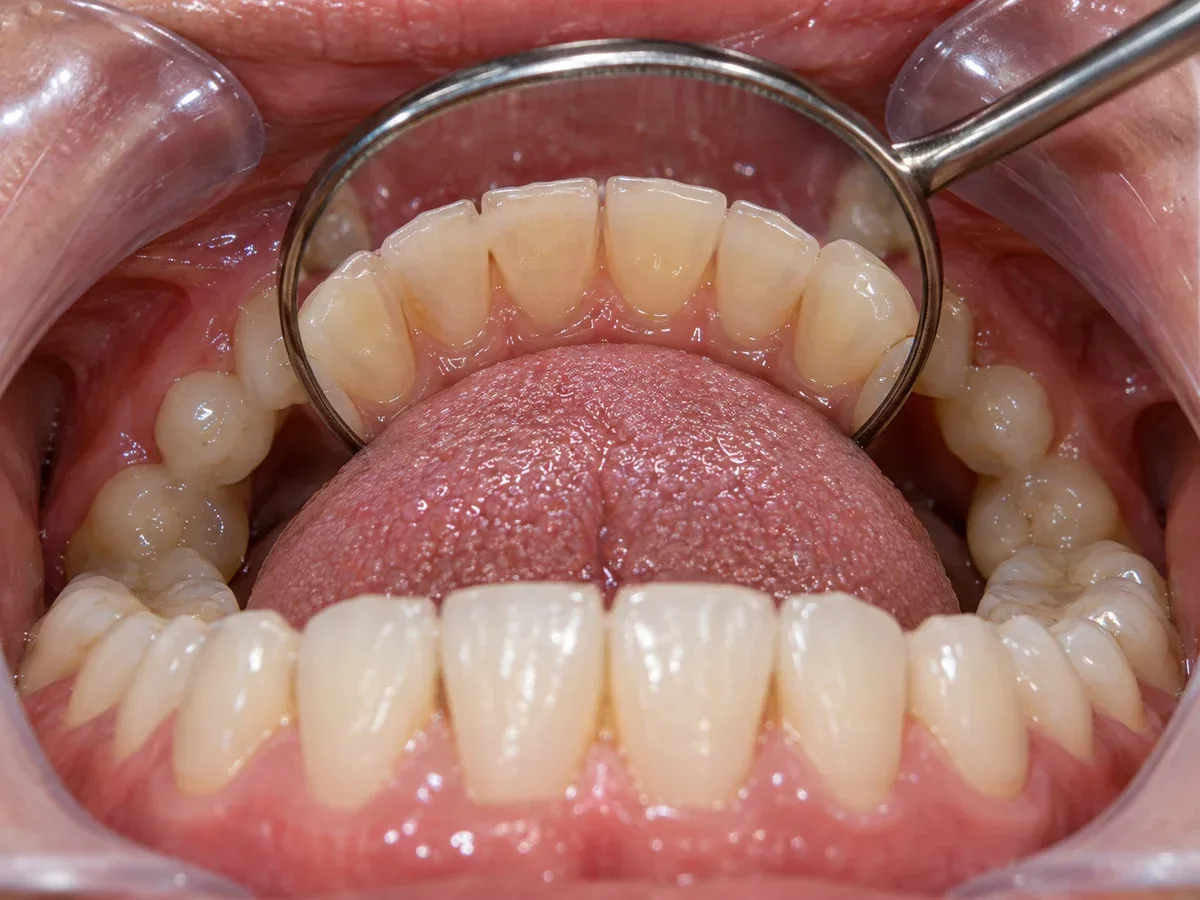
- The ceramic of a veneer does not decay. The tooth underneath can.
- Decay almost always starts at the edge where ceramic meets tooth.
- A smooth edge above the gum rarely decays.
- That is why floss and regular check-ups still matter after bonding.
"I heard teeth rot under a veneer. Is that true?" We hear this often in Seomyeon, Busan, and at Reset Dental Clinic we start by explaining the edge line. For patients living in or visiting Korea, we offer 1:1 English interpretation from the first consultation through the end of treatment.
The worry has some basis, and we do see such cases. The cause, though, is not the ceramic.
It depends on how the veneer is bonded and how it is cared for afterwards. This column explains where decay starts and how it spreads.
Can teeth decay under a veneer?
Does the ceramic decay?
No. Ceramic is a glass-like material that does not dissolve in the acid bacteria produce.
So the bonded surface stays the same for years. The trouble starts around it.
Then where does decay start?
At the line where ceramic meets tooth. However well it is made, that line never disappears completely.
Bacteria settle in the tiny gap there and spread inward from it.
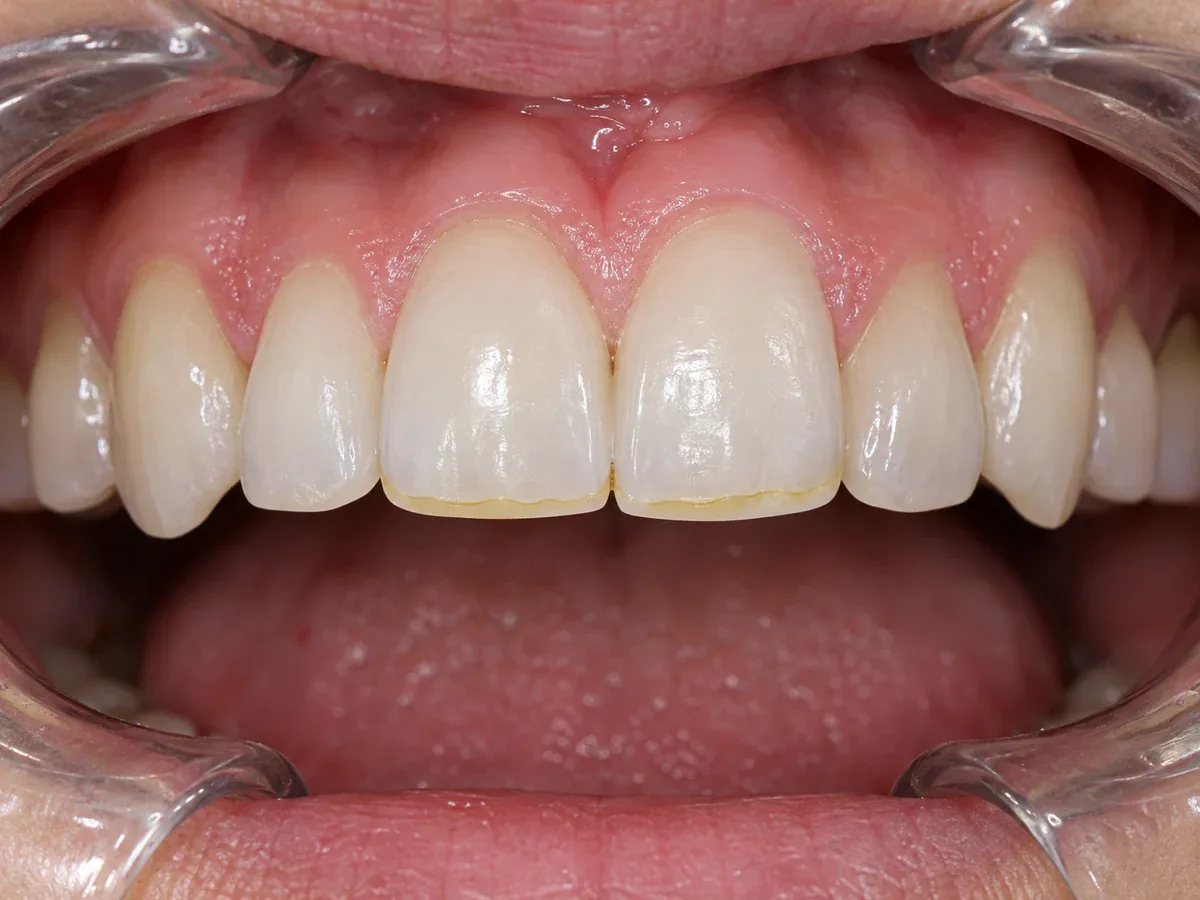
Why is there an edge line at all?
Every bonded treatment has one, because the prepared tooth surface and the ceramic have to meet. How fine that line is made is the skill.
A good veneer edge feels smooth, with no ledge, even to the tongue.
Can I feel if the edge has opened?
Run the tip of your tongue up and down along the gum-side edge. Smooth means fine, while a ledge or rough feeling needs a check.
Do veneers make decay more likely?
Not by themselves. Without care, though, there is one more place where decay can start.
That is why we stress floss for veneer patients. With the same care, the risk is similar.
Why does the position of the edge matter?
Above or below the gum?
This is crucial. Above the gum, toothbrush and floss reach the edge.
Tucked under the gum, they cannot, and plaque eventually builds up there.
So should the edge always sit above the gum?
We do so where possible, but not always. If the tooth colour must change a lot, the edge has to be hidden slightly, or it shows.
So we balance appearance against ease of care.
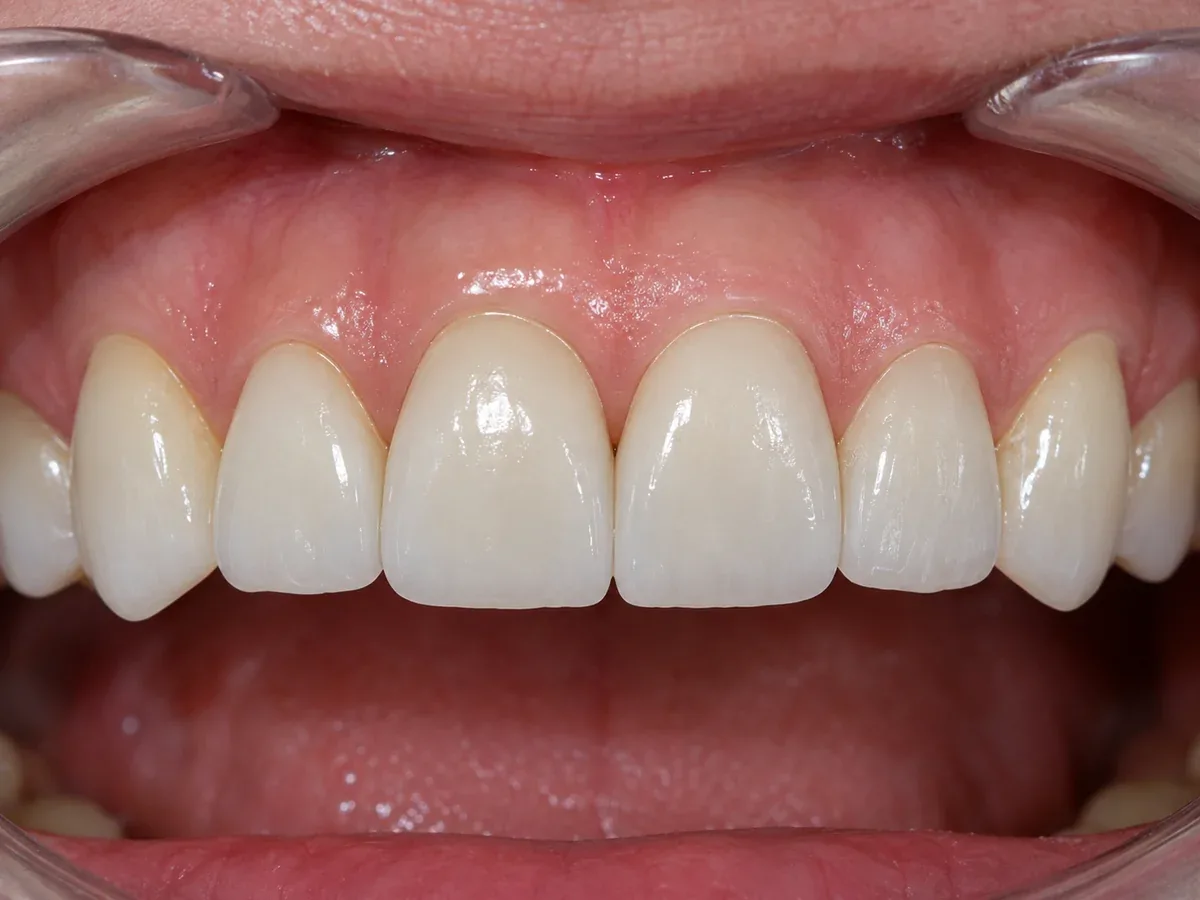
Is all decay removed before bonding?
Always, first. Decay covered over grows quietly inside, and the outside looks fine until it hurts years later.
So we review photos and X-rays together before bonding.
Can you see inside after bonding?
Not easily from outside. On X-rays the ceramic also blurs the view.
So we check the edge line by eye and with instruments. This is why regular check-ups matter even more.
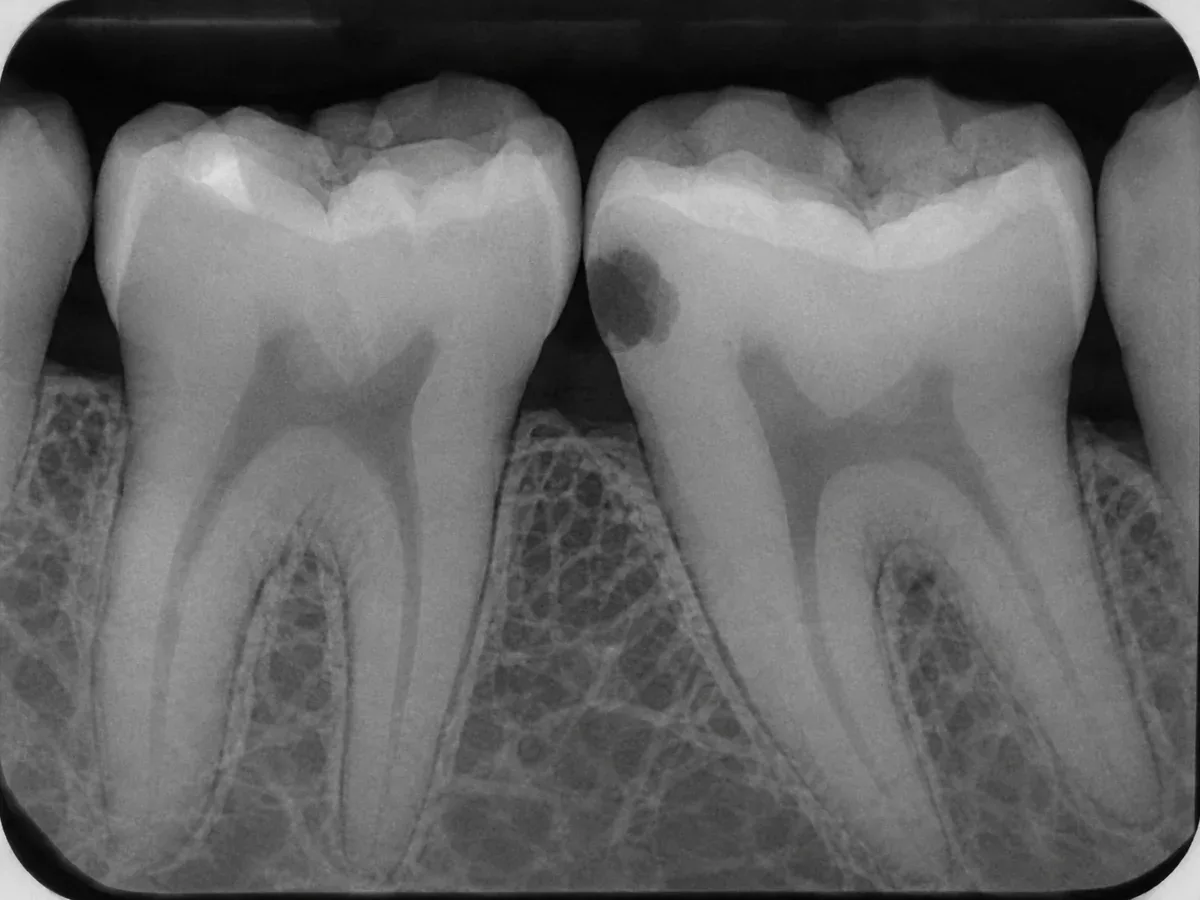
How does a veneer compare with a crown?
A crown edge runs all the way around the tooth, so part of it sits under the gum. A veneer covers the front alone, so its edge is shorter, while the uncovered back stays natural.
Minish works on the same principle, as it is also bonded. Less tooth is reduced, so the edge stays on the surface where brush and floss reach.
| Treatment | Edge length | Section under the gum |
|---|---|---|
| Veneer | Short | Little |
| Minish | Short | Almost none |
| Partial restoration | Moderate | Depends on site |
| Crown | All the way round | Some |
The shorter the edge, the fewer places decay can start.
How should you clean around a veneer?
Is it safe to floss?
You should floss. Some people avoid it for fear the veneer will come off, but a well-bonded one will not.
Skipping floss lets the edges between teeth decay first. Slide the floss out sideways rather than pulling it upward.
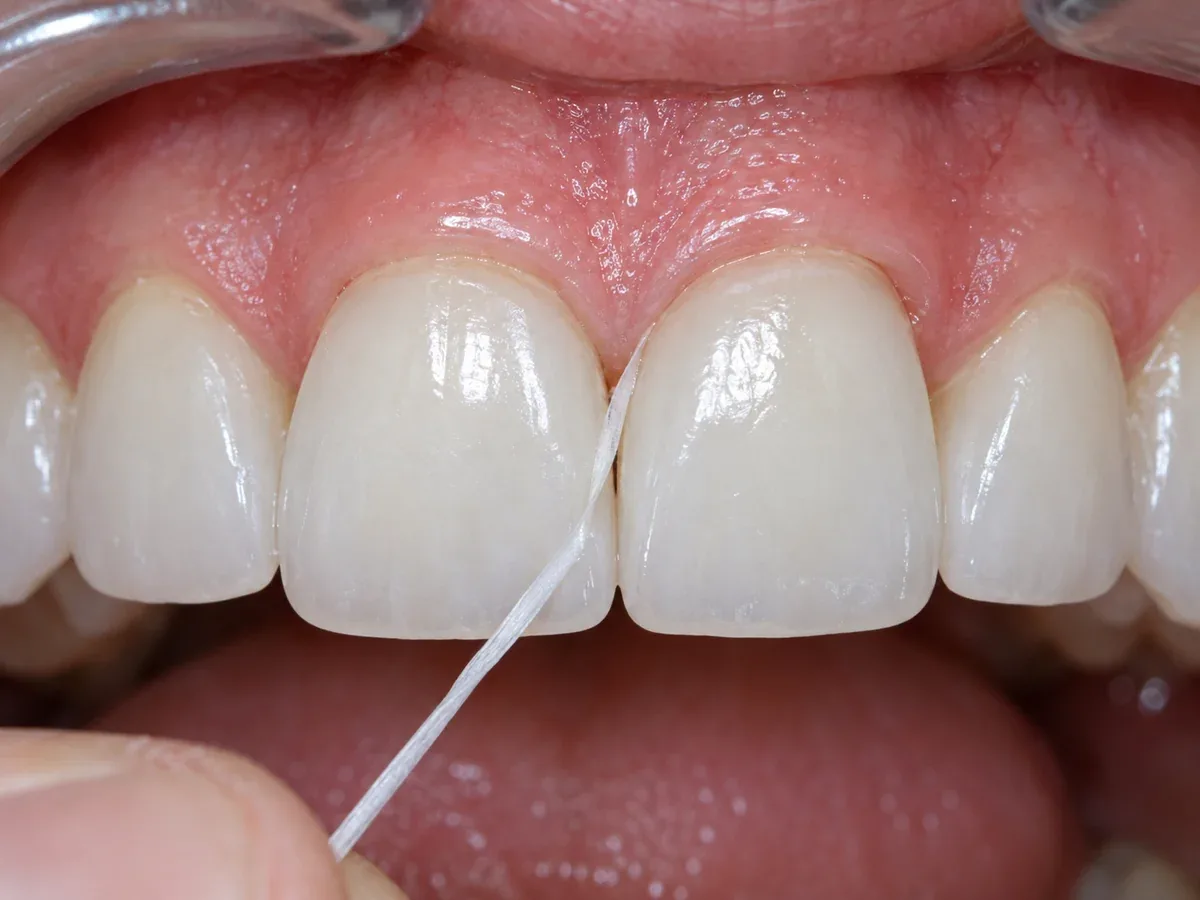
What if the floss catches?
Please tell us where. It means the edge there is not smooth.
A little smoothing stops the catching. Left alone, that spot is where decay starts.
Do I need an interdental brush?
If there is a gap, it helps. Do not force a thick one in, as hitting the edge repeatedly roughens the line.
We fit the size for you.
What about other tools and toothpaste?
An electric toothbrush is fine and makes pressure easier to control. Do not hold it on the edge too long, and one with a pressure alert is good.
A water flosser helps but cannot replace floss, which lifts trapped debris better. Use both, at medium strength.
Avoid strongly abrasive whitening toothpaste, as it wears the ceramic gloss and dull spots collect more. Fluoride strengthens the tooth around the edge, though not the ceramic, and comes for home use or applied in the clinic.
Who is more prone to decay?
We take extra care if any of these apply.
- A history of frequent decay
- A mouth that often feels dry
- Frequent sugary drinks
- Not using floss
- Receded gums with exposed roots
If they do, we shorten the check-up interval.
Why does a dry mouth decay more?
Saliva washes away and neutralises acid. With less saliva, that stops.
This affects people on some medicines and mouth breathers. Sipping water often already helps.
Are sugary drinks and eating habits a problem?
How often matters more than how much. Small sips all day keep the mouth acidic, so drink quickly and rinse with water.
No big diet change is needed, but cut down on all-day snacking and drink water between meals.
What about ice and hard foods?
Biting them puts force on the edge. Even without breaking, the bonding layer opens bit by bit and becomes a place to decay.
Cut down on biting things off with your front teeth for the same reason.
What happens if decay starts at the edge?
Does the cement decay?
The bonding layer does not decay, but it wears. It dissolves very slowly at the edge, and a dip there becomes a gap.
So we check that line at every check-up.
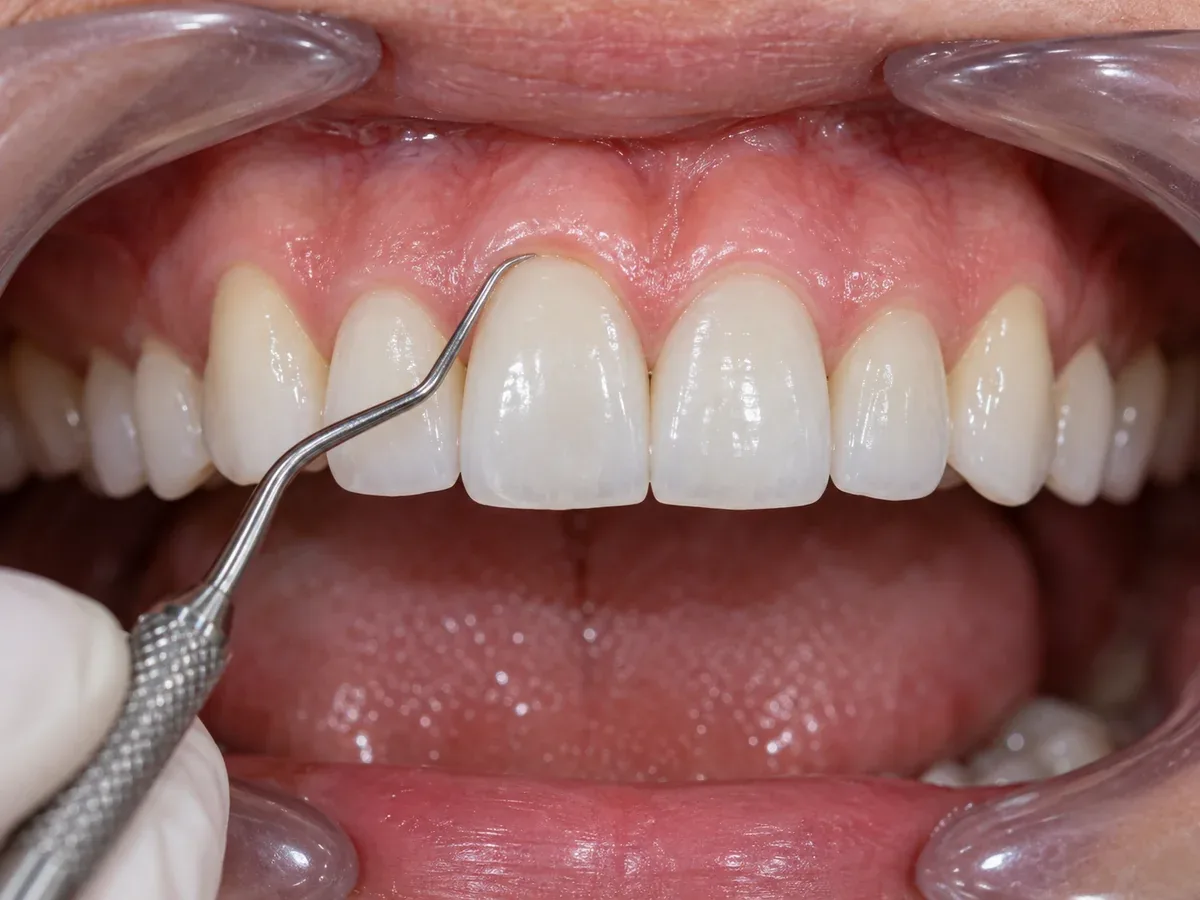
Does decay under a veneer hurt?
Not at first, because the outer layer has no nerves. Sensitivity to cold water means it has reached the inner layer.
So it is better not to wait for pain.
Are there other warning signs?
Some people notice a smell from one spot when they remove floss, meaning food lingers there. Remember which tooth it was, and it is easier to find.
Gum swelling often comes too. A rough edge makes the gum there swell first, and it bleeds from one spot when you brush.
Is every yellow band at the edge decay?
No. Staining is more common, where coffee or tea pigment has soaked into the bonding layer, and cleaning and polishing remove it.
A stain sits on the surface over a hard base. Decay is soft and lets the instrument sink in, and unclear spots are photographed and compared six months later.
How is decay at the edge treated?
It depends on depth.
| Condition | Usual treatment | Visits |
|---|---|---|
| Rough edge | Smooth and polish | 1 |
| Shallow staining | Fill that spot | 1 |
| Decay along the edge | Remove and remake | 2–3 |
| Spread inward | Treat decay, then remake | 3 |
| Reached the nerve | Root canal treatment, then a crown | 4 or more |
Caught at the first two rows, the ceramic can stay.
Does removing a veneer take more tooth?
Removal itself takes almost none, as we lift off the bonding layer. Any decay, though, has to be removed.
So catching it early saves tooth.
Is a remade veneer the same as before?
We match the shape and colour. The tooth may be slightly smaller, so the thickness can differ and options narrow.
With each repeat, there are fewer options.
Which veneer decays first?
Often the one furthest back, where brush and floss reach least. Front teeth are visible in the mirror and get cleaned well.
So we check the back ones first.
What is normal right after bonding?
The gums may feel sore for two or three days, as they were pressed during bonding. Swelling and bleeding beyond a week need a check.
Some people are sensitive to hot and cold for a few weeks, because the outer layer was thinned. It usually settles within a month, and after three months we recheck the edge.
How can decay under a veneer be prevented?
What prevents it?
It splits into bonding and aftercare.
- Leave no decay before bonding
- Keep the edge above the gum where possible
- Smooth and polish the edge while checking in a mirror
- Floss every day after bonding
- Have the edge checked every six months
All five together are what make a veneer last.
Does prevention really work?
Yes. Many people keep theirs unchanged for over ten years.
What they share is floss and regular check-ups. There is no special trick, and wherever you go in Seomyeon, these two stay the same.
How can I check at home?
Try this once a month.
- Lift your lip in good light and look at the edge line
- Look for a yellow band or dark line
- Run your tongue up and down along the edge
- Smell the floss after removing it
- Check whether one spot bleeds
If anything catches your attention, come in then.
Is scaling safe for veneers?
Yes, ceramic is hard. We avoid scraping hard over the edge line, so please tell us about your veneers beforehand.
Lower front veneers sit where saliva pools, which helps, but tartar builds up there easily. Tartar on the edge roughens it, so we may scale more often.
What should I tell a new dentist?
Which teeth have veneers and when they were done, plus photos if you have them. Then instruments can avoid the edges.
Does the order of treatments matter?
Yes. Braces bonded onto ceramic can dull the gloss when removed, so orthodontics comes first and veneers after.
Ceramic does not whiten, so whitening the neighbours later makes the edge stand out. Whitening comes first, and if braces come later, we change how they are removed.
What about children and pregnancy?
For young people, we wait until growth ends. A gum line that is still changing exposes the edge, and exposed edges decay more easily.
During pregnancy, gums swell easily and can cover the edge. Floss more carefully, and we bring check-ups forward slightly.
Does a visible edge mean redoing it?
Not necessarily, because showing is different from decaying. Often the gum has receded and exposed it.
If the line is hard, we leave it and watch. If it bothers you, we remake it then.
When should you see a dentist in Busan?
How often should it be checked?
Every six months, together with scaling, so no separate visit is needed. We check the edges and gums together, and if it has been over a year, please drop in.
Over the years we look more closely. After five years the bonding layer has worn a little, and after ten we also discuss when to remake, though a veneer in good condition can stay longer.
What does the dentist check?
We do not look at the edge alone.
| Check | Method | Why |
|---|---|---|
| Edge line | Probe and magnifier | Gaps and roughness |
| Stained band | Visual exam | Sign of a gap |
| Gum condition | Bleeding check | Local inflammation |
| Between teeth | X-ray | Hidden decay |
| Bite contacts | Articulating paper | Force on the edge |
Checking all five together keeps anything from being missed.
What should I ask at the consultation?
Three questions are enough.
- Do you place the edge above the gum?
- How do you check for decay before bonding?
- How often are check-ups after bonding?
If there is no answer to the third, it is fine to think it over.
When should I come in?
Use this as a guide.
| Condition | When to come in |
|---|---|
| Sensitive to cold water | Within a week |
| Smell from one spot | Within a week |
| Floss catches | Within a month |
| Yellow band at the edge | Within a month |
| No symptoms | At your regular check-up |
If you are passing by, feel free to drop in then.
The ceramic of a veneer does not decay. The edge is what needs care.
A smooth edge above the gum, daily floss
and a check every six months go a long way.
If you are worried about decay under a veneer in Busan, Reset Dental Clinic offers 1:1 English interpretation from your first consultation through the end of treatment. Call 010-8555-2854 to book a visit.
Frequently asked questions
Does a tooth always decay under a veneer?
No. It depends on the edge and on care, and the ceramic itself does not decay.
Will flossing make it fall off?
A well-bonded one will not. Skipping floss is what leads to decay.
Does decay always mean redoing it, and does it show on X-rays?
Shallow decay is filled at that spot. X-rays are blurred by the ceramic, so we check the edge directly.
Can I get this treatment in English in Busan?
Yes, we offer 1:1 English interpretation from the first consultation to the end of treatment, near Seomyeon Station Exit 2, opposite Lotte Hotel Busan. If you live outside Busan, you can send photos first. Call 010-8555-2854, or +82-10-8555-2854 from abroad.
References
- KDCA National Health Information Portal, "Laminate Veneer Treatment" — veneers removing a minimal amount of the enamel surface, while crowns remove the whole tooth surface
- KDCA National Health Information Portal, "Tooth Decay" — treatment depending on how far decay has progressed, with root canal treatment and crowns possibly needed in deep cases
- KDCA National Health Information Portal, "Gum Disease (Periodontal Disease)" — plaque as a mass of bacteria, and the need for tartar removal and check-ups at least once a year
- Journal of the Korean Dental Association, Vol. 49 No. 2, "Tradition and Prospects of Minimally Invasive Restoration" — a comparison showing veneer preparation as favourable for preserving tooth structure
Written by Reset Dental Clinic Support Team
Medical review Dr. Kim Hyun-joo, Head Dentist
Last updated: October 21, 2026
This column is for general information and does not replace diagnosis or treatment for individual patients. If you have symptoms, please see a dentist.