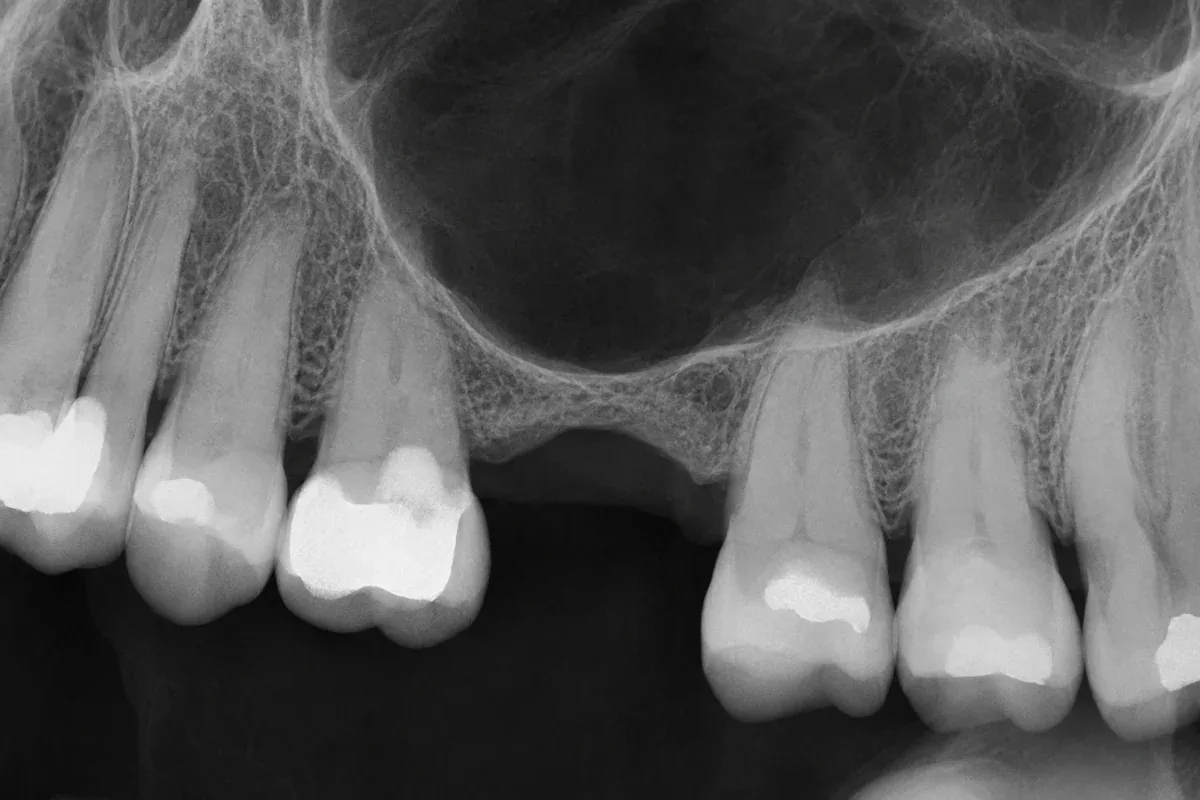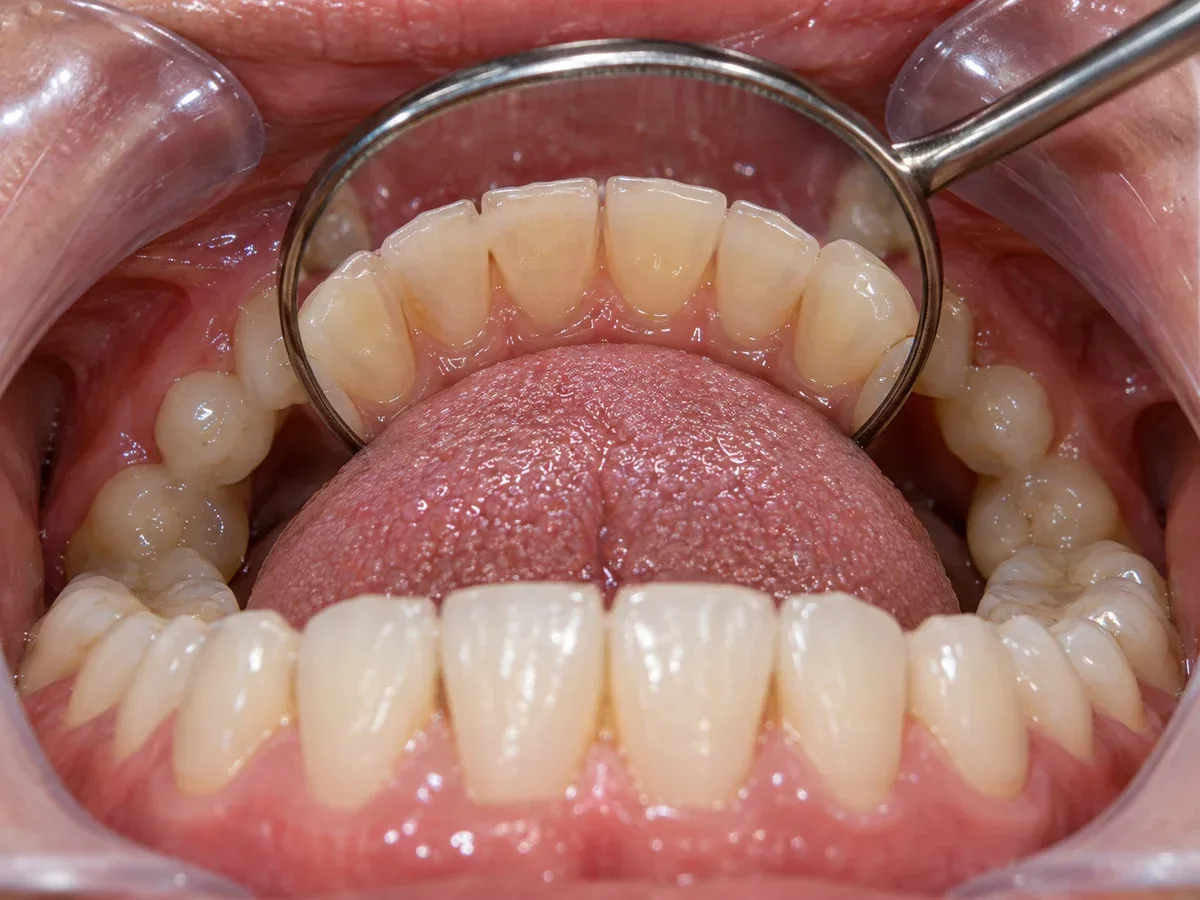
- A bridge uses the teeth beside the gap as pillars. An implant places an artificial root in the bone.
- Neither is always better. A bridge means shaping the neighboring teeth, and an implant means surgery and more time.
- The deciding factors are the neighboring teeth, the gap's position, bone and general health.
- Neither option lasts forever. Care makes a great difference.
When we explain the options to someone who has lost one tooth, the next question is usually which one is better. We hear it often at our clinic in Seomyeon, Busan, but the answer differs from mouth to mouth. For patients living in or visiting Korea, we offer 1:1 English interpretation from the first consultation through the end of treatment.
Below, we set out how to choose between an implant and a bridge, based on Korean public health and hospital sources.
What does an implant rely on, and what does a bridge rely on?
The prosthodontics department of Gwanak Seoul National University Dental Hospital divides fixed restorations into crowns and bridges. A bridge is used when one tooth, or a fairly small number of teeth, is missing.
It is held in place by the natural teeth in front of and behind the gap. A false tooth fills the gap, joined in one piece to crowns placed on the teeth on either side.
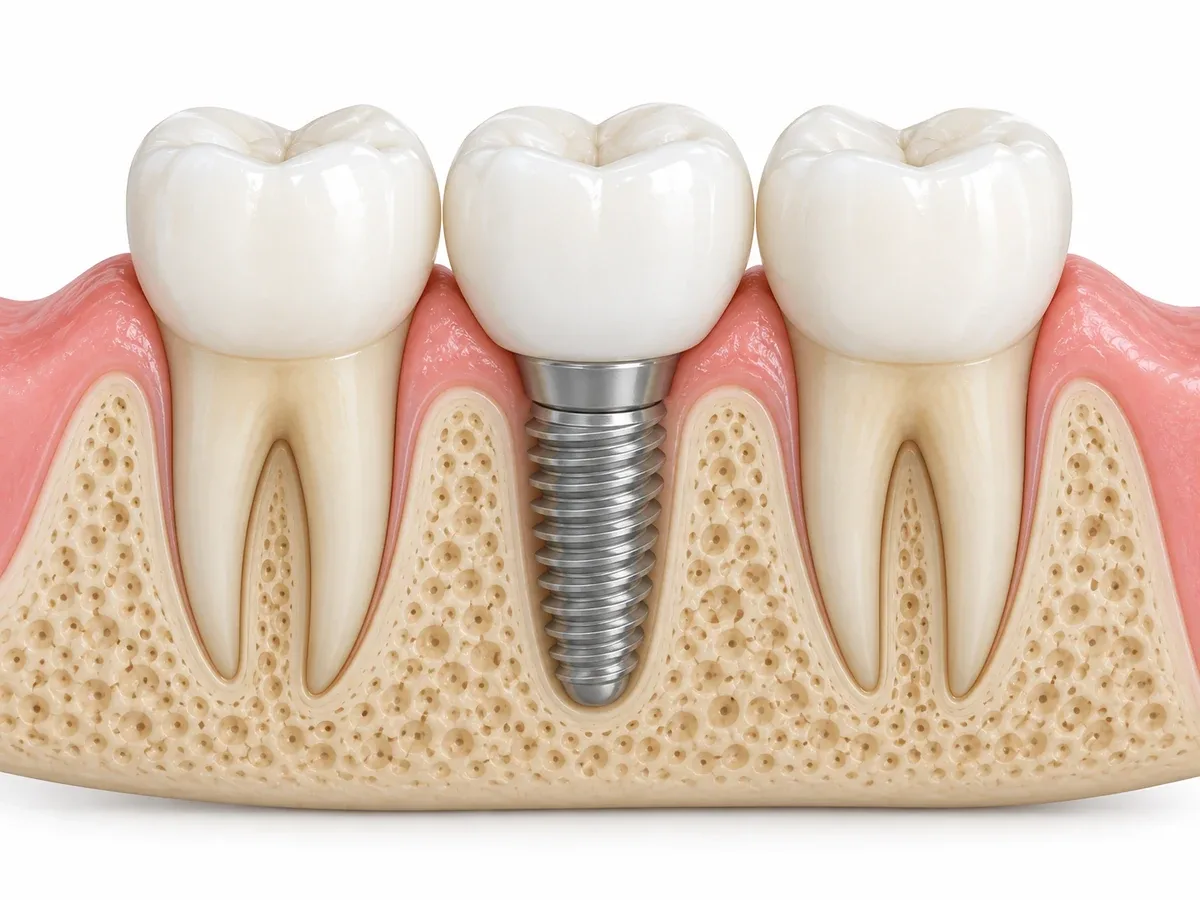
The KDCA defines an implant as an artificial root placed in the bone where a tooth is missing. A crown is connected on top, and the core principle is osseointegration, the firm bonding of implant and bone.
In short, a bridge leans on the neighboring teeth, and an implant stands on the bone at that spot. Seoul Asan Medical Center notes that titanium bonds firmly with the jawbone. The crown is then fixed on top with a screw or cement.
The KDCA says implants are seen as "a second set of permanent teeth" because their chewing force is close to natural teeth.
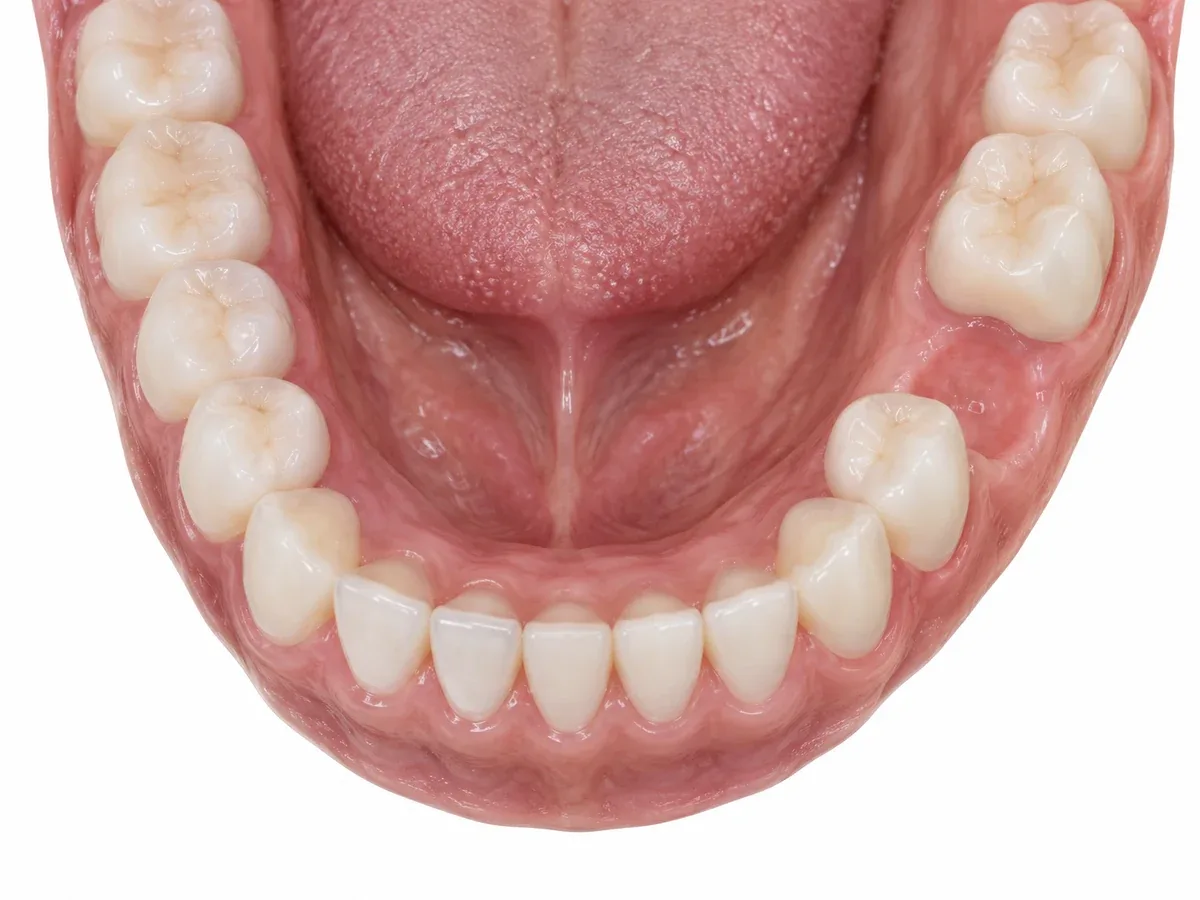
The KDCA material on removable dentures notes that many people prefer fixed restorations to dentures. Bridges and fixed implants belong to this group. Still, it adds that they cannot be used in every situation.
| Item | Bridge | Implant |
|---|---|---|
| What it relies on | The natural teeth in front of and behind the gap | The bone at the gap (osseointegration) |
| Neighboring teeth | Shaped to take crowns | Left untouched |
| Treatment process | Usually 3–4 visits | Bonding to bone usually takes 3–4 months, longer with a bone graft |
What changes if the neighboring teeth are healthy?
For a bridge, the teeth on either side must be shaped to take crowns. Gwanak Seoul National University Dental Hospital explains that as much tooth surface as needed is removed for a crown.
The same hospital says a bridge increases the load on the neighboring teeth. So the pillar teeth, in particular, need healthy gums.
Seoul Asan Medical Center puts the difference this way. A bridge is attached after the neighboring teeth are ground down. An implant's advantage is that it leaves the neighboring teeth alone.
The KDCA also lists this as the first indication for an implant: wanting to treat the missing tooth without grinding the natural teeth beside it.
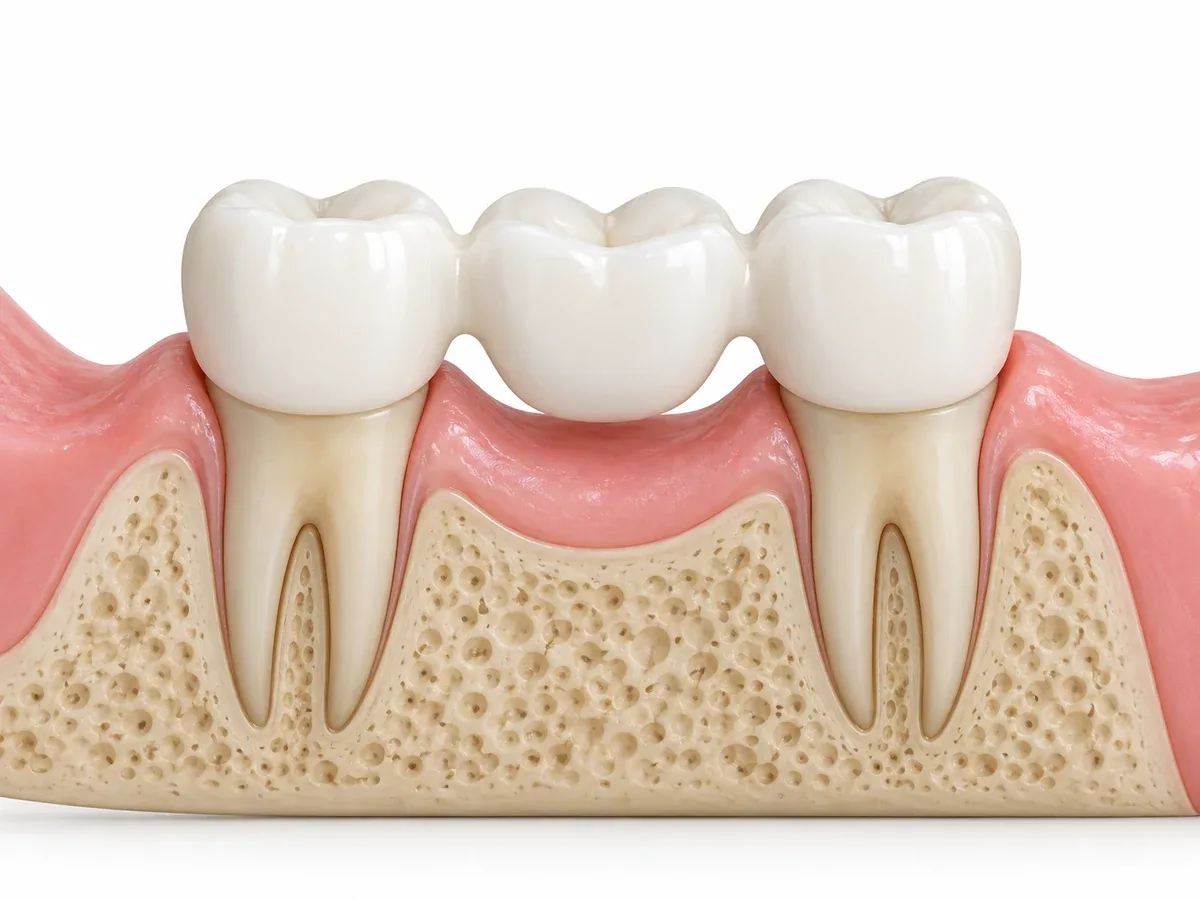
With a ceramic bridge, how much tooth is removed also matters. According to the KDCA material on all-ceramic crowns, the neighboring teeth also receive all-ceramic crowns. It notes that these need slightly more tooth removed than metal restorations.
If the neighboring teeth have already had major treatment, things are different. Gwanak Seoul National University Dental Hospital notes that crowns are placed on root-canal-treated, cracked or broken teeth. For teeth like these, a bridge can be considered too.
The KDCA's denture material also notes that a bridge may not suit some positions and tooth conditions, because it relies on the teeth on either side.
When does the position of the gap rule out a bridge?
In some positions, a bridge is difficult from the start. The KDCA lists a missing last molar as an indication for an implant.
A bridge needs a pillar in front and behind. When the very last tooth is lost, there is no pillar behind it, so a bridge may not be possible.
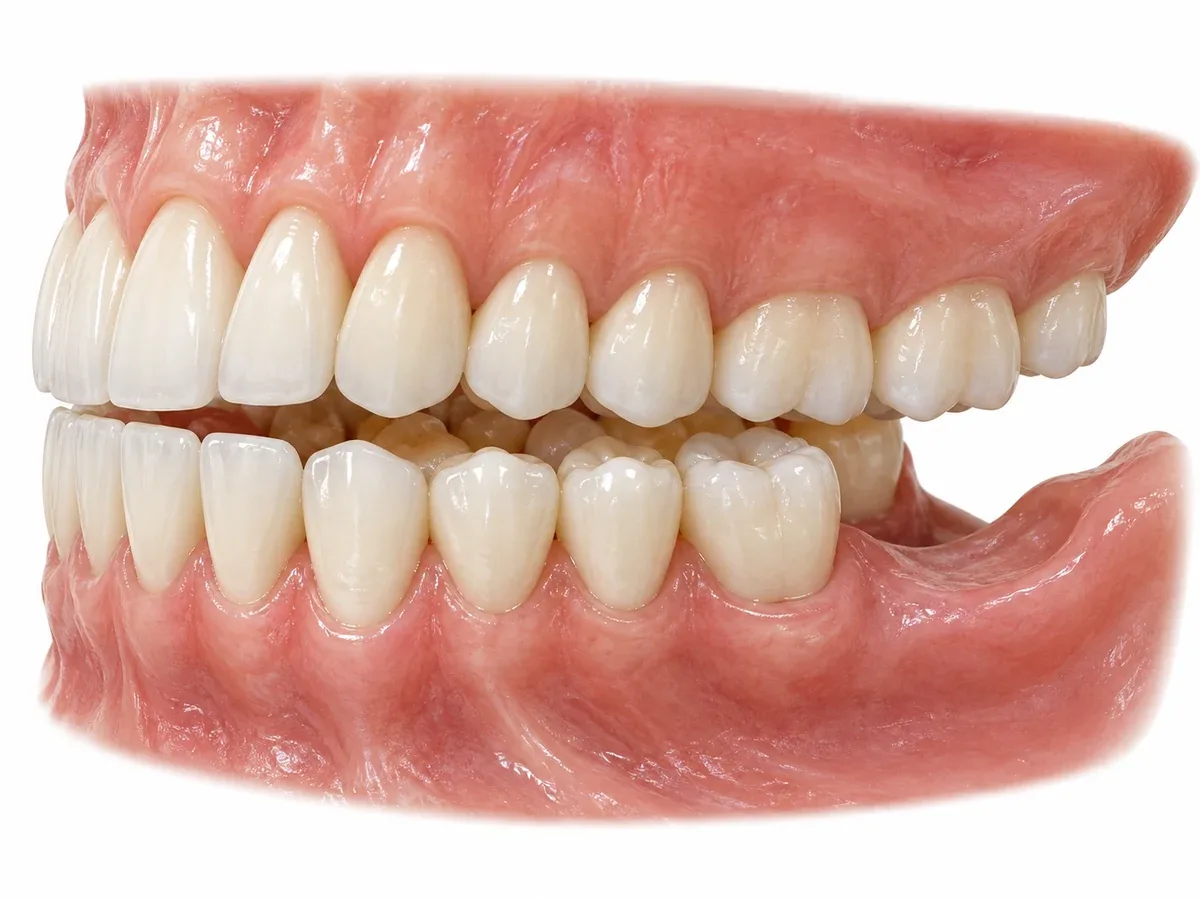
Gwanak Seoul National University Dental Hospital describes another situation. A bridge is removed because the gums and teeth got worse while it was in use. Even where a bridge was placed before, the next choice depends on the pillar teeth.
The same hospital lists these cases where an implant may be needed:
- a bridge was removed because the gums and teeth got worse
- some teeth never developed, so teeth are missing from birth
- space is left after orthodontic treatment is mostly done
- a fairly young person would otherwise need a partial denture
- teeth lost to an accident or illness cause functional or emotional discomfort
Seoul Asan Medical Center's indications are similar. It lists discomfort from a few missing teeth, and wanting treatment without touching the neighboring teeth.
What is checked about your bone and general health?
An implant is placed in bone, so bone volume matters. The KDCA says bone is assessed with dental CT and panoramic X-rays.
The results decide whether a bone graft is needed, and the implant size, length and number. The KDCA's denture material singles out alveolar bone loss. Severe loss can make the plan more complex or limited.
The KDCA adds that decay or gum disease is treated before surgery. A diagnostic model from impressions or an intraoral scan is also used to check the bite.
General health is checked too. Combining the two sources, these points are reviewed before surgery:
- High blood pressure and diabetes: surgery follows once they are well controlled.
- Blood thinners: tell your dentist in advance if you have taken aspirin or warfarin long term.
- Osteoporosis drugs: they can interfere with bone bonding, so they may be paused or changed.
- Smoking: it is directly linked to failure, so quitting is essential.
Seoul Asan Medical Center also notes when surgery may be difficult. Examples are uncontrolled diabetes, or being in chemotherapy or radiation therapy. Chronic conditions such as hyperthyroidism and kidney disease are listed as well.
However, surgery may be possible when a condition is mild or well controlled. The decision is made after a detailed diagnosis, following the dental team's judgment.
For a bridge, the first thing to check is the pillar teeth. The all-ceramic crown material says gum disease, bite and whether the nerve is alive are checked before treatment.
How do time and surgery compare for patients in Busan?
Seoul Asan Medical Center lists the burden of surgery as a drawback of implants. It also notes a longer treatment time than a bridge.
According to the KDCA, bonding to bone usually takes 3–4 months, and longer if a bone graft is needed. The KDCA's denture material also names time and surgery as burdens.
The surgery itself can be shorter than you might think. Seoul Asan Medical Center estimates about 20–30 minutes for one implant. This can change if a bone graft or sinus lift is added.
The same source describes the surgery in this order:
- Local anesthesia is given.
- The gum is opened and the soft tissue is folded back.
- A space is prepared in the bone.
- The artificial root is placed and a cover screw is attached.
- The soft tissue is put back and stitched.
The same source gives an average success rate of about 95%, noting that results vary with each patient's condition. Infection, bleeding, swelling, pain or altered sensation can occur after surgery.
The long part is not surgery day but the wait for the implant to bond to bone. After 2–6 months, a second surgery adds the post that the crown sits on.
A bridge needs fewer visits. Gwanak Seoul National University Dental Hospital says it usually takes 3–4 visits. The all-ceramic crown material says restoration alone usually takes 1–3 weeks and 1–3 visits.
That material describes the steps as shaping the teeth, taking impressions, a temporary crown, then fitting. Strong zirconia can also be used for molars and bridges.
| Item | Bridge | Implant |
|---|---|---|
| How it works | The neighboring teeth are shaped, crowned and joined | An artificial root is placed in bone and left to bond |
| Visits and time | Usually 3–4 visits | Bonding to bone usually takes 3–4 months |
| Parts | Two crowns and a false tooth in one piece | Artificial root, abutment and crown |
| Burden noted in the sources | More load on the neighboring teeth | Surgery and a longer treatment time |
| What is checked | What the sources say |
|---|---|
| Neighboring teeth | A bridge adds load to them, so their gums need to be healthy |
| Position of the gap | If the last molar is missing, a bridge may not be possible |
| Bone volume | Severe bone loss can make an implant plan complex or limited |
| General health | Surgery may not be possible with uncontrolled diabetes or during chemotherapy or radiation |
| Time and surgery | Surgery and a longer treatment time than a bridge are listed as implant drawbacks |
Is a denture a third option?
The KDCA's denture material lists a removable denture as an alternative. It suits people who want to ease the time and surgery burden.
It also suits cases where severe bone loss makes an implant difficult. It is a suitable alternative when the gum and ridge, not just the teeth, need to be replaced.
Gwanak Seoul National University Dental Hospital also describes removable restorations. They are used when many teeth are missing and cannot be anchored to neighboring teeth. You can put them in and take them out yourself.
Getting used to one takes time. The same hospital notes that first-time denture wearers need a good deal of time to adapt. It varies widely, and can take years in slow cases.
A partial denture is anchored to the remaining teeth. The KDCA notes that those teeth often need repairs or adjustments first. The more teeth that remain, in good positions, the better the expected result.
A partial denture can also be combined with implants. Adding artificial roots gives it more fixed support, which can improve function and appearance.
| Option | What it relies on | Burden noted in the sources |
|---|---|---|
| Bridge | The natural teeth on either side | The neighboring teeth are shaped and carry more load |
| Implant | The bone at the gap | A longer treatment time and surgery |
| Partial denture | The remaining teeth | It must be put in and taken out, and adapting can take time |
Why does neither option last forever?
The KDCA states clearly that implants do not last forever. Because the gaps between teeth are wider, floss and interdental brushes are essential. A check-up every 3–6 months is needed after treatment.
There is one more thing to watch for: peri-implantitis, inflammation of the gum and bone around an implant. Even when bone is damaged, the implant may not move, so treatment is often delayed.
Seoul Asan Medical Center notes that poor care can cause problems much like those of natural teeth. A loose screw that is not retightened can be damaged, or gum disease can develop.
Crowns and bridges are no different. The all-ceramic crown material says restorations last about 10 years in the literature. But this varies widely with tooth condition, oral hygiene, eating habits and maintenance.
A bridge is also one joined piece. If part of it is damaged, the whole bridge usually has to be removed and remade, the material says. Rarely, very small damage can be polished or repaired.
The same material gives these care tips for crowns and bridges:
- Avoid very sticky foods while a restoration is temporarily cemented.
- Do not use excessive force chewing very hard foods.
- Brush properly and have regular scaling.
- If you grind or clench at night, ask your dentist about a protective guard.
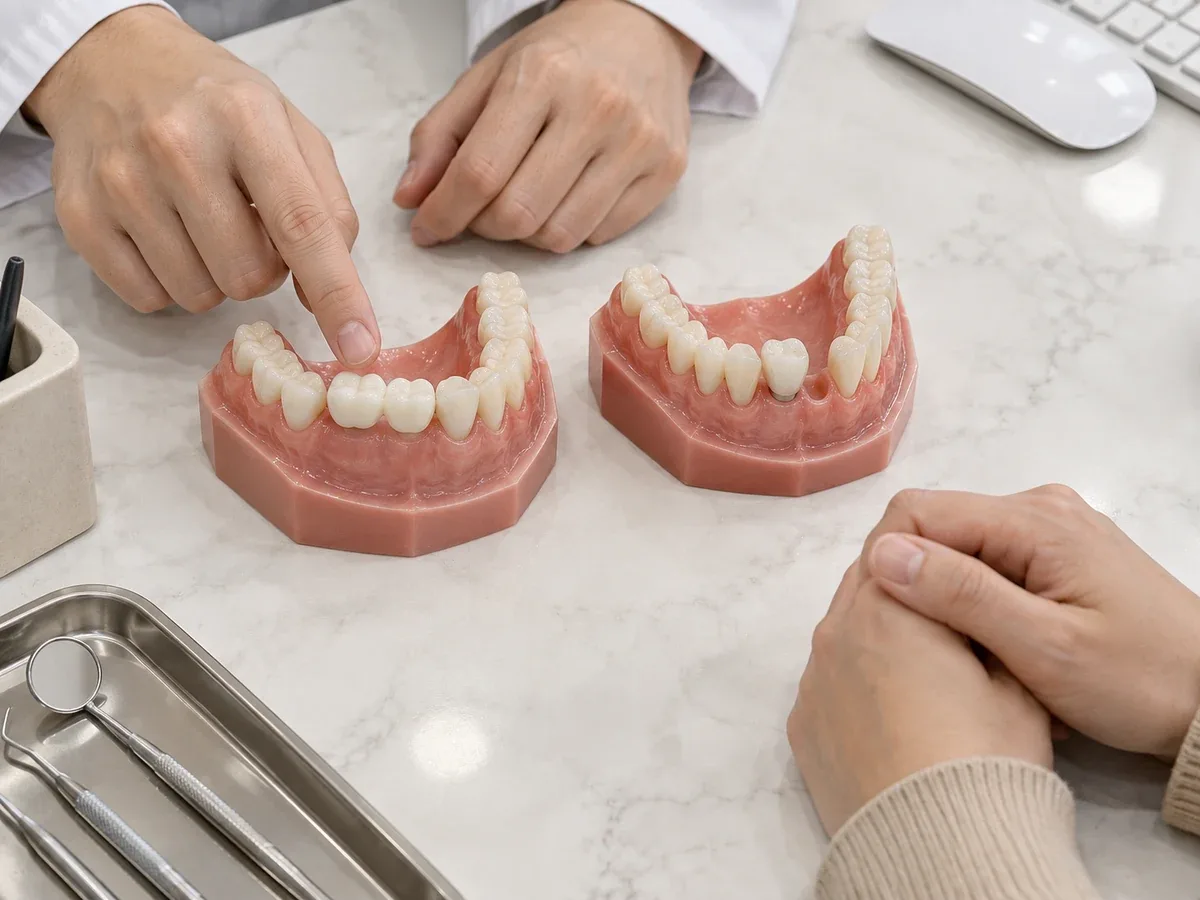
Leaving the gap empty may also look like a choice. But Seoul Asan Medical Center notes that it can lead to ongoing bone loss, with esthetic and functional problems.
Frequently asked questions
Does an implant last longer than a bridge?
The sources do not say either one lasts forever. How long a restoration lasts depends a great deal on tooth condition, hygiene, eating habits and maintenance. So the choice of method alone cannot fix its lifespan.
If the neighboring teeth already have crowns, is a bridge the better choice?
We first check whether their roots and gums are healthy. A bridge adds load to the pillar teeth, so their gums need to be healthy. We compare both options based on the exam.
The tooth has been missing for a long time. Can I still choose?
Bone can shrink over time, so we check bone volume with CT first. Severe bone loss can make the plan more complex.
Can I get this treatment in English in Busan?
Yes. We provide 1:1 English interpretation from the first consultation through the end of treatment. The clinic is near Seomyeon Station Exit 2 (5-min walk), opposite Lotte Hotel Busan, and you can call 010-8555-2854 (+82-10-8555-2854 from abroad).
Neither an implant nor a bridge is always the better choice.
The neighboring teeth, the position of the gap,
your bone and your health
decide which one fits.
If you are weighing an implant against a bridge in Busan, Reset Dental Clinic offers 1:1 English interpretation from your first consultation through the end of treatment. Call 010-8555-2854 to book a consultation.
References
- KDCA National Health Information Portal, "Dental Implants" — definition of an implant and osseointegration; healing usually 3–4 months and longer with bone grafts; indications such as not wanting to grind neighboring teeth and a missing last molar where a bridge is not possible; medicines, diabetes, osteoporosis drugs and smoking before surgery; CT and panoramic X-rays to plan grafts and implant size; implants do not last forever, floss and interdental brushes, check-ups every 3–6 months; peri-implantitis that damages bone without any wobble
- Seoul Asan Medical Center, "Implant Surgery" — a bridge grinds the neighboring teeth while an implant leaves them alone; the burden of surgery and a longer treatment time as drawbacks; conditions that may rule out surgery; about 20–30 minutes per implant; daily life right after surgery; a second surgery after 2–6 months; avoiding very hard foods such as dried squid and ice; ongoing bone loss if a gap is left; problems from poor care
- Gwanak Seoul National University Dental Hospital, Department of Prosthodontics, "Disease Information" — fixed restorations as crowns and bridges; tooth removal for crowns; bridges anchored to the teeth in front and behind, adding load to them and needing healthy gums, usually over 3–4 visits; cases where an implant is needed, such as after a bridge is removed
- KDCA National Health Information Portal, "Removable Prostheses" — many people prefer fixed restorations such as bridges and implants, but these cannot be used in every situation; bridges may not suit some positions and tooth conditions; the burdens of implant treatment and the effect of severe bone loss on planning
- KDCA National Health Information Portal, "All-Ceramic Crowns" — ceramic bridges also crown the neighboring teeth; zirconia for molars and bridges; restoration alone usually 1–3 weeks and 1–3 visits; restorations lasting about 10 years in the literature, varying with tooth condition, hygiene, eating habits and maintenance
Written by Reset Dental Clinic Support Team
Medical review Dr. Na In-chae, Head Dentist · Periodontics Specialist
Last updated: September 19, 2026
This column is for general information and does not replace diagnosis or treatment for individual patients. If you have symptoms, please see a dentist.