

- Korea's national health portal says extraction cannot be undone, so it should be decided carefully and when truly needed. This applies to a full-arch implant plan too.
- A tooth loosened by gum disease is likely to need extraction, yet the portal says its outlook can be judged after gum treatment first.
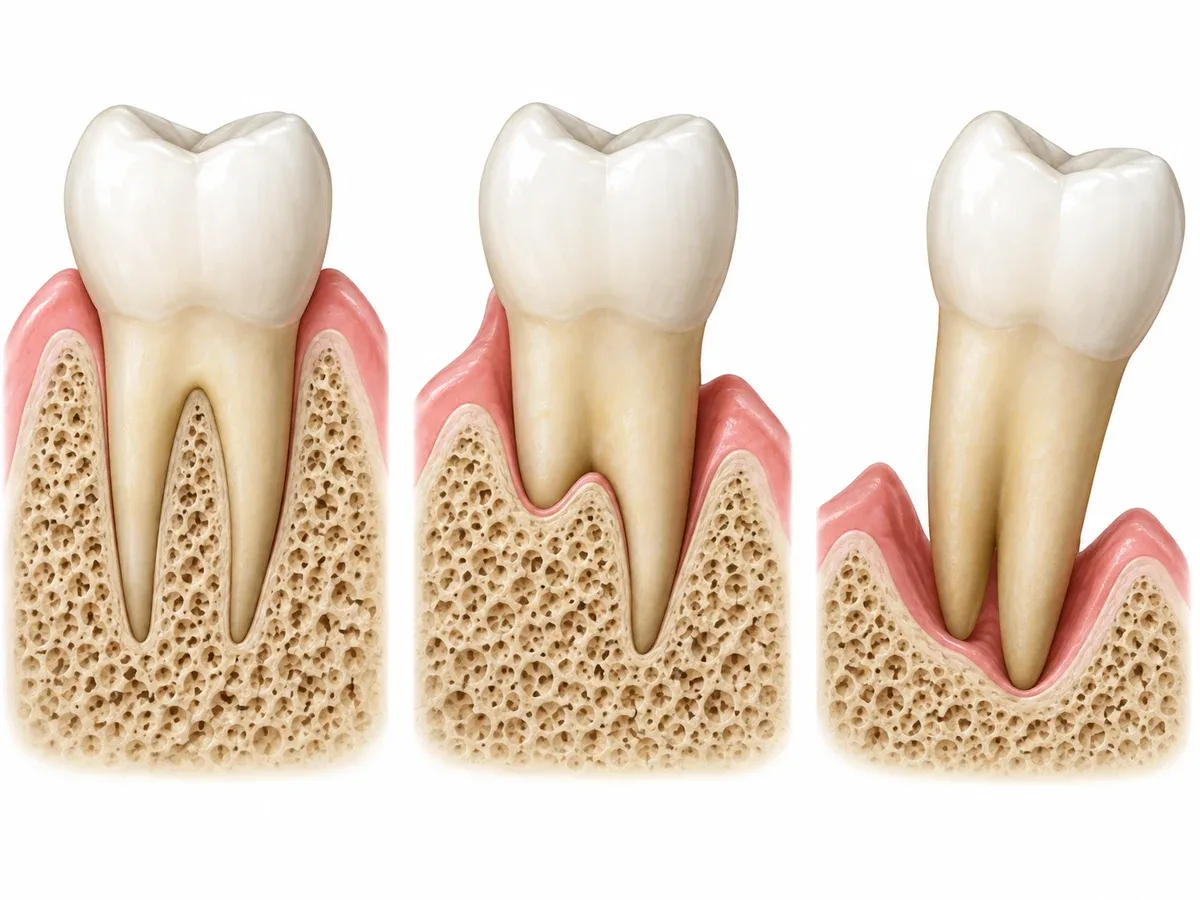
- Remaining bone is a key measure. When bone height is half the root length or less, the tooth is likely to need extraction later.
- On the other hand, a loose tooth may be removed for a stable denture design. Whether to keep a tooth is decided within the whole plan, not one tooth at a time.
One question we often hear in full-arch implant consultations is whether healthy-looking teeth must all come out. Others ask us to simply remove them all, since treatment is happening anyway. At Reset Dental Clinic in Seomyeon, Busan, patients can have 1:1 English interpretation from the first consultation through the end of treatment.
This column sets out how to tell which teeth to keep and which to remove. It draws on four KDCA National Health Information Portal pages, on extraction, systemic disease and gum treatment, root canal treatment and removable prostheses. We also cite news of a campaign by the Korean Academy of Conservative Dentistry.
Why is extraction a decision you cannot undo?
The KDCA page on extraction opens with a clear statement. Because extraction cannot be undone, it should be decided carefully and when truly needed.
The dental profession is saying the same thing. According to Dailydental, the Korean Academy of Conservative Dentistry launched a public campaign called "Save Natural Teeth" in August 2026.
The academy said that as implants have become common, more patients are giving up their natural teeth early. It aims to build a culture where patients first discuss treatments that could save their teeth.
That does not mean every tooth should stay when planning a full-arch implant. The same extraction page also lists clear cases where a tooth needs to come out.
What is needed is to check each tooth against clear criteria. For a full-arch implant, this check is done tooth by tooth before the plan is set.
When do the sources say a tooth should come out?
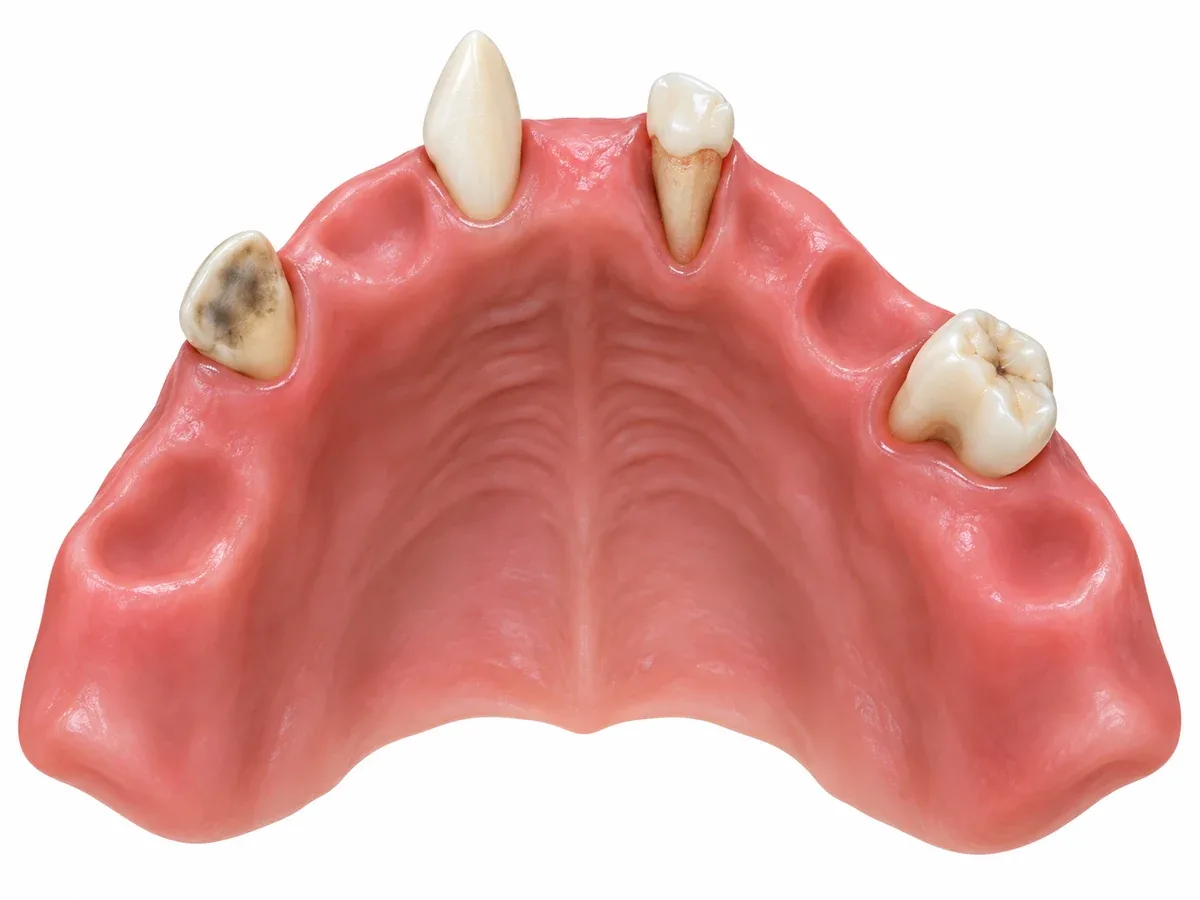
The KDCA page lists the cases where extraction is needed. They include decay too severe to treat, and cases where root canal treatment is impossible or pain continues after it.
Severe gum disease that has damaged the bone and left a tooth very loose is on the list. So is a cracked or broken tooth that still hurts after treatment.
One item links directly to full-arch implant planning. For prosthetic treatment, the page says a loose tooth may be removed so that a denture can be designed to be stable.
In other words, a tooth might last a little longer on its own. But if it makes the whole design unstable, the decision can change.
The same page adds that extraction needs caution in people with certain conditions. If several teeth are to be removed at once for a full-arch implant, these need to be checked first.
- heart disease
- high blood pressure
- blood disorders
- diabetes
- liver or kidney disease
- taking certain medications
| Category | Case listed in the source |
|---|---|
| Decay | The tooth is too decayed to be treated |
| Root canal treatment | Root canal treatment is impossible, or pain continues after it |
| Gum and bone | The bone is badly damaged and the tooth is very loose |
| Crack or fracture | The tooth is cracked or broken and pain continues after treatment |
| Prosthetic treatment | A loose tooth may be removed for a stable denture design |
Can teeth loosened by gum disease be saved?
In people considering a full-arch implant, the remaining teeth are often loose from gum disease. The KDCA page on systemic disease and gum treatment addresses this directly.
If a tooth moves without any outside injury, the gum tissue is likely inflamed. Such a tooth is likely to need extraction, but its outlook can be judged after gum disease is treated first.
There is also a number to guide the decision. Even after inflammation clears, damage from bone loss often stays. The outlook of a tooth depends on how much bone has been lost.
The portal says that when bone height is half the root length or less, the tooth is likely to need extraction later. This is why, before a full-arch implant, we compare bone height with root length on X-rays.
One more sentence deserves attention. Gum disease often causes no pain unless it forms an abscess. So if it hurts, the disease has probably already reached the point of extraction.
No pain does not mean a tooth can be saved. The two are separate questions.
Where bone and gum tissue have been lost, regenerative surgery may be done. Examples are bone grafting at the defect and guided tissue regeneration. Yet the portal also notes that bone damage often remains after treatment.
| Sign | What the source says |
|---|---|
| Tooth moves without injury | Gum inflammation is likely; extraction is likely, but the outlook can be judged after treatment |
| Bone at half the root or less | The tooth is likely to need extraction later |
| Pain | The disease has probably already become severe enough for extraction |
| Lost bone and gum tissue | Regenerative surgery may be done, but bone damage often remains |
How far can a root canal save a tooth?
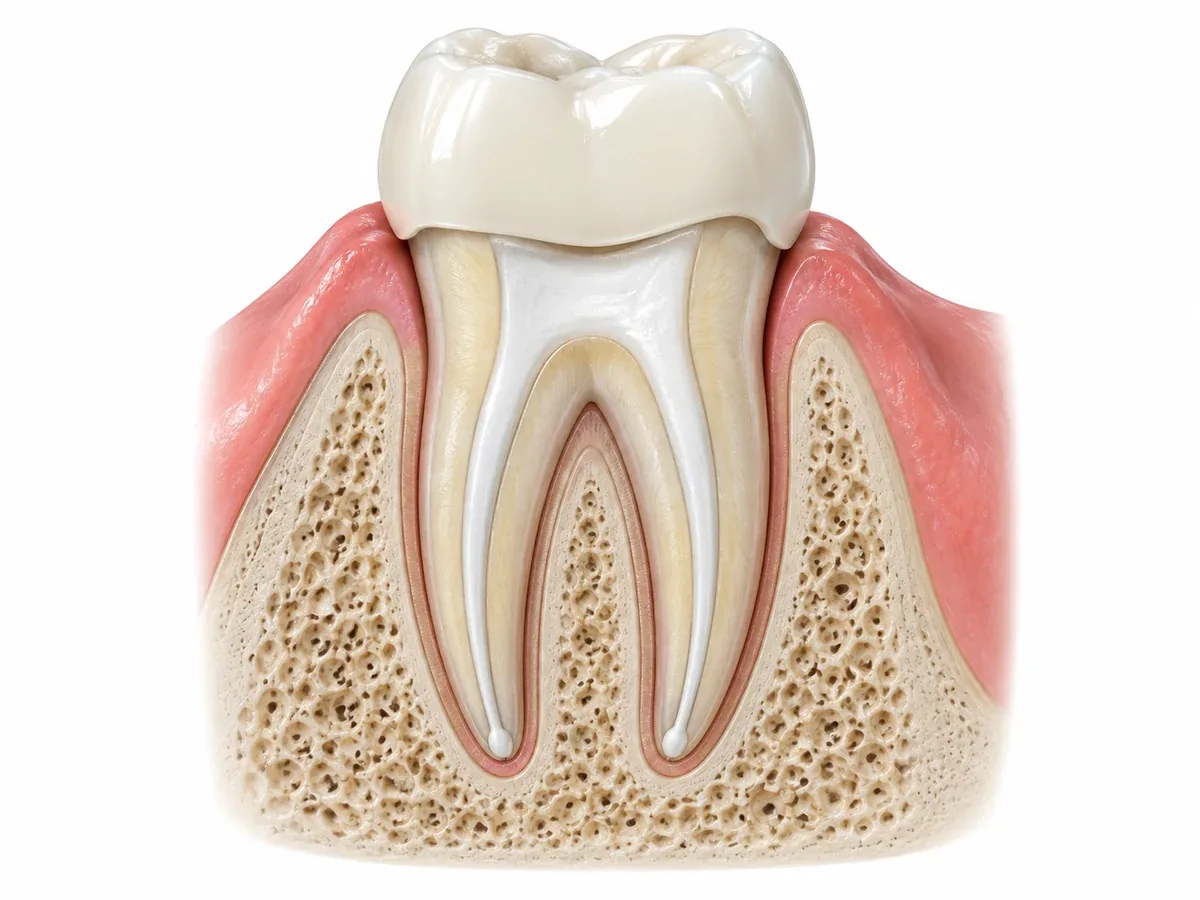
For decayed or cracked teeth, root canal treatment is considered first. The KDCA page describes root canal treatment (endo), which removes infected pulp and then cleans and seals the inside of the tooth.
The page is frank about results. It says success is hard to promise. Reported success rates range from 60 to 90%, with 10-year success of about 70 to 80%, and the dentist's skill has a major effect.
There is also a point specific to Korean patients. The page says the lower second molar in Koreans often has a C-shaped canal, and its complex anatomy makes success rates lower.
If standard root canal treatment does not solve the problem, two further options are described.
- apicoectomy, which removes the tip of the root
- intentional replantation, in which the tooth is taken out, treated and put back
After treatment, the tooth needs protection. Removing tooth structure for the root canal makes the tooth more likely to break. So back teeth and heavily reduced teeth need a crown to prevent fractures.
The portal also advises regular check-ups, including a yearly X-ray, to look for reinfection. When a treated tooth is kept alongside a full-arch implant, we weigh the role it will play in the whole plan.
| Item | What the source says |
|---|---|
| Success rate | Reported at 60 to 90%, with 10-year success of about 70 to 80% |
| Certainty | Success is hard to promise; the dentist's skill has a major effect |
| Lower second molar in Koreans | Often has a C-shaped canal, with lower success rates |
| If standard treatment fails | Apicoectomy or intentional replantation may be done |
| After treatment | Crown for back teeth or heavily reduced teeth; yearly X-ray checks for reinfection |
What can kept roots and teeth do in a full-arch implant plan?
Sometimes the crown of a tooth is hard to use, but the root is healthy. The KDCA page on removable prostheses says that sound roots in suitable places can be used to support a denture. This is called an overdenture.
The page lists its advantages.
- The roots support the denture from below, so chewing is more stable.
- Attachments such as magnets can add retention.
- The bone around the roots is kept instead of shrinking.
It lists limits too. Its use depends on the space available and on the position and condition of the roots.
The main risk is care. If care is neglected, the covered roots can develop decay or gum disease, and they may end up being extracted.
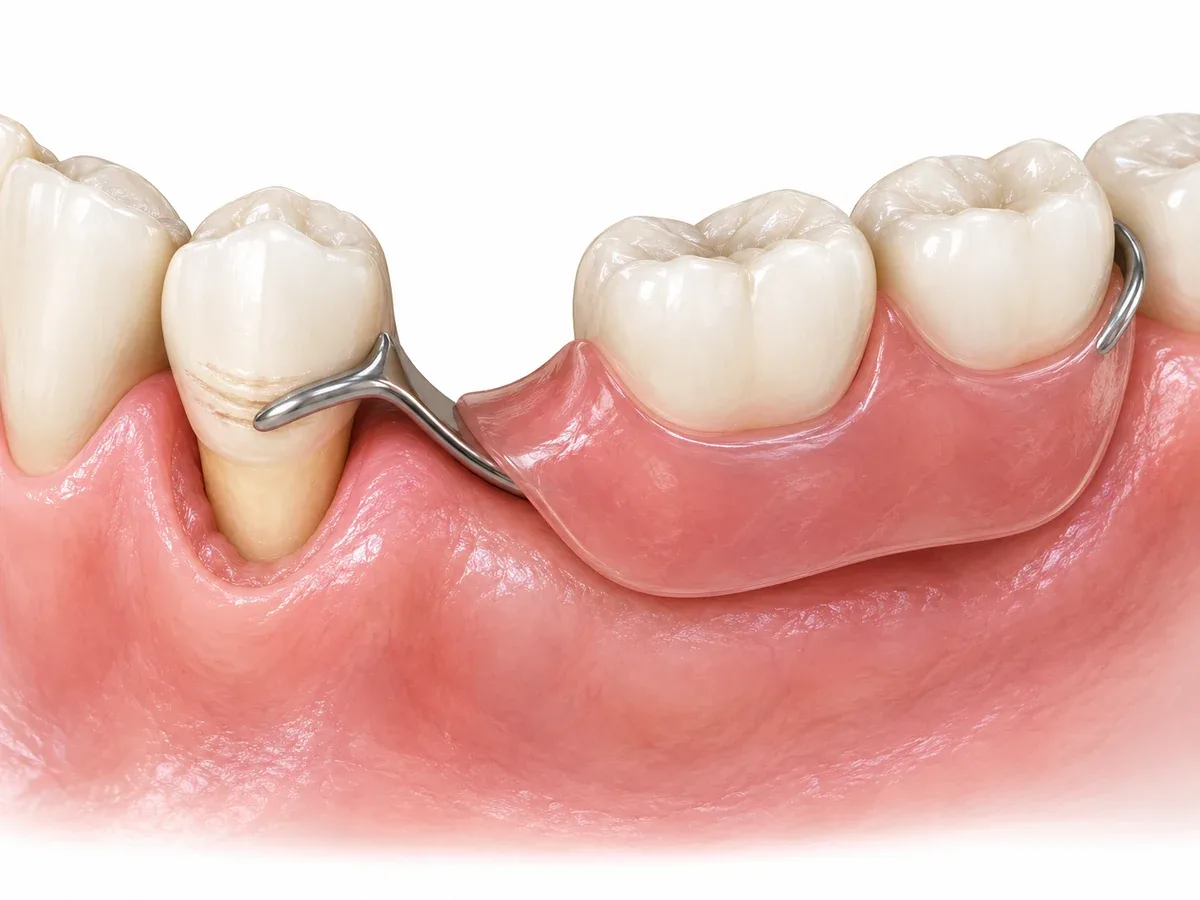
The same page warns about teeth that hold the clasps of a partial denture. These teeth can become prone to decay and gum disease. Because they bear the denture's movement, they may not last as long.
So what you ask a kept tooth to do shapes its future. The page says a partial denture tends to give better results when more teeth remain and they are well placed.
It also describes adding implants to long gaps to improve stability. If a few teeth are kept, the full-arch implant design should share the load with implants so those teeth do not carry it alone.

| Approach | What the sources say | Caution noted |
|---|---|---|
| Gum disease treatment | The outlook can be judged after treatment | Bone at half the root or less means extraction is likely later |
| Root canal treatment | Success reported at 60 to 90%, and about 70 to 80% at 10 years | Success is hard to promise; back teeth or heavily reduced teeth need a crown |
| Overdenture on roots | Sound roots support a denture, and bone around them is kept | Neglected care can lead to decay or gum disease and extraction |
| Partial denture | Better results with more remaining teeth in good positions | Teeth holding clasps can become prone to decay or gum disease |
How is the keep-or-extract decision made in Busan?
Convenience alone is not a good reason to remove every tooth at once for a full-arch implant. As noted above, more remaining teeth in good positions can lead to better results.
Kept roots under an overdenture also help keep the bone around them. When some teeth can be saved, your full-arch implant choices become wider.
At the same time, kept teeth can weaken later. Roots under an overdenture can decay if care slips, and root-canal-treated teeth need yearly X-ray checks.
That is why we talk through the next step in advance. If a kept tooth is lost later, the full-arch implant plan should still hold together.
For patients living in or visiting Korea, we suggest asking three questions during planning.
- Why does this tooth need to come out?
- If it is kept, what would the full-arch implant plan look like?
- If a kept tooth fails later, what is the next step?
Hearing both sides before you decide makes the choice clearer. It also keeps the decision in your hands.
Frequently asked questions
A tooth that looks healthy is recommended for extraction. Should I agree?
The KDCA page says a loose tooth may be removed for a stable denture design, but also that extraction cannot be undone and should be decided carefully. Ask why that tooth should come out and what the plan would be if it stays. Then decide on your full-arch implant plan with both answers in mind.
Does a loose tooth always have to come out?
The portal says such a tooth is likely to need extraction, but its outlook can be judged after gum disease is treated first. It also notes that a tooth whose bone has dropped below half the root is likely to need extraction later.
Can a root-canal-treated tooth be kept with a full-arch implant?
The portal says treated teeth can break easily, so back teeth and heavily reduced teeth need a crown. It also advises yearly check-ups with X-rays to look for reinfection. The forces that tooth will take and its check-up plan should be set together.
Can I get full-arch implant treatment in English in Busan?
Yes. We offer 1:1 English interpretation from the first consultation through the end of treatment. The clinic is near Seomyeon Station Exit 2 (5-min walk), opposite Lotte Hotel Busan, and you can call 010-8555-2854 (+82-10-8555-2854 from abroad).
Extraction cannot be undone, so each tooth deserves its own check.
Some teeth are better removed for a stable design.
Some can be saved with gum or root canal treatment,
and some roots can keep bone in place under a denture.
If you are planning a full-arch implant in Busan, Reset Dental Clinic offers 1:1 English interpretation from your first consultation through the end of treatment. Call 010-8555-2854 to book a consultation and ask which of your teeth can stay.
References
- KDCA National Health Information Portal, "Tooth Extraction" — extraction cannot be undone and should be decided carefully when truly needed; cases needing extraction (untreatable decay, failed or impossible root canal treatment, severe gum disease with a very loose tooth, cracked teeth that keep hurting); removing a loose tooth for a stable denture design; caution with heart disease, high blood pressure, blood disorders, diabetes, liver or kidney disease and certain medications
- KDCA National Health Information Portal, "Systemic Disease and Periodontal Treatment" — bone damage often remains after treatment and the outlook depends on bone loss, with extraction likely later when bone is half the root or less; loose teeth can be judged after gum treatment; gum disease often causes no pain until an abscess forms; regenerative surgery such as bone grafting and guided tissue regeneration
- KDCA National Health Information Portal, "Root Canal Treatment" — success is hard to promise, reported at 60–90% and about 70–80% at 10 years, with the dentist's skill playing a major role; C-shaped canals common in the lower second molar of Koreans; apicoectomy or intentional replantation; crowns for back teeth or heavily reduced teeth and yearly X-ray checks for reinfection
- KDCA National Health Information Portal, "Removable Prostheses" — overdentures on sound roots give stable chewing, can use magnets for retention and keep bone around the roots, with limits and the risk of decay or gum disease if care is neglected; clasp teeth can become prone to decay and gum disease; partial dentures work better with more, well-placed teeth, and implants can be added to long gaps
- Dailydental (Korean Dental Association newspaper), "Korean Academy of Conservative Dentistry Starts 'Save Natural Teeth' Public Campaign" — the academy's campaign from August 14, 2026, noting that more patients give up natural teeth early as implants become common, and aiming for a culture of first discussing treatments that can save teeth
Written by Reset Dental Clinic Support Team
Medical review Dr. Na In-chae, Head Dentist · Periodontics Specialist
Last updated: September 19, 2026
This column is for general information and does not replace diagnosis or treatment for individual patients. If you have symptoms, please see a dentist.


