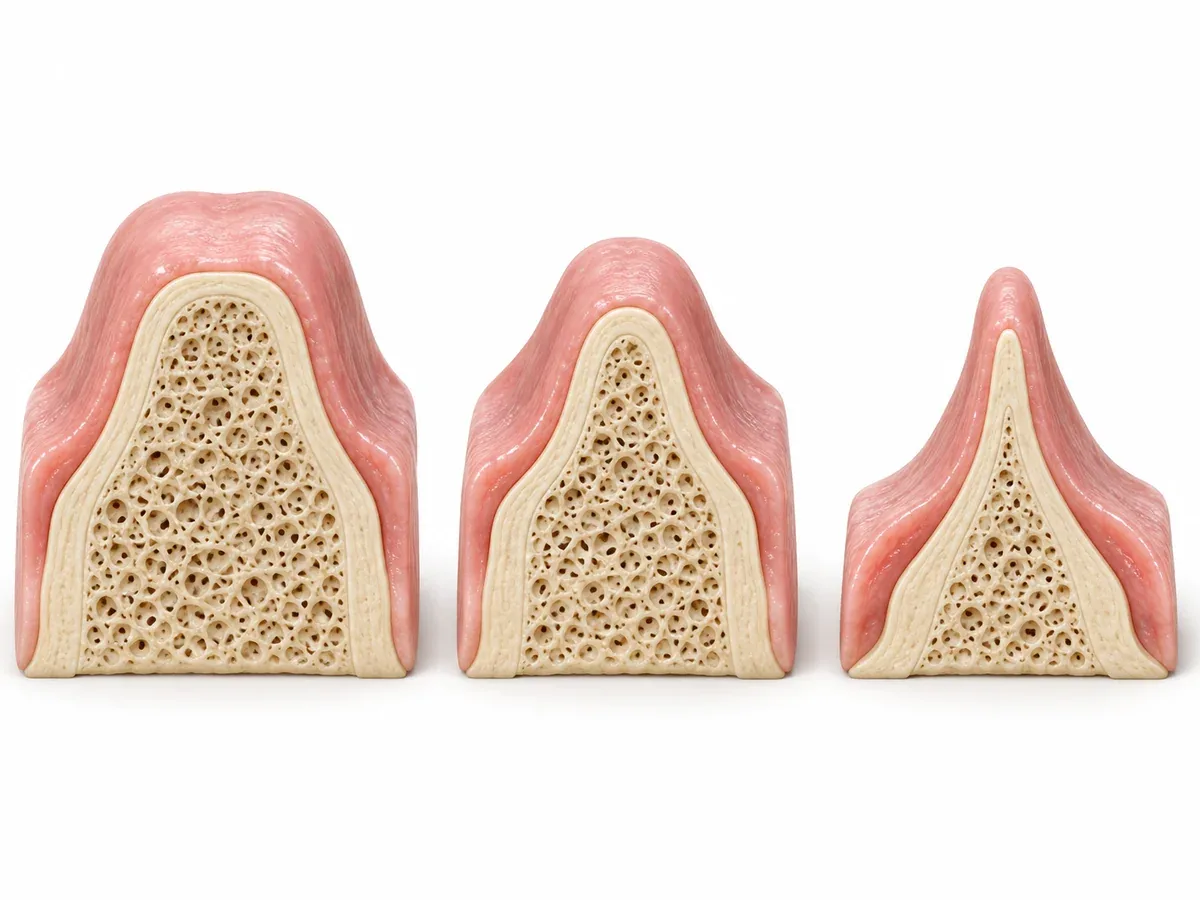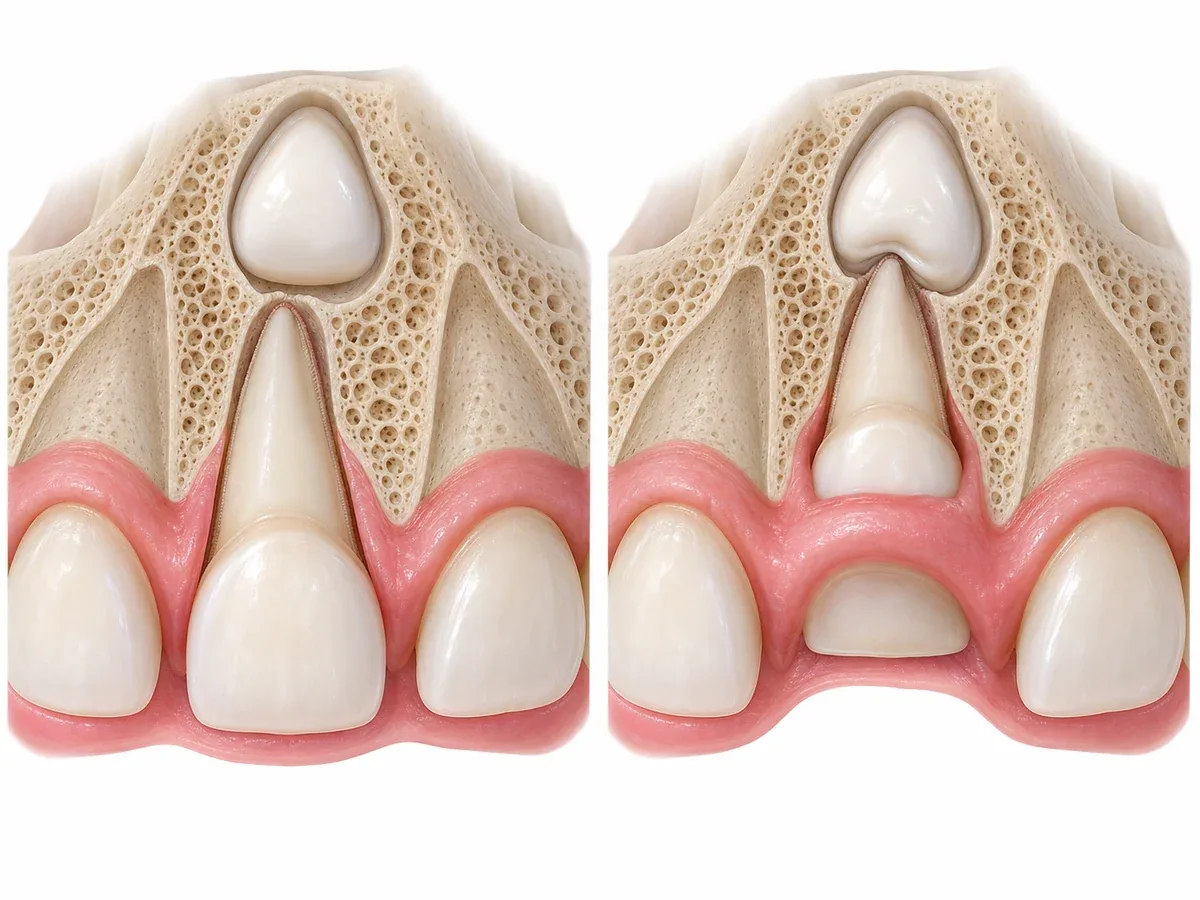
- Korea's national health portal says the first year after a full-arch implant is when the bone around it firms up and settles, so start with soft foods.
- After years without teeth, you may bite your tongue or cheek at first, but this usually eases within one to two months.
- Avoid hard or tough foods where you can, chew on both sides, and discuss grinding, clenching or one-sided chewing with your dentist.
- A grinding guard should be a hard, full-coverage splint fitted and checked by a dentist. Soft store-bought guards are not advised for long-term use.
"Can I eat anything now?" is one of the most common questions after a full-arch implant. Others carry habits from their denture years and are more careful than they need to be. At Reset Dental Clinic in Seomyeon, Busan, we provide 1:1 English interpretation from your first consultation through the end of treatment.
Do denture habits carry over after a full-arch implant?
The national health portal's page on removable dentures says dentures work at just 20–30% or so of natural teeth. Over time they stop fitting the gums well, and they feel like a foreign object.
The same page says that with a full denture, biting with the front teeth is discouraged because the denture can come loose. Chewing fibrous or tough food with the back teeth can also strain and hurt the gums.
A full denture is held by suction, so it can come loose when you move your mouth or chew.
The page lists these drawbacks of dentures:
- chewing is less efficient
- they feel bulky and must be taken out and cleaned after meals
- a lower denture, sitting around the tongue, is even less stable
- with long use, the gums shrink and a gap can open under the denture
So people who wore dentures for years often avoid using their front teeth. Some cut food into small pieces and chew carefully on one side.
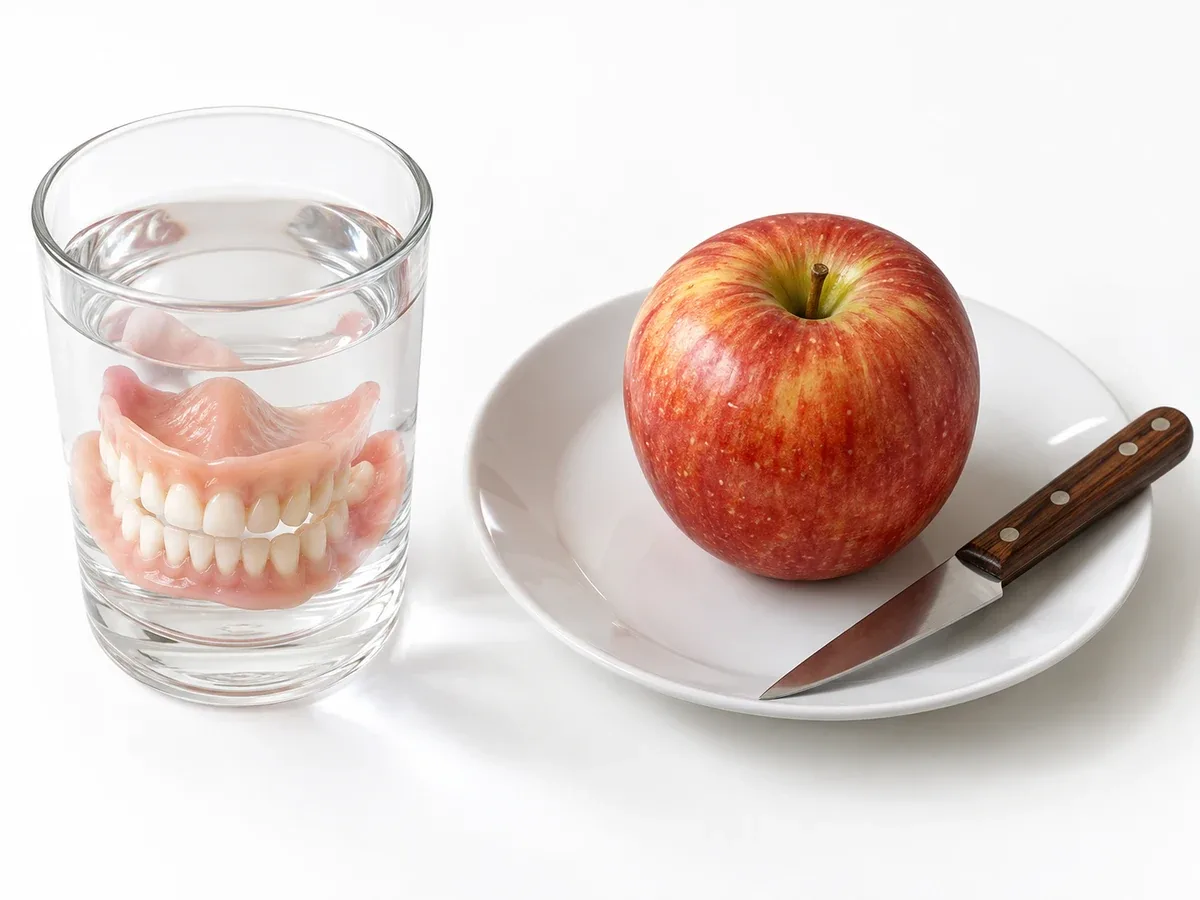
A fixed full-arch implant bridge removes the worry of it coming loose. That does not mean you can use unlimited force. The sections below explain why.
What feels strange in the first month or two?
When you use an area again after a long time, you may bite your tongue or cheek at first. The opposing teeth may also feel uncomfortable when they suddenly take force.
The portal says this usually settles gradually within one to two months.
Where you chew may also have shifted. A Korea Consumer Agency officer described a dispute case in the dental newspaper, including an expert's opinion. If back teeth are missing for a long time and you chew with your front teeth, you start pushing the lower jaw forward to chew.
The lower jaw's position can then change, and so can the points where teeth meet. While you adjust to a full-arch implant, these chewing habits change along with the shape of your mouth.
The expert added that, after implants, about 80–90% of your former bite force can be restored.
That is much firmer than a denture, but not the same as natural teeth. Knowing this from the start makes adjusting to a full-arch implant easier.
| What you notice | What the sources say | Source |
|---|---|---|
| Biting tongue or cheek | Can happen early; settles within 1–2 months | KDCA |
| Opposing teeth feel sore | Can happen when they suddenly take force | KDCA |
| Where you chew | Contact points may shift after long front-tooth chewing | Dental newspaper |
| Bite force | About 80–90% of former bite force can be restored | Dental newspaper |
Which foods should you start with in the first year?
The portal says that to keep an implant for a long time, you must avoid excessive force. The same goes for a full-arch implant.
It explains that the first year is when the bone around the implant firms up and settles. That is why you should start by chewing soft foods.
The denture page offers a helpful method too. Start with soft foods such as steamed egg and adjust slowly.
We suggest starting with foods that need little force, such as tofu, eggs, well-cooked vegetables and soft fish. Widen the range of textures step by step, watching for any discomfort.
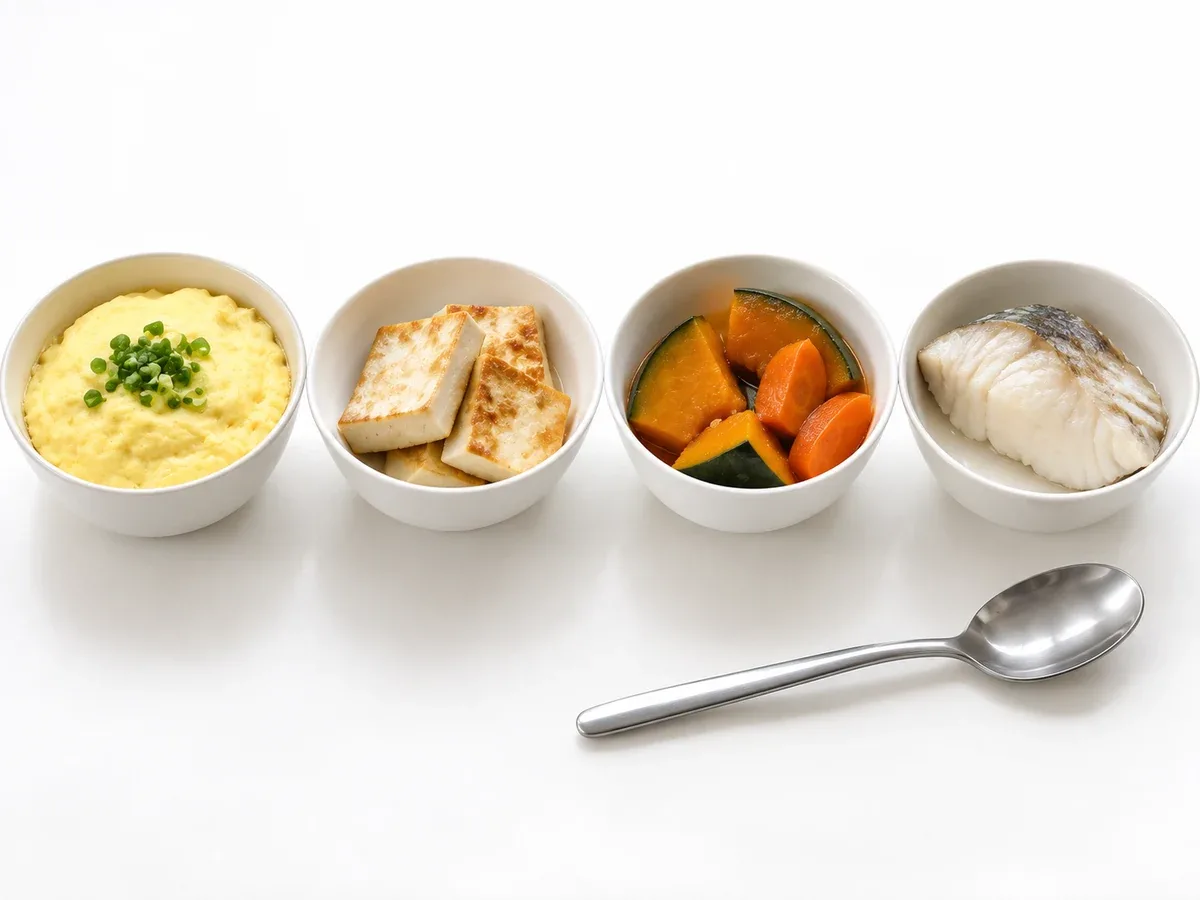
Here are the eating tips after a full-arch implant:
- cut food into small pieces and chew slowly
- share the chewing evenly between the back teeth on both sides
- avoid hard or tough food where you can
- do not put up with a sore spot; mention it at your checkup
Everyone adjusts at a different pace. The denture page says getting used to speech, chewing and the feel can take weeks to months.
Cleaning after meals is part of eating too. The portal says implants leave wide gaps, so floss and interdental brushes are a must. A regular toothbrush alone cannot reach every surface.
Many people miss the tongue side, so check it in a mirror. With a full-arch implant, learn at the clinic how to clean under and between the bridge.
Why be careful with hard and tough foods?
The portal explains the reason under complications.
When you chew something hard or tough, the force travels through the bridge to the implant in the bone. As a result, the implant or the bridge can break.
An implant has three parts: the fixture in the bone, the connecting post (abutment) and the superstructure on top. Each part is handled differently when something goes wrong.
If the bridge breaks, it is repaired or remade. If a retaining screw loosens, it is tightened or replaced. But if the implant in the bone breaks, it usually cannot be reused and must be removed.
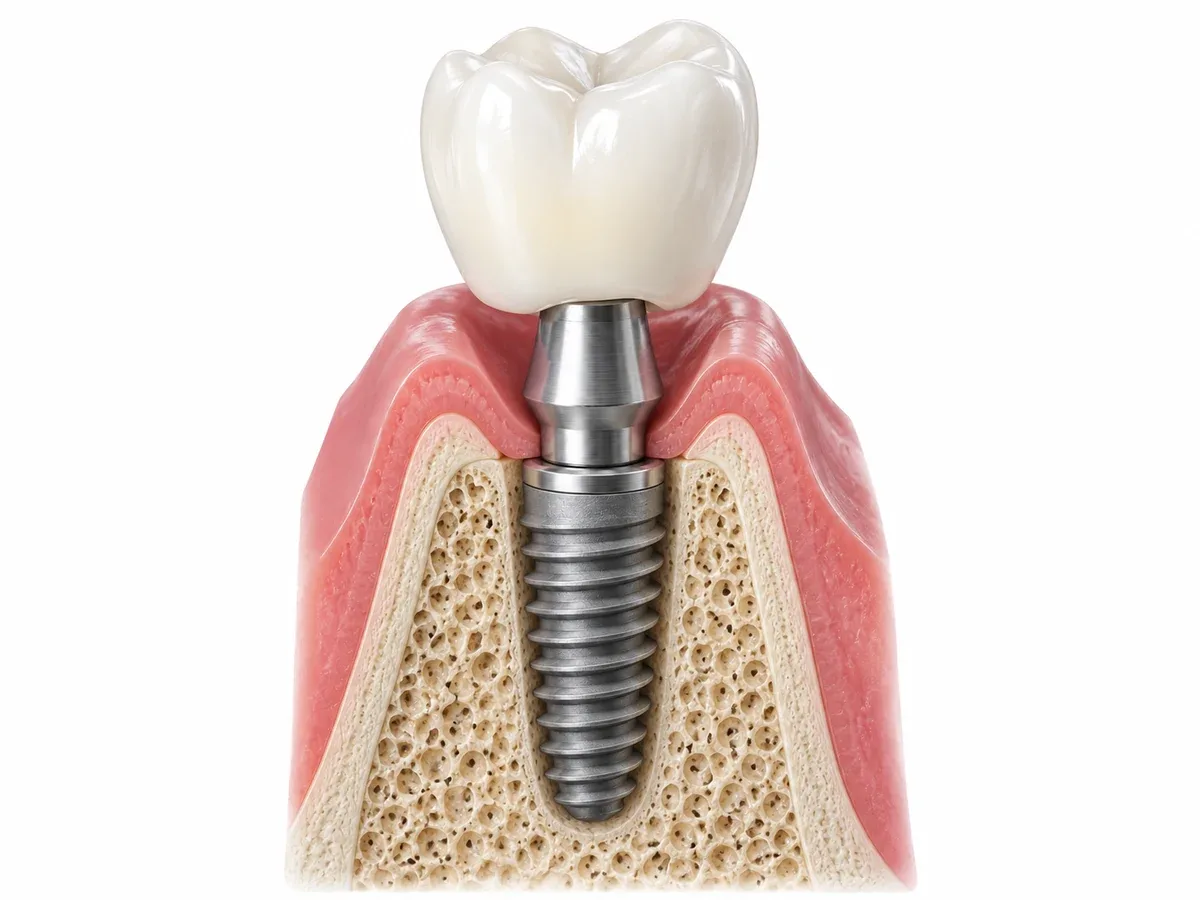
| Part | What the source says |
|---|---|
| Superstructure (bridge) | If broken, repaired or remade |
| Retaining screw | If loose, tightened or replaced with a new one |
| Implant in the bone (fixture) | If broken, hard to reuse and must be removed |
The portal's summary says plainly that implants do not last forever. Read this as meaning that how long a full-arch implant lasts depends on care.
Keeping force from piling up in one spot helps a full-arch implant last.
The portal says using both sides evenly keeps too much force off any one implant. It also names habits that focus force: grinding, chewing on one side and clenching.
If you have these habits, discuss preventive steps with your dentist.
How can you tell if you grind your teeth at night?
The trouble is that many people do not know they grind. The portal's page on bruxism says most people are unaware of it themselves. Most find out from a partner, family member or roommate.
According to the page, sleep bruxism occurs persistently in about 8% of people. About 15% have it now and then.
Awake bruxism affects about 16–32%. This means clenching the teeth or tensing the jaw during the day.
People with a full-arch implant are no exception. Grinding is not always loud, so family members often miss it. The self-check list from the page can help:
- Someone has told you that you clench or grind in your sleep.
- Your jaw muscles ache or feel tired when you wake up.
- You have a headache at the temples in the morning.
- Your mouth does not open easily in the morning.
- Your teeth feel sensitive or uncomfortable in the morning.
- Your jaw muscles are well developed.
- The chewing surfaces of your teeth are worn overall.
- There are tooth marks along the edges of your tongue.
If item 1 applies, grinding is very likely. Items 2 to 8 are signs that it is possible.
There is one more sign to note with a full-arch implant. The page lists restorations that break again and again as a finding in grinders. If your bridge keeps chipping, grinding may be the reason.
It also lists everyday steps. Avoid heavy smoking and drinking, and cut down on caffeine in coffee, tea and chocolate. Keep good sleep habits and try to reduce stress.
You can watch for daytime clenching yourself. Rest the tip of your tongue lightly just behind your upper front teeth. Keep your teeth apart and relax your jaw, neck and shoulders.
Sleep grinding cannot be controlled directly. But the page says a conscious effort to reduce daytime clenching can reduce sleep grinding too.
Why should a grinding guard be made by a dentist?
The page describes an oral appliance as the widely used treatment. It does not stop grinding, but it can reduce it. It also shields the teeth, tissues, muscles and jaw joints from force.
The appliance is a stabilization splint, a hard resin guard covering all the teeth. It fits on either the upper or lower teeth, and the dentist decides which.
It should feel comfortable, with upper and lower teeth touching evenly. The page says checkups at least every one to three months help avoid side effects.
A poorly fitting guard worn for a long time can shift teeth. Partial guards that cover a few teeth can also move teeth and should be avoided.
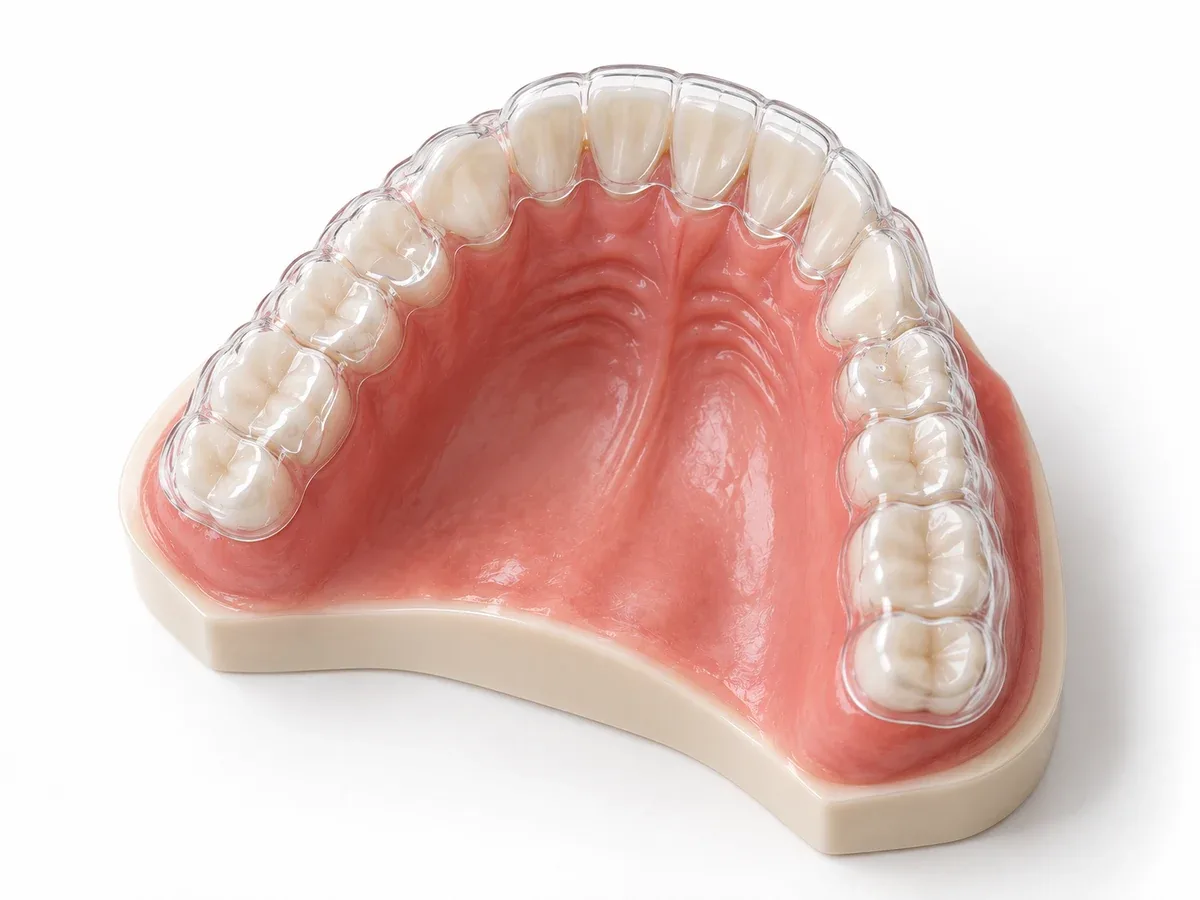
The page says soft guards do not reduce grinding, and some reports found it increased. Store-bought guards cannot fine-tune the bite, so long-term use is not advised.
| Item | Dentist-fitted stabilization splint | Store-bought guard |
|---|---|---|
| Material | Hard resin covering all the teeth | Soft material |
| Reported effect | Reduces grinding and blocks force, though it does not stop it | Does not reduce grinding; some reports found an increase |
| How it is used | With checkups at least every 1–3 months | Bite cannot be fine-tuned; not advised for long-term use |
Some severe grinding is not relieved by a guard. For this, the page says botulinum toxin injections into the chewing muscles may help. The effect wears off, so repeat injections may be needed.
If grinding is severe or almost daily, the page advises an appliance consultation even without symptoms. This helps prevent tooth wear.
In September 2025, the Korean Dental Association warned about self-fit guards sold online. There were cases of tooth and gum damage, bite problems and jaw joint disorders. Inhaling broken pieces was another.
The association stressed that a guard should be made to fit you after a dentist's diagnosis, with ongoing adjustment. With a full-arch implant, we recommend a dentist-fitted guard with regular checks.
How do we check your bite at follow-ups in Busan?
The portal says to have checkups every three to six months after treatment. It lists what happens at a checkup:
- Inflammation around the implants is treated.
- The bite is checked and readjusted if it has changed.
- Depending on the implant type, the upper structure is removed and disinfected.
Bite adjustment is also part of full-arch implant treatment itself. The portal lists a separate step for adjusting the chewing surfaces. It balances the contact area and force between opposing teeth.
Even if you chew well, checkups are still needed. Peri-implantitis may not make an implant loose even with severe bone loss. Because chewing feels normal, treatment often starts late.

A Korea Consumer Agency case shows why the bite matters. A 57-year-old man had implant crowns on both upper back sides. After two years of bite adjustments and remade crowns, a university hospital diagnosed a bite problem.
The dispute committee found that he had not used his upper back teeth for a long time. His contact points had shifted while he chewed with his front teeth. Ceramic crowns, which are hard to adjust, had also made correction difficult.
The expert also noted that if contact points are hard to find, temporary teeth should be worn for about six months first. Ceramic crowns are made in one piece, so a lowered bite is hard to raise again.
Some signs mean you should come in without waiting for your checkup:
- a clicking feeling when you chew
- the bridge seems to move slightly
- a new spot seems to touch first
- cheek or tongue biting that lasts beyond two months
With a full-arch implant, a loose screw found early may just need tightening. The smaller the change, the sooner you should show us.
In short: soft foods first, both sides evenly, a dentist-fitted guard if you grind, and regular bite checks.
If you need advice on eating or a guard after your full-arch implant, call 010-8555-2854.
Frequently asked questions
When can I eat meat after a full-arch implant?
The portal says to start with soft foods in the first year and avoid tough foods where possible. Begin with tender meat cut small and chewed on both sides. Mention any discomfort at your checkup.
I keep biting my cheek. Is that normal?
After years without teeth, cheek or tongue biting can happen early and usually settles in one to two months. If it continues or keeps causing sores, we check your bite.
Can I use a mouthguard from the pharmacy?
Store-bought guards are soft and cannot fine-tune the bite, so long-term use is not advised. With a full-arch implant, use a dentist-fitted guard with regular checks.
Can I get this treatment in English in Busan?
Yes, we provide 1:1 English interpretation from your first consultation through the end of treatment. The clinic is near Seomyeon Station Exit 2 (5-min walk), opposite Lotte Hotel Busan. Call 010-8555-2854 (+82-10-8555-2854 from abroad).
A full-arch implant lets you chew with confidence again.
Start soft in the first year, chew on both sides
and keep force from piling up in one spot.
Small changes are easiest to fix when found early.
If you have a full-arch implant in Busan, Reset Dental Clinic offers 1:1 English interpretation from your first consultation through the end of treatment.
References
- KDCA National Health Information Portal, "Dental Implants" — the three parts of an implant; hard or tough food can break the implant or bridge, and a broken fixture must be removed; soft foods in the first year; chew on both sides; tongue and cheek biting settles in 1–2 months; checkups every 3–6 months
- KDCA National Health Information Portal, "Bruxism (Teeth Grinding)" — sleep and awake bruxism and how common they are; most people are unaware; links with smoking and alcohol; hard full-coverage stabilization splints checked every 1–3 months; soft and store-bought guards not advised for long-term use; self-check list
- KDCA National Health Information Portal, "Removable Prostheses (Dentures)" — dentures work at about 20–30% of natural teeth; biting with front teeth is discouraged with a full denture; start with soft foods such as steamed egg
- Korean Dental Association newspaper Dailydental (Chiui Sinbo), "Was the Response to an Implant Bite Problem Appropriate?" (Korea Consumer Agency dispute case) — long front-tooth chewing can shift contact points; about 80–90% of former bite force can be restored; temporary teeth for about 6 months when contact points are hard to find
- Dailydental (Chiui Sinbo), "KDA Warns of Serious Side Effects of Self-Fit Dental Appliances" — online grinding and snoring guards linked to tooth and gum damage, bite problems, jaw joint disorders and inhaled fragments; guards should be made after a dentist's diagnosis and adjusted over time
Written by Reset Dental Clinic Support Team
Medical review Dr. Na In-chae, Head Dentist · Periodontics Specialist
Last updated: September 19, 2026
This column is for general information and does not replace diagnosis or treatment for individual patients. If you have symptoms, please see a dentist.