

- Copying the shape of your teeth is called taking a dental impression. A tray of rubbery material and an intraoral scanner do the same job.
- A national health page in Korea says that with an intraoral scanner, treatment became possible without rubber impression material or plaster models.
- What changes: gagging from the material, the plaster-model step, errors as plaster sets, and remaking a lost restoration.
- What stays the same: how much tooth is trimmed, the bite checks, and the 3–4 months an implant needs to bond with bone.
"Biting on that rubber mold is the hardest part. Don't dentists use a scanner now?" More and more patients ask us this at Reset Dental Clinic in Seomyeon, Busan. For patients living in or visiting Korea, we provide 1:1 English interpretation from the first consultation to the end of treatment.
Instead of listing machine names, this column explains which step of treatment an intraoral scanner takes over. It also explains what the scanner changes and what it leaves alone.
We compare the two methods calmly, using three pages from the KDCA National Health Information Portal. They cover all-ceramic crowns, dental implants and gold inlays.
What does taking a dental impression actually mean?
Some dental treatment is finished directly inside the mouth. Other treatment means making something outside the mouth and then fixing it in place.
The second kind always includes one step: copying the shape of your teeth. In dentistry this step is called taking an impression.
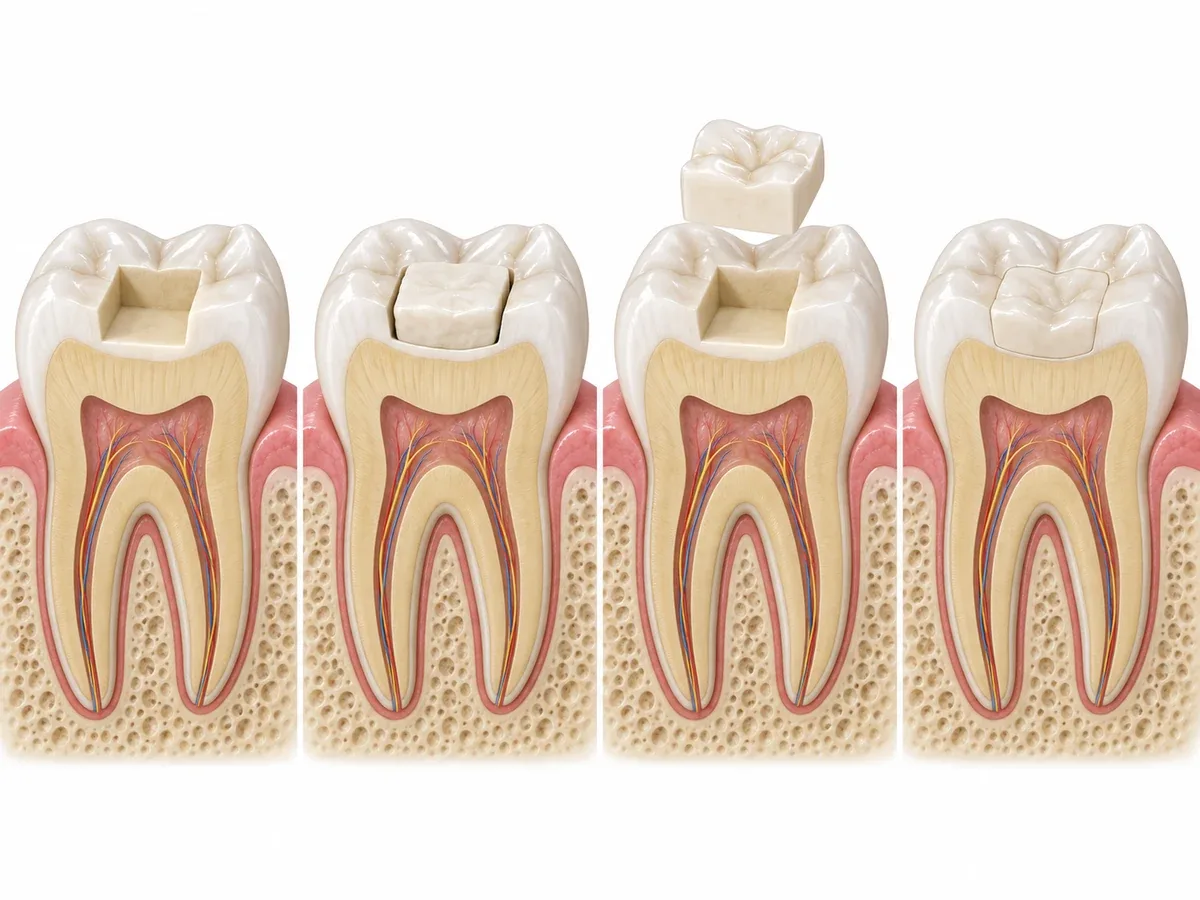
The gold inlay page describes the procedure in order. An inlay is made after the decay is removed and the empty space is copied.
The restoration is then made outside the mouth from gold, ceramic or composite resin. Finally, it is cemented into the cavity, the space left after the decay was removed.
The key words here are "made outside the mouth." If the shape inside the mouth is not carried outside accurately, even excellent work will not fit when it comes back.
So an impression is not a side step. It shapes the result, and that is where the intraoral scanner comes in.
An intraoral scanner did not create a new treatment. It is simply a different way of doing this one old step.
- Treatment finished inside the mouth: no impression is needed.
- Treatment made outside the mouth, such as inlays and crowns: an impression is always needed.
- The impression can be taken with rubber material or with an intraoral scanner.
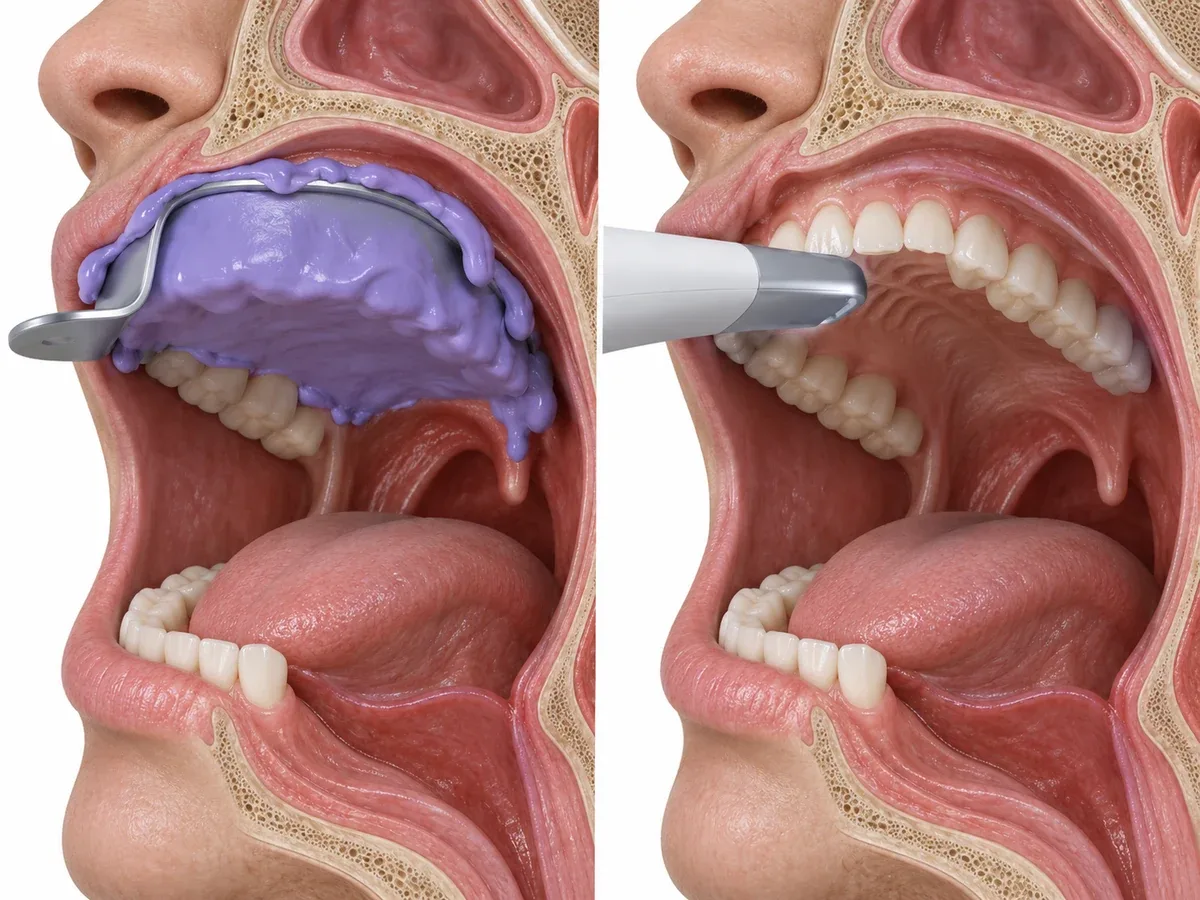
What happens with a traditional rubber impression?
The gold inlay page lists the steps of a conventional inlay like this.
- First visit: local anesthesia is given and the decay is removed.
- An impression of the prepared space is taken, and a plaster (stone) model is made.
- The model goes to a dental lab, where the restoration is cast.
- Second visit: the temporary filling is removed and the new inlay is tried on the tooth.
- It is bonded with dental cement, extra cement is cleaned away, and the bite is checked and adjusted.
Between the two visits, the patient carries part of the load. The page notes that a temporary filling does not bond to the tooth.
So you should avoid foods with big temperature changes and chewy foods. The page also warns that if the temporary comes out, the new gold inlay may no longer fit. That is why the days in between call for some care.
| Stage | What happens | What the patient should know |
|---|---|---|
| First visit | Decay removed, rubber impression taken | A temporary filling is placed |
| Between visits | Plaster model made, inlay cast at a lab | Avoid very hot, very cold and chewy foods |
| Second visit | Inlay tried in, cemented and adjusted | If the temporary fell out, the inlay may not fit |
None of this means the method is bad. The same page says gold inlays have been used successfully for a long time. Many people have used theirs for more than 10 years.
It lists real strengths as well. Because the inlay is made outside the mouth, it is easy to give it the tooth's original shape. It is also easy to polish to a smooth surface.
The page also lists one clear drawback: it takes a long time to finish the restoration.
What changes when an intraoral scanner is used?
The all-ceramic crown page has a separate section on the introduction of digital dentistry. It explains that dentistry has started digital treatment too.
Design and milling that used to be done by hand are now being automated with computers. With an intraoral scanner (IOS), the impression itself can be taken digitally.
As a result, the page says, treatment became possible without rubber impression material or plaster model material. Those were the materials used in the past.
The page then lists six advantages of the intraoral scanner. We translate them closely in the table below.
| Area | What changes |
|---|---|
| Comfort | No gagging or discomfort from impression material |
| Process | The complex step of making a plaster model can be skipped, with no plaster dust |
| Accuracy | No error from plaster expanding or changing shape |
| Remaking | If a restoration is lost, the digital data makes it easier to remake the same one |
| Storage | Digital data is easy to manage and maintain |
| Time | Making the restoration takes less time overall; depending on the clinic's digital equipment, same-day treatment may be possible |
Please look closely at the wording of the last row. The page says same-day treatment may be possible depending on the equipment.
It does not say that every treatment with an intraoral scanner is finished in one day.
Why does a plaster model cause small errors?
Of the six advantages, the third needs the most explanation. It says there is no error from plaster expanding or changing shape.
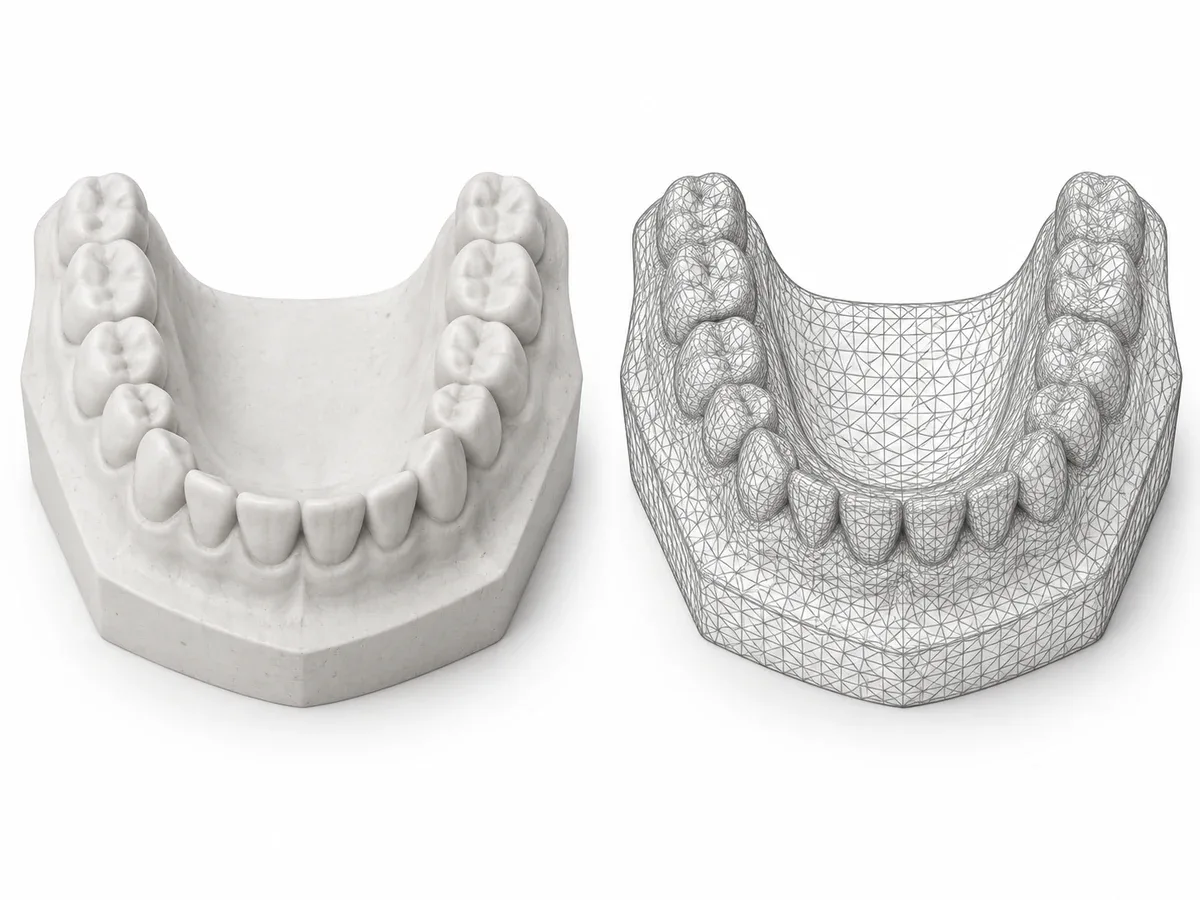
With a rubber impression, plaster is poured into the mold and left to harden into a physical model. As the material hardens, its volume changes a little.
So the model can end up slightly different from the real tooth. The restoration is built on that model, so any difference is carried straight into it.
- Plaster is poured into the rubber impression.
- The plaster changes volume slightly as it sets.
- The model can differ a little from the real tooth.
- The restoration made on that model carries the same difference.
An intraoral scanner skips the model-making step altogether. The difference that used to arise at that point simply does not arise.
One point must be clear, though. The page says there is no error coming from plaster. It does not say a digital method has no error of any kind.
In the treatment room, bleeding gums or pooling saliva can make scanning harder. We will not add claims that are not in the source, so we stop here.
Which treatments use an intraoral scanner?
The KDCA pages mention two main uses.
- Taking impressions to make restorations such as crowns
- Making diagnostic models to check the bite and plan treatment
The first is the impression for a restoration. On the all-ceramic crown page, step three is the impression for the crown. It adds in brackets that scanning the teeth with an intraoral scanner is also possible.
The words in brackets show where the intraoral scanner stands today. It is written as an option you may use, not a step you must use.
The second is diagnosis and planning. The dental implant page lists a diagnostic model made from an impression or an intraoral scan among the tests before treatment.
Its purpose is to check how the upper and lower teeth meet, and to plan the restoration. So a scan is also used to record your current state and study it before anything is made.
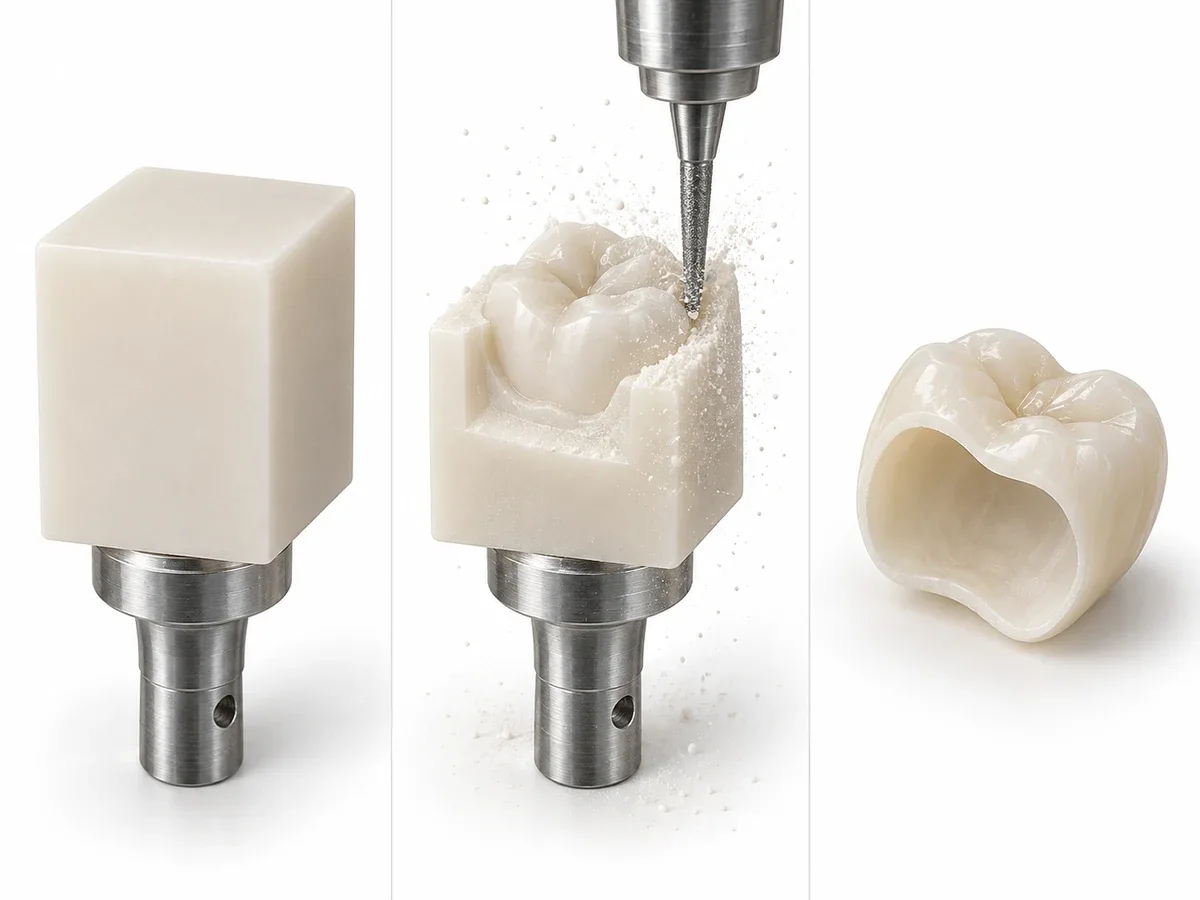
The way restorations are made has changed as well. The crown page names CAD-CAM first: the crown is designed on a computer and milled from a large block.
The other method is heat pressing, where ceramic is melted at high temperature and pressed into a mold. The page sums up that all-ceramic crowns can be made the same way as ordinary crowns, but suit digital methods better.
| Method | How it works |
|---|---|
| CAD-CAM milling | Designed on a computer, then milled out of a large ceramic block |
| Heat pressing | Ceramic is melted at high temperature and pressed into a mold |
| Conventional crown method | Also possible, though the page says digital methods suit these crowns better |
Changes in manufacturing have also widened what the material can do. Early all-ceramic crowns were weak, so they could be used just for single front teeth.
Later, ceramic strengthening improved, and digital methods for milling strong ceramics developed quickly. As a result, high-strength zirconia can now be used for back teeth (molars) and for bridges.
So a clinic that still takes rubber impressions is not behind the times. Both methods are in use, and the choice depends on the type of treatment and the condition of the tooth.
What does not change, whichever method your Busan dentist uses?
This is the part we most want you to take away. Some things stay the same when the impression method changes.
The amount of tooth trimmed does not shrink. The first drawback listed on the crown page is that the tooth must be trimmed slightly more than for a metal restoration. The reason is the thickness the ceramic needs for strength.
Another condition also remains. If the tooth is too short, there is not enough room, and the crown cannot be made.
The checks do not get shorter either. Before treatment, the same page asks for the following checks.
- Oral hygiene habits and a gum disease exam
- A bite check for abnormal biting force and enough space between the jaws
- The material of the opposing teeth, the teeth you bite against
- A pulp vitality test to see whether the tooth's nerve is alive
- Panoramic and periapical X-rays, plus cone-beam CT
- Diagnostic models, and photos of the mouth and face
An intraoral scanner helps with just one line of this list: the diagnostic model.
The waiting time stays the same. The implant page says osseointegration, where bone and implant bond firmly, usually takes 3–4 months. It takes longer if a bone graft is needed.
This healing time has nothing to do with how the impression is taken. An intraoral scanner cannot make bone heal faster.
The material stays the same. The crown page says strong ceramics lack translucency, while translucent ceramics are less strong. It adds that a crown can break if you suddenly bite something hard with great force.
It names zirconia and lithium disilicate as typical materials. The literature puts their lifespan at around 10 years. It varies a lot with the tooth's condition, oral hygiene, eating habits and maintenance.
Aftercare stays the same. The crown page recommends proper brushing and regular scaling. If you grind or clench your teeth, a guard may be needed to protect the crown from wear and chipping.
The implant page adds regular checkups every 3–6 months, even after treatment is complete. Whatever method made the restoration, this part does not change.
| Changes | Stays the same |
|---|---|
| No gagging from impression material | How much tooth is trimmed |
| No plaster model step | Exams before treatment |
| No error from plaster setting | 3–4 months for an implant to bond with bone |
| Easier to remake a lost restoration | The strength and translucency of the material |
| Less time making the restoration | Brushing, scaling and regular checkups |
Frequently asked questions
Is an intraoral scanner more accurate?
The source states one point: there is no error from plaster expanding or changing shape. Because there is no setting step, there is no difference from that step. Please do not read it as a better result in every case; tooth preparation, gum health and the bite also affect the outcome.
Can treatment be finished in one day?
The source says same-day treatment may be possible depending on the clinic's digital equipment. That sentence comes with a condition. The usual course for an all-ceramic crown is 1–3 weeks and 1–3 visits, and longer if root canal or gum treatment is needed first.
I gag badly and have always struggled with impressions.
That is the first advantage the source lists for digital impressions: no gagging or discomfort from impression material. If impressions have been hard for you, please tell us in advance. We can plan together how to ease that burden.
Can I get this treatment in English in Busan?
Yes, we provide 1:1 English interpretation from the first consultation to the end of treatment, whether your impression is taken with rubber material or an intraoral scanner. The clinic is near Seomyeon Station Exit 2 (5-min walk), opposite Lotte Hotel Busan. Call 010-8555-2854 (+82-10-8555-2854 from abroad).
An intraoral scanner is not a new treatment.
It is a new way of doing one old step.
Gagging from the material, the plaster-model step,
and the errors that step created
are what the source says will change.
How much tooth is trimmed, the checks and the waiting time
stay the same. Knowing both helps you choose.
If you are considering a crown, an inlay or an implant in Busan, Reset Dental Clinic offers 1:1 English interpretation from your first consultation to the end of treatment. Call 010-8555-2854 to book a consultation.
References
- KDCA National Health Information Portal, "All-Ceramic Crowns" — the related topic on digital dentistry: digital impressions with an intraoral scanner (IOS) without rubber impression or plaster model material, and six advantages (no gagging or discomfort, no plaster model step or dust, no error from plaster expansion or distortion, easier remaking from digital data, easy data management, shorter production time with same-day treatment possible depending on equipment); scanning as an option at the impression step; CAD-CAM milling and heat pressing; zirconia and lithium disilicate; the need to trim slightly more tooth than for metal restorations and the limit for short teeth; the trade-off between strength and translucency; a treatment period of 1–3 weeks and 1–3 visits and a lifespan of about 10 years in the literature; the pre-treatment exam list; and brushing and regular scaling afterwards
- KDCA National Health Information Portal, "Amalgam and Inlays (Gold Inlays)" — the definition of an inlay as a restoration made outside the mouth after the prepared space is copied; the two-visit procedure with a plaster model sent to a lab; cautions about temporary fillings, which do not bond to the tooth, and about a lost temporary causing a poor fit; the ease of shaping the inlay outside the mouth, the long time to completion, and many people using theirs for more than 10 years
- KDCA National Health Information Portal, "Dental Implants" — diagnostic models made from an impression or an intraoral scan to check the bite and plan treatment; dental CT, panoramic and intraoral X-rays; osseointegration usually taking 3–4 months, longer with a bone graft; and regular checkups every 3–6 months after treatment
- KDA newspaper Dailydental (Chiui Sinbo), "Why Do We Need Digital Diagnosis and Treatment Based on Intraoral Scanners?" — a clinical lecture published on April 22, 2026 by Prof. Oh Kyung-chul, Department of Prosthodontics, Yonsei University College of Dentistry, part of a series on digital diagnosis and prosthetic treatment in daily practice (the full lecture is provided as an attached file)
Written by Reset Dental Clinic Support Team
Medical review Dr. Kim Hyun-joo, Head Dentist · Integrated Dentistry Specialist
Last updated: September 19, 2026
This column is for general information and does not replace diagnosis or treatment for individual patients. If you have symptoms, please see a dentist.


