

- Struggling to chew has a name. A Korean dental source calls it reduced chewing ability, one side of oral frailty, and says more than half of people aged 70 and over report chewing discomfort.
- The test is simple. Can you bite down firmly on your back teeth on both sides? If you can bite on one side or neither, you fall into the reduced group.
- Chewing affects more than meals. When chewing is uncomfortable, people skip meals, which can lead to poor nutrition, muscle loss and weaker immunity.
- Frequent choking at meals is a sign. Yet people find it hard to notice their own oral function weakening, which is why regular check-ups matter.
Some patients tell us that meat feels too tough to chew these days, or that they keep choking during meals. Most people put this down to age, but dentistry treats it as a condition with its own name. At Reset Dental Clinic in Seomyeon, Busan, we explain it to international patients with 1:1 English interpretation.
Below, we go through what Korean and Japanese sources say about chewing ability and the rest of the body, one step at a time.
What is it called when you can no longer chew well?
An opinion series on oral frailty in Dailydental, the Korean Dental Association's newspaper, says oral frailty ends in two kinds of oral dysfunction. They are reduced chewing ability and worsening swallowing function.
Reduced chewing ability means the factors involved in chewing no longer work together, so food cannot be chewed well. It is not a problem of a single tooth.
The term covers several things at once. The number of teeth, bite force, and the strength of the tongue and lips all play a part.
The series also says how common it is. More than half of people aged 70 and over report chewing discomfort from wearing dentures.
The source adds that the problem goes beyond food. Saliva may keep running, or food may escape from the mouth, and quality of life suffers.
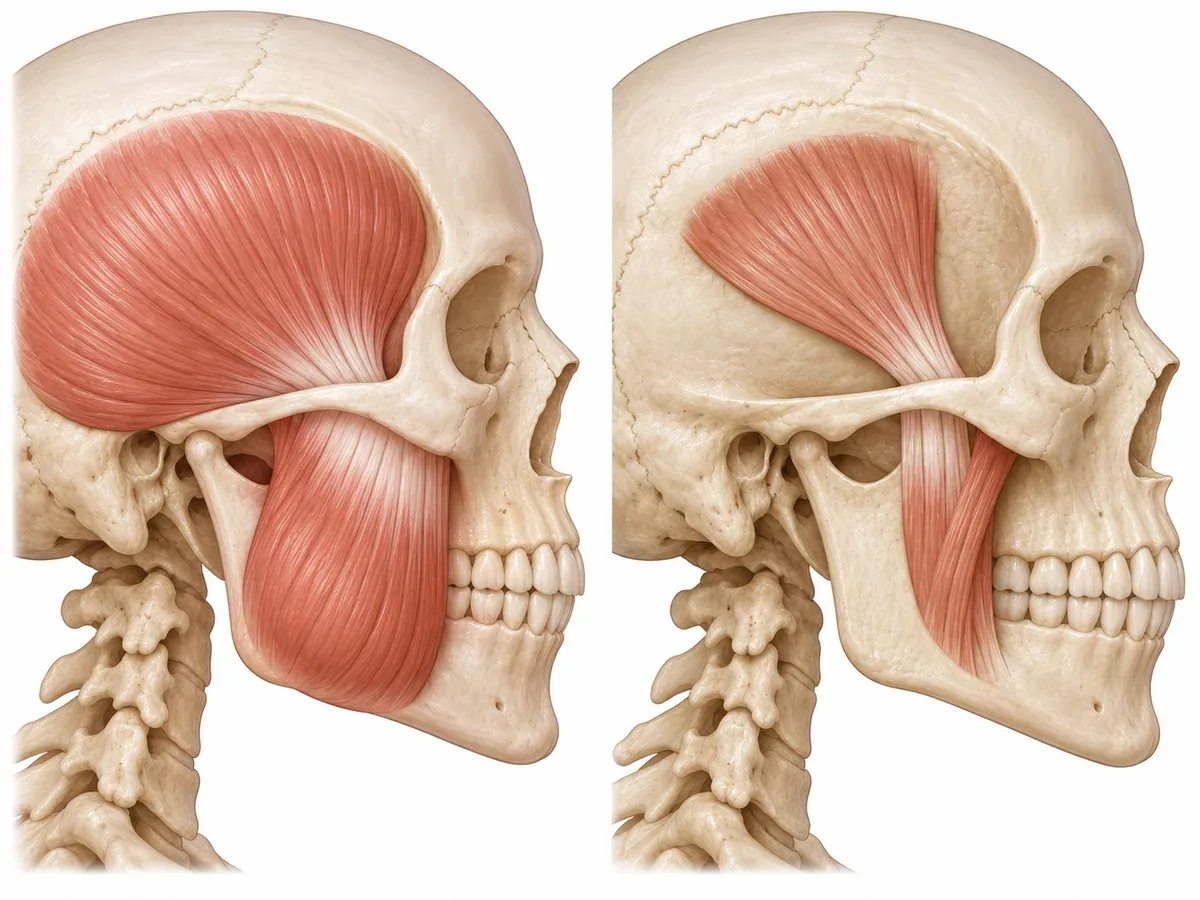
The source gives two reasons why chewing ability declines:
- Age. Muscles and nerves decline slowly throughout the body, and the muscles and nerves used for chewing weaken along with them.
- Neglect. When many teeth are lost and not restored with dentures or implants for a long time, the muscles around the mouth grow weaker still.
Age cannot be changed, but the second reason is different. Restoring missing teeth is something that can be done.
A check you can do at home: both sides of your back teeth
The series uses a simple rule. If you can bite down firmly on your back teeth on both sides, you are in the chewing-ability group.
If you can bite on just one side, or on neither side, you are in the reduced group. You can try this right now.
- Bite down firmly on the back teeth on your right side.
- Do the same on your left side.
- Notice whether one side feels awkward or weak.
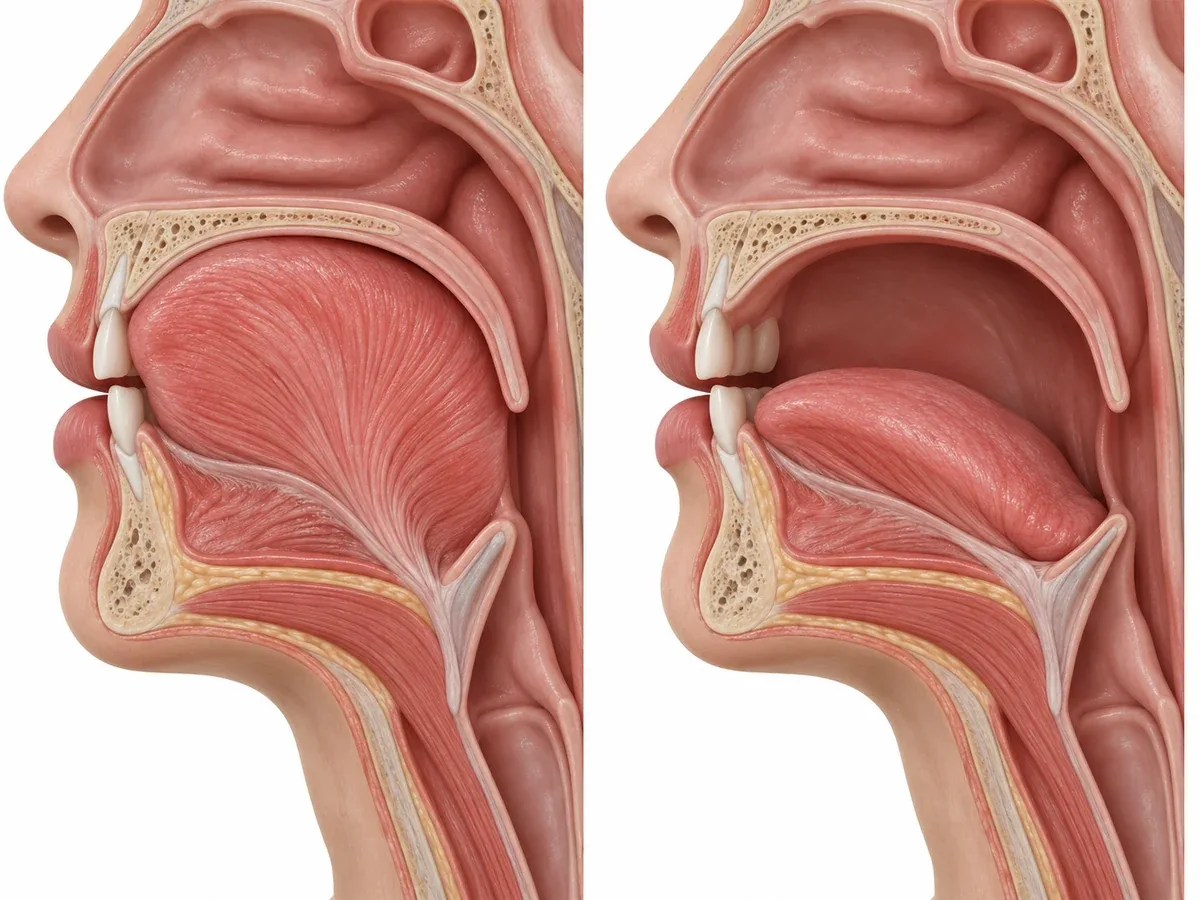
Tongue strength counts as well. The series lists weaker tongue and lip muscles from frailty or brain lesions, and lower tongue pressure, as causes of reduced chewing ability.
The tongue shapes chewed food into a ball and pushes it to the back of the throat. When the tongue weakens, chewing and swallowing become harder at the same time.
What changes first at the dinner table?
The series' section on eating and nutrition is the heart of this column. Among older adults in Korean data, it reports chewing problems in more than half and swallowing problems in about one third.
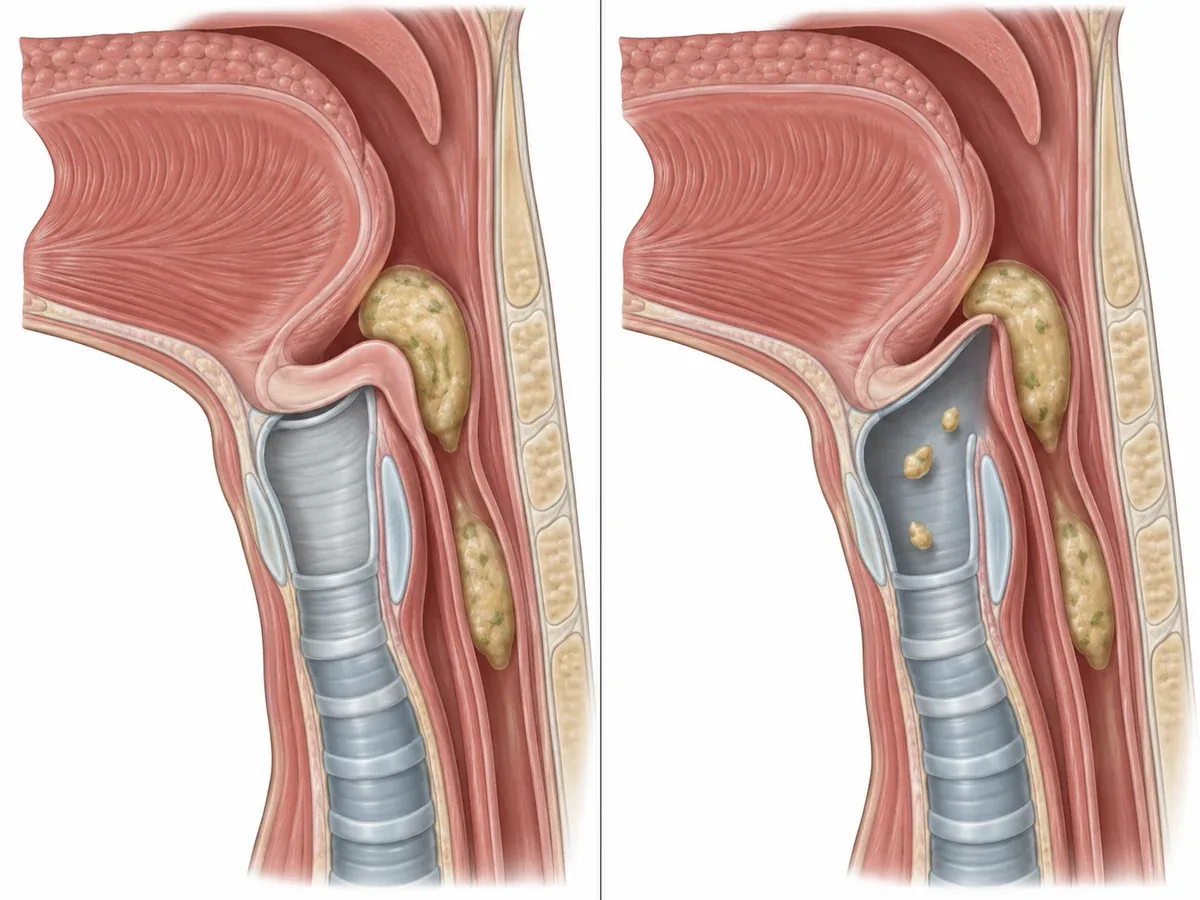
These problems often lead to poor nutrition, dehydration, bronchitis and aspiration pneumonia. Aspiration pneumonia is pneumonia that develops when food or saliva goes down the airway.
The source calls chewing ability a key factor in nutrition and food choices in later life. It also calls it a marker of overall health.
It then lists what nutritional imbalance from reduced chewing ability looks like. We pass it on as written.
| Area | What the source describes |
|---|---|
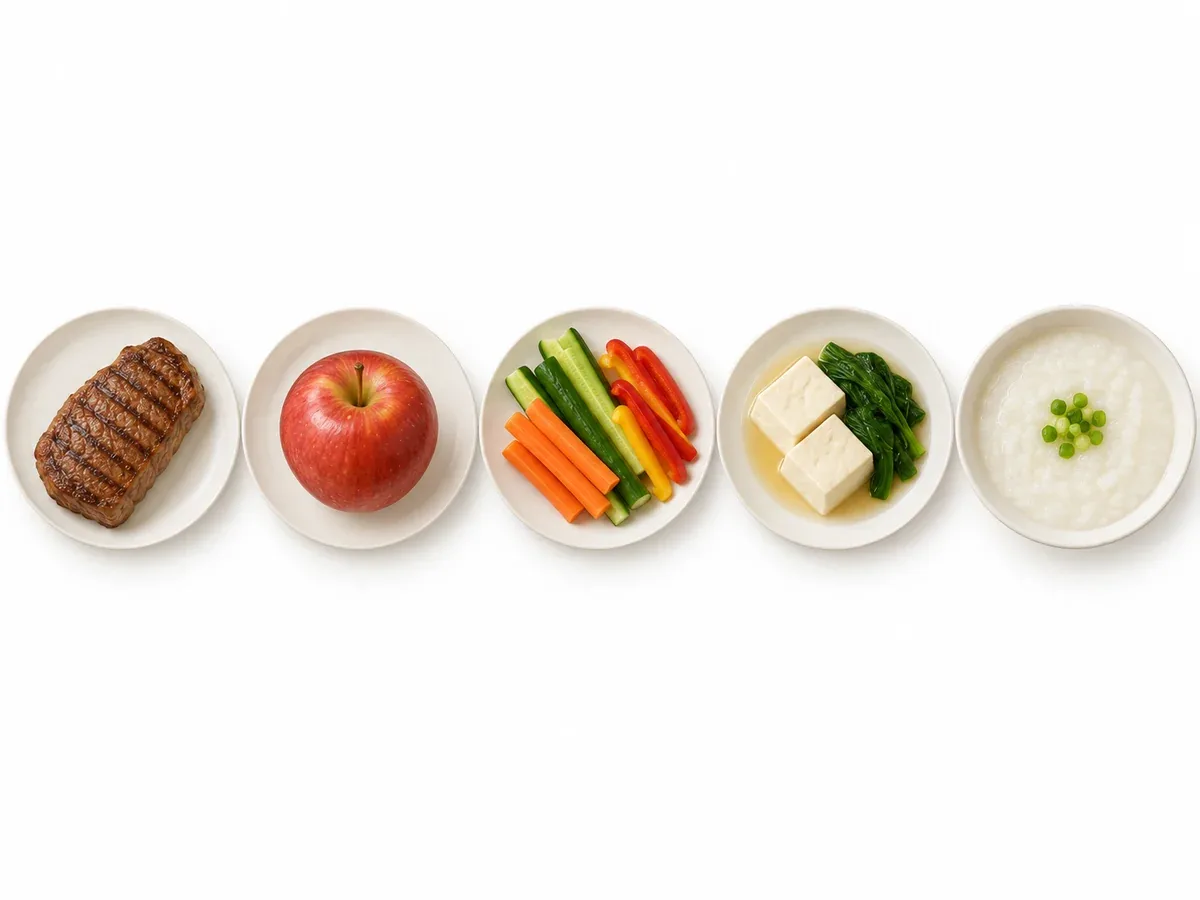
| How much is eaten | Even fruit such as pears or apples becomes hard to chew, half or more of a served meal is left, and total calorie intake falls |
| What is eaten | Eating soft foods makes nutritious foods such as vegetables and meat hard to include |
| Body weight | Height, weight and body mass index drop, leading to underweight |
| What shows on the outside | A lack of vitamins, trace minerals such as potassium and calcium, and water leaves skin and hair dry and brittle |
| After meals | Meals are skipped, and the mouth feels stale and the stomach bloated after eating |
| Blood tests | Albumin, total protein and hemoglobin often fall, while blood urea nitrogen (BUN) often rises |
Please look at the order. The back teeth feel uncomfortable, so soft foods take over the plate.
Meat and vegetables then leave the table. The result shows up in body weight, skin and blood tests.
This is why the series says it is no exaggeration to call reduced chewing ability a trigger of frailty.
Is frequent choking during meals a warning sign?
A research team at the University of Tokyo put numbers to this. In 2012, they surveyed 2,000 people aged 65 and over in Kashiwa, Chiba, all living without the need for care.
The team checked six signs in each person:
- fewer than 20 remaining teeth
- weak biting or chewing force
- a mouth that does not move easily
- a weak tongue
- trouble eating hard foods
- choking easily when eating or drinking
People were placed in three groups: three or more signs, one or two signs, and none. The team then followed their health for about four years.
| Item | Detail |
|---|---|
| Who | 2,000 people aged 65 and over who did not need care |
| Where and when | Kashiwa, Chiba Prefecture, Japan, from 2012 |
| What was checked | Six signs of weaker oral function, including choking |
| Follow-up | About four years |
Even after allowing for age and lifestyle, people with three or more signs had a death rate 2.09 times that of the group with no signs.
The team's added comment matters more than the number. People find it hard to notice their own oral function weakening, so regular dental check-ups help spot symptoms and ease them.
These six signs do not appear overnight. People shift little by little toward what feels easier, and they do not notice the change.
What do reports say about frailty and the brain?
The series also summarizes studies on frailty and brain disease. We pass on the findings with the same strength of wording the source used.
In older adults with reduced chewing ability, the rate of frailty is reported at about 2.7 times. It rises 1.3 times when gum disease is also present, and by 3% for each adult tooth lost.
The series calls reduced chewing ability a clear warning light for frailty.
Reports also point toward the brain. Older adults with reduced chewing ability are reported to have a higher risk of dementia.
The series says this is thought to be related to less blood flow to the brain. That may affect learning and the function of the hippocampus and frontal lobe.
Please note the words thought to be. They mark an estimate, not a proven mechanism.
| Finding | Figure | Strength of wording |
|---|---|---|
| Frailty rate with reduced chewing ability | About 2.7 times | Reported |
| With gum disease as well | 1.3 times higher | Reported |
| Each adult tooth lost | Frailty up 3% | Reported |
| Dementia risk | Higher | Reported; the cause is "thought to be" less blood flow to the brain |
| Stroke, both-sides group aged 75 or under | More than 2 times lower | Reported |
| Each two teeth lost | Coronary artery disease and stroke risk up 3% | Reported |
| 20 remaining teeth | A meaningful dividing line for survival | Study finding in people aged 60 and over |
The series adds a stroke finding based on the two-sided bite test. Among adults aged 75 or under, the group who could bite on both sides had a stroke rate more than two times lower.
A study by the Korean Academy of Prosthodontics linked national health survey data with death records for people aged 60 and over. It found that 20 remaining teeth was a meaningful dividing line for survival.
All of these are group statistics, not predictions for any one person. We share them not to alarm you, but as a reason not to ignore your chewing.
What can you change at mealtimes today?
The series says chewing discomfort from aging or from missing restorations can improve considerably with small changes in eating habits. It suggests the following steps:
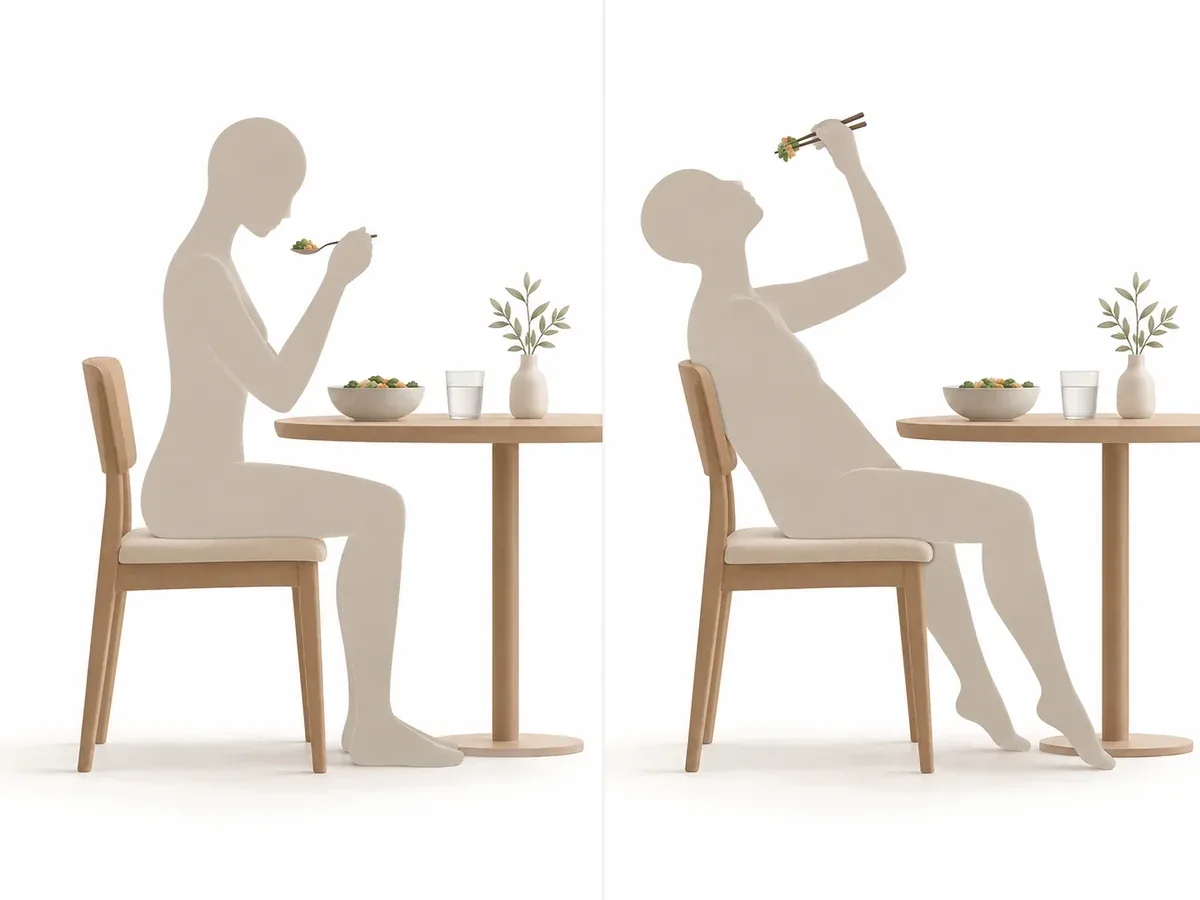
- Sit up, with your head tilted slightly forward. Eat small amounts slowly.
- Use a spoon or fork rather than chopsticks. With weaker mouth muscles, large mouthfuls or chopsticks make chewing discomfort worse.
- Drink lukewarm or warm water rather than cold water.
- Do not lie down for 30 minutes after eating. Staying upright while doing chewing exercises with a spoon, or practicing speech sounds, can also help.
Moving the body matters as well. Chewing discomfort was lower in people who could walk or cycle for at least 10 minutes at a time.
It was also lower in people who walked and did strength exercises on four or more days.
On the other hand, discomfort was higher when loss of mobility got in the way of daily life, or when low mood lasted more than two weeks. It was also higher in people who had no oral check-up in the past year.
The series sums it up simply. Chewing strength, physical activity and mood all affect one another.
How can chewing function be restored?
Filling the gap left by a missing tooth is not just about looks. The series stresses that proper restoration with implants and prostheses is important to prevent reduced chewing ability early.
Still, expectations need to be accurate. The national health portal's page on removable dentures clearly says that dentures work at about 20–30% of natural teeth.
Full dentures are held in place by suction, which has limits. A lower denture sits around the tongue, so it is even less stable.
For a full lower denture, the portal says at least two implants to support the denture are often recommended. This is advised even though it takes more cost and time.
A denture is not finished once it is made. The jawbone in toothless areas shrinks over time, so a denture that fit well at first gradually stops fitting over the years.
The portal advises regular dental visits for checks, and repairs when needed. Chewing is a function you maintain, not one you restore once and forget.
What can Korea learn from Japan's dental care for older adults?
The Korean Society of Gerodontology visited a combined medical and dental hospital in Fukuoka, Japan. Its report shows where care for older adults is heading.
At that hospital, dentistry and medicine are integrated at the same scale. Internal medicine, neurology and psychiatry sit alongside ENT and rehabilitation medicine, all linked to dental care.
Older patients who need a medical assessment during dental care can get one without unnecessary trips. The departments treat them together.
Dentists there take an active part in swallowing and speech problems. In Korea, these are mainly handled by ENT or rehabilitation medicine.
The report describes how the roles are shared:
- Dentistry assesses the anatomy of the mouth, tongue movement and swallowing ability.
- ENT and the speech therapy team review throat function and the swallowing reflex.
- The teams make the treatment plan together.
- At the attached care facility, dental staff visit regularly for scaling and denture adjustment, and offer home dental visits to people with limited mobility.
The report ends by calling for standard diagnostic guidelines and interventions for oral frailty. In other words, this field is still taking shape.
One thing is already clear. As we age, the dentist becomes less a place to fill teeth and more a place to check chewing and swallowing.
Frequently asked questions
I chew on one side, but it does not bother me. Is that a problem?
Even without discomfort, the classification already places you in the reduced chewing group. The series groups people who can bite on just one side this way. It is worth finding out why you stopped using the other side.
Will dentures let me chew the way I used to?
Not quite. The national health portal says dentures work at about 20–30% of natural teeth, but that is very different from leaving gaps unfilled. For the lower jaw, implant-supported dentures are often recommended.
Does weaker chewing cause dementia?
That cannot be stated. The series reports a higher dementia risk with reduced chewing ability, but describes the reason as something that is "thought to be" the case. A link has been reported; a cause has not been confirmed.
Can I get a chewing check-up in English in Busan?
Yes. We provide 1:1 English interpretation from your first consultation through the end of treatment. The clinic is near Seomyeon Station Exit 2 (5-min walk), opposite Lotte Hotel Busan, and you can call 010-8555-2854 (+82-10-8555-2854 from abroad).
Chewing strength fades quietly.
You simply move toward what feels easier.
Meat and vegetables leave the table,
and the body keeps the record.
Try biting down firmly on your back teeth on both sides today. If one side feels awkward, it is time for a check. Reset Dental Clinic in Busan offers 1:1 English interpretation for a chewing check; call 010-8555-2854.
References
- KDA newspaper Dailydental (Chiui Sinbo), "Oral Frailty (VII): Reduced Chewing Ability" — definition of reduced chewing ability, the two-sided bite test, nutrition and swallowing problems in older adults, reported links to frailty, dementia and stroke, and simple changes at mealtimes
- KDA newspaper Dailydental (Chiui Sinbo), "Trouble Chewing Meat and Frequent Choking Linked to Higher Mortality" (University of Tokyo research team) — survey of 2,000 people aged 65 and over in Kashiwa, six signs of weaker oral function and a death rate of 2.09 times after about four years
- KDA newspaper Dailydental (Chiui Sinbo), "An Oral Care Model for Older Adults From Super-Aged Japan" (Korean Society of Gerodontology) — integrated medical and dental care, dental involvement in swallowing assessment and home dental visits
- KDCA National Health Information Portal, "Removable Prostheses (Dentures)" — dentures working at about 20–30% of natural teeth, implant support for lower dentures and regular checks as the jawbone changes
- KDA newspaper Dailydental (Chiui Sinbo), "Fewer Teeth, Shorter Life" (Korean Academy of Prosthodontics) — analysis of people aged 60 and over showing 20 remaining teeth as a meaningful dividing line for survival
Written by Reset Dental Clinic Support Team
Medical review Dr. Kim Hyun-joo, Head Dentist
Last updated: September 19, 2026
This column is for general information and does not replace diagnosis or treatment for individual patients. If you have symptoms, please see a dentist.


