

- What many people in Busan call being "put to sleep" for implant surgery is usually conscious sedation. You stay able to respond and breathe on your own; you are not actually asleep.
- Sedation can be given by laughing gas, tablets or an IV drip. Before it, your general health, medicines, allergies and airway are checked.
- The main complications are a blocked airway and slowed breathing. The risk rises as sedation deepens, so it should not be kept too deep, according to the KDCA.
- On the day, sedation depth, breathing, oxygen saturation and blood pressure are monitored, and you avoid driving and alcohol for 24 hours.
At full-arch implant consultations in Seomyeon, Busan, patients often ask whether the surgery can be done while they sleep. Calming medication is available, but it is not sleep, and this column explains where its limits lie. For patients living in or visiting Korea, we provide 1:1 English interpretation from your first consultation through the end of treatment.
How is sedation different from sleep?
According to Dailydental, the Korean Dental Association (KDA) sticks to the term "conscious sedation". The aim is to reduce misunderstanding among patients.
Conscious sedation is not real sleep. It calms you while you can still respond to what is around you and breathe on your own.
Because you may not remember the procedure afterwards, it can feel as if you slept. The KDA explains, however, that it is clearly different from sleep in the medical sense.
The KDA also warns that describing it as sleep makes a procedure with real risks feel risk-free. For that reason, Korea's medical advertising review committee has not allowed implant advertising that presents it as sleep.
That is also why this column avoids the word sleep. You do not sleep through a full-arch implant operation. You stay able to respond, while your tension is eased.
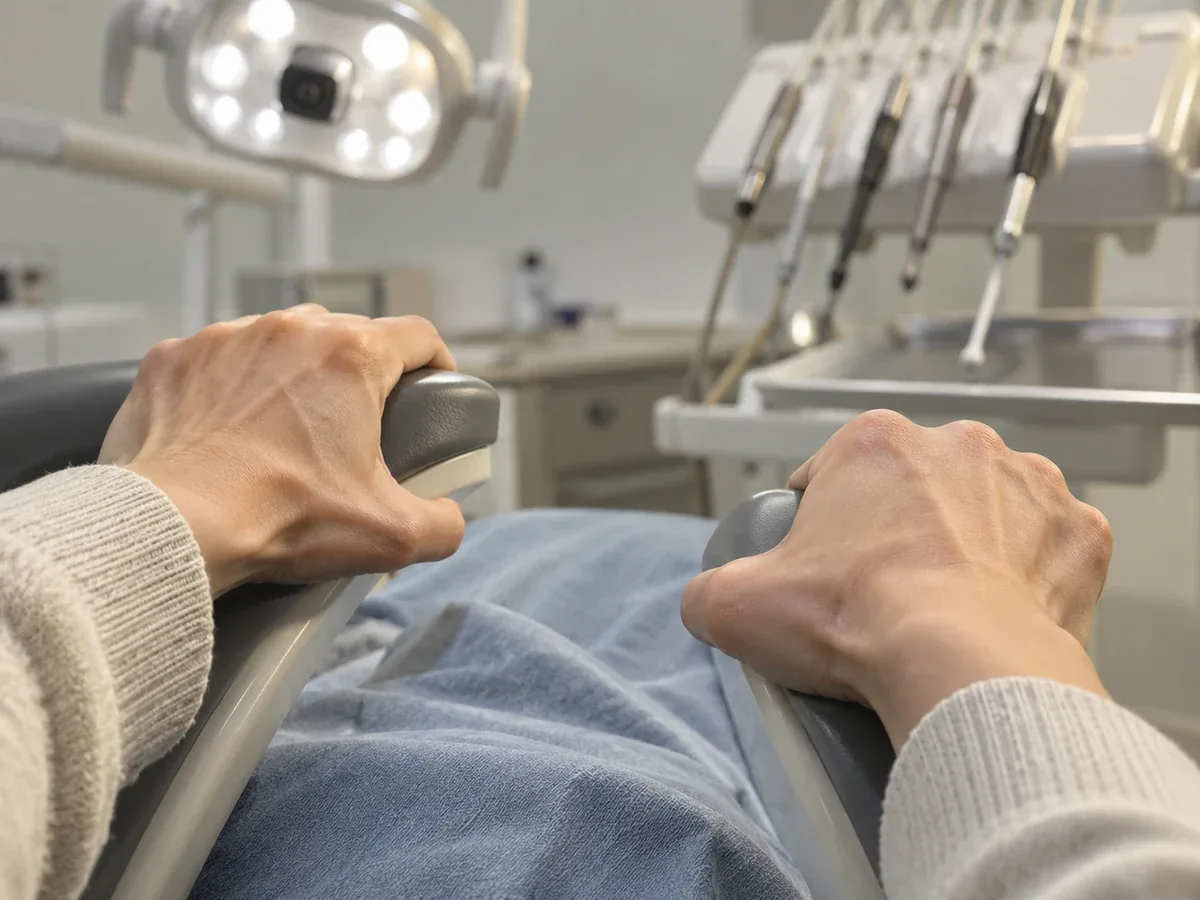
The KDCA points the same way. It notes that many people feel anxious or afraid before dental treatment. Managing that fear matters a great deal for comfortable, effective care.
The KDCA says behavioral methods are tried first. When anxiety is very strong or a lot of treatment is needed, those methods alone may not be enough. Forcing treatment then can cause distress or lead a patient to refuse care later.
How deep can a patient be calmed?
Kam Myung-hwan, of the Department of Dental Anesthesiology at Seoul National University School of Dentistry, introduced a new national guideline in the KDA's journal. It is the 2022 "Sedation Guideline for Tests and Procedures", led by the Korean Society of Anesthesiologists with dental societies taking part.
The guideline lists dentists among the providers. It focuses on the moderate level.
Depending on the drug and the person, however, a patient can slip deeper than planned. So the guideline also covers how to watch for and handle heart and breathing complications at that point.
The guideline sets four levels, from minimal to general anesthesia.
| Level | Response | Airway and breathing |
|---|---|---|
| Minimal sedation | Responds normally to speech | Normal |
| Moderate (conscious) sedation | Responds purposefully to speech or light touch | No airway support needed; breathing adequate |
| Deep sedation | Responds purposefully to repeated or painful stimulation | Support may be needed; breathing may be inadequate |
| General anesthesia | Cannot be woken even by pain | Support needed; breathing inadequate |
The KDCA notes that complications become more likely when patients go very deep. One example is a patient who cannot respond when asked to open their eyes.
It is therefore advised not to go so deep that consciousness is lost. This holds even for a long operation such as a full-arch implant.
This column refers to that moderate level, also called conscious sedation.
Which methods can be used for full-arch implant surgery?
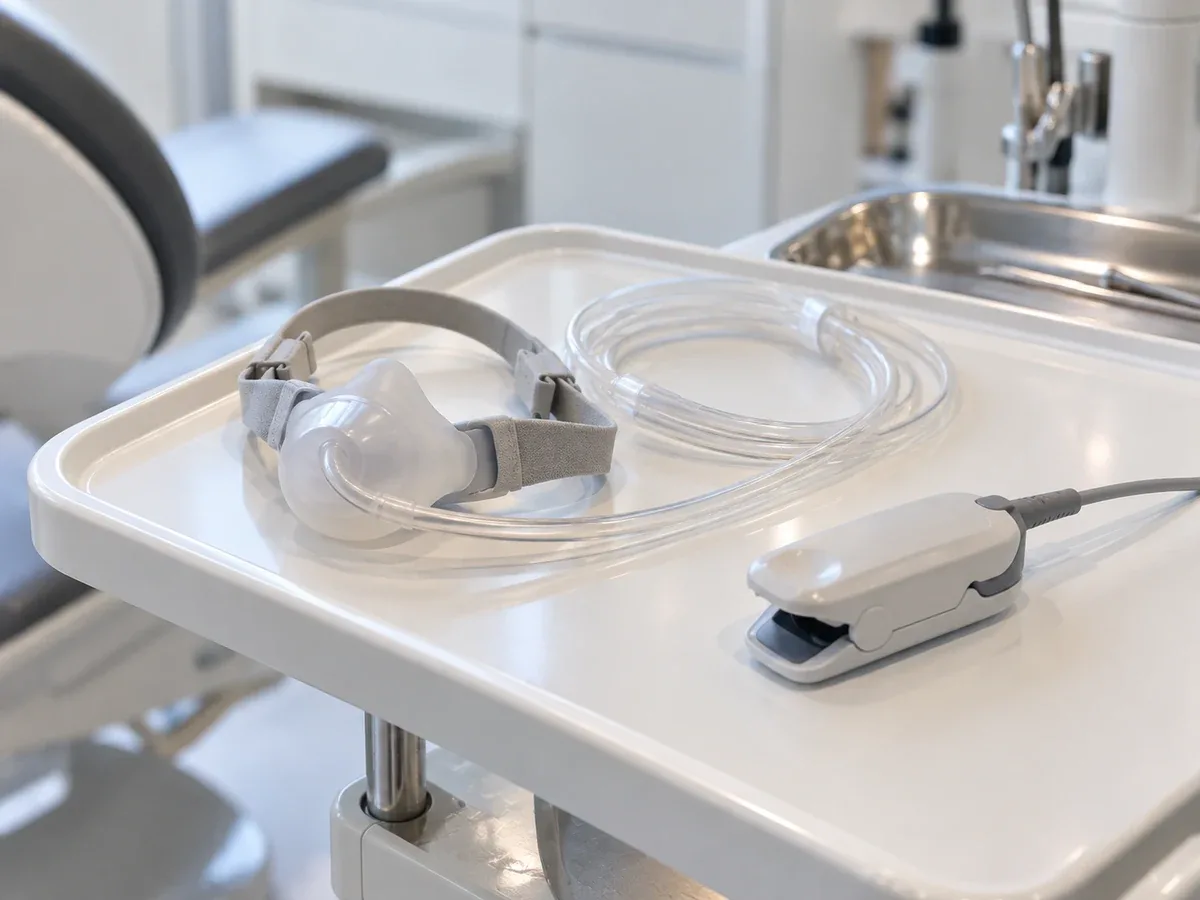
Seoul National University Hospital's implant guide says a sedative can be taken before surgery to help you relax. Laughing gas or other calming methods can also be used.
For extensive surgery with bone grafting or reshaping of the jawbone, general anesthesia may be used. In that case, you must not eat for six hours before surgery.
The KDCA groups the methods by how the drug is given: inhaled nitrous oxide, by mouth, through the nose, into a muscle or into a vein. The three that overlap with the hospital's guide are shown below.
| Method | Features | Note |
|---|---|---|
| Laughing gas | Breathed in through a nose mask. | Leaves through the lungs, so recovery is very fast. |
| Tablets | Easy to give, with no special equipment. | Stay quietly with a companion for 30–40 minutes after taking them. |
| IV drip | Drugs given repeatedly or continuously to adjust depth. | Needs close observation throughout. |
Nitrous oxide is commonly called laughing gas. The KDCA says it works well for people with strong anxiety, a strong gag reflex or a fear of needles. The concentration is raised little by little through a nose mask.
IV sedation works quickly, and its depth can be adjusted. A lot of treatment can be done in one visit, but close observation is needed throughout.
The guideline also comments on IV drugs. It says propofol shortens recovery time significantly compared with midazolam. Both are widely used, and the choice can depend on procedure length, team experience and setting.
For a full-arch implant with a wide surgical area, the method is chosen by looking at your general health and the surgical plan together.
Who should consider sedation, and what is checked first?
The KDCA recommends it for these patients.
- People with strong anxiety or fear about dental treatment.
- People whose condition can worsen with stress, such as angina.
- People with an intellectual disability.
- People for whom local anesthesia does not work well.
Beforehand, your general illnesses and how well they are controlled are checked. Your regular medicines, drug side effects and allergies are checked too. Assessing the airway is especially important.
- Is the neck thick and short?
- Can the head tilt back easily?
- Are the tonsils enlarged?
- Is there sleep apnea?
- Is the lower jaw small?
- Is the tongue relatively large?
- Does the mouth open well?
The main candidates are patients in class 1 or 2 of the American Society of Anesthesiologists physical status scale. With severe illness at class 3 or above, a physician is consulted first.
In that case, the KDCA recommends treatment at a general hospital with emergency facilities. The sedation guideline also recommends that high-risk adults be sedated by an anesthesiologist.
| Class | Meaning | Examples |
|---|---|---|
| Class 1 | A healthy patient. | Does not smoke and drinks little or no alcohol. |
| Class 2 | Mild systemic disease. | Smoking, or well-controlled diabetes or high blood pressure. |
| Class 3 | Disease that limits function. | Poorly controlled diabetes or high blood pressure, dialysis. |
High-risk patients are not limited to class 3 and above. They also include people whose airway is expected to be hard to manage and those who had trouble with past anesthesia or sedation.
A complex, invasive procedure is also listed as a factor. A wide operation such as a full-arch implant is weighed with this in mind.
Bringing a full list of your medicines to the consultation speeds up these checks. If you have been told you snore or stop breathing in your sleep, please tell us.
Why does dental sedation need extra care?
According to the KDA, as reported by Dailydental, implant surgery differs from a routine endoscopy in three ways.
- The procedure is relatively long.
- The patient often needs to cooperate, for example by turning the head.
- Because the work is inside the mouth, blood, saliva or instruments can always be inhaled into the airway or lungs.
The KDA adds that older patients react more strongly to drugs because their body functions have declined. It calls implant treatment a comprehensive medical act that includes assessment, clinical judgment, the treatment setting and aftercare.
In February 2026, two Korean dental societies for oral surgery and dental anesthesiology held a press briefing. It followed reports of patient deaths during conscious sedation at several dental clinics.
At the briefing, experts pointed out that dental treatment is done lying down. The tongue and throat can sag, so the risk of airway obstruction is much higher. The mouth also easily fills with water, saliva and blood.
The KDCA likewise names the tongue or soft tissues falling back as the main cause of airway obstruction. Watching closely that the patient breathes well throughout is therefore very important.
Airway obstruction is an emergency that must be resolved within two to three minutes, so repeated training is needed. The oral surgery society's president stressed that sedation can always carry a risk of reduced consciousness and airway obstruction.

What is monitored during sedation?
The guideline recommends monitoring and recording four things: sedation depth, breathing, oxygen saturation and blood pressure. People with heart disease also have an ECG.
A basic setting with the necessary drugs and equipment is also recommended. Regular training for providers, patient selection criteria and discharge criteria are included too.
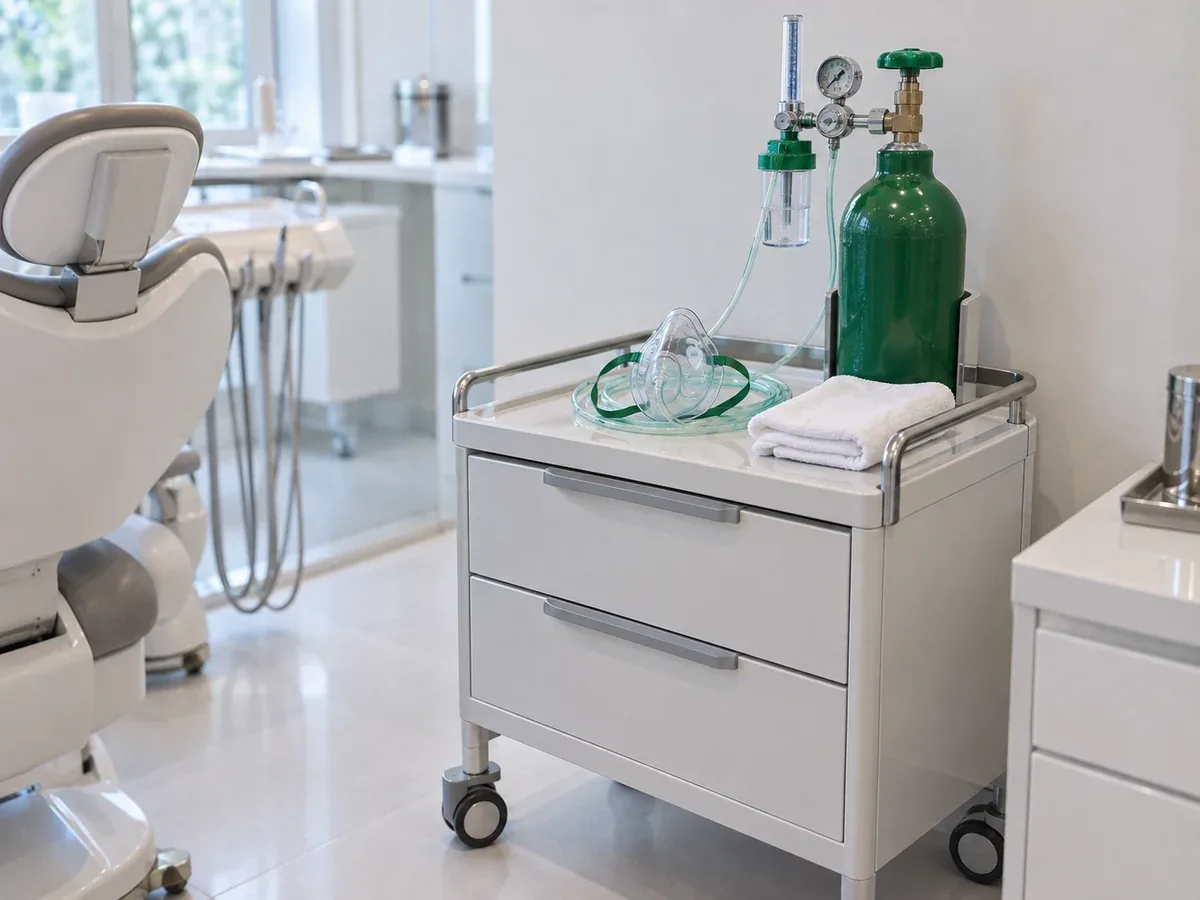
The guideline's list of drugs and equipment for the treatment area includes the following.
- Supplemental oxygen with a regulator, from at least two sources.
- A nasal cannula, face mask and oral airway.
- A hand-squeezed breathing bag.
- Suction equipment to clear secretions.
- A charged defibrillator and advanced resuscitation drugs.
Kim Seung-oh, president of the Korean dental anesthesiology society, said dentists who sedate must be skilled in four areas. These are health assessment, control of depth, real-time monitoring and emergency response.
He said the essence of sedation is not simply calming a patient with drugs. It is keeping possible risks under control.
The KDA also describes conscious sedation as an act requiring careful medical judgment to ease anxiety, not a marketing tool. If you are weighing this, feel free to ask about these preparations.
The guideline also scores readiness to go home on these items.
- Level of consciousness.
- Physical activity, such as moving the arms and legs.
- Stable blood pressure.
- Breathing, including the ability to breathe deeply.
- Oxygen saturation of 90% or more in room air.
- Pain after the procedure.
- Nausea and vomiting after the procedure.
After surgery, you go home once these criteria are met. The KDCA's advice to rest in a recovery room means the same thing.
How do you prepare for a full-arch implant under sedation in Busan?
The guideline recommends fasting for adults: at least two hours for clear drinks and six hours for solid food. It adds that urgency and depth should be weighed as a whole.
The KDCA says to rest well in a recovery room after treatment. You stay until consciousness, movement, blood pressure and breathing recover and pain or nausea is bearable.
It also says do not drive yourself home. Go home by taxi or car with a companion.
| When | What to do | Source |
|---|---|---|
| When booking | Arrange a companion and a way home. | KDCA. |
| Beforehand | Fast: 2 hours for clear drinks, 6 hours for solid food. | Guideline. |
| Right after treatment | Rest well in the recovery room. | KDCA. |
| Going home | Do not drive yourself. | KDCA. |
| Next 24 hours | Avoid driving, alcohol and hard exercise. | KDCA. |
After waking up, the usual care after implant surgery still applies. Seoul National University Hospital advises biting on gauze for about an hour and not spitting or using a straw. For two to three days, eat soft food on the other side.
For 24 hours after going home, the KDCA advises the following.
- Rest.
- Drink plenty of water and eat light meals.
- Take prescribed and regular medicines as directed.
- Do not ride a bicycle or drive.
- Do not use cooking equipment or a hot kettle.
- Avoid alcohol, sedating medicines and hard exercise.
If a high fever continues, contact your doctor. The same applies to pain that painkillers do not relieve, or vomiting so bad you cannot keep water down.

If you are looking into a full-arch implant in Busan and thinking about sedation, note down a few things first. These are how anxious you feel, the medicines you take and any illnesses. Whether you need it, and which method suits you, is decided from that.
Frequently asked questions
If I cannot remember anything, wasn't I asleep?
The KDA explains that the memory-dulling effect can make it feel like sleep. But in conscious sedation you respond to what is around you and breathe on your own, which is different from medical sleep.
Does a full-arch implant have to be done under sedation?
The KDCA recommends it where needed, such as for strong anxiety or fear. It does not say every operation requires it. The decision depends on your health, your anxiety and the extent of surgery.
Can I come alone?
No. On that day, you should not drive and should go home with a companion. Arrange who will come with you and how you will get home when you book.
Can I have a full-arch implant with sedation in English in Busan?
Yes. We offer 1:1 English interpretation from the first consultation through the end of treatment. The clinic is near Seomyeon Station Exit 2 (5-min walk), opposite Lotte Hotel Busan, and you can call 010-8555-2854 (+82-10-8555-2854 from abroad).
Sedation eases tension, but it is not sleep.
With a full-arch implant under sedation,
you stay able to respond,
and your breathing and blood pressure are watched throughout.
At Reset Dental Clinic in Seomyeon, tell us about your anxiety, medicines and health, and we will go through which option suits you. We offer 1:1 English interpretation from your first consultation through the end of treatment. Call 010-8555-2854 to book a consultation.
References
- KDCA National Health Information Portal, "Dental Sedation" — types of sedation (nitrous oxide, oral, nasal, intramuscular, IV) and their features; who it is recommended for; checks of health, medicines, allergies and seven airway items; ASA class 1–2 as main candidates and hospital referral for class 3 or above; complications are mostly airway and breathing related and rise with depth; recovery room rest, no driving, 24-hour precautions and when to call
- Kam MH, "The New Sedation Guideline," Journal of the Korean Dental Association 61(4), 2023, Department of Dental Anesthesiology, Seoul National University School of Dentistry — introduces the 2022 sedation guideline for tests and procedures, which includes dentists as providers; levels of sedation; recommendations on training, equipment, patient selection, anesthesiologist sedation for high-risk patients, fasting, monitoring and discharge criteria
- KDA newspaper Dailydental, "KDA warns against misleading sedation advertising and overcommercialization in implant care" (January 28, 2026) — conscious sedation keeps response and spontaneous breathing and differs from medical sleep; the advertising review committee did not allow ads that present sedation as sleep; features of implant procedures that call for care; older patients' sensitivity to drugs; sedation as medical judgment, not marketing
- KDA newspaper Dailydental, "Sedation calls for dentists to see themselves as vital-sign doctors" (February 25, 2026) — press briefing by the oral and maxillofacial surgery and dental anesthesiology societies; airway obstruction risk in the lying position; skills required of dentists who sedate; airway obstruction must be resolved within 2–3 minutes
- Seoul National University Hospital, "Dental Implants" — a sedative, laughing gas or other sedation can be used before surgery; general anesthesia may be used for extensive surgery, with six hours of fasting
Written by Reset Dental Clinic Support Team
Medical review Dr. Na In-chae, Head Dentist · Periodontics Specialist
Last updated: September 19, 2026
This column is for general information and does not replace diagnosis or treatment for individual patients. If you have symptoms, please see a dentist.


