

- After braces come off, children and adults alike are expected to wear a retainer, says Seoul National University Hospital.
- A bonded wire retainer stays on with no set end date. A removable retainer should be worn during sleep whenever possible.
- Relapse is a typical after-effect of all orthodontic treatment, so regular check-ups matter after treatment ends.
- In dispute cases, experts found that a bite problem after treatment could not be explained by poor retainer wear alone.
"How long do I have to wear my retainer?" Patients who finish orthodontic treatment in Busan ask this on the day their braces come off. Seoul National University Hospital's answer is that children and adults alike should wear a retainer. For patients living in or visiting Korea, 1:1 English interpretation is available from the first consultation to the end of treatment.
This column draws on Seoul National University Hospital (SNUH) guides on orthodontics, clear aligners and malocclusion. It also looks at dispute cases handled by national consumer and medical mediation agencies.
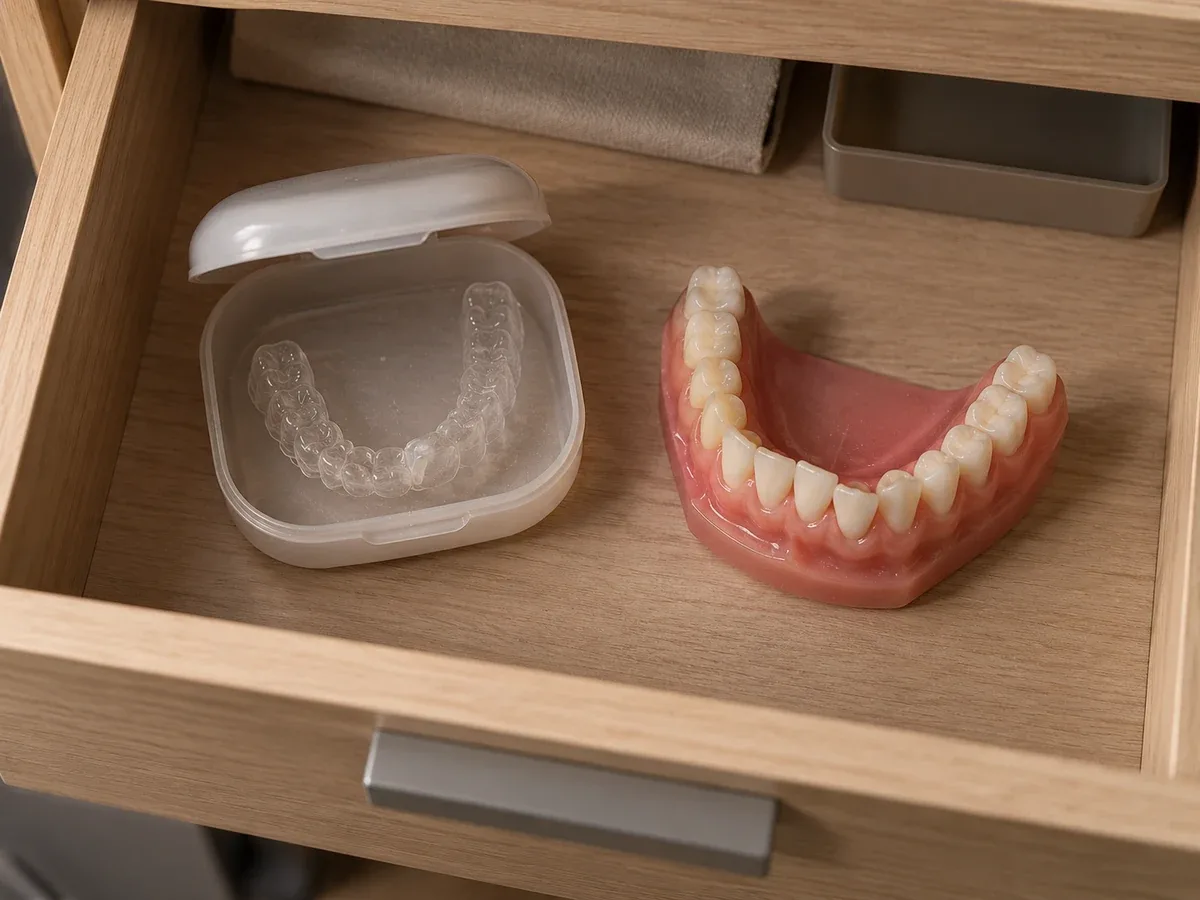
Why wear a retainer after orthodontic treatment ends?
SNUH's orthodontics guide says all appliances are removed when treatment ends. A retainer is then worn in their place.
The reason is given too. It stabilizes the new alignment and keeps the result during any remaining growth. So it must be worn for a set period, the guide says.
The same hospital's clear aligner guide is more direct. Relapse, the return toward the original position, is a typical after-effect of all orthodontic treatment. So a retainer is worn just as after regular braces, with check-ups afterwards.
Relapse is also on the guide's list of side effects. The list includes loss of minerals on the tooth surface, gum inflammation and recession, root resorption and jaw joint problems.
These problems do not happen in every case, the guide adds. Most can be prevented by following the instructions, and any that occur may stay mild.
SNUH describes orthodontics as more than lining up crooked teeth. It also corrects skeletal imbalance during growth so the jaws work normally. Tooth alignment alone usually takes 18–30 months.
So this appliance is not an optional extra. It is the final step that holds moved teeth in place while they settle.
How do fixed and removable retainers differ?
There are two main types. A fixed retainer is a thin wire bonded to the teeth. A removable retainer is one you put in and take out yourself.
SNUH's malocclusion guide also divides appliances into two groups. Removable ones go in and out of the mouth, while fixed ones are bonded to the teeth and removed at the end.
Which type to use, or whether to combine them, depends on the teeth, the occlusion (bite) and daily habits. The upper and lower jaws may use different types.
Each type needs attention in a different way. Here are the differences we often explain in the clinic.
- A bonded wire cannot be forgotten.
- But it is hard to see, so you may not notice if it comes loose or breaks.
- A removable one depends on you wearing it for the set hours.
- It is easy to lose or bend while it is out of your mouth.
A wire bonded behind the teeth is almost invisible. It needs little daily thought, but a loose wire can go unnoticed. A removable one asks more of you each day.
Either way, your cooperation shapes the result. The malocclusion guide calls the patient's cooperation an important part of successful treatment.

So how long should you wear a retainer?
SNUH's orthodontics guide answers plainly. Children and adults alike are expected to wear one.
A wire bonded to the teeth is kept on with no set removal date, the guide says. For a removable type, it recommends wearing it during sleep whenever possible.
Advice on daily hours varied between cases. In one consumer agency case reported in the dental press, the patient was told to wear it at least 6 hours a night. Another case record shows a new retainer that was to be worn 24 hours a day.
So advice depends on the teeth and the stage. Rather than memorizing one number, follow the hours your orthodontist sets. Check again at each visit.
If those hours are hard to keep, say so honestly at your check-up. We can adjust the plan to fit your daily life.
For growing children, there is one more point. The guide says regular visits should check both the alignment and the growth of the facial bones. Even when the teeth stay put, a growing jaw can change the bite.
Many parents ask whether children need to wear one as long as adults. The guide does not divide by age. In one case, an expert also said the need for a retainer should be explained before treating a growing patient.

| Item | Fixed retainer | Removable retainer |
|---|---|---|
| What it is | A thin wire bonded to the teeth | You put it in and take it out yourself |
| What to watch | Hard to notice if it comes loose or breaks | Wearing hours must be kept; easy to lose or bend |
| How long (SNUH) | Kept on with no set removal date | Worn during sleep whenever possible |
Does wearing a retainer alone protect the result?
Saying it matters is not the same as saying it solves everything. A few dispute cases show the difference.
In one consumer agency case, the dental clinic claimed the patient had not worn the retainer well. That, it said, caused an open bite, where the front teeth do not meet, 18 months after treatment.
Expert advice saw it differently. The models after treatment showed the teeth had been aligned back to the first premolars and simply spread out. The dentist was held responsible.
Another mediation case reached the same view. The expert found the open bite was not a condition that poor retainer wear alone could cause. The expert also said a case needing extractions had been pushed through without them.
The notice the patient signed in that case listed reasons results can change even after retention ends.
- Growth and development
- Wisdom teeth
- Gum disease
- Mouth breathing
- Poor oral habits
Teeth keep adjusting to these conditions, the notice explained. SNUH's malocclusion guide also says habits like thumb sucking or tongue thrusting keep pressing on the gum bone. It names mouth breathing as a cause of changes in tooth alignment.
Both cases point the same way. A retainer is a device that protects a well-finished result. It does not replace the treatment itself.
A recent case from the national medical mediation agency, reported in the dental press, was similar. A patient treated for about six years still had a bite problem afterwards. The agency found fault in the missing consent form and lack of explanation.
In that article, a Korean Dental Association official noted a possible gap between patient hopes and achievable goals. He advised explaining realistic goals and side effects, and getting written consent, before treatment starts.
That is why records on the day braces come off matter. Advice in the dental press is to keep mouth photos and dental models from the start and the end. The malocclusion guide also uses photos to compare before and after.
How do you care for a retainer?
This appliance stays in your mouth for a long time. SNUH's malocclusion guide says that with a removable retainer, keeping it clean also matters.
The care it recommends is simple. Here it is step by step.
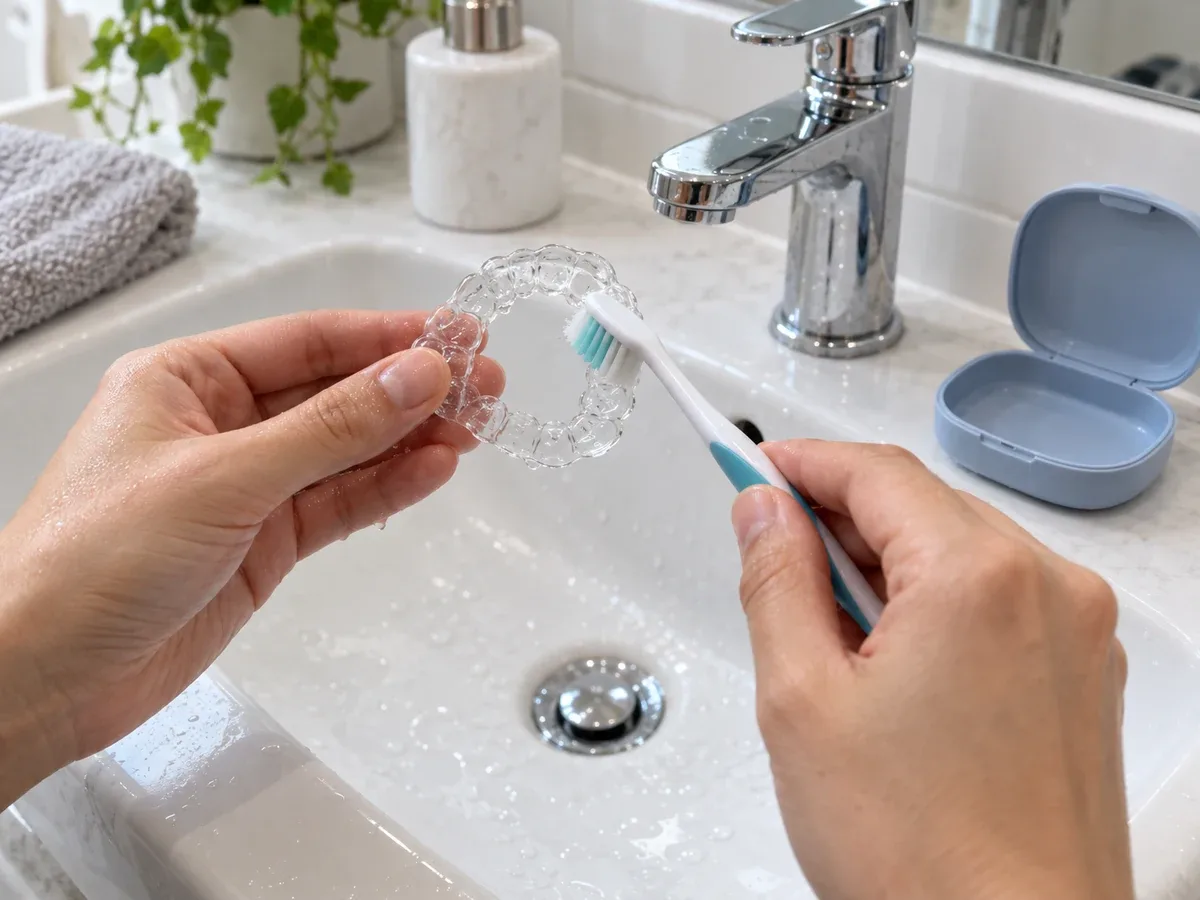
- Clean the retainer every day with a brush and toothpaste.
- Pay special attention to the parts that touch the palate or gums.
- Brush your teeth slowly with a soft brush, and use floss or interdental brushes.
- If it is bent or broken, stop wearing it and tell your dentist.
Plaque builds up easily around anything bonded to the teeth. The guide says plaque left in place leads to cavities, gum inflammation and bad breath.
Food tends to catch around a bonded wire. SNUH's orthodontics guide advises using interdental brushes and checking in a mirror. It applies to a bonded wire as well.
Food choices matter too. The guide says to avoid hard or tough foods, such as ice, hard ice cream and dried squid or fish snacks.
Sticky foods like caramel and gum can cling to an appliance or pull it off. Cut firm foods such as apples into small pieces. The malocclusion guide also says to cut down on sugary foods.
Watch for bending as well. The clear aligner guide says an appliance can warp just from being put in and taken out. Repeated uneven force can also change its shape.
Wearing a warped appliance can do more harm than good, the guide warns. If it is damaged or lost, see the dentist right away. This refers to aligners, but a clear retainer is also taken in and out.
One case record shows a retainer broken by accident and remade. A few months later it no longer fit and was made again, and a bonded part came off and was reattached.
So it needs checks and repairs too. If something feels wrong, you do not need to wait for your next appointment.
| Situation | What the guides and records say |
|---|---|
| Damaged or lost | See the dentist right away for proper care |
| Warped | Wearing a warped appliance can do more harm than good |
| Bonded part came off | Records show it was reattached |
| Wire broken or bent | Records show the patient was asked to bring it in |
| Cleaning a removable retainer | Brush and toothpaste every day, especially where it touches the palate or gums |
What if your teeth shifted a little because you skipped the retainer?
Some people forget to wear theirs for a while and then notice their teeth have moved. The first step is to see how far they moved.
SNUH's clear aligner guide lists cases that clear aligners can treat. One of them is mild relapse after treatment.
- Slightly crooked teeth
- Small gaps between teeth
- Mild relapse after treatment
On the other hand, large or complex tooth movement is hard with aligners. Severe crowding, prominent canines and skeletal problems needing surgery are examples.
Aligners do not suit every patient, so a thorough consultation is needed first. Any needed dental work and scaling should also be done before starting.
Aligners are meant to be worn 24 hours a day, except when brushing and eating. The guide gives about a year of treatment, with visits every 2–8 weeks, depending on how much movement is needed.
After the teeth are corrected again, a retainer is worn just as before. Relapse can follow any type of treatment, so it is better to catch it while the shift is still small.
How are check-ups after braces done in Seomyeon, Busan?
There is a reason to visit even while your teeth seem stable. SNUH says regular visits are needed to confirm the teeth are holding their position. Its aligner guide also recommends check-ups after treatment ends.
A check-up looks at three main things. Are the teeth in place, does the appliance fit, and are the teeth and gums healthy? The table below draws on the guides and records above.
| What is checked | What the guides and records say |
|---|---|
| Tooth alignment | Regular visits confirm the alignment is holding |
| Facial growth | In growing patients, facial bone growth is also checked |
| Fit of the appliance | A warped appliance can do more harm than good |
| Bonded parts | Case records show loose parts being reattached |
| Teeth and gums | Mineral loss and gum inflammation are on the side-effect list |
Diagnostic records help at check-ups too. SNUH's orthodontics guide uses X-rays, dental models, and facial and intraoral photos for diagnosis.
Models and photos from the day braces came off can be laid next to today's teeth. If you wear a removable retainer, please bring it along, so we can see how it fits in your mouth.
Keeping check-up dates is a simple way to protect the result for patients in Busan. At Reset Dental Clinic, we check the fit of the retainer and whether any bonded part has lifted.
Frequently asked questions
My retainer feels tight after a few days without it. Is that OK?
Rather than forcing it in, have it checked first. SNUH says wearing a warped appliance can do more harm than good.
What if the bonded wire comes loose or breaks?
Do not leave it; come in with the appliance. Case records show patients being asked to bring the appliance when a wire broke or bent. A fixed retainer is hard to see, so a loose wire may go unnoticed for a while.
Do I need a retainer after clear aligner treatment?
Yes. SNUH's clear aligner guide says relapse happens with aligners too. So a retainer is worn just as after regular braces.
Can I get orthodontic care and retainer check-ups in English in Busan?
Yes. We offer 1:1 English interpretation from the first consultation to the end of treatment. The clinic is near Seomyeon Station Exit 2 (5-min walk), opposite Lotte Hotel Busan; call 010-8555-2854 (+82-10-8555-2854 from abroad).
A retainer protects a well-finished result; it does not replace treatment.
Wear it for the hours you were given,
and keep your check-up dates.
If you wear a retainer in Busan and want it checked, Reset Dental Clinic offers 1:1 English interpretation from your first consultation to the end of treatment. Call 010-8555-2854 to book a visit.
References
- Seoul National University Hospital Medical Information, "Orthodontic Treatment" — removing appliances and wearing a retainer at the end of treatment, the rule that children and adults alike wear one, keeping a bonded wire retainer on and wearing a removable retainer during sleep whenever possible, the purpose of retention, regular visits to check alignment and facial growth, and relapse on the list of side effects
- Seoul National University Hospital Medical Information, "Clear Aligners" — relapse as a typical after-effect of all orthodontic treatment, wearing a retainer and having check-ups afterwards, warping from repeated insertion and the harm of wearing a warped appliance, and seeing the dentist right away if it is damaged or lost
- Seoul National University Hospital Medical Information, "Malocclusion" — removable and fixed appliances, photos for comparing before and after, cleaning a removable retainer every day with a brush and toothpaste, and the importance of patient cooperation
- KDA newspaper Dailydental (Chiui Sinbo), "The limits of non-extraction orthodontics" (August 19, 2013) — a consumer agency dispute case, advice to wear a retainer at least 6 hours a night, an open bite 18 months after treatment that experts linked to the treatment rather than retainer wear, and the importance of explaining retention
- Consumer agency dispute mediation case, "Claim for damages over malocclusion after orthodontic treatment" — records of a broken, remade and reattached retainer, a broken and bent wire, the expert view that the open bite could not result from poor retainer wear alone, and the need to explain retention to growing patients
- KDA newspaper Dailydental (Chiui Sinbo), "Set treatment goals and agree on them before orthodontic treatment" (September 2, 2026) — a mediation case after about six years of treatment, fault found in the missing consent form and lack of explanation, and advice to explain realistic goals and side effects and obtain written consent
Written by Reset Dental Clinic Support Team
Medical review Dr. Kim Hyun-joo, Head Dentist
Last updated: September 19, 2026
This article is general information and does not replace diagnosis or treatment for individual patients. If you have symptoms, please see a dentist.


