

- Experts in Korea say that for older patients, bone condition at the surgical site and general health are bigger risk factors than age itself. That holds for a full-arch implant too.
- Health problems such as diabetes, high blood pressure and heart disease become more common with age, so medicines and overall health are checked first.
- On surgery day, steps are taken to reduce stress. If blood pressure is very high or there was a recent heart attack, a physician is consulted first.
- Designing restorations that are easy to clean and maintain is suggested, in case self-care becomes hard later in life.
Many patients begin by saying they are too old for implants. The sources, however, do not decide by age alone. At Reset Dental Clinic in Seomyeon, Busan, patients can have 1:1 English interpretation from the first consultation through the end of treatment.
This column explains what is checked before a full-arch implant in later life. It draws on the KDCA National Health Information Portal page on dental implants and on several Dailydental articles about implants for older adults.
Is age the deciding factor for a full-arch implant?
Dailydental introduced a paper on implant treatment in older adults from a Korean clinical geriatrics journal. It notes that bone condition at the surgical site and general health are bigger risk factors than age itself.
The KDCA portal points the same way. The firm bond between an implant and the bone is called osseointegration.
Healing for this bond generally takes about 3 to 4 months. The portal notes that it varies with bone condition, age and general health, so age is treated as one factor among several.
Implants among older adults are also becoming more common in Korea. Dailydental reported an analysis by the Health Insurance Review and Assessment Service (HIRA).
| Age group | 2016 | 2022 |
|---|---|---|
| 65 and over | About 429,000 | About 805,000 |
| 75 and over | About 120,000 | About 195,000 |
These numbers show that later life does not in itself rule out implants. What matters is the condition of the mouth, the bone and the body today.

What else is checked as we get older?
Professor Lee Seong-bok of Kyung Hee University Dental Hospital at Gangdong spoke with Dailydental. He said older adults have far more accompanying health conditions than in their younger years. He gave these examples.
- diabetes
- high blood pressure
- stroke
- heart attack (myocardial infarction) and angina
- a higher bleeding tendency linked to medication
- liver disease and kidney disease
He also described changes in the mouth that are common in older adults. Many of them are linked to taking medicines for years.
- less saliva and a dry mouth
- exposed roots that lead to frequent decay
- gum recession
- a lining of the mouth that has lost its elasticity
For these reasons, the KDCA portal lists checking general health and current medicines as the first step before full-arch implant surgery. Some heart and circulation medicines may need adjusting because of bleeding risk.
Diabetes slows wound healing, so blood sugar needs to be controlled. Osteoporosis drugs or injections also need to be checked separately.
Medication changes are not decided by the dental clinic alone. They are agreed with the doctor who prescribed them.
How is surgery day planned around your health?
The article on the geriatrics paper gives practical points for surgery day. Older patients may become very tense, so stress-reduction measures are advised.
Late morning or early afternoon is the recommended time. In the early morning blood pressure tends to be raised, and by late afternoon a person may have been under stress for hours.
Strong tension can cause vasovagal syncope, a brief fainting spell. People with heart or lung disease may find it hard to breathe lying flat. For them, a position with the upper body raised 20 to 30 degrees is recommended.
Some findings call for delaying a full-arch implant or consulting a physician first. If diastolic pressure is 110 mmHg or higher, or systolic pressure is 180 mmHg or higher, a physician should be consulted before surgery.
For older patients who had a heart attack within the past 6 months or have unstable angina, dental care should be limited to emergencies.
For a full-arch implant, how much to do in one visit and how much to split up is decided according to your condition. A long treatment can be divided when that suits you better.

| Item | What the article says |
|---|---|
| Time of day | Late morning or early afternoon is recommended |
| Tension | Use stress-reduction measures; strong tension can cause vasovagal syncope |
| Position | Upper body raised 20 to 30 degrees for people with heart or lung disease |
| Blood pressure | Diastolic 110 mmHg or higher, or systolic 180 mmHg or higher, means consulting a physician before surgery |
| Heart disease | Heart attack within 6 months or unstable angina: dental care should be limited to emergencies |
How do diabetes, smoking and bone heat affect a full-arch implant?
The same article notes that diabetes can slow wound healing after surgery. It cites earlier research in which people with diabetes or high cholesterol had a 1.21 to 2.46 times higher risk of peri-implantitis.
Peri-implantitis is inflammation around an implant. Medical advice and blood sugar control are recommended before surgery.
Smoking matters too. With a long smoking history, the implant failure rate was at least twice that of non-smokers.
For that reason, the article says quit-smoking guidance and an explanation of failure rates are needed before treatment.
The way bone is handled also changes. In older patients, bone cells are replaced more slowly, so heat of 47°C or more must not build up for 1 minute at the implant site.
This calls for drilling in short intervals, with plenty of irrigation to cool the bone. With a full-arch implant, many sites are prepared, so this care is repeated at each one.
| Factor | What the article says |
|---|---|
| Diabetes and high cholesterol | 1.21 to 2.46 times higher risk of peri-implantitis in earlier research; medical advice and blood sugar control recommended |
| Long smoking history | Implant failure rate at least twice that of non-smokers; quit-smoking guidance and an explanation of failure rates needed |
| Heat on the bone | Heat of 47°C or more must not build up for 1 minute; drilling in short intervals with plenty of irrigation |
What help is needed in the days after surgery?
The KDCA portal says swelling, pain and limited mouth opening are common right after full-arch implant surgery. Swelling is usually worst about 48 hours after surgery and then gradually eases.
For the first 24 hours, apply ice in cycles of 5 minutes on and 5 minutes off. Until the stitches are removed, use a mouth rinse on the surgical area in place of brushing.
Take the prescribed medicines as directed. If a problem such as an allergy appears, tell the clinic at once so the medicine can be changed.
Before surgery, the portal advises getting enough sleep and eating a light meal. Here is a simple checklist for the days around surgery.
- Sleep well and eat a light meal before surgery.
- For the first 24 hours, ice the area 5 minutes on and 5 minutes off.
- Use a mouth rinse on the surgical area until the stitches are out.
- Take the prescribed medicines, and report any allergy at once.
- Expect swelling to peak around 48 hours, then ease.
If you live alone, check whether a family member can help in the days after a full-arch implant. Icing, taking medicines and preparing soft meals are easier with support.
If you take many medicines, bring all your medicine packets. This lets us check that new prescriptions do not overlap with your usual ones.
Why plan the final teeth before placing a full-arch implant?
Professor Lee explained that top-down treatment suits patients aged 65 and over. Surgery does not happen on the first visit.
Instead, the shape of the final teeth is decided first, at the planning stage. The implants are then placed to match those final teeth.
He also made a further point. Shorter treatment time, fewer surgeries and flapless surgery without incisions are not things to offer every patient in the same way.
They are options to be chosen according to each patient's condition. The larger the treatment, as with a full-arch implant, the more this order matters.
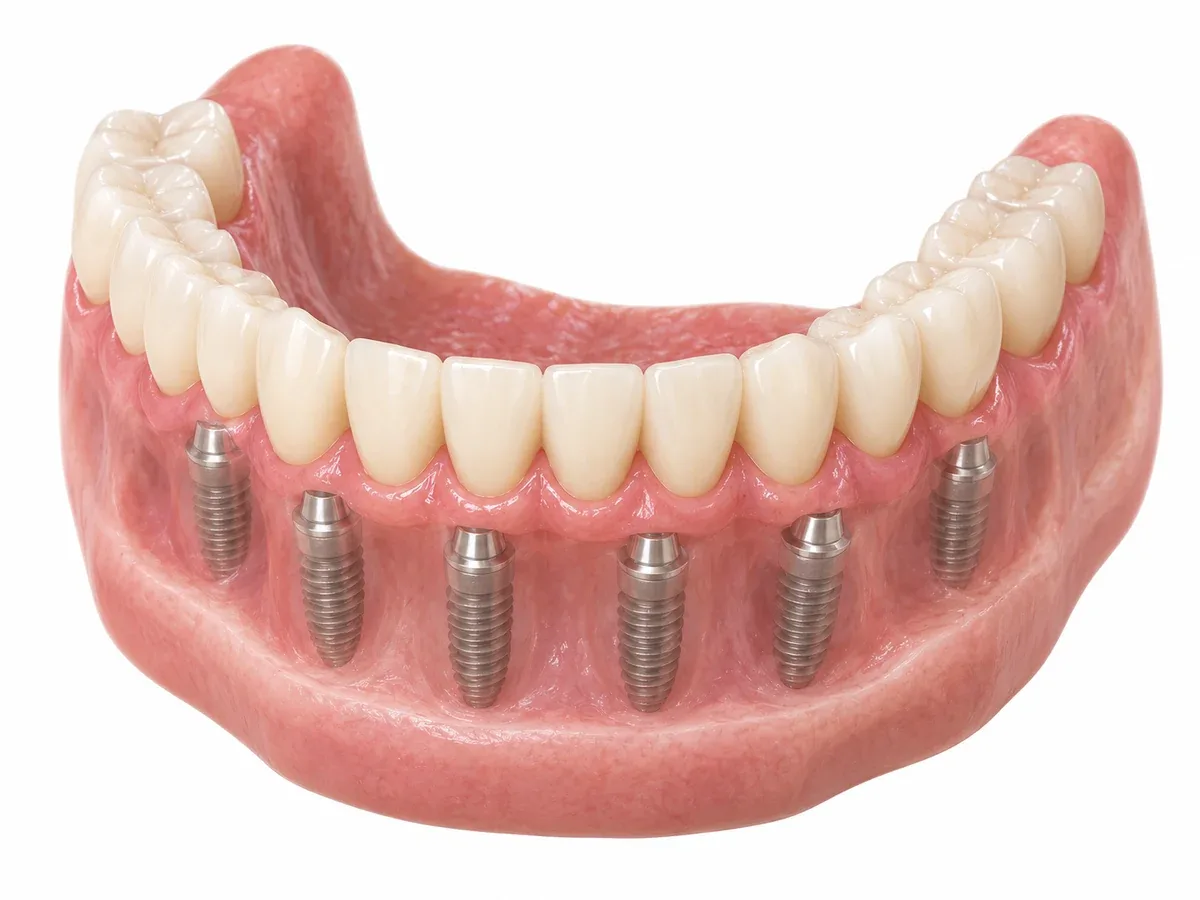
How is a full-arch implant designed for later years in Busan?
A dentist's opinion column in Dailydental looks further ahead. Statistically, about 10% of all older adults move into care, whether in nursing facilities, at home or in long-term care hospitals.
That means a full-arch implant placed today may later be cared for by other people's hands. So while you are still independent, designs that are easy to treat and clean are worth considering.
The author suggests that upper and lower restorations meet in at least one area to hold the vertical dimension, the height of the bite. If that is hard, a screw-retained design that is easier to remove is preferred over a cemented one.
The reason given is safety. A loose restoration that cannot be taken out might come off by itself and be inhaled into the lungs.
This suggestion is based on the author's own experience. The actual full-arch implant design is decided after examining your mouth.
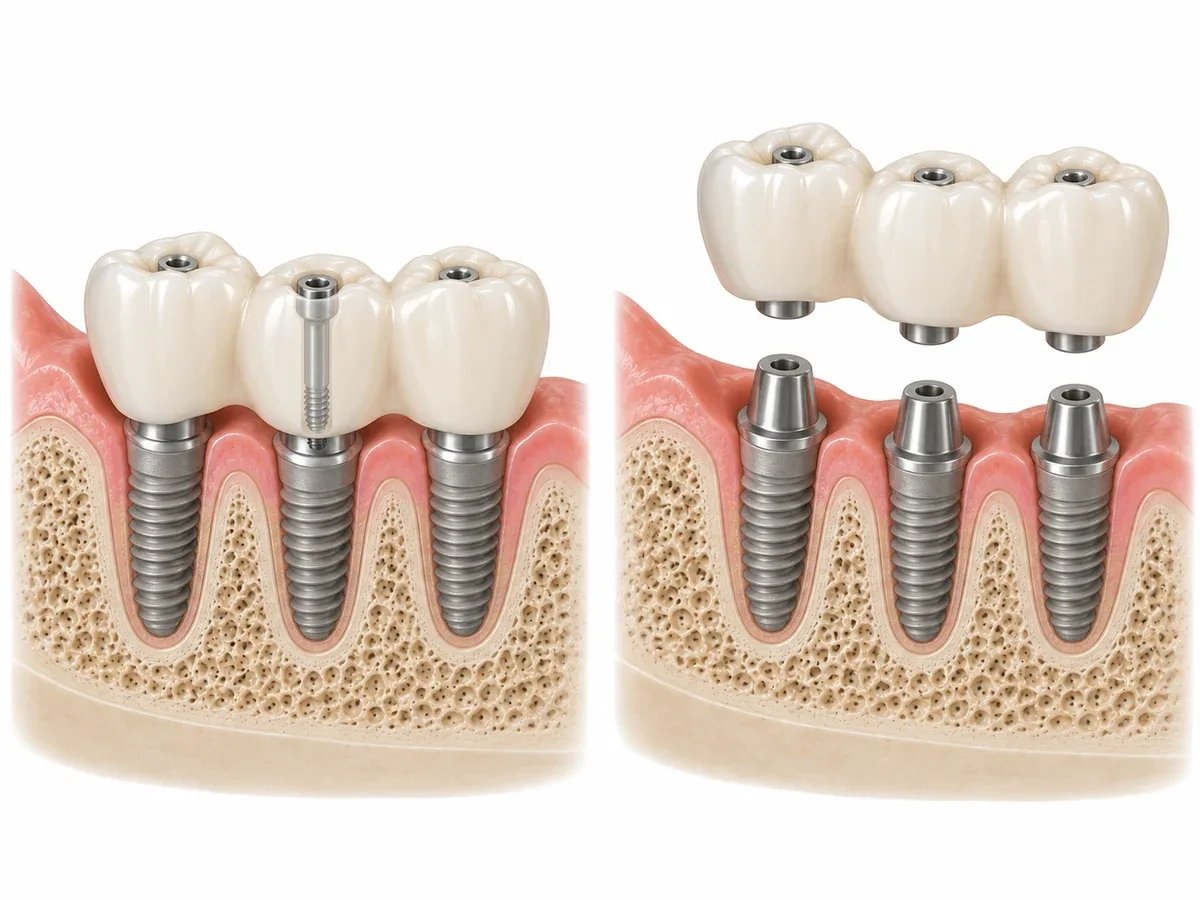
The years after placement are longer than the treatment itself. The KDCA portal states clearly that implants do not last forever.
The portal lists what lasting use needs.
- thorough oral hygiene
- avoiding excessive chewing force
- regular dental check-ups every 3 to 6 months, even after treatment is complete
Because implants leave wider gaps between teeth, floss and interdental brushes are essential. If your hands are not as steady as before, finding easy-to-hold tools is part of each check-up.

Frequently asked questions
I am over 80. Is it too late for a full-arch implant?
The sources say bone condition and general health are bigger risk factors than age itself. Health problems do become more common with age, so bringing your medicine list and medical records helps us decide sooner.
I take blood pressure medicine. Is that a problem?
What matters more is whether your blood pressure is under control now. A diastolic pressure of 110 mmHg or more, or a systolic pressure of 180 mmHg or more, calls for a physician consultation before surgery. Please do not stop your medicine on your own, and talk to the doctor who prescribed it.
What if I move into a care home later?
A Dailydental opinion column suggests planning for that time with a design that is easy to maintain. You can raise this at the design stage so it becomes part of your plan.
Can I get full-arch implant treatment in English in Busan?
Yes. We offer 1:1 English interpretation from the first consultation through the end of treatment. The clinic is near Seomyeon Station Exit 2 (5-min walk), opposite Lotte Hotel Busan, and you can call 010-8555-2854 (+82-10-8555-2854 from abroad).
Age alone does not decide whether a full-arch implant is possible.
Bone, general health and medicines are checked first.
Surgery day is planned around your body,
and the design looks ahead to the years of care that follow.
If you are considering a full-arch implant in Busan, Reset Dental Clinic offers 1:1 English interpretation from your first consultation through the end of treatment. Call 010-8555-2854 to book a consultation, and bring your medicine list.
References
- Dailydental (Korean Dental Association newspaper), "Late Morning or Early Afternoon Suits Implant Surgery in Older Patients" (introducing a paper from a Korean clinical geriatrics journal) — bone condition and general health as bigger risk factors than age; stress reduction and the recommended time of day; vasovagal syncope and a 20–30 degree upright position; physician consultation at diastolic 110 mmHg or systolic 180 mmHg or higher, and care limited to emergencies after a recent heart attack or with unstable angina; 1.21–2.46 times higher peri-implantitis risk with diabetes or high cholesterol; at least twice the failure rate with a long smoking history; avoiding heat of 47°C or more for 1 minute with interval drilling and irrigation
- Dailydental (Korean Dental Association newspaper), "Professor Lee Seong-bok: Top-Down Treatment Suits Implants for Older Adults" — planning the final teeth first and placing implants to match; oral features of adults over 65 such as dry mouth, root decay, gum recession and less elastic oral lining; common accompanying health conditions; shorter treatment, fewer surgeries and flapless surgery chosen according to each patient's condition
- KDCA National Health Information Portal, "Dental Implants" — osseointegration and healing of about 3–4 months, varying with bone, age and general health; checking general health and medicines before surgery (circulation medicines, blood sugar control, osteoporosis drugs); sleep and a light meal before surgery; icing for 24 hours and using a mouth rinse until stitches are removed; swelling peaking around 48 hours; implants do not last forever, with check-ups every 3–6 months and essential use of floss and interdental brushes
- Dailydental (Korean Dental Association newspaper), "Implant Patients Aged 65 and Over Pass 800,000 Last Year" — HIRA analysis showing implant surgery patients aged 65 and over rising from about 429,000 in 2016 to about 805,000 in 2022, and those aged 75 and over from 120,000 to 195,000
- Dailydental (Korean Dental Association newspaper), "Linking Wider Implant Coverage With Oral Care Systems for Older Adults" (opinion column by Dr. Lee Seong-geun) — about 10% of older adults moving into care; considering designs that are easy to treat and clean while patients are still independent; keeping the vertical dimension or choosing easier-to-remove screw-retained designs over cemented ones, to prevent inhalation into the lungs
Written by Reset Dental Clinic Support Team
Medical review Dr. Na In-chae, Head Dentist · Periodontics Specialist
Last updated: September 19, 2026
This column is for general information and does not replace diagnosis or treatment for individual patients. If you have symptoms, please see a dentist.


