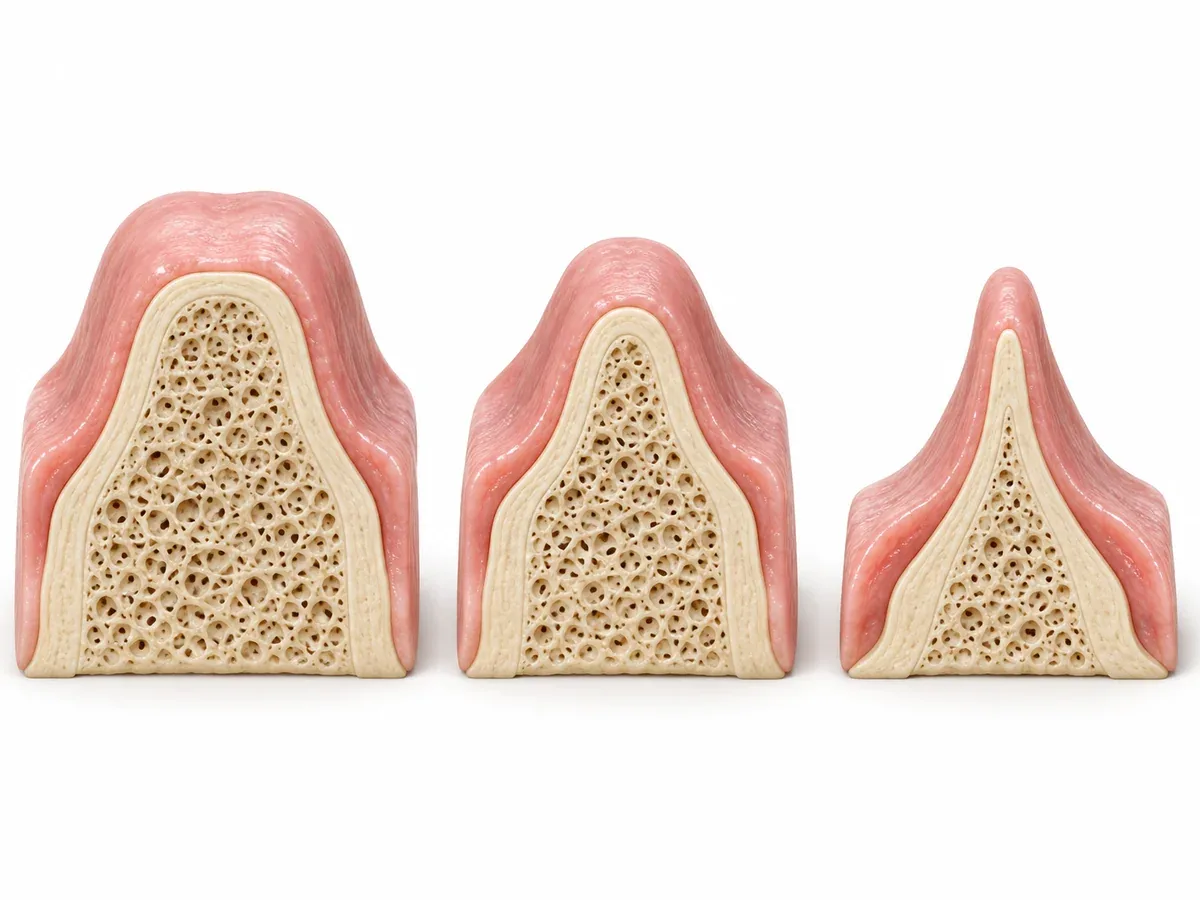
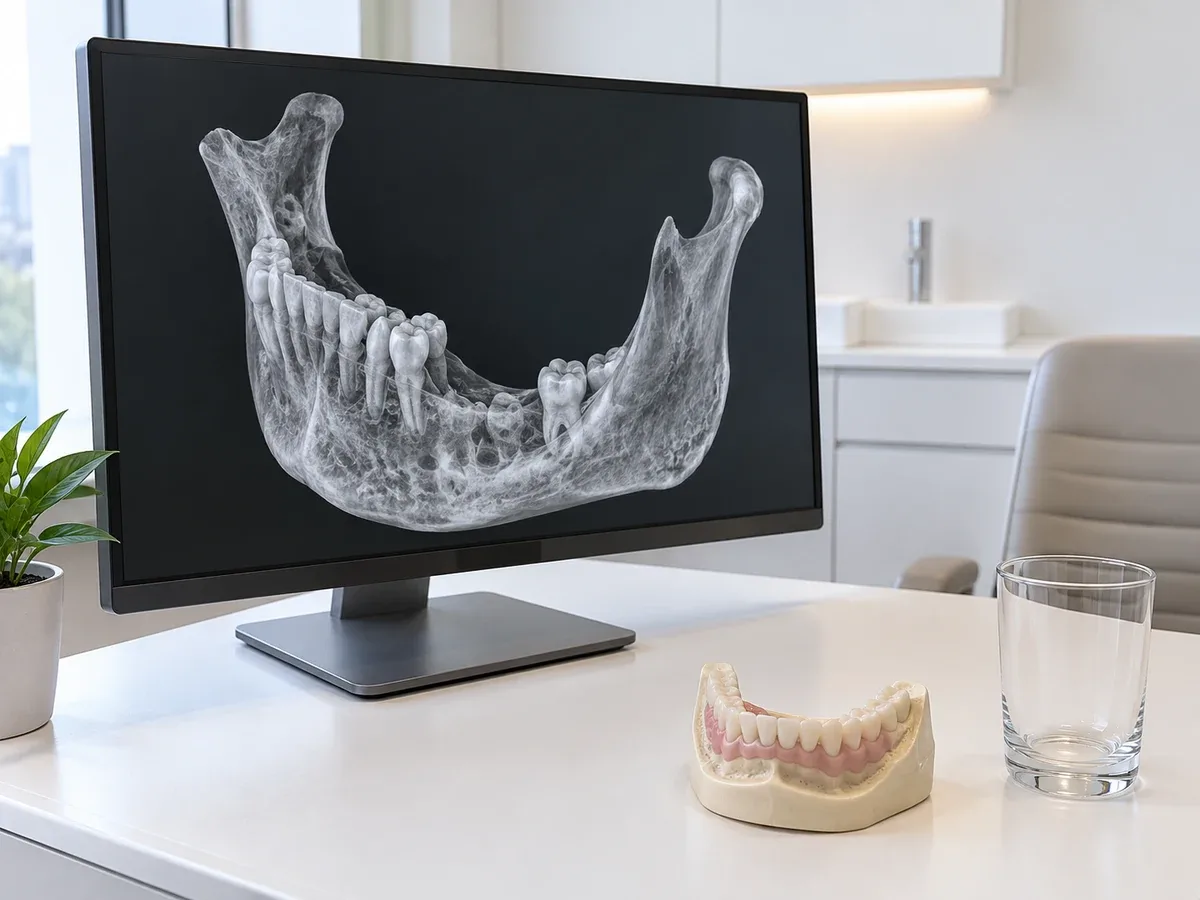
- Before an implant, a CT scan, panoramic X-ray and intraoral X-rays give information about the bone. The results decide whether a bone graft is needed and the size, length and number of implants.
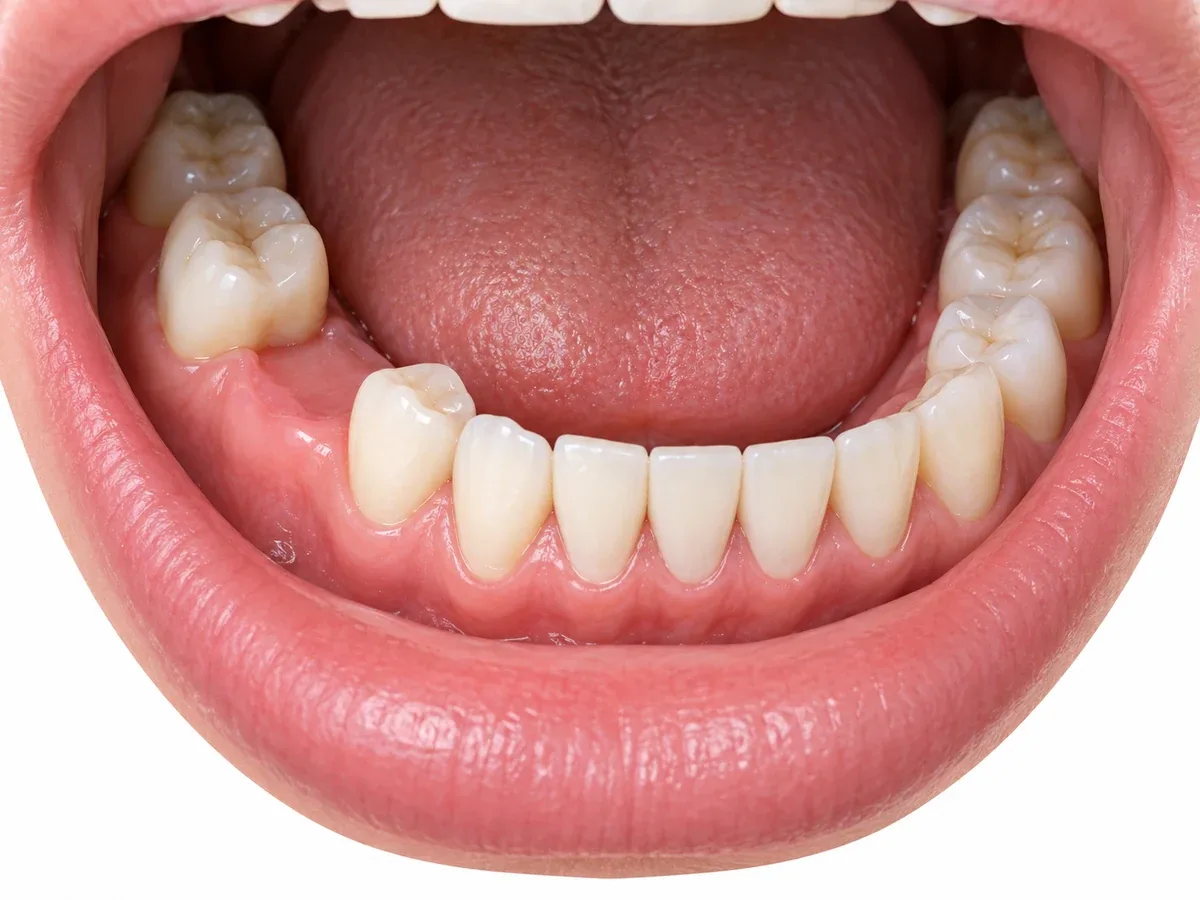
- Looking inside the mouth cannot show the bone's thickness and height, or where the nerve and sinus lie.
- In disputes over lower-jaw nerve injury, Korean courts used the distance to the nerve seen on the CT scan as key evidence.
- A CT scan has a higher reference dose than other dental X-rays, so the rule is to take it when needed, over the area needed.
"Do I really need a CT scan for one implant?" We hear this often at Reset Dental Clinic in Seomyeon, Busan. From the outside you see just the gum, but the implant goes into the bone underneath. For patients living in or visiting Korea, we provide 1:1 English interpretation from your first consultation through the end of treatment.
What is checked before implant surgery?
The Korea Disease Control and Prevention Agency (KDCA) runs a national health portal. Its dental implant page describes the checks before treatment in three steps:
- Check your general health and the medicines you take.
- Check whether you smoke. The page says smoking is directly linked to implant failure.
- Carry out diagnostic tests and make a treatment plan.
The health check is specific. Some heart or blood pressure drugs may need adjusting because of bleeding risk, and diabetes needs blood sugar control. Osteoporosis drugs are also checked, and any change is decided with the prescribing doctor.
Asan Medical Center also asks you to mention long-term blood thinners such as aspirin or warfarin before surgery.
The diagnostic step has three parts of its own:
- Oral exam: any decay or gum disease is treated before surgery.
- Radiographic imaging: this gives information about the bone.
- Study model: an impression or intraoral scan shows how the upper and lower teeth meet.
Asan Medical Center describes a similar process. X-rays, face photos and intraoral photos show the state of the teeth. A model is used to plan the restoration, then the right number and size of implants are chosen.
Seoul National University Hospital also takes X-rays to check the jawbone and choose a suitable implant. The CT scan is the step in this process that looks at the bone.
How is a CT scan different from other dental X-rays?
The KDCA page names three kinds of imaging. First, intraoral X-rays take a close view of a few teeth. The dental panoramic X-ray shows the whole jaw in one image.
The third is dental computed tomography, which gives a 3D image. For dentistry, a cone-beam CT (CBCT) scan is used. The KDCA's dental imaging standards also treat cone-beam CT separately from intraoral and panoramic X-rays.
The first two images are flat, while a CT scan shows the bone in three dimensions. You cannot see inside bone by looking into the mouth, which is why imaging is needed.
The page says the test results are combined with the patient's needs and expectations to decide treatment. This covers whether a bone graft is needed, and the implant type, size, length and number.

| Image | What the page says |
|---|---|
| Intraoral X-ray | A close view of a few teeth |
| Dental panoramic X-ray | The whole jaw in one image |
| Dental CT (cone-beam CT) | A 3D image showing the bone in three dimensions |
Images are material for choosing how to operate; taking them is not the goal in itself. Images taken before surgery also become the baseline for comparing bone changes later.
What does a CT scan measure in the lower jaw?
The KDCA page lists altered sensation as a complication right after surgery. If the nerve canal is injured during lower-jaw surgery, numbness or odd sensations can follow.
This nerve, running through the lower jawbone, is called the inferior alveolar nerve. Minor injury or pressure fades over time; otherwise the implant may be removed or medicine used.
Seoul National University Hospital lists where altered sensation can occur. These include the lips, tongue, cheeks, chin, gums and teeth. It usually recovers with time, but very rarely it may not recover.
The Korean Dental Association's newspaper reported a 2023 ruling. After surgery on a lower second molar, a patient had altered sensation in the lower lip and chin from the next day. The Seoul Northern District Court ordered the clinic to pay damages.
A legal director of the association explained the case in the article. The tip of the implant had come closer to the nerve than the minimum safe distance of 1–2 mm. The court's main reason for finding negligence was that the CT scan showed this safe distance had been crossed.
The legal director added that imaging such as a CT scan before placement should measure the distance between the nerve canal and the top of the bone precisely.
If bone is short, several plans should be considered. Examples are using a shorter implant or doing a bone graft first.
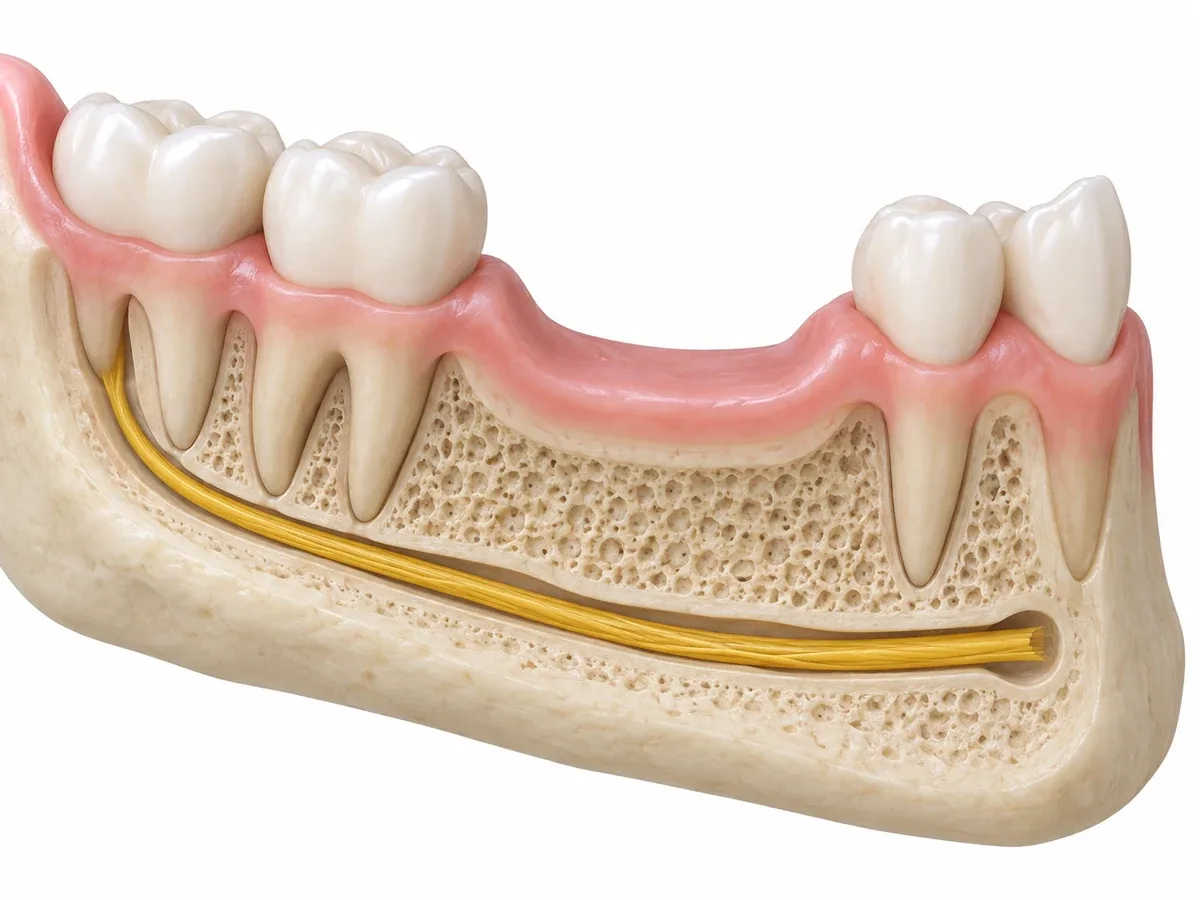
The lower jaw has one more rare complication. Seoul National University Hospital notes that if the jawbone is thin, a jaw fracture can very rarely occur. That is another reason to check bone thickness on a CT scan in advance.
What is checked in the upper jaw?
Above the upper back teeth sits the maxillary sinus, an air space beside the nose. If little bone remains above a missing molar, a CT scan shows how close the site is to this space.
The KDCA page says upper-jaw surgery can cause new sinusitis or worsen existing inflammation. The causes are a perforated sinus and infection. It is treated with antibiotics, and in severe cases the implant is removed.
Seoul National University Hospital adds that such sinus pain is usually temporary, but a specialist should be seen if it lasts.
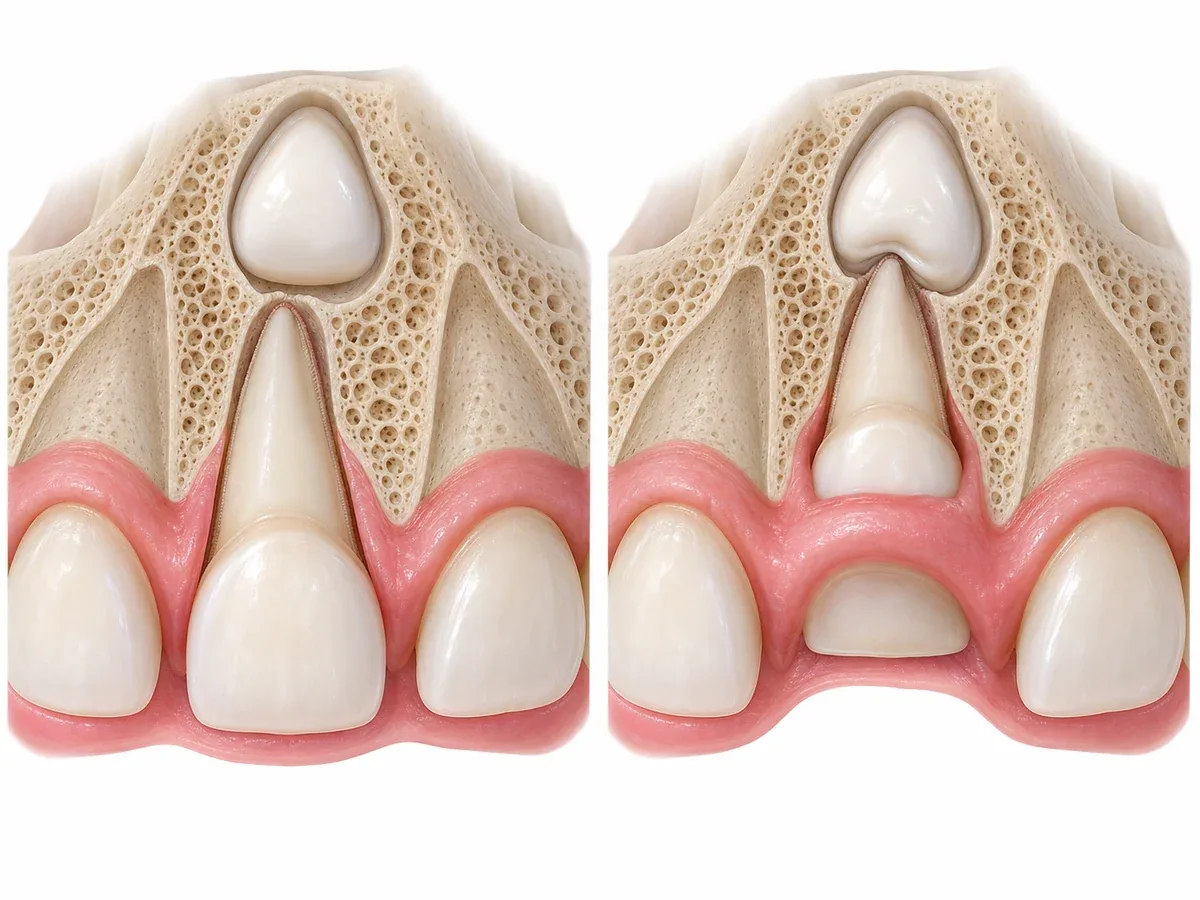
The KDCA page also lists damage to neighboring teeth. If the artificial root is at the wrong angle or too close, the tooth beside it can be harmed.
When upper-jaw bone is short, surgery to build bone toward the sinus may be done as well. Seoul National University Hospital lists a sinus floor lift as a related treatment. Asan Medical Center notes that adding a sinus lift can change the length of surgery.
Bone height and width, and the direction of neighboring roots, cannot be seen from outside the mouth. That is why a CT scan is used to check them.
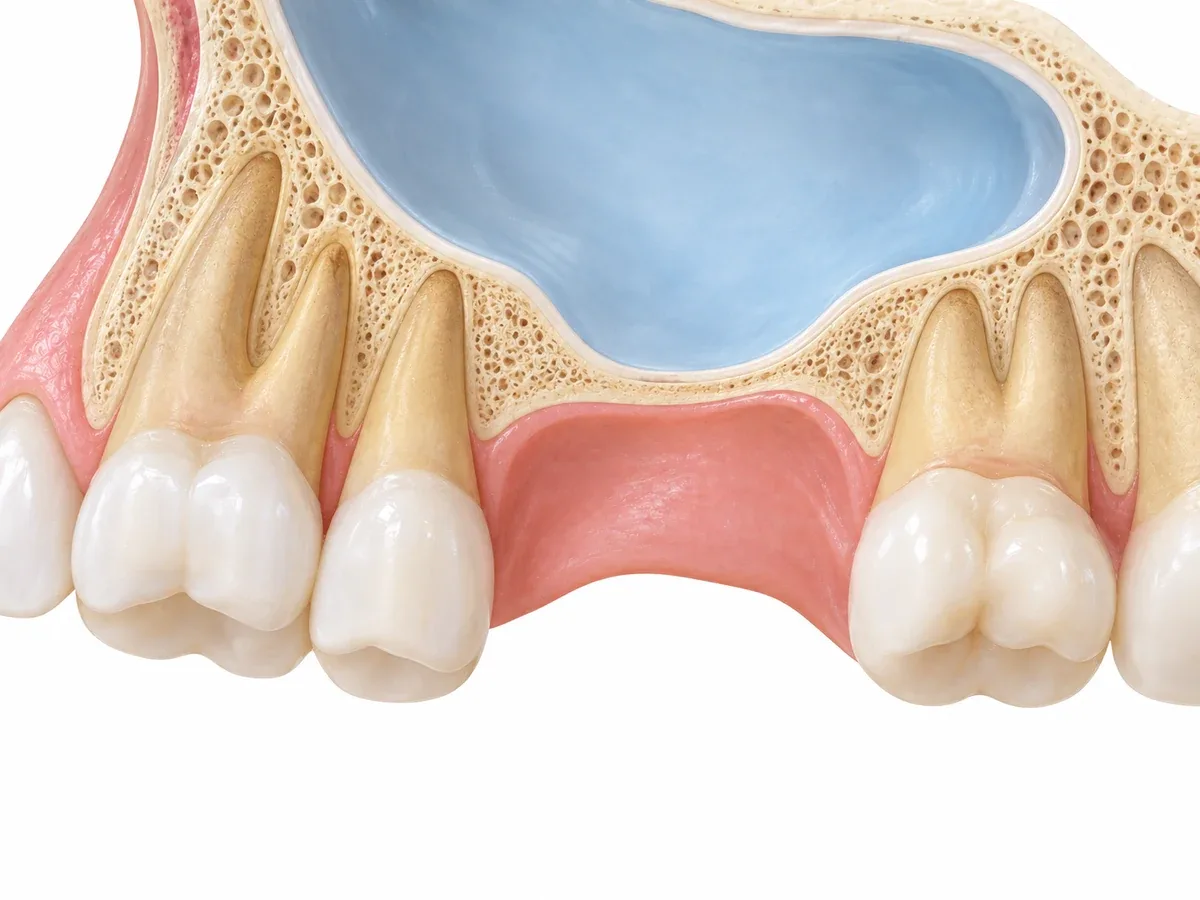
| Area | What the images show | Complication named in the sources |
|---|---|---|
| Lower jaw | Distance between the nerve canal and the top of the bone | Altered sensation from nerve canal injury |
| Upper jaw | Distance to the maxillary sinus | Sinusitis from perforation and infection |
| Neighboring teeth | Distance and angle to the teeth beside it | Damage to neighboring teeth |
| Amount of bone | Bone height and width at the site | If short, a bone graft guides regrowth |
How is CT scan radiation managed in Korea?
Radiation is one reason people hesitate about a CT scan. In 2024, the KDCA set new diagnostic reference levels (DRLs) for dental imaging.
According to the dental newspaper, a DRL is a recommended value to lower the dose patients unavoidably receive. It is set at the 75th percentile of a national survey. Facilities using higher doses should review their equipment and methods.
The survey covered 960 machines at 362 dental facilities nationwide. These were 12 dental school hospitals, 12 dental hospitals and 338 dental clinics.
The adult reference values were 48 for an intraoral X-ray of a lower molar and 354 for a panoramic X-ray. For a cone-beam CT scan to plan an upper first molar implant, it was 1856, all in DAP (mGy·cm²).
These are reference values for checking facilities, not the dose one person receives. Still, a CT scan clearly sits higher than other dental imaging.
| Imaging | Reference value | Compared with 2019 |
|---|---|---|
| Intraoral (adult lower molar) | 48 | Similar |
| Panoramic (adult) | 354 | Higher, as combined digital units spread |
| Cone-beam CT (adult upper first molar implant planning) | 1856 | Similar |
These values update a 2019 survey. Compared with 2019, intraoral and cone-beam CT values were similar. Panoramic values rose, which was linked to more combined digital units with higher doses.
In other words, the values are a tool for facilities to check themselves.
So a CT scan is taken when needed, over the area needed. If you had one recently at another clinic, please bring it. We can decide together whether a new scan is needed.
Does a CT scan remove all the risk?
In September 2026, the dental newspaper reported another ruling. The Ansan branch of Suwon District Court found that a clinic had breached its duty of care over a nerve injury.
But the court also weighed the chance of nerve injury even in a properly done implant surgery. So it limited the clinic's liability to 70%.
In the 2023 ruling too, the court noted that anatomy varies from patient to patient. It added that implant placement itself carries some risk. Weighing these points, it limited liability to 80%.
| Item | 2023, Seoul Northern District Court | 2026, Suwon District Court, Ansan branch |
|---|---|---|
| Symptoms | Altered sensation in the right lower lip and chin from the day after surgery | Reduced sensation in the right lower lip after placement |
| What followed | Implant removed; placed again at another clinic months later | No recovery after removal and medicine; neuropathy diagnosed at a hospital |
| Liability limit | 80% | 70% |
The rulings also address what to do after altered sensation begins. The 2023 court held that the course should be watched for at least about two years. This is the time to see whether nerve symptoms ease.
It said placing an implant again during this time could harm the nerve's own recovery. In the 2026 case, the patient's symptoms did not recover even after removal and medicine.
Asan Medical Center gives an average success rate of about 95%, adding that results vary by patient. Infection, bleeding, swelling, pain and altered sensation can occur after surgery.
A CT scan is a planning tool that lowers risk. It does not remove every risk. Tell us at once if you notice any of these after surgery.
- lasting tingling or altered sensation in the lips, chin, tongue or cheeks
- pain after upper-jaw surgery that does not improve with medicine
- swelling that does not go down after two days, or gets worse
Seoul National University Hospital says swelling usually peaks within about 48 hours, then slowly settles. If it worsens after that, contact the clinic.
What happens after the CT scan?
Asan Medical Center describes implant surgery in five steps.
- Local anesthesia is given.
- The gum is opened and the soft tissue folded back.
- Space is prepared in the bone below.
- The implant is placed and a cover screw is fitted.
- The soft tissue is trimmed and stitched.
Prepare as follows on the day before and the day of surgery.
- sleep well and eat a light meal (KDCA)
- take prescribed medicine one hour before surgery (Seoul National University Hospital)
- wear loose, comfortable clothes (Seoul National University Hospital)
- if you smoke, stop before surgery (Seoul National University Hospital)
If you are very anxious, sedatives, laughing gas or sedation may be used.
The same source estimates 20–30 minutes per implant. A bone graft or sinus lift can change this, and the method or scope may change with your condition.
After placement, you wait for the implant to bond with bone. The KDCA says this usually takes three to four months, longer with a bone graft. Asan Medical Center says a second surgery to attach the crown post follows after two to six months.
If the bone is short, guided bone regeneration may be done, usually before placement and sometimes during it. Graft materials include your own bone, donor bone, animal-derived bone and synthetic bone.
In short, a CT scan is the material for deciding where, what size and how many implants to place. It measures the distance to the lower-jaw nerve, the upper-jaw sinus and neighboring teeth.
If you have questions about imaging or your plan, call 010-8555-2854. You are welcome to bring images taken at another clinic.
Frequently asked questions
Is a panoramic X-ray alone enough?
The KDCA lists the CT scan, panoramic and intraoral X-rays as ways to see the bone. Which you need depends on the site, the bone and the distance to the nerve or sinus, so it is decided after an exam.
Does a CT scan mean surgery is safe?
It helps make a more precise plan. But as the courts noted, nerve injury remains possible even in a properly done procedure. If you notice altered sensation after surgery, contact us right away.
Can I bring a CT scan taken at another clinic?
Yes. We check when it was taken, what area it covers and any changes since, to decide whether it can be used.
Can I get this treatment in English in Busan?
Yes, we provide 1:1 English interpretation from your first consultation through the end of treatment. The clinic is near Seomyeon Station Exit 2 (5-min walk), opposite Lotte Hotel Busan. Call 010-8555-2854 (+82-10-8555-2854 from abroad).
A CT scan shows what the eye cannot: the bone, the nerve and the sinus.
It is taken when needed, over the area needed,
to plan where and how each implant goes.
It lowers risk, but it does not remove every risk.
If you are planning an implant in Busan, Reset Dental Clinic offers 1:1 English interpretation from your first consultation through the end of treatment.
References
- KDCA National Health Information Portal, "Dental Implants" — checks before surgery (health, medicines, smoking, oral exam); dental CT, panoramic and intraoral imaging for bone information; study models; deciding bone grafts and implant type, size, length and number; complications including neighboring tooth damage, altered sensation from lower-jaw nerve injury and sinusitis
- Asan Medical Center, "Implant Surgery" — X-rays, face photos and intraoral photos before surgery; models to plan the restoration and choose the number and size of implants
- Korean Dental Association newspaper Dailydental (Chiui Sinbo), "Check the Right Radiation Dose for Key Dental Exams" (March 27, 2024) — the KDCA's new diagnostic reference levels for intraoral, panoramic and cone-beam CT imaging; the 75th percentile definition; values of 48, 354 and 1856 DAP; survey of 960 machines at 362 facilities; comparison with 2019
- Dailydental (Chiui Sinbo), "Damages Awarded for Inferior Alveolar Nerve Injury" (August 16, 2023) — implant tip within the 1–2 mm minimum safe distance to the nerve; CT evidence as the main basis for negligence; measuring the nerve distance before placement; liability limited; at least about two years of observation after altered sensation
- Dailydental (Chiui Sinbo), "Damages Ruling on Inferior Alveolar Nerve Injury After Implant" (September 9, 2026) — breach of duty of care found, with liability limited to 70% given the chance of nerve injury even in a proper procedure
- Seoul National University Hospital Medical Information, "Dental Implants" — X-rays to check the jawbone; areas where altered sensation can occur; sinus-related pain; rare jaw fracture in thin bone; swelling peaking within 48 hours; removal when bone loss reaches a third of the implant or more
Written by Reset Dental Clinic Support Team
Medical review Dr. Na In-chae, Head Dentist · Periodontics Specialist
Last updated: September 19, 2026
This column is for general information and does not replace diagnosis or treatment for individual patients. If you have symptoms, please see a dentist.