

- Local anesthesia places medicine near the nerves of the area being treated to switch off feeling for a while. It does not affect consciousness.
- There are reasons it sometimes works less well. The usual ones are lower back teeth, where the bone is thick, and areas with severe inflammation.
- There is more than one method: numbing the surface, injecting at the spot, or blocking a nerve trunk. Dentists in Busan and elsewhere mix them as needed.
- There is a limit to how much can be given at one visit, so treatment is sometimes split into several visits.
"Anesthesia just doesn't work on me." We hear this often at our clinic in Seomyeon, Busan. In fact, the same person can numb differently depending on which tooth is treated and how inflamed it is that day. For patients living in or visiting Korea, we provide 1:1 English interpretation from the first consultation through the end of treatment.
Much of what people call "my body type" can actually be explained. This column covers what local anesthesia blocks, why it works less well on some days, and what to be careful about until it wears off.
What does local anesthesia actually block?
The Korea Disease Control and Prevention Agency (KDCA) describes local anesthesia as placing medicine around the peripheral nerves of the treatment area. It blocks more than pain.
- pain
- temperature
- pressure
- touch
- sometimes, movement
An important sentence follows. Local anesthesia does not affect consciousness. For this reason, the KDCA describes it as relatively safe compared with methods that act on the central nervous system.
It also does a different job from what people call "sleep dentistry," which is sedation. Sedation calms you, while local anesthesia stops the feeling of pain.
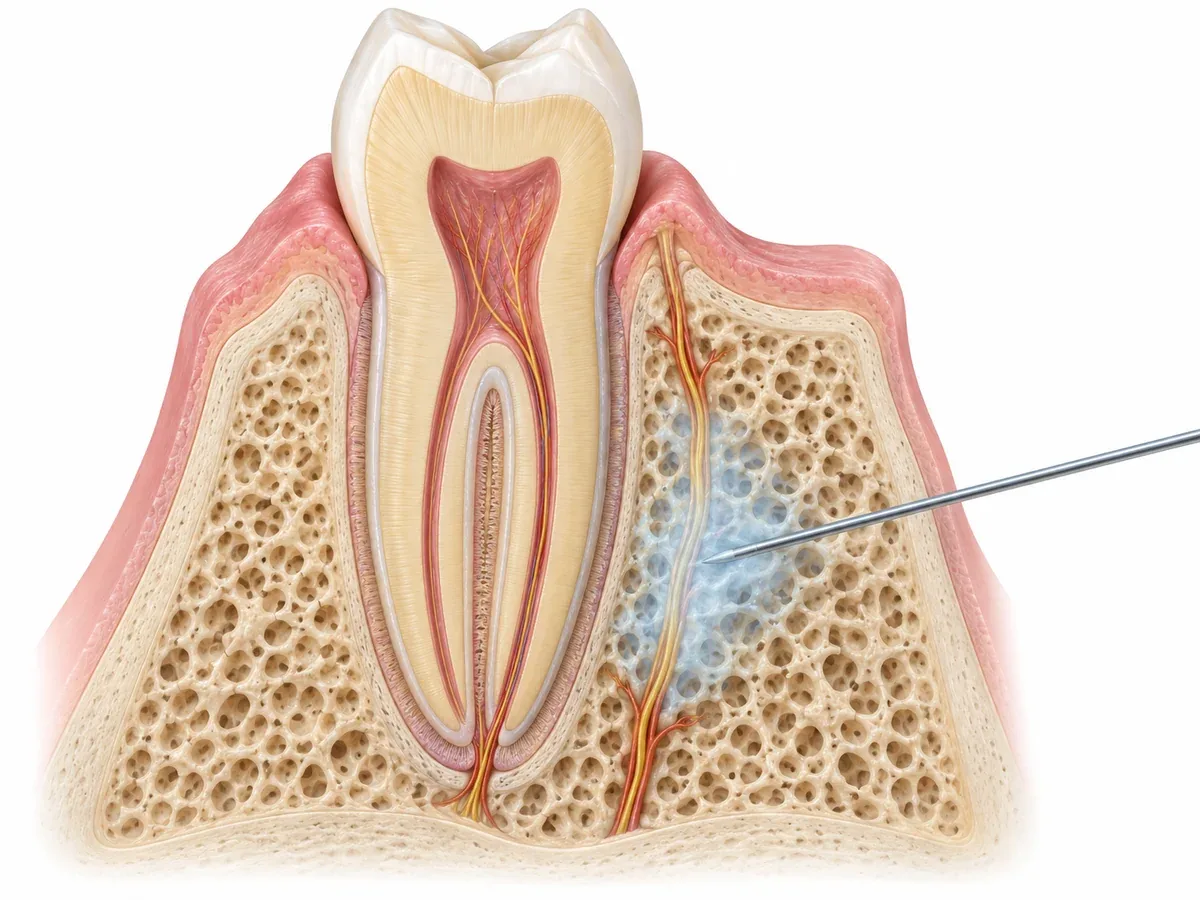
The KDCA lists several advantages. It takes effect quickly and wears off quickly. It lowers the stress of treatment and eases pain after treatment is over.
When the anesthetic contains a vasoconstrictor, a drug that narrows blood vessels, there is also less bleeding.
That is why the KDCA says local anesthesia is usually given even during general anesthesia or sedation. Falling asleep does not stop pain. Keeping treatment comfortable stays the job of local anesthesia from start to finish.
What types of local anesthesia do dentists use?
The KDCA divides local anesthesia into three types by how far the medicine reaches. In the treatment room, dentists combine them to suit each situation.
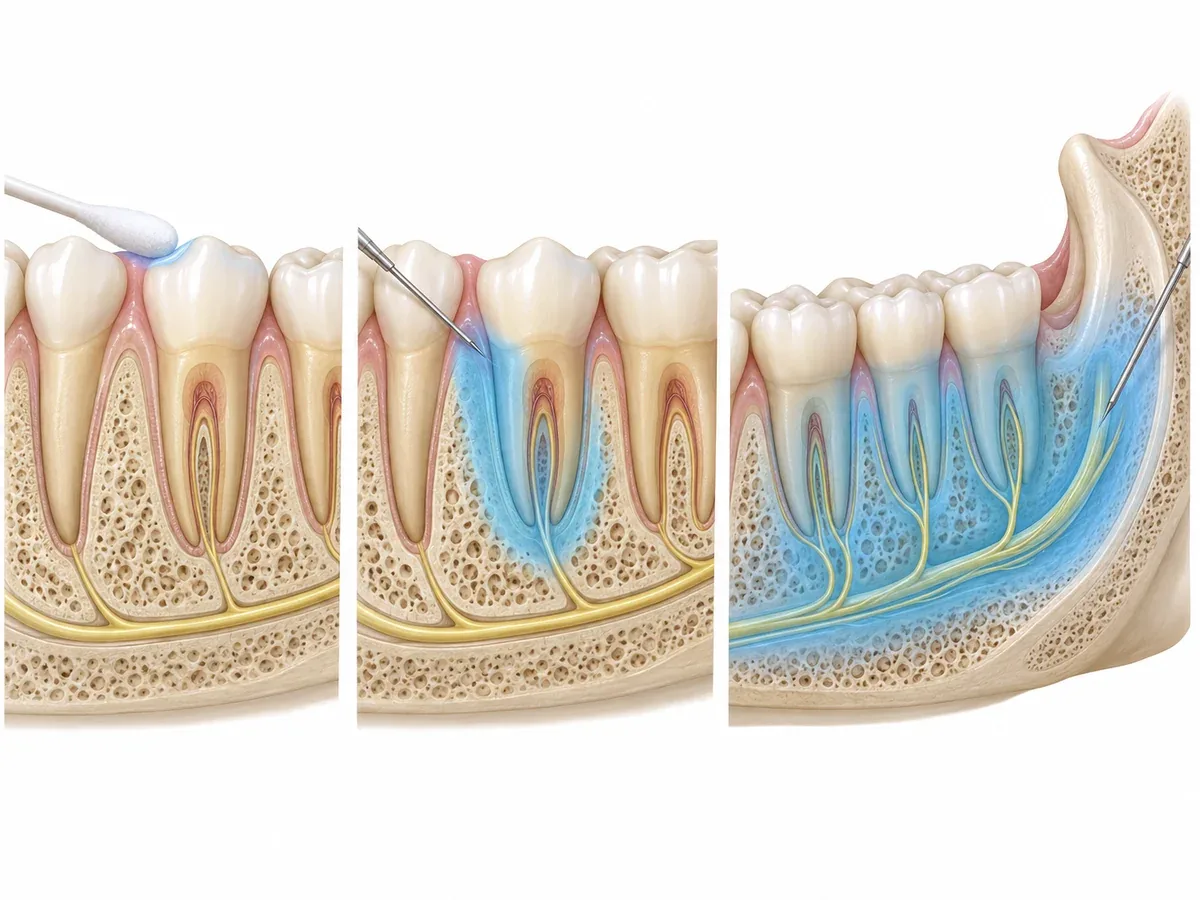
Topical anesthesia: numbing the surface
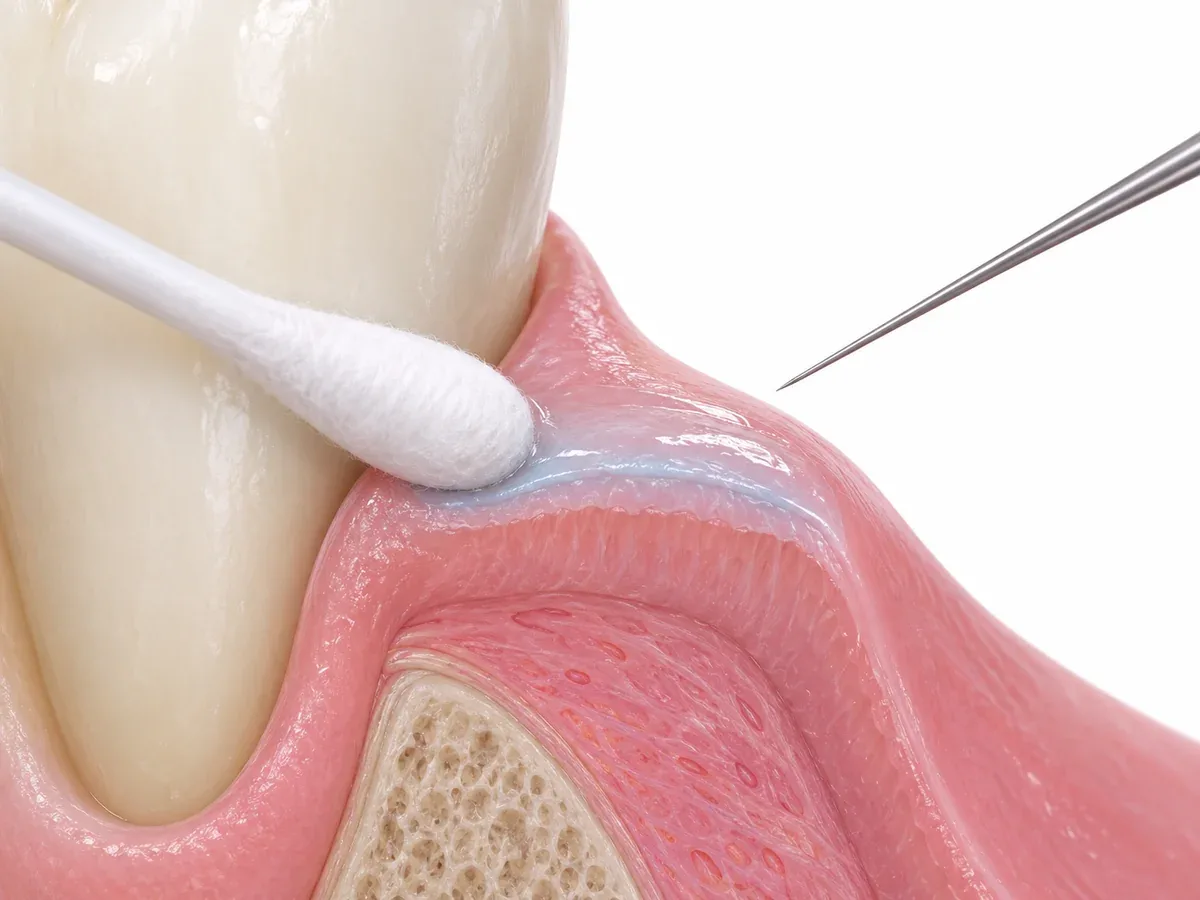
Topical anesthesia means rubbing or spraying medicine onto the gum so the nerve endings on the surface go dull. It is usually not used alone. It helps reduce the sting where the needle will go in.
This is what we do first for patients who fear needles. Injecting slowly also makes a noticeable difference.
Its limits are clear. The KDCA explains that it works on the surface lining but does not reach the membrane over the bone. The lining of the mouth also absorbs medicine very quickly, so it should not be spread in large amounts over a wide area.
Infiltration: injecting at the spot
Infiltration means injecting medicine so it soaks in and numbs the nerve endings in that area. It is common for treatment on one or two teeth. With a vasoconstrictor added, it also helps control bleeding.
Nerve block: blocking the nerve trunk
A nerve block puts medicine where a nerve branches off, so the pathway that carries pain is blocked. According to the KDCA, it numbs a wider, deeper area with a smaller amount and lasts longer. The needle also does not need to go in many times.
There is a trade-off. A larger area than expected may go numb, or numbness may last longer. Because the needle goes deeper, a nerve or blood vessel may be injured, or medicine may enter a blood vessel.
If your lower lip and tongue go numb as well, it is because this method was used.
| Type | How it works | Points to know |
|---|---|---|
| Topical | Medicine rubbed or sprayed on the gum surface | Reduces the needle sting; does not reach the bone membrane |
| Infiltration | Medicine injected to soak into the area | Common for one or two teeth; helps control bleeding |
| Nerve block | Medicine placed where a nerve branches off | Wider, deeper, longer; numbness may spread further |
Why is it harder to numb lower back teeth or inflamed teeth?
There is an anatomical answer. The KDCA explains that where the outer shell of bone is thin, as in the upper jaw, infiltration alone can numb most teeth well.
The lower jaw is different, with dense, thick outer bone. The KDCA notes that infiltration alone struggles with lower molars, where the root is far from the bone surface. The medicine has trouble passing through the bone to reach the nerve.
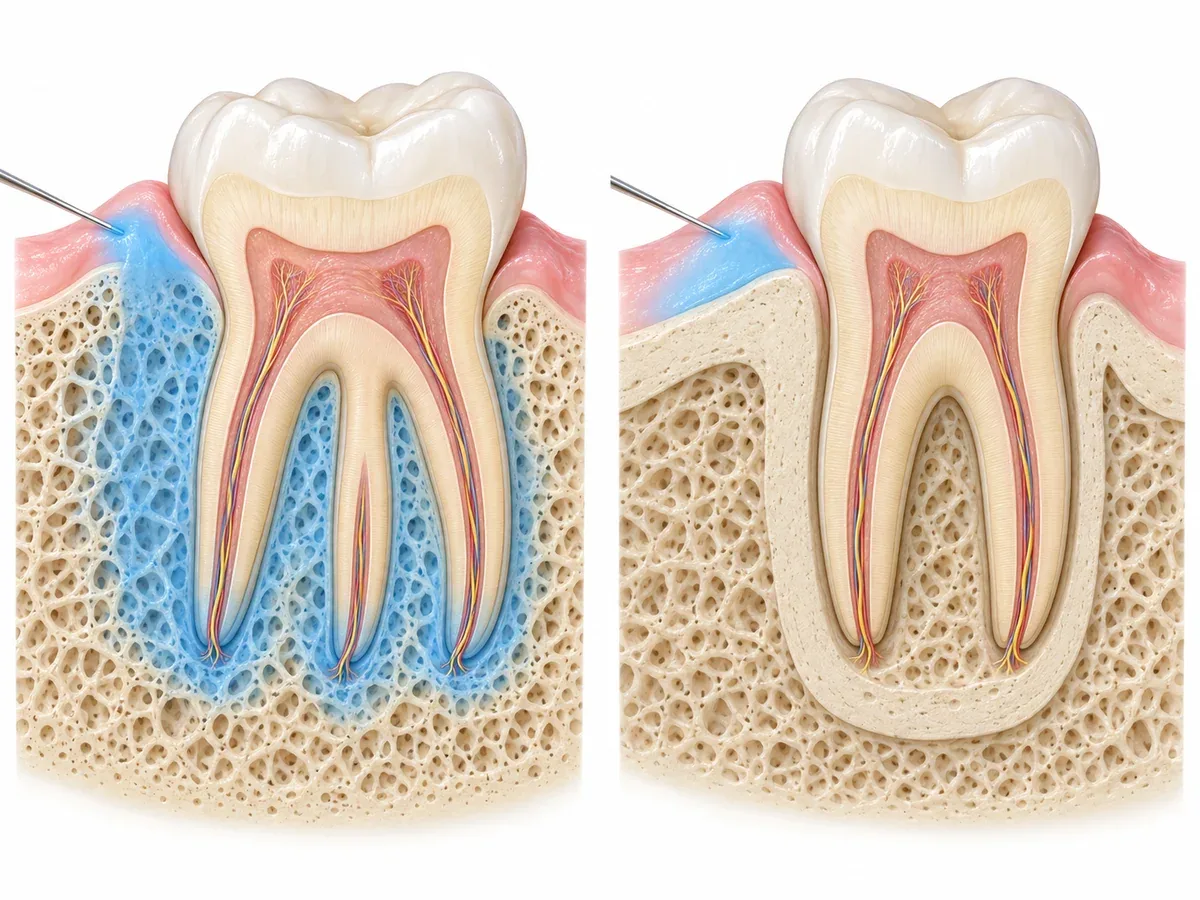
So where infiltration does not work well, the KDCA says a nerve block or an injection into the ligament around the root is added. For lower molars, combining an inferior alveolar nerve block with infiltration is described as standard practice.
Inflammation is the second reason. The KDCA explains that in severely inflamed areas, ordinary infiltration may work less well, and extra anesthesia such as a nerve block is needed.
This is why anesthesia can feel weaker on a day you come in swollen and in pain. It happens more often to people who put off their visit for a long time.
So we sometimes change the order. The KDCA's wisdom tooth guide says extraction during severe inflammation heals poorly and can spread the infection. Healing is easier when the inflammation is calmed first.
That is why we sometimes prescribe medicine first instead of treating that day. It is not a delay. It is following the right order.
How many local anesthesia injections can you safely have?
When treatment runs long, more anesthetic is given along the way. But it cannot be given without limit. The KDCA states the limits in numbers.
For lidocaine, the anesthetic most used in dentistry, the recommended maximum dose is 7 mg per kg of body weight, up to 500 mg. For a 70 kg adult, that equals about 13 standard cartridges.
There is a second limit for epinephrine, the vasoconstrictor mixed into the anesthetic. The KDCA gives a safe dose of 0.2 mg for healthy people and 0.04 mg for people with significant heart disease.
In cartridges, that is about 11 for healthy people and about 2 for people with heart disease.
| Basis | Reference amount |
|---|---|
| Lidocaine | 7 mg per kg of body weight, up to 500 mg |
| Healthy adult (epinephrine) | About 11 cartridges |
| Significant heart disease (epinephrine) | About 2 cartridges |
You can see how much lower the limit is for people taking medicine for their heart or blood pressure. The KDCA notes that anesthetics with a vasoconstrictor may be restricted by medical history, so this should be checked by questioning before treatment.
If you take heart or blood pressure medicine, please always tell us. The dose limit changes, and in some cases we switch to a different anesthetic. You are welcome to bring a photo of your medicine labels.
So we calculate in advance how much can be done in one visit. On some days we suggest splitting treatment over several dates instead of finishing everything at once, usually for this reason.
Children need even more care. The KDCA says the maximum dose is calculated by body weight, and lower-concentration anesthetics are recommended because of toxicity.
How long until local anesthesia works, and when does it wear off?
We are asked this often. According to the KDCA, it takes from a few seconds to over 10 minutes to take effect. With a vasoconstrictor, it lasts about an hour, depending on the drug and method.
However, full feeling takes longer than that to return. That is why your lips can stay numb for a good while after treatment ends.
Rarely, something else can happen. During a lower-jaw nerve block, if the needle goes too far back, medicine can enter the parotid gland below the ear. The facial muscles may then stop moving for a while.
The KDCA says this lasts about 2 to 3 hours, until the medicine wears off. Many people are startled, so we mention it in advance. If your eye does not close well, use artificial tears, and tell us at once if nothing improves with time.
A deep nerve block can also cause paresthesia, an altered sensation such as tingling. The KDCA explains that most paresthesia recovers by itself without treatment.
For wisdom tooth removal, the KDCA gives more specific figures. Paresthesia recovers by itself in 96% of cases for the inferior alveolar nerve and 87% for the lingual nerve, usually within 1 to 2 months.
Some cases last longer, though. If something feels wrong, tell us early so we can follow it together.
What if you are afraid of needles?
Many people put off the dentist because they fear the injection itself. That fear can show up as a real physical reaction.
The KDCA notes that pain or fear during the needle can make a person faint. It lists the warning signs that can come before fainting.
- feeling stuffy, uncomfortable or drowsy
- a heavy stomach or nausea
- cold sweat and a pale face
- cold hands and feet, and dizziness
The KDCA says these signs can appear from a few seconds to a few minutes beforehand. Tell the dental team at once so treatment can stop and they can respond.
Please do not hold it in; just raise your hand. In most cases, lying the chair back with your head low and legs raised is enough to recover.
When fear makes treatment itself too hard, we consider sedation as well. The KDCA's sedation guide lists strong anxiety and fear as reasons for it. It also lists cases where local anesthesia works poorly and more pain control is needed.
Even with sedation, local anesthesia is still given. One does not replace the other.
What should you watch for after treatment in Busan?
Sometimes what happens after treatment matters more. The KDCA clearly notes that patients, especially children, may bite, chew or scratch the numb area and hurt themselves because they feel no pain.
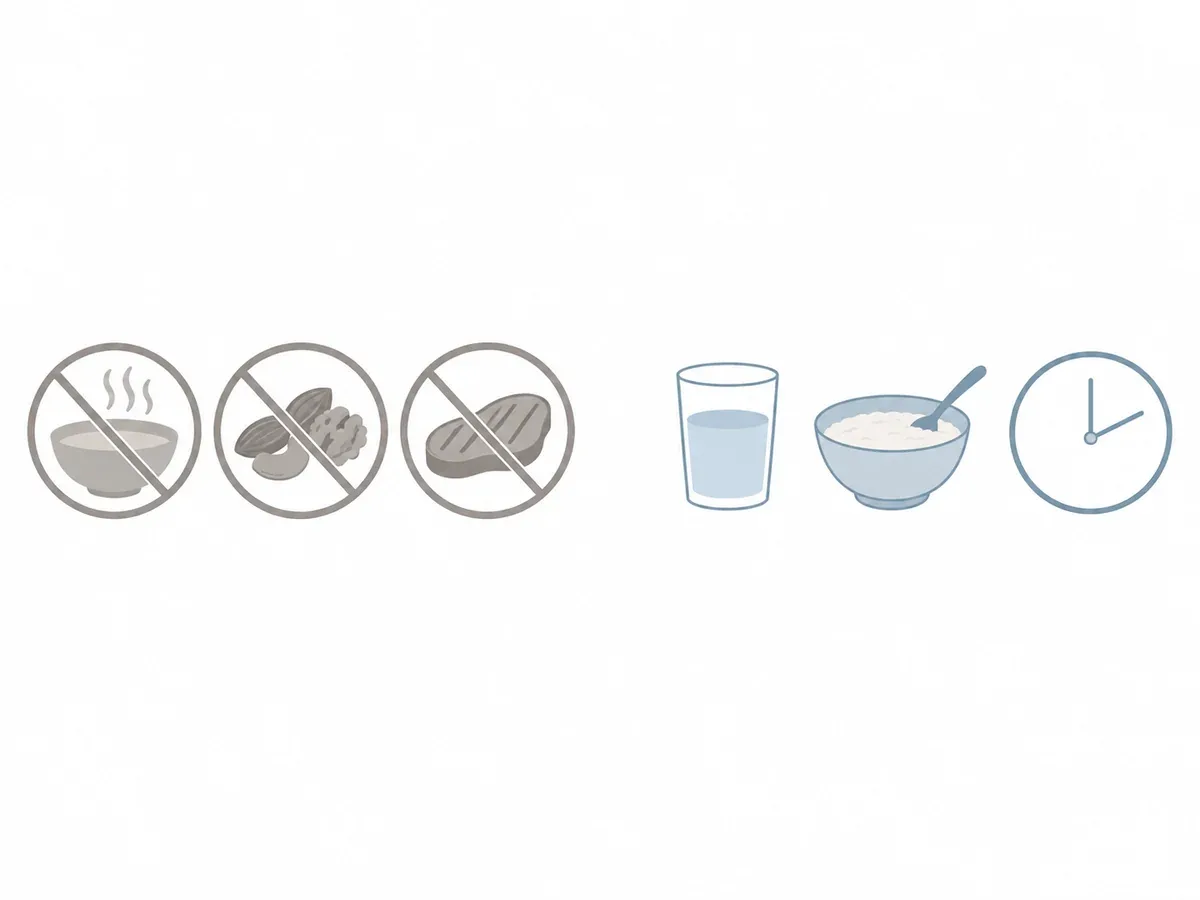
So here is our advice for the hours after local anesthesia.
| Group | What to do |
|---|---|
| Please avoid | Hot food and drinks (you will not feel a burn) |
| Hard or chewy food | |
| Biting your numb lip or cheek to test it | |
| Please do | Eat after feeling returns |
| If it is a child, have a parent watch them closely |
If you had a tooth pulled or gum surgery, one more set of rules applies. The KDCA's wisdom tooth guide advises the following.
- Bite firmly on the gauze for about 30 minutes.
- Do not use a straw.
- Do not touch the area with your tongue or fingers.
A dislodged blood clot slows healing, which is why these steps matter.
The KDCA says no special tests are needed before local anesthesia. Instead, it stresses checking by questions beforehand. These are the things we ask you:
- whether you have had a hard time with anesthesia before
- any heart, blood pressure or thyroid diagnosis or medicine
- whether you have been told of liver or kidney problems
- any allergies to medicine or food
- whether you are pregnant or breastfeeding
- whether you have a strong fear of injections
Why ask about the liver or kidneys? The KDCA explains that these conditions can slow how the body clears the drug, so its level in the blood can rise. Small details help us set the dose.
Frequently asked questions
Am I really someone local anesthesia does not work on?
It can happen, but it is usually about the location and the condition of the tooth. The KDCA explains that anesthesia may work less well where the bone is thick, like the lower jaw, and where inflammation is severe. In those cases, we change or add methods.
Can I drive after local anesthesia?
If you had local anesthesia alone, it does not affect consciousness, so driving is generally fine. On a day you also had sedation, you must not drive. We will tell you in advance to come with someone that day.
Is it safe during pregnancy?
The KDCA describes the local anesthetics and vasoconstrictors used in dentistry as safe for pregnant and breastfeeding women, with care that the medicine does not enter a blood vessel. It depends on your stage and health, so we decide together with your obstetrician.
Can I get this treatment in English in Busan?
Yes. We offer 1:1 English interpretation from the first consultation through the end of treatment. The clinic is near Seomyeon Station Exit 2 (5-min walk), opposite Lotte Hotel Busan, and you can call 010-8555-2854 (+82-10-8555-2854 from abroad).
When anesthesia does not work well,
there is usually a reason.
Before calling it your body type,
we look at the tooth and the inflammation first.
If you are in Busan and worried about local anesthesia, Reset Dental Clinic offers 1:1 English interpretation from your first consultation through the end of treatment. Call 010-8555-2854 and tell us about any past difficulty first.
References
- KDCA National Health Information Portal, "Dental Local Anesthesia" — definition and advantages of local anesthesia, topical, infiltration and nerve block methods, upper versus lower jaw, reduced effect in inflamed areas, maximum doses of lidocaine and epinephrine, onset and duration, warning signs of fainting and complications, and guidance for pregnant and breastfeeding women and children
- KDCA National Health Information Portal, "Dental Sedation" — when sedation is recommended, why local anesthesia is given alongside it, and precautions for going home
- KDCA National Health Information Portal, "Wisdom Teeth" — extraction order when inflammation is severe, recovery rates and timing of inferior alveolar and lingual nerve paresthesia, and care after extraction
- KDCA National Health Information Portal, "Gum Disease (Periodontal Disease)" — flap surgery performed under local anesthesia and the stages of periodontal treatment
- KDCA National Health Information Portal, "Dental Implants" — checking general health conditions and current medicines before surgery
Written by Reset Dental Clinic Support Team
Medical review Dr. Na In-chae, Head Dentist · Periodontics Specialist
Last updated: September 19, 2026
This column is for general information and does not replace diagnosis or treatment for individual patients. If you have symptoms, please see a dentist.


