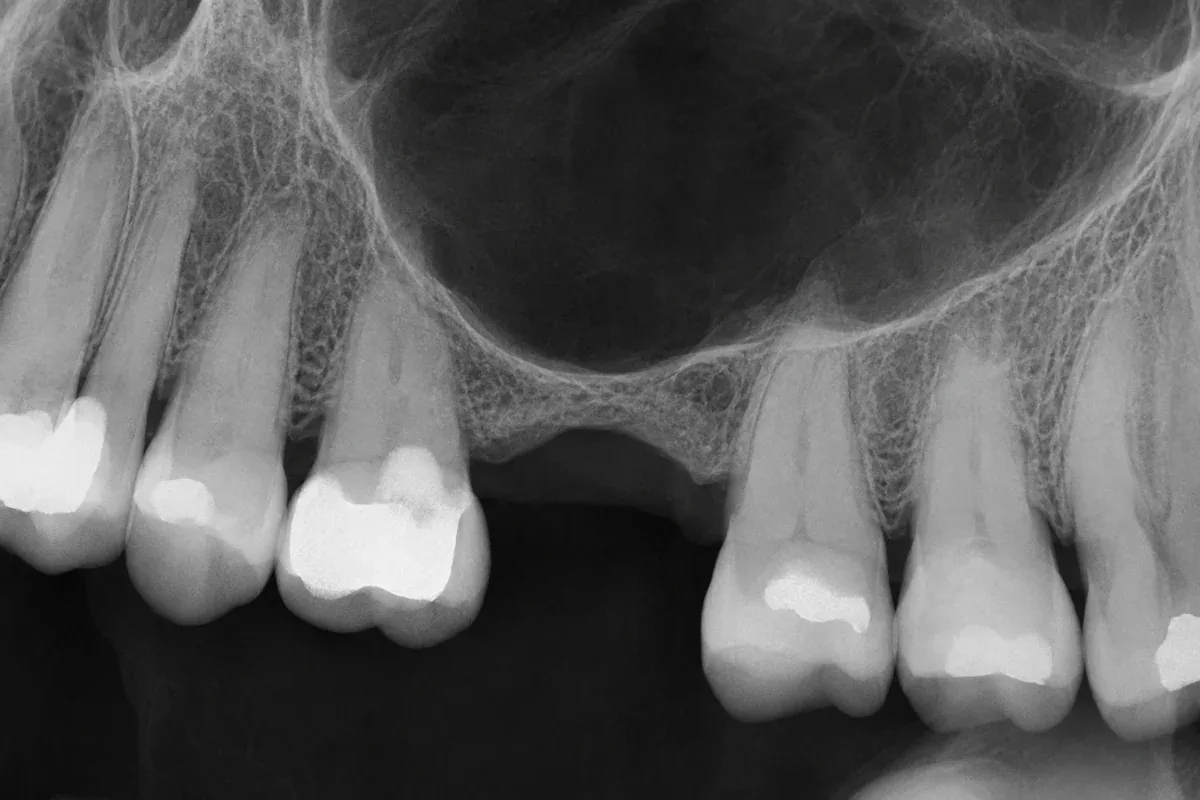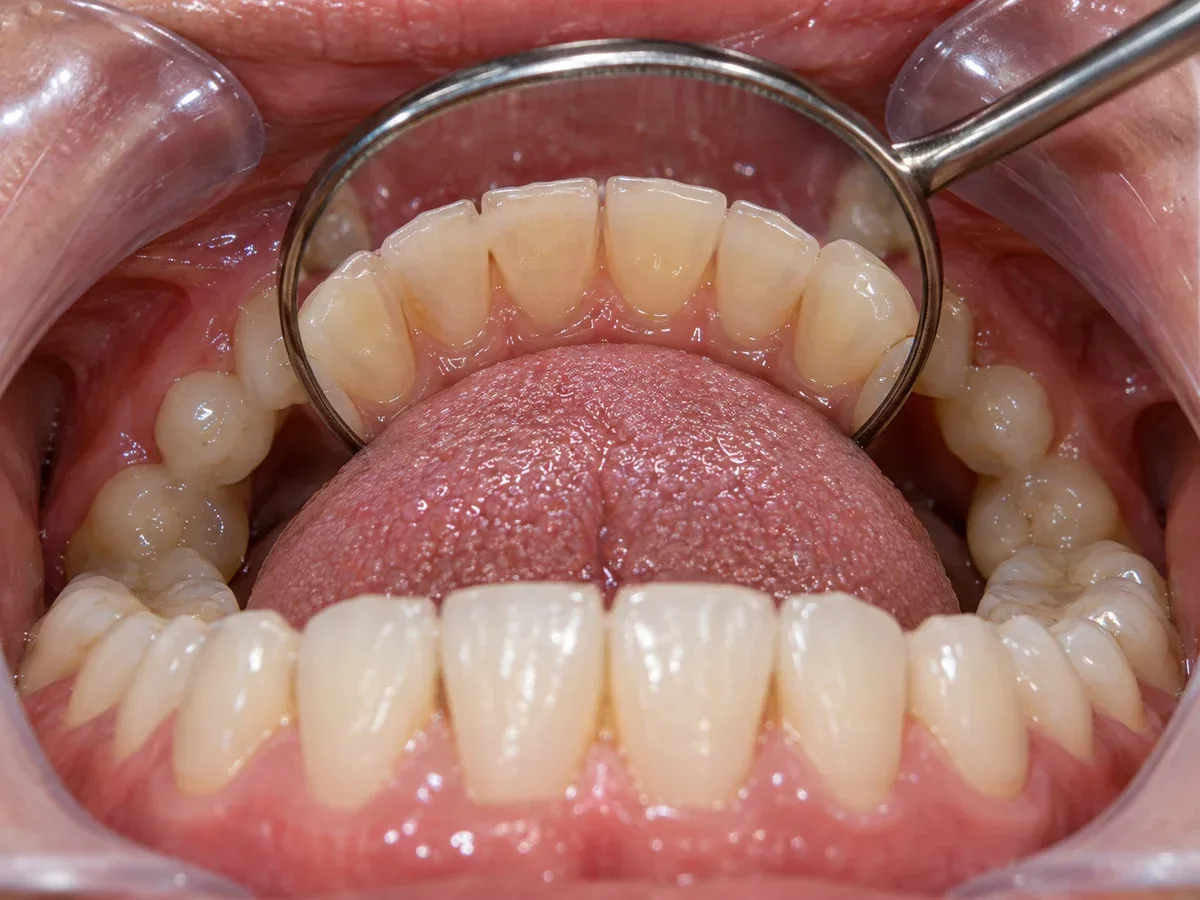
- The first split is the method, not the material. Resin is a direct restoration built in the mouth, while porcelain veneers are an indirect restoration made outside and bonded on.
- The source says composite resin keeps tooth reduction to a minimum, is easy to repair in part and can be finished the same day.
- In exchange, its wear resistance is somewhat lower, and pigment can settle into tiny gaps on its surface.
- Porcelain sits on the other side: excellent looks and surface stability, but a complex lab process and a tendency to chip.
At Reset Dental Clinic in Seomyeon, Busan, one question follows the decision to fix a front tooth: resin or porcelain veneers? We think the answer should come from what each material does well, not from price or trends. For patients living in or visiting Korea, we provide 1:1 English interpretation from the first consultation through the end of treatment.
The KDCA National Health Information Portal describes each material in separate articles: "Resin Treatment", "Tooth-Colored Inlays" and "Laminate Treatment". Below, we set their descriptions side by side.
What is the first difference between resin and porcelain veneers?
The biggest difference between the two treatments is where the restoration is made.
With resin, the dentist fills the prepared area with composite resin and hardens it right in your mouth. The source explains that composite resin is grouped by how it sets: self-cure, light-cure and dual-cure. Most direct restorations use the light-cure type, which hardens as soon as a light is shone on it.
That is why resin can start and finish in a single sitting. You sit down once, and you leave with the tooth done.
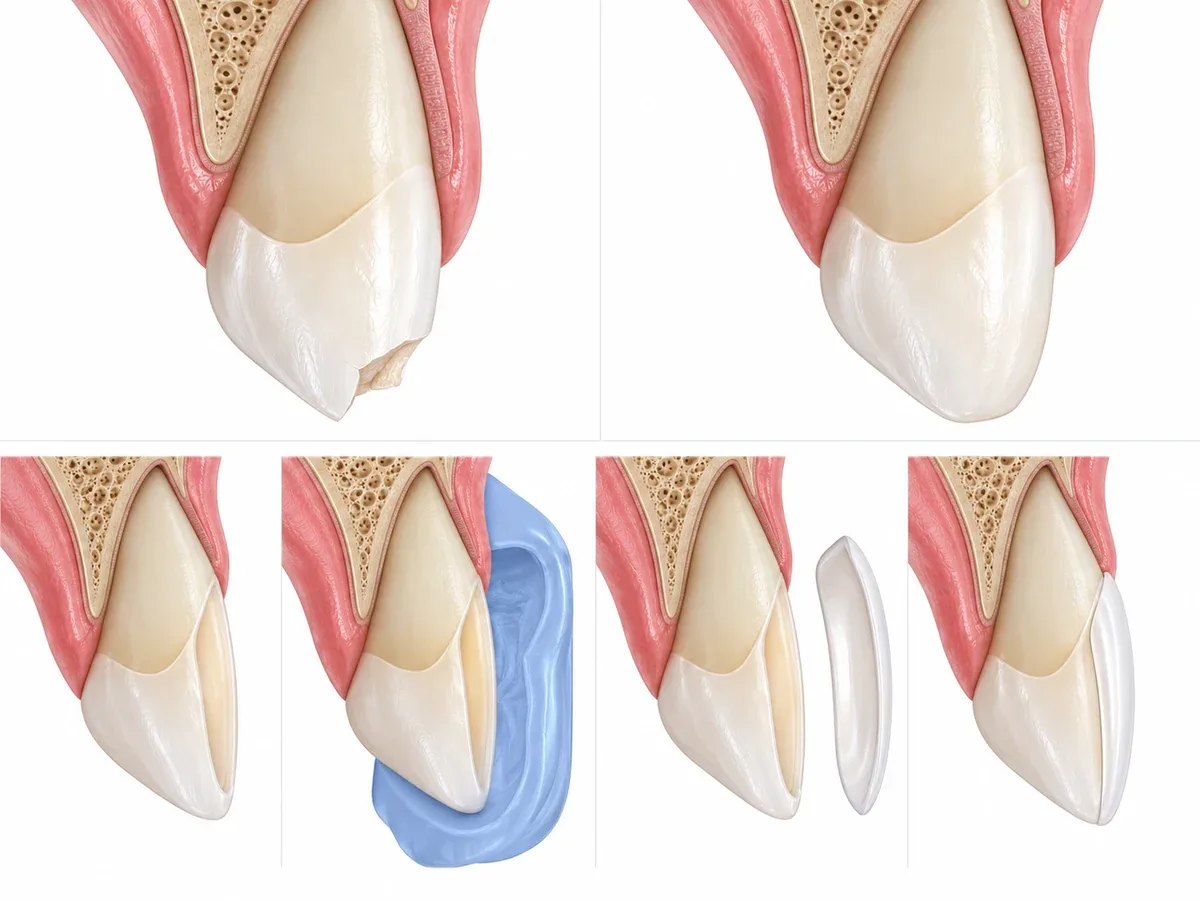
Porcelain veneers work differently. The source lists the steps in order, and each step explains why you come in twice:
- The tooth surface is lightly shaped.
- The shaped tooth, the teeth beside it and the gums are recorded with a precise impression material.
- A temporary tooth is placed if needed.
- The veneer is made through a careful process at a dental lab.
- At the next visit, color, shape and fit are checked, and the veneer is bonded.
The source on tooth-colored inlays describes indirect work in the same way. It usually takes two visits and a lab step.
In between, the temporary filling is not a material that bonds to the tooth. So you should avoid foods with big temperature changes and chewy foods during that period.
| Step | Composite resin (direct) | Porcelain veneers (indirect) |
|---|---|---|
| Shaping | The area is prepared | The enamel surface is lightly shaped |
| Impression | Not needed | A precise impression is taken |
| Making | Built up and light-cured in the mouth | Made at a dental lab |
| In between | Not needed | A temporary tooth, if needed |
| Visits | Same-day treatment is possible | Usually two visits |
What does composite resin do well?
Here are the strengths the source lists for composite resin that matter most for front teeth.
The first is saving tooth. The source says composite resin removes less tooth than amalgam or gold inlays. It stays in place by bonding, so the tooth does not need to be cut into a shape that holds it mechanically.
Metal does not bond to teeth, so more tooth must be removed to keep it from falling out. Bonded restorations, by contrast, can strengthen weak tooth structure while removing very little.
The second is easy repair. The source says partial re-restoration makes upkeep easy, and resin can be used for almost every type of restoration. In plain terms, you do not have to strip it all away; the damaged part can simply be filled again.
The third is time and cost. The source says direct restoration in the mouth saves both time and cost compared with porcelain or gold. It does not give specific amounts.
Two situations are worth a closer look for front teeth:
- Gaps between teeth: if the size mismatch is not large, resin can close the gap directly, in one day, with minimal tooth removal.
- Color problems in one spot: if the discoloration is partial or limited to one tooth, resin can make the surface look natural again.
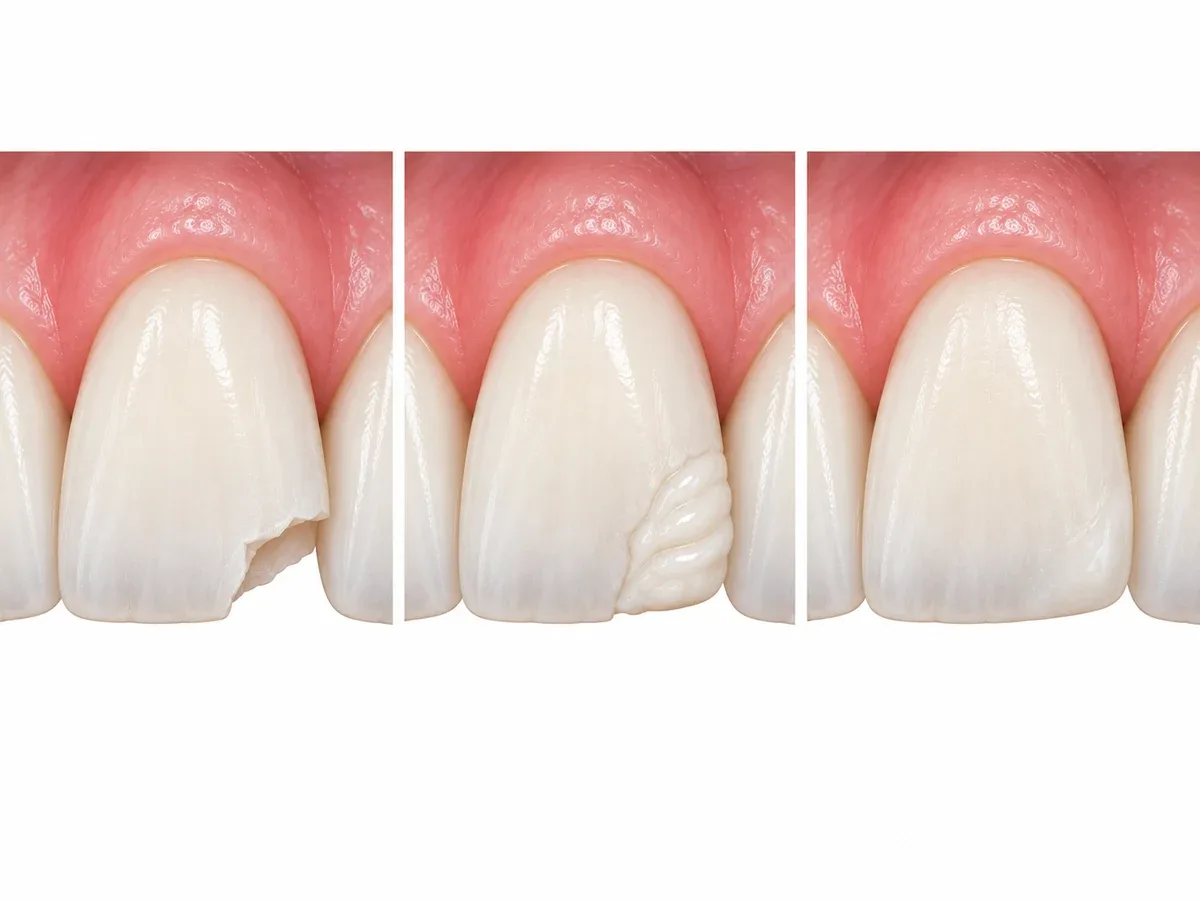
- Chipped front teeth: the source notes that most tooth injuries affect the front teeth, and most fractures can be restored with composite resin.
Where is composite resin weaker?
The same source is open about the weak points, too.
One is wear. The source says composite resin's wear resistance is somewhat lower than other materials, so areas that take heavy chewing tend to wear away. It also notes that wear resistance has improved, and resin is gradually replacing amalgam and gold inlays in back teeth.
The other is color. Composite resin is made of several substances, so tiny gaps form on its surface. When food pigment settles into those gaps, the surface can discolor or stain over time.
The source names these as pigment-heavy items:
- wine
- green tea and black tea
- curry
- tobacco
- coffee
The good news is that this is not hard to deal with. The source says staining at the edges is easily removed by polishing the surface, so regular check-ups after resin work are a good idea. If the color sits on the surface, polishing changes it.
The source is careful about lifespan. It first says that studies on dental materials use unclear standards and different conditions, so the lifespan of composite resin is hard to state exactly.
It then adds that the literature reports a wide range of 3.3 to 16 years. A range that wide means the result depends on the location and size of the filling, chewing habits and care.
Can whitening lighten resin along with the teeth? The source says resin staining is removed by polishing. It does not say that whitening makes the resin itself lighter.

What do porcelain veneers do well?
Now for the other side. The resin article contains one sentence that compares it with porcelain, and we translate it as written.
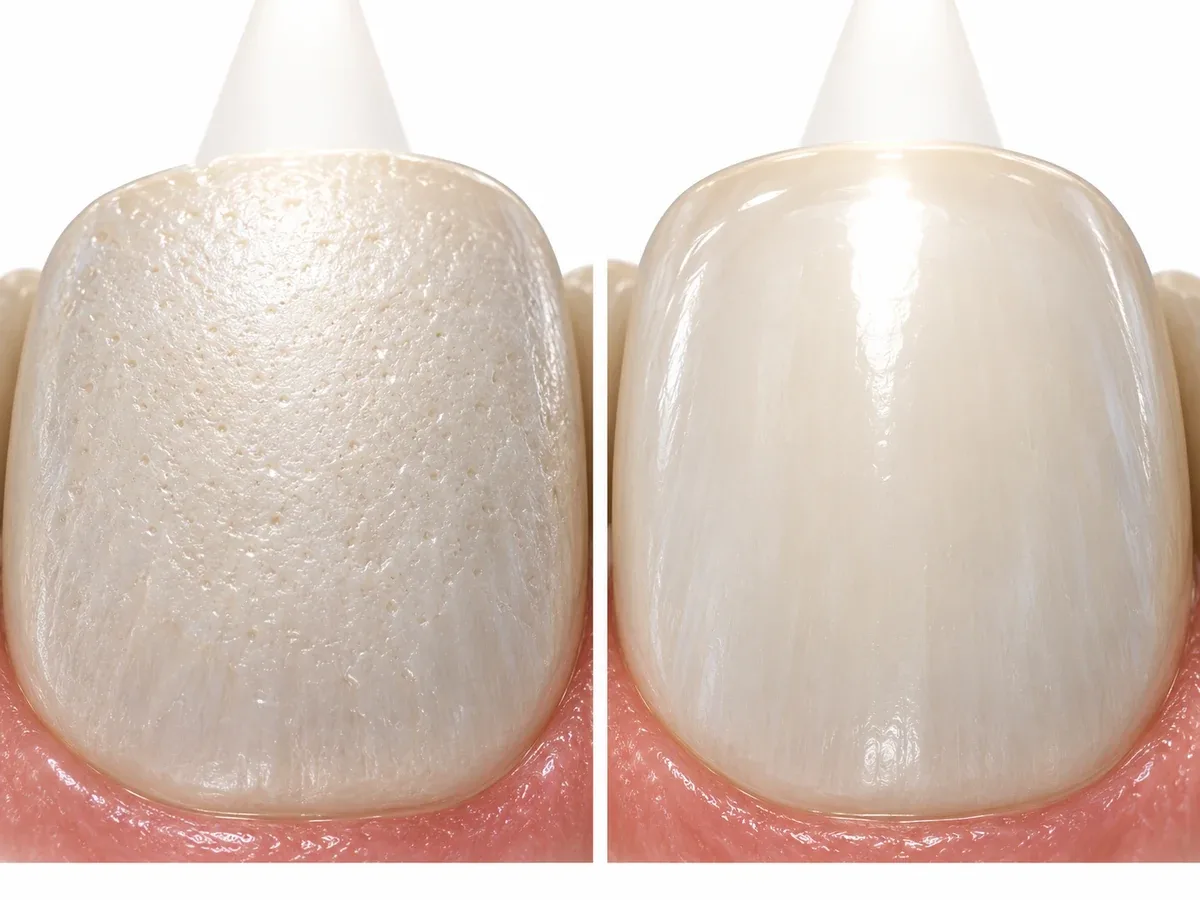
Porcelain has excellent esthetics and surface stability, but it must be made indirectly, so the lab process is complex, esthetic results vary widely, and it breaks easily.
This one sentence holds both the strengths and the weak points of porcelain. The surface is stable, so its color changes little. But it has to be made outside the mouth, the result depends a lot on the maker's hands, and it can break.
The source on tooth-colored inlays describes the same qualities from another angle. Compared with composite resin, porcelain is more esthetic and more biocompatible.
It used to be more brittle and wore down opposing teeth more. Recently it has been adjusted to wear at a rate similar to natural teeth, and its toughness has improved, so it is widely used.
The history in the laminate article backs this up. In the 1970s, resin veneers made from light-cure resin came into use. The source says the resin of that time wore easily and discolored.
From the 1980s, methods for bonding porcelain became known, and porcelain veneers were introduced. Today, "laminate" usually means a porcelain veneer. Wear and staining were the very reasons the material changed.
What do porcelain veneers ask of you in return?
Stable color comes with a trade-off.
The first is tooth structure. The laminate article defines the treatment as bonding a thin shell after minimally shaping the enamel surface. It says "minimally", but that is not zero, and shaped tooth does not come back.
Compare that with resin, which the source says is held by bonding and needs no extra shaping to stay in place. The difference is clear.
The second is strength. The summary says veneers attach to part of the tooth, not the whole crown, so they are relatively weaker than other restorations. Harmful force can make them come off, so the source advises against biting hard foods with treated teeth.
The third is time and process. There are two visits, and you may wear a temporary tooth in between. The inlay article notes that if a temporary comes off, the new restoration may not fit.
The source also lists side effects of veneers:
- the veneer coming off
- partial chipping
- discoloration at the edge
- sensitivity, when teeth feel cold or sore
So porcelain does not rule out staining at the edge. On the other hand, if a veneer simply comes off and there is no decay, it can be bonded again. Small damage can be smoothed and the veneer kept in use.
After bonding, the laminate article gives specific care points. For about two to three days, avoid drinks that stain, such as cola, black tea and coffee. Avoid heavy force from hard foods, and tell the hygienist about your veneers before scaling, because ultrasonic scalers can damage porcelain.
How do we weigh resin against veneers in Busan?
The table below lines up what the sources say about each material, point by point.
| Point | Composite resin | Porcelain veneers |
|---|---|---|
| Where it is made | Directly in the mouth | From an impression, at a dental lab |
| Visits | Same-day treatment is possible | Usually two, with a lab step |
| Tooth reduction | Held by bonding, so it can be kept to a minimum | Minimal shaping of the enamel surface |
| Color stability | Pigment may settle into tiny surface gaps | Excellent surface stability |
| Wear and strength | Wear resistance somewhat lower | Relatively weaker, may come off |
| If part is damaged | Partial re-restoration and repair are easy | Re-bonding or smoothing; remake if severe |
| Lifespan in the sources | Reported widely, 3.3–16 years | Hard to state; around 5–10 years |
No single row puts one side ahead on everything. The sources do not recommend one over the other either; they list what each material does well and poorly.
In our clinic in Busan, we look at a few things in order. Which way each one points is laid out below.
| What we see | We look at first |
|---|---|
| A small area, plenty of tooth left, color problem in one spot | Resin |
| Color and shape of the whole front surface need work | Porcelain veneers, alongside resin |
| The same resin area keeps changing after several repairs | Porcelain veneers, alongside resin |
| The color comes from the tooth itself, not the surface | Porcelain veneers, alongside resin |
| Biting force concentrates on one spot | Sort that out first, whichever we choose |
Is it fine to try resin first? Starting with the option that touches the tooth least is the right order. But each time old resin is removed for a redo, a little tooth can come off with it.
So it helps to judge first whether the spot will be fixed once or will keep coming back. Before deciding, it is worth asking three things:
- How large is the area?
- Where is the color: on the surface, or in the tooth itself?
- Does biting force concentrate on that spot?
Can the two be mixed in one mouth? In practice, that is sometimes the plan. The two materials pass light differently and change differently over time.
For front teeth that sit side by side, the question is not just the first color match. We also think about whether they will still look right together years later.
Frequently asked questions
My front tooth chipped at the tip. Do I need porcelain veneers?
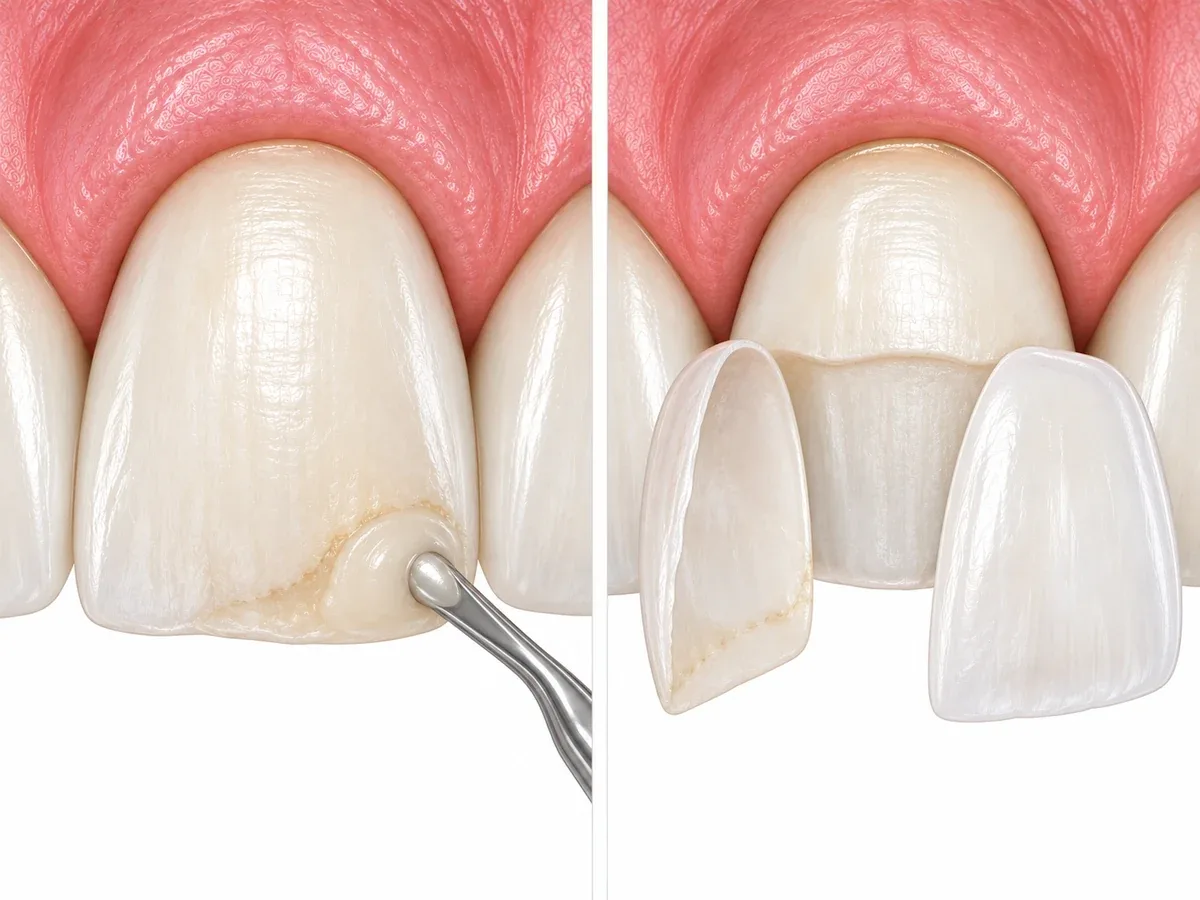
Not necessarily. The source says most fractures can be restored with composite resin, with very little tooth removed and a very natural look. The veneer article also lists tip fractures as a use, so the choice depends on the size of the break and the tooth left.
Is the resin material safe for my body?
The source answers this directly. Some components are released into the body, but no risk from this has been reported, and leftover components have very low solubility. It concludes that composite resin is a material with extremely low risk to the body.
Where does sensitivity after resin or veneers come from?
Both sources mention it. With resin, sensitivity can appear if the exposed inner tooth is not fully covered or bonded, and it usually eases with time; veneers list sensitivity as a side effect too. If it stays the same after a few weeks or gets worse, please get it checked.
Can I get resin or veneers in English in Busan?
Yes. We offer 1:1 English interpretation from the first consultation through the end of treatment. The clinic is near Seomyeon Station Exit 2 (5-min walk), opposite Lotte Hotel Busan, and you can call 010-8555-2854 (+82-10-8555-2854 from abroad).
One treatment finishes in a single visit.
The other is made outside and bonded at a second visit.
The sources note resin's minimal reduction and easy repair,
and porcelain's surface stability.
They list the weak points of each, side by side.
How large is the area, where is the color,
and does force concentrate there?
Those three questions come first.
If you are weighing resin against porcelain veneers in Busan, we offer 1:1 English interpretation from your first consultation through the end of treatment. Call 010-8555-2854 to book a consultation.
References
- KDCA National Health Information Portal, "Resin Treatment (Dental Resin Treatment)" — what composite resin is made of; self-cure, light-cure and dual-cure types; why bonding means less tooth reduction than amalgam or gold inlays; easy partial repair; time and cost savings of direct restoration; somewhat lower wear resistance; the comparison with porcelain; staining from wine, tea, curry, tobacco and coffee and its removal by polishing; a reported lifespan of 3.3–16 years; same-day gap closure and repair of fractured front teeth; very low risk to the body; sensitivity and retreatment
- KDCA National Health Information Portal, "Amalgam and Inlays (Tooth-Colored Inlays)" — resin and porcelain as the main tooth-colored materials; the strengths of each; porcelain's past brittleness and recent improvements; risk of breakage with grinding or clenching; two visits and a lab step; care with temporary fillings and the risk of poor fit if a temporary comes off
- KDCA National Health Information Portal, "Laminate Treatment" — definition (minimal enamel shaping, a thin 0.5–1.0 mm shell bonded with resin cement); the move from 1970s resin veneers to porcelain from the 1980s; treatment steps; relatively lower strength and risk of coming off; side effects and how they are handled; care for 2–3 days after bonding; a typical use period of around 5–10 years
- KDCA National Health Information Portal, "All-Ceramic Crowns" — the trade-off between strength and translucency in ceramics, the risk of fracture when biting hard food suddenly, and slightly more tooth reduction than metal restorations
- KDCA National Health Information Portal, "Dentin Hypersensitivity" — how thinning enamel and exposed dentin let stimuli through and cause sensitivity
Written by Reset Dental Clinic Support Team
Medical review Dr. Kim Hyun-joo, Head Dentist · Esthetic Restorations
Last updated: September 19, 2026
This column is for general information and does not replace diagnosis or treatment for individual patients. If you have symptoms, please see a dentist.