- The neck is rich in lymph glands. About 40% of all the lymph nodes in the body sit in the neck area.
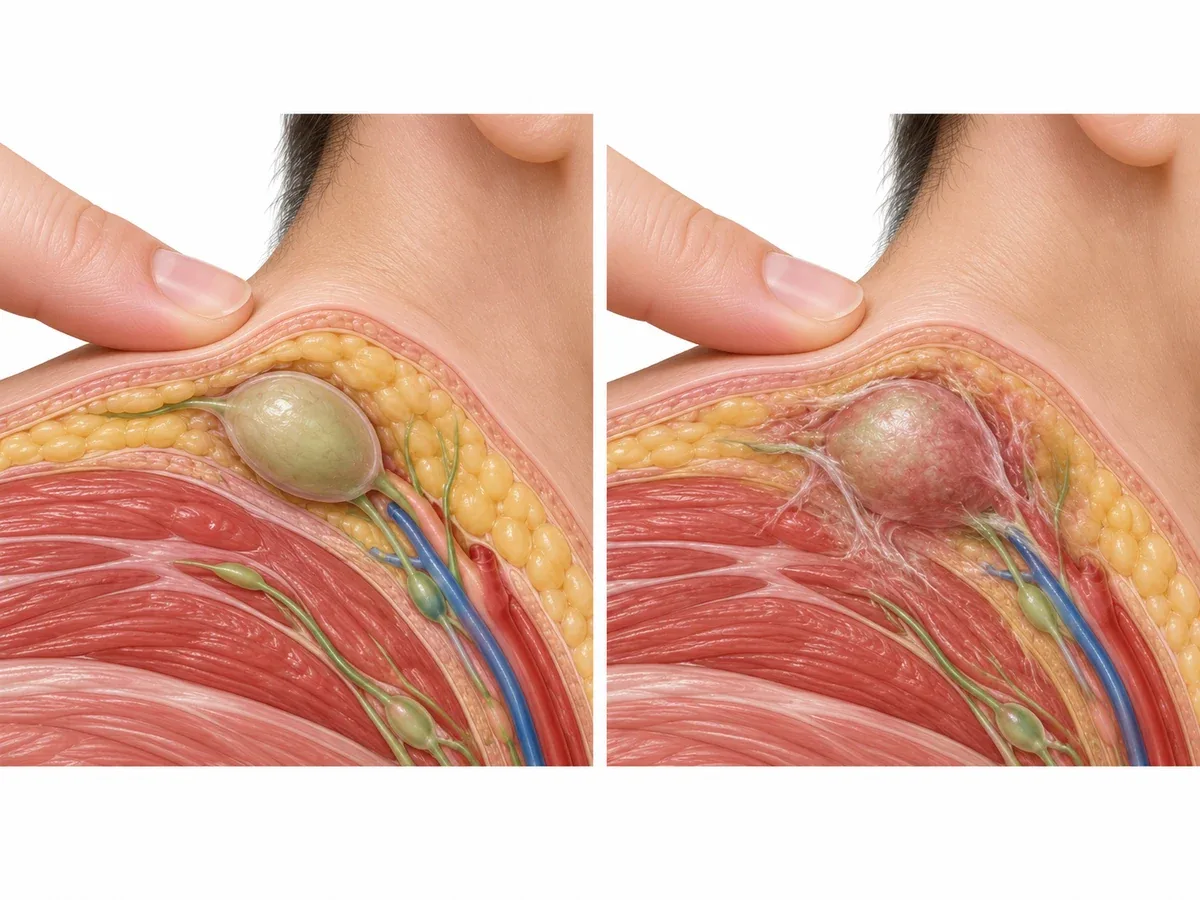
- A lymph node swollen by infection is often tender when pressed. It is usually under about 1 cm across, separate from its neighbors and easy to move.
- As lymphadenitis progresses, the node can stick to the tissue around it and stop moving. Whether a lump moves is an important clue.
- Tuberculous lymphadenitis forms several lumps that grow slowly without pain. They often go unnoticed for one to two months.
Some people come to our dental clinic in Seomyeon, Busan because they have felt a lump in their neck. It may come from a tooth infection, or have nothing to do with teeth, and the sources describe how to tell these apart. For patients living in or visiting Korea, we provide 1:1 English interpretation from your first consultation through the end of treatment.
This column draws on four sources. Three are entries from Asan Medical Center's disease encyclopedia: "Lymphadenitis", "Ludwig's Angina" and "Oral Cancer". The fourth is "Systemic Disease and Periodontal Treatment" from the national health information portal run by the KDCA.
Why are lumps in the neck so common?
The source defines lymphadenitis as the enlargement of lymph nodes. It is an immune response to infection, or to other causes such as malignant tumors.
The body has a network of lymph vessels, built much like blood vessels, linking every part of the body through small tubes. These vessels carry body fluids other than blood.
The fluid they carry, called lymph, mainly handles immune function. Lymph nodes sit along these vessels like checkpoints.
One sentence in the source explains why neck lumps are so common. About 40% of all the lymph nodes in the body are found in the neck.
Lymph vessels and lymph nodes run all the way around the neck. So when the immune system reacts to something nearby, the neck is one of the first places you may feel it.
Feeling a small lump in the neck, then, is not rare in itself. What matters is what kind of lump it is, how it behaves and how long it stays.

What makes a lymph node swell?
The source lists the causes clearly. Lymphadenitis develops when lymph glands react to bacteria and viruses from outside, overwork or stress.
It is common in children who often catch colds or get tonsillitis. The source also notes that tuberculosis bacteria can be a cause.
There is one more cause in the list. A malignant tumor that started in another organ can move into the lymph glands and cause inflammation there.
From a dental point of view, inflammation in the mouth can be the starting point. The national portal defines periodontal (gum) disease as a chronic infection caused by bacteria.
The Ludwig's angina entry, covered below, explains how inflammation in the mouth can spread into the spaces of the neck. That is why a dentist is one of the people who should look at a neck lump.
In short, the causes listed in the sources fall into a few groups:
- bacteria and viruses entering from outside
- overwork and stress
- tuberculosis bacteria
- a malignant tumor from another organ moving into the lymph glands
- inflammation in the mouth, such as severe decay or gum infection, spreading into the neck
What does a swollen lymph node feel like?
The source gives a concrete description. In the early stage, the lymph gland enlarges and a lump can be felt.
When lymphadenitis is caused by infection, pressing on that spot is often painful. Size and texture are described as well.
The lymph node is enlarged to under about 1 cm in diameter. The nodes sit separately, one by one, and move easily under the finger.
The next point is important. As lymphadenitis progresses, the lymph node sticks to the tissue around it and no longer moves easily. In the early stage, redness of the skin and a high fever may come with it.
So one thing to notice is whether the lump rolls under your finger or stays stuck in one place. This is not a way to diagnose yourself. It is simply useful information to share when you see a dentist or doctor.
| What to notice | What the source says |
|---|---|
| Early stage | The lymph gland enlarges and a lump can be felt |
| Pain | When caused by infection, pressing on it is often painful |
| Size and position | Under about 1 cm across, with nodes sitting separately |
| Movement | Moves easily at first; as it progresses, it sticks to nearby tissue and stops moving easily |
| What may come with it | In the early stage, skin redness and a high fever may occur |
When you check, it helps to feel the same spot on both sides of the neck at once. Comparing left and right makes a difference easier to notice.
How does a swollen lymph node look in different cases?
The source separates several situations. Each one has its own pattern.
When lymphadenitis follows an upper respiratory infection or acute pharyngitis, symptoms can appear on both sides of the neck at the same time.
As lymphadenitis progresses, the node grows and can form an abscess. Pus may then break out through the skin, leaving a skin ulcer and a fistula, which is an abnormal passage.
Tuberculous lymphadenitis is common in children and in adults in their twenties. Several lumps appear around the neck, without pain, and grow slowly.
People often miss them for one to two months. The lumps are then found by chance, after they have become quite large.
Some patients, 20% or fewer, report other complaints. The source lists these:
- a low-grade fever
- weight loss with no clear reason
- loss of appetite
- night sweats
- tiredness
- pain in the neck area
The source also notes that lymph nodes can enlarge because of other malignant tumors. That is why a lump that behaves unusually deserves a proper check.
| Situation | What the source says |
|---|---|
| After an upper respiratory infection or acute pharyngitis | Symptoms can appear on both sides at once |
| Progressed lymphadenitis | The node grows and forms an abscess; a skin ulcer and fistula can develop |
| Tuberculous lymphadenitis | Common in children and adults in their twenties; several lumps grow slowly without pain |
| Other malignant tumors | Lymph nodes can enlarge |
What if the swelling started from a tooth?
At a dental clinic, this is the first possibility we rule in or out. The Ludwig's angina entry describes an infection in which inflammation from the mouth spreads rapidly into the space just below the jaw.
It mostly starts when bacteria from severe tooth decay or periodontitis invade the floor of the mouth. The main causes are decay and root-tip inflammation in the lower front teeth or premolars.
Sometimes it develops when inflammation around a wisdom tooth spreads. This case is different in nature from an ordinary swollen gland.
It spreads very quickly, so it can block the airway without any clear early warning. For that reason, it needs urgent treatment.
The typical sign is that the tongue is pushed upward and looks like two tongues. The source lists these symptoms alongside it:
- neck pain and swelling
- difficulty swallowing
- limited neck movement
- drooling
- fever
- difficulty breathing
The most serious complication is suffocation from airway blockage. So if your neck is swollen and you find it hard to swallow, breathe or open your mouth, do not wait.
| Item | What the source says |
|---|---|
| What it is | Inflammation from the mouth spreading rapidly into the space just below the jaw |
| Main causes | Decay and root-tip inflammation in the lower front teeth or premolars; sometimes a wisdom tooth |
| Typical sign | The tongue is pushed up and looks like two tongues |
| Why it is urgent | It can block the airway without clear early symptoms |
| Tests | A dental panoramic X-ray and a CT scan of the neck |

Why does a lump that lasts need a closer look?
The oral cancer entry also belongs in this picture. If a tumor is not treated properly, it grows and destroys the soft tissue and bone around it.
As it progresses, it spreads to the lymph nodes in the neck and can then spread to other organs in the body.
The same entry says oral cancer can develop in several places.
- the lips
- the tongue
- the inner surface of the cheeks
- the hard palate
- the gums
It can form a lump or an ulcer, or appear as a white or discolored patch on the surface. The source names drinking and smoking as the main causes, and 90% of patients have a history of smoking.
Say you have a mouth sore that is not healing and a neck lump at the same time. Do not treat them as two separate problems, and tell us about both together.
For mouth sores, an ulcer that has not healed after two to three weeks of treatment is the point where a closer check is needed. How long a lump has been there also matters: a few days is different from several months.

How does a dental clinic in Busan check a neck lump?
Our part is to find out whether the problem started in the teeth or gums. The Ludwig's angina entry recommends a dental panoramic X-ray to find a dental cause.
It also recommends a CT scan of the neck to see how far the inflammation has spread. If no dental cause is found, you are referred on to the right medical department.
Gum disease is part of the picture too. The national portal describes periodontal disease as a chronic bacterial infection that shares risk factors with other chronic diseases.
It adds that periodontal disease can worsen heart and blood vessel disease, high blood pressure, diabetes and chronic kidney disease. Treatment is applied step by step to match its severity, with scaling and root planing among the steps.

It helps to come prepared. Before your visit, note down these points:
- How long you have had the lump: days, weeks or months.
- Whether it moves under your finger or stays in one place.
- Whether it hurts when pressed.
- Whether you have a fever, redness or tiredness with it.
- Whether you have a sore in your mouth that has not healed.
- Whether swallowing, breathing or opening your mouth feels difficult.
If the last point applies, do not wait for a regular appointment. Those signs call for emergency care first.
Frequently asked questions
Can I leave a lymph node lump that appeared after a cold?
The source says lymphadenitis comes from a reaction to bacteria, viruses, overwork or stress, and is common in children who often have colds or tonsillitis. Even so, it needs a check if it grows, does not move when pressed or comes with a high fever.
Is a lump that does not hurt worse?
That cannot be said for certain. Infection-related lymphadenitis is often painful when pressed, while tuberculous lymphadenitis causes no pain and grows slowly. Lymph nodes can also enlarge because of other malignant tumors, so a lack of pain is not a reason to feel reassured.
When should I go to the emergency room?
Among the symptoms listed in the Ludwig's angina entry, seek emergency care without delay if you have difficulty swallowing, drooling, difficulty breathing or a change in consciousness.
Can I have a swollen lymph node checked in English in Busan?
Yes. We offer 1:1 English interpretation from the first consultation through the end of treatment. The clinic is near Seomyeon Station Exit 2 (5-min walk), opposite Lotte Hotel Busan, and you can call 010-8555-2854 (+82-10-8555-2854 from abroad).
A lump in the neck is common, but not every lump is the same.
Whether it moves, whether it hurts,
how long it has been there,
and whether a tooth is involved all point in different directions.
If you want to rule out a dental cause for a swollen lymph node in Busan, talk to us. Reset Dental Clinic offers 1:1 English interpretation from your first consultation through the end of treatment. Call 010-8555-2854 to book a visit.
References
- Asan Medical Center Disease Encyclopedia, "Lymphadenitis" — the definition of lymphadenitis as lymph node enlargement from an immune response to infection or malignant tumors; lymph vessels as channels for body fluids other than blood, with lymph mainly handling immune function; about 40% of the body's lymph nodes lying in the neck; causes including bacteria, viruses, overwork, stress, tuberculosis bacteria and tumors from other organs; early signs (a palpable lump, tenderness with infection, nodes under about 1 cm that sit separately and move easily); nodes sticking to nearby tissue as it progresses, with possible skin redness and high fever; symptoms on both sides after upper respiratory infection or acute pharyngitis; abscess, skin ulcer and fistula; tuberculous lymphadenitis in children and adults in their twenties, with slowly growing lumps that do not hurt and, in some, low fever, weight loss, poor appetite, night sweats and tiredness
- Asan Medical Center Disease Encyclopedia, "Ludwig's Angina" — an infection in which inflammation from the mouth spreads rapidly into the space below the jaw and can block the airway without clear early symptoms; causes including bacteria from severe decay or periodontitis entering the floor of the mouth, mainly from lower front teeth or premolars, sometimes a wisdom tooth; the raised "double tongue" sign, neck pain and swelling, difficulty swallowing, limited neck movement, drooling, fever and difficulty breathing; dental panoramic X-ray and neck CT; suffocation from airway blockage as the most serious complication
- Asan Medical Center Disease Encyclopedia, "Oral Cancer" — oral cancer arising on the lips, tongue, inner cheeks, hard palate or gums, mostly squamous cell carcinoma; lumps, ulcers or white or discolored surface patches; destruction of soft tissue and bone, spread to the neck lymph nodes and distant organs if untreated; drinking and smoking as the main causes, with 90% of patients having a smoking history
- KDCA National Health Information Portal, "Systemic Disease and Periodontal Treatment" — periodontal disease as a chronic bacterial infection sharing risk factors with other chronic diseases; its frequency in outpatient health insurance statistics; its possible worsening of cardiovascular disease, high blood pressure, diabetes and chronic kidney disease; step-by-step treatment such as scaling and root planing according to severity
Written by Reset Dental Clinic Support Team
Medical review Dr. Kim Hyun-joo, Head Dentist · Integrated Dentistry Specialist
Last updated: September 19, 2026
This column is for general information and does not replace diagnosis or treatment for individual patients. If you have symptoms, please see a dentist.