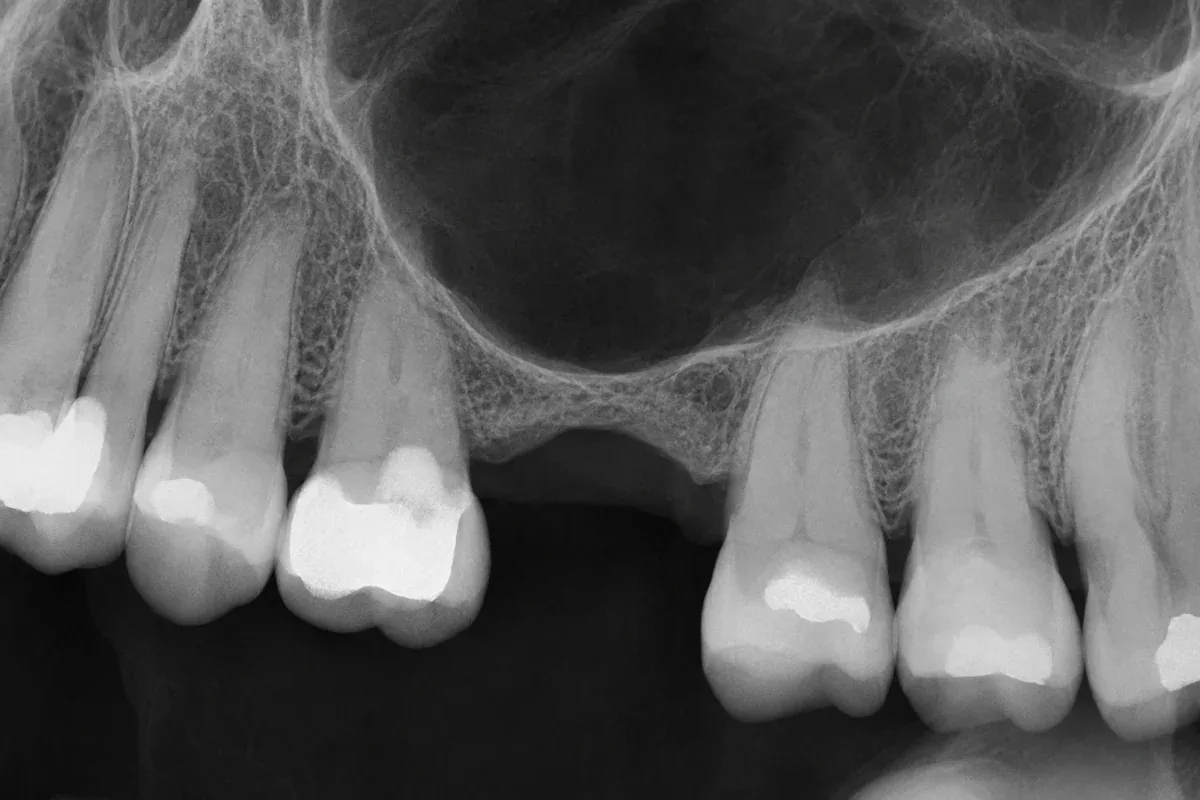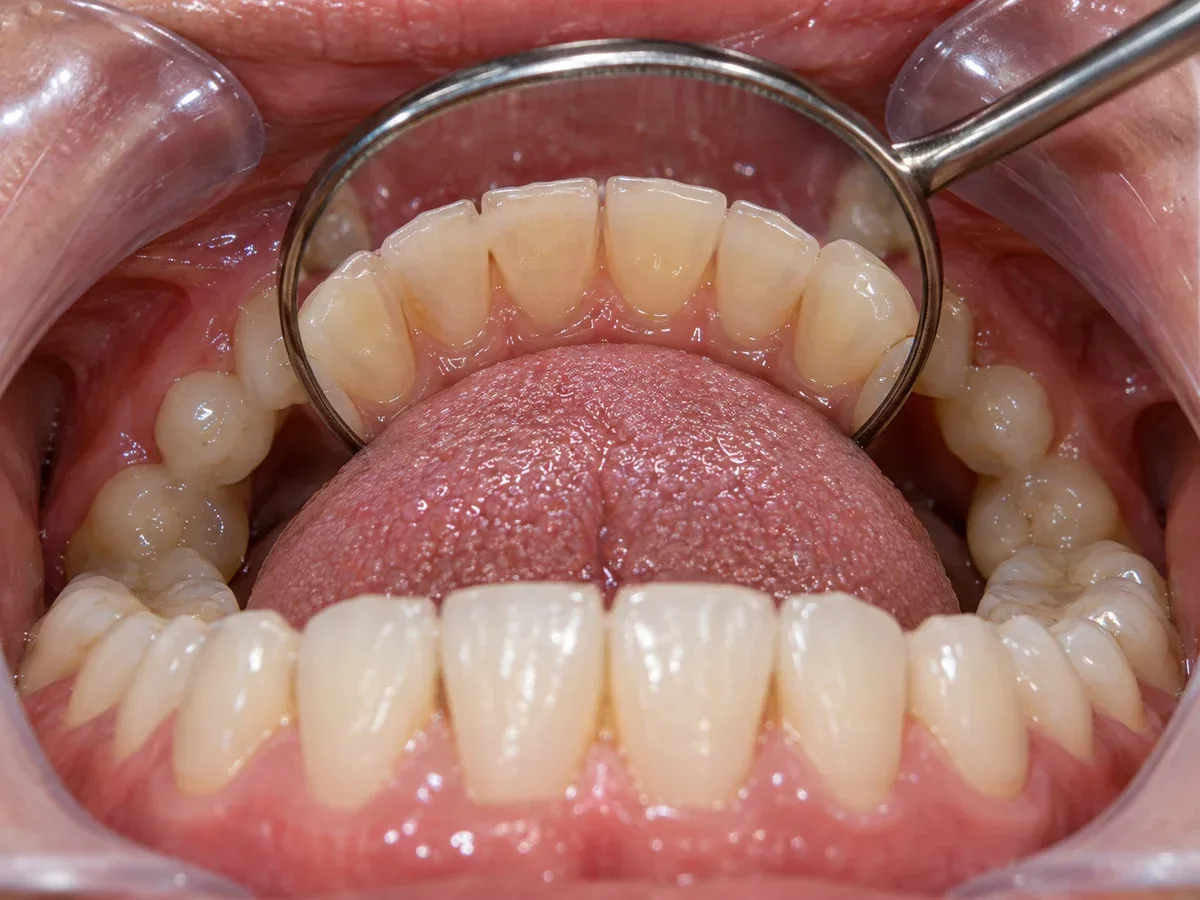
- A professor of oral medicine who wrote a book on the subject puts it plainly: botulinum toxin is the last resort for jaw muscle pain.
- There is an order. Physical therapy or muscle relaxants, then a splint, then a local anesthetic such as lidocaine, and botulinum toxin last.
- For teeth grinding, the Korea Disease Control and Prevention Agency says an occlusal splint is currently the most widely used treatment.
- The same source states that a misaligned bite is not a cause of teeth grinding. That is why we do not start by grinding the bite.
Patients at Reset Dental Clinic in Seomyeon, Busan often ask whether a toxin injection can simply fix teeth grinding. Botulinum toxin is indeed used for this, but published sources and expert advice show that it is not the first choice. For patients living in or visiting Korea, we provide 1:1 English interpretation from your first consultation through the end of treatment.
This column draws on four sources. The first is a book introduction reported by the Korean Dental Association's newspaper. The book is titled "Botulinum Toxin Injection for Dental Practitioners."
The others are the national health portal's guides on teeth grinding and on toothache and chronic pain. We also use Asan Medical Center's guide on jaw joint disorders.
What is teeth grinding, and what causes it?
Teeth grinding is also called bruxism. The national health portal divides it into two types: sleep bruxism, which happens during sleep, and awake bruxism, which happens during the day.
The same guide lists several factors linked with teeth grinding:
- stress
- sleep disorders
- smoking
- alcohol
- caffeine
- certain medications
Then comes a key sentence. The guide states clearly that a misaligned bite (malocclusion) is not a cause. A bite that looks slightly off is not the reason someone grinds their teeth.
What teeth grinding can do
The guide also lists the problems teeth grinding can cause. They are shown in the table below.
| Topic | What the guide says |
|---|---|
| Types | Sleep bruxism and awake bruxism |
| Linked factors | Stress, sleep disorders, smoking, alcohol, caffeine, medications |
| Not a cause | A misaligned bite (malocclusion) |
| Possible effects | Tooth wear and fractures, gum disease, jaw joint disorders, headaches |
| Most widely used treatment | An occlusal splint, together with toxin injection, stress management and cognitive behavioral therapy |
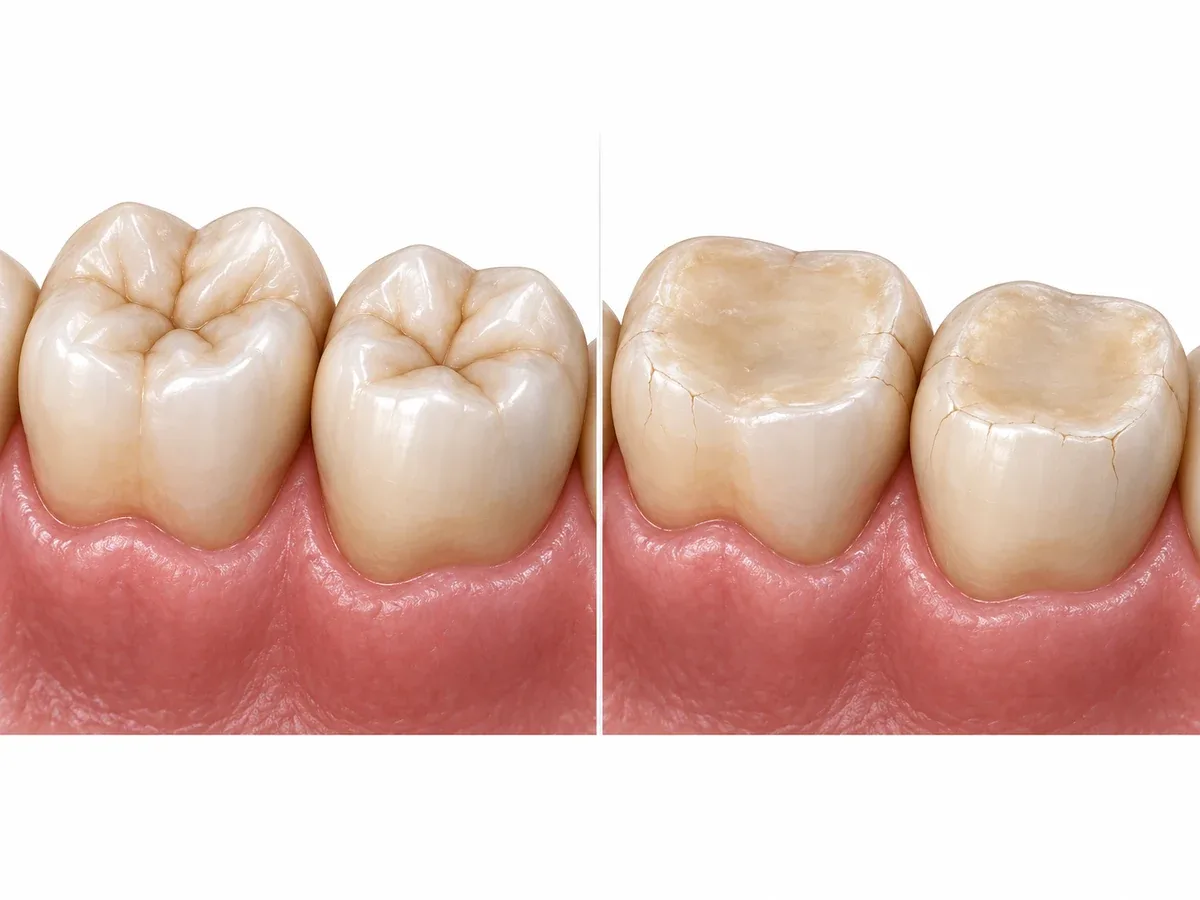
The force of grinding can be stronger during sleep than during chewing. It can also act for longer. That is why wear often shows up first on the biting surfaces.
Where is botulinum toxin used in dentistry?
The news report describes how widely botulinum toxin is now used in dentistry. It is actively used to treat a range of conditions:
- teeth grinding and jaw joint disorders
- muscle pain in the head and neck (myofascial pain)
- headaches and nerve-related pain (neuropathic pain)
- involuntary muscle spasms of the jaw and tongue (oromandibular and lingual dystonia)
- Frey syndrome
- excessive saliva
The book was written by Professor Kim Seong-taek of the Department of Oral Medicine at Yonsei University College of Dentistry. It covers the history and pharmacology of botulinum toxin.
It also covers treatment for an enlarged chewing muscle (masseter hypertrophy), sleep bruxism and headaches. Facial asymmetry and a gummy smile are included as well.
According to the report, the book explains the anatomy to consider when injecting in detail. It also covers dose, dilution and side effects.
The author noted that teeth grinding is the area that has changed the most in recent years. The book includes new concepts and treatment methods for it.
An injection that needs anatomical care
The author also gave a practical warning. Injections should be placed so as to avoid the salivary glands and blood vessels.
In other words, this is a procedure that depends on knowing where the muscle lies. It also depends on knowing what runs right next to it.
Why is botulinum toxin the last step for teeth grinding?
This is the most important part of the column. The author gave advice about a mistake that is easy to make in treatment.
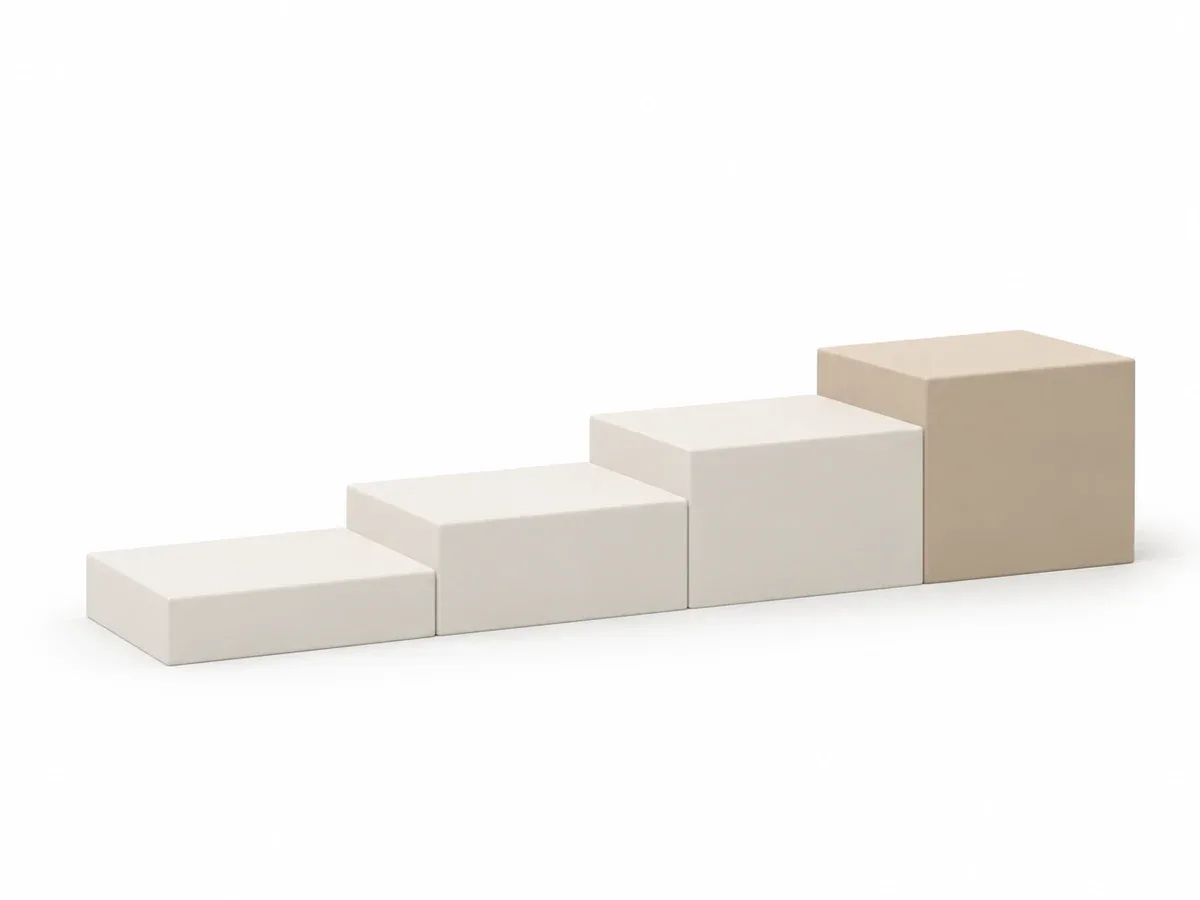
Botulinum toxin is the last resort. For a patient with muscle pain in the jaw, the first step is physical therapy or medication such as a muscle relaxant.
If that does not solve the problem, the next step is treatment with a device such as a splint. After that comes treatment with a local anesthetic such as lidocaine.
Botulinum toxin should be used when lidocaine works but the effect does not last. So it is the fourth step, after three others have been tried.
| Order | Treatment |
|---|---|
| First | Physical therapy or medication such as a muscle relaxant |
| Second | If that does not solve it, treatment with a device such as a splint |
| Third | Treatment with a local anesthetic such as lidocaine |
| Fourth | Botulinum toxin, when the anesthetic works but the effect does not last |
There is another point hidden in this order. If the anesthetic works, that confirms the muscle is really the source of the pain.
We read this as a clear rule. The injection is not given first, before the source of the pain has been confirmed.
Questions worth asking before an injection
If an injection is suggested at your first visit, it is fair to ask about the steps before it. These questions follow the order the author described:
- Have physical therapy or muscle relaxants been tried?
- Would a splint help in my case?
- Has a local anesthetic confirmed that this muscle is the source of the pain?
- Did that effect fade too quickly to be useful?
The answers help you see where you are in the order. They also help you and your dentist agree on the next step.
Which treatments come first for patients in Busan?
Asan Medical Center's guide on jaw joint disorders explains the earlier steps. A jaw joint disorder is a broad term that covers several conditions of the chewing muscles and the jaw joint.
The guide says these disorders can develop from chewing hard food for long periods or from a habit of clenching the teeth. It names injury and stress as the biggest causes.
The treatment options it lists are medication, physical therapy, occlusal devices, behavioral therapy and exercise. Usually, conservative methods are tried first.
Of these, physical therapy and occlusal devices are the most commonly used. The details are summarized in the table below.
| Treatment | What the sources say |
|---|---|
| Physical therapy | Warm compresses, ultrasound and laser treatment |
| Occlusal device | A device worn in the mouth to help the jaw stay in a stable position |
| Medication | Anti-inflammatory painkillers and muscle relaxants |
| Others | Behavioral therapy and exercise |
| For teeth grinding | An occlusal splint is currently the most widely used treatment |
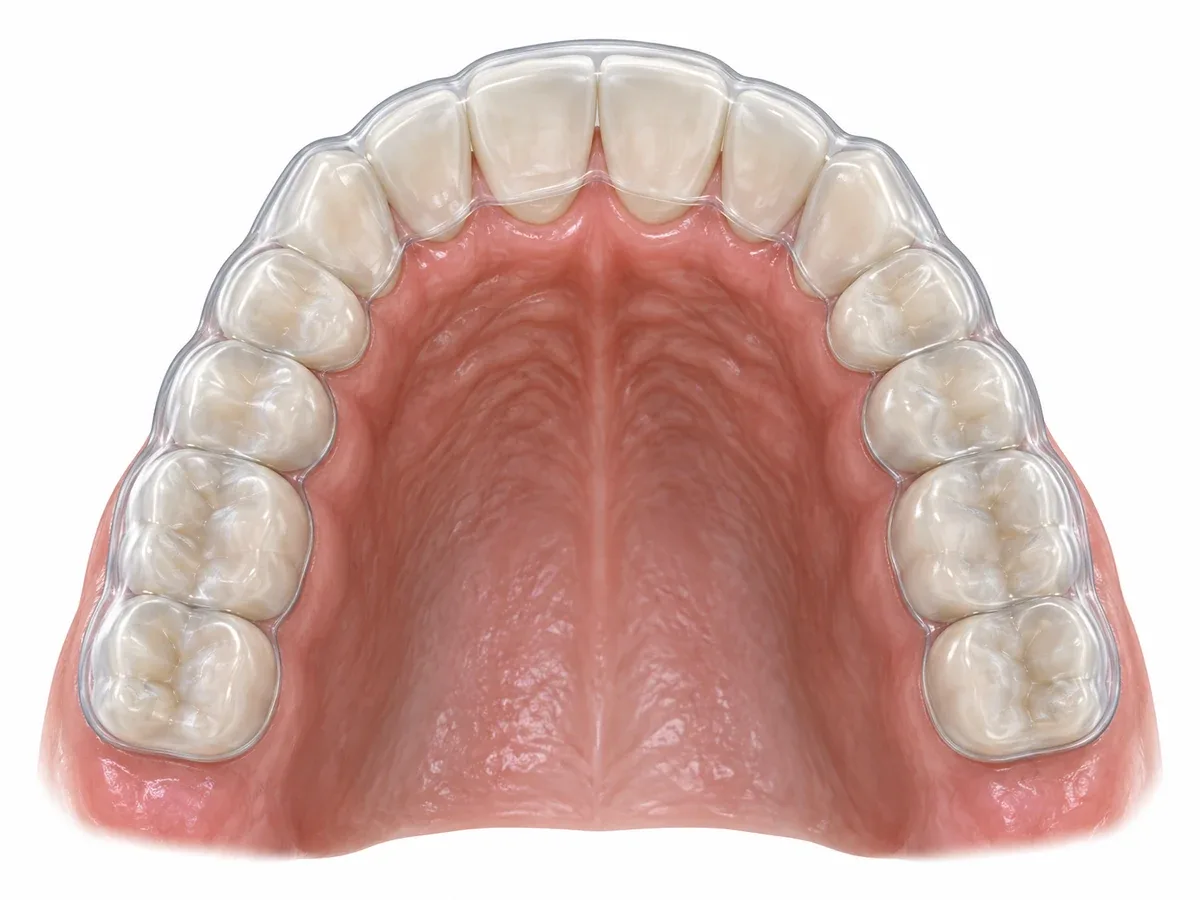
The national health portal's guide on teeth grinding points the same way. It says an occlusal splint is currently the most widely used treatment.
The guide also lists toxin injection, stress management and cognitive behavioral therapy. These are used alongside the splint.
Why not grind down the bite to fix teeth grinding?
Many people with teeth grinding ask whether their bite is the problem. The sources give a clear answer.
The teeth grinding guide states that a misaligned bite is not a cause. The national health portal's guide on toothache and chronic pain adds that a misaligned bite does not always lead to pain.
The same guide explains that the face and mouth contain a complex network of nerves. As a result, pain can look different depending on your physical and mental state.
It also says the structure and movement of the jaw joint should be looked at together with the bite. The bite alone does not tell the whole story.
Grinding away tooth surface cannot be undone. The right order is not to use an irreversible method on something that has not been confirmed as the cause.
This is also why the sources point to a splint first. A splint can be taken out, adjusted or stopped. Tooth structure that has been ground away does not come back.
The same thinking applies to pain in the face. Since pain can change with stress and your general state, it is worth looking at the whole picture before changing the teeth.
What happens if jaw problems are left alone?
Asan Medical Center's guide warns about leaving a jaw joint disorder untreated for a long time. The possible results are listed below:
- arthritis can develop in the jaw joint
- the jaw can become asymmetrical
- you may barely be able to open your mouth
These changes build up slowly, so they are easy to ignore at first. That is why early signs are worth a check.
If the jaw joint is uncomfortable, eating properly becomes hard. The guide adds that swallowing food that has not been chewed well can lead to indigestion.
Habits the guide recommends
The guide also lists habits to follow in daily life:
- Be careful not to open your mouth very wide.
- Avoid staying tense for long periods.
- Make it a habit to keep your upper and lower teeth apart.
- Apply a warm compress to the painful area.
- Avoid hard and chewy food.
The third habit matters most for people with teeth grinding. It is natural for the upper and lower teeth to touch when you chew food, and at no other time.
Try checking yourself a few times a day. If your teeth are touching while you rest, gently let them part.
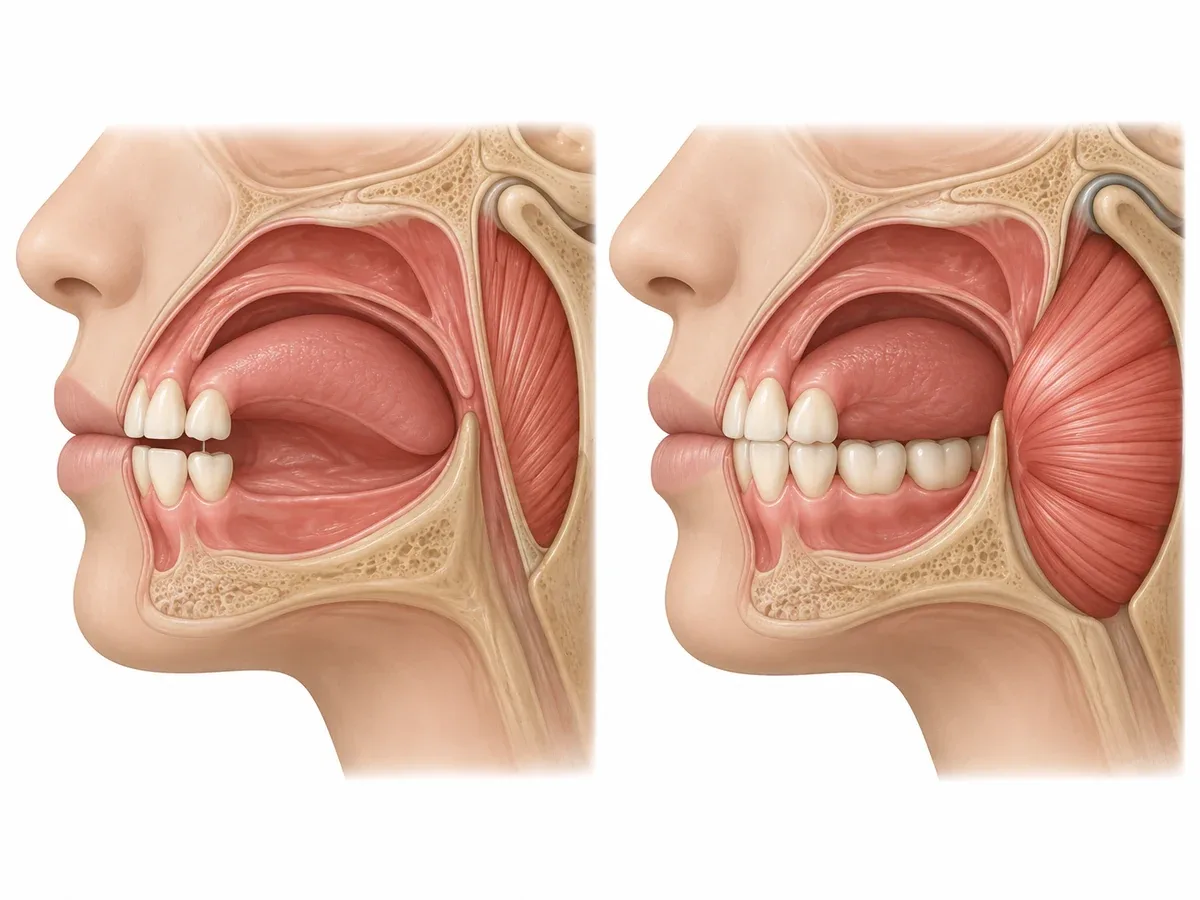
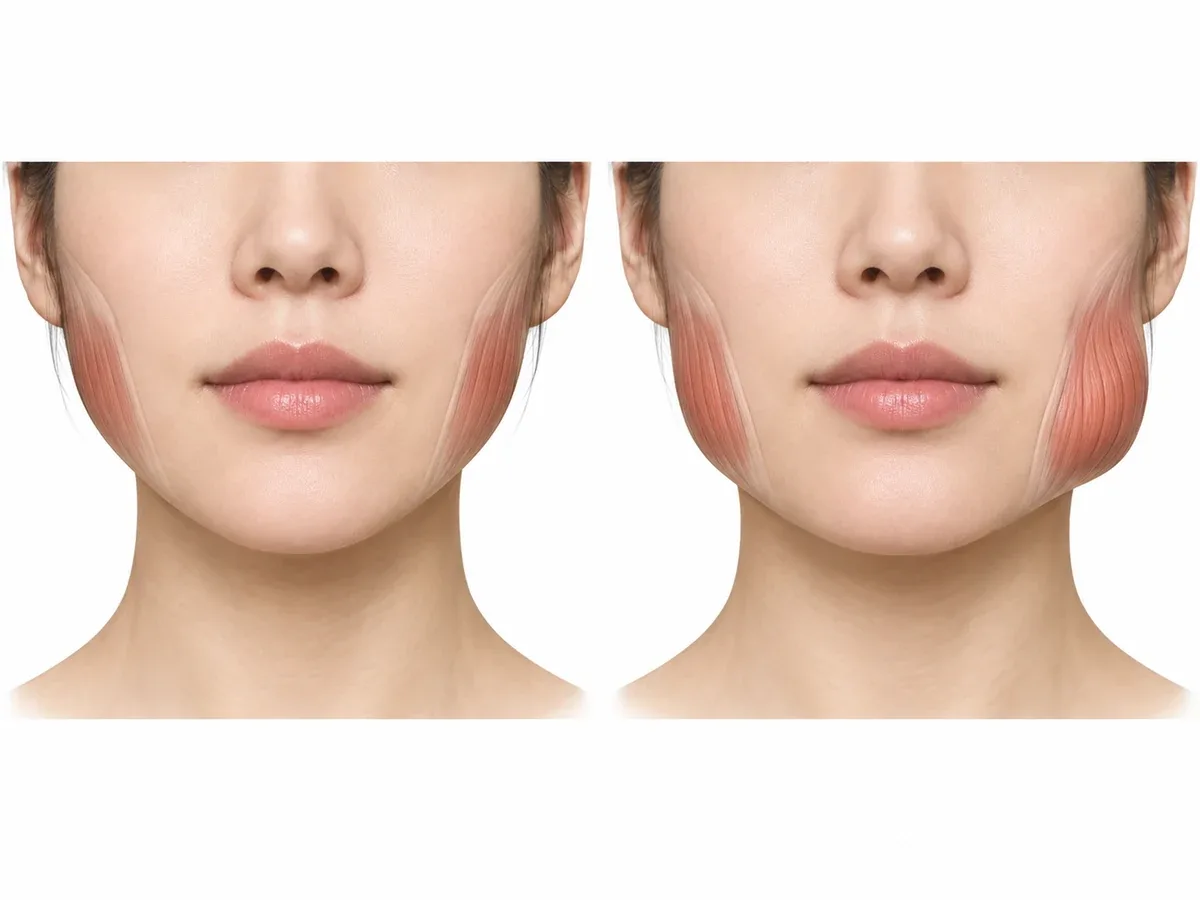
Muscles that work hard for a long time can grow thicker. The chewing muscle at the angle of the jaw is one example.
Frequently asked questions
Will a toxin injection stop my teeth grinding?
The sources say botulinum toxin is actively used to treat teeth grinding. The author, however, clearly calls it the last resort. It is described as a step that comes after physical therapy, medication, a splint and a local anesthetic.
I heard it can slim a square jaw. Is that true?
The book does include treatment for an enlarged chewing muscle. However, the report introduces a book and does not describe how well the procedure works or how long it lasts, so we will not say more. Procedures done for appearance and treatment for pain or grinding are judged by different standards.
Is wearing a splint enough on its own?
The sources say an occlusal splint is the most widely used treatment for teeth grinding and one of the most common for jaw joint disorders. A splint shares out the force on the teeth and joints rather than stopping the grinding itself. That is why stress management and cognitive behavioral therapy are mentioned alongside it.
Are there side effects?
The report says the book explains dose, dilution and side effects in detail, and that the author stresses avoiding the salivary glands and blood vessels. The report does not list specific side effects. If you are considering the procedure, ask the clinic that performs it to explain them directly.
Can I get teeth grinding care in English in Busan?
Yes. We offer 1:1 English interpretation from the first consultation through the end of treatment. The clinic is near Seomyeon Station Exit 2 (5-min walk), opposite Lotte Hotel Busan, and you can call 010-8555-2854 (+82-10-8555-2854 from abroad).
For teeth grinding and jaw pain, botulinum toxin is the last step, not the first.
Conservative care comes first,
and a bite that looks off is not the cause.
What cannot be undone should wait for a clear reason.
If you grind your teeth or have jaw pain in Busan, Reset Dental Clinic offers 1:1 English interpretation from your first consultation through the end of treatment. Call 010-8555-2854 to book a consultation.
References
- Korean Dental Association newspaper Dailydental (Chiui Sinbo), "How to Use Botulinum Toxin for Bruxism and Jaw Joint Treatment" — introduction of the book "Botulinum Toxin Injection for Dental Practitioners" by Professor Kim Seong-taek (Oral Medicine, Yonsei University College of Dentistry), the conditions botulinum toxin is used for in dentistry, the author's advice to avoid the salivary glands and blood vessels, and his step-by-step advice that botulinum toxin is the last resort after physical therapy or medication, a splint and a local anesthetic such as lidocaine
- KDCA National Health Information Portal, "Bruxism" — sleep and awake bruxism, linked factors, the statement that malocclusion is not a cause, its effects on teeth, gums, jaw joints and headaches, and treatment centered on the occlusal splint
- Asan Medical Center Disease Encyclopedia, "Temporomandibular Joint Disorders" — definition and causes, conservative treatment first with physical therapy and occlusal devices as the most common, what happens if left untreated, and daily precautions
- KDCA National Health Information Portal, "Toothache and Chronic Pain" — how the complex nerves of the face make pain vary with physical and mental state, looking at the jaw joint and bite together, and the statement that malocclusion does not always cause pain
Written by Reset Dental Clinic Support Team
Medical review Dr. Kim Hyun-joo, Head Dentist · Integrated Dentistry Specialist
Last updated: September 19, 2026
This column is for general information and does not replace diagnosis or treatment for individual patients. If you have symptoms, please see a dentist.