

- Teeth come in through three stages, and each tooth has its own timing, order and position.
- Eruption problems often cause no obvious symptoms, so regular checkups that include X-rays are key to finding them early.
- Growing teens can often finish with orthodontic treatment alone. If jaw growth goes wrong, surgery may be needed in adulthood.
- In growing children, orthodontic treatment may improve a skeletal problem and help avoid surgery.
"At what age should my child start orthodontic treatment?" Parents at our clinic in Seomyeon, Busan ask this often, and no single age answers it for every child. For families living in or visiting Korea, we provide 1:1 English interpretation from the first consultation through the end of treatment.
Two children of the same age can be at very different points in how their teeth come in and how their jaws grow. Still, the published sources are clear on one thing: there are more options while growth remains.
This column draws on the KDCA National Health Information Portal pages on tooth eruption disorders and on jaw surgery and orthodontic treatment. It also uses the Asan Medical Center disease encyclopedia entries on dental arch problems and abnormal jaw growth.
In what order do children's teeth come in?
The KDCA page defines tooth eruption as the whole journey of a tooth. It moves from inside the jaw bone into the mouth until it reaches its working position.
Normal eruption happens in three stages:
- the pre-eruptive stage, when the tooth bud starts to move inside the jaw bone
- the pre-functional eruptive stage, when the tooth enters the mouth and moves toward the opposite tooth
- the functional eruptive stage, when the tooth meets its partner and settles into its final position in step with jaw growth
The page adds an important point. Each tooth erupts with its own timing, order and position.
If the surroundings upset this balance, eruption can stop or slow down. The tooth may then come in at an abnormal position, and this is called a tooth eruption disorder.
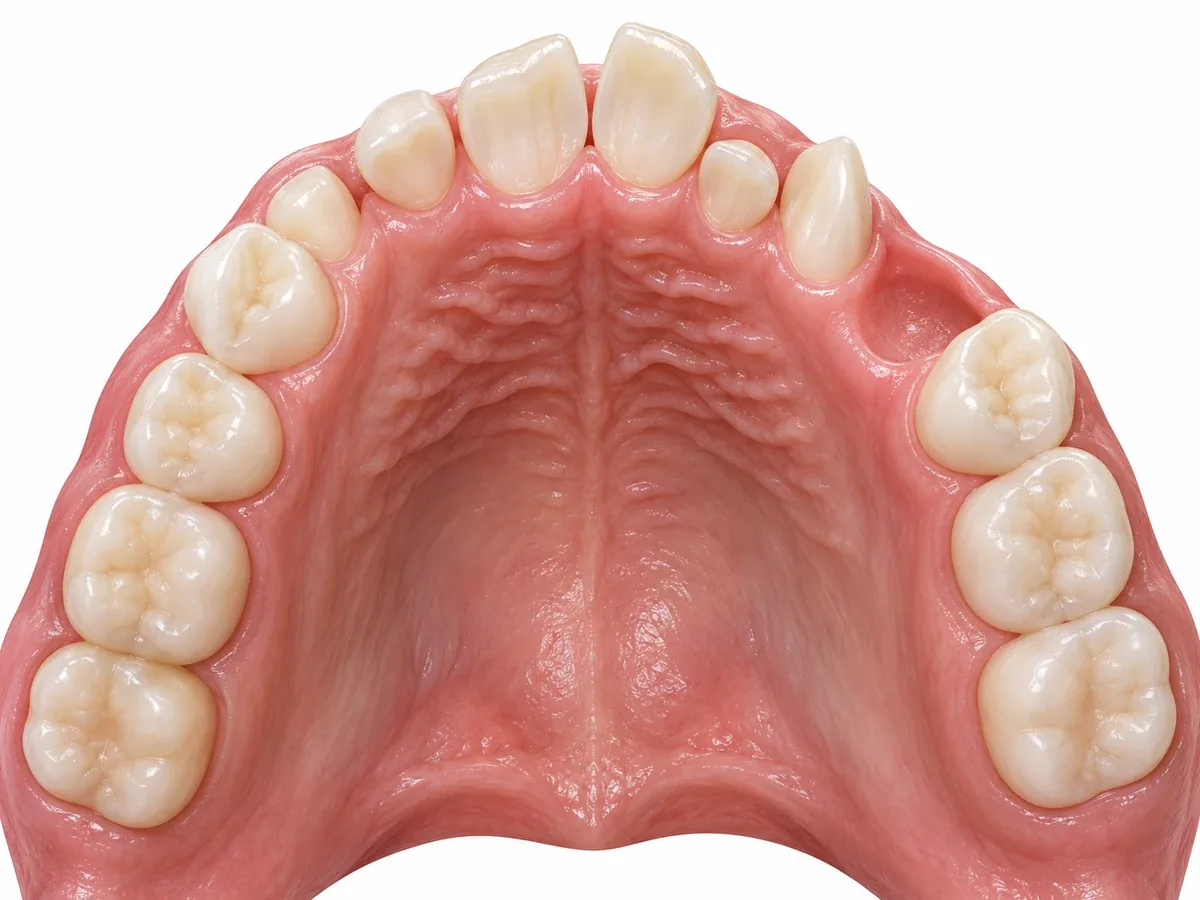
This is why age alone says little. Two children of eight may be at different stages, and their mouths can look quite different.
What are the three types of eruption problems?
The KDCA page divides eruption disorders into three types. Each needs a different kind of attention.
The first is delayed eruption. A baby tooth or adult tooth does not appear even after its normal time has passed.
In the adult teeth, a delay in one or a few teeth is common. But a whole-body factor can sometimes delay every tooth, and delays in baby teeth are rarer than in adult teeth.
The second is ectopic eruption, where a tooth comes in at an abnormal position. The page says it often affects the upper first molars, the lower lateral incisors and the upper canines.
The third is impaction. The normal time has passed, but the tooth stays buried under the gum or in the jaw bone and does not come in.

| Type | What the source says |
|---|---|
| Delayed eruption | A baby or adult tooth does not appear after its normal time |
| Ectopic eruption | The tooth comes in at an abnormal position; common in upper first molars, lower lateral incisors and upper canines |
| Impaction | The tooth stays buried under the gum or in the jaw bone after its time |
Where ectopic eruption tends to happen:
- the upper first molars
- the lower lateral incisors
- the upper canines
Why are eruption problems hard to spot?
This is the most important sentence in this column. The KDCA page says eruption disorders often cause no clear symptoms.
It goes on to say that regular dental checkups, including X-ray examination, are important for finding them early. That is the core advice for parents.
A child who does not complain of pain is not necessarily a child whose teeth are coming in smoothly. A tooth that is turned the wrong way or buried under the gum cannot be seen from outside.
The Asan entry on dental arch problems describes diagnosis in the same direction. It lists these records:
- an X-ray showing the whole head and all the teeth
- photos of the face and the inside of the mouth
- dental models (impressions of the teeth)
With these, the dentist looks at the overall relationship and identifies the problems before making a diagnosis. The Asan entry on abnormal jaw growth adds that 3D-CT can show the structure from the skin down to the bone.
Do X-rays really have to be taken? The source states plainly that they are part of the checkups needed for early detection. What lies under the gum and in the jaw bone cannot be seen by eye.
Why does remaining growth matter for orthodontic treatment?
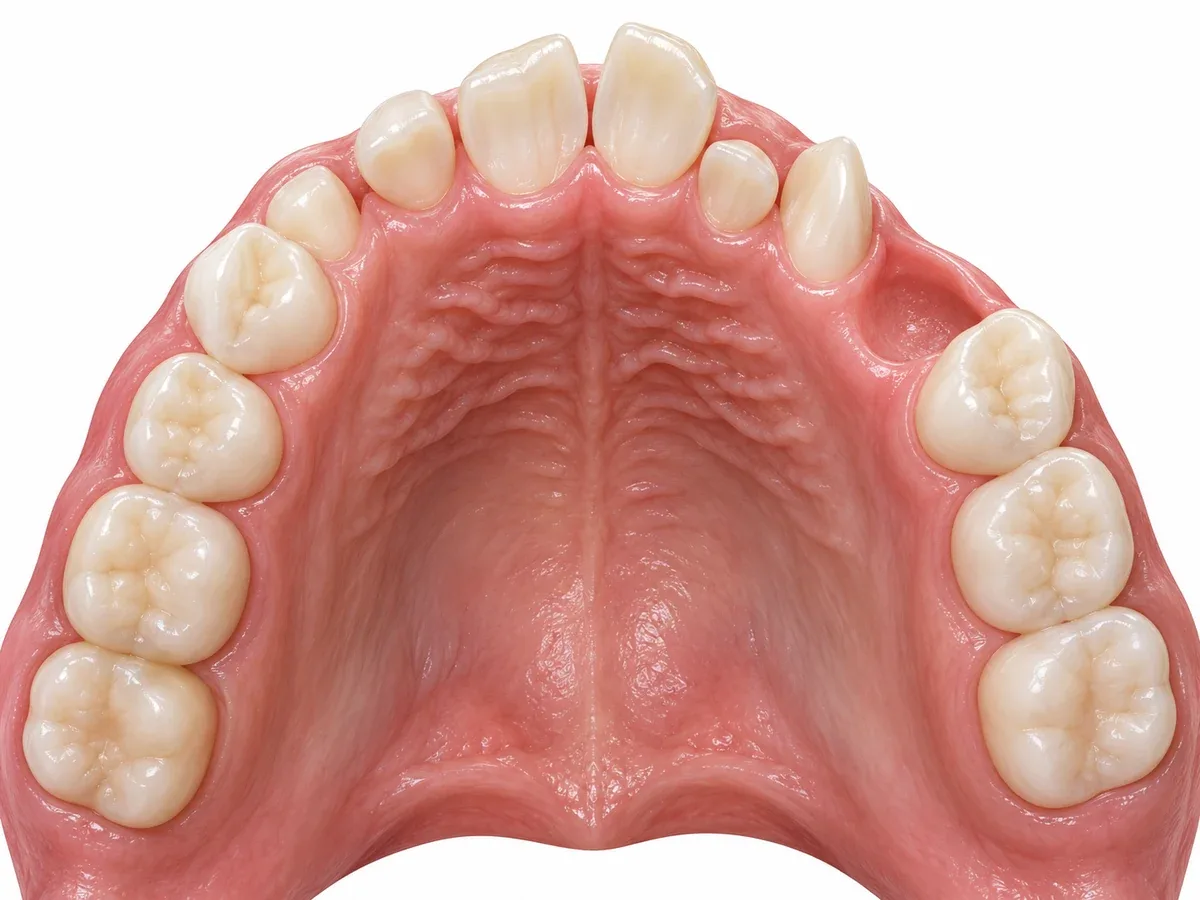
The KDCA page on jaw surgery states it directly. In growing children, orthodontic treatment may improve a skeletal problem and help avoid surgery.
In adults who have stopped growing, surgery is needed to correct a skeletal imbalance. That is the key difference between the two groups.
The Asan entry on dental arch problems says the same thing in another way. Growing teens can sometimes prevent abnormal jaw growth in advance and finish with orthodontic treatment alone.
On the other hand, if the problem goes beyond the teeth and jaw growth becomes abnormal, surgery combined with orthodontic treatment may be needed in adulthood. The window of growth shapes what is possible.
The KDCA page also explains when jaw surgery is used in general. It is done when a bite problem is too severe for orthodontic treatment alone, or when the face shape cannot be fully improved.
The page adds that jaw surgery is carried out by an orthodontist and an oral and maxillofacial surgeon together. Orthodontic treatment before surgery moves the teeth into place, because without it the jaw bone is hard to position as planned.
So the practical answer to when to start is really about when we can take a look. To decide on the timing of orthodontic treatment, we first need to know where your child is now.
| Case | What the sources say |
|---|---|
| Growing children | Orthodontic treatment may improve a skeletal problem and help avoid surgery |
| Growing teens | Abnormal jaw growth can be prevented in advance, finishing with orthodontic treatment alone |
| Abnormal jaw growth | Surgery combined with orthodontic treatment may be needed in adulthood |
| Adults who have stopped growing | Surgery is needed to correct a skeletal imbalance |
Does every child need braces right away?
Coming in for a look and starting treatment are two different things. The sources stress regular checkups for one reason: early detection.
After a problem is found, some cases need action right away. In others, it is better to wait for the right time.
The Asan entry names three things that should not be missed in growing children:
- treating cavities
- extracting baby teeth
- the retention period
In other words, putting on braces is not the whole job at this age. Much of the work is about keeping the teeth in place and on track.
The same entry's cautions turn to habits. Bad habits such as finger sucking, pushing the tongue forward or breathing through the mouth should be corrected early.
It also says badly decayed teeth should be treated quickly. That way, each tooth can keep its own place.


Putting the sources together, the path from a first checkup to a decision usually looks like this:
- a regular checkup that includes X-rays
- records such as X-rays, face and mouth photos and dental models
- an assessment of the overall relationship of the teeth and jaws
- a decision to act now or to wait for the right time
- agreeing on achievable goals before any orthodontic treatment begins
Sometimes the decision at step 4 is to watch and recheck. That is a normal outcome, not a missed chance.
| Area | What the Asan entry says |
|---|---|
| Treatment | Do not miss cavity treatment, baby-tooth extraction and the retention period |
| Habits | Correct finger sucking, tongue pushing and mouth breathing early |
| Decay | Treat badly decayed teeth quickly so teeth hold their places |
What should parents in Busan keep an eye on?
The Asan encyclopedia describes a dental arch problem as a state where the shape formed by the upper and lower teeth is not good. Its related entry on abnormal jaw growth covers overgrowth and undergrowth of both the upper and the lower jaw.
The Asan entry on dental arch problems explains that the size of the teeth and jaws is set by genetics. Yet the position of the teeth can still change.
Tongue pushing, finger sucking and mouth breathing are the examples it gives. It also notes that malocclusion is rising because of cavities and early loss of baby teeth.
The entry on abnormal jaw growth says jaw size and shape are strongly influenced by genetics. Childhood habits, injury and abnormal muscle action can also play a part.
Putting these together, here is what parents can watch for at home:
- finger sucking, tongue pushing or mouth breathing
- cavities, especially in baby teeth
- baby teeth lost earlier than expected
- an adult tooth that is late while the others have come in
- a tooth coming in at a clear angle, especially a molar, lower side incisor or upper canine
- any injury to the jaw or teeth
None of these alone means orthodontic treatment is needed. They are reasons to book a checkup rather than wait.
Habits are worth attention because they are the part parents can change. The sources describe genetics as setting size, while habits can still shift where teeth sit.
Cavities in baby teeth deserve the same attention. The Asan entry links the rise in malocclusion to cavities and early loss of baby teeth, which makes baby-tooth care part of orthodontic prevention.
Frequently asked questions
My child's teeth are coming in crooked. Do we need orthodontic treatment now?
While baby and adult teeth are mixed, some unevenness is common. Ectopic eruption often affects the upper first molars, lower lateral incisors and upper canines, so a tooth there that looks angled is worth checking. The judgment is made with X-rays, not by how it looks.
My child's teeth are coming in later than friends' teeth.
The source says a delay in one or a few adult teeth is common. It also notes that a whole-body factor can delay all the teeth, so a general delay across many teeth deserves a closer look.
If we treat now, will it never need doing again?
That is hard to say for sure. Growing teens can often finish with orthodontic treatment alone, but abnormal jaw growth may call for surgery in adulthood. Growth is ongoing, so it is wise to agree on achievable goals before starting.
Can we get this checked in English in Busan?
Yes. We provide 1:1 English interpretation from the first consultation through the end of treatment. The clinic is near Seomyeon Station Exit 2 (5-min walk), opposite Lotte Hotel Busan; call 010-8555-2854 (+82-10-8555-2854 from abroad).
There is no single right age. What matters is seeing where your child is now.
Eruption problems are often silent,
and growth gives more options while it lasts.
A checkup comes before any decision.
If you are thinking about orthodontic treatment for your child in Busan, Reset Dental Clinic offers 1:1 English interpretation from your first consultation through the end of treatment. Call 010-8555-2854 to book a checkup.
References
- KDCA National Health Information Portal, "Tooth Eruption Disorders" — definition, the three stages of eruption, each tooth's own timing, order and position, delayed eruption, ectopic eruption and impaction, the teeth most often affected by ectopic eruption, and the importance of regular checkups including X-rays
- Asan Medical Center Disease Encyclopedia, "Dental Arch Relationship Problems" — definition, genetics and habits such as tongue pushing, finger sucking and mouth breathing, the rise in malocclusion from cavities and early baby-tooth loss, diagnostic records, what not to miss in growing children, the outlook for growing teens, and daily cautions
- KDCA National Health Information Portal, "Jaw Surgery and Orthodontic Treatment" — when jaw surgery is used, growing children versus adults, cooperation between orthodontist and oral surgeon, and the role of orthodontics before surgery
- Asan Medical Center Disease Encyclopedia, "Abnormal Jaw Growth" — overgrowth and undergrowth of the jaws, the strong influence of genetics, childhood habits, injury and muscle action as causes, and diagnosis with 3D-CT, measurements and simulation
Written by Reset Dental Clinic Support Team
Medical review Dr. Kim Hyun-joo, Head Dentist
Last updated: September 19, 2026
This column is for general information and does not replace diagnosis or treatment for individual patients. If you have symptoms, please see a dentist.


