

- After an extraction, a blood clot forms in the socket and protects the bone and nerve. If it is lost, dry socket can follow.
- Dry socket (alveolar osteitis) occurs in about 2–5% of patients who have a tooth removed.
- The biggest risk factor is smoking. Avoid it for at least two weeks before and after the extraction.
- Pain usually starts about two days later, grows worse and may spread toward the ear.
Had a tooth pulled in Busan, and the socket hurts more two or three days later than on the day itself? Do not just put up with it, because it may be dry socket. For patients living in or visiting Korea, our clinic in Seomyeon provides 1:1 English interpretation from the first consultation through the end of treatment.
This column explains what happens and what to do. It is based on Asan Medical Center's page on alveolar osteitis. It also uses pages from the KDCA National Health Information Portal on tooth extraction, oral disease prevention and bad breath.
How does a tooth socket heal after an extraction?
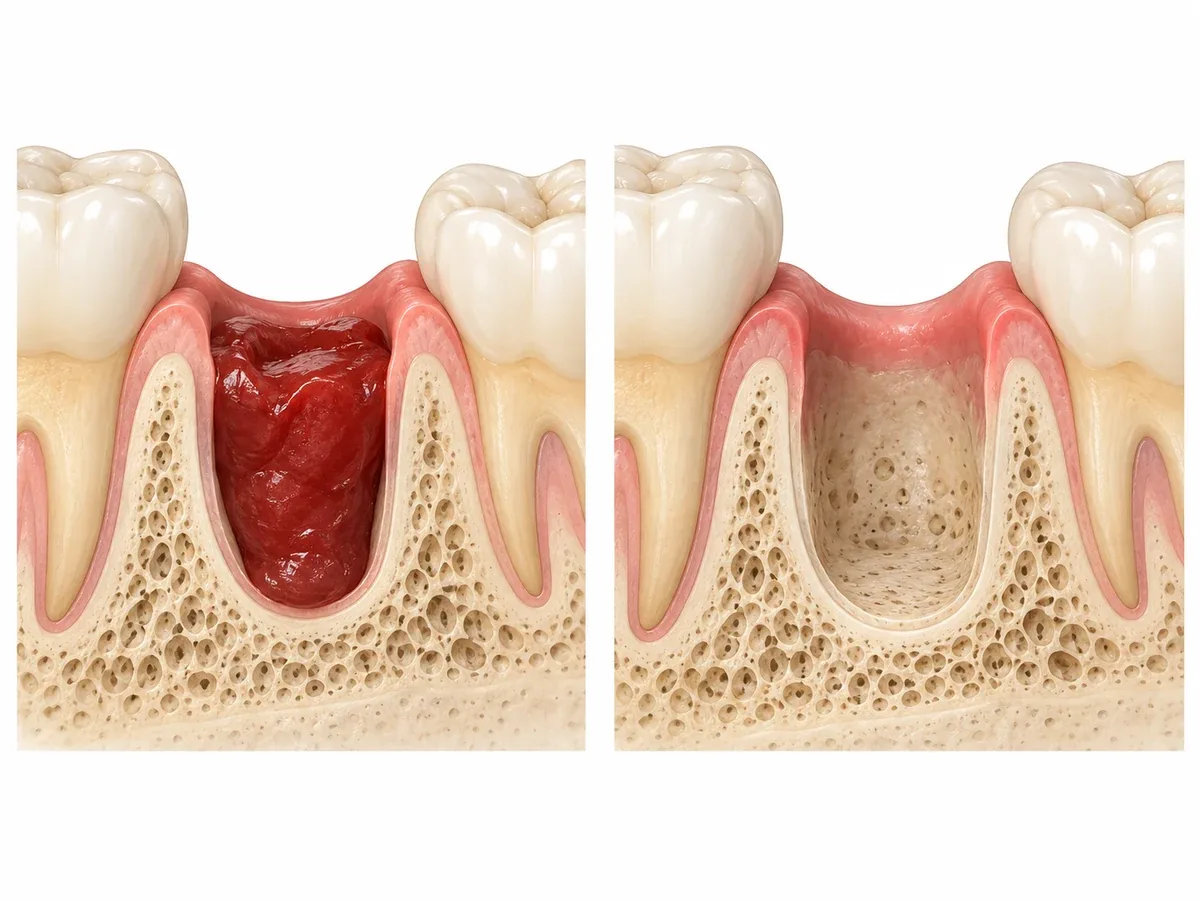
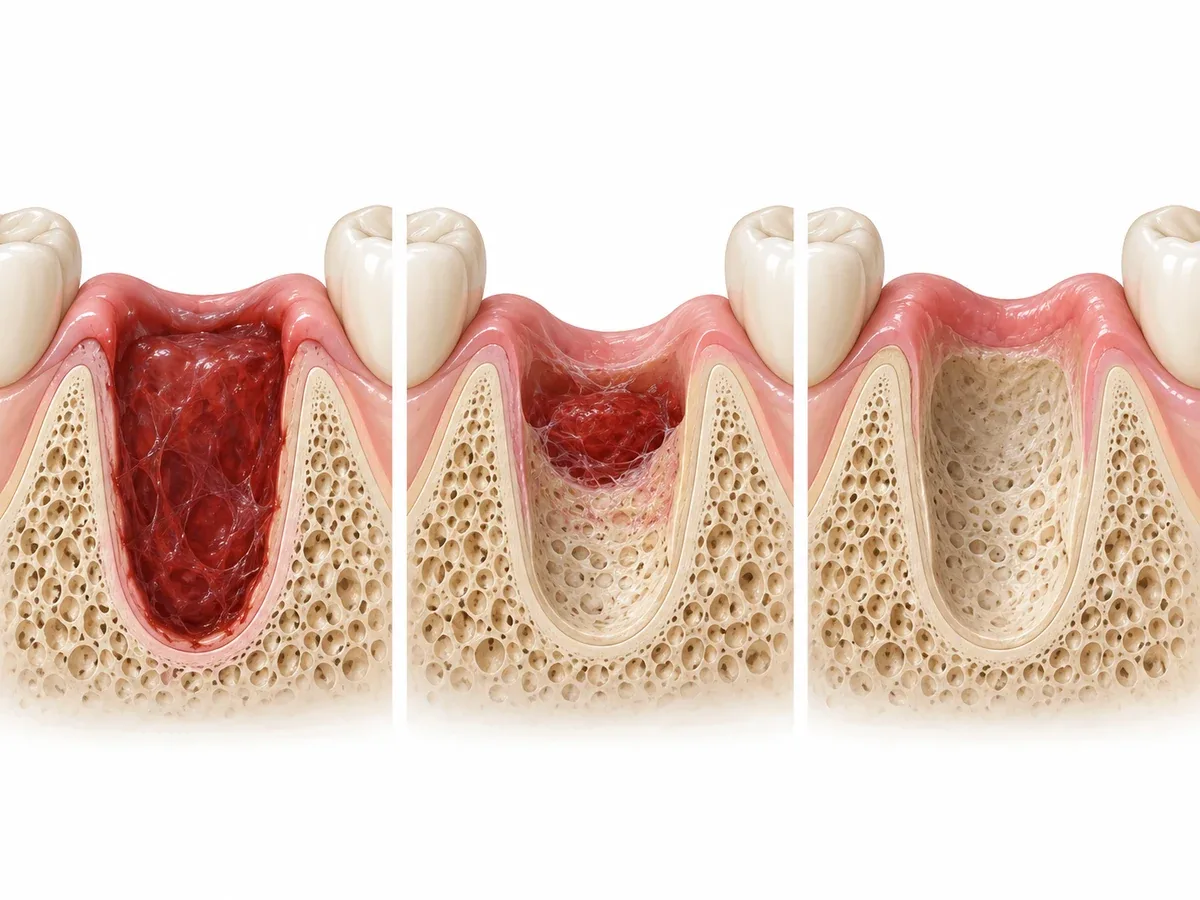
Once a tooth is removed, the spot can look like an empty hole. But a blood clot soon forms there. According to Asan Medical Center, this clot protects the bone and nerve that remain.
So the dark red lump in the socket is not something to remove. It is a cover. It shields the bone and nerve while new tissue fills in underneath.
In some people, the clot is lost or dissolves after about two days. The bone and nerve are then exposed to air, food and whatever else is in the mouth.
Infection and severe pain follow. This condition is called alveolar osteitis, better known as dry socket.
Asan Medical Center reports that dry socket occurs in about 2–5% of patients who have a tooth pulled. It classes the condition as a complication after extraction.
The KDCA page on tooth extraction lists several possible complications. Dry socket is one of them:
- a broken root
- nerve injury
- a perforation into the maxillary sinus
- infection
- dry socket
When and how does dry socket hurt?
The pattern described in the source is clear. In most cases, pain starts about two days after the extraction. It then grows worse over time.
The pain may spread toward the ear. You may also notice bad breath or an unpleasant taste.
What matters is that this runs opposite to normal healing. Usually a socket is most uncomfortable right after the extraction and improves day by day.
Dry socket starts around day two and keeps getting worse. So when a patient says, "It was fine at first, but it started hurting on day three," dry socket is the first thing we check.
| Item | What the source says |
|---|---|
| Onset | In most cases, about two days after the extraction |
| Course | The pain grows worse over time |
| Spread | It may spread toward the ear |
| Other signs | Bad breath or an unpleasant taste |
| Point | Usual recovery | Dry socket |
|---|---|---|
| Worst discomfort | Right after the extraction | From about day two onward |
| Direction | Better day by day | Worse over time |
| The socket | Covered by a blood clot | Clot lost, bone and nerve exposed |
Bad breath is one of the listed symptoms too. The KDCA page on bad breath sorts it into physiological, pathological and subjective types.
A smell from an extraction site comes from a wound that has not healed. So it is not something to cover with mouthwash. It is something to have checked.
The same KDCA page covers bad breath in general. It mentions devices that measure breath odor, cleaning the coating on the tongue with a tongue cleaner and adjusting diet.
It also says mouthwash plays a supporting role. For a smell from a fresh socket, the cause needs attention first.
What raises the risk of dry socket?
The source names one factor clearly. Smoking is the biggest risk factor for dry socket. It says to stop smoking for at least two weeks before and after an extraction.
It also gives the reason. Smoke irritates the extraction site. In addition, the force of sucking on a cigarette creates negative pressure in the mouth and disturbs clotting.
In other words, smoking produces a force that can pull the cover away. That is why the advice on smoking is so firm.
If you smoke, plan ahead. Two weeks before an extraction is a good time to start, because the source counts the time before it as well as after it.
Alcohol matters as well. The source says alcohol speeds up blood circulation, which disturbs clotting and makes swelling worse.
The KDCA extraction page adds that alcohol and smoking should be avoided for at least a week after an extraction. The two sources give different periods, so the longer one is the safer guide.
| Factor | Why it matters | How long to avoid it |
|---|---|---|
| Smoking | Smoke irritates the site; sucking creates negative pressure that disturbs clotting | At least two weeks before and after (Asan Medical Center) |
| Alcohol | Faster circulation disturbs clotting and increases swelling | At least one week after, together with smoking (KDCA) |
What should you do after a tooth extraction?
Here are the five cautions from the source, in its own order.
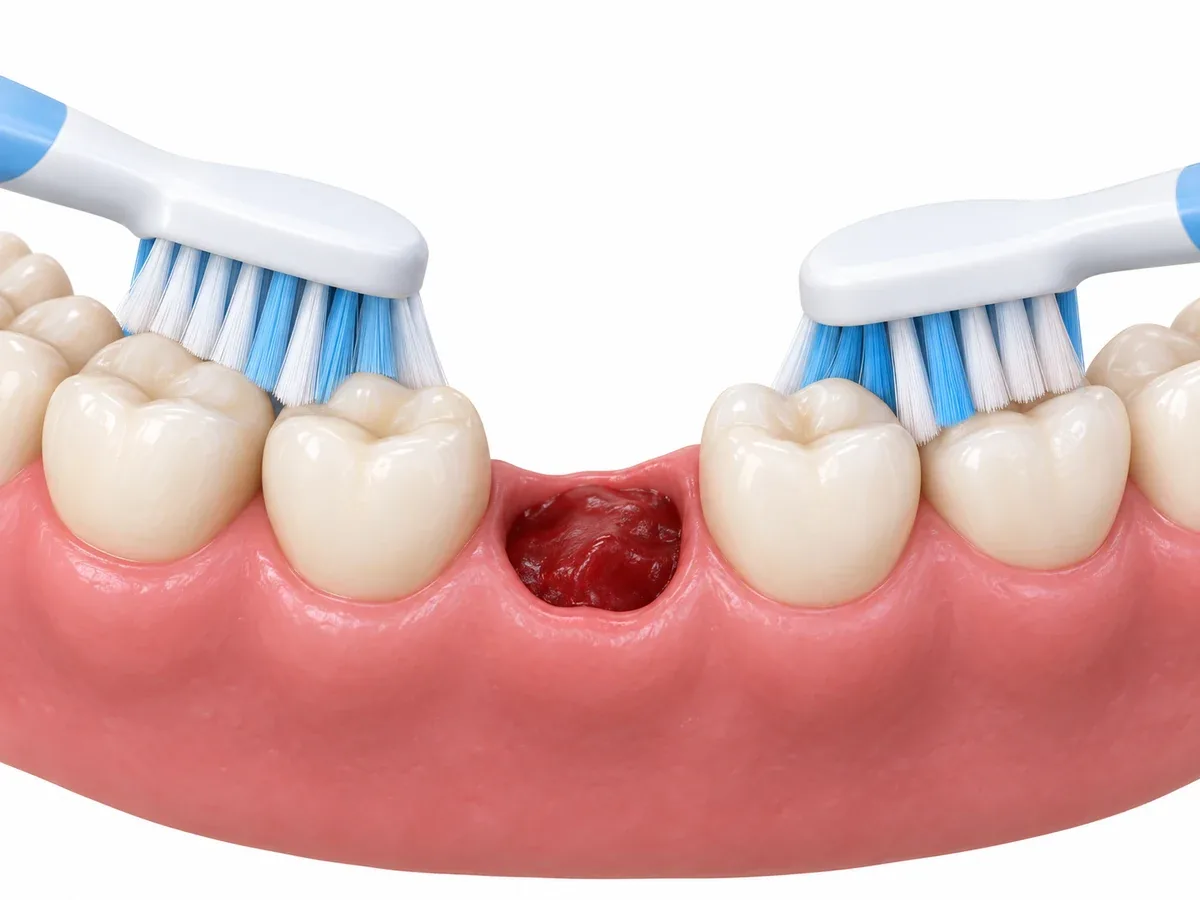
- Do not brush the extraction site. Rinse with clean water, saline or mouthwash instead.
- Remember that alcohol speeds up circulation, disturbs clotting and increases swelling.
- Avoid alcohol and smoking after the extraction.
- Avoid hard exercise, saunas and hot baths.
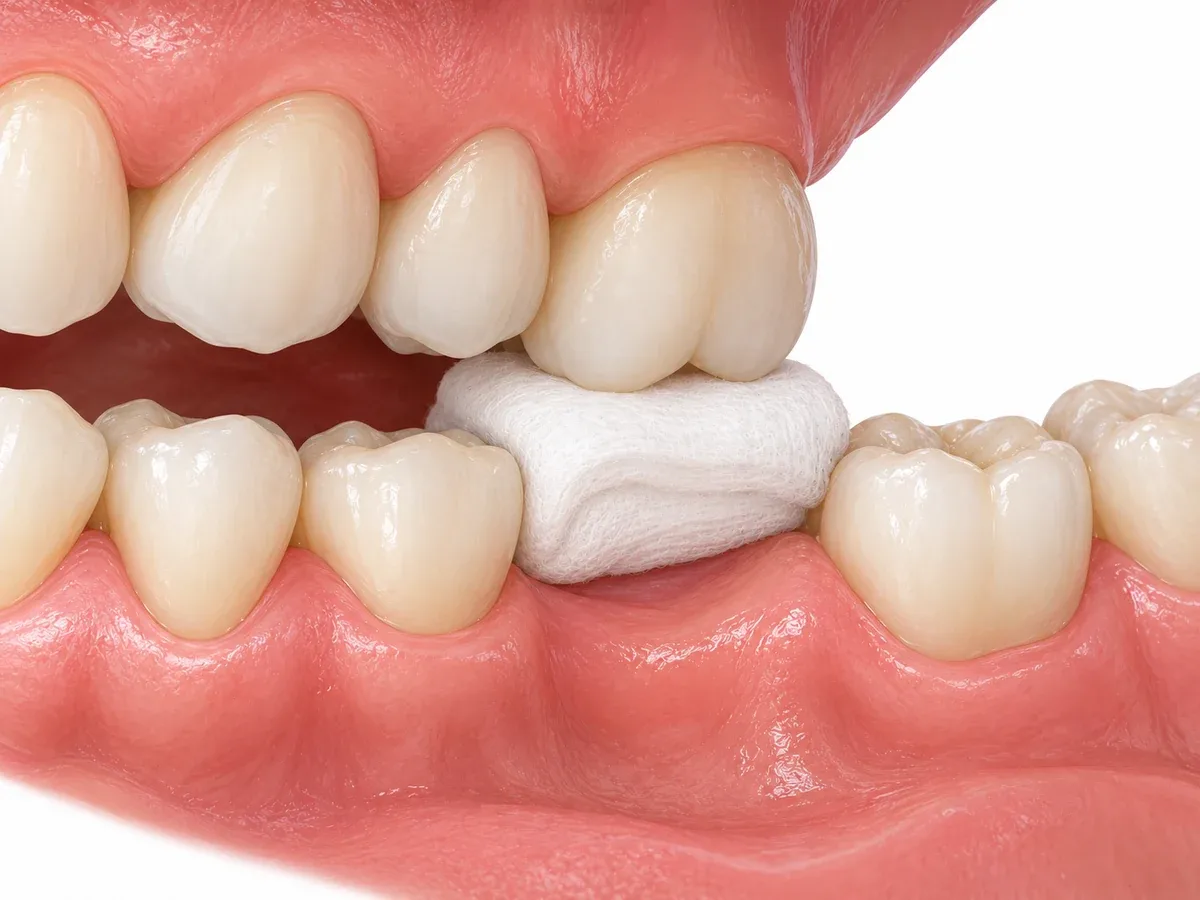
- If bleeding continues even while biting on gauze, or if you get a fever or heavy swelling, see a dentist.
Some people misread the first point. It means keep the brush away from that spot. It does not mean stop brushing your whole mouth.
Keep up your usual care everywhere else. The KDCA page on preventing oral disease gives these habits:
- brush at least twice a day, for at least two minutes, with fluoride toothpaste
- brush while looking in a mirror
- use dental floss, which the page calls essential
- rinse less after fluoride toothpaste, which makes it work better
After an extraction, simply skip the socket itself. Everything else can be cleaned as usual.
The same page recommends a dental check-up once a year. If you have a history of dental treatment, it suggests every six months.
Putting the advice from both sources together gives a simple timeline. It is a summary of the cautions above, not a new rule:
- Before the extraction: stop smoking, and tell your dentist about your health and medicines.
- First hours: bite on gauze to help the bleeding stop.
- First days: skip brushing the socket, and avoid hard exercise, saunas and hot baths.
- Around day two: watch whether pain eases or grows.
- First week: avoid alcohol and smoking.
- Until two weeks: keep avoiding cigarettes.
| Topic | What the source says |
|---|---|
| Brushing | Do not brush the site; rinse with clean water, saline or mouthwash |
| Alcohol | Speeds up circulation, disturbs clotting and increases swelling |
| Alcohol and smoking | Avoid both after the extraction |
| Exercise and bathing | Avoid hard exercise, saunas and hot baths |
| When to see a dentist | Bleeding despite gauze, fever or heavy swelling |
How is dry socket treated in Busan?
The treatment described in the source is simple. The dentist places medicine that reduces pain in the socket. The area is then cleaned with lukewarm saline, followed by rinsing.
Diagnosis is made at the dental clinic by asking about symptoms and looking at the site. When needed, an X-ray or CT scan is taken.
| Step | What happens |
|---|---|
| Questions | The dentist asks when the pain started and how it has changed |
| Examination | The dentist looks at the extraction site |
| Imaging if needed | An X-ray or CT scan is taken |
| Treatment | Pain-reducing medicine is placed, then the socket is cleaned with lukewarm saline and rinsed |
Please remember that dry socket does not simply go away if you wait it out. It is a condition that becomes much easier to bear once it is treated.
Call the clinic when pain starts to grow after about two days. Mention when the tooth was removed, whether you smoked, and whether there is a bad taste or smell.
If you are staying in Busan for a short time, an extraction can overlap with travel plans. Keep the two-day window in mind, and leave room for a follow-up visit if pain starts to grow.

What is checked before a tooth is pulled?
The KDCA extraction page also lists what to check before an extraction. Heart disease, blood disorders and uncontrolled diabetes should be discussed with a specialist in advance.
If you take any medicine, tell your dentist about it too. It is easier to bring a list or photos of the packages.
The page says anesthesia is chosen from local anesthesia, sedation and general anesthesia. The method is decided by looking at the tooth to be removed and your general health.
Ask which method is planned for you, and why, before the day of the extraction. Knowing this in advance makes the day itself easier to plan.
It also helps to be clear about why the tooth is being removed. The page gives these reasons:
- severe tooth decay
- death of the tooth's pulp
- severe gum disease
- orthodontic reasons
| Topic | Why it matters |
|---|---|
| Heart disease, blood disorders, uncontrolled diabetes | These should be discussed with a specialist in advance |
| Medicines you take | Your dentist needs the full picture before treatment |
| Smoking | The biggest risk factor for dry socket |
| Anesthesia | Local anesthesia, sedation or general anesthesia is chosen for your case |
Know why the tooth is coming out and what will happen to the space afterwards. Then the recovery plan becomes clearer too.
Frequently asked questions
I keep touching the socket with my tongue. Is that a problem?
It is safer to leave the cover alone. If the clot is removed or dissolves, the bone and nerve are exposed, leading to infection and severe pain. For the same reason, avoid sucking hard through a straw or rinsing forcefully.
How many days of pain are normal?
The source does not give a number of days for normal recovery. It does describe dry socket clearly: pain usually starts about two days after the extraction and gets worse over time. If pain improves and then gets worse again, have it checked.
I have bad breath after an extraction. Should I use more mouthwash?
Bad breath and an unpleasant taste are listed symptoms of dry socket. The KDCA page on bad breath also says mouthwash plays a supporting role. Still, treatment itself includes lukewarm saline cleaning and rinsing, so follow the method you are given after your visit.
Can I get dry socket treatment in English in Busan?
Yes. We offer 1:1 English interpretation from the first consultation through the end of treatment. The clinic is near Seomyeon Station Exit 2 (5-min walk), opposite Lotte Hotel Busan, and you can call 010-8555-2854 (+82-10-8555-2854 from abroad).
Pain that grows two days after an extraction is a signal, not something to endure.
Protect the clot.
Stay away from cigarettes and alcohol.
Skip the socket, but keep brushing the rest.
If you think you may have dry socket in Busan, Reset Dental Clinic offers 1:1 English interpretation from your first consultation through the end of treatment. Call 010-8555-2854 to arrange a visit.
References
- Asan Medical Center Disease Encyclopedia, "Alveolar Osteitis" — how the blood clot protects bone and nerve and what happens when it is lost, frequency of about 2–5% of extraction patients, smoking as the biggest factor with at least two weeks of not smoking before and after, pain starting about two days later and spreading toward the ear with bad breath and an unpleasant taste, diagnosis by history, inspection and X-ray or CT if needed, treatment with pain-reducing medicine and lukewarm saline cleaning, aftercare cautions, and how sucking on a cigarette creates negative pressure that disturbs clotting
- KDCA National Health Information Portal, "Tooth Extraction" — reasons for extraction such as severe decay, pulp death, severe gum disease and orthodontics, choice of local anesthesia, sedation or general anesthesia, avoiding alcohol and smoking for at least a week afterwards, possible complications including root fracture, nerve injury, sinus perforation, infection and dry socket, and consulting a specialist in advance for heart disease, blood disorders or uncontrolled diabetes
- KDCA National Health Information Portal, "Preventing and Managing Oral Disease" — brushing at least twice a day for two minutes or more with fluoride toothpaste while looking in a mirror, why flossing is essential, rinsing less after fluoride toothpaste, and check-ups once a year or every six months with a treatment history
- KDCA National Health Information Portal, "Bad Breath" — physiological, pathological and subjective types of bad breath, measuring devices, tongue cleaning and diet, and the supporting role of mouthwash
Written by Reset Dental Clinic Support Team
Medical review Dr. Kim Hyun-joo, Head Dentist · Integrated Dentistry Specialist
Last updated: September 19, 2026
This column is for general information and does not replace diagnosis or treatment for individual patients. If you have symptoms, please see a dentist.


