

- With a burning tongue, the tip stings or the edges tingle although nothing looks wrong.
- Causes include worry about cancer, stress, local irritation, smoking, hormones and less saliva.
- See an oral surgeon, even just to confirm it is not cancer.
- A visible ulcer not healed after 2–3 weeks of treatment needs a biopsy.
Your tongue burns, yet the mirror shows nothing. At Reset Dental Clinic in Seomyeon, Busan, we often meet patients who feel even more anxious after hearing that nothing is wrong. For patients living in or visiting Korea, we provide 1:1 English interpretation from the first consultation through the end of treatment.
The good news is that this state has a name. The sources also describe its causes and how it is approached.
This column explains a burning tongue using the Asan Medical Center pages on glossodynia and oral cancer. It also draws on the KDCA pages on dry mouth and mouth inflammation (stomatitis).
What is a burning tongue?
The medical name is glossodynia, or tongue pain. The source defines it as a state in which the tip of the tongue stings or the edges tingle, even though nothing is clearly wrong with the tongue.
The symptoms are described like this:
- a tingling pain at the tip or edges of the tongue
- a burning feeling on the tongue
- sometimes, a taste that is quite different from before
The first line of the cause section shows what kind of condition this is. In most cases, people feel pain even though nothing is wrong with the tongue or the inside of the mouth.
The source then lists other possible causes:
- worry about oral cancer
- stress
- local irritation inside the mouth
- smoking
- hormonal changes
- reduced function of the salivary glands
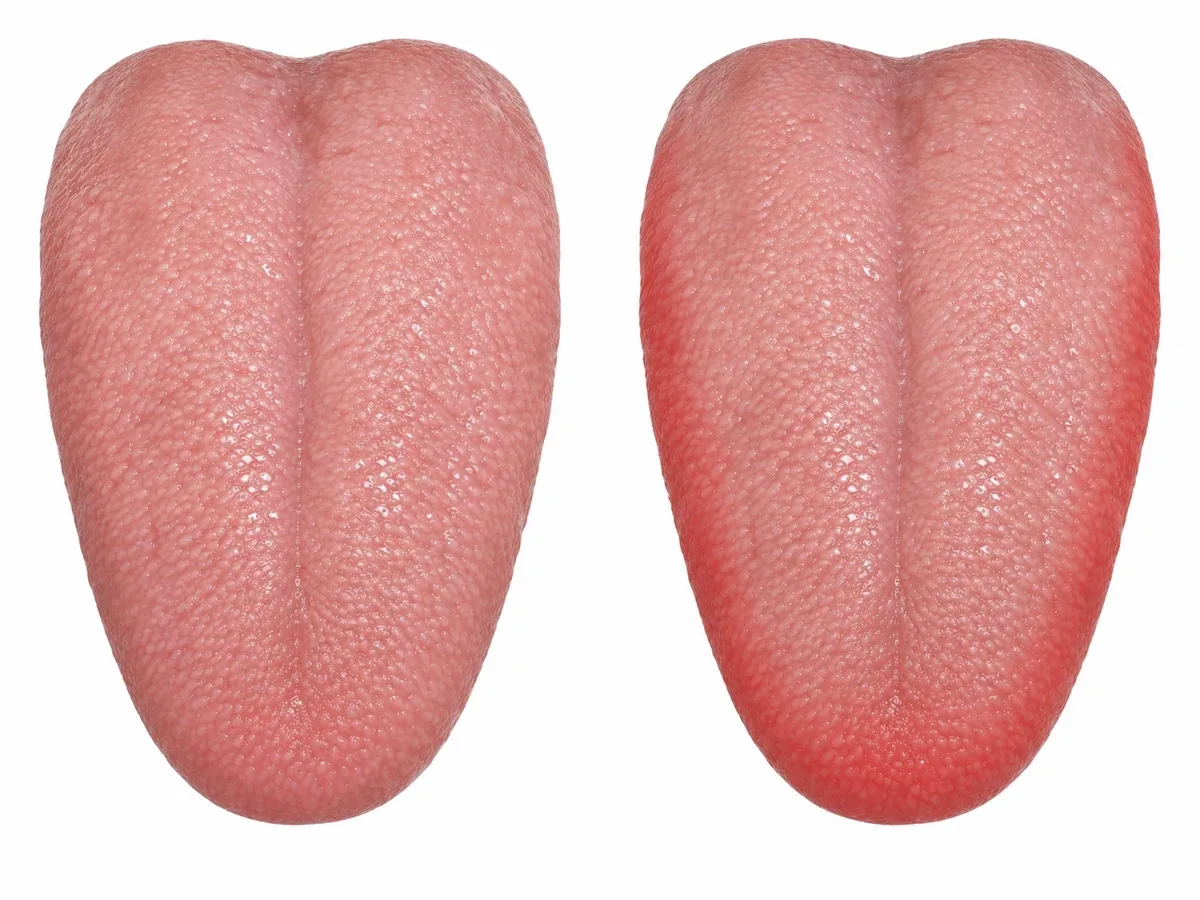
A burning tongue often looks completely normal. That is exactly what makes it so frustrating.
The tongue may look pink and healthy while it hurts. This gap between how it looks and how it feels is the core feature of the condition.
Can a dry mouth cause a burning tongue?
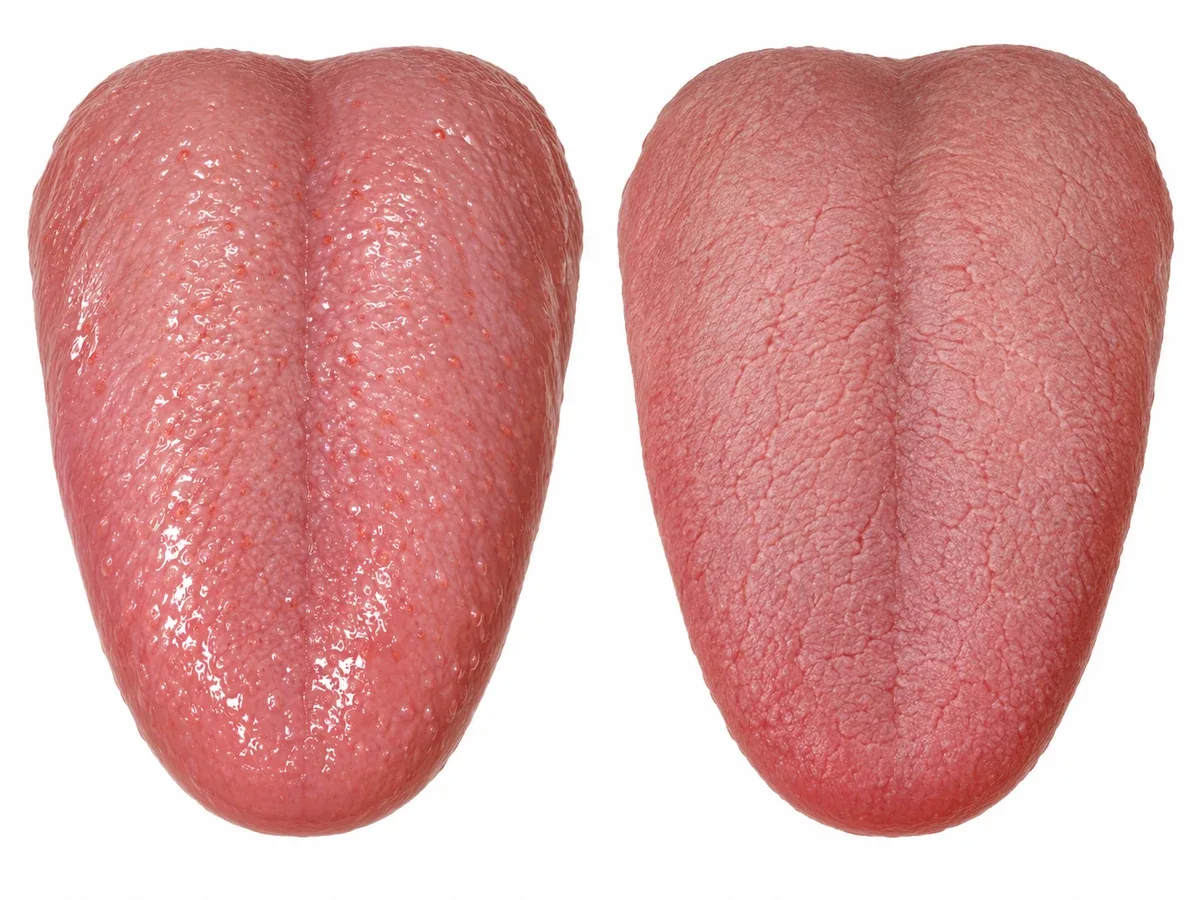
One of the listed causes is reduced salivary gland function. The KDCA page on dry mouth fills in the details.
According to that page, dry mouth can be caused by medicines, radiation therapy, Sjögren's syndrome, stress and aging.
Its symptoms include trouble swallowing and speaking. Tooth decay, bad breath and changes in taste can also follow.
The page adds one more point. When saliva decreases, tooth decay and gum disease get worse faster.
For care, the KDCA page suggests these steps:
- Adjust the medicine that is causing the dryness, with your doctor.
- Have fluoride applied regularly.
- Get a dental checkup every six months.
- Drink enough water.
- Chew sugar-free gum.
If you take several medicines, bring the list with you. In practice, this helps a great deal.
For visitors, photos of the medicine labels from home work too. Brand names differ between countries, so the list helps us see what each one is.
Could something in your mouth be rubbing your tongue?
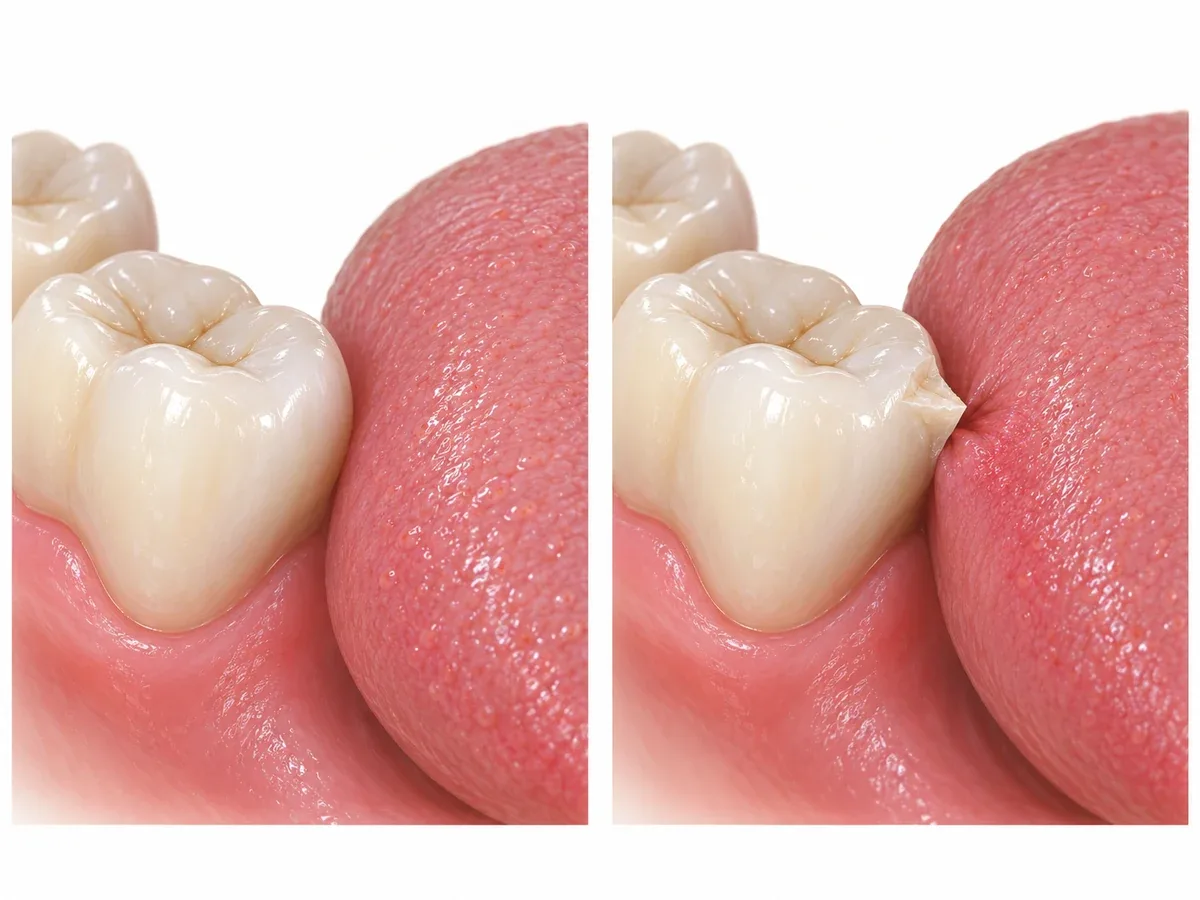
Another listed cause is local irritation inside the mouth. Something may keep brushing against the same spot.
Common sources of this kind of rubbing include:
- a tooth that has chipped and left a sharp edge
- the edge of an old crown or filling
- a denture that no longer fits well
When one of these keeps rubbing the same place, that place can hurt. A burning tongue may partly come from this kind of repeated contact.
The oral cancer source matters here too. It lists dentures or teeth that repeatedly injure the tongue among the risk factors.
It also says that ongoing damage to the lining of the mouth from sharp teeth or dentures is linked to cancer. So smoothing a rough spot is about more than pain relief.
Rubbing and dryness can also overlap. A dry tongue becomes sensitive to even small irritation, so an edge that seemed harmless before may start to bother you.
This is where the examination begins. We look and feel first, and if something is rubbing, we deal with that first.
The source describes the same start. A first diagnosis is made by looking at and feeling the area.
What if there is a visible sore or patch?
One distinction must be clear. A burning tongue means pain with nothing clearly wrong to see. A visible sore or spot belongs to a different category.
The KDCA page on stomatitis covers inflammation of the lips, tongue and gums. It divides it into infectious types (herpes, hand-foot-and-mouth disease, candida) and non-infectious types (aphthous ulcers, burning mouth syndrome, radiation mucositis).
| Type | Examples listed |
|---|---|
| Infectious | Herpes, hand-foot-and-mouth disease, candida |
| Non-infectious | Aphthous ulcers, burning mouth syndrome, radiation mucositis |
Burning mouth syndrome appears in the non-infectious group. So a burning feeling and a visible sore can sit side by side in the same list, yet they are checked in different ways.
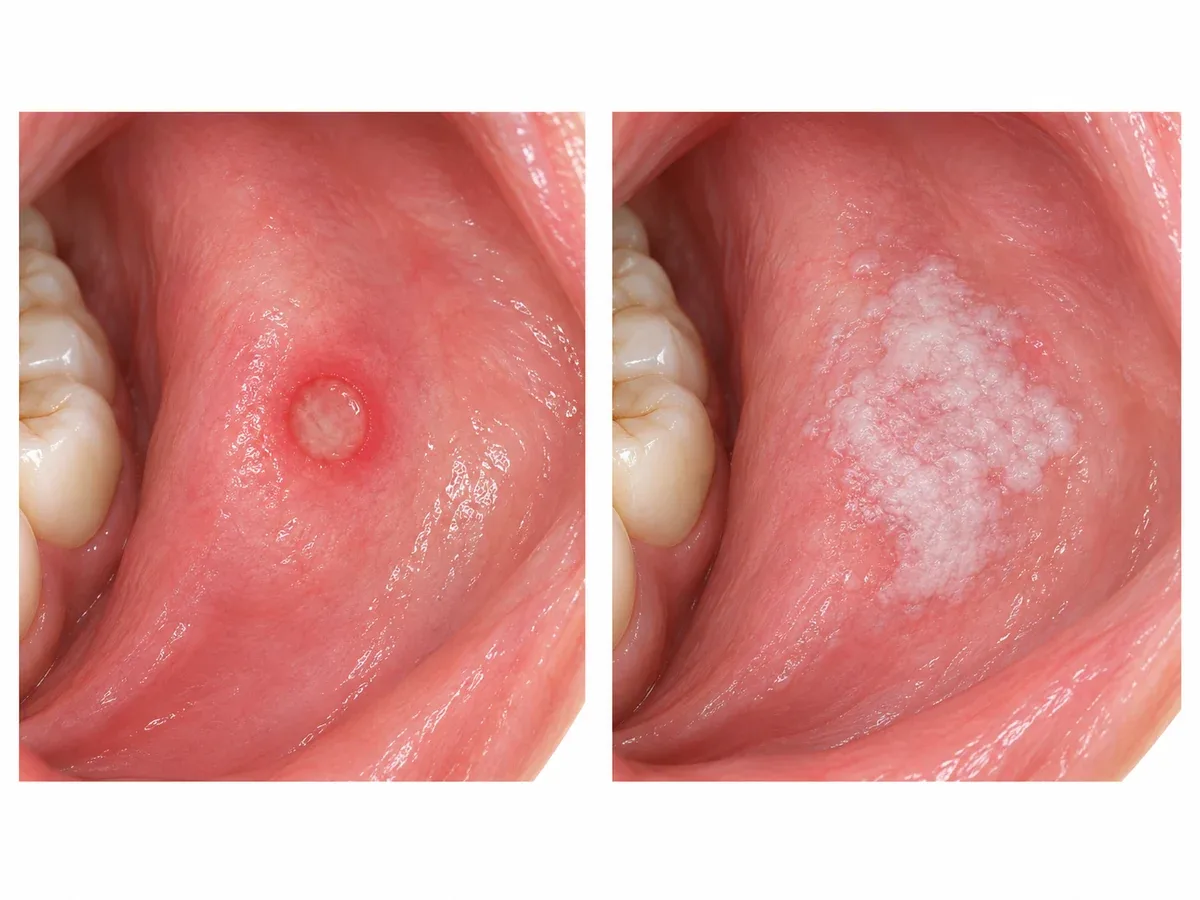
An aphthous ulcer, a common mouth ulcer, has a clear border with a red rim. Then the page sets a firm rule.
An ulcer that has not healed after 2–3 weeks of treatment needs a biopsy to rule out cancer. For a visible sore, the number of days is the key figure in this rule.
The oral cancer source says cancer can appear on the lips, tongue, inner cheeks, hard palate and gums. As a tumor grows, it can form a lump or an ulcer.
It can also appear as a white or discolored surface patch, and it may cause pain.
The same source names drinking and smoking as the main causes. Poor oral hygiene is also listed. Smoking appears on the burning tongue list as well, which is one more reason to mention it at your visit.
| Topic | Burning tongue | Visible sore or patch |
|---|---|---|
| Appearance | Pain with nothing clearly wrong | A sore or spot you can see |
| What the sources describe | A stinging tip, tingling edges, a burning feeling | Aphthous ulcer: clear border and red rim; oral cancer: lump, ulcer or patch |
| The sources' guidance | See an oral surgeon, even just to confirm it is not cancer | An ulcer not healed after 2–3 weeks of treatment needs a biopsy |
How is a burning tongue treated in Busan?
The approach is the same in Busan as elsewhere. The source says that once the cause is found, that cause is removed.
If the problem is psychological, antidepressants and anti-anxiety medicines are prescribed. To ease symptoms in the mouth, a steroid mouth rinse may be prescribed, along with an ointment containing propolis or hyaluronic acid.
When stress is the cause, behavioral therapy is used.
In short, the treatments named in the source are:
- finding and removing the cause
- antidepressants and anti-anxiety medicines for psychological causes
- a steroid mouth rinse
- an ointment with propolis or hyaluronic acid
- behavioral therapy when stress is the cause
Which of these fits depends on what the examination finds. That is why the first visit focuses on looking for a cause.
The section on the course of the condition captures how patients feel. Because the pain often has no clear reason, anxiety about cancer and depression can follow.
In fact, the source notes that many patients with a burning tongue report feeling anxious and low.
So the source makes a clear recommendation. See an oral and maxillofacial surgeon, even just to confirm that it is not cancer. Getting checked is itself part of the treatment.

| Cause | Approach described |
|---|---|
| Reduced salivary gland function | Adjusting the causing medicine, regular fluoride, six-month checkups, water, sugar-free gum |
| Local irritation in the mouth | Look and feel first; deal with anything that rubs |
| Psychological factors | Antidepressants and anti-anxiety medicines |
| Stress | Behavioral therapy |
| Symptoms in the mouth | Steroid mouth rinse, ointment with propolis or hyaluronic acid |
Why should you not wait and watch?
Many people with a burning tongue check it in the mirror again and again. That habit is understandable, but it rarely answers the question.
The source includes a caution. Symptoms that started at the tip of the tongue can spread to the whole tongue or the whole mouth.
For that reason, it advises finding a diagnosis and treatment early. Getting checked once is better than watching alone and putting it off.
Before your visit, it helps to note a few things:
- Where it burns: the tip, the edges or the whole tongue.
- When it started, and whether it has spread.
- Whether your sense of taste has changed.
- Every medicine you take, including those for sleep or mood.
- Any sharp tooth, old filling or denture that touches the tongue.
- Any visible sore, and how many days it has been there.
Keep the two timelines separate. For a burning tongue with nothing to see, an early visit helps. For a visible ulcer, count the days, and remember the 2–3 week line.
| Situation | What the sources advise |
|---|---|
| Burning or stinging with nothing visible | Seek a diagnosis early, since it can spread to the whole tongue or mouth |
| Worry about cancer | See an oral surgeon, even just to confirm it is not cancer |
| An ulcer not healed after 2–3 weeks of treatment | A biopsy to rule out cancer |
| A sharp tooth or denture rubbing the tongue | Have the rubbing spot checked and smoothed |
If you live in Busan, a short visit is enough to begin. Bring your medicine list, and note when the burning started and where.
Frequently asked questions
My tests were normal. Why does my tongue still burn?
The source says that in most cases of a burning tongue, people feel pain even though nothing is wrong with the tongue or mouth. A normal result does not mean the pain is not real. This state has a name, and treatment options are described.
Could it be cancer?
The source lists that very worry, concern about oral cancer, among the causes. It recommends getting checked, even just to confirm it is not cancer. If an ulcer has not healed after 2–3 weeks, the KDCA rule is a biopsy.
Is a burning tongue related to a dry mouth?
Reduced salivary gland function is one of the listed causes. The KDCA page on dry mouth says less saliva makes decay and gum disease worse faster and can change taste. Medicines can be the cause, so checking your medicine list is the first step.
Can I get care for a burning tongue in English in Busan?
Yes, we provide 1:1 English interpretation from your first consultation through the end of treatment. The clinic is near Seomyeon Station Exit 2 (5-min walk), opposite Lotte Hotel Busan. Call 010-8555-2854 (+82-10-8555-2854 from abroad).
A burning tongue with nothing to see is a real condition with a name.
Dry mouth, rubbing edges and stress are all on the list.
A visible ulcer is judged by a different rule:
2–3 weeks without healing means a biopsy.
If your tongue burns and you are in Busan, Reset Dental Clinic offers 1:1 English interpretation from your first consultation through the end of treatment. Call 010-8555-2854 to book a consultation.
References
- Asan Medical Center Disease Encyclopedia, "Glossodynia (Tongue Pain)" — definition as a stinging tip or tingling edges without a clear abnormality; pain without abnormal findings as the most frequent case, plus worry about oral cancer, stress, local irritation, smoking, hormonal changes and reduced salivary function; tingling, burning and changed taste; first diagnosis by looking and feeling; removing the cause, antidepressants and anti-anxiety medicines, steroid rinse and propolis or hyaluronic acid ointment, and behavioral therapy; anxiety and depression, and the advice to see an oral surgeon to confirm it is not cancer; spread to the whole tongue or mouth
- KDCA National Health Information Portal, "Dry Mouth" — medicines, radiation therapy, Sjögren's syndrome, stress and aging as causes; trouble swallowing and speaking, decay, bad breath and taste changes; faster decay and gum disease with less saliva; medicine review, regular fluoride, six-month checkups, water and sugar-free gum
- KDCA National Health Information Portal, "Stomatitis" — inflammation of the lips, tongue and gums; infectious (herpes, hand-foot-and-mouth disease, candida) and non-infectious (aphthous ulcers, burning mouth syndrome, radiation mucositis) types; aphthous ulcers with a clear border and red rim; a biopsy for ulcers not healed after 2–3 weeks of treatment
- Asan Medical Center Disease Encyclopedia, "Oral Cancer" — sites including the lips, tongue, inner cheeks, hard palate and gums, mostly squamous cell carcinoma; lumps, ulcers and white or discolored patches that may cause pain; alcohol and smoking as the main causes, with poor oral hygiene and dentures or teeth repeatedly injuring the tongue; the link between ongoing mucosal damage from sharp teeth or dentures and cancer
Written by Reset Dental Clinic Support Team
Medical review Dr. Kim Hyun-joo, Head Dentist
Last updated: September 19, 2026
This column is for general information and does not replace diagnosis or treatment for individual patients. If you have symptoms, please see a dentist.


