

- Gum disease guides list factors that speed it up: faulty restorations, malocclusion, smoking, stress, clenching, grinding and tongue thrusting.
- Gum disease moves through four stages. Gums start to recede at the moderate periodontitis stage.
- After scaling, gaps that look wider are normal, and a loose feeling is part of swollen gums settling.
- Braces are listed among the causes of a gum abscess, which is why gum health comes first.
At Reset Dental Clinic in Seomyeon, Busan, we sometimes hear that braces make your gums recede. The public references we checked contain no statement that braces cause receding gums. For patients living in or visiting Korea, we provide 1:1 English interpretation from the first consultation through the end of treatment.
What the references do explain clearly is how gum disease progresses, and what pushes it along. This column draws on Asan Medical Center's guides to chronic periodontitis, gingivitis and gum abscess. It also uses the KDCA National Health Information Portal's guide to scaling and a dental news report on scaling coverage.
What does "receding gums" actually mean?
Asan Medical Center's guide defines chronic periodontitis as inflammation around the teeth. It destroys the gums and the bone that supports the teeth, called the alveolar bone.
The guide explains the terms. Gum disease is the general name. Gingivitis is inflammation of the gums, and periodontitis is inflammation that has reached the bone.
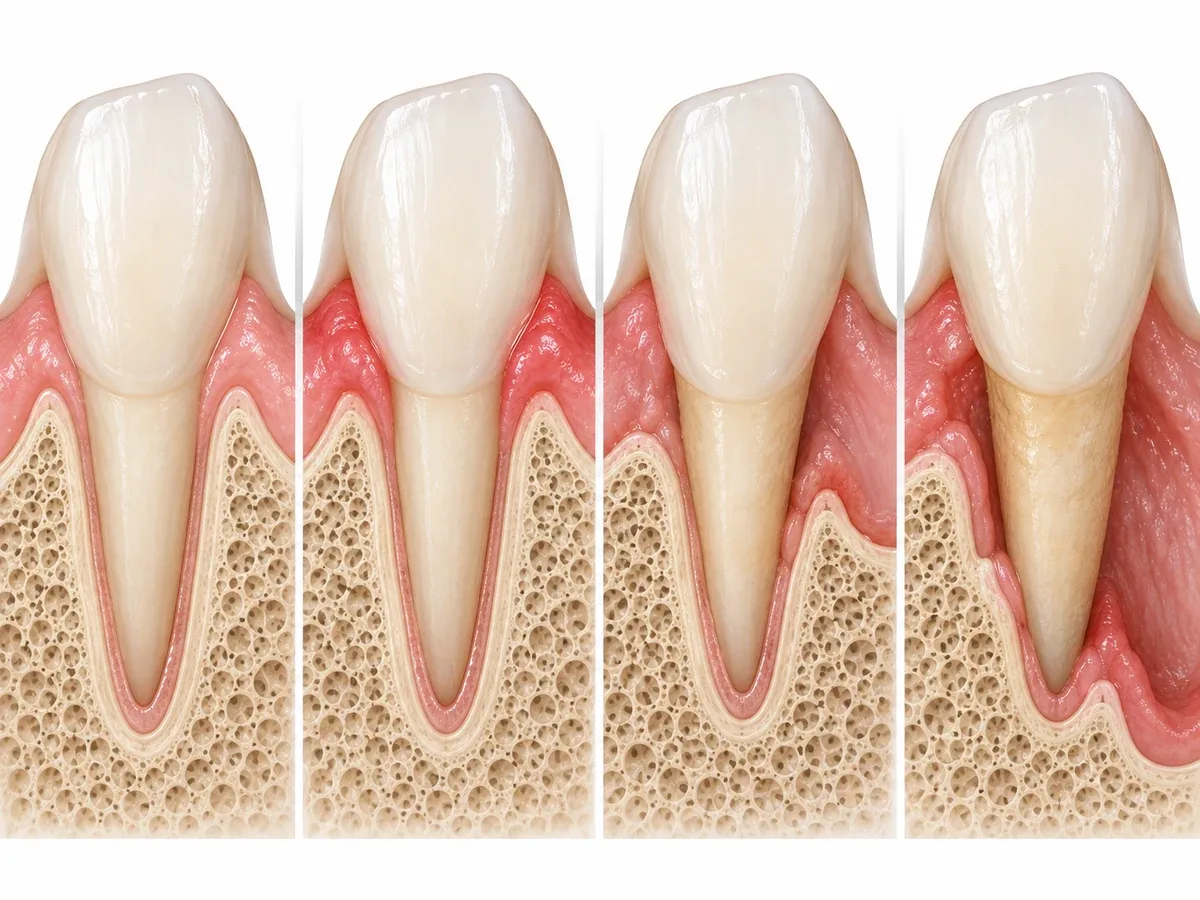
The guide sets out four stages of gum disease:
- Gingivitis: the gums swell and turn red, and they bleed when you brush.
- Early periodontitis: the gums swell, feel lifted and red, and bleed when touched.
- Moderate periodontitis: the gums recede, gaps start to open between the teeth, and teeth begin to loosen slightly.
- Advanced periodontitis: the gums recede badly, the gaps widen, and the teeth are loose.
So "receding gums" describes the moderate stage or later. It is not where gum disease begins.
The guide adds that the early stages usually do not hurt much. Discomfort tends to appear once the disease has progressed quite far.
| Stage | What the guide says |
|---|---|
| Gingivitis | Gums swell and turn red, and bleed when you brush |
| Early periodontitis | Gums swell, feel lifted and red, and bleed when touched |
| Moderate periodontitis | Gums recede, gaps start to open between the teeth, teeth begin to loosen slightly |
| Advanced periodontitis | Gums recede badly, gaps widen, teeth are loose |
Gums recede at the moderate stage of gum disease. The early stages rarely hurt.
What makes gum disease progress?
The guide explains the cause. Bacteria and food debris (plaque) combine with calcium to form tartar.
Tartar leads to gum pockets, the spaces that open between gum and tooth. The bone supporting the tooth is then destroyed.
The guide also gives a long list of factors that affect how gum disease progresses:
- faulty dental restorations
- malocclusion, where the upper and lower teeth do not meet properly
- smoking and stress
- bad habits such as clenching, grinding and tongue thrusting
- medication, age, race, sex and hormonal changes
General health matters too. The guide adds diabetes, heart and blood vessel disease, pregnancy and poor nutrition as causes.
Note that malocclusion is on the list. When the bite is off, force can gather on certain teeth, which also strains the gums.
No reference says braces damage the gums. But a reference does say that a misaligned bite affects how gum disease progresses.
| Group | Factors listed |
|---|---|
| In the mouth | Tartar, faulty restorations, malocclusion |
| Habits and lifestyle | Smoking, stress, clenching, grinding, tongue thrusting |
| Personal factors | Medication, age, race, sex, hormonal changes |
| General health | Diabetes, heart and blood vessel disease, pregnancy, poor nutrition |
What about age? The guide lists age as one factor, but it is one of many. Symptoms of chronic periodontitis mostly appear from the late 30s, yet the guide notes that some people's gums start to worsen in their teens.
How can you tell gingivitis from periodontitis?
The two words sound alike, but the difference matters. Gingivitis stays in the gums, while periodontitis has reached the bone.
The gingivitis guide names plaque, a film of bacteria on the teeth, as the cause. When hardened tartar builds up as well, the gap between gum and tooth opens, bacteria get in and inflammation follows.
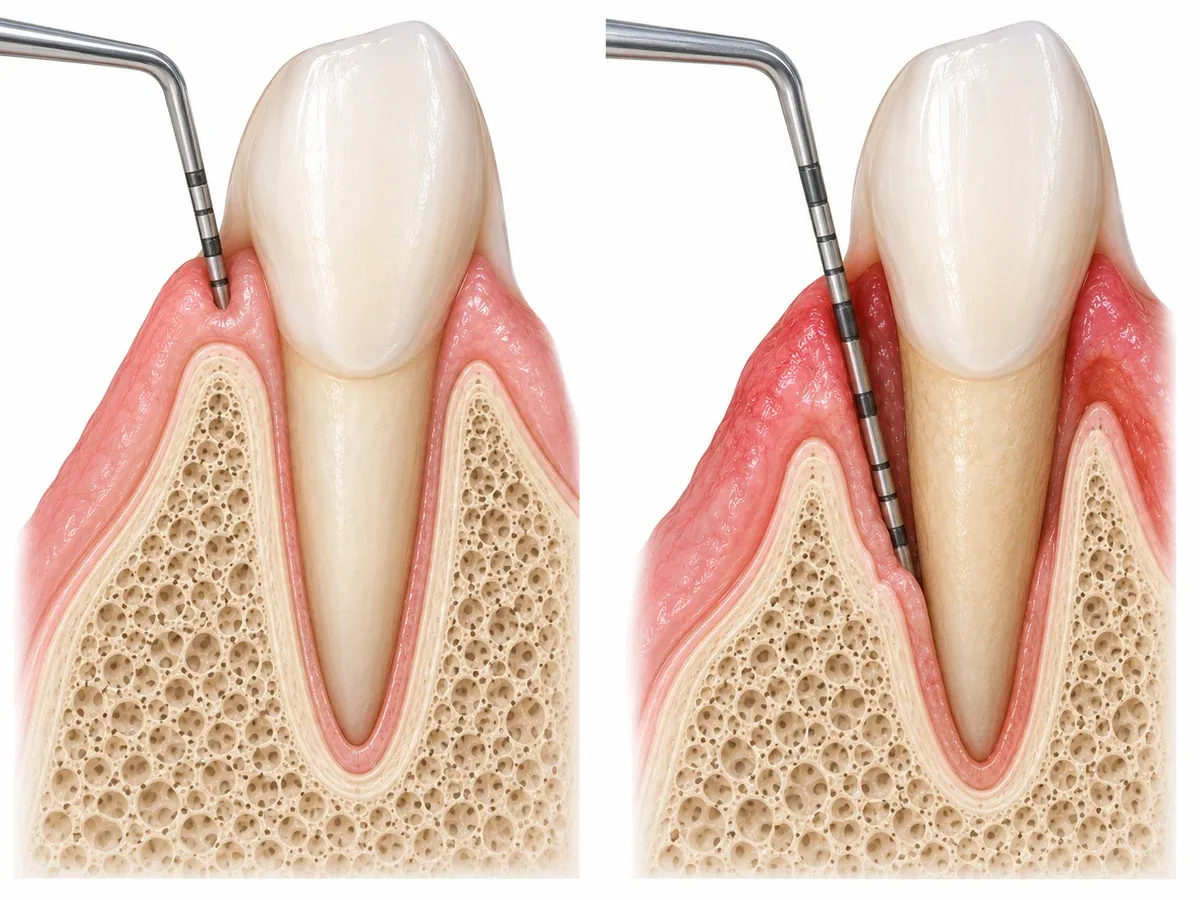
Gingivitis is diagnosed by checking how much the gums bleed and swell. Periodontitis needs more: the chronic periodontitis guide describes probing pocket depth and using X-rays to see lost bone support.
| Point | Gingivitis | Periodontitis |
|---|---|---|
| Where it is | The gums | The gums and the supporting bone |
| Signs | Red gums that bleed when brushing | Receding gums, gaps, loose teeth at later stages |
| How it is checked | Bleeding and swelling of the gums | Pocket depth with a probe, bone support on X-rays |
| Can it be reversed? | Usually, with careful brushing, flossing and scaling | Destroyed bone does not grow back by itself |
This is why early checks are worth the time. The earlier stage is the one that can still be turned around.
If left, gingivitis can progress to periodontitis. The guide lists this as the next step when inflammation gets worse.
How are braces and gum disease actually related?
Asan Medical Center's gum abscess guide lists the causes of a periodontal abscess, a pus-filled infection in the gum tissues. One of them is trauma to the teeth, naming braces, tartar and dental restorations.
We read this as a caution. When appliances and force are added, gums that are already inflamed can get worse.
That is why order matters. Gingivitis is a stage that can be reversed.
The gingivitis guide says it can usually be reversed with careful, thorough brushing and flossing. It also names correct brushing and regular scaling as part of treatment.
Once gum disease becomes periodontitis and bone is destroyed, that bone does not grow back by itself. This is the key difference between the two stages.
So the sequence around braces follows from the references:
- Check gum health before braces start.
- Treat any inflammation first.
- Keep brushing and flossing carefully while the braces are on.
- Remove tartar regularly with scaling during treatment.
The gum abscess guide also describes warning signs of an acute abscess. The gum bulges in a rounded shape, is very painful to touch, and the tooth may feel loose.
Why do teeth look gappier after scaling?
Many people say their teeth look more spaced out after gum treatment. The KDCA's scaling guide explains this clearly.
According to the guide, these changes after scaling are expected:
- sensitivity fades within a few weeks
- a loose feeling is a natural part of swollen gums settling down
- gaps that look wider are normal
No new gap has formed. The swollen gums were covering that space, and now it can be seen.
During braces, this distinction matters even more. The teeth are already moving, so it is easy to blame every change on the braces.
What is swelling and what is real change can be separated. The chronic periodontitis guide describes the method: measure pocket depth with a probe and check bone height on X-rays.

| What you notice | What the guide says |
|---|---|
| Sensitivity | Fades within a few weeks |
| A loose feeling | A natural part of swollen gums settling down |
| Gaps that look wider | Normal |
If a change does not settle, it is worth having the depth and bone level checked. Measurements, not guesses, tell swelling apart from gum disease.
How often should you get scaling in Korea?
The KDCA's scaling guide describes scaling as the basic treatment for removing plaque and tartar. People with gum disease should have it at least every 6 months.
Korea's national health insurance covers one scaling a year for adults aged 19 and over. A dental news report on insurance guidance says this applies to both members and dependents.
The same report adds that the yearly benefit does not carry over. If the year ends without it, it is lost. The report advises booking early rather than waiting for the year-end rush.
The report also calls scaling a basic preventive treatment. It describes it as key to preventing gum inflammation and gum disease.
Braces often last several years. Remembering scaling once each year can change how your gums look when treatment ends.
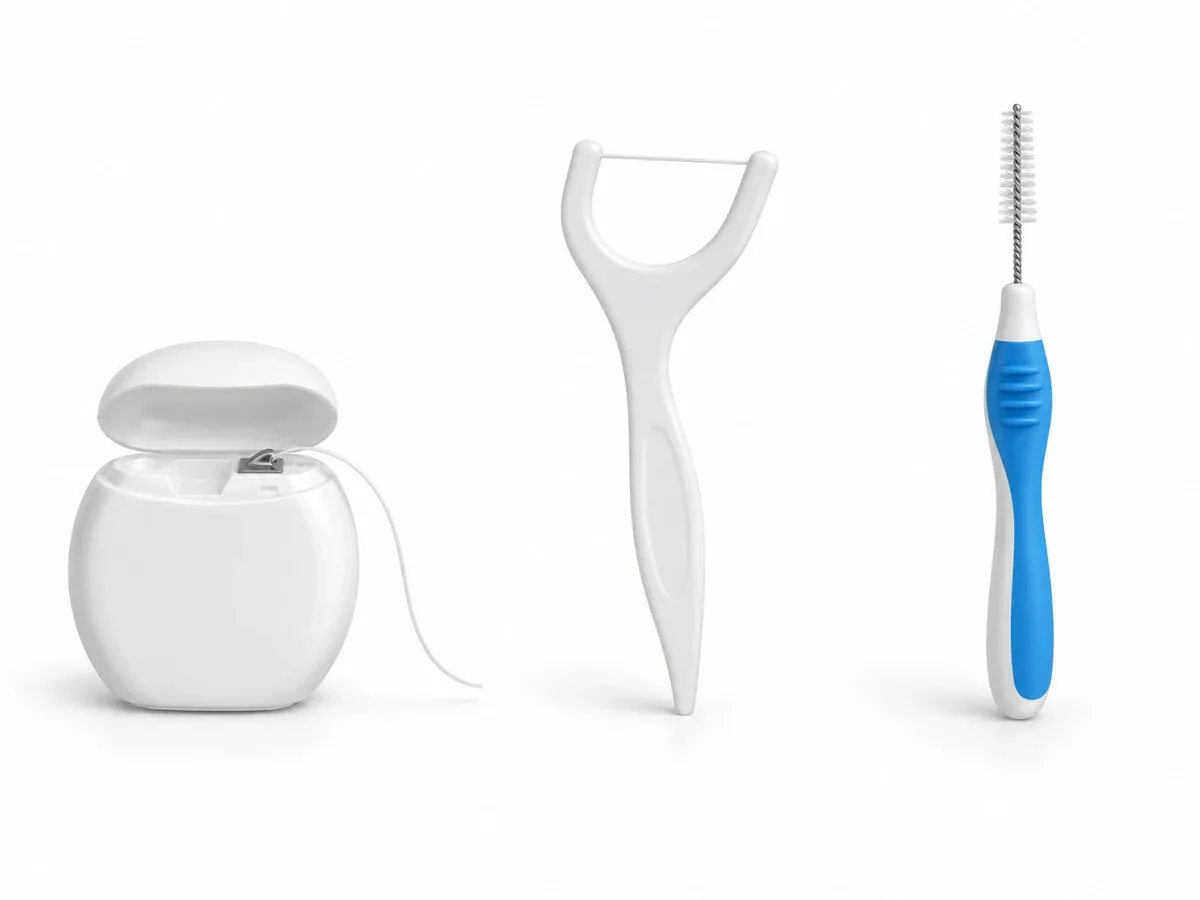

Between scaling visits, the tools matter. Floss and interdental brushes reach where a single toothbrush cannot.
Bone height, on the other hand, cannot be seen from outside. It is measured on X-rays, which is why regular check-ups include imaging when needed.
What are the warning signs of a gum abscess?
Asan Medical Center's guide defines a periodontal abscess as a pus-filled infection inside the gum tissues. It is caused by bacteria in the mouth.
The guide lists several situations in which an abscess can form. They are set out below.
- the opening of a gum pocket narrows, so pus cannot drain well
- the body's resistance drops
- the teeth are injured, including by braces, tartar or restorations
In an acute abscess, the guide describes pain that spreads and very severe pain when the gum is touched. The tooth may feel loose.
Rarely, fever and weakness can come with it. The gum may bulge in a rounded shape, with a red and shiny surface.
Treatment starts with removing bacterial plaque and tartar thoroughly. This keeps the area from becoming a place where bacteria can thrive.
If bone loss has already progressed and regular gum treatment, including scaling, is not enough, the guide says gum surgery is done. During braces, reporting these signs early helps avoid that point.
Frequently asked questions
Did braces cause my gum disease or receding gums?
The references do not say braces make gums recede. They describe receding gums as a sign of moderate periodontitis, and list malocclusion, smoking, clenching and grinding among factors in gum disease. Whether yours is gum disease or post-scaling change is checked with pocket depth and bone height.
Should gum disease be treated before braces?
If there is inflammation, yes, that is the sensible order. The gingivitis guide says this stage can recover with brushing, flossing and regular scaling. The gum abscess guide lists braces as one situation that can cause trauma to the teeth.
Should I stop braces if my gums bleed?
Bleeding alone is not a reason to stop, because it is a common sign of gingivitis. If the gum bulges, is very painful to touch and the tooth feels loose, it may be an abscess, so tell your dentist right away. Rarely, fever and weakness can occur.
Can I get gum care during braces in English in Busan?
Yes. We offer 1:1 English interpretation from the first consultation through the end of treatment. The clinic is near Seomyeon Station Exit 2 (5-min walk), opposite Lotte Hotel Busan, and you can call 010-8555-2854 (+82-10-8555-2854 from abroad).
Receding gums are a stage of gum disease, not a side effect written into braces.
Check the gums first.
Treat inflammation before it reaches the bone.
Keep up scaling while the braces are on.
If you are worried about your gums before or during braces in Busan, Reset Dental Clinic offers 1:1 English interpretation from your first consultation through the end of treatment. Call 010-8555-2854 to book a consultation.
References
- Asan Medical Center Disease Encyclopedia, "Chronic Periodontitis" — definition as inflammation that destroys the gums and alveolar bone; gingivitis versus periodontitis; tartar and gum pockets as the cause; factors such as faulty restorations, malocclusion, smoking, stress, clenching, grinding, tongue thrusting, medication, age, hormonal changes and systemic disease; the four stages, with gums starting to recede at the moderate stage; little pain early on, symptoms mostly from the late 30s but sometimes from the teens; and diagnosis by probing pocket depth and X-rays
- Asan Medical Center Disease Encyclopedia, "Gingivitis" — definition as inflammation of the gums; plaque and hardened tartar as causes; red, bleeding gums with possible progression to periodontitis; and recovery through careful brushing, flossing and regular scaling
- Asan Medical Center Disease Encyclopedia, "Periodontal Abscess" — definition as a pus-filled infection in the gum tissues; causes including poor drainage, lowered resistance and trauma to the teeth such as braces, tartar and restorations; acute symptoms including severe pain on touch, loose teeth and, rarely, fever and weakness; and treatment by removing plaque and tartar, with gum surgery when bone loss has progressed
- KDCA National Health Information Portal, "Scaling (Tartar Removal)" — scaling as the basic treatment for removing plaque and tartar; yearly insurance coverage for adults 19 and over and scaling at least every 6 months with gum disease; and why sensitivity, a loose feeling and wider-looking gaps after scaling are normal
- KDA newspaper Dailydental (Chiui Sinbo), "Don't miss this year's insured scaling" — national health insurance guidance on yearly scaling for members and dependents aged 19 and over; the benefit does not carry over to the next year; scaling as basic preventive care and key to preventing gum disease; and advice to book early
Written by Reset Dental Clinic Support Team
Medical review Dr. Kim Hyun-joo, Head Dentist · Integrated Dentistry Specialist
Last updated: September 19, 2026
This column is for general information and does not replace diagnosis or treatment for individual patients. If you have symptoms, please see a dentist.


