

- Sources link repeated injury from dentures or teeth with oral cancer risk.
- Gum bone shrinks, so regular adjustment of dentures is essential.
- Raised white patches that wipe off easily may be oral thrush.
- An ulcer that has not healed after 2–3 weeks of treatment needs a biopsy.
Denture wearers often come to us in Seomyeon, Busan, with a sore spot where the plate touches the gum. In most cases, trimming the area that presses makes it comfortable within a few days. At Reset Dental Clinic, denture wearers can go through each visit with 1:1 English interpretation.
A sore that stays and does not heal, however, is viewed differently. This column explains why sore spots appear and when a closer look is needed.
It draws on the KDCA National Health Information Portal pages on removable dentures and on stomatitis. It also uses the Asan Medical Center disease encyclopedia entries on oral cancer and oral candidiasis.
Why do dentures rub and cause sore spots?
The KDCA page on dentures explains the two main types. If all the teeth are missing, a full denture is used. If some teeth remain, a partial denture is used.
Compared with fixed options such as bridges or implants, a removable denture needs no surgery. It does, however, come with a foreign-body feeling and the work of cleaning it.
- full dentures, when all the teeth are missing
- partial dentures, when some teeth remain
- no surgery needed, unlike implants
- a foreign-body feeling and daily cleaning to get used to
- treatment that can take several months to more than a year
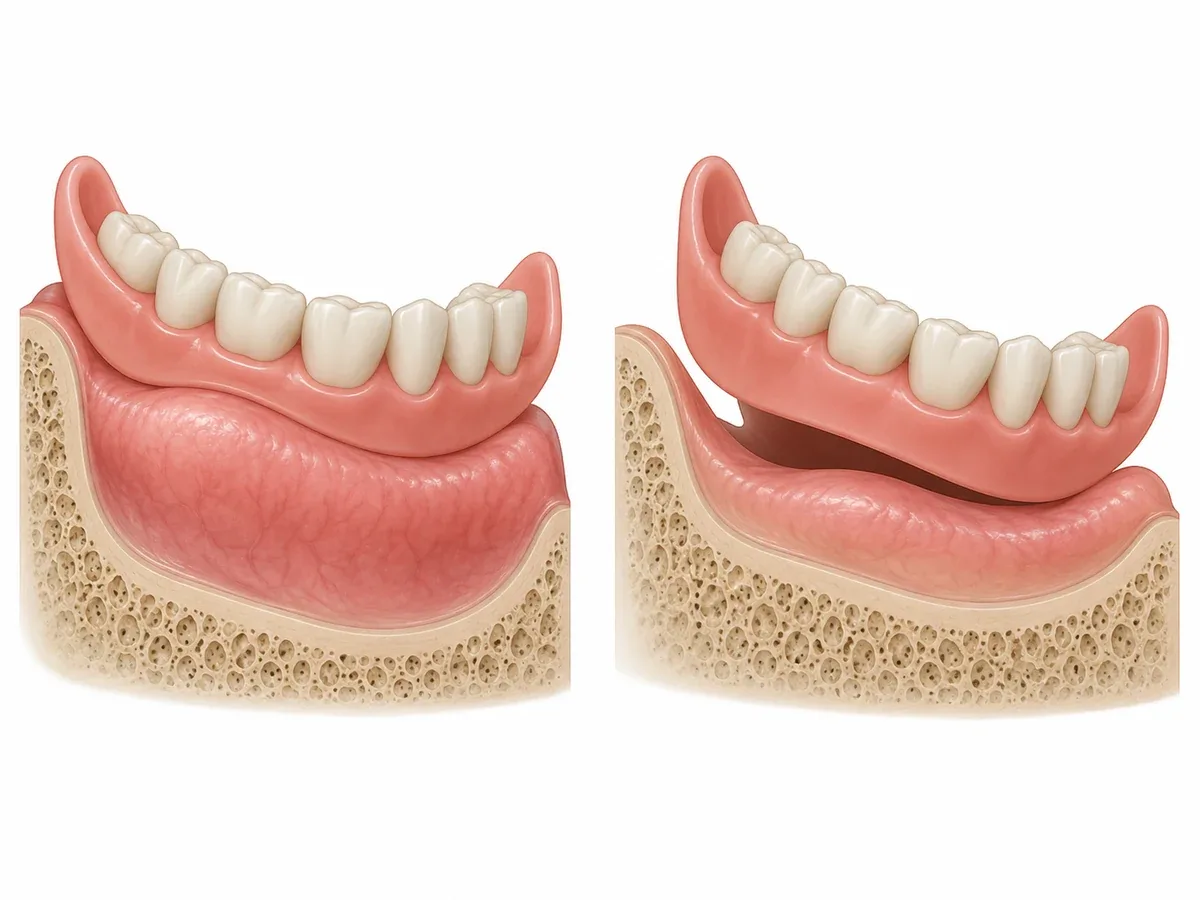
The page also contains the most important sentence for this column. Because the gum bone shrinks, regular adjustment is essential.
Dentures that fit well when first made become loose over time. The plate has not changed; the gums and bone underneath have.
Loose dentures move slightly every time you chew. That small movement rubs the same spot again and again, and a sore spot forms there.
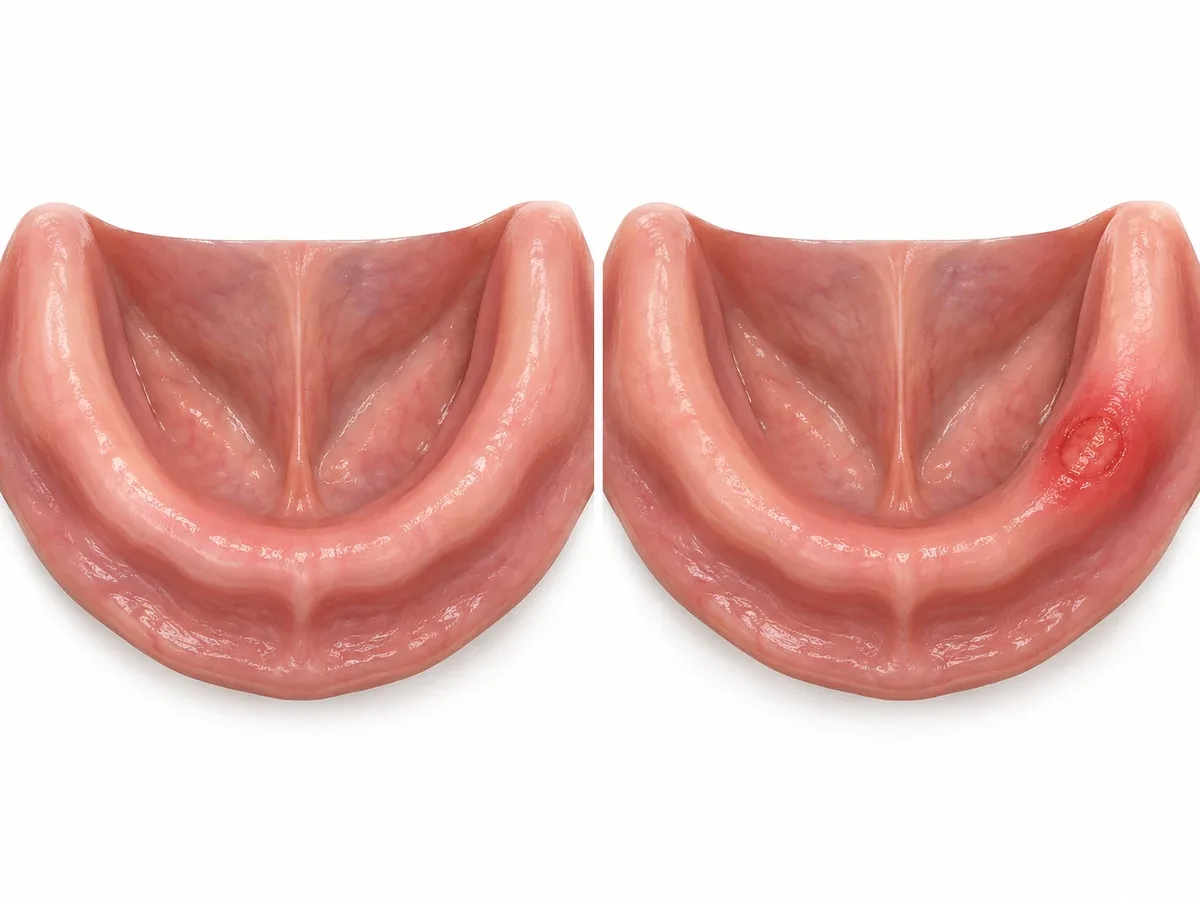
Why is adjusting dentures the first step?
If a sore was caused by rubbing, treatment means removing the cause. We find the area that presses and trim the inner surface or the edge of the dentures.
This is about more than comfort. The Asan Medical Center entry on oral cancer lists other causes besides the main ones.
It names poor oral hygiene and dentures or teeth repeatedly injuring the tongue. It also says that constant damage to the lining of the mouth from sharp teeth or dentures is linked to cancer, along with vitamin deficiency and poor oral hygiene.
That is why removing repeated irritation matters. Even if it does not hurt, a spot that keeps getting pressed should be adjusted.

Putting ointment on the sore spot is a common first thought. If the cause of the pressing is still there, however, the sore will come back.
So the order is adjustment first. Removing the irritation is where treatment begins, since the source names constant damage to the lining of the mouth as the problem.
| Situation | What to do |
|---|---|
| A spot is sore where the dentures touch | Have the pressing area of the dentures trimmed |
| The same spot keeps being pressed, even without pain | It still needs adjusting |
| Raised white patches that wipe off easily | May be oral thrush; have it checked and follow the cleaning advice you are given |
| An ulcer that has not healed after 2–3 weeks of treatment | A biopsy is needed to rule out cancer |
What if a white patch peels off under dentures?
Another common problem for denture wearers is stomatitis caused by a fungus. The Asan Medical Center entry calls stomatitis caused by the fungus Candida oral candidiasis, or oral thrush.
Candida normally lives in the mouth. It can suddenly multiply fast and cause stomatitis when the body's balance is upset or resistance is low.
The source lists these situations as possible triggers.
- a cold or an acute infectious illness
- general weakness
- taking antibiotics for a long time
- smoking
The entry adds that it often occurs in people with diabetes and in people with acquired immunodeficiency syndrome (AIDS).
Here is what it looks like. Raised white patches with a coating appear in the mouth. They can be wiped off easily, and they sometimes bleed when removed.
The source gives separate advice for denture wearers. For oral thrush caused by dentures, the dentures are soaked overnight in a diluted sodium hypochlorite solution (1:10).
It is safer to get the actual solution and strength from your dentist at your visit. Please do not mix a solution at home by guesswork.
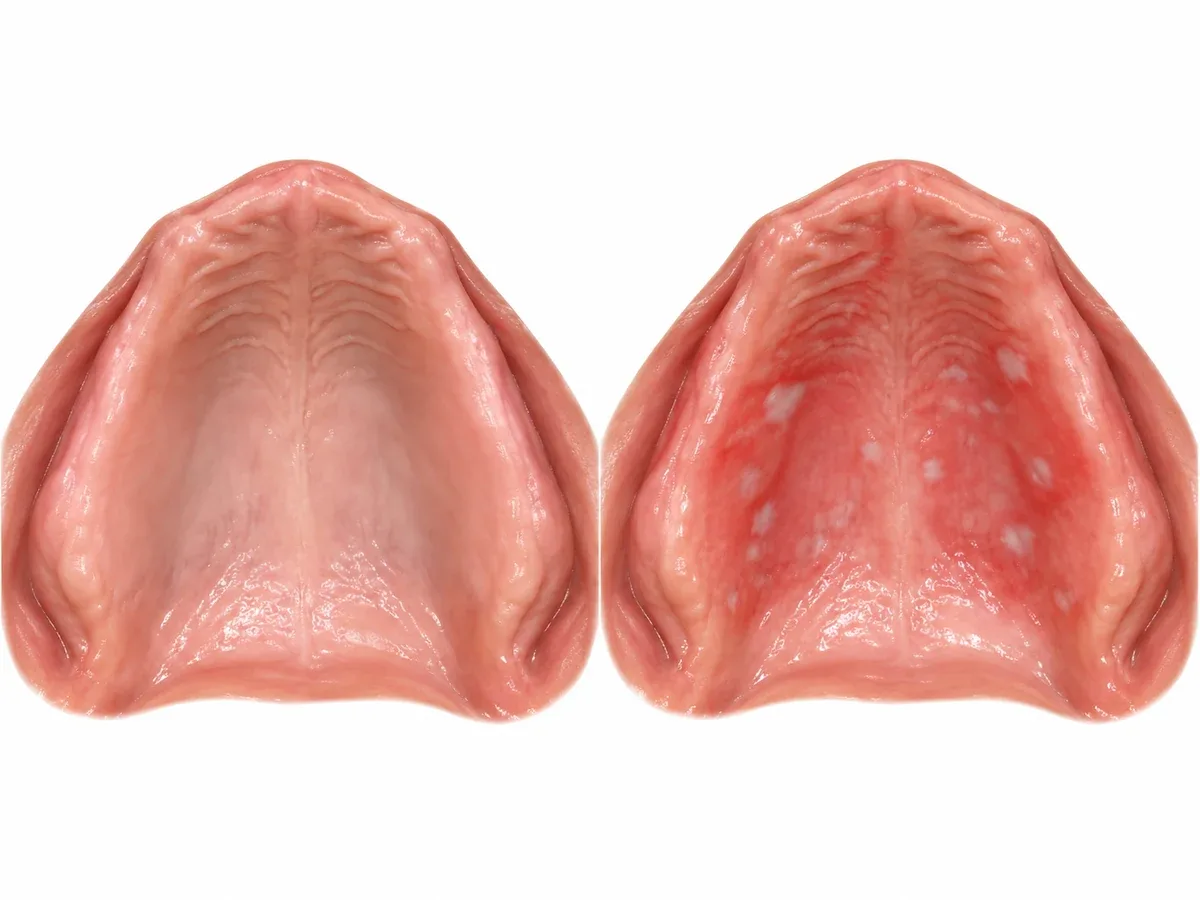
Stomatitis is inflammation of the lining of the lips, tongue and gums. The KDCA page on stomatitis groups it into two types.
| Type | Examples named in the source |
|---|---|
| Infectious | Herpes, hand-foot-and-mouth disease, Candida |
| Non-infectious | Aphthous ulcers, burning mouth syndrome, radiation mucositis |
The same page notes that aphthous ulcers have a clear border with a red rim. Oral thrush under a denture belongs to the infectious group.
When does a sore that will not heal need a closer look?
If a sore is still there after the dentures have been adjusted and cared for, time becomes the guide. The KDCA page on stomatitis states that an ulcer that does not heal after 2–3 weeks of treatment needs a biopsy to rule out cancer.
The oral cancer entry should be read alongside it. Oral cancer can occur on the lips, the tongue, the inner surface of the cheeks, the hard palate and the gums.
As a tumor grows, it can form a lump or an ulcer. It can also appear as a white or discolored surface patch, and it may cause pain.
The source adds that the main causes of oral cancer are drinking and smoking. Most oral cancers are squamous cell carcinomas.
Without proper treatment, it can destroy the soft tissue and bone around it and spread to the lymph nodes in the neck. That is why a lasting sore is not something to wait out.
The white patches of oral thrush wipe off easily. The discolored patches described in the oral cancer entry do not.
Oral thrush is diagnosed by the white lesion that comes off easily and by looking at a sample under a microscope, according to the Asan Medical Center entry.
Because the two are hard to tell apart by eye alone, the length of time a sore lasts is used as the guide. A sore that has not healed after 2–3 weeks of treatment should be checked.
| Point | Oral thrush (oral candidiasis) | What the oral cancer entry says |
|---|---|---|
| Appearance | Raised white patches with a coating | May appear as a lump, an ulcer, or a white or discolored patch |
| When wiped | Wipes off easily and may bleed when removed | Does not wipe off easily |
| Linked with | Long-term antibiotics, smoking, low resistance, diabetes | Constant damage to the lining of the mouth from dentures or teeth |
| What the source advises | Soak the denture overnight in diluted sodium hypochlorite (1:10) | An ulcer not healed after 2–3 weeks of treatment needs a biopsy |
How can you keep dentures comfortable for longer?
The care routine in the KDCA denture page is simple. Take them out and clean them after every meal, and keep them in water overnight.
- After each meal, take the dentures out.
- Clean the dentures before putting them back in.
- At night, take them out and keep them in water.
- Come in for regular adjustment, because the gum bone shrinks.
The same page repeats the point made earlier. Because the gum bone shrinks, regular adjustment is essential.
If you keep wearing loose dentures for a long time, more spots start to rub. The lining of your mouth is irritated for longer as a result.
Rather than putting up with the discomfort, it is better to come in for adjustment sooner. A small trim is easier than a sore that has had weeks to develop.
Think of it as three simple habits. Keep the fit adjusted, keep the plate clean, and keep an eye on how long any sore lasts.

| Item | What the source says |
|---|---|
| Types | Full dentures when all teeth are missing; partial dentures when some remain |
| After meals | Take them out and clean them after every meal |
| At night | Keep them in water |
| Adjustment | Regular adjustment is essential because the gum bone shrinks |
| Treatment time | Can take several months to more than a year |
What should denture wearers in Busan bring up at a check?
For patients living in or visiting Korea, a short list of details makes a denture check faster. It helps us find the spot that is causing trouble.
- where the sore spot is, and how long it has been there
- whether white patches appear, and whether they wipe off
- whether you take antibiotics or have diabetes
- whether you smoke or drink
- whether you wear your dentures at night
At the visit, we look for the area where the plate presses. We then trim the inner surface or edge so the force no longer gathers on one point.
If white patches are present, we check them and explain how to clean the plate. If a sore has lasted 2–3 weeks despite treatment, we explain the next step, which the source says is a biopsy.
Adjusting the fit, cleaning the plate and watching the time a sore lasts are the three habits that matter most here.
You do not need to wait for pain to book a check. A spot that keeps getting pressed is reason enough, even when it does not hurt yet.
Frequently asked questions
How many days does a denture sore take to heal?
The sources do not give a recovery period in numbers. There is a guide, though: the 2–3 weeks in the KDCA stomatitis page. If a sore has not healed that long after the dentures are adjusted, it needs to be checked.
A white coating appears. Can I just wipe it off?
The source says oral thrush patches wipe off easily and may bleed when removed. Rather than scrubbing them away, it is better to have them checked. There is a separate cleaning method for denture wearers, so follow the advice you receive.
Can I sleep with my dentures in?
The KDCA denture page says to keep them in water overnight. The lining of your mouth needs time to rest, and it is better for keeping the dentures clean.
Can I get my dentures checked in English in Busan?
Yes. We provide 1:1 English interpretation from your first consultation through the end of treatment. The clinic is near Seomyeon Station Exit 2 (5-min walk), opposite Lotte Hotel Busan, and you can call 010-8555-2854 (+82-10-8555-2854 from abroad).
Dentures are not finished once they are made.
The gum bone shrinks, so the fit changes.
A spot that keeps rubbing should be adjusted.
A sore that lasts 2–3 weeks despite treatment should be checked.
If your dentures have started to rub in Busan, Reset Dental Clinic can adjust them with 1:1 English interpretation. Call 010-8555-2854 to book a check.
References
- KDCA National Health Information Portal, "Removable Prostheses (Dentures)" — full dentures when all teeth are missing and partial dentures when some remain; no surgery compared with fixed options, but a foreign-body feeling and cleaning burden; treatment taking several months to more than a year; taking them out to clean after every meal and keeping them in water overnight; regular adjustment as essential because the gum bone shrinks
- Asan Medical Center disease encyclopedia, "Oral Cancer" — occurrence on the lips, tongue, inner cheeks, hard palate and gums, mostly as squamous cell carcinoma; lumps, ulcers or white or discolored patches that may cause pain; drinking and smoking as the main causes, with poor oral hygiene and dentures or teeth repeatedly injuring the tongue as other causes; constant damage to the lining of the mouth from sharp teeth or dentures linked to cancer; spread to soft tissue, bone and neck lymph nodes without proper treatment
- Asan Medical Center disease encyclopedia, "Oral Candidiasis" — stomatitis caused by the fungus Candida, also called oral thrush; rapid growth when the body's balance is upset by a cold, acute infection, weakness, long-term antibiotics or smoking; frequent in people with diabetes or AIDS; raised white coated patches that wipe off easily and may bleed; diagnosis by the easily removed white lesion and microscope; soaking dentures overnight in diluted sodium hypochlorite for denture-related thrush
- KDCA National Health Information Portal, "Stomatitis" — inflammation of the lining of the lips, tongue and gums; infectious types (herpes, hand-foot-and-mouth disease, Candida) and non-infectious types (aphthous ulcers, burning mouth syndrome, radiation mucositis); the clear border and red rim of aphthous ulcers; a biopsy to rule out cancer for ulcers not healed after 2–3 weeks of treatment
Written by Reset Dental Clinic Support Team
Medical review Dr. Kim Hyun-joo, Head Dentist · Integrated Dentistry Specialist
Last updated: September 19, 2026
This column is for general information and does not replace diagnosis or treatment for individual patients. If you have symptoms, please see a dentist.


