

- An international standards article in the Korean Dental Association's newspaper says to clean between the teeth before brushing. Floss comes first, not last.
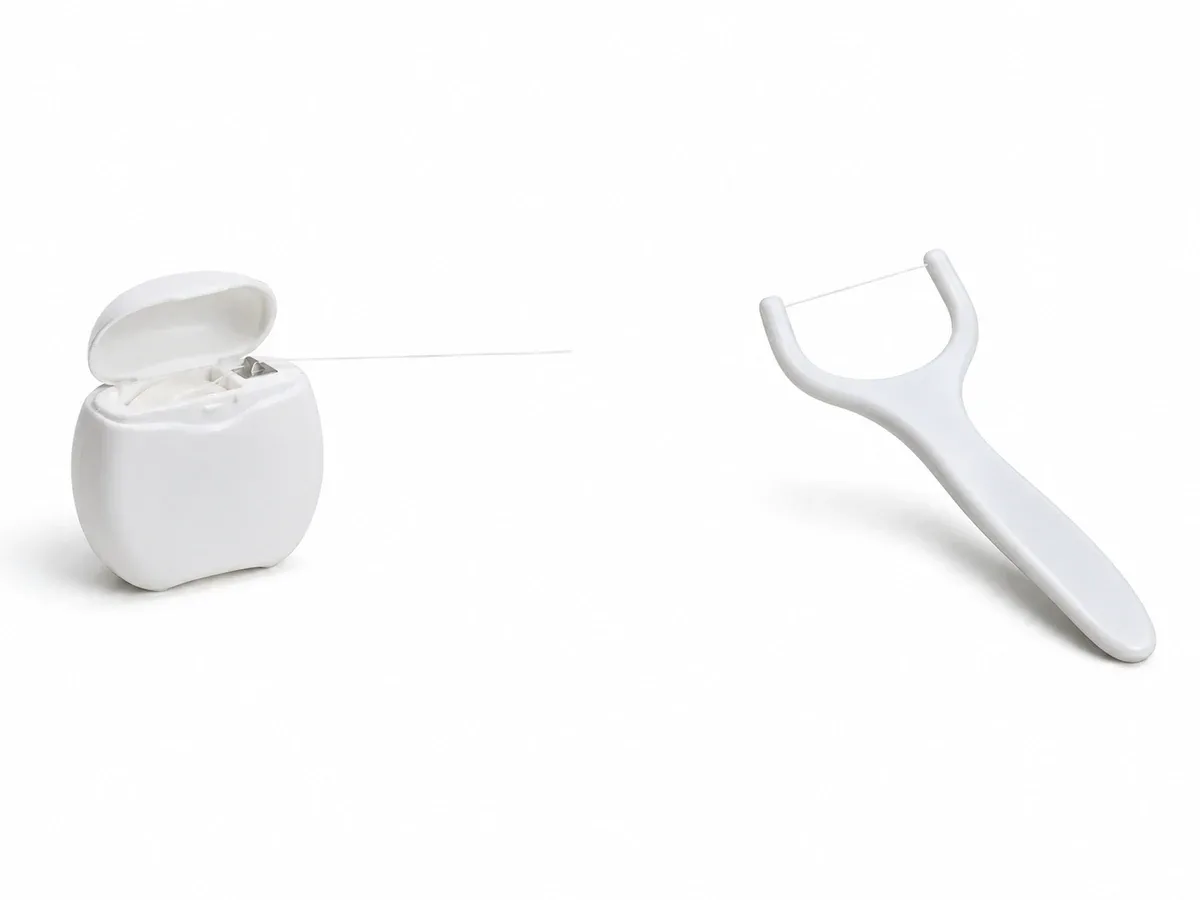
- Floss on a fixed handle (a Y-shaped floss holder) follows the ISO 28158 international standard and works as well as finger flossing.
- The article notes it is especially useful for people who find hand movements difficult, or who have hand muscle problems or limited mouth opening.
- Korea's national health portal also says floss is essential, and to add an interdental brush where the gum bone has receded and gaps are wide.
Patients in Seomyeon, Busan often ask us whether floss is something you use after brushing. The published guidance actually recommends the opposite order. For patients living in or visiting Korea, Reset Dental Clinic provides 1:1 English interpretation from the first consultation through the end of treatment.
This column explains why the order matters, and which tool to use where. It is based on a Dailydental article on the standard for handle-type floss, the KDCA national health portal and the Asan Medical Center disease encyclopedia. It also covers the Y-shaped floss holder, which many patients ask about.
Where does floss reach that a toothbrush cannot?
A toothbrush cleans the outer, inner and chewing surfaces of the teeth. It cannot get into the side surfaces where neighboring teeth touch each other.
These side surfaces are not a small share of the total tooth surface. If they are never cleaned, a large part of each tooth goes without care every day.
The Asan Medical Center material on gingivitis names the cause of gum inflammation. It is plaque, a film of bacteria that forms on the teeth.
When hardened tartar builds up with it, the space between gum and tooth opens. Bacteria then get in, and inflammation develops.
The material describes the process in steps:
- Plaque, a film of bacteria, forms on the teeth.
- Calcified tartar builds up alongside it.
- The space between the gum and the tooth opens.
- Bacteria get into that space, and inflammation develops.
- If it gets worse, gingivitis can progress to periodontitis.
The same material describes how the gums recover. In most cases, healthy gums return through careful, thorough brushing together with flossing.
The two are named side by side. Neither one is presented as a replacement for the other.
| Tooth surface | Toothbrush | Tools for between the teeth |
|---|---|---|
| Outer surface | Reaches | Not needed |
| Inner surface | Reaches | Not needed |
| Chewing surface | Reaches | Not needed |
| Side surfaces where teeth touch | Cannot get in | Needed |

Why should floss come before brushing?
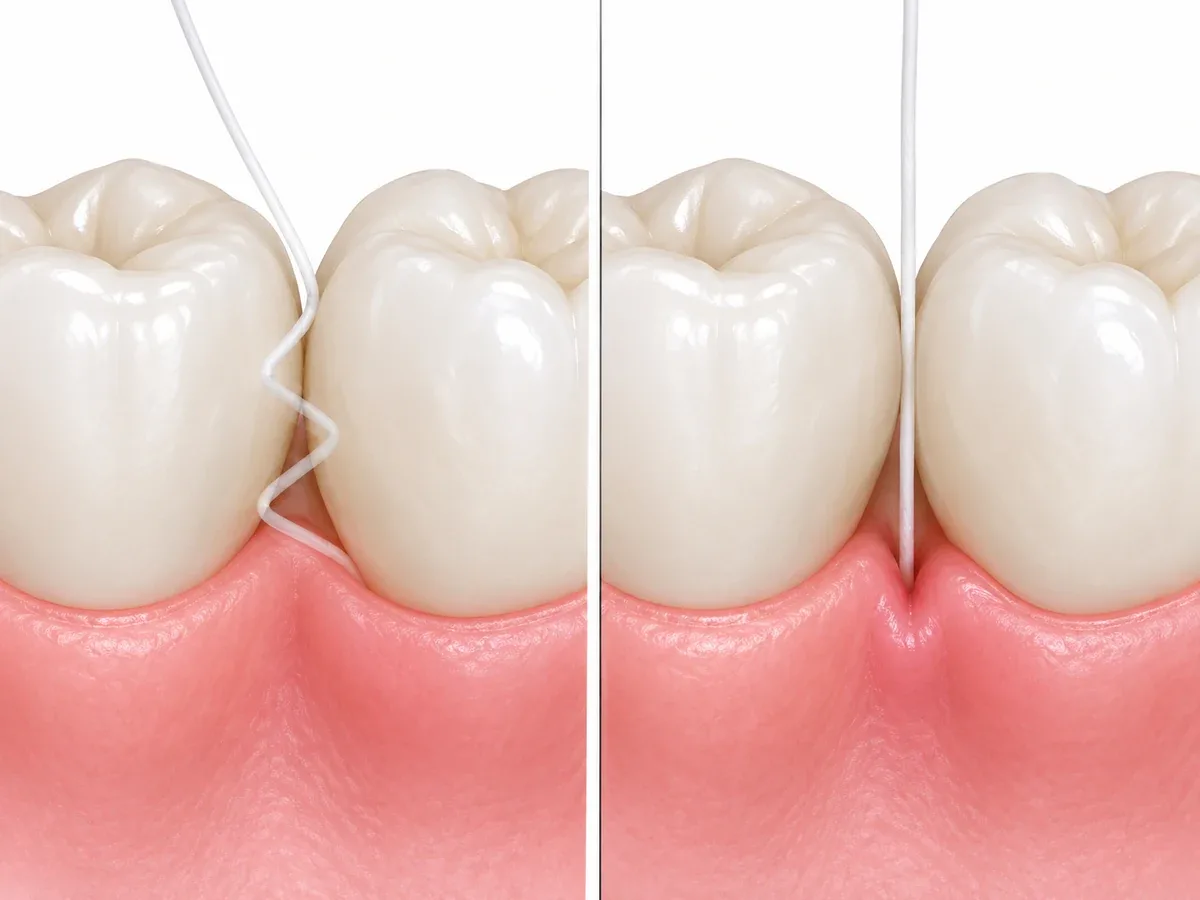
The Dailydental article gives the method in one line. Clean between the teeth before brushing, and ease the floss in gently with a zigzag, sawing motion.
The source does not explain the reason for this order at length. We will not claim more than the material confirms.
Still, you can feel the difference when you try it. When food and plaque between the teeth are loosened first, the toothpaste reaches those spaces during brushing.
It also connects with one point in the KDCA material. Rinsing less after using fluoride toothpaste makes it more effective.
If you floss last, you disturb the fluoride that brushing just left behind. If you brush last, with the spaces already opened, the fluoride stays where it should.
| Order | Between the teeth during brushing | After the last step |
|---|---|---|
| Floss first, then brush | Already loosened, so toothpaste can reach | Fluoride from the toothpaste stays in place |
| Brush first, then floss | Food and plaque still in place | The last step is cleaning between the teeth, not the toothpaste |
Is a Y-shaped holder as good as finger flossing?
Many people find thread wound around the fingers hard to use. The article gives a clear answer on this point.
Thread on a fixed handle follows the ISO 28158 international standard. According to the article, it works as well as finger flossing.
It is also described as especially useful for certain people. These include people who find fine hand movements difficult, and people with hand muscle problems or limited mouth opening.
The article also explains what the standard covers. It sets rules for three things: the material, the shape and the strength.
For strength, the thread must not come loose even when a force of 10 N is applied for 10 seconds. This is the rule that keeps the thread from slipping out of the handle.
So there is no need to feel you must wrap the thread around your fingers to do it properly. Cleaning between your teeth every day matters far more than the style you use.
If finger flossing has been the reason you skip a day, a holder removes that reason. What matters is that the spaces between your teeth are cleaned.
| Item | What the article says |
|---|---|
| Standard | Follows the ISO 28158 international standard |
| Effect | Works as well as finger flossing |
| Especially useful for | People who find hand movements difficult, or who have hand muscle problems or limited mouth opening |
| What the standard sets | Material, shape and strength; the thread must not come loose under 10 N for 10 seconds |
When should you add an interdental brush?
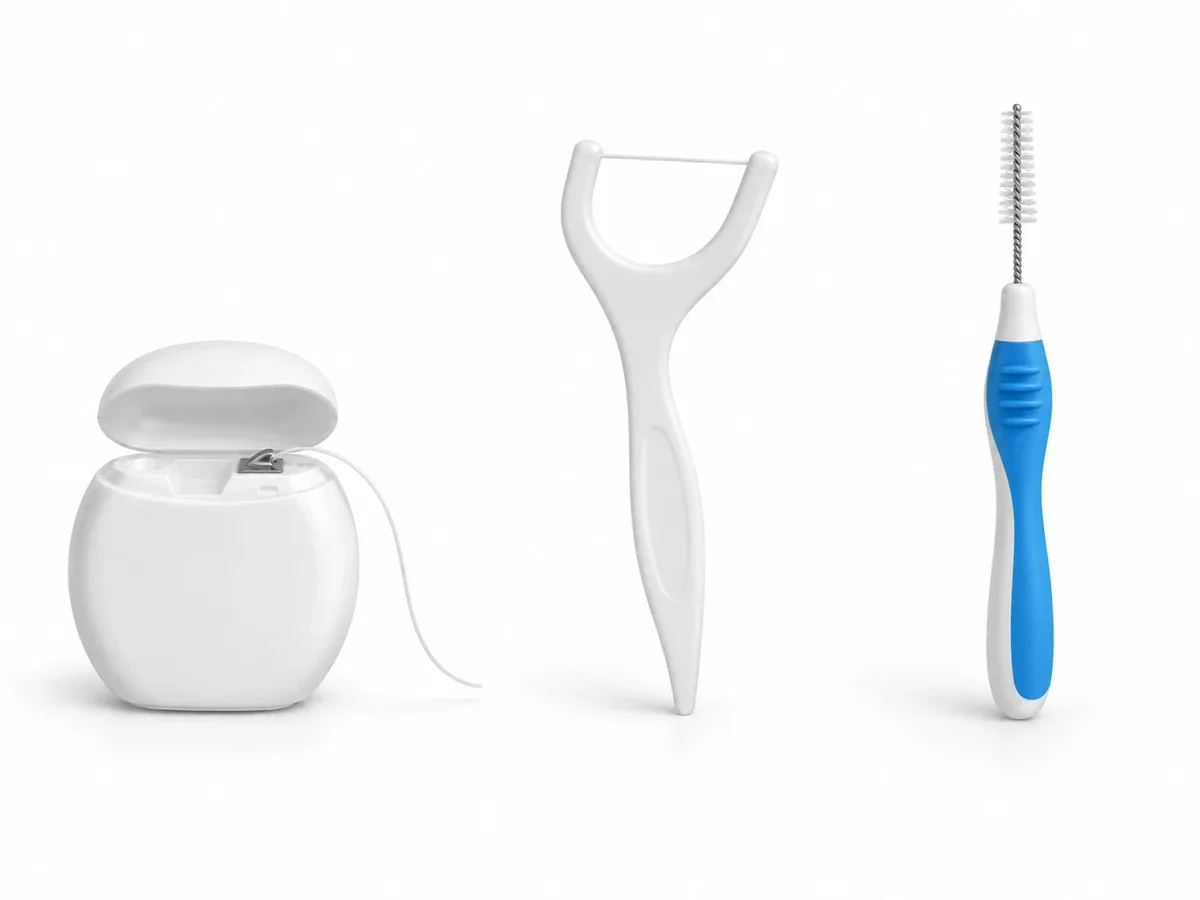
The KDCA material sets out a clear rule. Floss is essential, and where the gum bone has receded and gaps are wide, you add an interdental brush.
In other words, you are not choosing one or the other. Where a gap has widened, you use an interdental brush as well.
This often applies after gum treatment, or where gaps have formed with age. Tight spaces still call for floss.
The KDCA material on scaling also explains why gaps can look wider afterwards. Sensitivity fades within a few weeks, and a slightly loose feeling is the natural process of swollen gums settling down.
Gaps that look wider are also normal, according to the material. They are not new gaps; they are spaces that swelling had been hiding.
The KDCA material lists these changes as normal after scaling:
- sensitivity that fades within a few weeks
- a slightly loose feeling as swollen gums settle down
- gaps that look wider than before
If you have gum disease, the same material advises scaling at least every six months.
Those spaces are where an interdental brush fits. Forcing a thick brush into a narrow space can hurt the gums, so it helps to check the right size at your dental visit.
- Tight contact between teeth: floss
- Wide gap where the gum bone has receded: add an interdental brush
- Gap that looks wider after scaling: an interdental brush of the right size
- Brush will not go in: do not force it; use thread there
How often should you brush and have check-ups?
The KDCA material gives the basics. Brush at least twice a day with fluoride toothpaste for two minutes or more, looking in a mirror, and treat floss as essential.
If you have had an acidic drink, wait 30 minutes before brushing. Check-ups are once a year, or every six months if you have had dental treatment.
The rule proposed by the Korean Academy of Periodontology asks for a little more. Dailydental reported it as the "3-2-4 rule."
- Brush carefully after meals, at least three times a day.
- Have an oral check-up and scaling twice a year.
- Clean between the teeth with an interdental brush or floss, where an ordinary toothbrush cannot reach.
The same article described an analysis of poor hygiene habits. Brushing fewer than three times a day, skipping brushing before bed and not using tools between the teeth showed a significant association with esophageal cancer.
Put the two sources together and the message is the same: every day, and between the teeth too. Hardened deposits are then removed at regular scaling.
The two sources differ in how often, but not in what. Both include cleaning between the teeth as a daily habit, alongside brushing and regular check-ups.
In Korea, National Health Insurance covers scaling once a year for adults aged 19 and over. The KDCA material also describes scaling as a basic treatment that removes plaque and tartar.
| Item | KDCA material | Korean Academy of Periodontology 3-2-4 rule |
|---|---|---|
| Brushing | At least twice a day, two minutes or more, with fluoride toothpaste | At least three times a day, carefully, after meals |
| Between the teeth | Floss is essential; add an interdental brush where gaps are wide | Interdental brush and floss |
| Check-ups | Once a year; every six months with a history of treatment | Check-up and scaling twice a year |
What does a gentle daily routine look like for patients in Busan?
Here is the whole routine in the order the sources suggest. It takes a few minutes, and the order is the part most people change.
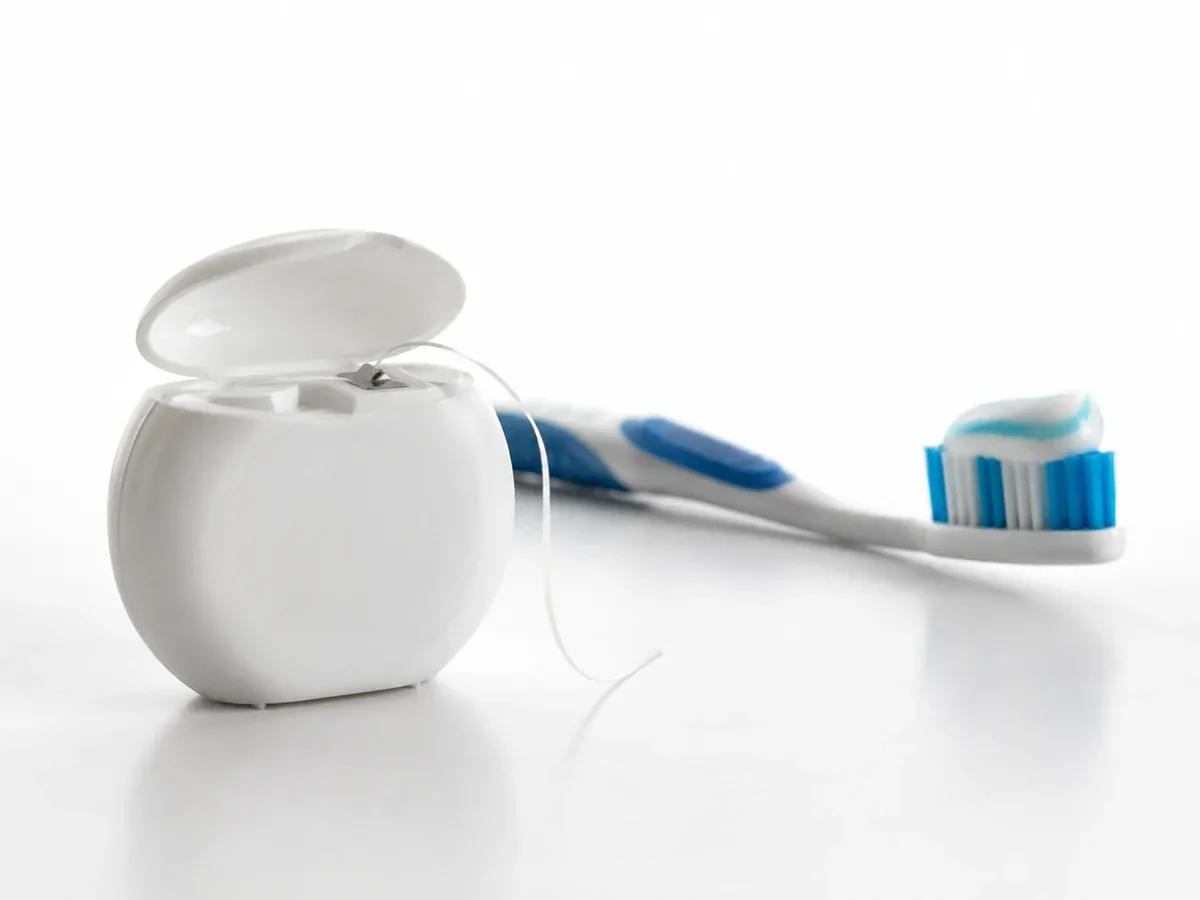
- Clean between the teeth first, with finger floss or a Y-shaped holder.
- Ease the thread in gently with a zigzag, sawing motion.
- Use an interdental brush where the gum bone has receded and gaps are wide.
- Brush with fluoride toothpaste for two minutes or more, looking in a mirror.
- Rinse less afterwards, so the fluoride toothpaste works better.
The second step matters for your gums. Do not snap the thread down hard between the teeth.
For people who have had gum treatment, or whose gaps have widened with age, some spaces will be wider. Those are the spots for the third step.
Sawing it in slowly lets the thread pass the contact point without striking the gum. This is the method the article describes.
If your gums bleed at first, do not stop. The gingivitis material lists red gums and bleeding when brushing as signs of gingivitis, and it can progress to periodontitis if it gets worse.
The same material says healthy gums can usually return with careful brushing and flossing. Proper brushing and regular scaling are also needed.
Frequently asked questions
My gums bleed when I floss. Should I stop?
No, the opposite. The gingivitis material lists bleeding when brushing as a sign of gingivitis, and says healthy gums can usually return with thorough brushing and floss. Do not snap it in; ease it in gently with a zigzag, sawing motion.
Can I use mouthwash instead of floss?
It cannot replace it. The thread physically lifts off the plaque stuck to the surfaces where teeth touch, and rinsing alone does not remove that film. The KDCA material also lists floss as essential.
The interdental brush will not go in. What should I do?
In narrow spaces, use floss. The KDCA material adds an interdental brush where the gum bone has receded and gaps are wide. Forcing a thick one in can hurt the gums, so check the right size at your visit.
Can I get help with flossing and gum care in English in Busan?
Yes. We offer 1:1 English interpretation from the first consultation through the end of treatment. The clinic is near Seomyeon Station Exit 2 (5-min walk), opposite Lotte Hotel Busan, and you can call 010-8555-2854 (+82-10-8555-2854 from abroad).
Floss first, then brush.
A Y-shaped holder works as well as finger floss.
Where gaps are wide, add an interdental brush.
What counts is doing it every day.
If you would like your gums checked in Busan, Reset Dental Clinic offers 1:1 English interpretation from your first consultation through the end of treatment. Call 010-8555-2854, and we can show you the floss and brush size that fit your teeth.
References
- Korean Dental Association newspaper Dailydental, "Dental Standards Series (62): Handle-Type Floss" — handle-type floss follows the ISO 28158 international standard and works as well as finger flossing; especially useful for people who find hand movements difficult or who have hand muscle problems or limited mouth opening; the standard sets material, shape and strength, and the thread must not come loose under 10 N for 10 seconds; clean between the teeth before brushing and ease floss in gently with a zigzag, sawing motion
- KDCA National Health Information Portal, "Preventing and Managing Oral Disease" — brushing at least twice a day for two minutes or more with fluoride toothpaste while looking in a mirror; floss as essential and interdental brushes for wider gaps; rinsing less after fluoride toothpaste; brushing 30 minutes after acidic drinks; check-ups once a year, or every six months with a history of treatment
- KDCA National Health Information Portal, "Scaling" — scaling as a basic treatment that removes plaque and tartar; once-a-year National Health Insurance coverage for adults 19 and over, and at least every six months with gum disease; sensitivity that fades within a few weeks, a loose feeling as swollen gums settle, and wider-looking gaps as normal after scaling
- Asan Medical Center Disease Encyclopedia, "Gingivitis" — gingivitis as inflammation of the gums; plaque as the cause, with tartar opening the space between gum and tooth so bacteria get in; red gums and bleeding when brushing, which can progress to periodontitis; recovery through thorough brushing and flossing, with proper brushing and regular scaling
- Korean Dental Association newspaper Dailydental, "Gum Bacteria That Travel to the Colon Raise Digestive Cancer Risk" — the 3-2-4 rule proposed by the Korean Academy of Periodontology (brushing at least three times a day after meals, check-ups and scaling twice a year, interdental brush and floss); an analysis in which poor hygiene habits showed a significant association with esophageal cancer
Written by Reset Dental Clinic Support Team
Medical review Dr. Kim Hyun-joo, Head Dentist · Integrated Dentistry Specialist
Last updated: September 19, 2026
This column is for general information and does not replace diagnosis or treatment for individual patients. If you have symptoms, please see a dentist.


