

- When a tooth cannot come in at its own time, in its own order and in its own place, it is called a tooth eruption disorder. There are three types: delayed, ectopic and impacted.
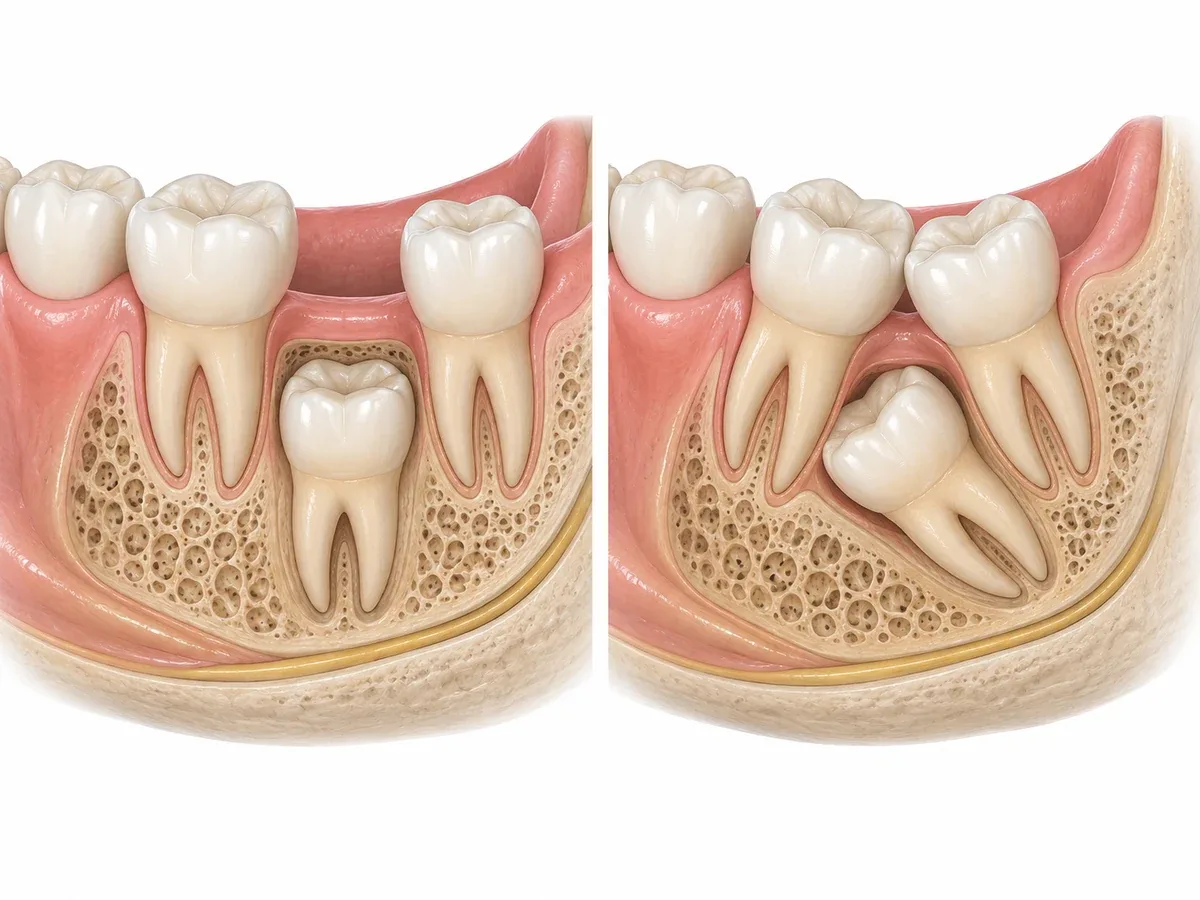
- An impacted tooth stays buried in the gum or jawbone after the time it should have come in.
- Tooth eruption problems often cause no obvious symptoms, so regular checkups that include X-rays matter for early detection.
- Anodontia, where teeth fail to develop at all, is described as a very rare condition.
Some parents come to Reset Dental Clinic in Seomyeon, Busan after hearing that one of their child's teeth has not come in. A tooth may be late, off course or not there at all, and you cannot tell which by looking. For families living in or visiting Korea, we provide 1:1 English interpretation from your first consultation through the end of treatment.
This column explains tooth eruption and what can go wrong with it. It is based on the national health portal's guide on tooth eruption disorders and on its guide to jaw surgery and orthodontics.
We also use three guides from Asan Medical Center. They cover anodontia, problems with how the dental arches meet, and abnormal jaw growth.
How does tooth eruption normally work?
The national health portal defines tooth eruption as the whole journey of a tooth from inside the jawbone into the mouth. The journey ends when the tooth reaches the position where it works.
Normal tooth eruption happens in three stages. They are summarized below.
- Pre-eruptive stage: the tooth bud, the early form of a tooth, starts to move inside the jawbone.
- Pre-functional eruptive stage: the tooth starts to come into the mouth and moves toward the tooth it will meet.
- Functional eruptive stage: after it meets the opposite tooth, it settles into its final position in step with the growing jaw.
The guide then makes a key point. Each tooth comes in according to its own time, order and position.
If the balance of tooth eruption is upset by the surrounding conditions, it can stop or be held back. A tooth eruption disorder is when a tooth cannot reach its normal position because of a problem along this journey.
Because each tooth has its own timing, comparing your child with another child can mislead you. What matters is whether this particular tooth is on its way.
Much of this happens out of sight. A tooth can be moving inside the bone for a long time before anything shows in the mouth.

What are the three types of tooth eruption problems?
The national health portal describes three types of tooth eruption disorder. Each one means something different for your child.
1. Delayed eruption. A baby tooth or permanent tooth has not come in even though its normal time has passed.
In the permanent teeth, it is common for one or a few teeth to be late. The guide adds that in some cases all the teeth are late because of a general health factor. Delayed eruption of baby teeth is less common than of permanent teeth.
2. Ectopic eruption. A tooth comes in at an abnormal position. It happens most often with these teeth:
- the upper first molars
- the lower lateral incisors (the teeth next to the lower front teeth)
- the upper canines
3. Impaction. A tooth stays buried in the gum or jawbone after the time it should have come in.
To judge an impacted tooth, dentists look at several things together. These are its shape, position and direction, and the space available for it to come in.

| Type | What the guide says |
|---|---|
| Delayed eruption | A baby or permanent tooth has not come in after its normal time |
| Ectopic eruption | A tooth comes in at an abnormal position, often the upper first molars, lower lateral incisors and upper canines |
| Impaction | A tooth stays buried in the gum or jawbone after its time has passed |
Can a child be born without some teeth?
Asan Medical Center defines anodontia as a condition in which the teeth fail to develop completely. It describes it as a very rare condition.
That is as far as the guide goes. So we will not say more here about its causes or treatment, since we keep to what the sources say.
In the clinic, a child with no teeth at all is not what we usually see. More often, one or two teeth are missing.
The difficulty is that a missing tooth and a late tooth look the same from the outside. In both cases, there is simply a gap or a baby tooth that stays in place.
That is why an X-ray is needed to tell them apart. The tooth eruption guide stresses that regular dental checkups that include X-rays are important for early detection.
A tooth bud that exists will show up in the bone on an X-ray. A tooth bud that never formed will not.
An X-ray can help tell apart the situations described in this column:
- a tooth that is late but still on its way inside the bone
- a tooth that is heading toward the wrong position
- a tooth that is buried and not moving up
- a tooth bud that never formed
Why does it help to know about tooth eruption early?
Asan Medical Center's guide on problems with the dental arches explains why. This condition means the teeth of the upper and lower jaws are not arranged in a good shape.
The guide says the size of the teeth and jaws is decided by genes. Even so, it notes that a bad bite (malocclusion) is becoming more common. It links this to tooth decay from changing diets and to baby teeth being lost too early.
For growing children, the guide says not to miss the right timing for three things. The list is short:
- treating cavities
- removing a baby tooth when it is time
- keeping a baby tooth in place for as long as it is needed
To get that timing right, you need to know which tooth is due to come in, and when. This is where knowing about tooth eruption early pays off.
Growth changes the path
The outcome can also split depending on age. The same guide says a growing teenager can often finish treatment with orthodontics alone.
But if the problem goes beyond the teeth and the bone grows abnormally, the path changes. As an adult, treatment may need surgery together with orthodontics.
Asan Medical Center's guide on abnormal jaw growth covers both overgrowth and undergrowth of the upper and lower jaws. It notes that the size and shape of the jawbone are strongly influenced by genes.
How is tooth eruption checked at a clinic in Busan?
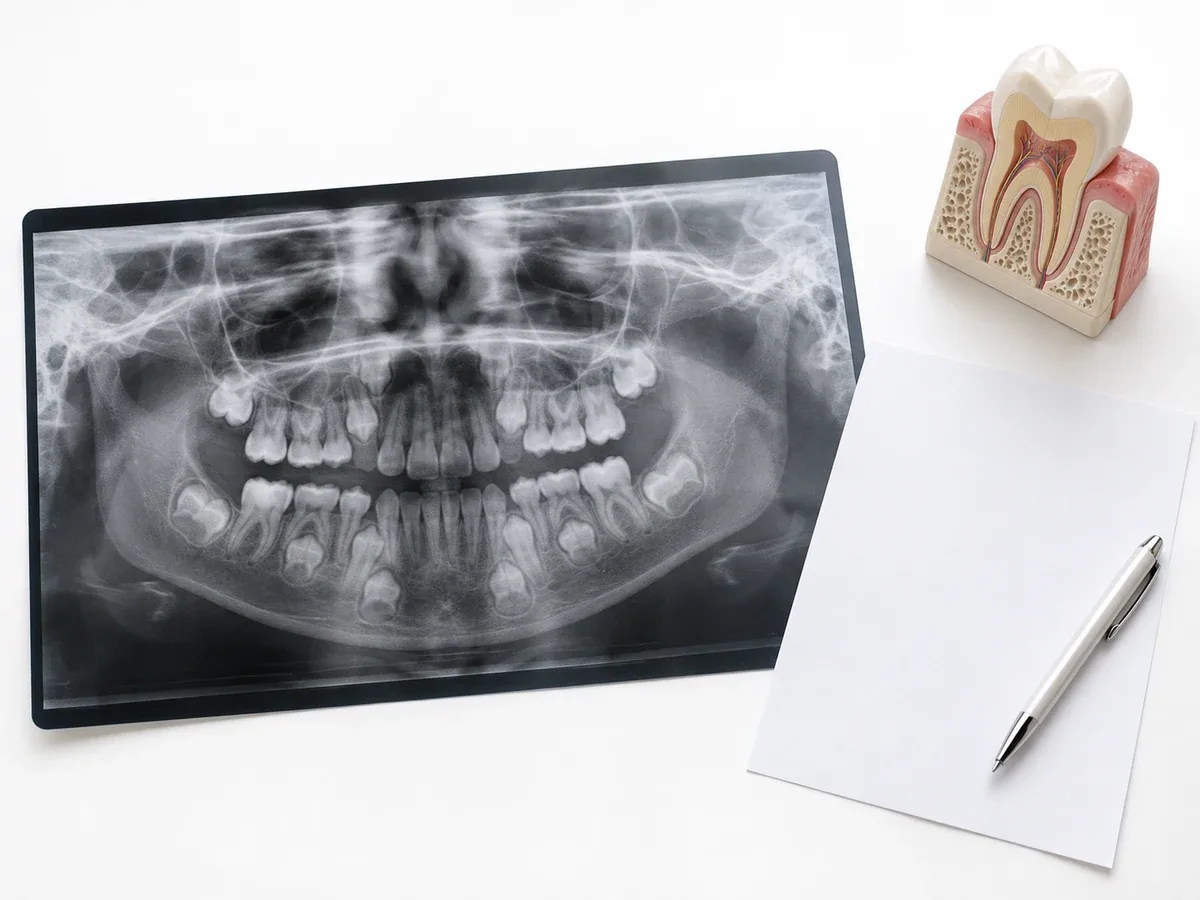
The tooth eruption guide puts X-ray examination at the center of diagnosis. It explains that these disorders often cause no obvious symptoms.
For that reason, regular dental checkups are important for early detection. A child may feel nothing while a tooth is stuck inside the bone.
Parents often first notice something when a baby tooth stays in place long after it was expected to fall out. By then, the X-ray may already have a story to tell.
The guide on dental arch problems also lists how diagnosis is made. The dentist looks at the overall relationship using these records:
- an X-ray that shows the whole head and all the teeth
- photos of the face and the inside of the mouth
- models of the teeth
The guide on abnormal jaw growth adds a more recent method. Instead of a flat X-ray, a 3D CT scan can show the structure from the skin surface down to the bone. This allows an accurate diagnosis.
| Source | How to check |
|---|---|
| Tooth eruption disorders | Regular dental checkups that include X-rays |
| Dental arch problems | An X-ray of the whole head and teeth, face and mouth photos, tooth models |
| Abnormal jaw growth | A 3D CT scan to see the structure in three dimensions |
What changes once you know?
Finding a problem and starting treatment are two different things. The aim of regular checkups is early detection, not treatment for its own sake.
Some cases need action soon after they are found. In others, it is better to wait for the right time. Knowing early lets you and your dentist choose that time on purpose, rather than by accident.
If you learn early that one or two teeth are missing, you have time to decide what to do with that space. While your child is still growing, there are more options.
The national health portal's guide on jaw surgery and orthodontics states the same principle. In growing children, orthodontic treatment may improve a skeletal problem and help avoid surgery.
In adults who have stopped growing, surgery is needed to correct a mismatch between the jaws. The guide adds that jaw surgery is done by an orthodontist and an oral and maxillofacial surgeon working together.
On the other hand, if a missing tooth goes unnoticed, the gap starts to change. The teeth on either side tilt into it, and the opposite tooth drifts down.
When you later want to use that space, it may already have shrunk. This is also why the eruption guide looks at the space available when judging an impacted tooth.
If the space closes, the path for the next tooth can be blocked. A small gap today can become a bigger problem for tooth eruption later.
Keeping track of the space is part of keeping track of tooth eruption.
| Situation | What the sources and this column describe |
|---|---|
| Found while still growing | More time and more options; orthodontics may improve a skeletal problem and help avoid surgery |
| Found after growth has ended | Surgery is needed to correct a jaw mismatch, done with an orthodontist |
| Gap left unnoticed | Neighboring teeth tilt in and the opposite tooth drifts down, so the space shrinks |
| Space closed | The path for the next tooth can be blocked |

Frequently asked questions
My child's teeth are coming in later than other children's. Should I worry?
The guide says it is common for one or a few permanent teeth to be late. It also says all the teeth can be late because of a general health factor. So if many teeth are late across the board, that is a reason to have a look.
How can we tell whether a tooth is missing or just late?
You cannot tell from the outside. That is why the tooth eruption guide stresses regular checkups that include X-rays. Whether a tooth bud is present in the bone can be confirmed with an X-ray.
Can we get a tooth eruption check in English in Busan?
Yes. We offer 1:1 English interpretation from the first consultation through the end of treatment. The clinic is near Seomyeon Station Exit 2 (5-min walk), opposite Lotte Hotel Busan, and you can call 010-8555-2854 (+82-10-8555-2854 from abroad).
A missing tooth and a late tooth look the same from the outside.
Tooth eruption problems often cause no symptoms,
so an X-ray is what tells them apart.
Knowing early leaves more time to plan.
If your child's tooth has not come in and you live in Busan, Reset Dental Clinic offers 1:1 English interpretation from your first consultation through the end of treatment. Call 010-8555-2854 to book a checkup.
References
- KDCA National Health Information Portal, "Tooth Eruption Disorders" — definition, the three stages of normal eruption, delayed eruption, ectopic eruption and impaction, how impacted teeth are judged, and why regular checkups with X-rays matter for early detection
- Asan Medical Center Disease Encyclopedia, "Anodontia" — definition of anodontia as a very rare condition in which teeth fail to develop completely
- Asan Medical Center Disease Encyclopedia, "Dental Arch Relationship Problems" — definition, the rise in malocclusion linked with decay and early loss of baby teeth, diagnosis with X-rays, photos and tooth models, and timing of treatment in growing children
- Asan Medical Center Disease Encyclopedia, "Abnormal Jaw Growth" — overgrowth and undergrowth of the jaws, the strong genetic influence on jaw size and shape, and diagnosis with 3D CT
- KDCA National Health Information Portal, "Jaw Surgery and Orthodontic Treatment" — orthodontics may help growing children avoid surgery, while adults who have stopped growing need surgery for a jaw mismatch, done jointly by an orthodontist and an oral and maxillofacial surgeon
Written by Reset Dental Clinic Support Team
Medical review Dr. Kim Hyun-joo, Head Dentist · Integrated Dentistry Specialist
Last updated: September 19, 2026
This column is for general information and does not replace diagnosis or treatment for individual patients. If you have symptoms, please see a dentist.


