

- A cold sore is usually caused by herpes simplex virus type 1, which mainly forms lesions around the mouth. Most adults in Korea already carry this virus.
- Most people are infected in childhood. The virus can also spread through kissing or sharing dishes and towels.
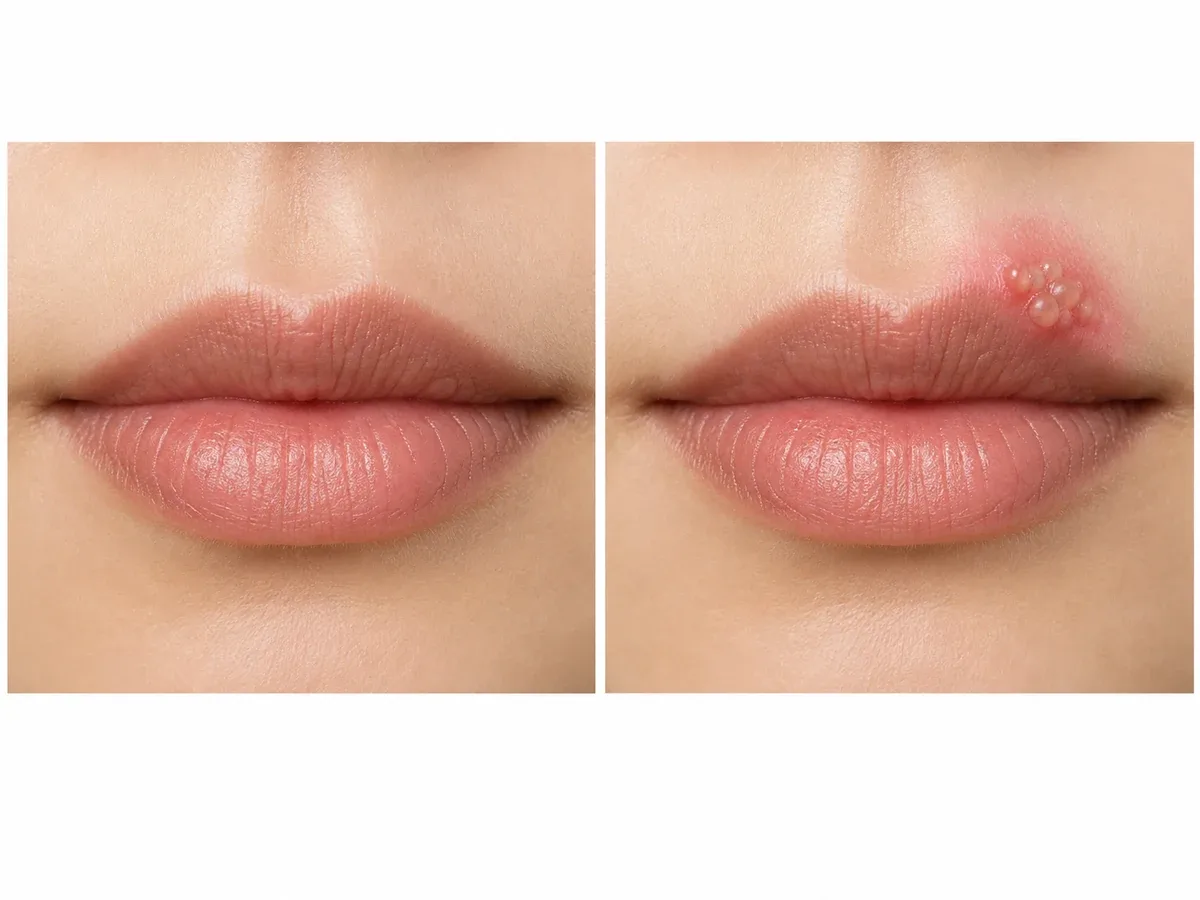
- Lesions mainly appear around the lips, nose, cheeks and chin, and they tend to come back from time to time.
- A separate rule applies to mouth sores in general: an ulcer that has not healed after two to three weeks of treatment needs a biopsy to rule out cancer.
Some people tell us their lip started to tingle, then a blister formed, and a few weeks later it came back in the same spot. Others visit our clinic in Seomyeon, Busan saying a cold sore appeared after dental treatment. For patients living in or visiting Korea, we provide 1:1 English interpretation from your first consultation through the end of treatment.
This column is based on four public sources. Two are entries from Asan Medical Center's disease encyclopedia: "Herpes Virus Infection" and "Candida Stomatitis". The other two come from the KDCA national health information portal: "Stomatitis" and "Dry Mouth".
What virus causes cold sores?
The source describes herpes virus infection as a common viral disease in which the herpes virus causes blisters and redness on the skin.
The virus is divided into eight types by its genetic and biological features. The most familiar are herpes simplex type 1 and type 2, together called herpes simplex virus.
The two types favor different places. Type 1 mainly causes lesions around the mouth, and type 2 mainly around the genitals.
A blister that keeps returning on the lip is usually type 1. This is what most people call a cold sore. For reference, type 3 is the varicella-zoster virus, which causes chickenpox and shingles.
The source adds that the virus can cause blisters and infection on most areas of skin. Lesions mostly develop around the mouth and nose, or around the buttocks and genitals.
| Type | Where it mainly appears | Note |
|---|---|---|
| Herpes simplex type 1 | Around the mouth | The usual cause of a cold sore on the lip |
| Herpes simplex type 2 | Around the genitals | Together with type 1, called herpes simplex virus |
| Type 3 | Skin, as chickenpox or shingles | Varicella-zoster virus |
When do people catch the virus behind cold sores?
The source is direct about this. Most people are infected with herpes type 1 in childhood.
Infection usually happens through contact with family members or friends who carry the virus. It can also spread through a few everyday habits:
- kissing
- sharing dishes or cutlery
- sharing towels
After infection, lesions appear for a short time, mainly around the lips, nose, cheeks and chin. Even so, most people go through it without any noticeable symptoms.
The source also describes the situation in Korea. Most adults there are infected with herpes virus type 1.
In other words, a new blister is often not a fresh infection. In many cases, it is a virus that was already in the body becoming active again.
This matters for how you think about it. A cold sore is common, and it is usually a return of something you have carried for years.
Why do cold sores keep coming back?
The source states that this infection tends to recur from time to time. It also notes that the infected area is painful and can look unsightly.
The herpes source does not list the conditions that trigger a return, so we will not go beyond it. Another source gives a hint, though.
The Candida stomatitis entry describes how a fungus that normally lives in the mouth can suddenly multiply. This happens when the body's balance is upset or resistance is low.
It lists several situations where that can happen:
- a cold
- an acute infectious illness
- general physical weakness
- long-term use of antibiotics
- smoking
In our treatment rooms, we often hear that a cold sore came up right after dental treatment. Others say it followed a night without sleep or a bout of flu-like aches.
Keeping the lips stretched for a long time can also act as an irritant. That is why the timing of a dental visit can matter, as the next section explains.
Who needs extra care when you have a cold sore?
The source adds one important warning. For people with chronic illness and for newborns, herpes simplex virus can be very serious and even fatal.
So while you have a blister on your lip, it is wise to take a few precautions. These are the same routes of spread that the source names:
- do not kiss babies
- do not share towels
- do not share dishes or cutlery
- avoid touching the blister and then touching other things
If you have dental treatment coming up, tell us about the blister in advance. Stretching the lips and keeping the mouth open for a long time can spread the lesion or make it hurt more.
In some cases, it is better to adjust the timing of the visit. We can decide that together once we see it.
If a cold sore appears shortly before a dental appointment, these steps help:
- Let the clinic know about the blister before the day of your visit.
- Show it to the dentist before treatment begins.
- Decide together whether to go ahead or to move the appointment.
- Until it heals, avoid touching it and keep towels and cutlery to yourself.
| Item | What the source says |
|---|---|
| First infection | Mostly in childhood, through contact with family or friends |
| Spread | Kissing, or sharing dishes or towels |
| Where lesions appear | Around the lips, nose, cheeks and chin; most people have no noticeable symptoms |
| Course | Symptoms tend to recur from time to time |
| Who should be careful | For people with chronic illness or newborns, it can be very serious and even fatal |
How is a cold sore different from other mouth sores?
Not every sore in the mouth is herpes. The KDCA stomatitis page defines stomatitis as inflammation of the lining of the lips, tongue and gums.
It divides stomatitis into infectious types (herpes, hand-foot-and-mouth disease, Candida) and non-infectious types (aphthous ulcers, burning mouth syndrome, radiation mucositis).
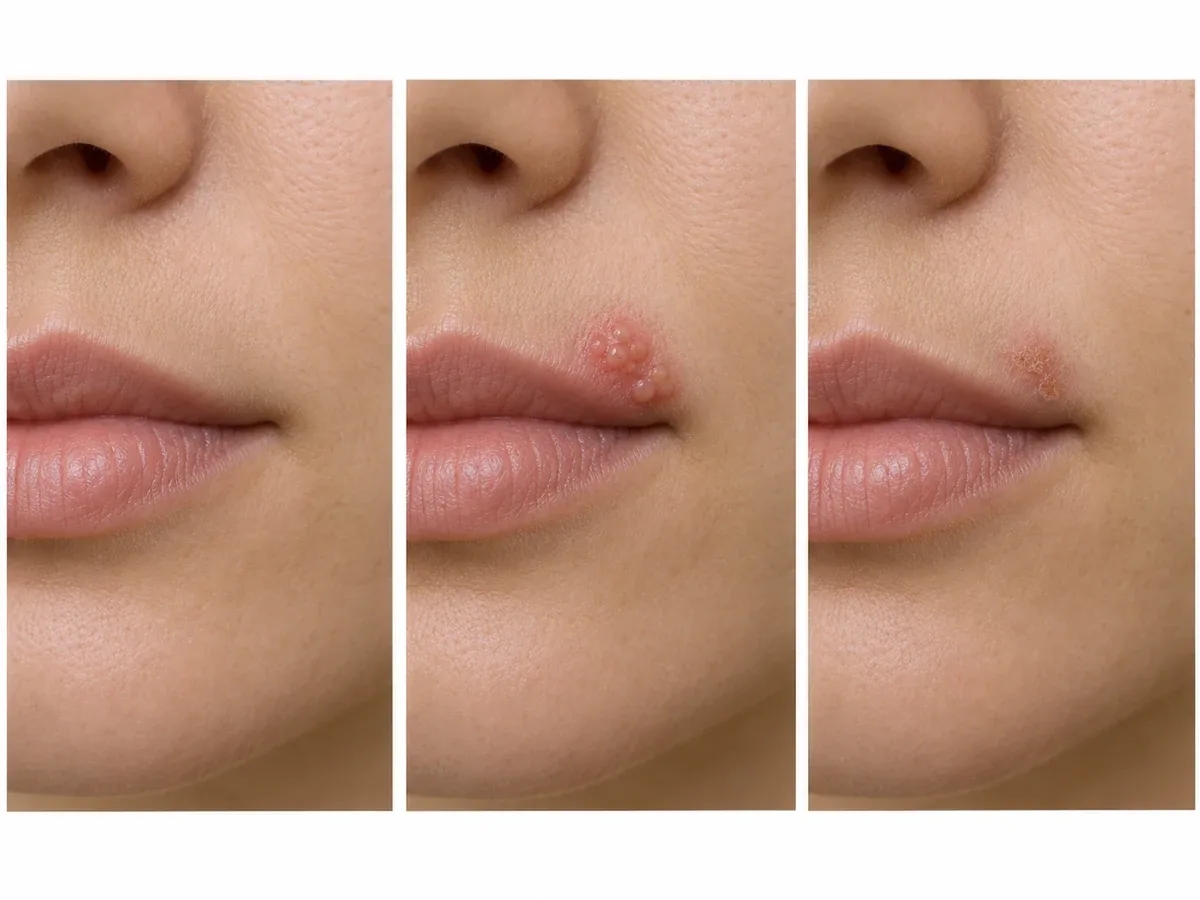
The most common, the aphthous ulcer, has clear borders and a red rim around the edge. A cold sore is different in place and shape, with blisters forming in a cluster on the skin outside the lips.
Candida stomatitis, also called oral thrush, looks different again. The source describes raised white patches with a coating inside the mouth, which can be wiped off easily and may bleed when removed.
It often occurs in people with diabetes or with weakened immunity, including people with AIDS. When dentures are involved, care includes soaking the dentures overnight in a diluted solution.

| Item | Cold sore (herpes) | Aphthous ulcer | Candida stomatitis |
|---|---|---|---|
| Group | Infectious | Non-infectious | Infectious |
| Look | Clustered blisters on the skin outside the lips | Clear borders with a red rim | Raised white patches with a coating |
| Feature | Tends to recur from time to time | The most common kind of mouth sore | Wipes off easily and may bleed when removed |
Telling these apart is done at an examination. The shape and place of the sore are the first clues we look at.
When should a mouth sore be checked in Busan?
A herpes blister usually forms and then starts to heal within days. The real concern is a sore that does not heal and stays.
The KDCA stomatitis page draws a clear line here. An ulcer that has not healed after two to three weeks of treatment needs a biopsy to rule out cancer.
So it is important to remember when a sore first appeared. A sore that keeps returning in the same spot is viewed differently from one that appeared once and never healed.
If you notice a sore, a simple record helps at your visit:
- Write down the date the sore first appeared.
- Note whether it is on the lip skin or inside the mouth.
- Note whether it looks like clustered blisters, a round ulcer or a white patch.
- Note whether it has appeared in the same spot before.
- If it has not healed after two to three weeks of treatment, have it checked.
| Pattern | What it often points to | What to do |
|---|---|---|
| Blisters that form, heal within days and return in the same spot | A recurring cold sore from herpes type 1 | Take care not to spread it; mention it before dental treatment |
| An ulcer that has not healed after two to three weeks of treatment | Something that needs a closer look | A biopsy is needed to rule out cancer |
Bring that record to your dentist in Busan or wherever you are. It makes the first conversation much clearer.
Why does a dry mouth make things worse?
The KDCA dry mouth page states that when saliva decreases, tooth decay and gum disease get worse quickly. Swallowing and speaking become harder, and decay, bad breath and changes in taste can follow.
It lists the causes as medications, radiation therapy, Sjögren's syndrome, stress and aging.
The recommended care includes adjusting the medicine that causes it, regular fluoride application and check-ups every six months. Drinking water and chewing sugar-free gum are on the list too.
If you often get mouth sores or a dry mouth, bring a list of the medicines you take. It helps us see the whole picture.
| Item | What the source says |
|---|---|
| Causes | Medications, radiation therapy, Sjögren's syndrome, stress, aging |
| Symptoms | Difficulty swallowing and speaking; decay, bad breath, taste changes |
| Why it matters | With less saliva, decay and gum disease get worse quickly |
| Care | Adjusting the medicine, regular fluoride application, six-monthly check-ups, water, sugar-free gum |


Frequently asked questions
Did my dental treatment cause the cold sore?
These sources do not list dental treatment as a trigger. They do say most adults already carry type 1 and that it tends to recur. Keeping the lips stretched may have added irritation, but that is different from catching a new virus.
Can a cold sore spread to my family?
The source says it can spread through kissing or sharing dishes and towels. It can be serious for newborns and people with chronic illness, so take care while the blister is present.
Should I pop the blister?
The sources say nothing about popping it. They note the infected area is painful and the virus spreads by contact, so avoid touching it and then touching other things.
Can I get a cold sore checked in English in Busan?
Yes. We offer 1:1 English interpretation from the first consultation through the end of treatment. The clinic is near Seomyeon Station Exit 2 (5-min walk), opposite Lotte Hotel Busan, and you can call 010-8555-2854 (+82-10-8555-2854 from abroad).
A cold sore is common, and it often returns.
Most adults already carry the virus.
What matters more is a sore that does not heal,
and keeping babies and vulnerable family members safe.
If a cold sore or mouth sore is bothering you in Busan, Reset Dental Clinic offers 1:1 English interpretation from your first consultation through the end of treatment. Call 010-8555-2854 to book a visit.
References
- Asan Medical Center Disease Encyclopedia, "Herpes Virus Infection" — a common viral disease causing blisters and redness on the skin; eight types by genetic and biological features, with herpes simplex types 1 and 2 together called herpes simplex virus; type 1 mainly around the mouth, type 2 mainly around the genitals, type 3 as varicella-zoster; lesions around the mouth, nose, buttocks or genitals that tend to recur; painful and unsightly lesions; very serious and possibly fatal in people with chronic illness and newborns; infection mostly in childhood through contact, kissing or shared dishes and towels; lesions around the lips, nose, cheeks and chin, usually without noticeable symptoms; most adults in Korea infected with type 1
- KDCA National Health Information Portal, "Stomatitis" — inflammation of the lining of the lips, tongue and gums; infectious types (herpes, hand-foot-and-mouth disease, Candida) and non-infectious types (aphthous ulcers, burning mouth syndrome, radiation mucositis); aphthous ulcers with clear borders and a red rim; a biopsy to rule out cancer for ulcers not healed after two to three weeks of treatment
- Asan Medical Center Disease Encyclopedia, "Candida Stomatitis" — stomatitis caused by the fungus Candida, also called oral thrush; Candida normally living in the mouth and multiplying when balance is upset or resistance is low, as with colds, acute infections, general weakness, long-term antibiotics or smoking; frequent in people with diabetes or AIDS; raised, coated white patches that wipe off easily and may bleed; soaking dentures overnight in a diluted solution
- KDCA National Health Information Portal, "Dry Mouth (Xerostomia)" — causes including medications, radiation therapy, Sjögren's syndrome, stress and aging; difficulty swallowing and speaking, decay, bad breath and taste changes; faster worsening of decay and gum disease when saliva drops; medicine adjustment, regular fluoride application, six-monthly check-ups, water and sugar-free gum
Written by Reset Dental Clinic Support Team
Medical review Dr. Kim Hyun-joo, Head Dentist · Integrated Dentistry Specialist
Last updated: September 19, 2026
This column is for general information and does not replace diagnosis or treatment for individual patients. If you have symptoms, please see a dentist.


