

- The source links rising malocclusion to tooth decay and the early loss of baby teeth, both tied to changing diets.
- In growing children, cavity treatment, baby-tooth extraction and the retention period should not be missed.
- Eruption problems often cause no symptoms, so they are found through regular checkups that include X-rays.
- While decay stays in the enamel, there is almost no pain. No pain does not mean no problem.
"They are going to fall out anyway, so can't we just leave them?" Parents at our clinic in Seomyeon, Busan sometimes ask this about baby teeth. For families living in or visiting Korea, we provide 1:1 English interpretation from the first consultation through the end of treatment.
Baby teeth do fall out, that is true. But when one is lost before its turn, what happens to that space changes things for the tooth that comes next.
This column draws on the Asan Medical Center disease encyclopedia entries on dental arch problems and tooth decay. It also uses the KDCA National Health Information Portal pages on tooth eruption disorders, cavities and fissure sealants.
What do baby teeth actually do?
The Asan encyclopedia describes a dental arch problem as a state where the shape formed by the upper and lower teeth is not good. The same entry explains why malocclusion (a bad bite) is increasing. The size of the teeth and jaws is set by genetics and cannot be changed.
However, malocclusion is rising because of tooth decay and the early loss of baby teeth, both linked to changes in diet. That is the source's own explanation.
The same entry's treatment section says that in growing children, cavity treatment, baby-tooth extraction and the retention period must not be missed. When baby teeth come out, and how long they stay, is listed as part of treatment.
The cautions section carries the same idea. It says badly decayed teeth should be treated quickly so that each tooth can hold its own place.
"Holding its place" sums up the job of baby teeth well. They keep the space for the adult teeth that follow.

The entry also notes that habits such as pushing the tongue forward, finger sucking and mouth breathing can change where teeth sit. So both decay and habits affect how baby teeth guide the next set.
What happens to the gap when baby teeth are lost early?
Teeth stand side by side, leaning on each other. When one space is empty, the teeth on either side tilt toward it, and the upper tooth that used to meet it moves down.
As a result, the space left for the next adult tooth gets smaller. This is the core reason early loss of baby teeth matters.
The eruption disorders described by the KDCA page connect directly to this. The page defines an eruption disorder as a problem in the eruption process that stops a tooth from reaching its normal position.
Normal eruption has three stages:
- the pre-eruptive stage, as the tooth starts moving inside the jaw bone
- the pre-functional eruptive stage, as it enters the mouth and moves toward the opposite tooth
- the functional eruptive stage, as it meets that tooth and settles into its final position
Each tooth erupts with its own timing, order and position. Adult teeth follow the path that baby teeth have kept open for them.
The page says that if the surroundings upset this balance, eruption can stop or slow down. The tooth may then come in at an abnormal position.
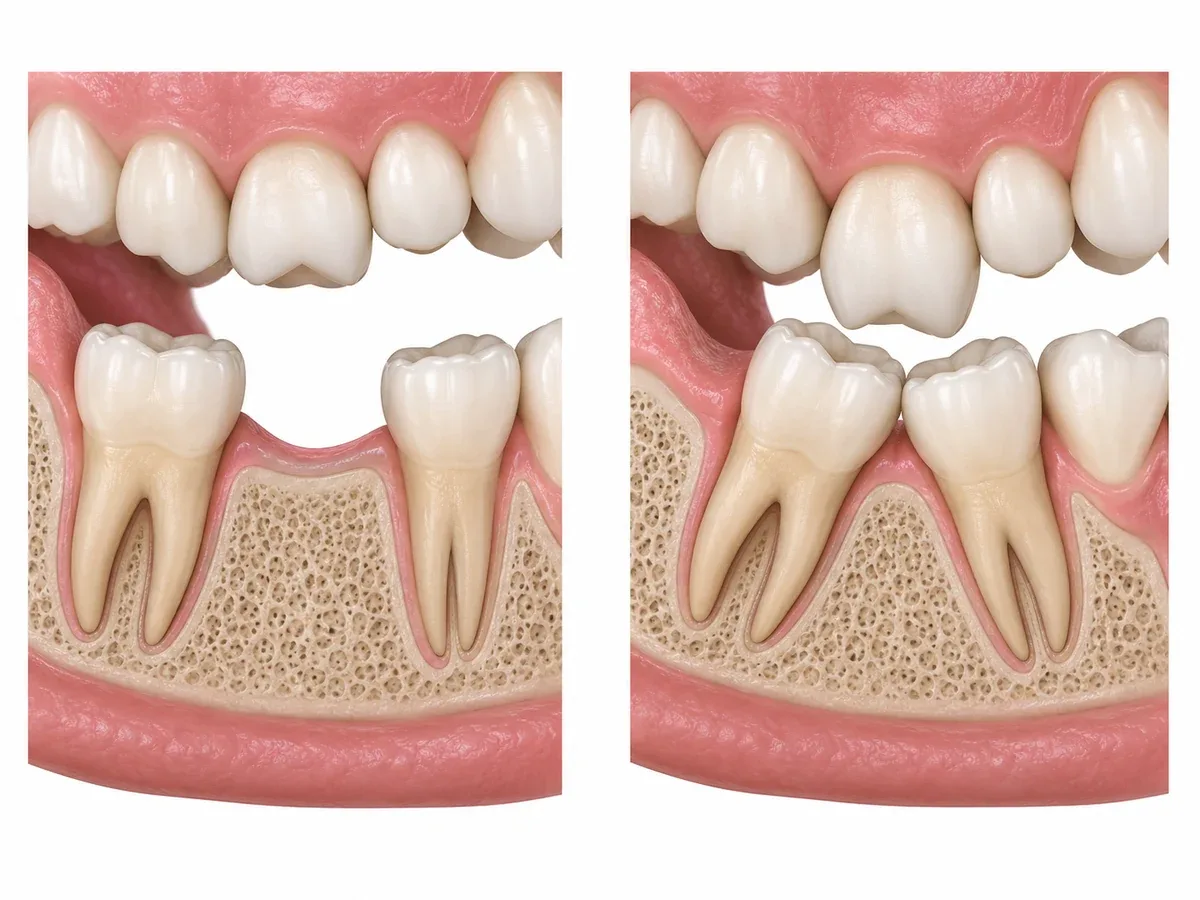
The page lists three types of eruption disorder. Two of them matter most here.
- ectopic eruption, where a tooth comes in at an abnormal position
- impaction, where a tooth stays buried under the gum or in the jaw bone after its time
The third type is delayed eruption, where a tooth does not appear after its normal time. All three can happen without the child noticing anything.
The page says the clinical judgment weighs the shape, position and direction of the tooth, together with the space available for eruption. Please keep in mind that space is one of the deciding factors.
Ectopic eruption often affects the upper first molars, the lower lateral incisors and the upper canines. These are worth watching when baby teeth nearby have been lost early.
Why do baby teeth come out early?
The most common reason is tooth decay. The Asan entry describes it as a disease in which the enamel is damaged and decay forms in the dentin and pulp beneath.
The KDCA page puts it simply: acid made by mouth bacteria from sugars dissolves the teeth. The Asan entry explains the details.
Bacteria in plaque, the film that forms on the tooth surface, break down sugar and starch. The acid they produce attacks the enamel.
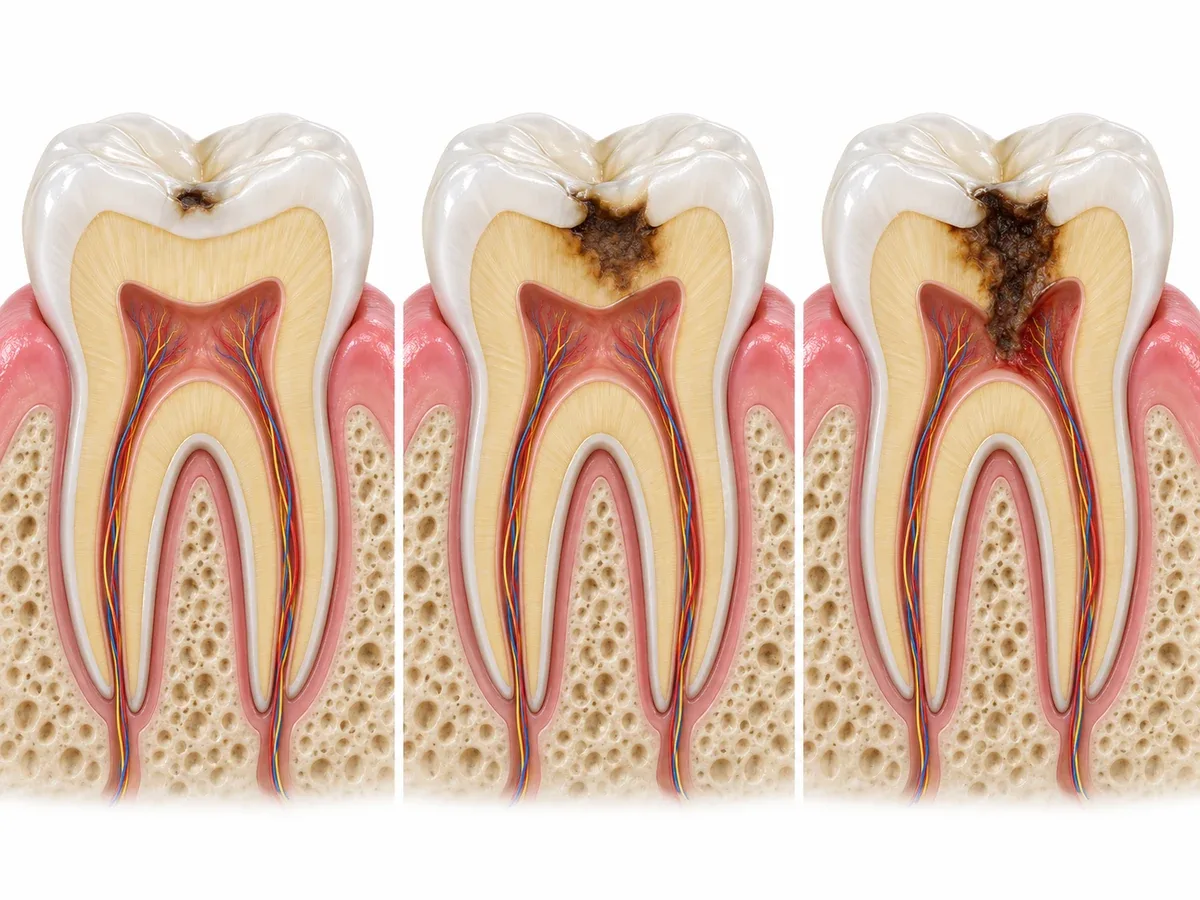
The entry describes symptoms by stage. While decay stays in the enamel, there is almost no pain.
At the border between enamel and dentin, the tooth becomes sensitive to cold and sweet things. Once decay reaches the dentin, hot and cold feel uncomfortable, and chewing hurts.
When it reaches the pulp (the nerve), pain appears even without any trigger. Painkillers may no longer help.
The KDCA page on cavities says the same. Damage to the enamel alone gives few symptoms, the dentin stage brings sensitivity, and reaching the nerve brings pain that is hard to bear.
So by the time a child says it hurts, the decay may already be well advanced. Waiting for pain means waiting too long.
| Depth | What the source says |
|---|---|
| Enamel | Almost no pain |
| Enamel–dentin border | Sensitive to cold and to sweet things |
| Into the dentin | Discomfort with hot and cold, pain when chewing |
| Into the pulp | Pain even without a trigger; painkillers may not help |
How are problems with baby teeth found?
Finding problems comes first. The KDCA page on eruption disorders says they often cause no clear symptoms.
For that reason, regular dental checkups that include X-rays are important for early detection. The Asan entry on tooth decay adds that decay is diagnosed by looking and probing with instruments.
It also says X-rays are essential for diagnosis. What can be seen in the mouth is not enough for a judgment by itself.
The Asan entry on dental arch problems lists the records used to understand the overall relationship of the teeth.
- X-rays
- photos of the inside of the mouth
- dental models
Whether an adult tooth is ready to come in can be seen on an X-ray. This is how the timing of baby-tooth extraction is judged.
| Purpose | What the sources say |
|---|---|
| Eruption problems | Regular checkups including X-rays, because symptoms are often absent |
| Tooth decay | Looking and probing; X-rays are essential |
| Overall tooth relationship | X-rays, mouth photos and dental models |
How can early loss of baby teeth be prevented?
After finding problems comes preventing them. The KDCA page on fissure sealants describes a preventive procedure for the back teeth.
The deep, narrow grooves of the molars are filled with a sealant so they are easier to clean. It is done in childhood and the teen years, once the adult first and second molars have come in.
The aim of a sealant is prevention, not repair. It makes the hardest-to-clean part of the molar easier to keep clean.
Is a sealant needed for every child? It is not needed for every child in the same way. The decision depends on how deep the grooves are and their condition.
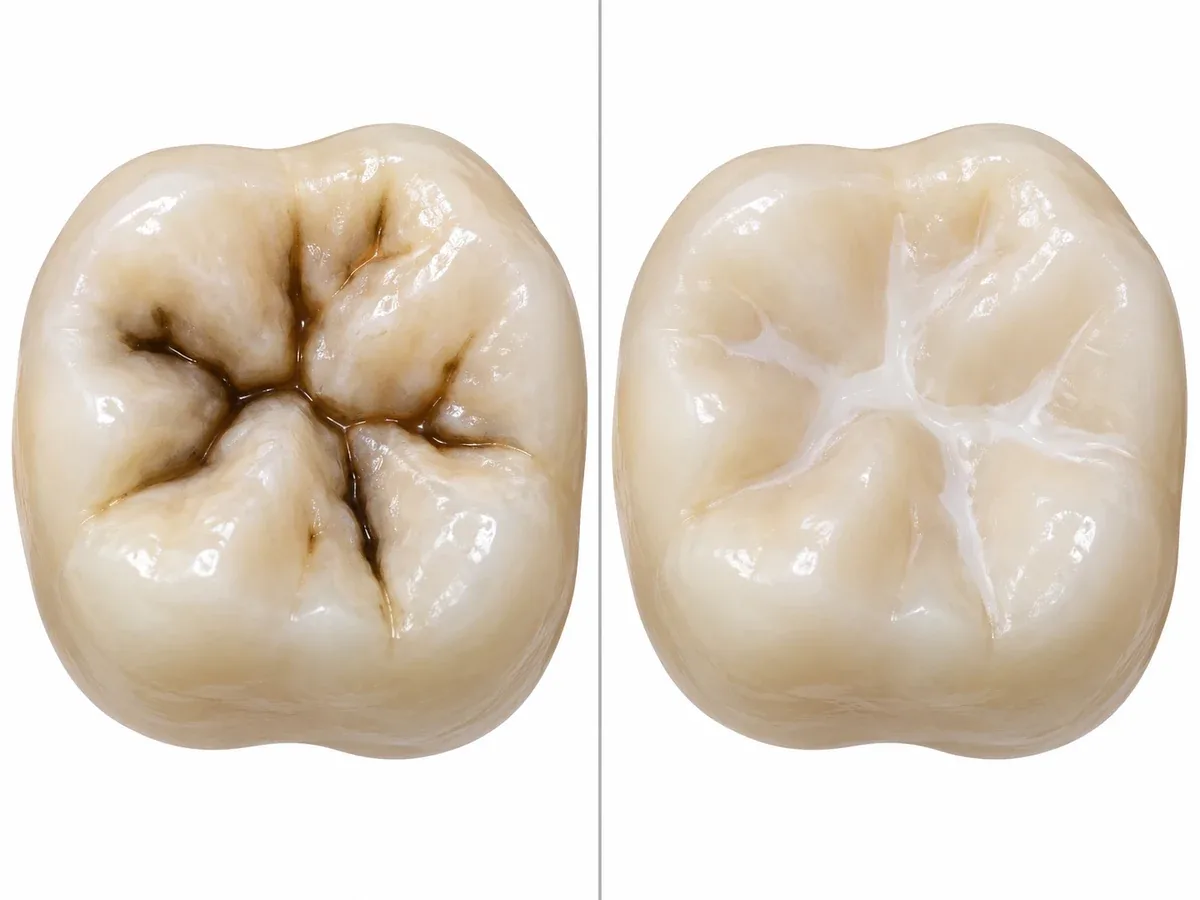
The KDCA page on cavities lists these ways to prevent decay:
- fluoride toothpaste
- dental floss
- scaling (professional cleaning)
- a checkup every six months
When decay has already formed, the Asan entry says the decayed part is fully removed and filled. The filling can be gold or tooth-colored resin, and the KDCA page also mentions amalgam and inlays.
Habits are the third part. The Asan entry on dental arch problems says finger sucking, tongue pushing and mouth breathing should be corrected early, since they can change where teeth sit.

| Step | What the sources say |
|---|---|
| Find | Regular dental checkups that include X-rays |
| Prevent | Seal the deep, narrow grooves of the molars; fluoride toothpaste, floss, scaling, six-monthly checkups |
| Habits | Correct finger sucking, tongue pushing and mouth breathing early |
What should parents in Busan watch for?
Most of what matters with baby teeth happens quietly. Decay in the enamel does not hurt, and eruption problems often show no symptoms.
That makes a parent's eye and regular checkups work together. Here are signs worth booking a visit for.
- a dark spot or hole in a baby tooth, even without pain
- sensitivity to cold or sweet foods
- pain when chewing
- baby teeth lost earlier than expected, especially after decay
- an adult tooth coming in off to one side or not appearing on time
- finger sucking, tongue pushing or mouth breathing
Put together, the sources describe a chain of events that can start with a single cavity in baby teeth.
- decay starts in the enamel and causes almost no pain
- it goes deeper, and the baby tooth is lost before its time
- neighboring teeth tilt into the gap, and the opposing tooth moves down
- the space for the next adult tooth shrinks
- the adult tooth may come in off to one side, or stay buried
Each step is a point where a checkup can catch the problem. The earlier the step, the simpler the answer tends to be.
None of these alone means a child needs braces. They are reasons to check the space and the timing before a small problem grows.
Diet is part of the picture too. The Asan entry links rising malocclusion to changing eating habits, and sugar and starch are what plaque bacteria break down into acid.
The aim is simple. Keep baby teeth healthy until their turn comes, so each adult tooth has room to come in where it should.
Frequently asked questions
Can decay in baby teeth be left since they will fall out?
The source says the opposite. Badly decayed teeth should be treated quickly so each tooth holds its place, and tooth decay and early loss of baby teeth are named as reasons malocclusion is rising.
A baby tooth is loose. Will it fall out if we leave it?
Many come out naturally. But since the source says baby-tooth extraction and the retention period should not be missed, it is worth checking that the timing is right. An X-ray shows whether the adult tooth is ready.
An adult tooth is coming in at an odd spot. What now?
Ectopic eruption often affects the upper first molars, lower lateral incisors and upper canines. Impaction is judged by the tooth's shape, position and direction and the space available. We confirm with imaging rather than by how it looks.
Can we get this checked in English in Busan?
Yes. We provide 1:1 English interpretation from the first consultation through the end of treatment. The clinic is near Seomyeon Station Exit 2 (5-min walk), opposite Lotte Hotel Busan; call 010-8555-2854 (+82-10-8555-2854 from abroad).
Baby teeth fall out, but they hold the place for what comes next.
Decay in the enamel does not hurt,
and eruption problems are often silent.
Regular checkups find them early.
If you are worried about your child's baby teeth in Busan, Reset Dental Clinic offers 1:1 English interpretation from your first consultation through the end of treatment. Call 010-8555-2854 to book a checkup.
References
- Asan Medical Center Disease Encyclopedia, "Dental Arch Relationship Problems" — definition, genetics and the rise in malocclusion from decay and early baby-tooth loss, habits that change tooth position, what not to miss in growing children, diagnostic records, and daily cautions
- KDCA National Health Information Portal, "Tooth Eruption Disorders" — definition, three stages of eruption, each tooth's own timing, order and position, delayed eruption, ectopic eruption and impaction, judging impaction by shape, position, direction and space, and regular checkups including X-rays
- Asan Medical Center Disease Encyclopedia, "Dental Caries" — definition, how plaque acid attacks enamel, symptoms by depth, diagnosis by looking, probing and essential X-rays, and treatment by removing decay and filling with gold or tooth-colored resin
- KDCA National Health Information Portal, "Cavities (Dental Caries)" — how acid from mouth bacteria dissolves teeth, symptoms by stage, fillings with amalgam, resin or inlays, and prevention with fluoride toothpaste, floss, scaling and six-monthly checkups
- KDCA National Health Information Portal, "Fissure Sealants" — sealing the deep, narrow grooves of the molars to make them easier to clean, and the timing once the adult first and second molars have come in
Written by Reset Dental Clinic Support Team
Medical review Dr. Kim Hyun-joo, Head Dentist
Last updated: September 19, 2026
This column is for general information and does not replace diagnosis or treatment for individual patients. If you have symptoms, please see a dentist.


