- The KDCA rule is clear: a mouth ulcer that has not healed after 2–3 weeks of treatment needs a biopsy to rule out cancer.
- Oral cancer can form a lump or an ulcer, or appear as a white or discolored surface patch.
- The main causes are drinking and smoking. 90% of oral cancer patients have a history of smoking.
- Ongoing damage to the lining of the mouth from sharp teeth or dentures is also linked to cancer.
When a patient comes to Reset Dental Clinic in Seomyeon, Busan with a mouth ulcer, our first question is how long it has been there. For patients living in or visiting Korea, we provide 1:1 English interpretation from the first consultation through the end of treatment.
Most mouth sores heal quickly. A sore that stays, though, is looked at differently, because the sources set a rule based on time.
This column draws on the KDCA page on mouth inflammation (stomatitis). It also uses the Asan Medical Center pages on oral cancer, tongue pain and oral candidiasis.
What does a common mouth ulcer look like?
The KDCA page on stomatitis covers inflammation of the lining of the lips, tongue and gums. It divides it into two groups.
- Infectious: herpes, hand-foot-and-mouth disease and candida
- Non-infectious: aphthous ulcers, burning mouth syndrome and radiation mucositis
The aphthous ulcer is the most familiar kind of mouth ulcer. The page describes it this way: it has a clear border with a red rim.
It usually hurts for a few days and then heals. These sores tend to appear in different spots over time, and they leave no mark once they heal.
A sore that stays in the same spot is a different story. That is the one this column is about.
Because a common mouth ulcer usually settles within days, most people never need to count. Counting matters when a sore does not follow that pattern.

Why is time the key rule for a mouth ulcer?
Here is the KDCA rule as written. An ulcer that has not healed after 2–3 weeks of treatment needs a biopsy to rule out cancer.
This rule matters because the eye alone cannot always tell sores apart. The oral cancer source says cancer can develop on the lips, tongue, inner cheeks, hard palate (the front of the roof of the mouth) and gums.
Most oral cancers are squamous cell carcinoma. It develops when the growth of the cells on the surface of the mouth is no longer properly controlled.
As a tumor grows, it can form a lump or an ulcer. It can also appear as a white or discolored surface patch and may cause pain.
In other words, at first it may look no different from a common mouth ulcer. That is why the number of days counts for more than the look.

| Topic | Common sore (aphthous ulcer) | Sore that needs checking |
|---|---|---|
| Look | Clear border with a red rim | Can appear as a lump, ulcer or patch; may look like a common sore at first |
| Place | Appears in different spots over time | Stays in the same spot |
| Course | Usually hurts for a few days, then heals without a mark | Not healed after 2–3 weeks of treatment: a biopsy is needed |
So the practical step is simple. Note the day you first noticed the sore.
Then watch two things: whether the mouth ulcer stays in the same spot, and whether it heals with treatment. If it is still there after 2–3 weeks, the rule applies.
What raises the risk of oral cancer?
The oral cancer source is clear about causes. The main causes are drinking and smoking. Other causes include poor oral hygiene and dentures or teeth that repeatedly injure the tongue.
The source gives a figure as well. 90% of oral cancer patients have a history of smoking. The longer and the more someone smokes, the higher the risk.
Several other factors are also linked to cancer in the source:
- vitamin deficiency
- poor oral hygiene
- ongoing damage to the lining of the mouth from sharp teeth or dentures
- heavy drinking
- sun exposure
This shows one thing a dentist can do. Smoothing the sharp edge of a broken tooth or adjusting a loose denture does more than ease discomfort. It removes a source of repeated injury to the lining of the mouth.

| Item | What the source says |
|---|---|
| Main causes | Drinking and smoking |
| Smoking | 90% of patients have smoked; longer and heavier smoking means higher risk |
| Other causes | Poor oral hygiene; dentures or teeth repeatedly injuring the tongue |
| Linked to cancer | Vitamin deficiency; ongoing damage from sharp teeth or dentures |
| Raises the risk | Heavy drinking, sun exposure |
Does quitting smoking help? The source ties risk to how long and how much someone smokes, and it names heavy drinking too. Apart from healing a sore that is already there, these are the clearest risks you can reduce.
If you smoke or drink, tell your dentist at the visit. It helps them weigh a mouth ulcer that has lasted longer than expected.
Why get a lasting mouth ulcer checked early in Busan?
The source describes how oral cancer progresses. If a tumor is not treated properly, it grows and destroys the soft tissue around it, and even bone.
As it advances further, it spreads to the lymph nodes in the neck. It can then spread to other organs in the body.
The source adds that oral cancer often has a poor outlook, and treatment can leave problems with function. For these reasons, it is regarded as one of the harder diseases to treat.
It is more common in men than women and is found most often in people in their 50s and 60s. Yet it also appears from time to time in people under 30.
The source also describes overlap with other cancers. People with oral cancer are more likely to have cancer of the larynx, esophagus or lungs.
At the time of diagnosis, 15% already have at least one such cancer. Later on, 10–40% develop one of these cancers or a new oral cancer.
| Topic | What the source says |
|---|---|
| If not treated properly | Destroys nearby soft tissue and even bone |
| If it advances | Spreads to neck lymph nodes, then to other organs |
| Outlook | Often poor; treatment can leave problems with function |
| Who | More common in men; most often found in the 50s and 60s, sometimes under 30 |
| Other cancers | 15% at diagnosis; 10–40% later |
None of this means every lasting sore is cancer. It means the 2–3 week rule is worth taking seriously, whether you live in Busan or are here for a short stay.
Is no pain a reason to relax?
Many people think, "It doesn't hurt, so it must be fine." The source on tongue pain (glossodynia) shows that the opposite can also happen.
With glossodynia, people feel pain even though nothing is clearly wrong with the tongue. Because anxiety about cancer and low mood can follow, that source recommends seeing an oral surgeon, even just to confirm it is not cancer.
So something can hurt while nothing is there. And a mouth ulcer that does not hurt can still need checking.
The rule is not whether it hurts. It is how long a visible sore has stayed.
Pain and duration are two separate questions. A painful tongue with nothing visible is checked to rule out cancer and ease worry. A mouth ulcer that does not hurt but stays for weeks is checked because of the time rule.
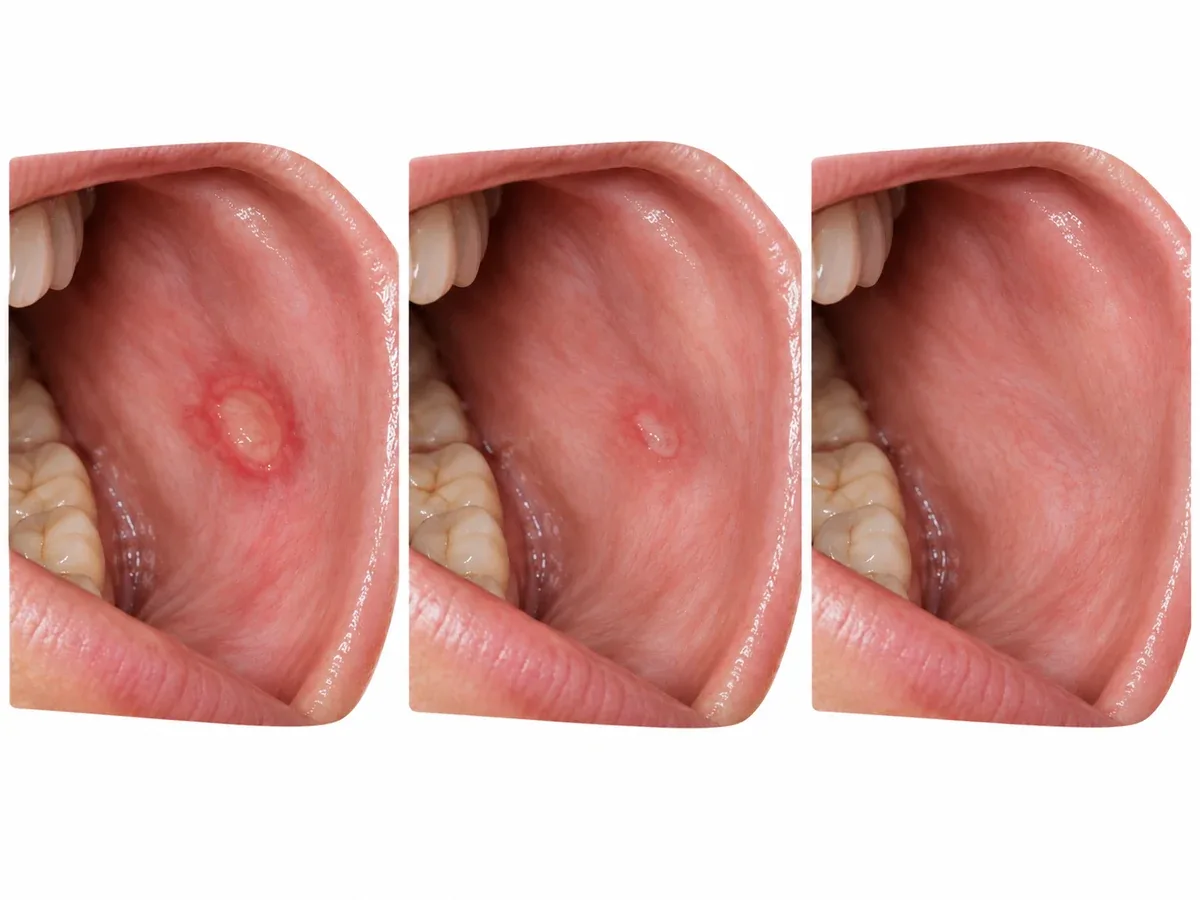
A simple self-check can help you keep track:
- Once a month, look inside your mouth in good light.
- Check the tongue, inner cheeks, gums, palate and lips.
- If you find a sore, write down the date.
- If it is still there after 2–3 weeks of treatment, get it checked.

What about white patches in the mouth?
The oral cancer source says it can appear as a white or discolored surface patch. But not every white spot is the same.
The KDCA page lists candida among the infectious types of stomatitis. The Asan source on oral candidiasis explains more.
Candida is a yeast that normally lives in the mouth. It can multiply quickly when the body's balance is upset or resistance is low. The source gives these examples:
- a cold or an acute infection
- general weakness
- long-term use of antibiotics
- smoking
It is also common in people with diabetes and people with AIDS. It shows up as raised white spots with a coating, which can be wiped off easily and may bleed when removed.
It is diagnosed by these easily removed white lesions and by looking under a microscope. For denture-related candidiasis, the source advises soaking the denture overnight in a diluted solution.
| Topic | Oral candidiasis | Patch described in the oral cancer source |
|---|---|---|
| Look | Raised white spots with a coating | A white or discolored surface patch |
| Feature | Wipes off easily and may bleed when removed | Can come with a lump or an ulcer, and may cause pain |
| How it is checked | The easily removed lesion and a microscope | A biopsy if an ulcer has not healed after 2–3 weeks of treatment |
So a white spot in the mouth can mean different things. Telling them apart is done at an examination, not at home.
If you wear dentures and notice white spots, mention it at your visit. The denture and the tissue under it are checked together.
Frequently asked questions
How long should I wait before seeing someone about a mouth ulcer?
The KDCA rule is 2–3 weeks. An ulcer that has not healed after treatment in that time needs a biopsy to rule out cancer. That is why it helps to remember when the sore first appeared.
Is a white, peeling spot dangerous?
The oral cancer source says it can appear as a white or discolored surface patch. Not every white spot is that, though. The KDCA page also lists candida among infectious types, and the two are told apart at an examination, just like a mouth ulcer.
My denture rubbed a sore. What should I do?
First, the spot where it rubs is adjusted. The source lists dentures or teeth that repeatedly injure the tongue as a cause, and links ongoing damage from them to cancer. If the sore has not healed 2–3 weeks after the adjustment, it is checked according to the rule.
Can I get a mouth ulcer checked in English in Busan?
Yes, we provide 1:1 English interpretation from your first consultation through the end of treatment. The clinic is near Seomyeon Station Exit 2 (5-min walk), opposite Lotte Hotel Busan. Call 010-8555-2854 (+82-10-8555-2854 from abroad).
For a mouth ulcer, the rule is time, not pain.
Most sores heal within days and leave no mark.
One that stays in the same spot
for 2–3 weeks despite treatment needs a biopsy.
If you have a sore that is not healing and you are in Busan, Reset Dental Clinic offers 1:1 English interpretation from your first consultation through the end of treatment. Call 010-8555-2854 to book a consultation.
References
- KDCA National Health Information Portal, "Stomatitis" — inflammation of the lips, tongue and gums; infectious (herpes, hand-foot-and-mouth disease, candida) and non-infectious (aphthous ulcers, burning mouth syndrome, radiation mucositis) types; aphthous ulcers with a clear border and red rim; a biopsy for ulcers not healed after 2–3 weeks of treatment
- Asan Medical Center Disease Encyclopedia, "Oral Cancer" — sites including the lips, tongue, inner cheeks, hard palate and gums, mostly squamous cell carcinoma; lumps, ulcers and white or discolored patches that may cause pain; spread to soft tissue, bone, neck lymph nodes and other organs if untreated; poor outlook and possible loss of function; more common in men, most often in the 50s and 60s but also under 30; drinking and smoking as main causes, 90% of patients with a smoking history; poor hygiene and ongoing damage from sharp teeth or dentures; other cancers in 15% at diagnosis and 10–40% later
- Asan Medical Center Disease Encyclopedia, "Glossodynia (Tongue Pain)" — a stinging or tingling tongue without a clear abnormality; causes including worry about cancer, stress, local irritation, smoking, hormonal changes and reduced salivary function; the advice to see an oral surgeon to confirm it is not cancer; possible spread to the whole tongue or mouth
- Asan Medical Center Disease Encyclopedia, "Oral Candidiasis" — inflammation caused by the yeast candida (thrush); rapid growth with colds, acute infections, weakness, long-term antibiotics or smoking; common in people with diabetes or AIDS; raised, coated white spots that wipe off easily and may bleed; diagnosis by the white lesions and microscopy; soaking dentures overnight in a diluted solution
Written by Reset Dental Clinic Support Team
Medical review Dr. Kim Hyun-joo, Head Dentist
Last updated: September 19, 2026
This column is for general information and does not replace diagnosis or treatment for individual patients. If you have symptoms, please see a dentist.