

- In Korea, gum disease ranked first among outpatient conditions by patient numbers in 2019–2021 and 2023.
- Gum disease is a chronic bacterial infection that shares risk factors with other chronic diseases.
- It can worsen heart disease, high blood pressure, diabetes and other conditions.
- Treatment goes step by step; medicine alone does not cure it.
"Doesn't everyone get gum disease with age?" We hear this often at our clinic in Seomyeon, Busan. At Reset Dental Clinic, you can go through gum care and treatment with 1:1 English interpretation.
It is true that gum disease is common. How common it is, and how it connects to the rest of the body, has been set out in numbers.
This column draws on two KDCA National Health Information Portal pages, on systemic disease and gum treatment, and on scaling. It also uses the Asan Medical Center entry on chronic periodontitis and a health insurance notice reported by the Korean Dental Association newspaper.
How common is gum disease in Korea?
Here is what the KDCA source says. Gingivitis and periodontal disease ranked first among outpatient conditions by number of patients in national health insurance statistics for 2019, 2020, 2021 and 2023.
In 2022, COVID-19 took first place. In other words, in most recent years more people were treated for gum disease than for any other outpatient condition.
The source goes on to say something else. As society ages, it is one of the conditions increasing the fastest.
The Asan Medical Center entry on chronic periodontitis adds a timeline. Symptoms mostly appear from the late 30s onward, but in some people the gums start to decline in their teens.

These are national figures, but the lesson is useful for anyone living here or visiting. A condition this common is easy to dismiss, which is exactly why it is worth a closer look.
What kind of disease is gum disease?
The KDCA source defines periodontal disease as a chronic infection caused by bacteria. It was once known by an older folk name. Today it is called periodontal disease, gum disease or gum illness.
The Asan Medical Center entry explains it in more detail. Chronic periodontitis is a disease in which inflammation of the tissues around the teeth destroys the gums and the bone that supports the teeth. That bone is called the alveolar bone.
The cause is tartar. Bacteria and food debris, called plaque, combine with calcium to form tartar.
Tartar leads to periodontal pockets, the spaces that open between gum and tooth. The bone supporting the teeth is then destroyed.
The entry sets out four stages of the disease.
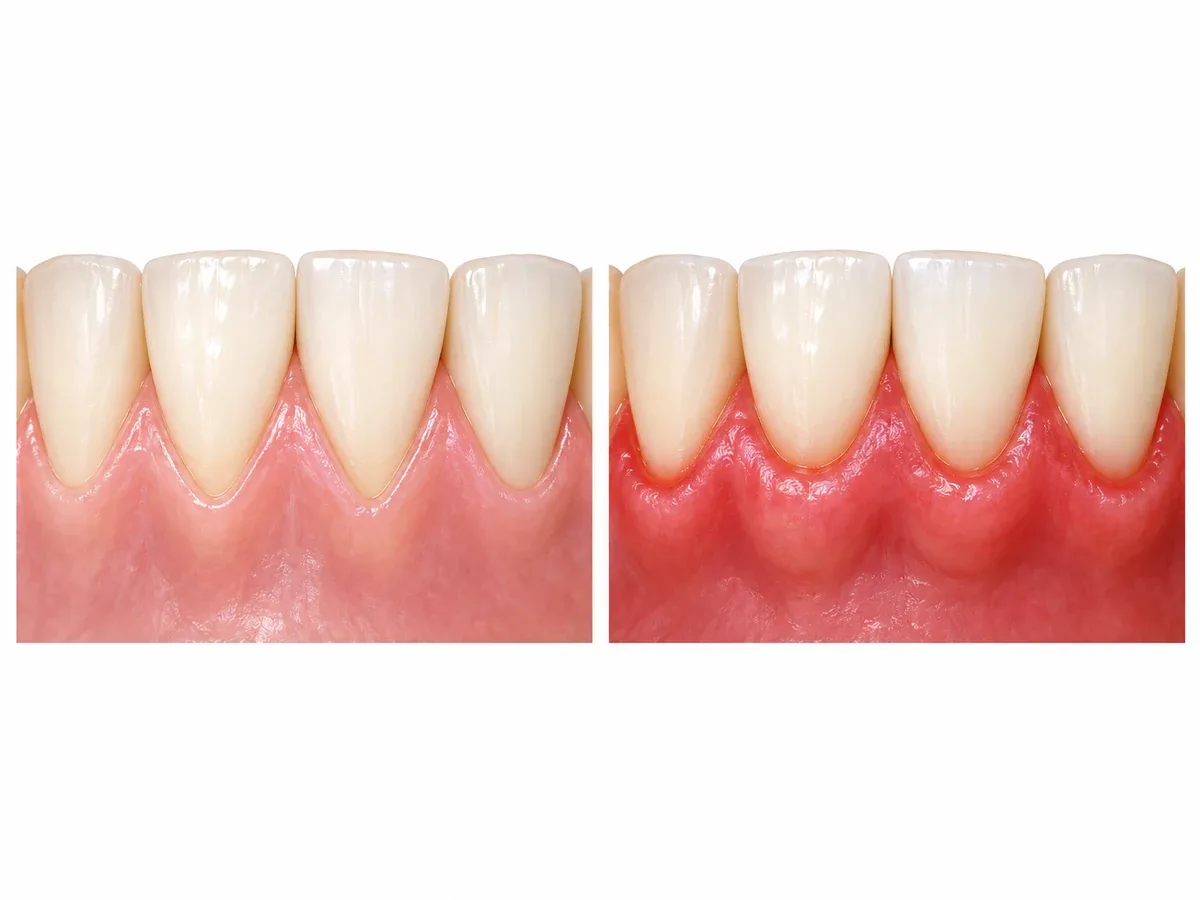
- Gingivitis: the gums swell, turn red and bleed when you brush.
- Early periodontitis: the teeth feel slightly raised, and the gums bleed when touched.
- Moderate periodontitis: the gums recede, gaps start to open between the teeth, and the teeth become a little loose.
- Advanced periodontitis: the gums recede a lot, the gaps widen, and the teeth are loose.
The entry also contains this sentence. In the early stages it is usually not very painful, and discomfort appears once the disease is well advanced.
This is why people come in late, even though gum disease is so common. By the time it hurts, it has often moved past the moderate stage.

| Stage | What it looks like |
|---|---|
| Gingivitis | The gums swell, turn red and bleed when you brush |
| Early periodontitis | The teeth feel slightly raised, and the gums bleed when touched |
| Moderate periodontitis | The gums recede, gaps start to open between teeth, and teeth become a little loose |
| Advanced periodontitis | The gums recede a lot, the gaps widen, and the teeth are loose |
Bleeding when you brush is a common sign of gingivitis, the first stage. Gingivitis can be reversed, but once it becomes periodontitis and bone is destroyed, that bone does not come back by itself.
How is gum disease linked to the rest of the body?
This is the part of the KDCA source most worth noting. Gum disease shares risk factors with other chronic diseases.
Risk factors such as lifestyle, diet and smoking make periodontal disease worse. The source also describes the link running the other way.
According to the source, gum disease can worsen these conditions.
- heart and blood vessel disease
- high blood pressure
- diabetes
- low birth weight and premature birth
- rheumatoid arthritis
- chronic kidney disease
- osteoporosis
The source adds that many systemic diseases affect the nature and severity of periodontal disease.
Its conclusion is this. Treating gum disease well and restoring a healthy mouth helps with nutrition and also with recovering general health.
One part needs careful reading, though. The source says gum disease can worsen those conditions. It does not say that it causes them.
Caring for your gums is not a cure-all. The point is that neglecting them can make other illnesses worse.

| Direction | What the source says |
|---|---|
| What makes gum disease worse | Lifestyle, diet and smoking |
| What gum disease can make worse | Heart and blood vessel disease, high blood pressure, diabetes, low birth weight and premature birth, rheumatoid arthritis, chronic kidney disease, osteoporosis |
| What affects gum disease | Many systemic diseases affect its nature and severity |
| What treatment helps | A healthy mouth helps nutrition and recovery of general health |
What affects how gum disease progresses?
The Asan Medical Center entry lists a number of factors that affect how gum disease moves forward. Some are in the mouth, and some are in the rest of the body.
- poorly made dental restorations and a misaligned bite
- smoking and stress
- bad habits such as clenching, grinding and pushing the tongue against the teeth
- medicines, age and hormonal changes
- diabetes, heart and blood vessel disease, pregnancy and poor nutrition
Age is on that list, but it is one factor among many. Smoking, habits and general health are there too.
The entry also describes how gum disease is diagnosed. A thin probe measures the depth of the periodontal pockets.
X-rays then show how much of the supporting bone has been lost. Together, these show which stage the disease has reached.
Because the early stages rarely hurt, these checks matter more than how your gums feel. A pocket can deepen quietly.
| Step | What it shows |
|---|---|
| Probing | The depth of the periodontal pockets around each tooth |
| X-rays | How much of the supporting bone has been lost |
| Scaling | Removes plaque and tartar as the first step of treatment |
If you have noticed any of the signs in the four-stage table, bring them up at the check. Swelling, bleeding, a raised feeling or a loose tooth all help place the stage.
It also helps to mention clenching, grinding, smoking and any medicines you take. Each of these is on the list of factors in the source.
How is gum disease treated, step by step?
The KDCA source states that the goal of gum treatment is to return diseased gum tissue to health. The disease is generally caused by bacteria in plaque, so removing them achieves that goal.
Mechanical treatment is recommended step by step, matched to severity. Plaque and tartar are removed by applying these procedures in stages.
- Scaling, which removes plaque and tartar.
- Root planing, which smooths the root surfaces.
- Subgingival curettage, which cleans below the gum line.
- Flap surgery, in which the gum is lifted to clean deeper.
When bone has been destroyed and gum tissue lost, regenerative procedures may be done to rebuild the bone and gums. The source names these examples.
- bone grafting for defects in the jawbone
- guided tissue regeneration
- gum grafting
The source also describes chemical treatment. Antibiotics are used as systemic medicine together with mechanical treatment.
Recently, they are not used for typical cases. They are used for periodontal disease that progresses quickly.
For a gum abscess, the aim of antibiotics is to ease symptoms and make mechanical treatment possible, not to cure the disease. This makes it clear that gum disease is not cured by medicine alone.
Which step you need depends on the stage found at your check. Treatment is matched to severity, so the deeper the damage, the further the treatment has to reach.

| Type | What the source says |
|---|---|
| Mechanical treatment | Scaling, root planing, subgingival curettage and flap surgery, applied in stages |
| Regenerative procedures | When bone is destroyed: bone grafting for jawbone defects, guided tissue regeneration, gum grafting |
| Antibiotics | Used together with mechanical treatment; recently, for quickly progressing gum disease |
| Antibiotics for a gum abscess | Aim to ease symptoms and make mechanical treatment possible |
Why is a yearly scaling worth booking in Busan?
The KDCA page on scaling describes it as a basic treatment for removing plaque and tartar. If you have gum disease, it recommends scaling at least every 6 months.
For those enrolled in Korea's National Health Insurance, adults aged 19 and over can have one covered scaling per year. According to the notice reported by the Korean Dental Association newspaper, an unused turn does not carry over to the next year.
The same notice calls scaling the most basic form of preventive dental care, and key to preventing gum inflammation and gum disease. It also advises booking early rather than waiting for the year-end rush.
The KDCA page also describes what to expect after scaling, so the changes do not surprise you.
- Sensitivity goes away within a few weeks.
- A feeling that the teeth are loose is part of swollen gums settling down.
- Gaps between the teeth that look wider afterwards are also normal.
Bleeding when you brush is the signal of the first stage. That is the time to book, not the time to wait.
Frequently asked questions
Isn't gum disease just part of getting older?
The source says it is rising sharply as society ages, but it also says lifestyle, diet and smoking make it worse. The chronic periodontitis entry says symptoms mostly appear from the late 30s, yet some people's gums decline from their teens. Gum disease is not decided by age alone.
Can medicine alone cure gum disease?
The source says antibiotics are used together with mechanical treatment, and recently in fast-progressing cases. For a gum abscess, their aim is to make mechanical treatment possible, not to cure the disease.
Can I have gum treatment if I have a chronic illness?
Yes. The source says many systemic diseases affect gum disease, and that restoring a healthy mouth helps general health. The approach depends on your medicines and how well your condition is controlled, so please tell us in advance.
Can I get gum treatment in English in Busan?
Yes. We provide 1:1 English interpretation from your first consultation through the end of treatment. The clinic is near Seomyeon Station Exit 2 (5-min walk), opposite Lotte Hotel Busan, and you can call 010-8555-2854 (+82-10-8555-2854 from abroad).
Gum disease is common, but it is not harmless.
It usually does not hurt early on.
It shares risk factors with other chronic diseases.
It is treated step by step, not with medicine alone.
If your gums bleed when you brush, Reset Dental Clinic in Busan can check for gum disease with 1:1 English interpretation. Call 010-8555-2854 to book a check-up.
References
- KDCA National Health Information Portal, "Systemic Disease and Periodontal Treatment" — former and current names for periodontal disease; gingivitis and periodontal disease ranking first among outpatient conditions by patient numbers in 2019–2021 and 2023, with COVID-19 first in 2022; one of the fastest-rising conditions as society ages; a chronic bacterial infection sharing risk factors with other chronic diseases; worsened by lifestyle, diet and smoking, and able to worsen heart disease, high blood pressure, diabetes, low birth weight and premature birth, rheumatoid arthritis, chronic kidney disease and osteoporosis; treatment aims, staged mechanical treatment, regenerative procedures and the limited role of antibiotics
- Asan Medical Center disease encyclopedia, "Chronic Periodontitis" — inflammation that destroys the gums and alveolar bone; tartar formed from bacteria, food debris and calcium creating periodontal pockets; factors such as poor restorations, misaligned bite, smoking, stress, clenching, grinding, tongue thrusting, medicines, age, hormonal changes, diabetes, heart disease, pregnancy and poor nutrition; the four stages; little pain early on, with symptoms mostly from the late 30s and in some people from the teens; diagnosis by probing pocket depth and X-rays, and treatment by scaling
- KDCA National Health Information Portal, "Scaling (Tartar Removal)" — scaling as a basic treatment removing plaque and tartar; yearly insurance coverage for adults 19 and over, and scaling at least every 6 months for people with gum disease; sensitivity fading within weeks, a loose feeling as swollen gums settle, and wider-looking gaps as normal
- Korean Dental Association newspaper Dailydental (Chiui Sinbo), "Don't Miss This Year's Insured Scaling" — a National Health Insurance Service notice on one covered scaling per year for adults 19 and over, which does not carry over; scaling as the most basic preventive care and key to preventing gum inflammation and gum disease; advice to book before the year-end rush
Written by Reset Dental Clinic Support Team
Medical review Dr. Kim Hyun-joo, Head Dentist · Integrated Dentistry Specialist
Last updated: September 19, 2026
This column is for general information and does not replace diagnosis or treatment for individual patients. If you have symptoms, please see a dentist.


