

- In an analysis of Korea's national health insurance data, people with tooth loss showed about a 16% higher risk of esophageal cancer, and people with gum disease about a 10% higher risk.
- Poor hygiene habits, such as brushing fewer than three times a day, skipping brushing before bed and not cleaning between teeth, were also significantly associated with esophageal cancer.
- Researchers reported that a subspecies of gum disease bacteria, animalis C2 (Fna C2), survives strong stomach acid, reaches the colon and worsens the early development and progression of colorectal cancer.
- Three daily habits were proposed: brush at least three times a day after meals, have check-ups and scaling twice a year, and clean between teeth with interdental brushes or floss.
The idea that gum disease is linked to other illnesses is no longer new. What matters is knowing which parts are confirmed and which parts still need more research. At our clinic in Seomyeon, Busan, patients from Korea and abroad ask about this often, and we provide 1:1 English interpretation from your first consultation through the end of treatment.
This column draws on five sources. One is a report in Dailydental, the Korean Dental Association's newspaper, on the Korean Academy of Periodontology's Gum Day event. Three are pages from the KDCA national health information portal, and one is Asan Medical Center's entry on chronic periodontitis.
Why is the mouth called the first gate of digestion?
The news report opens with a clear message. Research suggests that neglecting brushing or leaving gum disease untreated significantly raises the risk of digestive cancers, such as esophageal and colorectal cancer.
The mouth is the first passage directly connected to the digestive tract. The report's point is that managing bacteria and inflammation in the mouth is central to overall health.
These findings were presented at the 18th Gum Day event, held by the Korean Academy of Periodontology. The theme of the event was that thorough gum care reduces the risk of digestive cancer.
Several professors presented at the event, each on a different topic. The sections below take their findings one by one, and then set them beside what national health sources say.
| Presenter | Field | Topic |
|---|---|---|
| Professor Park Jae-yong, Chung-Ang University College of Medicine | Gastroenterology | Tooth loss, gum disease, hygiene habits and esophageal cancer risk |
| Professor Kook Joong-ki, Chosun University School of Dentistry | Oral biochemistry | A gum disease bacterium that reaches the colon |
| Professor Lee Seong-jo, Dankook University College of Dentistry | Periodontology | Stage-by-stage gum care for cancer patients |
We will be careful about one thing throughout. A higher risk seen in data is not the same as proof that gum disease causes cancer.
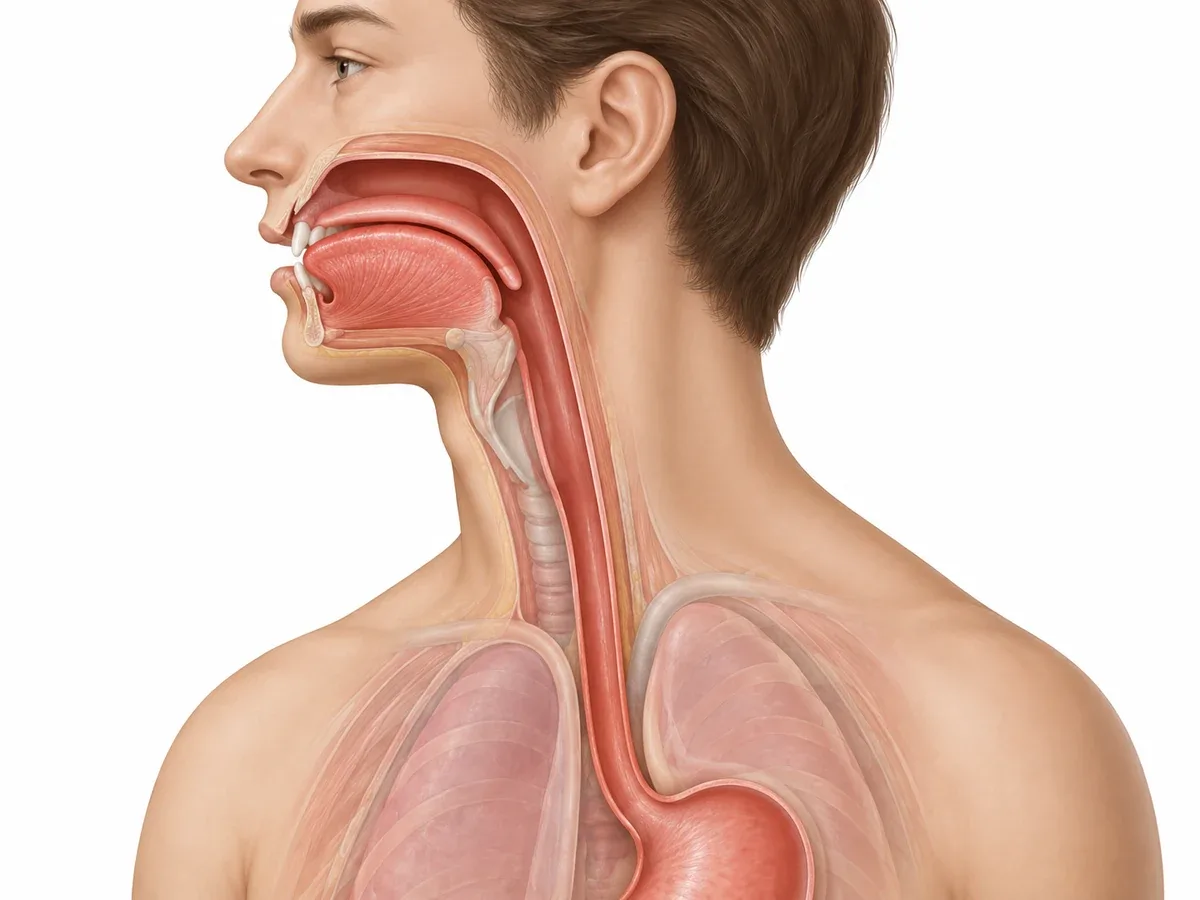
How is gum disease linked to esophageal cancer?
The report includes an analysis by Professor Park Jae-yong of Chung-Ang University College of Medicine, a specialist in gastroenterology. He analyzed data from Korea's National Health Insurance Service.
People with tooth loss showed about a 16% higher risk of developing esophageal cancer. People with gum disease showed about a 10% higher risk.
Daily habits were analyzed too. Poor hygiene habits were also significantly associated with esophageal cancer. The report names three of them:
- brushing fewer than three times a day
- skipping brushing before bed
- not using tools to clean between teeth
Here is one tip for reading these numbers. They show that the risk appeared higher, not that gum disease causes cancer.
What the statistics confirm is that these conditions tend to show up in the same people. That alone is reason enough to take care of your gums.
The report gives the figure for tooth loss but does not explain why it raises the risk. We will not go beyond what was reported.
| Item | Result reported |
|---|---|
| Tooth loss | About 16% higher risk of esophageal cancer |
| Gum disease | About 10% higher risk |
| Poor hygiene habits | Brushing fewer than three times a day, skipping brushing before bed, not cleaning between teeth |
Can gum disease bacteria really reach the colon?
The report also covers a presentation by Professor Kook Joong-ki of Chosun University School of Dentistry, from the department of oral biochemistry.
One of the bacteria behind gum disease is a subspecies called animalis C2 (Fna C2). According to the presentation, it survives strong stomach acid and reaches the colon.
There, it plays a decisive role in worsening the early development and progression of colorectal cancer. The report adds that animal experiments also confirmed this bacterium as a direct risk factor for colorectal cancer.
The idea of mouth bacteria passing through stomach acid to the colon may sound strange. Yet when you think of how much saliva we swallow every day, the route itself is natural.
Most bacteria do not survive the trip. The finding is that some do, and that one of them comes from gum disease.
Keep in mind that this is a research finding presented at an academic event. As the next section shows, it sits outside the list that the national health source has confirmed.

What do national health sources say about gum disease?
The KDCA page on systemic disease and periodontal treatment points in the same direction. Gum disease is a chronic infection caused by bacteria, and it shares risk factors with other chronic diseases.
It gets worse with risk factors such as lifestyle, diet and smoking. In turn, gum disease can worsen a list of other conditions:
- cardiovascular disease
- high blood pressure
- diabetes
- low birth weight and premature birth
- rheumatoid arthritis
- chronic kidney disease
- osteoporosis
Cancer is not on this list. To be precise, the national source confirms the conditions above. The link with digestive cancer comes from research presented at the academic event.
It is worth reading with that difference in mind. Either way, the conclusion is the same: do not leave gum inflammation untreated for long.
The same KDCA page concludes that treating gum disease well and restoring a healthy mouth helps with nutrition and with overall health. Treatment is applied step by step to match severity, including scaling and root planing.
| Source | What it says |
|---|---|
| KDCA national portal | Gum disease can worsen cardiovascular disease, high blood pressure, diabetes, chronic kidney disease and more; cancer is not on the list |
| Academic event (esophageal cancer) | With tooth loss or gum disease, the risk appeared higher |
| Academic event (colorectal cancer) | The bacterium Fna C2 reaches the colon and worsens early development and progression |
| How to read it | A higher risk was observed; this does not mean gum disease causes cancer |
Why does gum disease go on for so long?
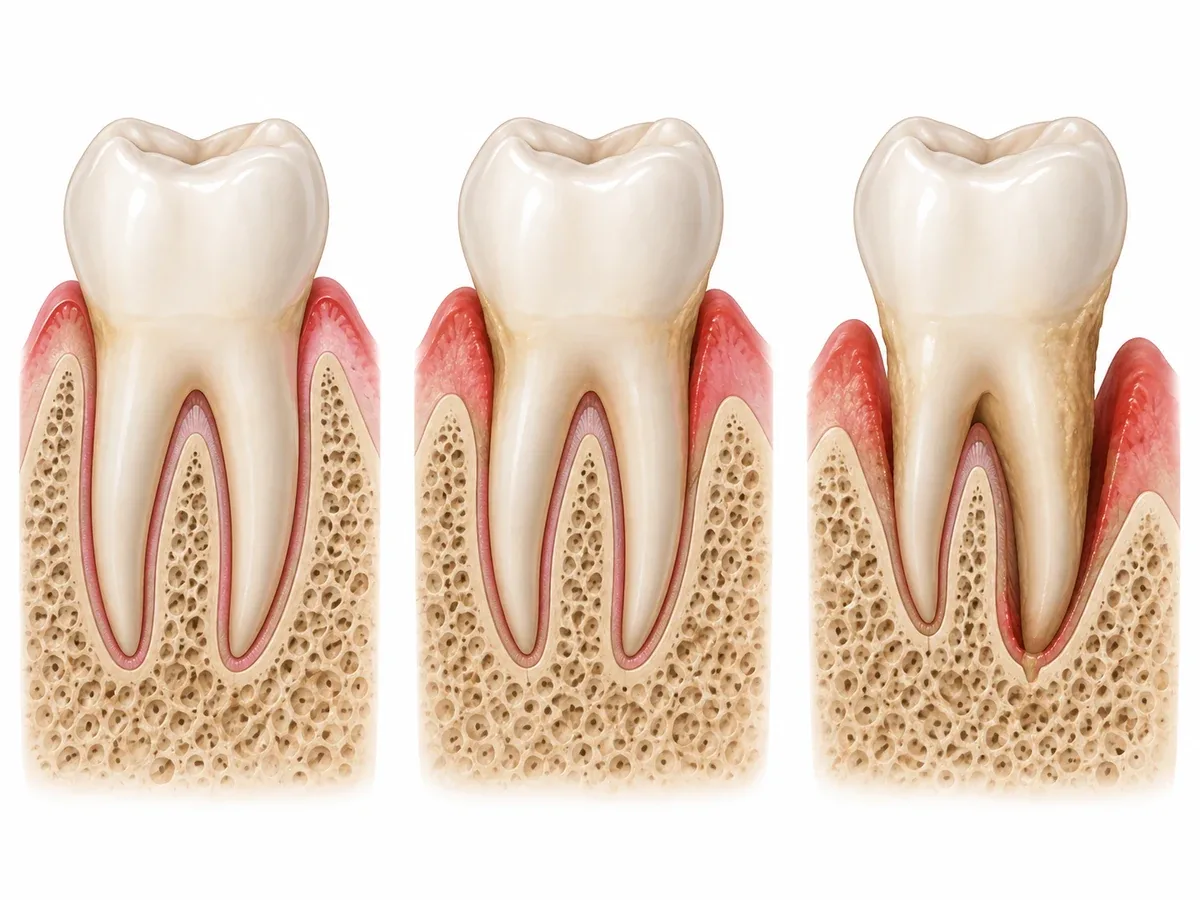
Asan Medical Center's entry on chronic periodontitis explains why. It is an inflammation of the tissues around the teeth that destroys the gums and the bone holding the teeth.
In the early stage, it usually does not hurt much, and discomfort appears after the disease has progressed considerably.
The entry describes four stages of progression:
- Gingivitis, inflammation of the gums.
- Early periodontitis.
- Moderate periodontitis, when the gums recede and gaps start to open between teeth.
- Advanced periodontitis.
Symptoms mostly appear from the late thirties onward. Even so, some people's gums start to decline in their teens.
The entry also lists factors that affect how it progresses. These include smoking, stress, clenching and grinding habits, as well as diabetes and cardiovascular disease.
| Stage | What the source describes |
|---|---|
| Gingivitis | Inflammation of the gums |
| Early periodontitis | Usually little pain at this point |
| Moderate periodontitis | The gums recede and gaps start to open between teeth |
| Advanced periodontitis | Discomfort is felt once the disease has progressed considerably |
So waiting until it hurts is too late. Checking while there is no pain is how gum disease is caught early.
Which daily habits help keep gum disease in check?
At the event, the Academy proposed a set of habits that anyone can practice. They are aimed at both gum health and digestive health.
- Brush carefully at least three times a day, after meals.
- Have regular oral check-ups and scaling twice a year.
- Clean between teeth, where a regular toothbrush cannot reach, with interdental brushes or floss.
The KDCA page on preventing oral disease makes the picture clearer. Brush at least twice a day with fluoride toothpaste for two minutes or more, looking in a mirror.
Floss is essential. If the gums and bone have receded and gaps are wide, add an interdental brush.
Rinsing less after fluoride toothpaste makes it work better. After an acidic drink, wait 30 minutes before brushing.
The KDCA scaling page describes scaling as the basic treatment that removes plaque and tartar. People with gum disease should have it at least every six months, which matches the Academy's advice of twice a year.
Some people notice sensitivity after scaling. The same page says this sensitivity fades within a few weeks.
| Item | Academy's proposal | KDCA prevention guide |
|---|---|---|
| Brushing | At least three times a day, after meals | At least twice a day with fluoride toothpaste, two minutes or more |
| Between teeth | Interdental brushes or floss | Floss is essential; add interdental brushes for wide gaps |
| Check-ups | Twice a year, with scaling | Once a year, or every six months with a history of treatment |
| Extra tips | Careful brushing after meals | Rinse lightly; brush 30 minutes after acidic drinks |

What should cancer patients in Busan know about gum care?
The report includes one more item. Professor Lee Seong-jo of Dankook University College of Dentistry, from the department of periodontology, also presented a guide for cancer patients.
During cancer treatment, patients are prone to serious complications such as dry mouth and gingivitis. The guide offers gum care tailored to each stage of treatment.
If you are about to start cancer treatment or are receiving it, do not treat mouth care as a separate matter. Ask your medical team and your dentist to look at it together.
Night brushing deserves a special mention here. Skipping brushing before bed was one of the poor habits linked with esophageal cancer.
Saliva drops during sleep and the mouth becomes dry. That makes the brushing before bed an especially important one each day.

Frequently asked questions
If I have gum disease, will I get cancer?
That is not how to read it. The report shows that the risk appeared higher, and the colorectal cancer finding is about a bacterium worsening early development and progression. Cancer is also not on the KDCA list, so gum disease is something to manage, not something to fear.
Do I really need to brush at night?
In the analysis, skipping brushing before bed was one of the poor habits significantly associated with esophageal cancer. Saliva drops while you sleep, so the brushing before bed matters a great deal.
Is scaling twice a year all right?
The KDCA scaling page says people with gum disease should have scaling at least every six months. The right frequency depends on your condition, so check it at your visit.
Can I get gum disease care in English in Busan?
Yes. We offer 1:1 English interpretation from the first consultation through the end of treatment. The clinic is near Seomyeon Station Exit 2 (5-min walk), opposite Lotte Hotel Busan, and you can call 010-8555-2854 (+82-10-8555-2854 from abroad).
A higher risk is a reason to take care, not a reason to panic.
Gum disease usually does not hurt at first.
Checking before it hurts
is how inflammation is kept from lasting.
If you want your gums checked for gum disease in Busan, Reset Dental Clinic offers 1:1 English interpretation from your first consultation through the end of treatment. Call 010-8555-2854 to book a check-up.
References
- KDA newspaper Dailydental (Chiui Sinbo), "Gum Bacteria That Reach the Colon Raise Digestive Cancer Risk" — the Korean Academy of Periodontology's 18th Gum Day event on gum care and digestive cancer risk; national health insurance data showing about 16% higher esophageal cancer risk with tooth loss and about 10% higher with gum disease; poor hygiene habits significantly associated with esophageal cancer; the subspecies animalis C2 (Fna C2) surviving stomach acid, reaching the colon and worsening colorectal cancer, confirmed as a direct risk factor in animal experiments; a stage-by-stage gum care guide for cancer patients; three daily habits of brushing after meals, twice-yearly check-ups and scaling, and cleaning between teeth
- KDCA National Health Information Portal, "Systemic Disease and Periodontal Treatment" — gum disease as a chronic bacterial infection sharing risk factors with other chronic diseases; worsening with lifestyle, diet and smoking; its possible worsening of cardiovascular disease, high blood pressure, diabetes, low birth weight and premature birth, rheumatoid arthritis, chronic kidney disease and osteoporosis; benefits of treatment for nutrition and overall health; step-by-step treatment such as scaling and root planing
- Asan Medical Center Disease Encyclopedia, "Chronic Periodontitis" — inflammation of the tissues around the teeth that destroys gums and bone; four stages from gingivitis to advanced periodontitis, with receding gums and gaps in the moderate stage; little pain early on; symptoms mostly from the late thirties, sometimes from the teens; smoking, stress, clenching, grinding, diabetes and cardiovascular disease affecting progression
- KDCA National Health Information Portal, "Oral Disease Prevention and Management" — brushing at least twice a day with fluoride toothpaste for two minutes or more while looking in a mirror; floss as essential, with interdental brushes for wide gaps; rinsing less after fluoride toothpaste; brushing 30 minutes after acidic drinks; yearly check-ups, or every six months with a history of treatment
- KDCA National Health Information Portal, "Scaling" — scaling as the basic treatment that removes plaque and tartar; scaling at least every six months for people with gum disease; sensitivity after scaling fading within a few weeks
Written by Reset Dental Clinic Support Team
Medical review Dr. Kim Hyun-joo, Head Dentist · Integrated Dentistry Specialist
Last updated: September 19, 2026
This column is for general information and does not replace diagnosis or treatment for individual patients. If you have symptoms, please see a dentist.


