

- An implant has a root in the bone, a connecting post and a crown on top, so the top alone can loosen or come off.
- A loose screw is retightened or replaced. A broken implant crown is repaired or remade.
- In one hospital review, 7.2% of implants had a loose screw, about half within six months.
- A loose screw left alone can be damaged or lead to gum disease, so call us the day you notice it.
At Reset Dental Clinic in Seomyeon, Busan, we sometimes hear that the top of an implant came off during a meal. Others tell us their implant crown clicks every time they chew. For patients living in or visiting Korea, we offer 1:1 English interpretation from the first consultation through the end of treatment.
When this happens, we first work out which part has the problem. Treatment depends on whether it is the root in the bone or the parts placed on top of it.
This column draws on Korean public health and hospital sources, listed at the end. Below, we go step by step through what is checked when the top of an implant loosens or falls out.
How is an implant crown attached to the implant?
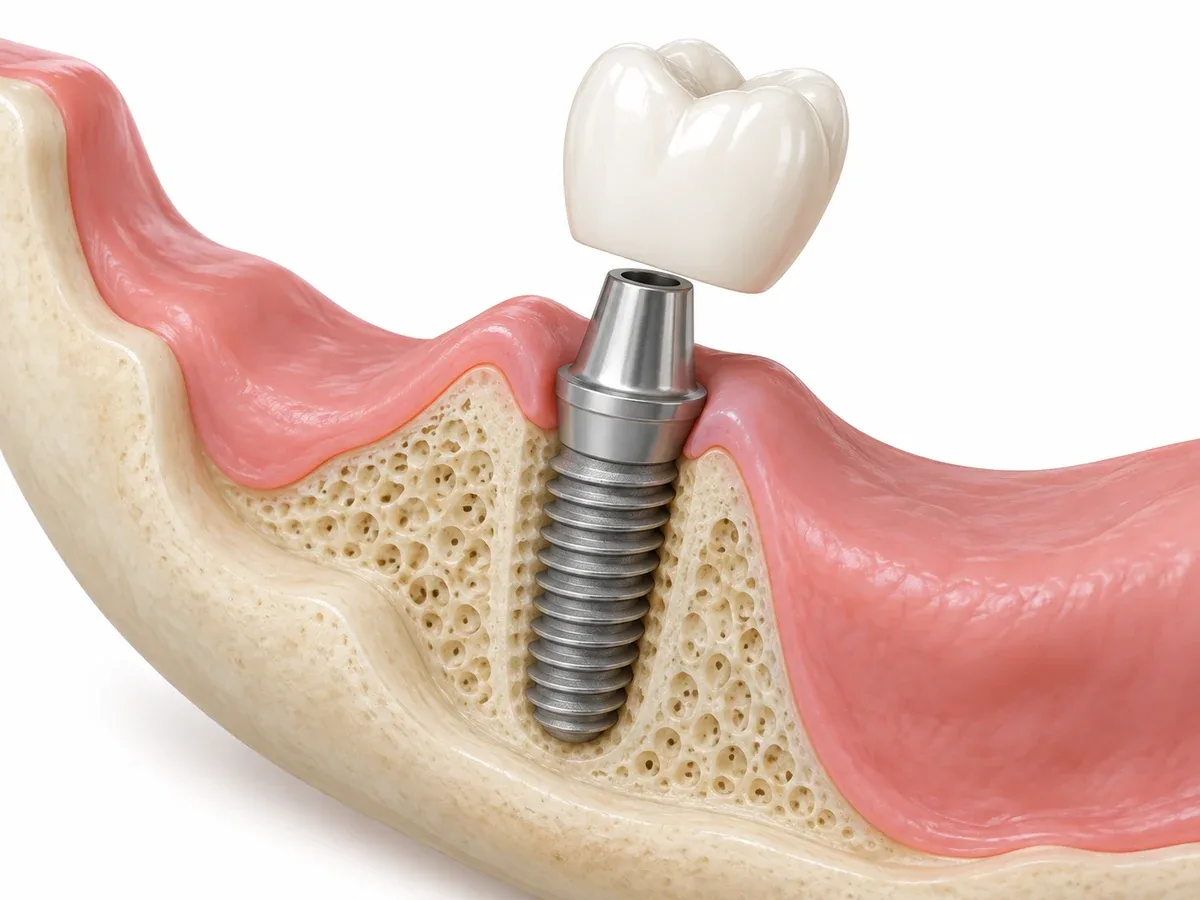
The KDCA material divides a dental implant into three parts. The fixture bonds to the bone, and a connecting post joins it to the restoration on top.
- Artificial tooth root (fixture): placed in the jawbone, where it bonds with the bone.
- Connecting post (abutment): links the root to the tooth above.
- Artificial tooth (implant crown): the part you see in the mouth and chew with.
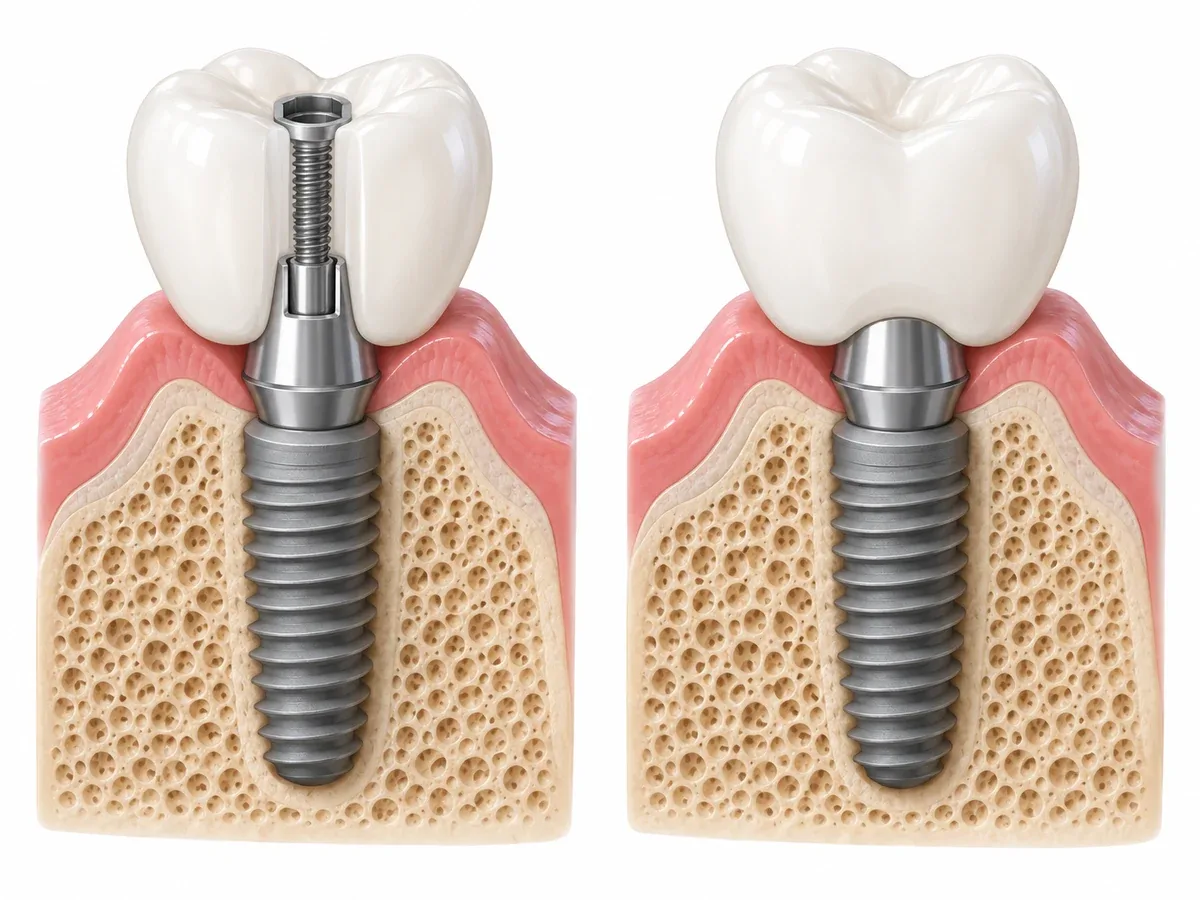
There are two ways to hold the implant crown in place. The KDCA material says it is fixed to the abutment with cement or a connecting screw. Seoul Asan Medical Center describes the same two options.
So "it came out" can mean several different things. The screw may have loosened, a cemented crown may have come off, or the crown itself may have broken.
Rarely, the problem lies in the root rather than the top. Seoul Asan Medical Center notes that poor care can cause inflammation that dissolves bone, and the implant may come out. This is why we check on an X-ray where the movement is coming from.
On the other hand, bone around the root can shrink without any wobble at all. The KDCA notes that peri-implantitis can badly destroy bone while the implant still feels firm. That is why treatment is often started too late.
So we do not judge by movement alone. We look at X-rays and the gums together.
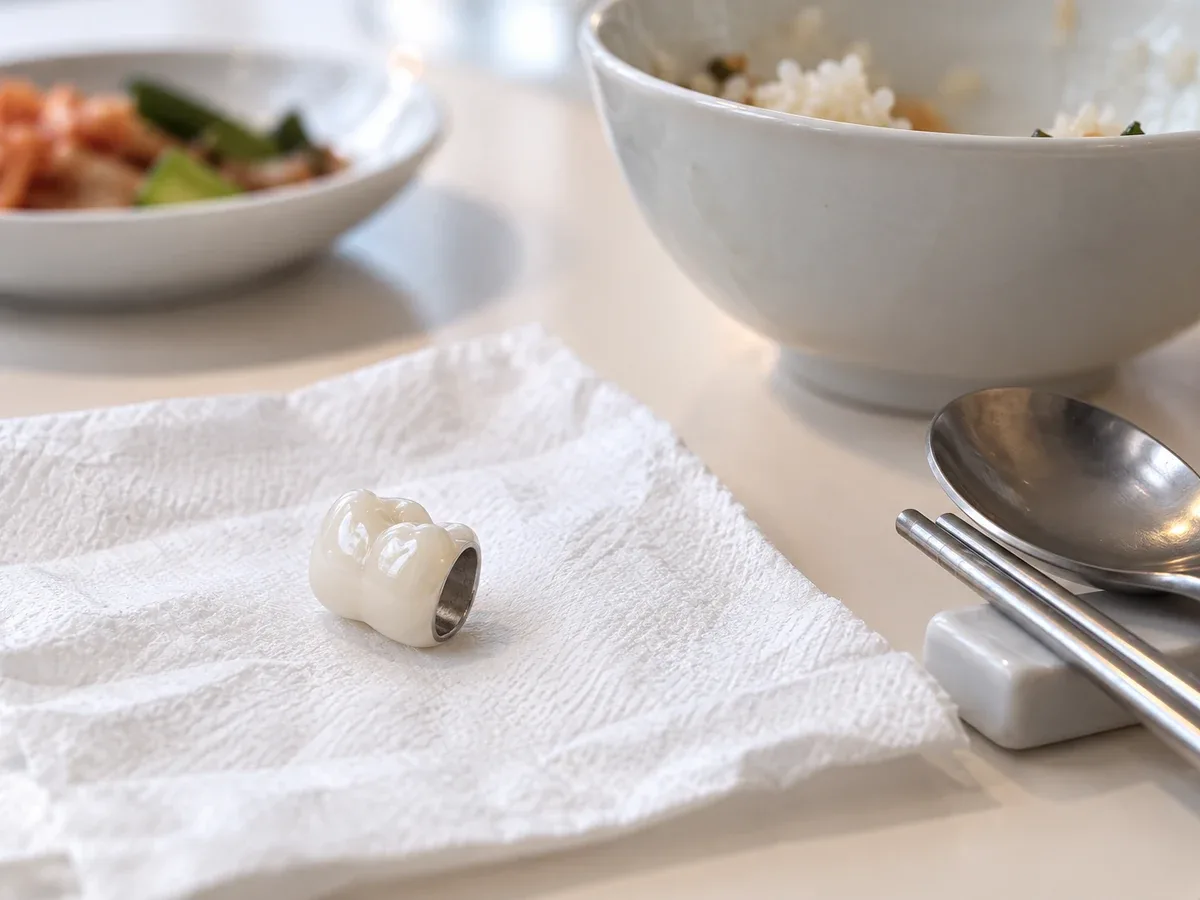
What happens when an implant crown screw comes loose?
Seoul Asan Medical Center explains that after long use, the screw of the restoration can loosen and the implant crown starts to wobble slightly. If it is not retightened, the screw can be damaged or gum disease can develop. It advises seeing a dentist right away when something feels wrong.
The KDCA material sorts the response by part. A loose fixing screw is retightened or swapped for a new one. A broken restoration is repaired or remade.
A fracture of the implant itself inside the bone is a different matter. According to the material, it is hard to reuse and has to be removed. The same "wobble" can call for very different treatment depending on which part is affected.
The cause the material points to is chewing force. When you bite hard or tough food, the force travels through the crown down into the bone. In the process, the crown or the implant can break.
The table below brings together what the two sources say for each part.
| Which part | What the sources say |
|---|---|
| The fixing screw has loosened | It is retightened or replaced with a new screw |
| The restoration is broken | It is repaired or made again |
| The implant in the bone has fractured | It is hard to reuse and has to be removed |
| A loose screw is left as it is | The screw can be damaged or gum disease can develop |
How often do implant crown screws loosen, and when?
Dailydental reported on a 2015 thesis from the Wonkwang University Graduate School. It was a six-year retrospective clinical study of screw loosening in implant restorations.
The study reviewed records from the implant center of one university dental hospital. It covered 1,928 implants placed in 837 patients between January 2008 and October 2013. Follow-up ran from the day the implant crown was connected to the end of December 2013.
The article calls screw loosening one of the more common mechanical complications. It adds that other studies have reported rates of 6.7%, 10.3% and 12.1%.
Follow-up in this study ranged from 0.25 to 70 months. Over an average of 31.5 months, 7.2% of implants had a loose screw. Just two screws actually broke.
The timing was concentrated early. In total, 50.4% of cases began within six months of function. Here, function means the time the implant crown was connected and put to use.
| Group | Study result |
|---|---|
| Loosened once | 77.7% of the implants that loosened |
| Loosened twice | 14.4% |
| Loosened three or more times | 7.9% |
| Loosened repeatedly | 22.3% |
| Within 6 months of function | 50.4% of all loosening happened in this period |
By location, the molar area had a rate of 8.5%. Front teeth had 6.9%, and premolars 3.8%.
This study looked back at the records of one institution, so its numbers will not fit every case. Still, sites under heavy chewing force and the first few months deserve extra attention. If your implant crown makes a noise or moves slightly in the early months, do not wait for your next check-up.
Does the way the crown is fixed make a difference?
The same study compared rates by the way the crown is held. Screw-retained crowns had 10.1%, and cement-retained crowns had 4.9%.
The connection between root and abutment also mattered. External hex connections had 8.9%, and internal hex connections 5.4%. Rates also varied by manufacturer, at 17.0%, 13.8% and 8.0%.
By restoration type, single crowns had 14.0%. Cantilever designs, which extend out to one side, had 11.8%. Several crowns joined together had 3.4%.
Implants 5 mm or wider showed a high 14.2%. Yet all but 3 of the 59 wide implants that loosened were in molar sites. The researcher therefore concluded that the characteristics of the site had the greater effect.
| Grouped by | Screw loosening rate |
|---|---|
| All implants (1,928, average 31.5 months) | 7.2%, with 50.4% of cases within 6 months of function |
| Site | Molars 8.5%, front teeth 6.9%, premolars 3.8% |
| How the crown is held | Screw-retained 10.1%, cement-retained 4.9% |
| Connection type | External hex 8.9%, internal hex 5.4% |
| Restoration type | Single crown 14.0%, cantilever 11.8%, joined crowns 3.4% |
These numbers alone cannot show that one method is better. The fixing method is chosen by looking at the site, the bone, chewing force and how easy later repairs will be.
Bridges that join several implants into one piece need special attention. Professor Woo Yi-hyung, then head of Kyung Hee University Dental Hospital, explained this in a Dailydental lecture. The key is a passive fit, where the implants and the restoration fit exactly without strain.
With natural teeth, the ligament holding the tooth and the tooth's own flex absorb small errors. Implants have no such margin, so precise fabrication is essential. For a full-arch case, the front and both back sections may be made separately to check the fit.
Without this fit, he wrote, screws at the connections often loosen. In severe cases the screw breaks and patients have to return again and again. If even one or two implants fail, the whole restoration may need to be rethought.
With an overdenture, a denture that clips onto implants, part problems are common. The same lecture listed what usually comes up during maintenance:
- The clip that holds the denture can break.
- The resin around the clip can crack.
- The grip can weaken, so patients come back for adjustment.
- Where magnets are used, a magnet can come loose.
Professor Woo stressed explaining these devices fully in advance. If the same implant crown loosens again and again, we do not simply retighten the screw. We check the fit of the restoration and the bite as well.
What should you do the day your implant crown falls off in Busan?
It is unsettling, but most cases just call for a few calm steps. Keeping the part that came out and bringing it with you helps us judge its condition.
- Do not throw away the crown. Rinse it clean.
- Keep it in a small container or wrap it in a tissue.
- If a loose screw or small part came out too, bring it along.
- Do not glue it back with household adhesive or force it back in.
- Until your visit, avoid chewing on that side.
If it is loose but has not fallen out, it is easy to put off. But as Seoul Asan Medical Center notes, a loose screw left alone can be damaged. It can also lead to gum disease, so please call us the day you feel movement.
At the clinic, we check whether the problem is the screw, the crown or the root in the bone. Based on the sources above, the order is roughly as follows:
- A loose screw is retightened or replaced with a new one.
- A broken crown is either repaired or made again.
- If the implant in the bone has fractured, removal is considered.
- Once the crown is back on, the contact area and force of the bite are adjusted.
We also check the bone level around the root on an X-ray. This tells us whether the problem is limited to the top or also involves the gums and bone.

If you were treated at another clinic, please bring any records you have. The steps differ depending on whether the implant crown is screwed or cemented.
How can you keep an implant crown from loosening again?
The KDCA material advises avoiding hard or tough foods where possible. It also recommends chewing evenly on both sides, so force does not build up on one side.
Habits matter too. The material advises correcting tooth grinding, chewing on one side and clenching. If you have these habits, talk to your dentist about preventive measures.
Seoul Asan Medical Center says you can usually eat almost anything. To protect the crown, though, some foods need care. Examples are very hard foods with big temperature changes, such as dried squid and ice.

The KDCA material states that implants do not last forever. Long use requires thorough oral hygiene, avoiding excessive chewing force and regular check-ups. It adds that smoking makes failure more likely.
The first year calls for extra care. According to the KDCA, the bone around the implant firms up and stabilizes during this period. That is why it recommends starting with soft foods.
After treatment, check-ups every 3–6 months are recommended. The material lists what these visits cover:
- Any inflammation around the implant is treated.
- The bite between upper and lower teeth is checked and readjusted if it has changed.
- Depending on the type, the top part is removed and cleaned.
Seoul Asan Medical Center also recommends thorough brushing with interdental aids and regular dental visits. Checking the bite at these visits is also a way of watching the force on the screw.
Seoul Asan Medical Center puts the implant success rate at over 95%. It adds that results can vary with general health, oral hygiene and regular maintenance.
Under Korean national health insurance, implants for patients aged 65 and over come with a 3-month follow-up period. It starts the day after the final crown is placed, and visits are made at the same clinic.
Frequently asked questions
Can my implant crown be used again after it falls out?
The KDCA material says a loose screw is retightened or replaced with a new one. A broken restoration is repaired or remade. We decide whether to reuse the implant crown after checking the one you bring in.
Mine loosened soon after placement. Is that common?
In the study above, about half of all screw loosening began within six months of function. Early loosening is not rare, so please do not put up with it. Let us know as soon as you notice it.
The same implant keeps loosening. Why?
In the study, loosening came back in 22.3% of the implants that loosened. We look at possible causes together, such as grinding habits, the bite and the fit of the restoration.
Can I get this treatment in English in Busan?
Yes. We provide 1:1 English interpretation from the first consultation through the end of treatment. The clinic is near Seomyeon Station Exit 2 (5-min walk), opposite Lotte Hotel Busan, and you can call 010-8555-2854 (+82-10-8555-2854 from abroad).
A loose or fallen implant crown is usually a problem with the parts above the root.
Still, which part is affected has to be confirmed by X-ray and examination.
Left loose for long, the screw can be damaged
or gum disease can follow.
If you have a loose implant crown in Busan, Reset Dental Clinic offers 1:1 English interpretation from your first consultation through the end of treatment. Keep any parts that came out and call 010-8555-2854 to book a visit.
References
- KDCA National Health Information Portal, "Dental Implants" — the three parts of an implant (fixture, abutment, crown); crowns fixed with cement or a connecting screw; chewing force that can break a crown or implant; repair or remaking of broken crowns, retightening or replacing loose screws, and removal of a fractured implant; chewing evenly, avoiding hard and tough foods, correcting grinding, one-sided chewing and clenching; check-ups every 3–6 months with bite adjustment and, depending on the type, removal and cleaning of the top part
- Seoul Asan Medical Center, "Implant Surgery" — crowns fixed with screws or cement; most foods can be eaten, but very hard foods with big temperature changes such as dried squid and ice should be avoided; after long use a crown screw can loosen and wobble, and if not retightened the screw can be damaged or gum disease can develop; advice to visit right away when something feels wrong
- KDA newspaper Dailydental, "Implant Screw Loosening Most Frequent Within 6 Months" (Sept 1, 2015) — a six-year retrospective study of 1,928 implants in 837 patients (average 31.5 months): 7.2% screw loosening, 50.4% within 6 months of function, 77.7% once and 22.3% repeated, 2 screw fractures; rates by site, connection type, retention type and restoration type; the researcher's view that site characteristics had the greater effect; other studies reporting 6.7%, 10.3% and 12.1%
- KDA newspaper Dailydental, "Professor Woo Yi-hyung's Lecture: Simple Solutions for Implant Overdentures" (Dec 13, 2010) — why a passive fit is essential for bridges joining several implants, frequent screw loosening and fracture at the connections without it, and how the failure of one or two implants can affect the whole restoration
- National Health Insurance Service, "Dental Implant Coverage Q&A" — the 3-month follow-up period after the final crown for implants covered by national health insurance, and how crown work and treatment of disease around implants are handled after it
Written by Reset Dental Clinic Support Team
Medical review Dr. Na In-chae, Head Dentist · Periodontics Specialist
Last updated: September 19, 2026
This column is for general information and does not replace diagnosis or treatment for individual patients. If you have symptoms, please see a dentist.


