

- New braces need about a week to get used to, says Seoul National University Hospital. The lips and inner cheeks usually feel it first.
- After each monthly adjustment, teeth may ache for 1–3 days. Most people describe it as discomfort, and painkillers are rarely needed.
- Hard, chewy and sticky foods can bend or loosen the brackets, so avoid them or cut them small.
- Jaw pain is not the same as tooth pain. Tell your dentist about it separately and early.
When people in Seomyeon, Busan think about getting braces, the first question is usually "How much will it hurt?" rather than time or cost. Seoul National University Hospital notes that teeth may ache for 1–3 days after an adjustment, but for most people it stays at the level of discomfort.
For patients living in or visiting Korea, we provide 1:1 English interpretation from the first consultation through the end of treatment.
This column draws on the hospital's patient guides on orthodontic treatment, clear aligners and malocclusion. We also look at two mediation cases reported by the Korean Dental Association's newspaper.

What is the first week with braces like?
The hospital's guide to orthodontic treatment says braces need about a week of adjustment. At first, the lips and the inside of the cheeks feel uncomfortable.
The brackets glued to your teeth and the archwire linking them rub against the lining of the mouth. Talking and eating feel strange for a while. After this phase, most people get used to their braces.
If a bracket keeps stabbing you, or a sore does not heal, please do not just put up with it. We can smooth the wire end or check the bracket position.
Before any braces go on, there is a diagnosis. The guide says the problem is analyzed with an interview, X-rays, tooth models, and photos of the face and mouth. A plan is then made for each person.
Gum inflammation or cavities should be treated before starting, because cleaning becomes harder with braces on. If cleaning slips, cavities or gum disease can develop along the brackets. That is why your oral hygiene habits are checked in advance.
How many days do braces hurt after an adjustment?
The appliance is adjusted at regular visits. The hospital's guide to malocclusion says patients usually return about every four weeks. The dentist checks how the teeth have moved and adjusts the appliance for the next stage.
Teeth shift when steady force is applied, and orthodontics uses this property. Each adjustment changes that force to suit the next step.
The orthodontic treatment guide says teeth may ache for 1–3 days after each monthly visit. A few people take painkillers, but for most it stays at the level of discomfort.
The same adjustment can feel different from person to person. A dull ache the next day that settles by day three is within the range the guide describes. Cutting food into smaller pieces makes those days easier.
Removable clear aligners are also changed at each stage. The clear aligner guide says treatment starts with a thin aligner of about 0.5 mm. Later, stronger aligners of 0.75 mm or more may be used.
The same guide notes that excessive pain can occur with aligners, although the exact reason is not known. With any appliance, no one can promise there will be no soreness at all.

| When | What the hospital guides say |
|---|---|
| Right after braces go on | About a week to get used to them; the lips and inner cheeks feel uncomfortable |
| Adjustment visits | Usually every four weeks, to check tooth movement and adjust the appliance |
| 1–3 days after an adjustment | Teeth may ache; painkillers are rarely needed, and most people feel discomfort |
| Clear aligners | As with fixed braces, excessive pain can occur |
What can you eat with braces, and how?
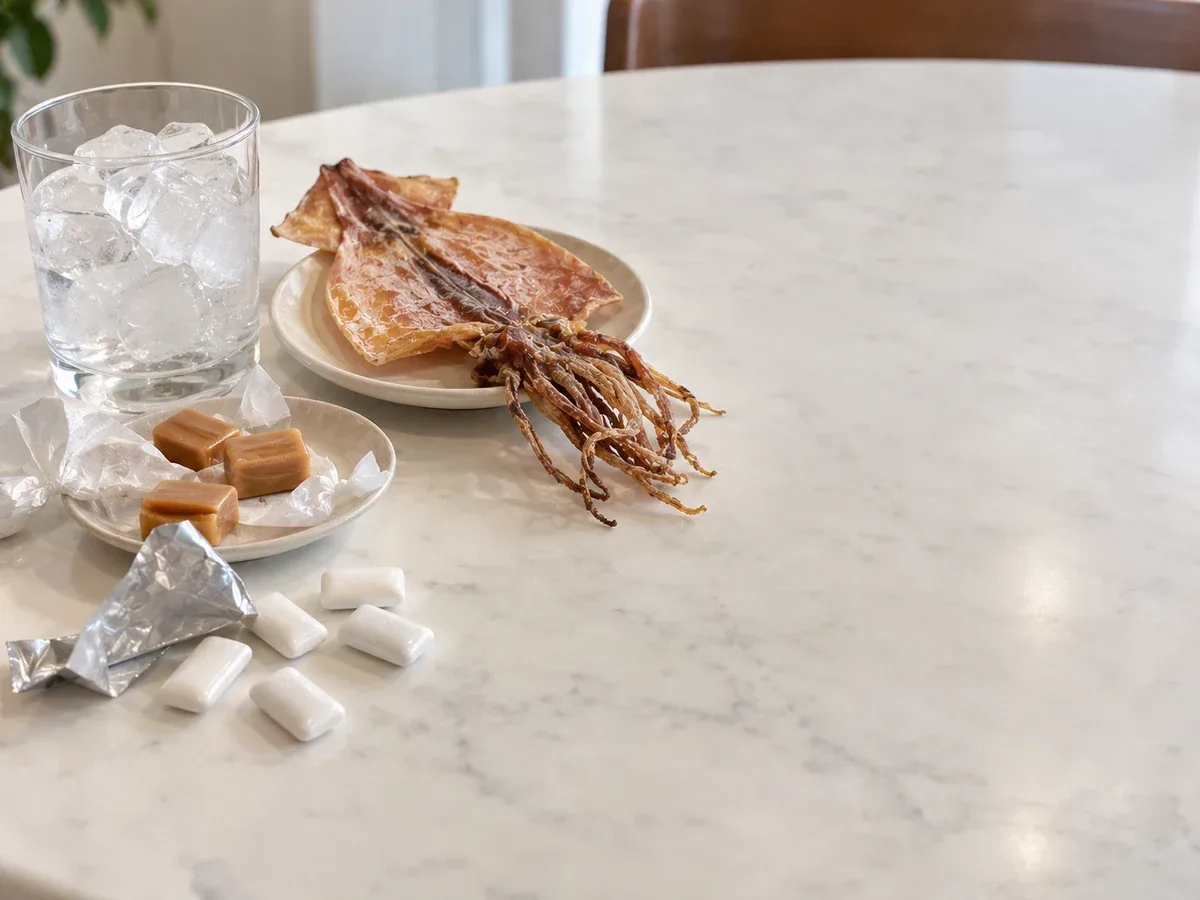
The lifestyle advice in the orthodontic treatment guide is specific. Avoid ice, hard ice cream, and dried snacks such as dried filefish and dried squid. They put too much force on the teeth and jaw joint and can bend the braces.
Sticky foods such as caramel, chewing gum and Korean rice taffy (yeot) should not be eaten. They can stick to the brackets or pull them off. Chunky foods such as apples or cubed radish kimchi are fine when cut into small pieces.
The malocclusion guide adds hard candy to the list and asks you to eat sugary food less often. Elastics, the small rubber bands used to close spaces, stain easily. That is why dark-colored foods and curry are also on the list.
These rules may sound fussy, but there is a reason for them. In a case from Korea's Medical Dispute Mediation and Arbitration Agency, a patient in the second year of treatment swallowed a piece of wire. It had snapped near a back tooth during a meal.
The expert opinion made several points:
- It is very rare for the wire alone to break while the brackets stay in place.
- Hard or chewy food was probably caught under the wire while strong biting force was repeated.
- Usually, a patient comes in with a loose bracket rather than a broken wire.
- Swallowed orthodontic wire is reported to pass naturally in most cases, without serious problems.
The patient had an X-ray at another hospital's emergency room, and the wire passed a few days later. The experts felt the clinic should have explained things so the patient could feel reassured.
The clinic had given written advice to avoid tough, hard foods, and the experts judged it appropriate. Food advice is not a formality; it is a real way to protect the braces.
| Food | What the hospital guides say |
|---|---|
| Ice, hard ice cream, dried filefish, dried squid | Put too much force on the teeth and jaw joint and can bend the appliance |
| Caramel, chewing gum, rice taffy | Can stick to the brackets or pull them off |
| Chunky foods such as apples or cubed radish kimchi | Better cut into small pieces |
| Sugary foods | Can cause cavities, so eat less and less often |
| Dark-colored foods, curry | Stain the elastics easily |
How do you clean your teeth with braces on?
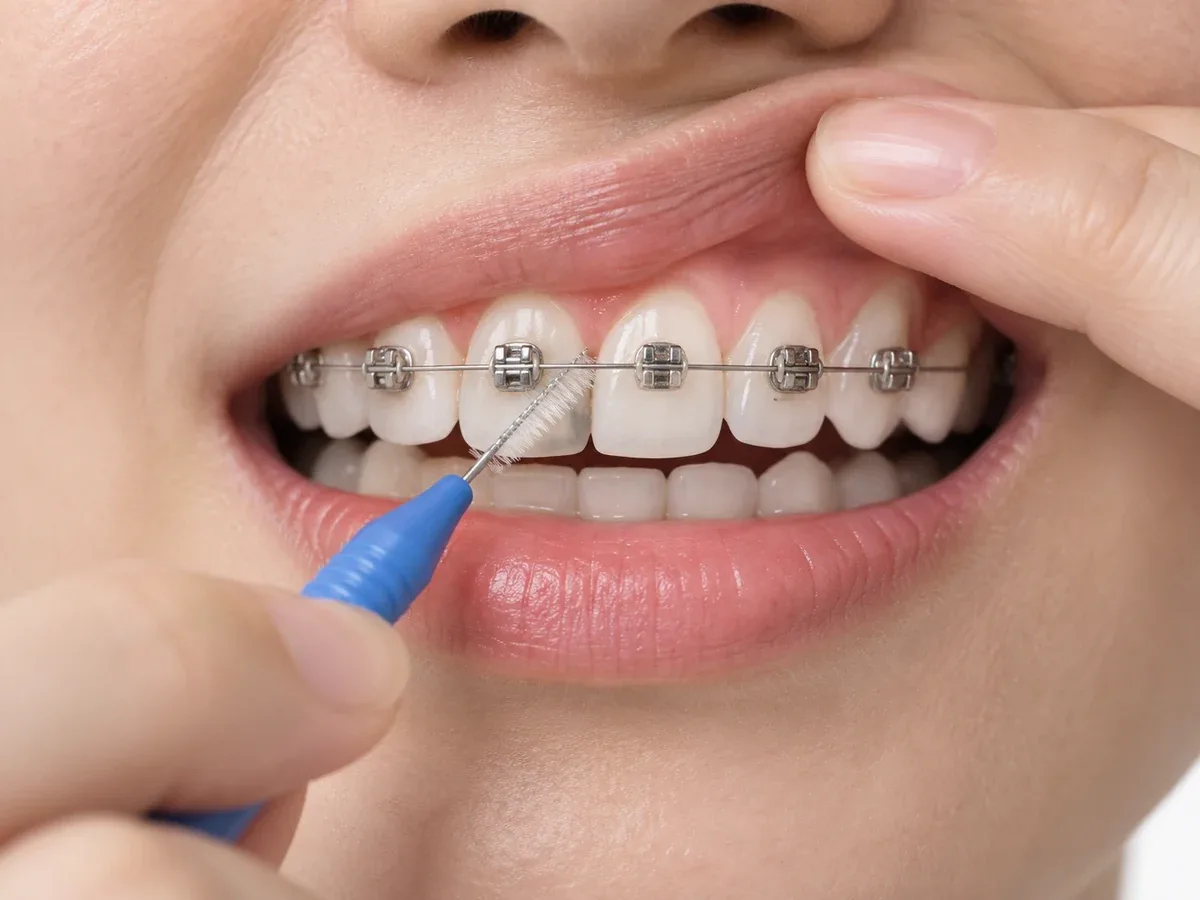
Food tends to collect around braces. The orthodontic treatment guide says the complex appliance brings a higher risk of cavities and gum disease. It stresses careful brushing.
The malocclusion guide explains that plaque builds up easily around fixed braces. If it is not removed, it causes cavities, gum inflammation and bad breath.
Putting the two guides together, the routine looks like this:
- Brush right after every meal or snack.
- Use a soft toothbrush and brush slowly and gently.
- Add an orthodontic toothbrush, an interdental brush and floss.
- Brush in front of a mirror and take enough time.
On days when your teeth ache after an adjustment, do not skip brushing. Simply use a lighter touch and go slowly.
Clear aligners are a little different. The clear aligner guide says the rule is to wear them all day, except when brushing and eating. Do not eat or snack with the aligners in.
Aligners cover the gums as well as the teeth, so the mouth must be kept clean. The aligner should not press on one area of the gum. Wearing an aligner that has lost its shape can even work against you.
Which braces pain should you report right away?
Some pain is different from the dull ache after an adjustment. In these three situations, please do not wait for your next appointment:
- Pain that does not settle after a few days, or keeps getting worse.
- Pain in the jaw rather than the teeth, or trouble opening your mouth.
- A loose bracket, or a wire end sticking out and poking you.
First, excessive pain can also happen with fixed braces. The clear aligner guide lists root resorption, nerve damage and discoloration as possible side effects. It is wiser to have pain checked than to endure it.
Second is jaw pain. In a mediation case reported by the dental newspaper, a patient felt jaw joint discomfort two months into treatment. Treatment went on without further tests.
Five months later, another hospital diagnosed a displaced jaw joint disc and arthritis. The patient had mentioned clicking in the jaw at the first consultation. The experts said a jaw function check, including measuring how far the jaw opens, was needed.
The expert opinion cited most clinical papers: in healthy adults, orthodontic treatment is reported not to cause temporomandibular disorder (TMD). Still, if limited mouth opening continued, further tests would have been needed. The agency found that the duty of care in follow-up had not been met.
When a jaw disorder is already advanced, the opinion said treatment should wait until symptoms ease. A vice president of the Korean Academy of Dental Science advised checking and recording jaw history before treatment. So if your jaw has ever clicked or not opened fully, please tell us before you start.
Third are problems with the appliance itself, including a cracked or lost aligner. The clear aligner guide says to come in right away if an aligner is damaged or lost.
When you contact us, these details help us check faster:
- When the pain started, and how many days after an adjustment.
- Whether it is in a tooth, the jaw or the inside of the cheek.
- Whether it hurts when you bite or when you open your mouth.
- Whether a bracket came off or a wire is sticking out.

How can you get through braces comfortably in Seomyeon?
Time in braces is not short. The orthodontic treatment guide says straightening the teeth usually takes 18–30 months. If there is a skeletal problem too, growth control may come first and treatment takes longer.
The first principle is keeping appointments. The guide says patients need to cooperate with elastics, appliance wear and the visit schedule. Rather than postponing a visit because your teeth ache, come in and tell us what bothers you.
Taking elastics or aligners out on your own is not advised either. The clear aligner guide says that if the appliance is not worn properly, teeth will not move as planned. Treatment can then be delayed or fail.
The orthodontic treatment guide lists problems that can arise during treatment. They do not happen in every case, and most can be prevented by following the instructions. As a daily routine:
- Before meals, cut chunky food into small pieces.
- After meals and snacks, brush right away.
- Wear elastics or aligners as instructed.
- Note down any unusual pain and report it promptly.
| Problem listed in the guide | How to reduce it |
|---|---|
| Demineralization of the tooth surface | Brush right after meals and eat sweets less often |
| Gum inflammation and recession | Clean around the brackets with an interdental brush and floss |
| Root resorption | Progress is checked at regular visits |
| Jaw joint disorder | Report jaw pain or reduced mouth opening right away |
| Bent or loose appliance | Avoid hard, chewy and sticky foods |
If a question comes up while you are wearing braces in Seomyeon, Busan, you do not have to wait for your next visit. Whether it is normal soreness or pain that needs a check is quicker to tell in person.
At Reset Dental Clinic, we ask what bothered you at every adjustment and take it into account that day. At the first consultation, we also ask about any jaw symptoms.
Frequently asked questions
Can I take painkillers?
The hospital guide says a few people take painkillers after an adjustment. If you take regular medication or have a health condition, ask us first which one suits you. If you keep needing painkillers, let us know about that too.
Do clear aligners hurt less than braces?
We could not find a source showing that either one hurts less. The clear aligner guide says excessive pain can occur, just as with fixed braces. The choice is better made on how far the teeth need to move.
A wire is poking my cheek. What should I do?
Please come in to have your braces checked. A loose bracket can be reattached, and a poking wire end can be trimmed. If a broken piece is loose in your mouth, take it out so you do not swallow it.
Can I get braces treatment in English in Busan?
Yes. We offer 1:1 English interpretation from the first consultation through the end of treatment. The clinic is near Seomyeon Station Exit 2 (5-min walk), opposite Lotte Hotel, and you can call 010-8555-2854 (+82-10-8555-2854 from abroad).
Braces usually feel sore for a few days, not for months.
Expect about a week to get used to them,
and 1–3 days of aching after each adjustment.
Pain that lasts longer, or pain in the jaw, is worth reporting.
If you are considering braces in Busan, Reset Dental Clinic offers 1:1 English interpretation from your first consultation through the end of treatment. Call 010-8555-2854 to book a consultation.
References
- Seoul National University Hospital Medical Information, "Orthodontic Treatment" — about a week of adjustment after braces go on, with discomfort in the lips and inner cheeks at first; 1–3 days of aching after monthly visits, rarely needing painkillers; higher risk of cavities and gum disease; cooperation with elastics, appliance wear and visits; brushing right after meals with orthodontic and interdental brushes in front of a mirror; avoiding ice, hard ice cream, dried filefish, dried squid, caramel, gum and rice taffy; cutting chunky foods small; avoiding colored foods and curry because elastics stain
- Seoul National University Hospital Medical Information, "Clear Aligners" — wearing aligners at all times except when brushing and eating, and how poor wear can delay or undermine treatment; not eating with aligners in; starting at about 0.5 mm and moving to 0.75 mm or thicker; avoiding pressure on the gums and not wearing deformed aligners; coming in right away if an aligner is damaged or lost; possible root resorption, nerve damage, discoloration and excessive pain; keeping the mouth clean
- Seoul National University Hospital Medical Information, "Malocclusion" — regular visits, usually every four weeks, to check tooth movement and adjust the appliance; brushing slowly with a soft brush and using floss and interdental brushes; how food debris and plaque around fixed braces lead to cavities, gum inflammation and bad breath; reducing sugary foods and avoiding hard, sticky foods such as taffy, caramel, candy and gum
- Korean Dental Association newspaper Chiui Sinbo, "Orthodontic Wire Broke During a Meal and Was Swallowed" (Oct 25, 2019) — a mediation case in which a patient in the second year of treatment swallowed a broken wire that later passed; the expert view that a wire breaking without a loose bracket is very rare; the likely cause of hard or chewy food caught under the wire; the report that swallowed wires usually pass naturally
- Korean Dental Association newspaper Chiui Sinbo, "Jaw Joint Symptoms Worsened During Orthodontic Treatment With Extractions" (Jul 16, 2019) — a mediation case of jaw joint discomfort after premolar extraction, later diagnosed as disc displacement and arthritis; the expert view that most clinical papers report braces do not cause TMD in healthy adults; delaying treatment for advanced TMD; the need for further tests when limited opening persists; the finding on the duty of care in follow-up
- Korean Dental Association newspaper Chiui Sinbo, "Set Treatment Goals and Agree on Them Before Orthodontics" (Sep 2, 2026) — orthodontic dispute cases shared by the mediation agency, with advice from a vice president of the Korean Academy of Dental Science to record jaw joint history, run a detailed jaw exam at diagnosis and refer to oral medicine when problems arise
Written by Reset Dental Clinic Support Team
Medical review Dr. Kim Hyun-joo, Head Dentist · Integrated Dentistry Specialist
Last updated: September 19, 2026
This column is for general information and does not replace diagnosis or treatment for individual patients. If you have symptoms, please see a dentist.


