

- A Cochrane review found that powered brushes reduced plaque more than manual brushes: by 11% at 1–3 months and 21% after 3 months.
- Gum inflammation fell by 6% and 11% more, but what this means for long-term dental health is unclear.
- The KDCA stresses cleaning every surface for at least 2 minutes without harming teeth or gums, more than any single technique.
- Hard side-to-side scrubbing can wear the neck of the tooth and cause sensitive teeth. Any brush needs a gentle hand.
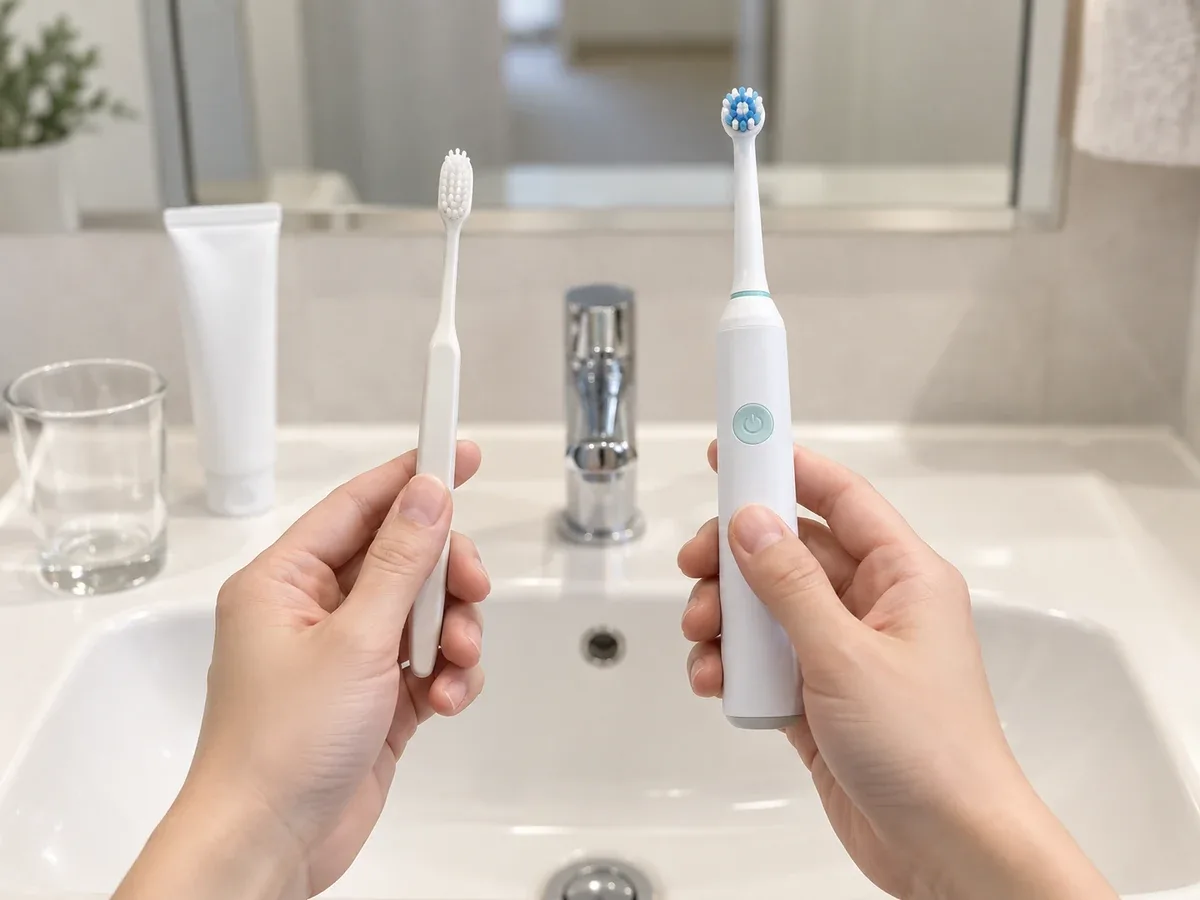
Many patients at our clinic in Seomyeon, Busan ask whether they should buy an electric toothbrush. Some hope it will fix their brushing by itself, while others feel careful manual brushing is enough. For patients living in or visiting Korea, we provide 1:1 English interpretation from the first consultation through the end of treatment.
Neither view is wrong. This column is based on a Cochrane systematic review and standards articles on powered and manual toothbrushes from a dental association newspaper. We also draw on KDCA material on preventing oral disease and on sensitive teeth.
What does research say about an electric toothbrush versus a manual one?
The Cochrane Oral Health Group compared the two types using studies published up to January 2014. It included 56 studies with 5,068 people, published from 1964 to 2011. Data from 51 studies and 4,624 people were used in the analysis.
Most participants were adults. More than half the studies used a rotation-oscillation brush, whose head turns one way and then the other. All were randomized studies in which people used the brush at home, unsupervised, for at least 4 weeks.
The results favored the electric toothbrush. Dental plaque fell by 11% more after 1–3 months of use. After more than 3 months, it fell by 21% more.
Gingivitis (gum inflammation) fell by 6% and 11% more over the same periods. The quality of this evidence was rated as moderate.
The caveats are clear, though. The review says the benefit for long-term dental health is unclear. Results varied widely between studies, and brush type did not explain that variation.
In short, an electric toothbrush removed a little more plaque on average. How much that difference helps keep teeth healthy over many years is still unclear.
| Item | What the review says |
|---|---|
| Dental plaque | 11% more reduction with a powered brush at 1–3 months, 21% more after 3 months |
| Gingivitis | 6% and 11% more reduction over the same periods |
| Quality of evidence | Rated as moderate |
| Long-term dental health | The benefit of this difference is unclear |
| Side effects | Reported inconsistently; those reported were local and temporary |
How does an electric toothbrush work?
International toothbrush standards are handled by an oral care products subcommittee within the dental technical committee of the International Organization for Standardization (ISO). The standard defines a powered toothbrush as an electrically driven device with bristles for cleaning surfaces in the mouth.
A standards article by the Department of Preventive Dentistry at Yonsei University divides an electric toothbrush into three parts. These are the brush head, the handle, and the power unit containing the battery and motor.
There are two main types of movement. In a rotation-oscillation brush, a round head turns from side to side while it vibrates.
The article says this design works well for cleaning teeth one at a time. Strong cleaning power and detailed care are named as its strengths.
In a sonic brush, the head vibrates from side to side to clean plaque from tooth surfaces and the gumline. It turns toothpaste and saliva into fine bubbles that help reach between teeth and along the gums. The article says this type suits people with sensitive teeth and gums.
It is hard to say that one type is clearly better. Most evidence in the Cochrane review came from rotation-oscillation brushes. Yet brush type did not explain the differences between studies.

Are there quality standards for toothbrushes?
Yes. The international standard for powered toothbrushes first appeared in 2005, and a second edition was issued in 2020. A matching national standard was set in 2009 and revised in 2021.
According to the article, the standard requires the following of a powered brush.
- Bristle tufts must not come out when pulled with a force of 15 N or more.
- The handle and head must not bend or break under pressure or repeated impact.
- The head must keep working after 24 hours in a chemical solution.
- It must be electrically safe, with protection against overheating, electric shock and current leakage.
The article raises a concern about local oversight, however. Since a 2023 law change, manual brushes are regulated as hygiene products. Yet powered brushes are still classed as general industrial goods, with no required safety testing.
Standards for manual brushes are changing too. The 2022 revision of the international standard added a requirement for end-rounding of bristles. This follows reports that sharp cut ends of nylon bristles can injure soft tissue in the mouth.
In the test, bristle tips are viewed under a microscope, and at least 50% must have no sharp edges. The article adds that the ultra-fine bristles widely sold in the local market are not covered by this standard.
| Item | What the articles say |
|---|---|
| Tuft retention | 15 N or more for both types |
| Handle durability | A manual brush must not break after 75,000 applications of a 4 N force |
| Electrical safety | A powered brush must prevent overheating, electric shock and leakage |
| Bristle tips | End-rounding of manual brushes assessed since 2022 |
| Local regulation | Manual brushes are hygiene products; powered brushes are industrial goods |

What should you look for when choosing an electric toothbrush?
The KDCA material gives short guidance on choosing a brush. It should be neither too big nor too small, have some flexibility, and sit firmly in the hand without slipping.
Any shape is fine as long as it fits well between teeth. This advice applies equally to an electric toothbrush.
Based on the material and the articles, here is what to check.
- It sits firmly in your hand, and the head size suits your mouth.
- The head reaches between teeth and the back molars.
- The bristle tips are not sharp.
- It has been assessed or certified under the international standard.
The article says dental professionals should keep up with current information on powered brushes. They should guide product choice and use based on evidence. If you bring the electric toothbrush you use to your visit, we can look at it together.
If your teeth are sensitive, you can keep in mind the article's point that sonic brushes suit sensitive teeth. Sensitivity has many causes, though, so it is wise to find the cause before changing brushes.
More expensive features do not automatically mean better results. In the Cochrane review, brush type did not explain differences between studies. In the end, how you use the brush matters more than the product.
How should you brush, whatever the brush?
The KDCA material does not recommend one particular brushing method. Instead, it says what matters is cleaning every surface without damaging teeth or gums.
Brush for at least 2 minutes while looking in a mirror to check for missed spots. Use fluoride toothpaste at least twice a day, and always brush before bed.
After brushing, it advises spitting out the leftover toothpaste rather than rinsing many times with water. Parents are advised to watch and help children of primary school age and younger.
Every brush misses some places. A brush removes a lot of plaque quickly, but it does not clean the gaps between teeth well. So use floss, and add interdental brushes if bone loss has widened the gaps.
After acidic drinks, wait about 30 minutes before brushing. You do not need to brush straight after eating, but the whole mouth should be brushed twice a day.
Turned into a daily routine, the advice looks like this.
- Always brush with fluoride toothpaste before bed.
- Brush every surface for at least 2 minutes in front of a mirror.
- Clean between teeth with floss or an interdental brush.
- Spit out leftover toothpaste instead of rinsing it away.
- After acidic drinks, wait about 30 minutes before brushing.
Pressure matters too. The KDCA material on sensitive teeth names scrubbing teeth from side to side as the first cause of sensitivity.
Scrubbing hard from side to side makes the gums recede at the cervical area, the neck of the tooth. The thin enamel and the cementum covering the root then wear away, exposing the dentin beneath.
If the habit continues, the neck of the tooth can wear into a V-shaped notch. In right-handed people, it often appears on the cheek side of the left teeth, especially canines and premolars where force builds up.
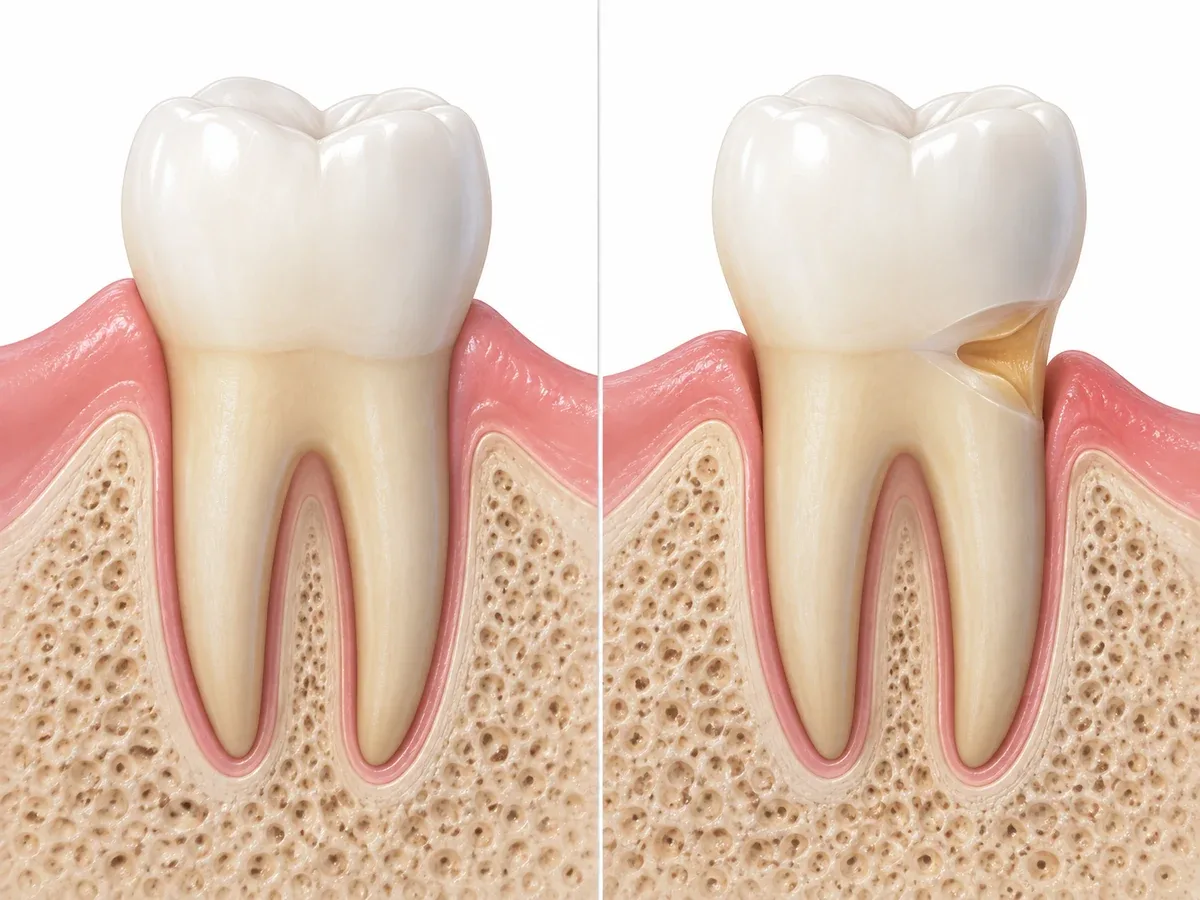
Brushing is not the sole cause of worn teeth. Heavy biting forces and teeth dissolving from acidic food or plaque also play a part. If symptoms continue even with a toothpaste for sensitive teeth, see a dentist.
The material says sensitive teeth are common, affecting 8–57% of adults. It sums up prevention in three points.
- Keep the mouth clean with good brushing habits.
- Correct habits such as clenching and grinding.
- Visit a dentist regularly.
How do you care for a toothbrush, and when should you replace it?
After use, rinse off all debris, shake off the water and let the brush dry. There is no need to disinfect it with hot water or antibacterial products.
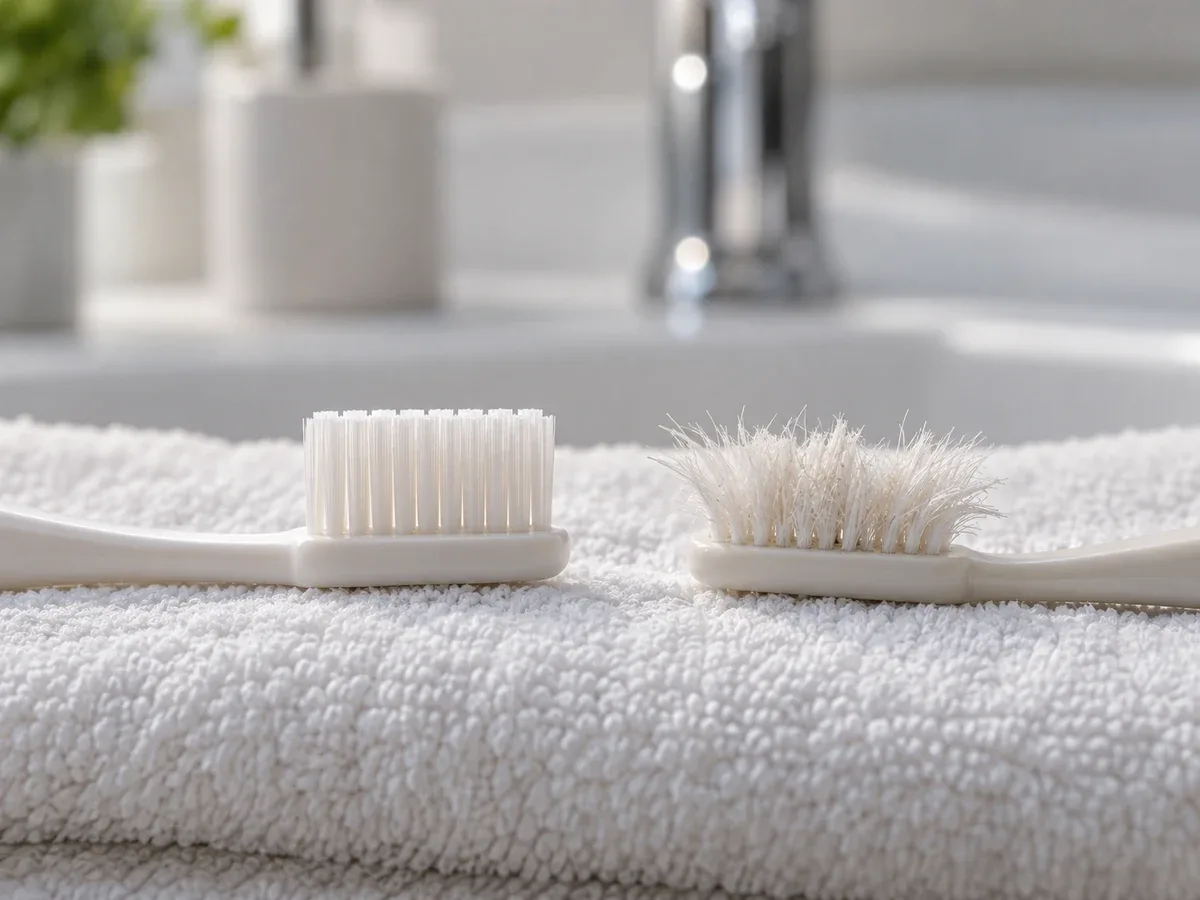
If the bristles are badly bent or the tips are broken, cleaning power drops sharply. The material advises replacing the brush right away.
Check the head of an electric toothbrush the same way. If the bristles have splayed, keep the handle and replace just the head.
The article adds that the battery and charger must stay safe after long use and repeated charging. If the charger or handle shows any fault, it is wiser to stop using it.
| Topic | What the sources say |
|---|---|
| Choosing | Not too big or small, a little flexible, and firm in the hand |
| Time and coverage | At least 2 minutes, every tooth surface, checked in a mirror |
| Pressure | Hard side-to-side scrubbing is named as a cause of sensitive teeth |
| Finishing | Spit out leftover toothpaste rather than rinsing many times |
| Brush care | Rinse and dry, no disinfection needed; replace when bristles bend or break |
Electric toothbrush tips for patients in Busan
Some people with weak gums reach for an electric toothbrush first. The review found slightly less gum inflammation with powered brushes, but says the clinical meaning is unclear.
People with weak gums also tend to have sensitive teeth. The KDCA material cites reports that sensitivity appears in 60–98% of people with gum disease.
With gum disease, cleaning between teeth and regular check-ups need to go along with any brush choice. Show us how you brush at your visit, and we can work out a suitable method together.
Hardened tartar is difficult to remove with a brush. The material advises removing tartar, and plaque in spots a brush cannot reach, by scaling. It recommends an oral check-up once or twice a year.
Whether an electric toothbrush or a manual one suits you depends on the person using it. Whatever the brush, the basics stay the same: at least 2 minutes, every surface, without pressing hard.
If timing is hard, start by building a 2-minute habit in front of the mirror. That habit comes before changing your brush.
At Reset Dental Clinic, you can bring your own toothbrush and we will check your brushing technique with you.
Frequently asked questions
Can I brush for less time with an electric toothbrush?
The KDCA standard is at least 2 minutes and every tooth surface, whatever the brush. An electric toothbrush also has to be moved onto each surface of each tooth to clean it.
Will an electric toothbrush wear down my teeth?
The side effects reported in the Cochrane review were local and temporary. The causes of a worn tooth neck named by the KDCA are side-to-side scrubbing and too much force. With any brush, avoid pressing hard.
Are ultra-fine bristles a better choice?
According to the standards article, the international manual toothbrush standard does not cover ultra-fine bristles. The bristle-tip test is not applied to very thin or tapered bristles. Choose a brush that cleans every surface without harming teeth or gums.
Can I get advice on an electric toothbrush in English in Busan?
Yes. We offer 1:1 English interpretation from the first consultation through the end of treatment. The clinic is near Seomyeon Station Exit 2 (5-min walk), opposite Lotte Hotel Busan, and you can call 010-8555-2854 (+82-10-8555-2854 from abroad).
An electric toothbrush removed a little more plaque, but the long-term benefit is unclear.
Whatever the brush,
brush every surface for at least 2 minutes,
and do not scrub hard from side to side.
If you are unsure whether an electric toothbrush suits you, Reset Dental Clinic in Busan offers 1:1 English interpretation from your first consultation through the end of treatment. Call 010-8555-2854 and bring your toothbrush along.
References
- Cochrane, "Powered/electric toothbrushes compared to manual toothbrushes for maintaining oral health" — evidence up to January 23, 2014; 56 studies with 5,068 people published 1964–2011, mostly adults, more than half using rotation-oscillation brushes; powered brushes reduced plaque by 11% (1–3 months) and 21% (over 3 months) and gingivitis by 6% and 11% more, with moderate-quality evidence; unclear long-term benefit and large variation not explained by brush type; inconsistent reports on cost, reliability and side effects, with reported side effects local and temporary
- Dental association newspaper, "Dental Standards (127): Powered Toothbrushes" (2025) — series by the Korean Dental Association materials and standards committee; parts of a powered brush; how rotation-oscillation and sonic brushes work; ISO 20127 (2005, second edition 2020) and the national standard (2009, revised 2021); requirements for tuft retention of 15 N or more, mechanical, chemical and electrical safety; powered brushes being classed as industrial goods with no required safety testing, and few certified products
- Dental association newspaper, "Dental Standards (110): Manual Toothbrushes" (2023) — series by the Korean Dental Association materials and standards committee; ISO 20126 (third edition, 2022); classification such as bristle stiffness; the end-rounding requirement added in 2022 after reports of soft tissue injury from sharp bristle ends; ultra-fine bristles not covered by the standard
- KDCA National Health Information Portal, "Preventing and Managing Oral Disease" — choosing a brush that is not too big or small, a little flexible and firm in the hand; no single recommended technique, but cleaning every surface for at least 2 minutes in a mirror without harming teeth or gums; fluoride toothpaste at least twice a day and always before bed; parental help for young children; rinsing and drying brushes without disinfection, and replacing them when bristles bend or break
- KDCA National Health Information Portal, "Sensitive Teeth (Dentin Hypersensitivity)" — poor brushing habits as the first cause of sensitivity, with side-to-side scrubbing able to damage tooth shape; how hard side-to-side brushing makes gums recede at the neck of the tooth and wears enamel and cementum to expose dentin
Written by Reset Dental Clinic Support Team
Medical review Dr. Kim Hyun-joo, Head Dentist · Integrated Dentistry Specialist
Last updated: September 19, 2026
This column is for general information and does not replace diagnosis or treatment for individual patients. If you have symptoms, please see a dentist.


