

- Taking osteoporosis medicine does not rule out a full-arch implant. But for treatments that expose bone, such as extraction and implants, the risk of medication-related jawbone necrosis must be weighed first.
- Your dentist does not decide alone whether to stop the medicine. For people at high risk of fracture, stopping can itself be risky, so it is decided with your physician. Never stop on your own.
- The advice on pausing has changed. A two-month pause used to be suggested, but the current direction is to decide case by case.
- In 2025 the Korean Dental Association issued guidelines on pausing medicine, favoring non-invasive care first and regular checkups for high-risk patients.
Many patients write their osteoporosis medicine on the consultation form and ask, "Does this mean I can't have a full-arch implant?" Others think it is minor and leave it off. At Reset Dental Clinic in Seomyeon, Busan, we provide 1:1 English interpretation from your first consultation through the end of treatment. This column draws on Korea's national health portal and professional guidelines reported by the Korean Dental Association's newspaper.
Why does a full-arch implant consultation start with your medicine?
We begin with a joint column in the Korean Dental Association's newspaper. In it, a periodontist and an internal medicine specialist discuss dental care for patients on osteoporosis medicine.
According to the column, bisphosphonates and denosumab are widely used for osteoporosis. Bisphosphonates come as tablets or injections, while denosumab is an injection given every six months.
The two drugs behave differently. Denosumab's effect fades gradually, so the next injection can be timed around dental treatment. Bisphosphonates stay in bone for a long time, so their effect can last for years after stopping.
| Item | Bisphosphonates | Denosumab |
|---|---|---|
| Form | Tablets and injections | Injection every 6 months |
| After stopping | Stays in bone; effect lasts for years | Effect fades within 6–8 months; next injection can be rescheduled |
| Pause in the 2021 statement | 2 months before treatment, held until the gum has healed | From 2 months before to 2–3 months after treatment |
That is why we ask the name of your medicine and how long you have taken it. For injections, we also ask the date of your last dose.
Korea's national health portal also says that conditions such as osteoporosis need careful checking before surgery. It advises having your medicines and health conditions reviewed beforehand.
Bringing the following makes the check more accurate:
- your medicine packet or prescription
- a record showing the dates of your injections
- when you first started the medicine
- the names of any other medicines you take
There is a reason we ask about other medicines too. Asan Medical Center notes that some drugs can cause osteoporosis, such as corticosteroids, thyroid hormone and anti-seizure drugs.

Why does a dentist ask about bone medicine?
The dental newspaper reported a statement from two Korean professional societies, one for oral surgery and one for bone metabolism. It defines medication-related osteonecrosis of the jaw (MRONJ) by three conditions:
- current or past use of a bone-resorption inhibitor or an anti-angiogenic drug
- no history of radiation therapy to the jaw
- exposed jawbone, or a fistula inside or outside the mouth, lasting 8 weeks or more
A Korean Dental Association report says long-term use of these drugs lowers bone's ability to heal. It can cause serious side effects such as jawbone necrosis. The report adds that this has become one of the main causes of dental disputes.
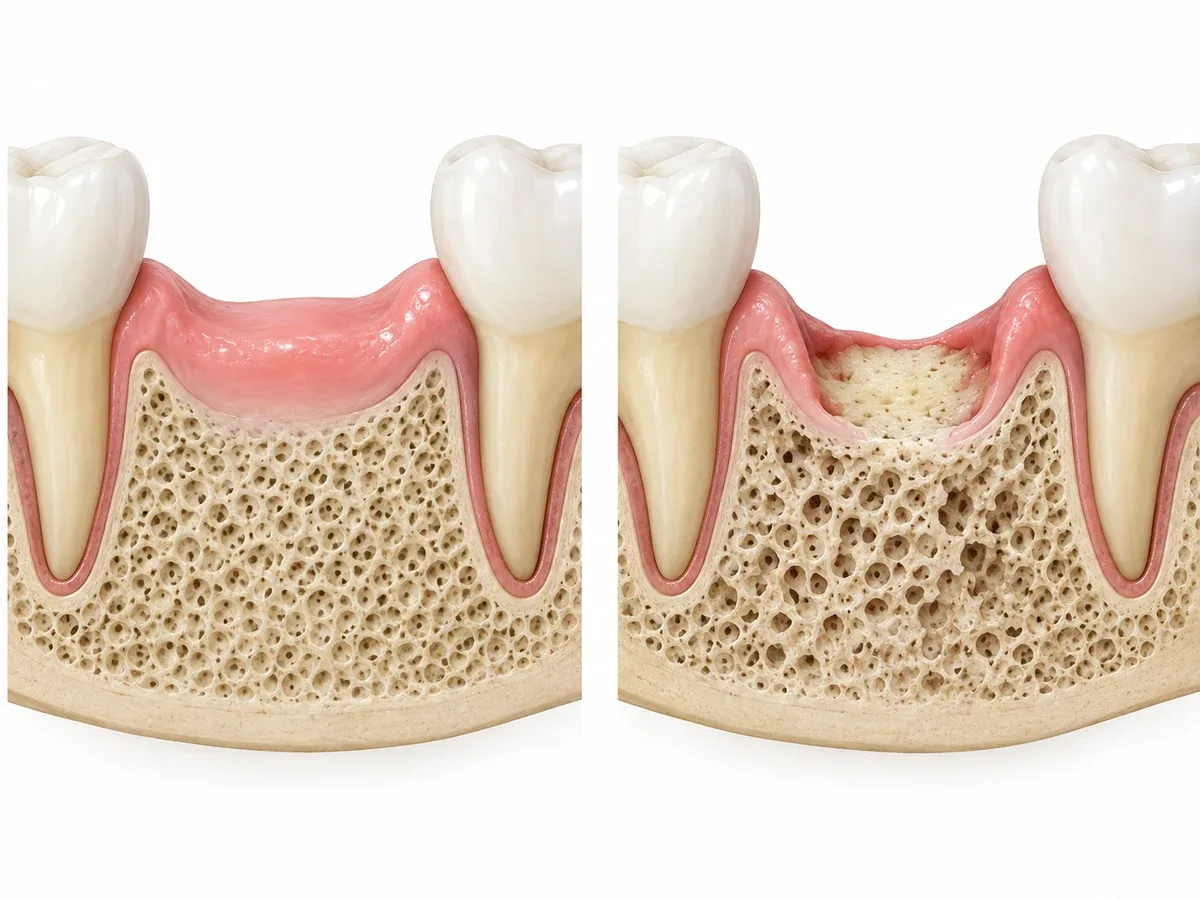
The national health portal lists osteoporosis medicine as its own item in the pre-surgery checks. It explains that these drugs can cause bone necrosis and interfere with the implant bonding to bone. It also names low bone density as a cause of failed bonding.
The portal says such medicines should be stopped or replaced. As shown below, though, that decision is made together with your physician.
In the joint column, the internal medicine specialist calls extraction a major cause of raised risk. A full-arch implant often means removing the remaining teeth and working on bone in several places. So we check more carefully than for a single implant.
Can't you just stop the medicine before a full-arch implant?
It is not that simple. Asan Medical Center describes osteoporosis as a disease in which bone mass drops and bones become thin, weak and easy to break.
It says fracture is the common and serious complication. The spine and hip break most often, and wrists often break in falls. Women aged 50–70 often have a wrist fracture first, while hip and spine fractures are common in their 70s.
Bone-resorption inhibitors such as bisphosphonates raise bone density and lower fracture rates.
So the internal medicine specialist says pauses are not set as a blanket rule. Recent guidelines say to decide by each patient's condition. In particular, stopping can be dangerous for people at high fracture risk.
The column advises weighing fracture risk against jawbone necrosis risk with your physician. For high fracture risk, switching drugs or restarting two months after the procedure are options.
Do not stop your medicine or delay an injection on your own before a full-arch implant. The decision is made after your prescribing doctor and dentist have checked with each other.
The joint column calls this teamwork between dentist and physician. Review the drug history, then plan any drug changes and treatment timing with the physician. A full-arch implant follows the same order.

How has the advice on pausing medicine changed?
In 2022, the dental newspaper reported a 2021 statement from the two societies. It advised a two-month pause of bisphosphonates or denosumab before dental treatment involving bleeding.
Bisphosphonates were to be held until the gum had fully healed after treatment. Denosumab's effect was said to fade within 6–8 months of stopping. So a pause from two months before to 2–3 months after treatment was suggested.
The same article added a caution. The value of these pauses was much debated, so the advice was likely to change. It also said the risk rises gradually the longer bisphosphonates are taken.
The presenter, Professor Kim Jin-woo, divided the advice by type of treatment.
| Treatment | Examples | Stopping osteoporosis medicine |
|---|---|---|
| Treatment with bleeding | Extraction, implants, gum surgery | Decide with the physician |
| Treatment with little bleeding | Crowns and bridges, root canal treatment | No particular need to stop |
The findings were published in the Journal of Bone Metabolism. The article also called pausing denosumab an effective way to lower the risk.
In 2025, a Korean Dental Association committee sent guidelines on pausing medicine to its regional branches nationwide. More patients were taking these drugs, yet there was no standard guide.
The basis was the "2025 MRONJ Clinical Recommendations," written over a year by 20 members of five societies. They set out, in charts, how long to pause each drug around invasive procedures.
An association director said the evidence for pausing had been weak, which caused debate. Because the advice keeps being refined, we check the latest standard at the time of your full-arch implant consultation.
| When / source | What it said |
|---|---|
| 2021 statement (reported 2022) | Pause bisphosphonates or denosumab for 2 months before dental treatment with bleeding |
| Caution in the same article | The value of pauses is debated, so the advice is likely to change |
| Joint column | Recent guidelines decide by the patient's condition, not a blanket pause |
| 2025 | Korean Dental Association issues guidelines based on five societies' recommendations |
What extra steps does a full-arch implant need?
The association's guideline poster sets out the key points. High-risk patients should have checkups and hygiene care every 3–6 months. Non-invasive care comes first, and for major surgery, working with a hospital is considered.
For invasive care such as extraction, gentle techniques and bone trimming are advised. So is primary closure, covering the bone with gum so it heals. Antibiotics should be considered for high-risk patients.
The joint column gives the example of a 70-year-old woman with a long bisphosphonate history. Gum disease has made a tooth painful, and extraction is being considered. The physician's suggested order is:
- Before extraction: check how long and how much she has taken, and assess the bone with a panoramic X-ray and CT if needed.
- Before extraction: weigh the dental plan against fracture risk to decide whether to continue the drug.
- During extraction: keep surgery minimal and give preventive antibiotics.
- During extraction: use a 0.12% chlorhexidine mouth rinse.
- After extraction: continue antibiotics if needed, but not for a long time.
The column stresses careful oral care after extraction. It advises follow-ups at 1 week, 2 weeks, 1 month, 3 months and 6 months to check for jawbone necrosis.
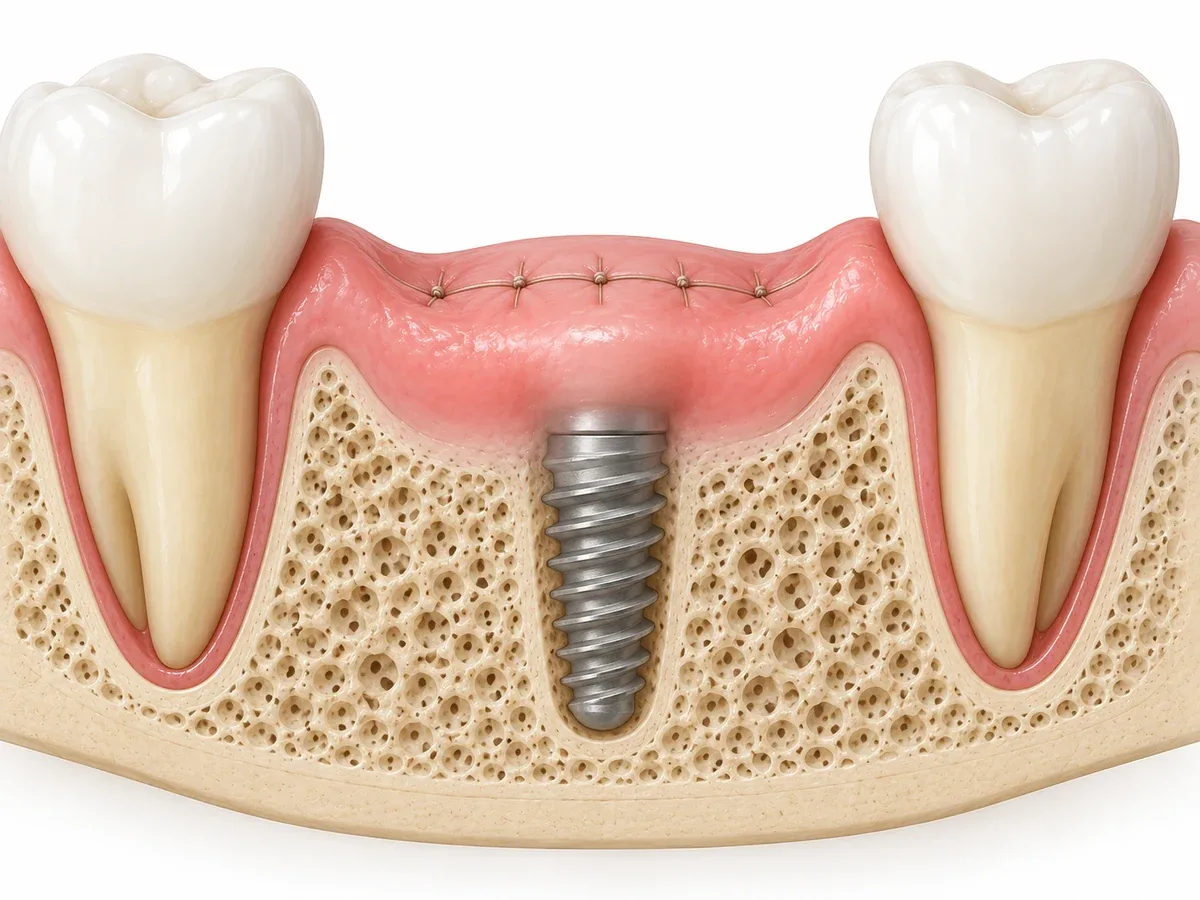
The national health portal says implant planning uses CT, panoramic and intraoral X-rays to assess bone. Before a full-arch implant, we read these images even more closely for patients on these drugs.
A paper on implants in older patients, reported by the same newspaper, addresses heat during surgery. Too much heat at the site can cause bone necrosis and early bonding failure. It advises drilling in short bursts with plenty of cooling, so heat never reaches 47°C for a minute.
In a full-arch implant, these principles go straight into the plan. Teeth that can be saved are considered for conservative treatment first. For large surgery, we discuss doing it in stages or with a hospital.
| Item | What it says |
|---|---|
| High-risk patients | Checkups and hygiene care every 3–6 months |
| Choice of treatment | Non-invasive care first; hospital cooperation for major surgery |
| Before extraction | Check drug duration and dose; panoramic X-ray and CT if needed |
| During extraction | Gentle technique, primary closure, minimal surgery |
| After extraction | Check for jawbone necrosis at 1 week, 2 weeks, 1, 3 and 6 months |
What should patients in Busan do before starting the medicine?
If you have not started osteoporosis medicine yet, the order of the drug and your full-arch implant can change. The 2021 statement advises a dental checkup and any needed treatment before starting.
The same article cited earlier research. Dental treatment before starting a bone-resorption inhibitor reduced jawbone necrosis by 77.3%. The association guideline also recommends a dental checkup within six months before and after starting.
Asan Medical Center says osteoporosis is judged by the T-score of a bone density test. A score of −1 or above is normal, −1 to −2.5 is low bone mass, and −2.5 or below is osteoporosis. If you have been told you have osteoporosis, see a dentist before starting treatment.
Before starting the medicine, the dental steps are:
- have a basic dental checkup
- treat any teeth that need extraction or gums that need care first
- have another checkup within six months of starting
- tell your physician about your dental plan
If several teeth need removing and osteoporosis treatment starts soon, order matters. Tell your physician first that you are planning a full-arch implant. Aligning the two can change your options.
What do we watch for after surgery?
If you keep taking the medicine after your full-arch implant, checkup intervals matter. The association recommends checkups every 3–6 months for high-risk patients.
The national health portal also advises checkups every 3–6 months after treatment. With a connected full-arch implant bridge, these checkups should not be skipped.
There is also a warning sign to watch for. The definition of MRONJ includes exposed jawbone or a fistula lasting 8 weeks or more. If you see something like bone in your gum, tell us right away, even if it does not hurt.
Treatment with little bleeding, such as crowns or root canal treatment, needs no particular pause. You will not have to stop the medicine for every later visit.
Home care keeps a full-arch implant working for the long run. The portal advises chewing soft foods first in the first year, while the bone firms up. Floss and interdental brushes are a must, since the gaps are wide.
Taking osteoporosis medicine does not mean you cannot have a full-arch implant. The order is set after checking the drug, its duration and your fracture risk with your physician.
Please bring a record of your medicines to the consultation. Call 010-8555-2854 to book.
Frequently asked questions
After how many years of medicine is a full-arch implant not possible?
We do not decide this by duration alone. The 2021 report said risk rises gradually the longer the drug is taken. We look at duration, drug type and fracture risk together, with your physician.
Can I delay my next injection for a full-arch implant?
Denosumab injections can reportedly be timed around dental treatment. But that decision belongs to your prescribing doctor, so do not delay it yourself.
Do I need to stop the medicine for a new full-arch bridge alone?
Treatment with little bleeding, such as a new bridge, needs no particular pause. If gum or bone work is involved, we consult your physician.
Can I get this treatment in English in Busan?
Yes, we provide 1:1 English interpretation from your first consultation through the end of treatment. The clinic is near Seomyeon Station Exit 2 (5-min walk), opposite Lotte Hotel Busan. Call 010-8555-2854 (+82-10-8555-2854 from abroad).
Osteoporosis medicine does not close the door on a full-arch implant.
What matters is the drug, how long you have taken it
and your fracture risk, checked with your physician.
Never stop the medicine on your own.
If you are considering a full-arch implant in Busan, Reset Dental Clinic offers 1:1 English interpretation from your first consultation through the end of treatment.
References
- KDCA National Health Information Portal, "Dental Implants" — conditions such as diabetes and osteoporosis need careful checking before surgery; osteoporosis drugs or injections that can cause bone necrosis and interfere with implant bonding should be stopped or replaced
- Asan Medical Center Disease Encyclopedia, "Osteoporosis" — definition of osteoporosis; bone-resorption inhibitors (bisphosphonates) raise bone density and lower fracture rates; fracture, mainly of the spine and hip, as the common and serious complication
- Korean Dental Association newspaper Dailydental (Chiui Sinbo), "Essential Checklist for Dental Care in Patients Taking Osteoporosis Drugs" (joint column by a periodontist and an internist) — bisphosphonates and denosumab; denosumab can be rescheduled while bisphosphonates act for years; extraction raises risk; decide pauses by patient condition with the physician; follow-up at 1 week, 2 weeks, 1, 3 and 6 months
- Dailydental (Chiui Sinbo), "Two-Month Pause Before Dental Treatment for Patients on Antiresorptives: New MRONJ Guideline" — the 2021 statement of the bone metabolism and oral surgery societies; MRONJ definition; 77.3% reduction with dental care before starting; pause recommendations and the caution that they may change; Professor Kim Jin-woo's advice by type of treatment
- Dailydental (Chiui Sinbo), "KDA Presents Guidelines on Pausing Osteoporosis Drugs" — guidelines based on the "2025 MRONJ Clinical Recommendations" by 20 members of five societies; checkups within 6 months before and after starting; 3–6 month checkups for high-risk patients; non-invasive care first; primary closure and antibiotics
- Seoul National University Hospital Medical Information, "Dental Implants" — bone conditions such as osteoporosis can affect the implant site and long-term bonding between jawbone and implant
- Dailydental (Chiui Sinbo), "Late Morning and Early Afternoon Suit Implant Surgery in Older Patients" (report on a Korean geriatric medicine journal paper) — bone condition and general health matter more than age; avoid heat of 47°C or more for one minute by drilling in bursts with plenty of cooling
Written by Reset Dental Clinic Support Team
Medical review Dr. Na In-chae, Head Dentist · Periodontics Specialist
Last updated: September 19, 2026
This column is for general information and does not replace diagnosis or treatment for individual patients. If you have symptoms, please see a dentist.


