

- On the day of implant surgery, bite on the gauze as told, do not spit or use a straw, and take your medicine on time.
- Use an ice pack for the first 24 hours. Swelling usually peaks around 48 hours, then goes down.
- For 2–3 days, eat soft food on the other side. Avoid hard exercise, alcohol and smoking for a week.
- Fever, swelling or pain that keeps getting worse, heavy bleeding, pus or a lasting salty taste: call us instead of waiting.
At our clinic in Seomyeon, Busan, patients often ask "What should I be careful about now?" as they get up from the chair after implant surgery. This guide lays out the day of surgery through the first week in order, using patient materials from the KDCA, Seoul National University Hospital and Asan Medical Center. For patients living in or visiting Korea, 1:1 English interpretation is available from the first consultation to the end of treatment.
What should you prepare before implant surgery?
Recovery after implant surgery goes more smoothly when you prepare well beforehand. The KDCA "Dental Implants" guide advises getting enough sleep and eating a light meal so you arrive in good condition.
Seoul National University Hospital (SNUH) recommends loose, comfortable clothing. If you were prescribed medicine to take before surgery, its guide says to take it one hour ahead.
Some cases, such as large bone grafts, are done under general anesthesia. In that case, the guide says not to eat anything for six hours before surgery.
Tell us about the medicines you take every day. Blood thinners, or anticoagulants, such as aspirin and warfarin are the main ones. Asan Medical Center says long-term users must tell the medical team.
Here are the items the guides ask you to check before implant surgery. Do not stop any medicine on your own; decide with the doctor who prescribed it.
- High blood pressure and diabetes: Asan Medical Center says these should be well controlled before surgery.
- Bleeding tendency: tell us in advance if you take blood thinners or tend to bleed easily.
- Osteoporosis medicine: the KDCA guide says it may need to be paused or replaced.
- Smoking: it can slow healing, and the KDCA links it directly to implant failure.
We also check the mouth ahead of time. SNUH says gum disease (periodontitis) should be treated before implant surgery.
SNUH says implant surgery usually takes about an hour. It can take longer when several implants are placed or a lot of bone grafting is needed.
How should you spend the first 24 hours after implant surgery?
SNUH advises you to bite on gauze to stop the bleeding and spit it out after about an hour. If a tooth was also removed that day, the KDCA "Tooth Extraction" guide says to keep the gauze in for about 1 hour 30 minutes.
SNUH then says not to spit and not to drink through a straw. The extraction guide also says to avoid straws for three days.
A little oozing of blood is common. The extraction guide says bleeding can continue for about a day. Slight bleeding after meals or brushing can last about a week.
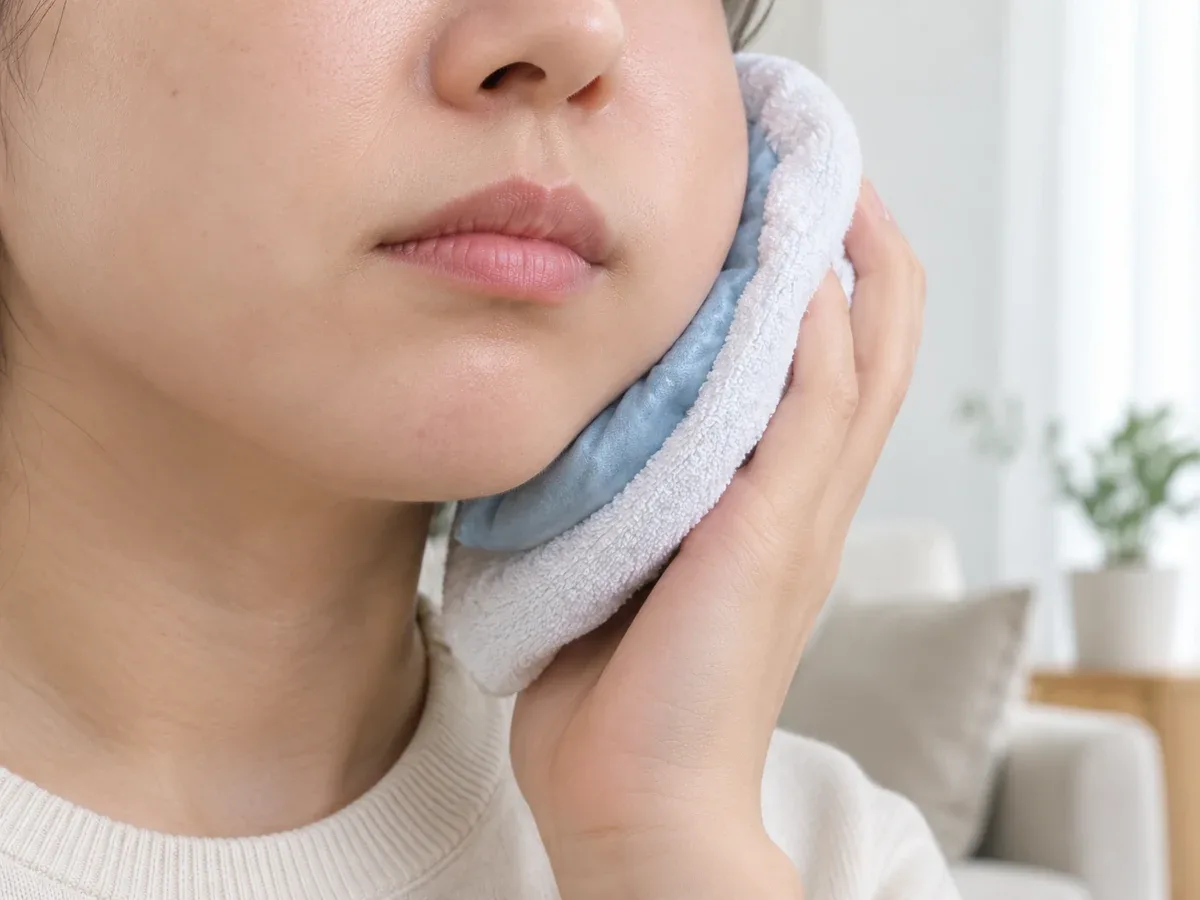
The KDCA implant guide says to use an ice pack actively for 24 hours after implant surgery. The method is "5 minutes on, 5 minutes off."
SNUH also advises cold packs, as directed by your dentist, to ease pain and swelling. The extraction guide notes that ice or ice cream can help too.
Do not skip your medicine. SNUH says to take prescribed medicine on schedule. The KDCA guide says to tell us right away about an allergy or other problem so the medicine can be changed.
If hives, fever or trouble breathing appear, the extraction guide says to stop the medicine at once and visit the clinic.
SNUH advises sleeping on a higher pillow than usual. The extraction guide says to avoid hot baths and saunas for one to two days.
If you had treatment under sedation, plan how you will get home first. The KDCA "Dental Sedation" guide says not to drive yourself, but to go home by taxi or car with a companion.
The same guide lists what to avoid for 24 hours after leaving the clinic.
- Do not ride a bicycle or drive.
- Do not use cooking equipment or a kettle of hot water.
- Do not drink alcohol or take medicine that makes you drowsy.
- Do not exercise hard.

Here is the same advice as a checklist for home.
- Bite on the gauze for the time you were told, then spit it out.
- Keep icing for 24 hours, 5 minutes on and 5 minutes off.
- Set times for your medicine and do not skip a dose.
- Put straws away and do not spit.
- Sleep with your pillow higher than usual.
What can you eat after implant surgery?
SNUH advises eating liquid or soft food on the opposite side for 2–3 days after surgery. During this time, avoid hot food and drink plenty of fluids.
The KDCA extraction guide also recommends mild, non-spicy food after implant surgery or an extraction.
If you had sedation, keep the first meal light. The dental sedation guide says drinking plenty of water and eating lightly can ease dizziness and drowsiness.
Even once the first days feel easier, take care during healing. SNUH says to avoid hard, tough food during the healing period. Too much force can disturb the implant as it fixes to the bone.
This bonding of implant to bone is called osseointegration. According to the KDCA, it generally takes three to four months, and longer with a bone graft.

SNUH divides the healing time by jaw. The lower jaw needs at least 2–3 months and the upper jaw at least 4–6 months. With a bone graft, 6–9 months is usually needed.
| Stage | What the guides advise |
|---|---|
| 2–3 days after surgery | Eat liquid food on the opposite side and avoid hot food. |
| The first few days | Eat mild food and drink plenty of fluids. |
| Healing period | Avoid hard, tough food. |
| First year after treatment | Start with soft food and chew evenly on both sides. |
Is it normal to look more swollen on day two?
The KDCA guide says swelling (edema) and pain are common after surgery. Difficulty opening the mouth, called trismus, is also listed as a common symptom.
Swelling usually peaks around 48 hours after surgery and then slowly goes down. So if you look puffier on the morning of day two, there is no need to panic.
SNUH also says swelling peaks within about 48 hours and then fades. However, if it gets worse after that point, the guide says to let the clinic know.
Moderate pain is often felt 24–48 hours after surgery. Medicine usually controls it, but come in if it continues despite your prescription.
Bruising may appear near the surgical area and usually clears within a few days. Antibiotics, painkillers and cold packs help with swelling, the KDCA says.
If a tooth was removed as well, the extraction guide adds more detail. It lists these possible symptoms for the first one to two days.
- Strong pain and swelling of the face.
- Difficulty opening the mouth or swallowing.
- A stiff neck or a mild fever.
If these symptoms continue, the guide advises contacting your dentist.
After lower-jaw surgery, we also watch sensation. If the nerve canal is injured during lower-jaw work, paresthesia (altered feeling) can occur, according to the KDCA.
SNUH says tingling or numbness can appear in the lips, tongue, cheeks or chin. If this feeling remains after the anesthetic wears off, please tell us.
When and how can you start brushing again?
The KDCA guide says not to brush the surgical site until the stitches come out; use a mouth rinse there instead. Brush the rest of your teeth as usual and simply avoid the surgical area.
SNUH also says to brush carefully so the brush does not touch the surgical area. It advises gargling with an oral antiseptic as well.
The KDCA stresses that good oral hygiene is needed to prevent infection after implant surgery. The extraction guide adds that you should not touch the area with your tongue or fingers.
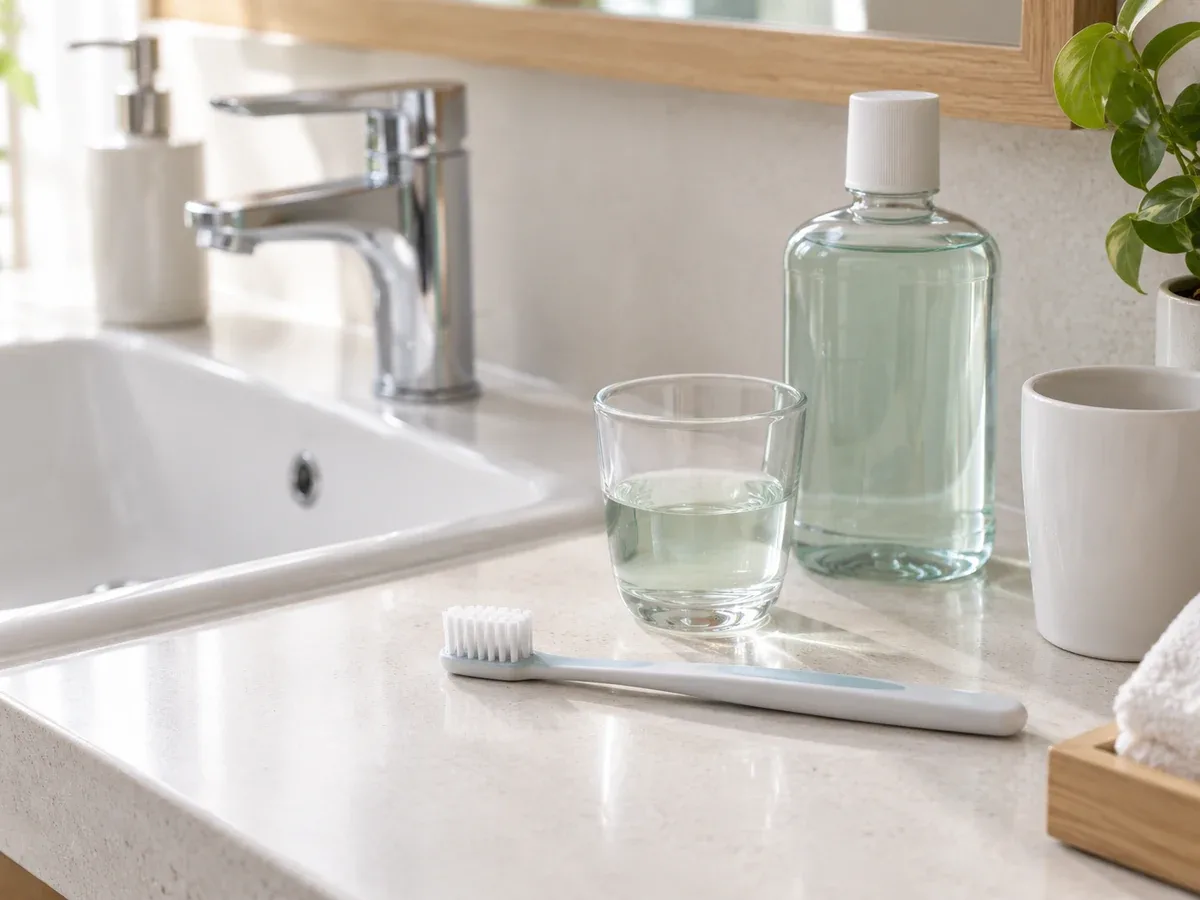
Asan Medical Center says careful brushing, cleaning aids and regular checkups are needed after implant surgery.
Care continues long after the stitches are removed. The KDCA says implant teeth must be kept as clean as natural teeth to prevent inflammation. It calls floss and interdental brushes essential.
The inner side facing the tongue is easy to miss, the same guide notes. Check it in a mirror after implant surgery heals.
How should you spend the first week after implant surgery in Busan?
SNUH says to strictly avoid hard exercise, alcohol and smoking for a week after surgery. The KDCA guide also says to avoid tobacco and alcohol as much as possible.
If a tooth was also removed, the extraction guide says to avoid alcohol and smoking for at least a week. It also advises resting well for a few days.
According to SNUH, the stitches, or sutures, are removed in stages over one to two weeks. The extraction guide says that after a fairly minor procedure, stitches come out after about a week.
Asan Medical Center says daily life can resume right after implant surgery. However, a few days of rest may be needed if extra procedures such as bone grafting were done. The rest period depends on the patient and the surgical method.
With two-stage implant surgery, a second, minor procedure follows after healing. SNUH describes it as simple, with normal life resuming within a day or two at most.
| When | What the guides advise |
|---|---|
| Right after surgery | Bite on gauze and spit it out after about an hour; do not spit or use a straw |
| First 24 hours | Ice pack (5 minutes on, 5 minutes off); take medicine on time |
| 2–3 days | Liquid food on the opposite side; avoid hot food |
| Around 48 hours | Swelling is at its peak, then slowly goes down |
| One week | Avoid hard exercise, alcohol and smoking |
| 1–2 weeks | Stitches are removed in stages |
Which symptoms mean you should call right away?
SNUH says to call and visit if you have severe pain or bleeding. The KDCA guide explains that bleeding can occur in people who take anticoagulants or have high blood pressure.
The signs of infection are also listed. They are fever, unusual swelling and pain, a lasting unpleasant taste like salt, and pus.
After upper-jaw surgery, pain can arise near the maxillary sinus. SNUH says it is usually temporary, but to get checked if it continues.
If a tooth was removed the same day, also know about dry socket. The extraction guide describes it as a complication with a bad smell and severe pain, usually 3–5 days after extraction. It says to rinse with saline and then visit the dentist.
Asan Medical Center lists several possible problems after implant surgery. They include infection, bleeding, swelling, pain, altered sensation and early exposure of the implant.
The KDCA dental sedation guide also says when to call. Call for a fever of 38°C or higher that does not go away, or pain that painkillers do not relieve. Also call if repeated vomiting stops you from keeping even water down.

| Symptom | What the guides say |
|---|---|
| Severe pain or bleeding | Call the clinic and come in |
| Fever, unusual swelling and pain, a lasting salty taste, pus | Listed as signs of infection |
| Swelling that gets worse after 48 hours | Tell the clinic |
| Pain that continues despite prescribed medicine | Come in |
| Lasting sinus-area pain after upper-jaw surgery | Usually temporary; get checked if it continues |
Care continues even after healing ends and the new tooth is fitted. The KDCA guide says an implant is not a once-and-done fix and advises checkups every 3–6 months.
If you have implant surgery coming up in Busan, it helps to read through this order once beforehand. At Reset Dental Clinic, we also go over the day-of instructions with you before you leave.
Frequently asked questions
Can I go back to work the next day?
Asan Medical Center says daily life is possible right after surgery. A few days of rest may be needed if bone grafting was also done. If you had sedation, do not drive for 24 hours.
I look more swollen on day two. Is that normal?
Swelling usually peaks around 48 hours and then goes down. If it keeps getting worse after that, or comes with fever or pus, please contact us.
When can I exercise after implant surgery?
SNUH advises avoiding hard exercise for a week. More rest may be needed if you also had a bone graft. We can decide when to restart when we check the wound on the day your stitches come out.
Can I have implant surgery with English support in Busan?
Yes. We offer 1:1 English interpretation from the first consultation to the end of treatment, including these aftercare instructions. The clinic is near Seomyeon Station Exit 2 (5-min walk), opposite Lotte Hotel Busan; call 010-8555-2854 (+82-10-8555-2854 from abroad).
The first week after implant surgery is mostly about gauze, ice, soft food and rest.
Swelling that peaks around day two is common.
Swelling that keeps growing after that is a reason to call.
If you are planning implant surgery in Busan, Reset Dental Clinic offers 1:1 English interpretation from your first consultation to the end of treatment. Call 010-8555-2854 to ask about your aftercare.
References
- Seoul National University Hospital Medical Information, "Dental Implants" — before surgery: loose clothing, pre-surgery medicine one hour ahead, fasting six hours before general anesthesia and quitting smoking; after surgery: gauze for about an hour, medicine on time, no spitting or straws, possible nosebleeds, cold packs, when to call, a week without hard exercise, alcohol or smoking, 2–3 days of liquid food on the other side, a higher pillow, careful brushing and antiseptic rinses, stitch removal over 1–2 weeks, signs of infection, altered sensation, sinus pain, swelling that peaks within about 48 hours, bruising, moderate pain at 24–48 hours, and avoiding hard or hot food during healing
- KDCA National Health Information Portal, "Dental Implants" — rest and a light meal before surgery, 24 hours of icing ("5 minutes on, 5 minutes off"), mouth rinse instead of brushing the site until the stitches come out, medicine and allergies, avoiding tobacco and alcohol, oral hygiene to prevent infection, swelling, pain and limited mouth opening that usually peak at 48 hours, bleeding risk with anticoagulants or high blood pressure, altered sensation after lower-jaw work, and osseointegration generally taking 3–4 months
- Asan Medical Center, Tests/Procedures/Surgery Information, "Implant Surgery" — telling the medical team about long-term blood thinners such as aspirin or warfarin, controlling high blood pressure and diabetes before surgery, returning to daily life right after surgery, and a few days of rest after extra procedures such as bone grafting
- KDCA National Health Information Portal, "Tooth Extraction" — care after extractions and minor oral surgery: gauze for about 1 hour 30 minutes, not touching the site, 1–2 days of icing and mild food, no hot baths or saunas for 1–2 days, no straws for 3 days, no alcohol or smoking for at least a week, and stopping medicine at once if an allergic reaction appears
- KDCA National Health Information Portal, "Dental Sedation" — going home by taxi or car with a companion instead of driving, what to avoid for 24 hours after leaving, and calling the dentist for a lasting fever of 38°C or higher or pain that painkillers do not relieve
Written by Reset Dental Clinic Support Team
Medical review Dr. Na In-chae, Head Dentist · Periodontics Specialist
Last updated: September 19, 2026
This article is general information and does not replace diagnosis or treatment for individual patients. If you have symptoms, please see a dentist.


