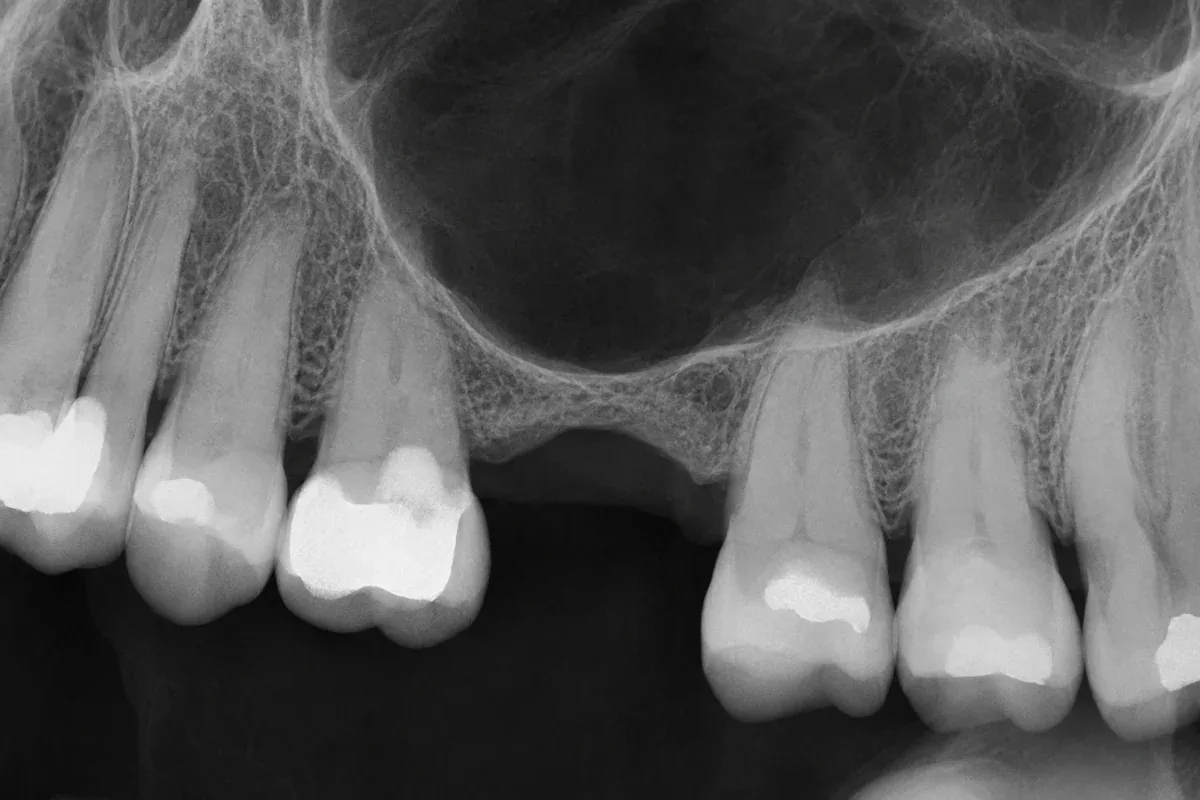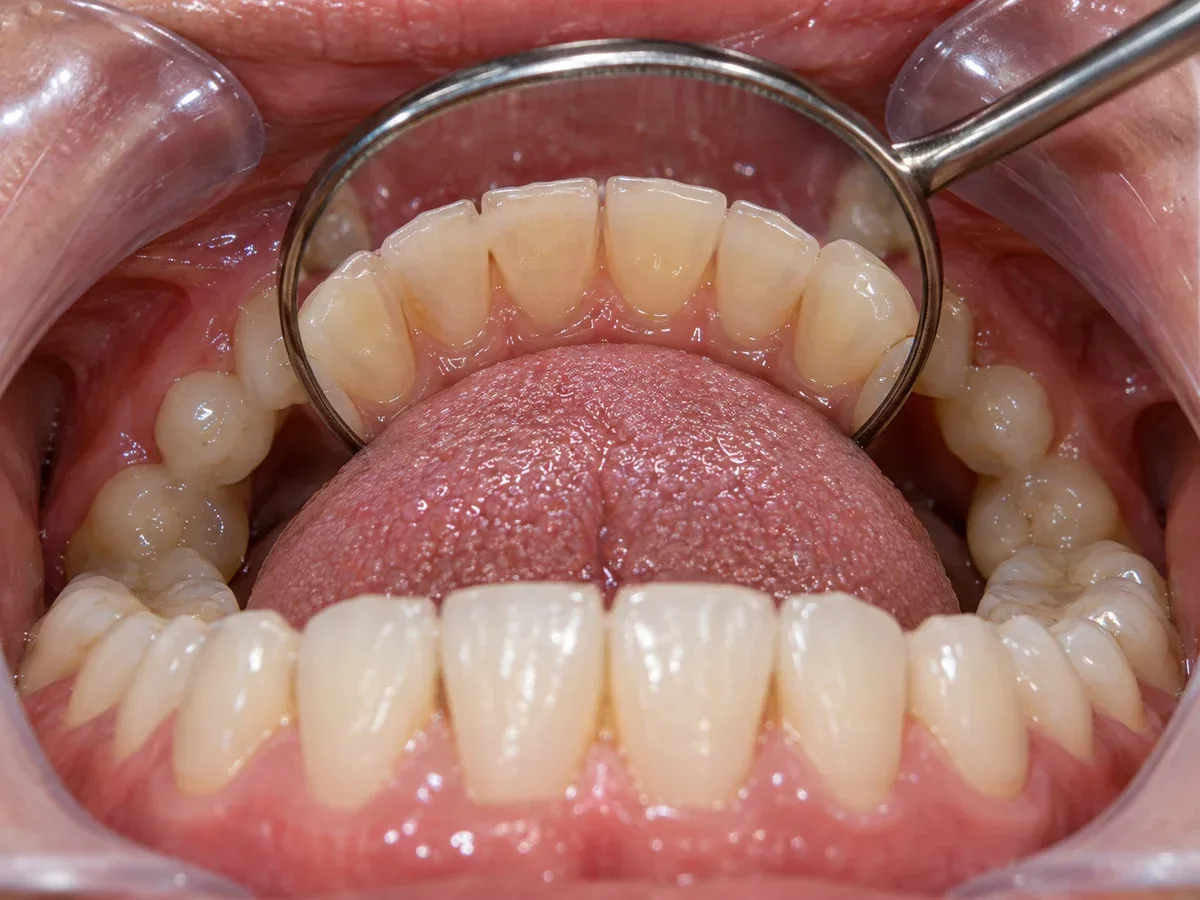
- A dental implant replaces the root of a missing tooth. An artificial root is placed in the jawbone, and a tooth-shaped crown goes on top.
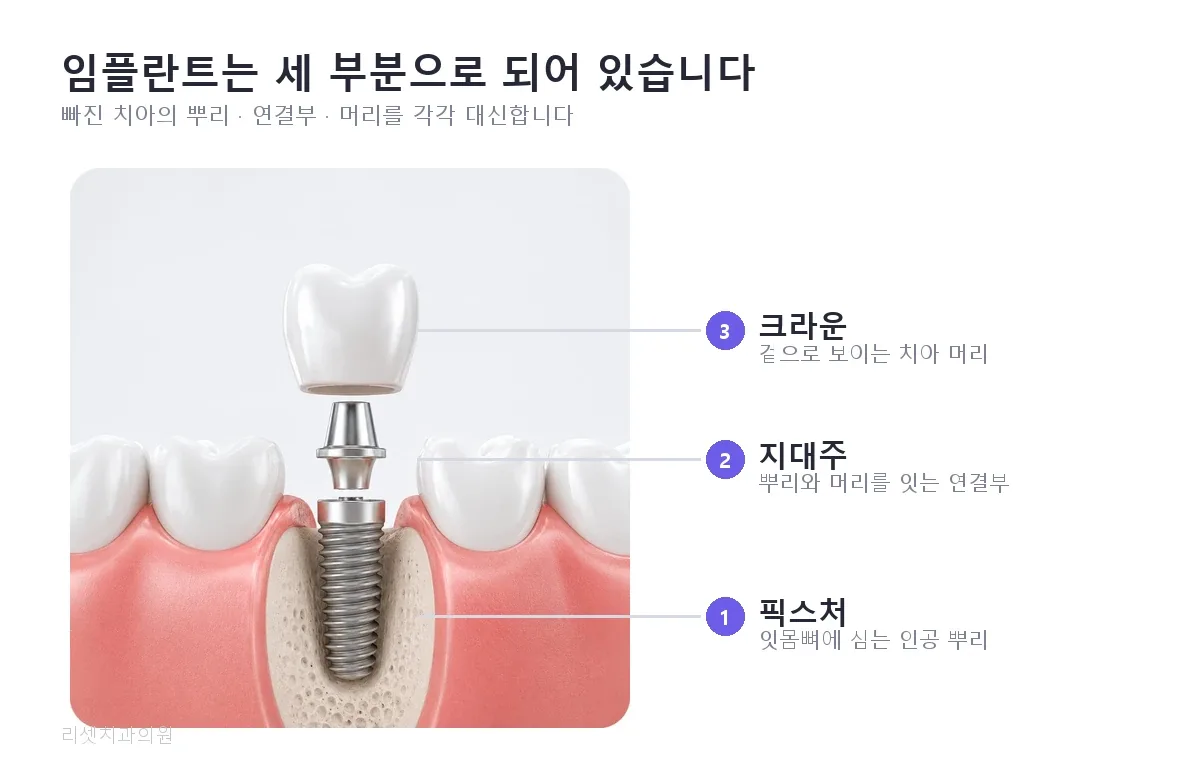
- It has three parts (fixture, abutment and crown). If one part has a problem, that part alone can usually be replaced.
- The key factor is not the implant itself but the jawbone that holds it.
- The longer a gap is left empty, the more bone is lost, and a bone graft may become necessary.
If you live in or are visiting Seomyeon, Busan and have lost a tooth, you usually have three choices: leave the gap, get a bridge, or get a dental implant. This guide explains what a dental implant is, how it works and why dentists keep talking about jawbone. Our clinic offers 1:1 English interpretation from your first consultation through the end of treatment.
What is a dental implant?
A dental implant is a new root for a missing tooth. An artificial root is placed inside the jawbone. Once it has bonded firmly to the bone, a tooth-shaped crown is fitted on top.
A natural tooth has a root anchored in the jawbone. That root is what allows the tooth to take the force of chewing.
When a tooth is lost, the root is lost with it. A simple way to picture a dental implant: it rebuilds the missing root.
This is the main difference from other options. Unlike a denture, you do not take it in and out. Unlike a bridge, it does not require shaving down the healthy teeth on either side.
| Option | How it works | When it may suit you |
|---|---|---|
| Dental implant | An artificial root is placed in the jawbone and a crown is fitted on top. The neighbouring teeth are left untouched. | When there is enough jawbone, or when bone can be built up first |
| Bridge | The teeth on both sides of the gap are shaved down to support a false tooth in between. | When the teeth next to the gap already have crowns |
| Denture | A removable appliance that you take in and out. | When several teeth are missing and surgery is a concern for general health reasons |
Is an implant always the right answer?
No. An implant is not always the right choice.
Above all, if your own tooth can be saved, that comes first. A loose tooth does not automatically need to be pulled. We first check whether gum treatment can stabilise it.
Nothing fits as well as your own tooth. Keeping even one tooth also helps protect the bone in that spot.
If the teeth next to the gap already have crowns, a bridge may be a better fit. If several teeth are missing and surgery would be a burden on your general health, a denture may be considered first. If gum disease is active, treating it comes first.
Which option suits you can be decided after examining your mouth and checking X-rays. The same gap can call for a different approach depending on the remaining bone, your bite force and the condition of the neighbouring teeth.
Why is a dental implant made of three parts?
If everything were one piece, any problem would mean redoing the whole thing. Because the parts are separate, just the part with a problem can be replaced.
① Fixture: the artificial root in the jawbone
The fixture is made of titanium. Titanium bonds well with bone, which is why it has long been used in artificial joints too. After placement, it usually takes two to three months to bond with the bone.
② Abutment: the connector between root and crown
The abutment links the fixture to the crown. The gum settles around this part as it heals.
③ Crown: the visible tooth
This is the part you actually chew with. It is made to match the colour and shape of the teeth beside it. If it chips or wears down after years of use, a new crown can be made and fitted on its own.
| Part | Where it sits | What it does |
|---|---|---|
| Fixture | Inside the jawbone | Acts as the artificial root. Made of titanium, which bonds with bone. |
| Abutment | At the gum line | Connects the fixture to the crown. The gum heals around it. |
| Crown | Above the gum | The visible tooth used for chewing. Can be remade if it chips or wears. |
In practice, a problem with one part does not always mean starting over. A crown that has chipped or worn after years of use, for example, can be replaced on its own.
An implant cannot get tooth decay. When problems happen, they usually start in the jawbone that holds it.
Why does the jawbone matter so much?
An implant stays in place because it is fused to bone. If there is not enough bone to hold it, even a high-quality implant will not last long. The ground matters before the pillar.
Jawbone starts to shrink little by little after a tooth is lost. When chewing forces no longer reach that area, the body treats the bone there as unnecessary.
So conditions are usually most favourable soon after the tooth is lost. If the gap is left for a long time, there may not be enough room for the implant. A bone graft is then needed more often.
Leaving a gap for a long time can also cause other changes:
- The jawbone in the gap shrinks.
- The teeth on either side tilt into the empty space.
- The opposing tooth, which used to bite against the lost one, drifts into the gap.
These changes make treatment more complicated over time. That is why an early consultation is recommended.
What if there is not enough bone?
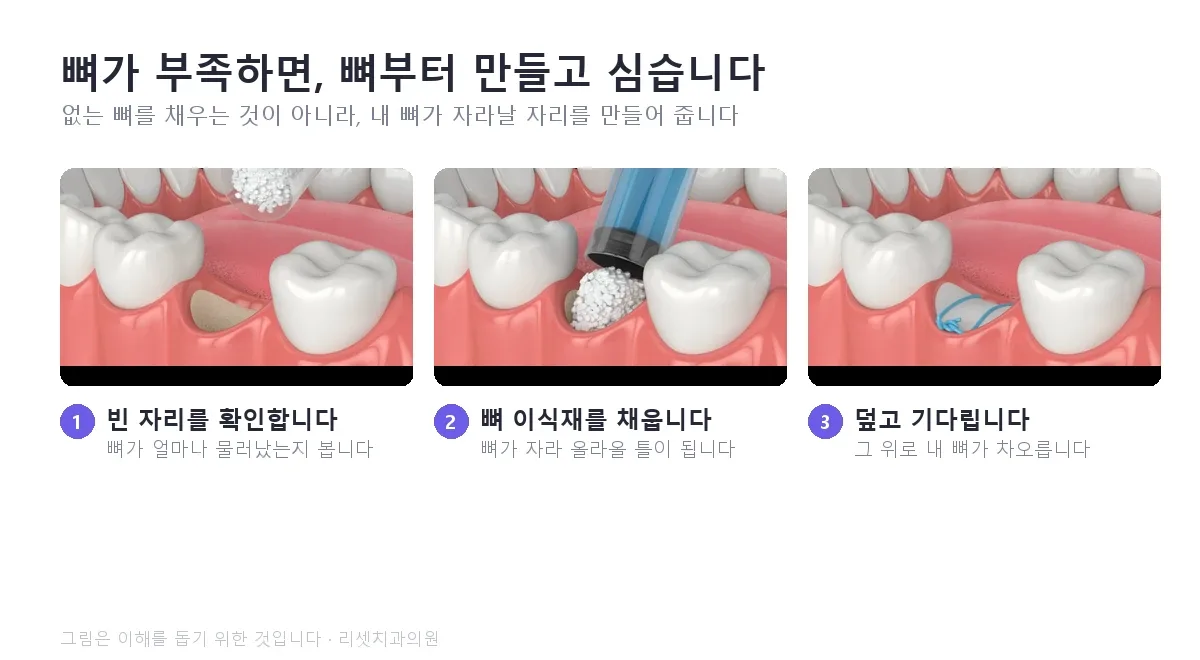
A lack of bone does not rule out an implant. The bone is built up first, and the implant is placed afterwards. This is called a bone graft.
A bone graft does not force new bone into an empty space. It is closer to creating a space and a framework where bone can grow. Once your own bone has grown into that space, the implant is placed.
A bone graft generally follows three stages:
- The empty space where bone is missing is checked.
- The space is filled with bone graft material.
- The area is covered, and time is allowed for your own bone to grow.
The upper back teeth sit below the maxillary sinus, an air space beside the nose. Because of this, bone height there is often too low.
In these cases, a sinus lift may be done as well. It raises the floor of the sinus to make room for the implant.
How long does a dental implant last?
It varies from person to person. It depends heavily on how well it is looked after.
A dental implant itself cannot get tooth decay. However, it is more vulnerable to gum disease than a natural tooth.
A natural tooth has a ligament around its root that holds back inflammation to some degree. An implant does not have this structure. So once inflammation starts around an implant, it spreads faster.
| Natural tooth | Dental implant | |
|---|---|---|
| Tooth decay | Can develop | Does not develop |
| Around the root | A ligament that holds back inflammation to some degree | No ligament |
| If the gum becomes inflamed | Some natural protection | Inflammation spreads faster |
| Main thing to watch | Decay and gum disease | Inflammation of the surrounding gum |
Inflammation of the gum around an implant is the most frequent problem. This is why regular check-ups matter so much after treatment.
Most of the work at a check-up is finding inflammation before it starts. At each visit, the dentist mainly looks for:
- Early signs of gum inflammation
- Whether chewing force is falling too heavily on one side
- Whether the screw has come loose
How does dental implant treatment work at our clinic in Busan?
Treatment usually follows four steps. The timing depends on your bone and on whether a graft is needed.
1. Examination and planning
A panoramic X-ray and a 3D CT scan show how much jawbone you have and where the nerves run. The position and angle of the implant are planned in advance.
Before this visit, please let us know about:
- Any medicines you take regularly
- Recent test results, for example for diabetes or blood pressure
- Any medicine for osteoporosis, which needs particular checking
Diabetes or high blood pressure does not automatically rule out an implant. If they are well controlled, treatment is possible in most cases.
2. Placement
The gum is opened and the fixture is placed in the bone. If bone is lacking, a bone graft is done at the same time.
3. Healing
This is the time the implant needs to bond with the bone. It usually takes two to three months, and longer if a bone graft was done.
With a bone graft, your own bone first needs time to grow into the grafted space. That is why this stage takes longer.
4. Fitting the crown
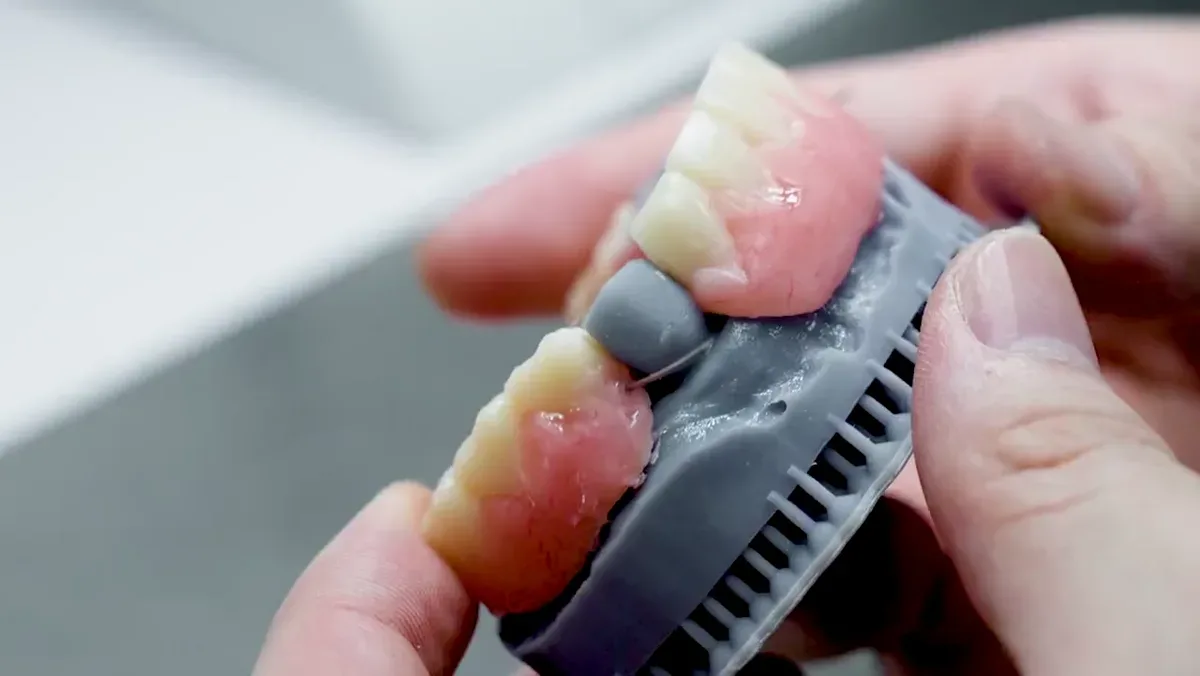
An impression is taken, and a tooth-shaped crown is made and fitted. The bite height is then adjusted so the crown meets the opposing teeth correctly.
The crown is made in our in-house dental lab. Its colour and shape are matched to the teeth beside it.
| Step | What happens | Typical timing |
|---|---|---|
| 1. Examination and planning | Panoramic X-ray and 3D CT; implant position and angle planned | First visit |
| 2. Placement | Fixture placed in the jawbone; bone graft at the same time if needed | Surgery day |
| 3. Healing | The implant bonds with the bone | Usually 2–3 months; longer with a bone graft |
| 4. Crown | Impression taken, crown made and fitted, bite adjusted | After healing |
Frequently asked questions
Does dental implant surgery hurt?
The area is numbed with anaesthetic, so you should not feel pain during the surgery. For two to three days afterwards, you may have some swelling and a dull ache, managed with prescribed medicine. How much you feel varies with the number of implants and whether a bone graft is done.
How long does treatment take?
The implant needs time to bond with the bone, so plan for about three to four months. It takes longer with a bone graft. We will tell you the expected timeline after reviewing your scans.
Is a dental implant covered by insurance in Korea?
For people enrolled in Korean national health insurance, patients aged 65 or older are covered for up to two implants in total. Eligibility conditions and your share of the cost are explained at your consultation.
Can I get dental implant treatment in English in Busan?
Yes. We provide 1:1 English interpretation from your first consultation through the end of treatment, so each step is explained in English. To book, call 010-8555-2854.
Do you need a dental implant, and can one be placed now?
We check your jawbone and nerve position with a panoramic X-ray and 3D CT, then explain what we find.
Even for the same gap, the right option depends on the remaining bone, your bite force and the teeth next to it.
We decide together after explaining those differences clearly.
Reset Dental Clinic is an English-speaking dental clinic in Busan, near Seomyeon Station Exit 2 (5-min walk), opposite Lotte Hotel Busan. For patients living in or visiting Korea, we offer 1:1 English interpretation from the first consultation through the end of treatment. Call 010-8555-2854 (+82-10-8555-2854 from abroad).
References
- KDCA National Health Information Portal, "Dental implants" — definition of implants and osseointegration, treatment time, care and complications
- KDA Dental News, "65% of implant patients have experienced peri-implant disease" (17th Gum Day, Korean Academy of Periodontology) — prevalence and risk factors of peri-implant disease, maintenance intervals
- KDCA National Health Information Portal, "Gum disease (periodontal disease)" — how gum inflammation progresses to the jawbone
- KDCA National Health Information Portal, "Systemic disease and periodontal treatment" — general health factors such as smoking and diabetes, and the gum tissues
- KDA Dental News, "Implant patients aged 65 and over exceed 800,000 last year" — growth in the number of implant patients
Written by Reset Dental Clinic Support Team
Medical review Dr. Na In-chae, Head Dentist · Periodontics Specialist
Last updated: September 19, 2026
This article is general information and does not replace diagnosis or treatment for individual patients. If you have symptoms, please see a dentist.